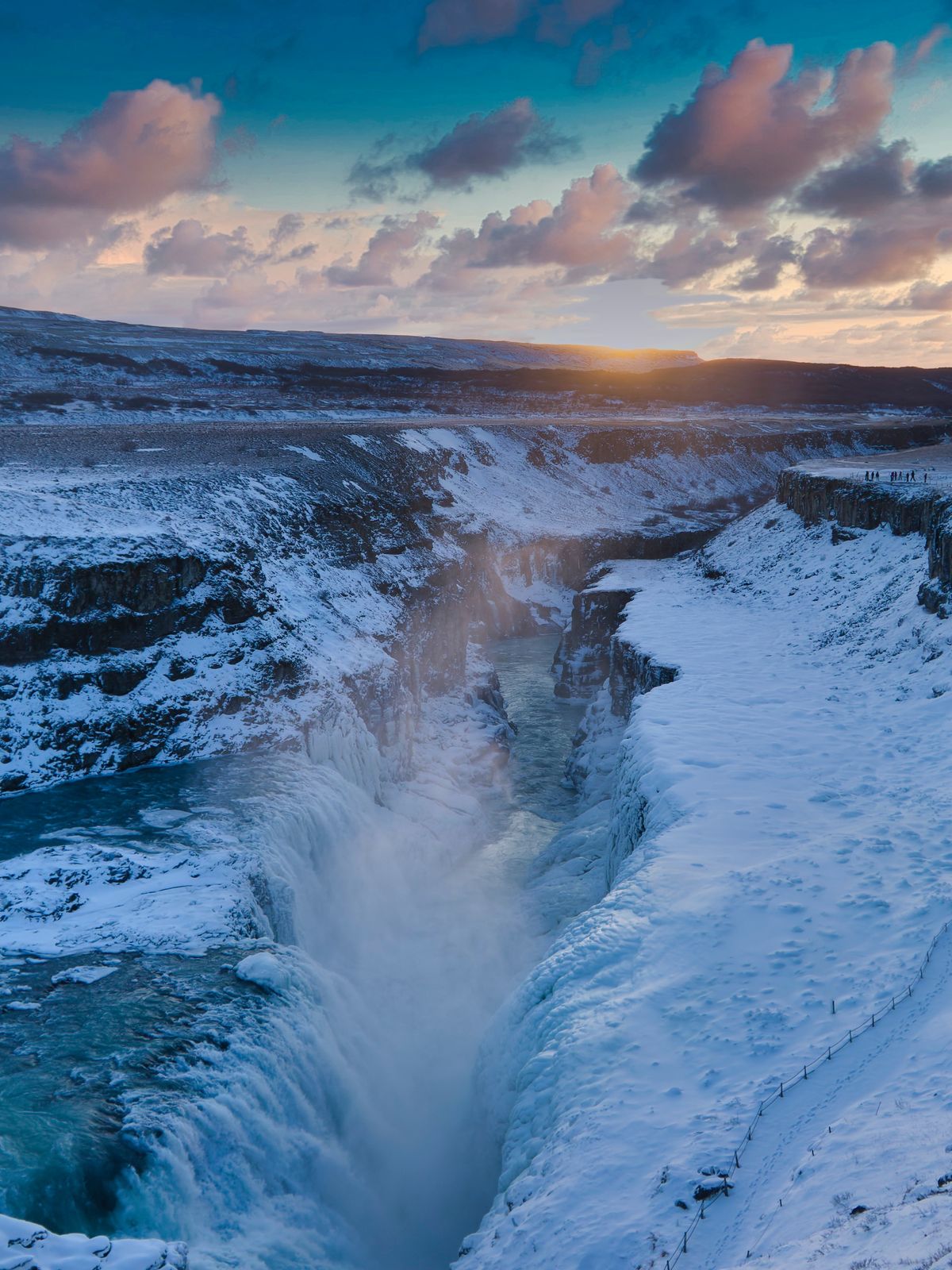
There are many reasons to choose Iceland as a travel destination. The country has a rich combination of culture, history, and geological life. Still, what draws more visitors to this Nordic country is its astonishing landscapes, impressive volcanoes, huge glaciers, and picturesque waterfalls. Among this last category, there’s one that is not one of the most famous, but that shines with its own light: Öxarárfoss
For those traveling by campervan, this stunning destination offers the perfect blend of freedom, adventure, and accessibility. It’s a great place to see but, on top of that, it’s in the middle of one of the most amazing sites in the entire country: Þingvellir National Park. Let's explore everything this amazing stop has to show.
Key Takeaways
Öxarárfoss is a unique man-made waterfall in Þingvellir National Park, created when the Öxará River was diverted in the 10th century to support Iceland’s early Alþingi assemblies.
The waterfall sits on the Mid-Atlantic Ridge, where the North American and Eurasian tectonic plates are separating, making it one of Iceland’s most significant geological and historical landmarks.
Þingvellir National Park is a UNESCO World Heritage Site and the birthplace of Icelandic democracy, home to the Alþingi (founded in 930 AD), Silfra Fissure, Almannagjá Gorge, and Iceland’s largest natural lake.
Located just 50 km (31 miles) from Reykjavík, Öxarárfoss is an easy stop on the Golden Circle, with a short 15–30 minute walk from the park’s main parking areas.
Nearby attractions include Gullfoss, the Geysir Geothermal Area, Brúarfoss, Kerið Crater, Laugarvatn Fontana, and the Secret Lagoon, making the area ideal for a full-day or multi-day Iceland itinerary.
Every season offers a different experience, from midnight sun and camping in summer to frozen waterfalls and Northern Lights opportunities in winter.
What's Öxarárfoss?
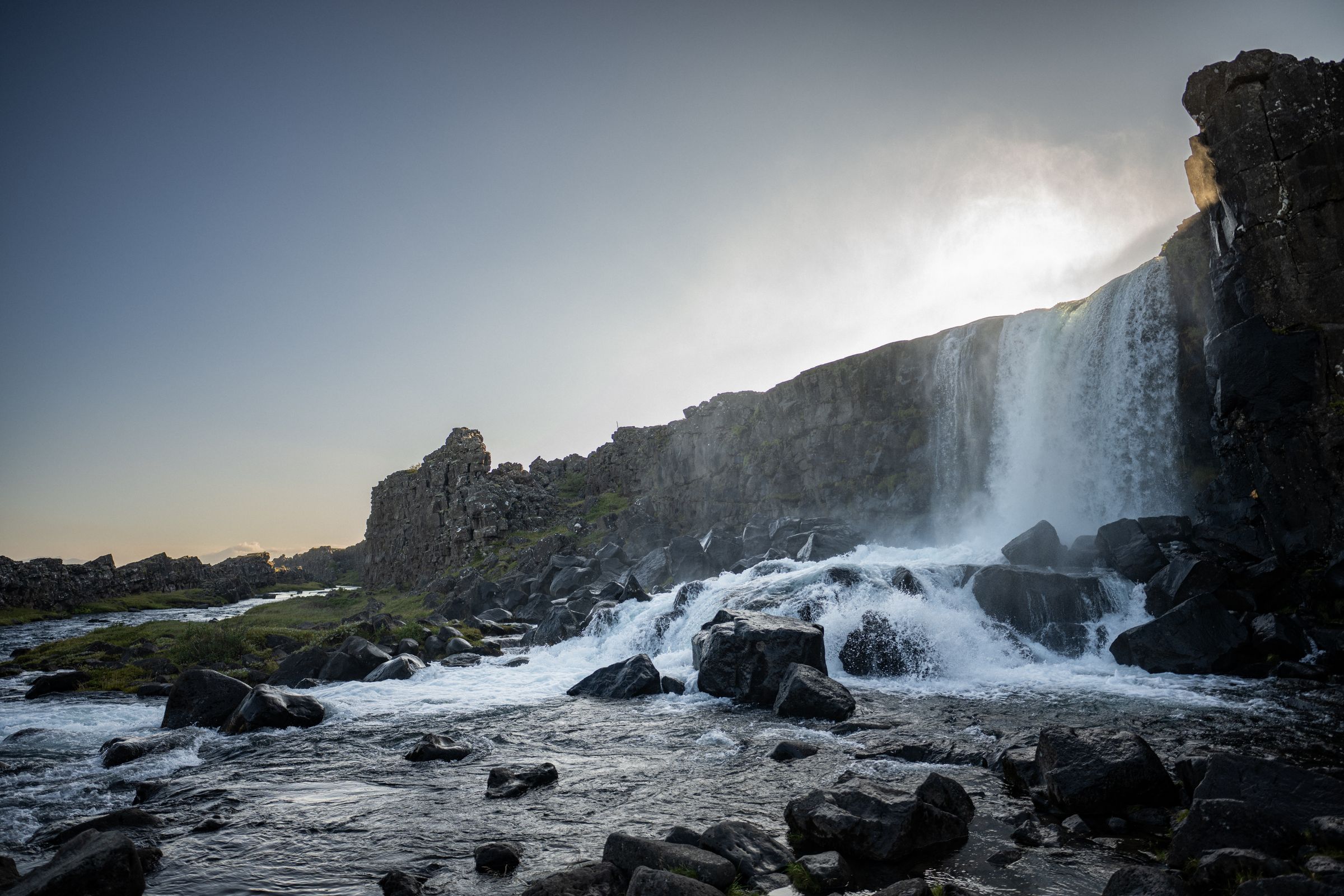
Öxarárfoss is a beautiful waterfall located in southwestern Iceland, not far from the capital city, Reykjavík. What makes it especially unique is its origin.
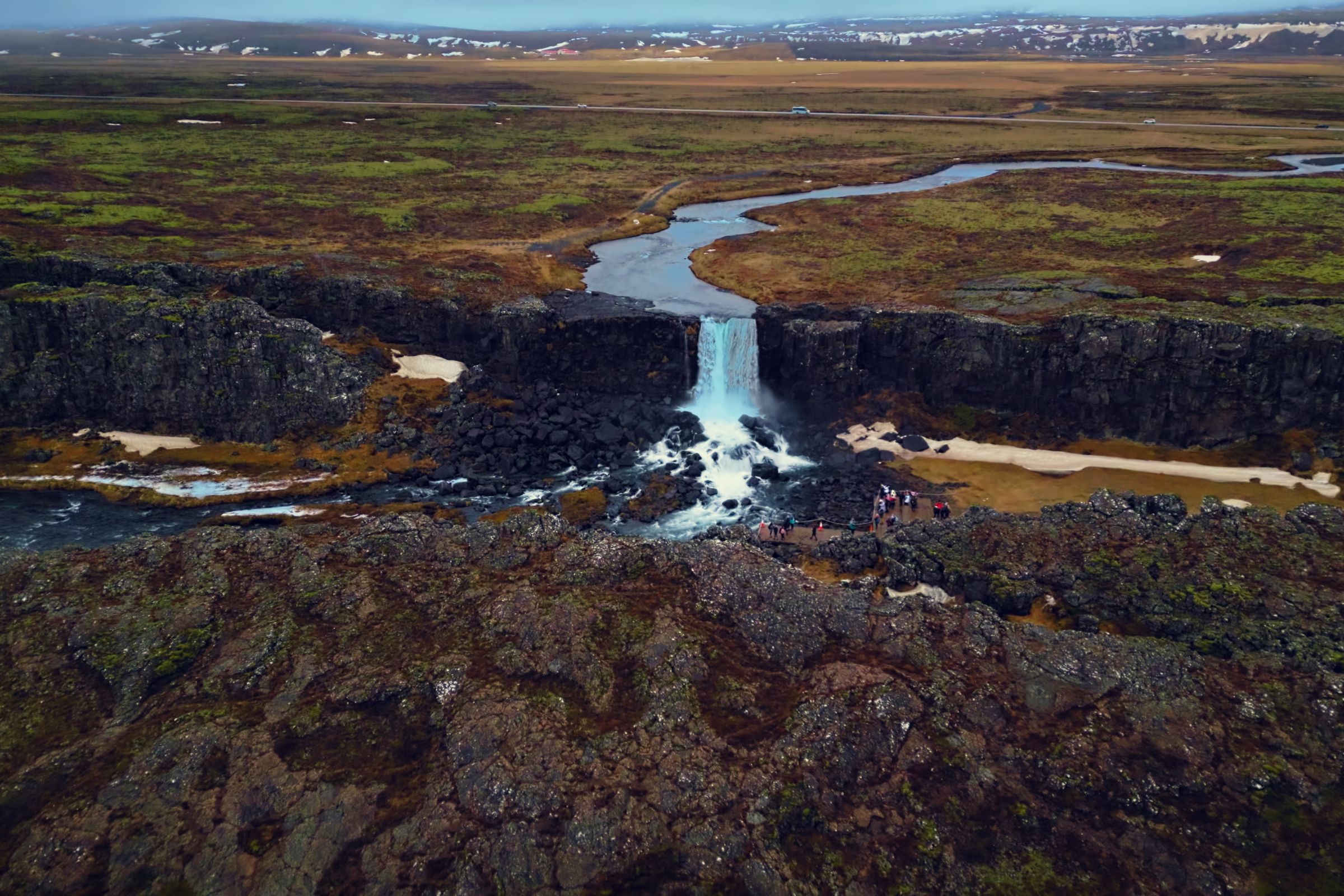
Unlike most Icelandic waterfalls, which naturally flow from glaciers and mountain rivers, Öxarárfoss is considered a man-made waterfall. In the 10th century, early Icelandic settlers intentionally redirected the course of the Öxará River so that it would flow over the cliffs of the Almannagjá gorge.
Located in an area famous for its dramatic geology and historical significance.
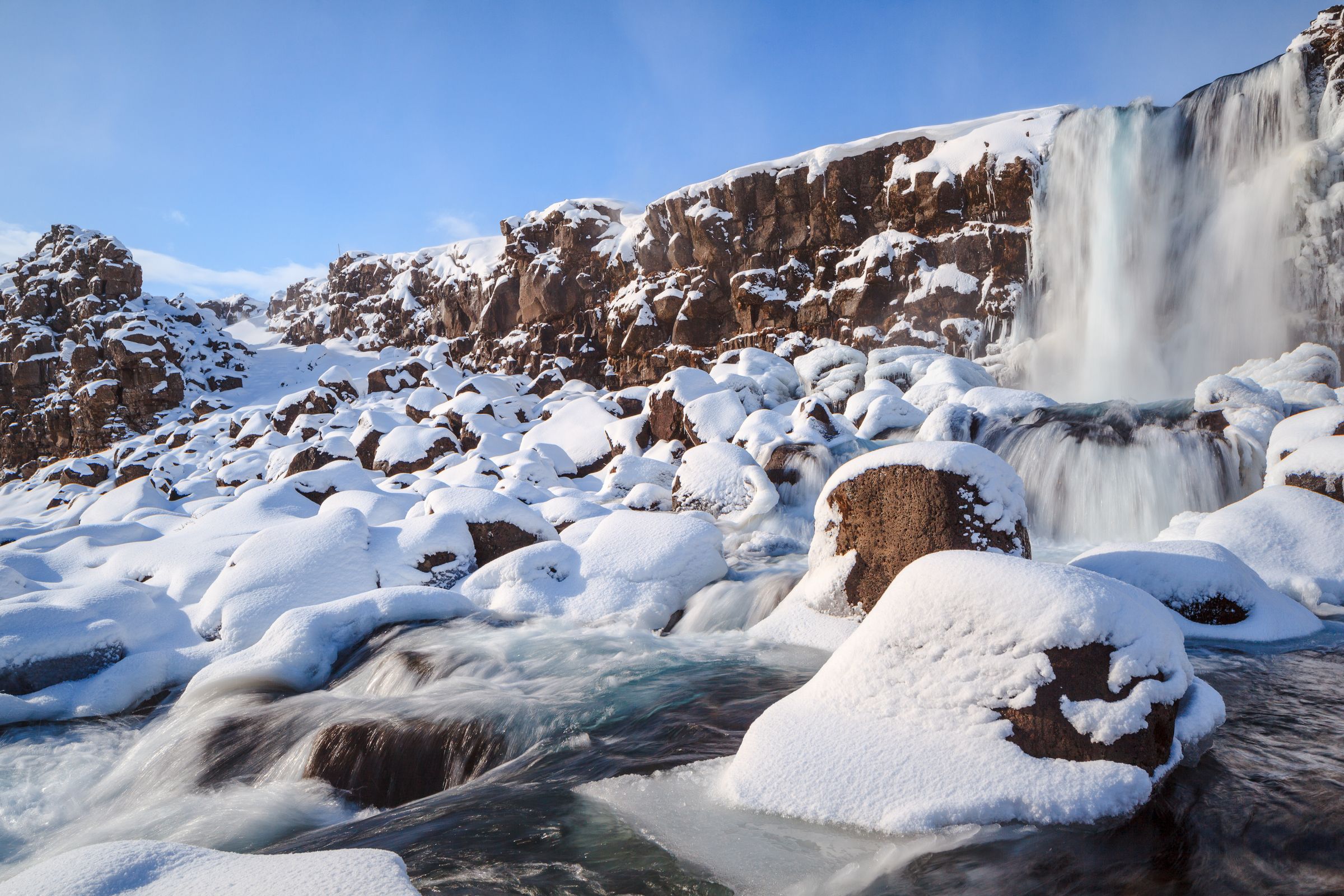
Water cascades over dark basalt rock formations, creating a striking contrast with the clear water.
Basalt forms when lava cools rapidly after coming into contact with water or ice.
A Landscape Shaped by Tectonic Forces
Öxarárfoss sits directly on the Mid-Atlantic Ridge, where the North American and Eurasian tectonic plates are slowly pulling apart.
This means visitors can see a landscape that is literally being reshaped by the movement of Earth's crust. Because this process is still ongoing, the area remains a dynamic geological environment.
The combination of:
Active geological processes
Stunning natural scenery
Rich human history
makes Þingvellir and Öxarárfoss one of Iceland's most remarkable destinations.
About Öxarárfoss
Although beautiful, Öxarárfoss is not one of Iceland's largest waterfalls.
Dimensions:
Height: approximately 13 meters (44 feet)
Width: approximately 6 meters (20 feet)
Divided into two separate drops
The waterfall crashes into a rocky pool filled with large boulders, creating a dramatic scene that is especially popular with photographers.
Meaning of the Name
The name Öxarárfoss translates to "Waterfall of the Axe River."
The word can be broken down as follows:
Icelandic
Meaning
öx
axe
á / ár
river
foss
waterfall
As is common in Iceland, the name is highly descriptive and directly references the river from which the waterfall flows.
Legends Behind the Name
Several local stories attempt to explain the name of the river and waterfall.
The Settlers' Axe
One legend claims that early Scandinavian settlers threw an axe into the river to mark their ownership of the surrounding land.
The Troll Story
Another piece of folklore tells of a dangerous troll that lived nearby. According to the tale, the creature was eventually killed with an axe beside the river, and the weapon remained there, giving the river its name.
Historical Importance
Beyond mythology, Öxarárfoss is closely connected to the history of the Alþingi, Iceland's national parliament.
Alþingi at a Glance
Founded in 930 AD
Considered the oldest continuously operating parliament in the world
Located within the Þingvellir area
Why Was the River Diverted?
Historians believe the Öxará River was redirected primarily to provide a reliable source of fresh drinking water for the thousands of people who gathered at the annual parliamentary assemblies.
An Unexpected Acoustic Advantage
The natural rock formations surrounding the waterfall may have served another practical purpose.
The rock wall behind Öxarárfoss forms a natural amphitheater, helping to reflect and amplify sound. This likely aided the Law Speaker as he stood on Lögberg (Law Rock) and recited legal codes to large crowds assembled at Þingvellir.
Þingvellir National Park
As we have already mentioned, Öxarárfoss is located within the borders of Þingvellir National Park (often anglicized as Thingvellir).
Established in 1930, exactly on the 1,000th anniversary of the Alþingi, Þingvellir was Iceland’s first national park and is considered the cradle of the nation’s historical identity. Due to its immense cultural value and untouched geological formations, it was designated as a UNESCO World Heritage Site in 2004.
The park spans more than 24,000 hectares and contains several types of ecosystems.
Historical Significance
The importance of Þingvellir stems from its role as the site where the Alþingi met continuously for centuries to resolve disputes, pass laws, and forge alliances.
It is also the place where two of the most important events in Icelandic history took place:
Iceland officially adopted Christianity in 1000 AD.
The modern Republic of Iceland was formally declared in 1944.
Geological Importance
Geologically, Þingvellir is one of the few places on Earth where the drift between the North American and Eurasian tectonic plates is clearly visible, both on dry land and underwater.
The plates pull apart at a rate of roughly 2 centimeters per year, causing the valley floor to sink and crack over time. As a result, the landscape is constantly being reshaped by tectonic activity.
Exploring the Park
Inside the park, you can explore some of the most incredible sites that can be found in Iceland:
Almannagjá Gorge: This is the place where you can see the separation of the continents above ground. It’s a long canyon, and visitors can walk directly inside this gorge along a smooth gravel path, flanked by black rock walls on one side and views of the valley on the other.
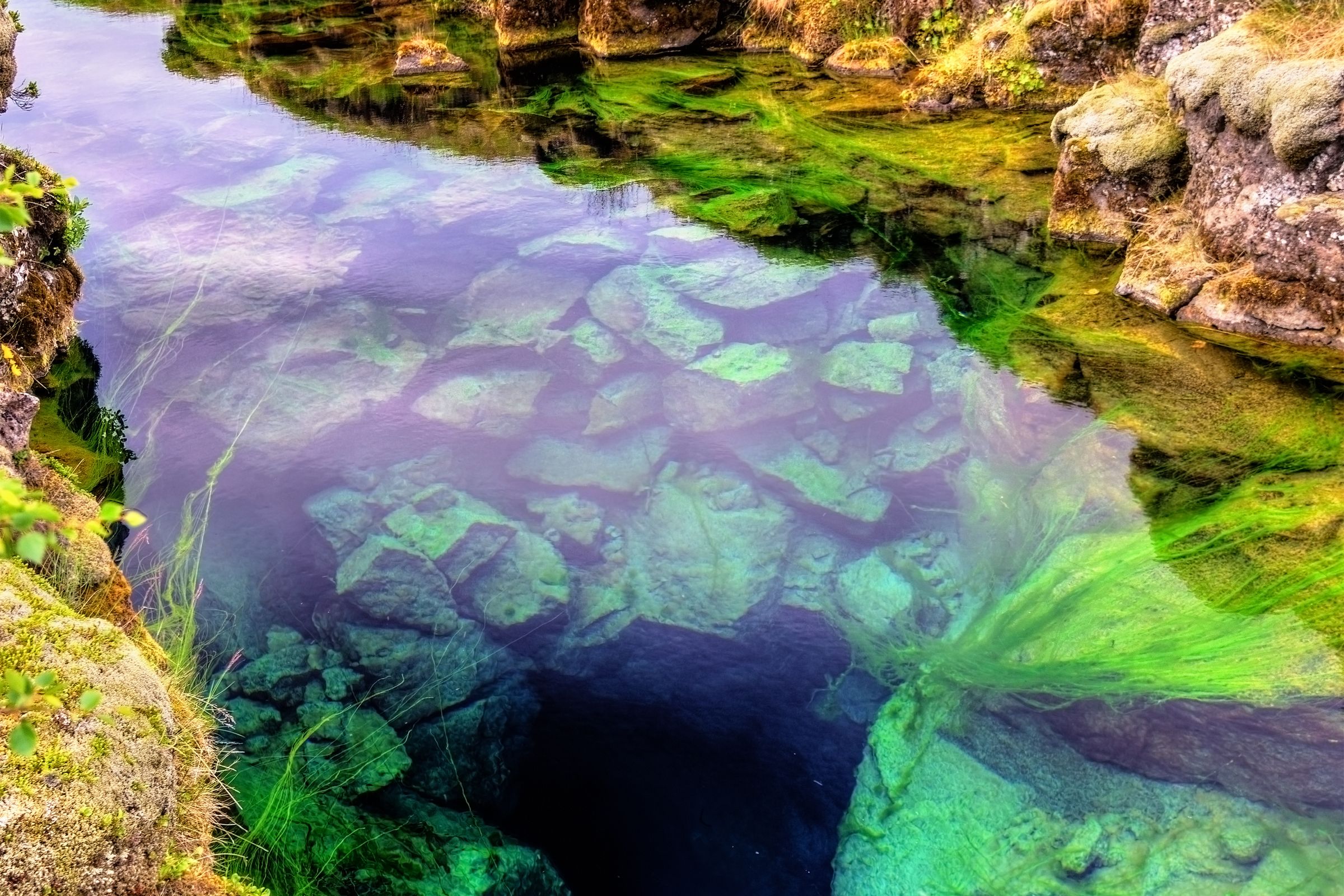
Silfra Fissure: It’s, perhaps, the most singular element in the park. Silfra is a deep volcanic crack filled with glacial meltwater that has been filtered through underground lava rocks for decades. It’s the continuation of Almannagjá but under water. The water is incredibly pure and clear, offering underwater visibility exceeding 100 meters (330 feet), making it a world-famous destination for scuba diving, because you can swim touching two continents at the same time.
Þingvallavatn Lake: Bordering the southern edge of the park, this is Iceland’s largest natural freshwater lake, covering an area of 84 square kilometers and reaching depths of up to 114 meters.
These are just the most famous landmarks, but the park has much more to offer. Save a day to see Öxarárfoss and the park.
Where's Öxarárfoss and How to Get There
Öxarárfoss is located in southwestern Iceland and forms part of the Golden Circle, the country’s most popular tourist route.
While there are some public transportation options between Reykjavík and Þingvellir National Park, the most convenient way to reach the waterfall is by car or campervan. Having your own vehicle allows you to set your own schedule, avoid the tour bus crowds by arriving early, and enjoy the flexibility of exploring at your own pace.
Driving from Reykjavík
The route from the capital is straightforward and fully paved, making it suitable for vehicles of all sizes, including campervans.
To reach the park:
Leave Reykjavík by heading north on the Ring Road (Route 1) toward Mosfellsbær.
After passing through the town, follow the signs for Route 36 (Þingvallavegur) and turn right.
Continue along Route 36 until you reach the national park area.
The total distance from central Reykjavík to the main parking areas near the waterfall is approximately 50 kilometers (31 miles), with a driving time of about 45 minutes.
Parking and Access
Once inside Þingvellir National Park, several parking areas are available.
Parking Lot P2 is the closest option and requires roughly a 15-minute walk to reach the base of the waterfall.
Alternatively, you can park at P1, near the main visitor center, and enjoy a longer but highly scenic 30-minute walk through the Almannagjá gorge.
Entering the national park is completely free, but vehicle parking requires a daily fee of approximately 1,000 ISK (around €7 or $8.10). Payment can be made at automated machines or through the park’s official websites.
Rent a campervan in Iceland
Explore the Golden Circle and beyond with a house in wheels
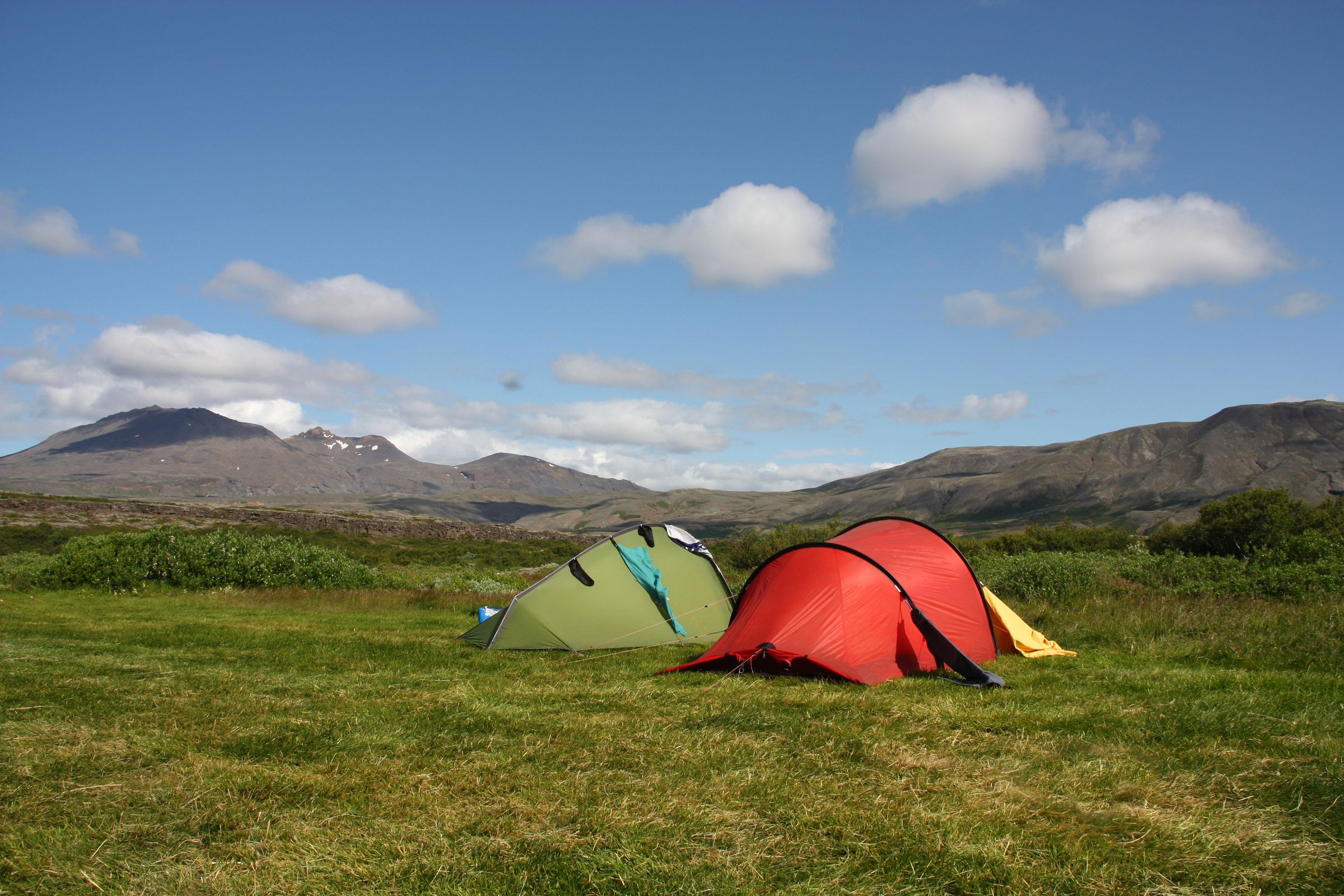
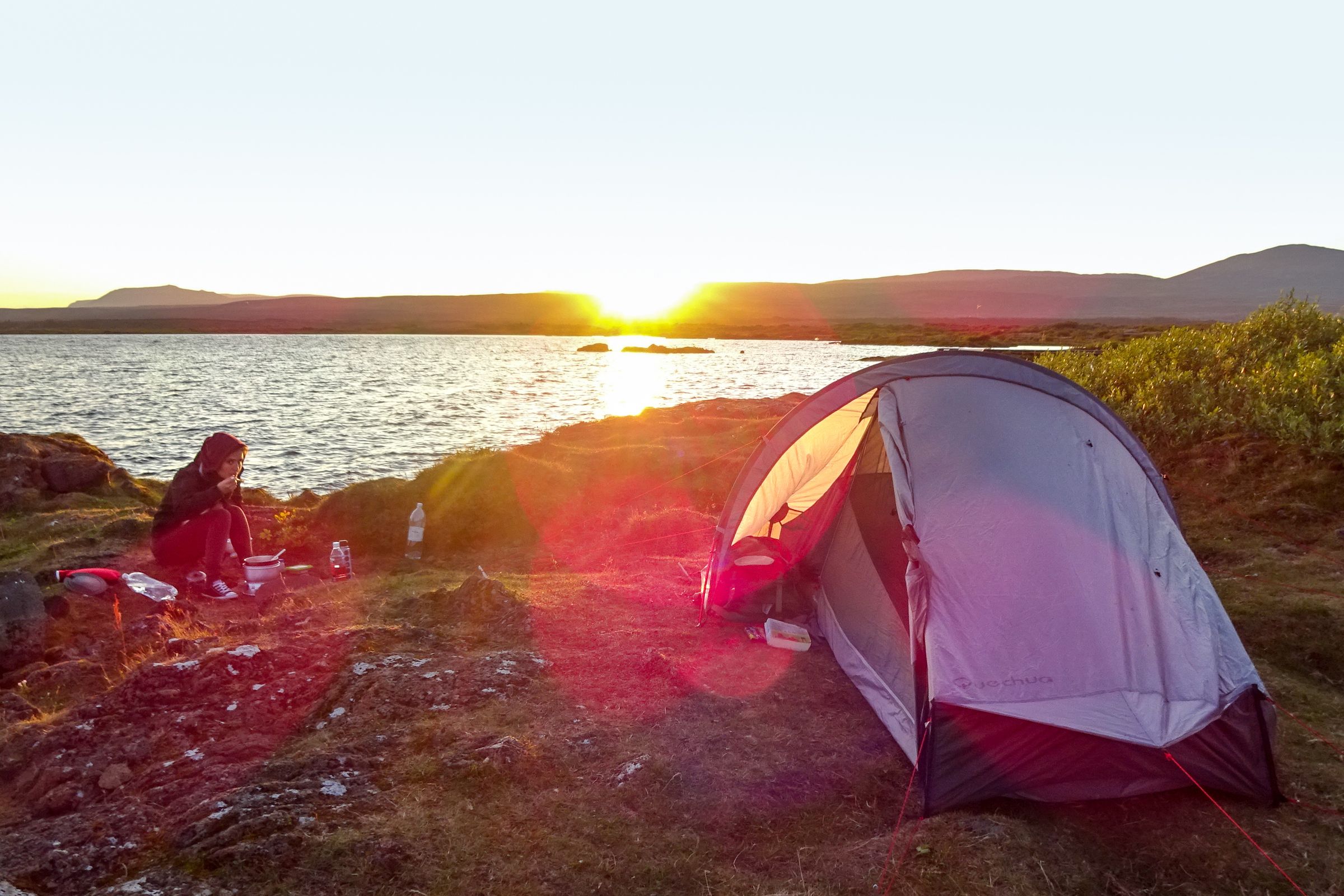
Traveling by campervan gives you not only a means of transport, but also a place to sleep. There are hundreds of camping sites in Iceland, and several very close to Öxarárfoss. It’s important to know that wild camping is illegal in Iceland.
Þingvellir Campsite / Nyrðri Leirar
Distance to Öxarárfoss: 2.2 kilometers (1.4 miles).
Opening Period: All year round.
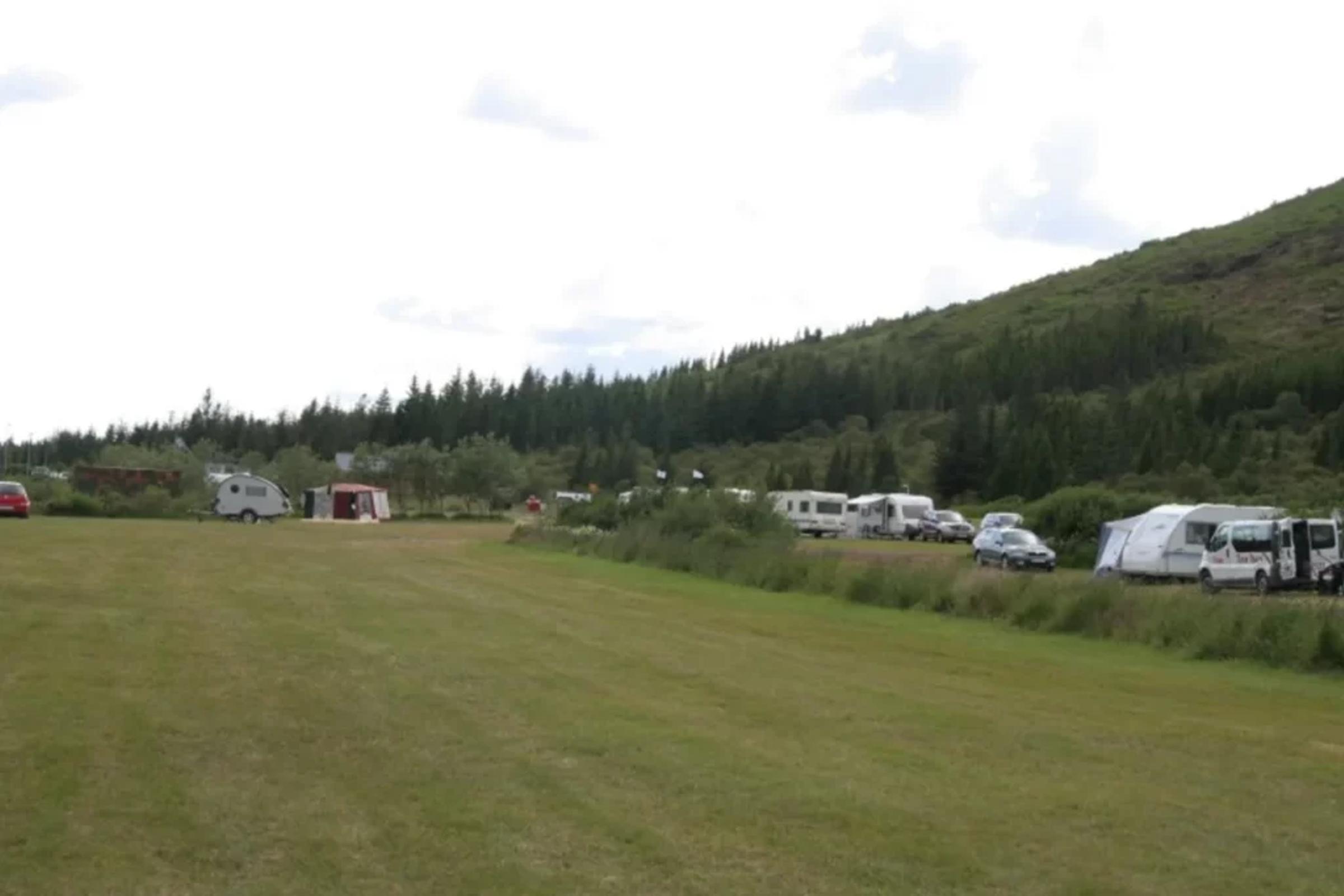
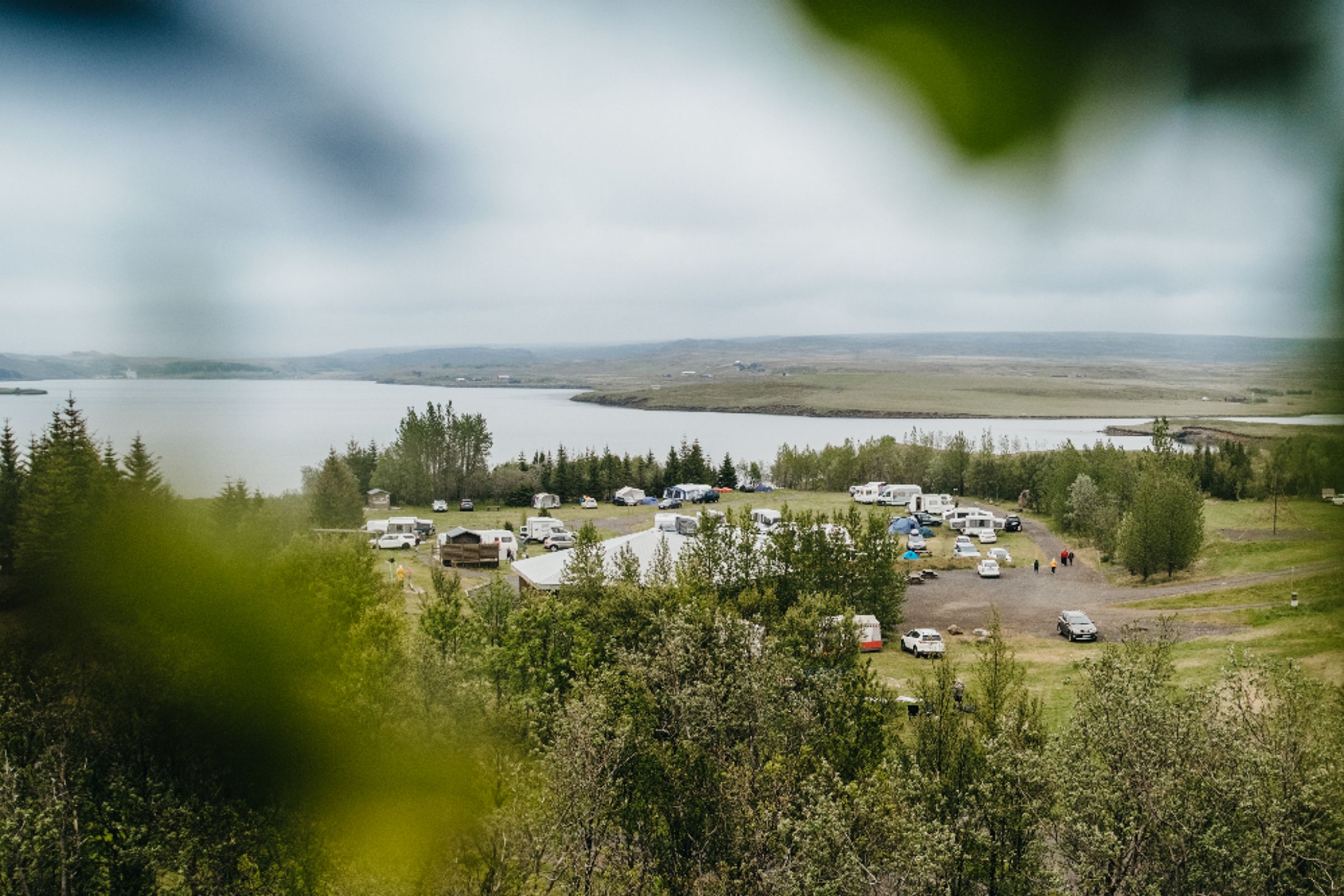
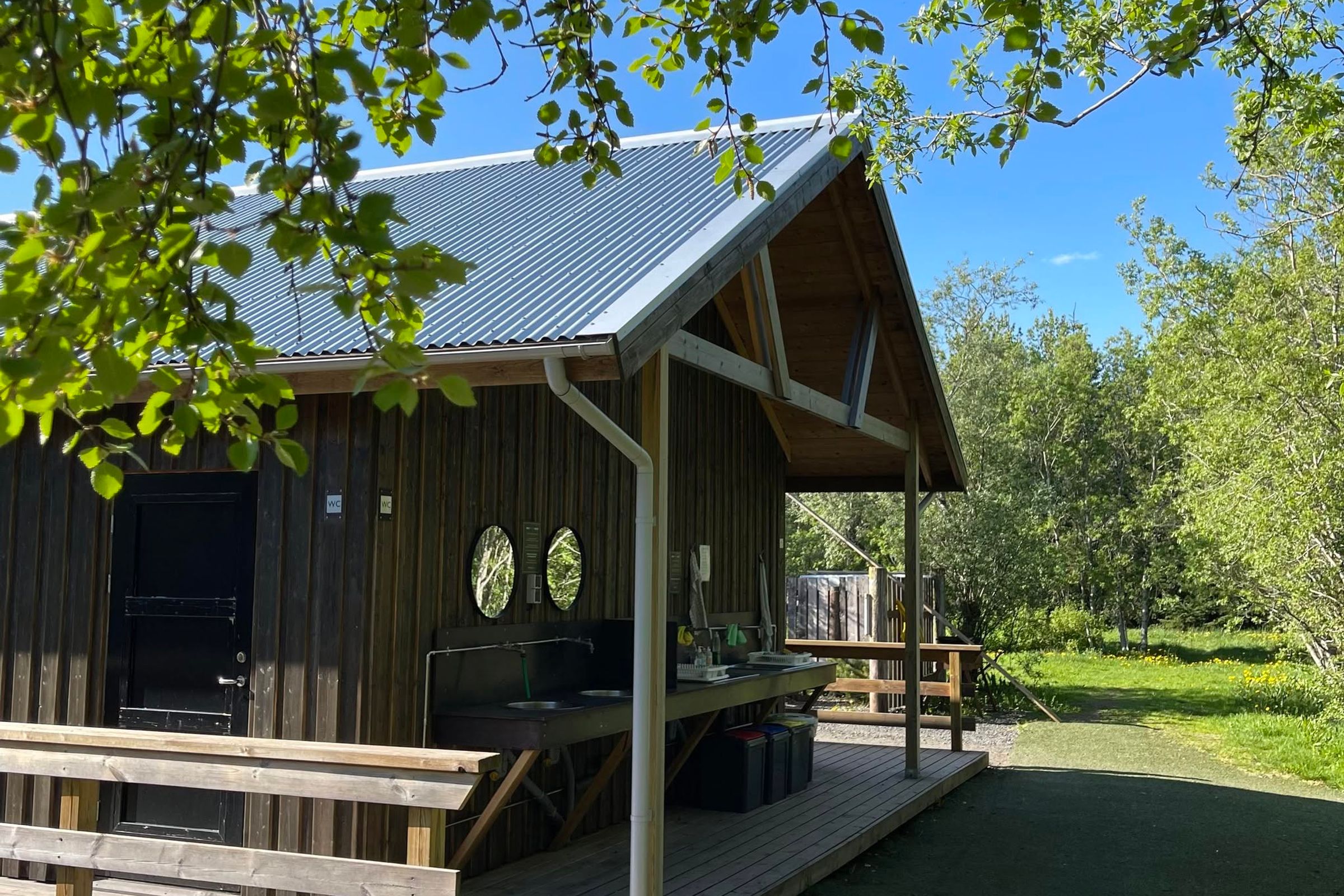
This is the primary and most spacious camping area within the park. It’s the closest you can sleep from the waterfall. It’s just by the visitors’ center of Þingvellir National Park. The campsite features pitches for campervans, toilets, showers (which may not work in freezing temperatures), electricity (available only in summer), and outdoor cooking facilities. There is no advance booking for the campsite, but there is usually plenty of space available.
Þingvellir Campsite / Vatnskot
Distance to Öxarárfoss: 4 kilometers (2.5 miles).
Opening Period: June 1 to September 15.
Situated on the remains of an old abandoned farm right on the banks of Þingvallavatn Lake, Vatnskot offers a much quieter, more rustic atmosphere. It’s a tent only campsite, which can be inconvenient if you’re going with your campervan, but some people love to pitch their tent there. There’s a service hut with toilets and, outside, you can find a BBQ area and picnic tables. It is an excellent summer-only spot for fishing enthusiasts, as this lake is known for its trout.
Laugarvatn Campground
Distance to Öxarárfoss: 30 kilometers (18.6 miles).
Opening Period: June to September.
Located further east along Routes 36 and 365 in the small village of Laugarvatn, this campsite sits within a lovely forested area that provides excellent shelter from the wind. The site has toilets, showers, electricity hookups, Wi-Fi, dishwashing sinks, washing machines, and outdoor sinks. Its position within the village means you are walking distance from grocery options, fuel stations, and the famous local thermal baths.
Úlfljótsvatn Campsite
Distance to Öxarárfoss: 29 kilometers (18 miles).
Opening Period: May to September.
Positioned south of the national park next to Lake Úlfljótsvatn, this site is one of the largest camping grounds in Iceland, with a capacity for 5,000 guests. It has toilets, showers, electricity, a BBQ area, playgrounds for kids, and a shop for basics. It’s a great site for outdoor activities that can be organized through the staff at the campsite. These include fishing, football, canoeing, and disc golf.
Mosskógar
Distance to Öxarárfoss: 32 kilometers (20 miles).
Opening Period: March 1 to December 1.
Located outside the city of Mosfellsbær, Mosskógar is a peaceful campground set among trees, which offer protection from the wind. It's a well-equipped camping with toilets, shower, electricity hookups, washing machine and dryer, and shared kitchen. They also offer the opportunity to camp inside a greenhouse.
Geysir Camping Ground
Distance to Öxarárfoss: 48 kilometers (29.8 miles)
Opening Period: May 15 to September 15.
Right by the Geysir Geothermal Area, this camping ground is perfect for those wanting to stay close to the action. It’s spacious, with grassy pitches for campervans and tents. It offers toilets, showers, electricity, Wi-Fi, and a washing machine. There’s a restaurant across the road, and there’s even a golf course nearby. The setting makes it unique, but it can get quite busy during peak season.
What to See and Do Near Öxarárfoss
Beside the countless wonders inside Þingvellir National Park, there’s lot of amazing sights near Öxarárfoss. The park is one of the three main stops of the Golden Circle, the main scenic route in the country.
Gullfoss
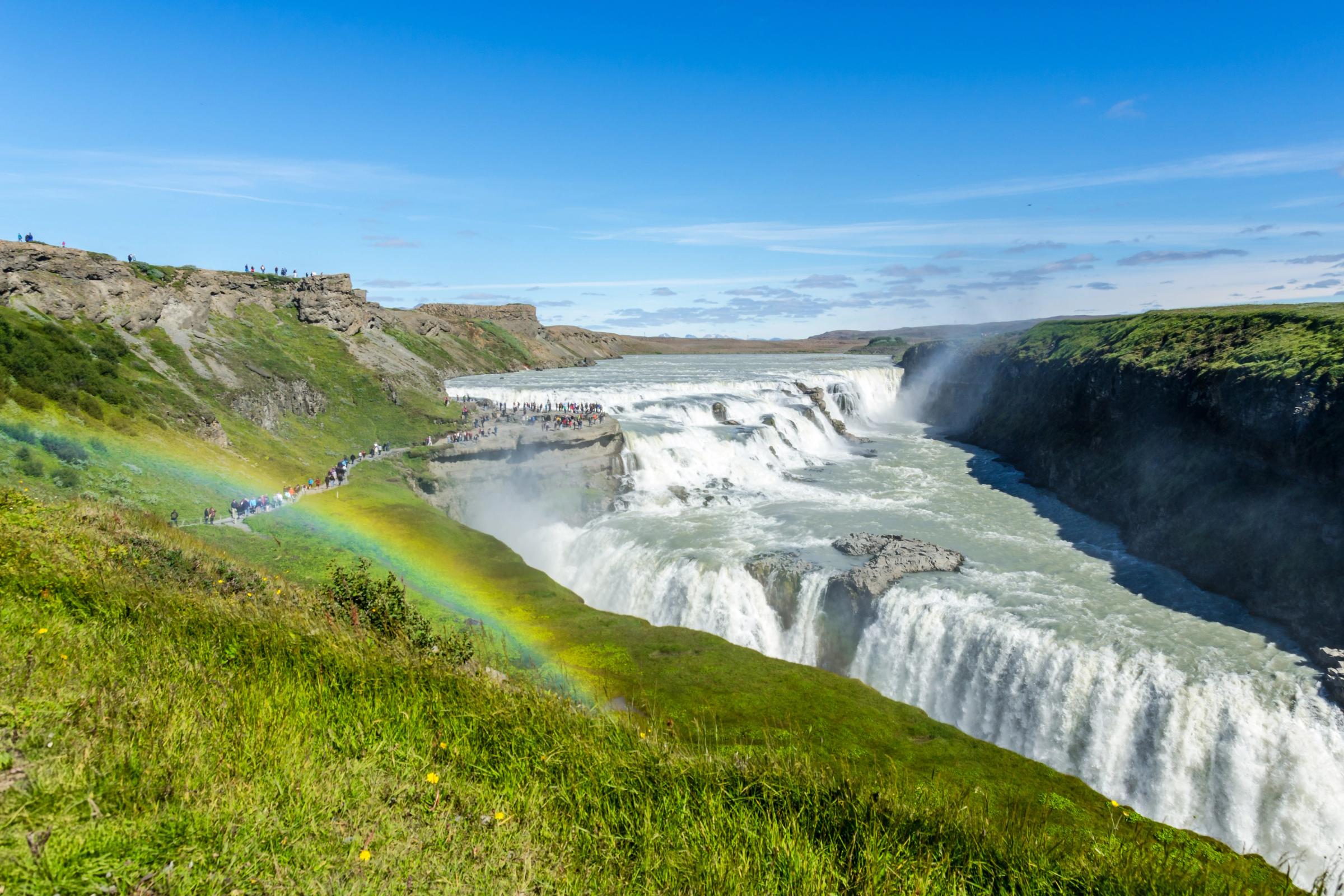
Gullfoss, or the "Golden Falls," is a massive waterfall situated on the Hvítá River, fed directly by the melting ice of the Langjökull glacier. It’s another of the main stops in the Golden circle. It’s a two-tier cascade with a total drop of 32 meters (105 feet) on the Hvitá River. It’s a remarkably powerful waterfall, especially in late spring or early summer, when the snowmelt increases the river's flow. There are two viewing platforms with different points of view. One takes you closer to the falls, while the other gives a more panoramic perspective.
Geysir Geothermal Area
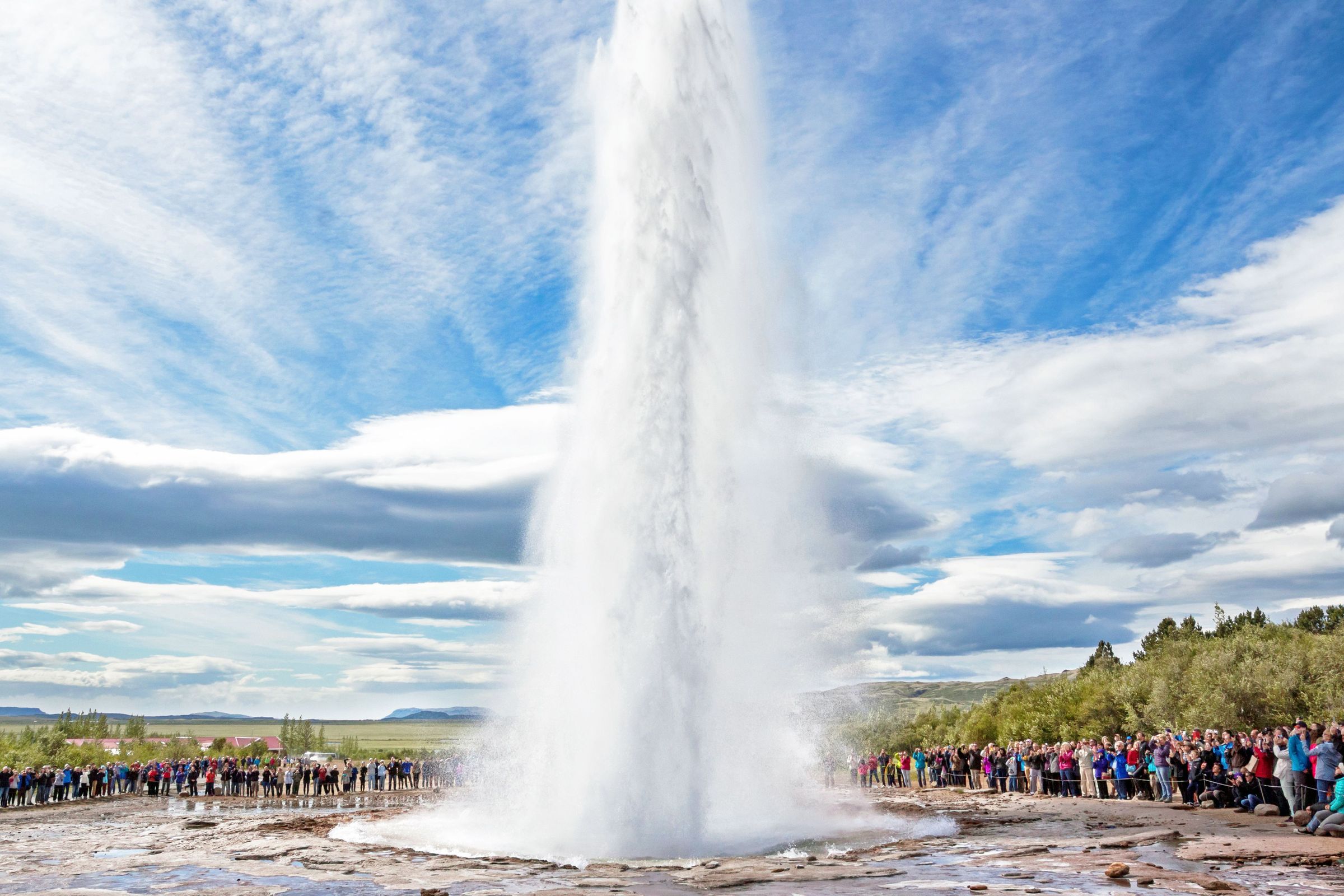
Located in the Haukadalur valley, this active geothermal field is packed with bubbling mud pools, steaming vents, colorful mineral deposits, and explosive hot springs. While the Great Geysir itself is currently dormant, its neighbor, Strokkur, is incredibly active and reliable. Every 6 to 10 minutes, Strokkur shoots a spectacular column of boiling water up to 20 or 30 meters into the sky. Walking paths are clearly marked to keep you safe not only from the water, but because the floor is hot in certain parts.
Brúarfoss
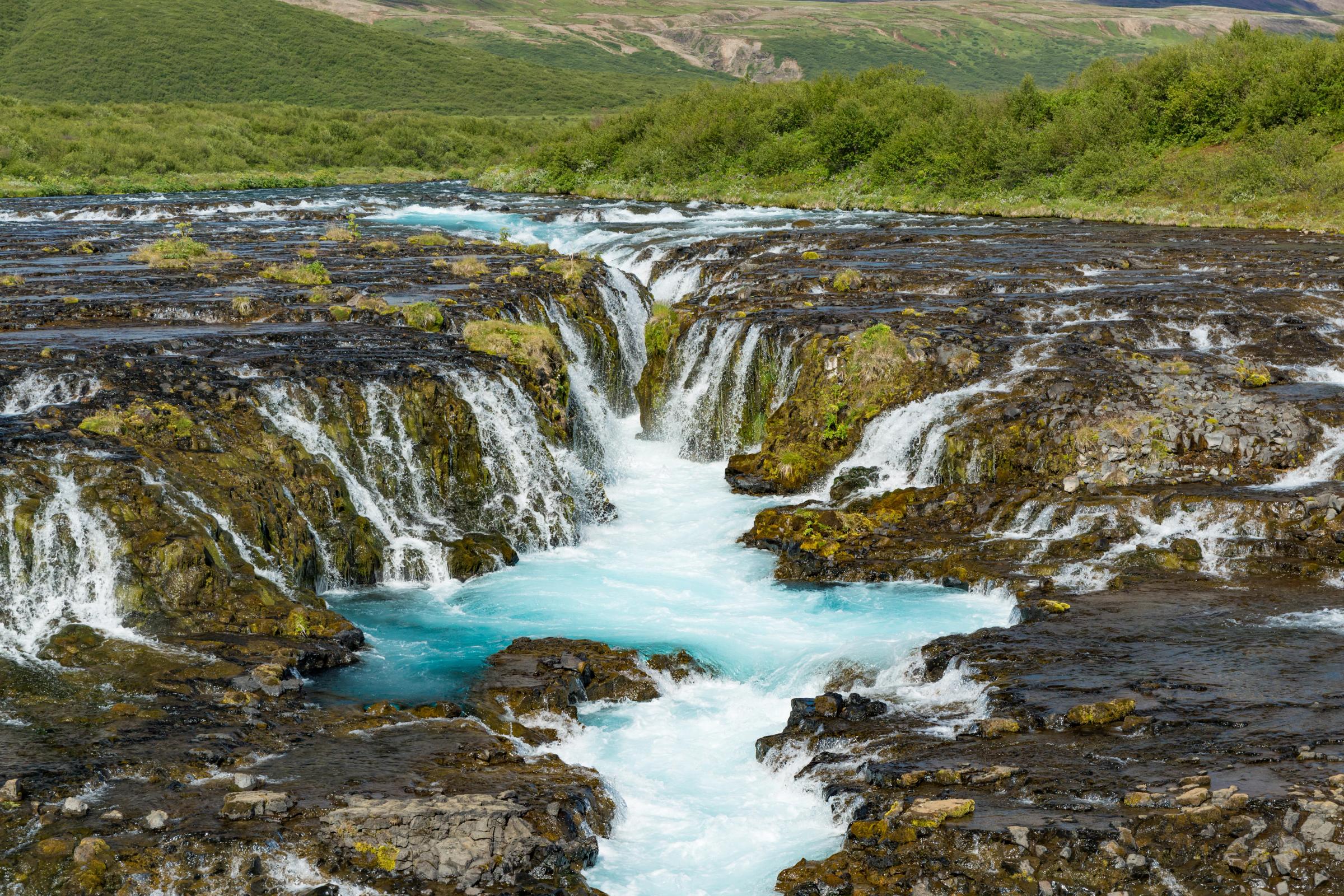
Often referred to as "Iceland’s Bluest Waterfall," Brúarfoss is a lesser-known cascade that features thousands of tiny springs falling over a dark, horseshoe-shaped volcanic ledge. The water is an intense blue color because of its glacial origin. Access has been improved with a dedicated parking lot located just a short walk away from the falls, making it much easier to visit during a campervan trip.
Laugarvatn Fontana
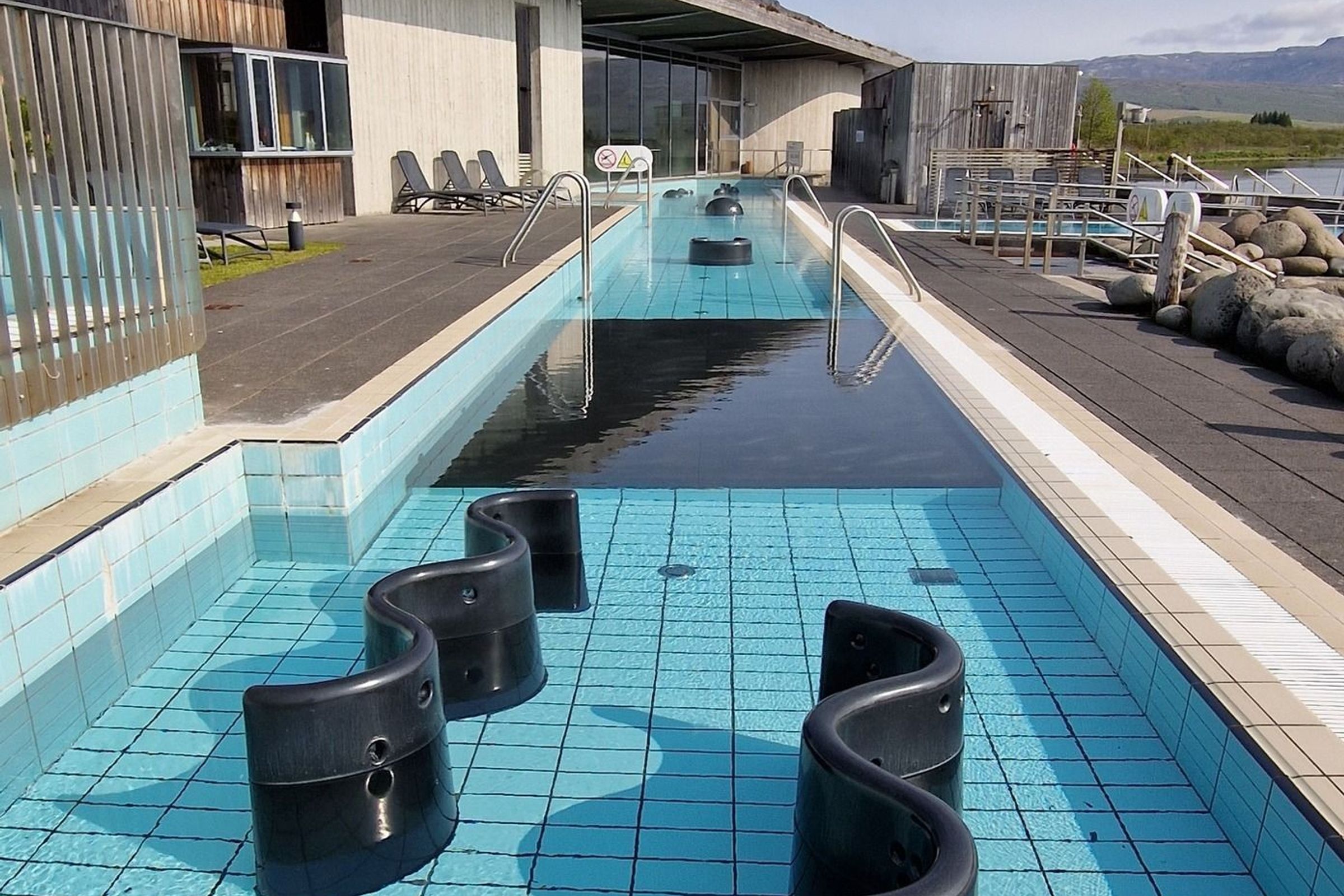
The Laugarvatn Fontana is a geothermal spa located on the shores of Lake Laugarvatn, about 25 kilometers (16 miles) southeast of Öxarárfoss. It features various outdoor pools with temperatures ranging from 36 to 40°C (96.8-104°F), where you can take a relaxing bath while enjoying stunning views. This place also offers visitors a unique treat: to watch rye bread being baked, buried in the sand, using geothermal energy. You can also try it with handmade butter afterwards.
Kerið Crater
Kerið is an ancient volcanic crater, now also a lake, that shines due to its vibrant colors. The red and black rocks contrast beautifully with the blue water that fills the crater. It was formed around 3,000 years ago, meaning Kerið is relatively young in geological terms. There’s also a path around the crater rim that offers stunning panoramic views. Another trail leads down to the water’s edge for a closer view.
Secret Lagoon
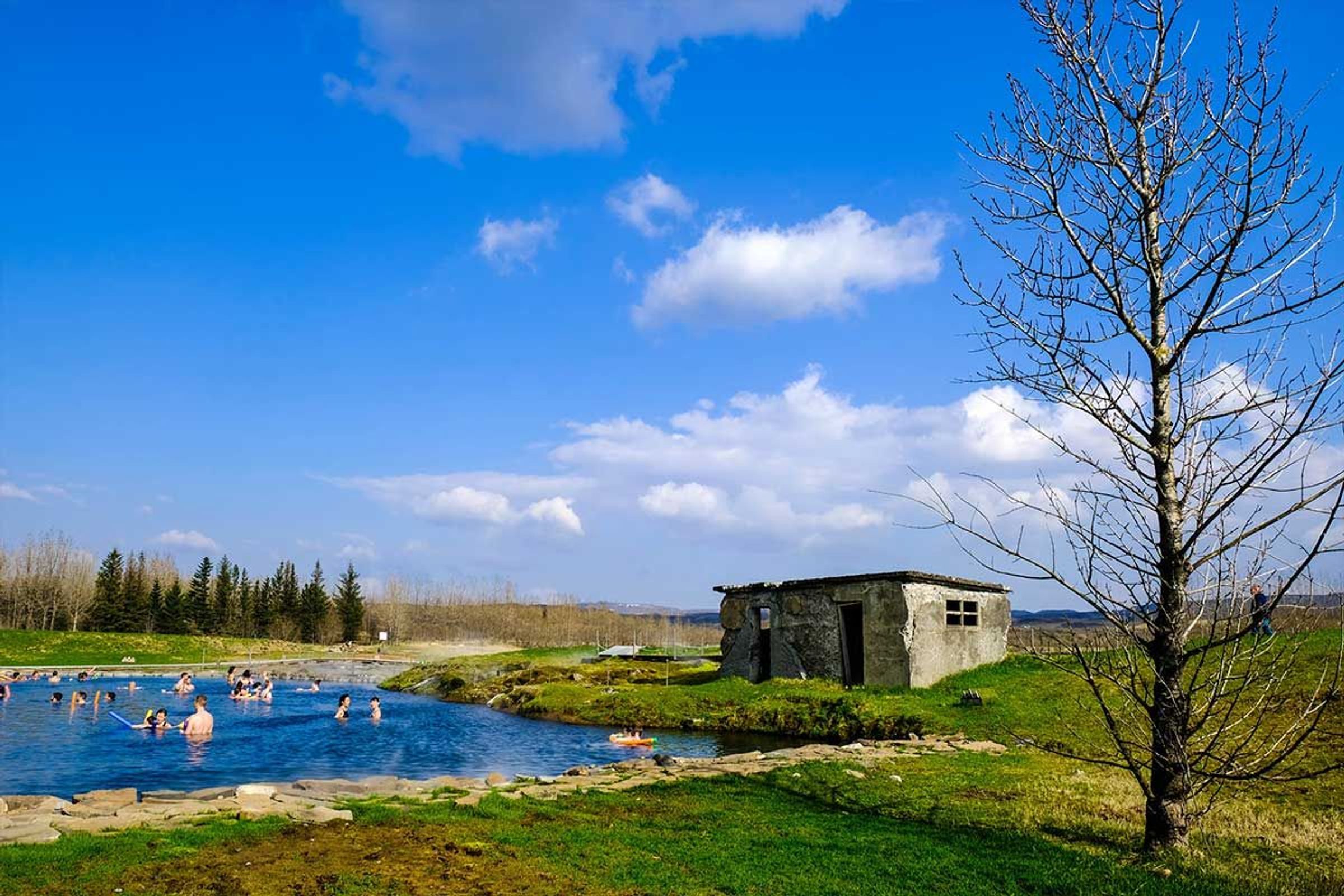
Located in the small village of Flúðir, the Secret Lagoon (known locally as Gamla Laugin) is the oldest man-made swimming pool in Iceland, dating back to 1891. It provides a highly authentic, historic alternative to modern luxury spas. The pool is surrounded by a walking path that winds past small, active geysers and bubbling springs that continuously supply the pool with fresh, 38–40°C geothermal water all year long.
The Seasons at Öxarárfoss
Öxarárfoss offers a different experience in every season, from the midnight sun of summer to the snow-covered landscapes of winter. Each time of year brings its own advantages, challenges, and scenery.
Summer (June – August)
Summer brings endless daylight and the warmest weather conditions of the year, making it an incredibly popular time for camping. The main advantage is that there are almost 24 hours of natural light by the end of June, so you can explore the waterfall and the national park at all times. All campsites are fully operational, and roads are dry. The disadvantage is the volume of tourists, meaning parking lots fill up quickly and the main trails can feel a bit crowded during midday.
Autumn (September – October)
Autumn is a transition period where the vegetation across the Þingvellir lava fields turns brilliant shades of gold, orange, and deep red. The advantages include fewer tourists. On the other hand, the daylight hours shrink every week and the temperatures, along with the closure of several seasonal summer campsites by mid-September.
Winter (November – March)
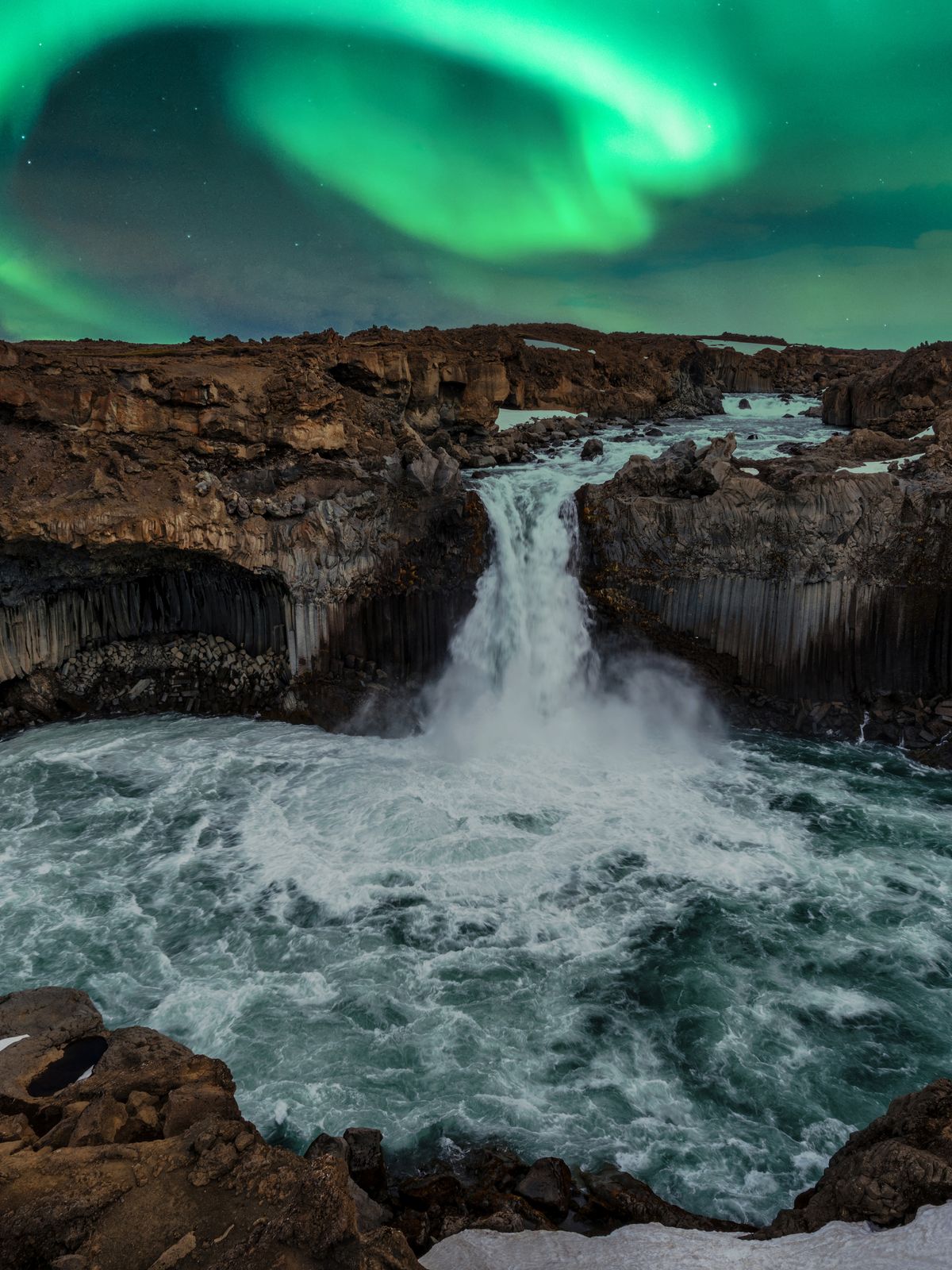
In Iceland, winters are long and harsh, with temperatures typically below the freezing point in this part of the country. The snow covers all the area, adding layers and textures to the park. In fact, parts of the waterfall may even freeze, creating unique ice sculptures. The days are very short, so it’s essential to plan the outdoor activities for the few hours of natural light. Although the roads leading to the national park are in good condition, heavy snow can close some secondary roads, so always check the status. This is the season with the highest probability of seeing the Northern Lights.
Spring (April – May)
Spring sees the awakening of the landscape as winter ice begins to thaw. The major advantage is the dramatic increase in the water volume of the Öxará River as the snow melts, making the waterfall look incredibly full and powerful. Tourist numbers are also low, similar to autumn. The disadvantage is that the landscape can look a bit brown and slushy as the snow recedes, and spring weather can be highly unpredictable, with high chances of rain and wind.
What to Pack to Visit Öxarárfoss
Sturdy Hiking Boots: Some trails are gravel and rock. Footwear with ankle support and good grip is essential. Better if they’re waterproof.
Waterproof Jacket: The weather in Iceland changes rapidly, and rain is always a possibility.
Layered Clothing: Pack thermal base layers; wool or fleece for a mid-layer; and the outer waterproof shell.
Hat, scarf, and gloves: Even in summer, nights can be chilly.
Reusable Water Bottle: The tap water across Iceland is exceptionally pure. You can fill your bottle directly from the service stations or campsite taps for free.
Swimwear and Quick-Dry Towel: With options like the Laugarvatn Fontana and the Secret Lagoon nearby, you will want to bring your swimming.
Travel Tips
Arrive Early in the Morning or Late in the Evening: To experience the waterfall without dozens of tour buses, plan your visit before 9:00 AM or after 6:00 PM.
Pay for Parking Electronically: Avoid ticket fines by paying your parking fee immediately upon arrival at the automated terminal screens or by logging onto the national park website.
Stay on Marked Trails: The ecosystem of the park is incredibly fragile. Don’t step on moss or rocks. Stick to the designated paths and boardwalks.
Monitor Road Conditions: Before moving your campervan from one location to another, always check live updates on road conditions and weather warnings.
Conclusion
Öxarárfoss is much more than just another scenic stop along the famous Golden Circle. It’s a marvelous waterfall that is inside one of the most amazing national parks in Europe. It’s a great mix of nature, culture, and history. It’s a perfect stop to add to a campervan itinerary through Iceland.
Frequently Asked Questions About Öxarárfoss
If you're just visiting the waterfall, 20 to 45 minutes is usually enough. If you want to explore more of Þingvellir National Park, plan for at least a few hours so you're not rushing from one place to the next.
Definitely. It's not one of Iceland's biggest waterfalls, but the location makes it special. Between the waterfall, the surrounding cliffs, and the history of Þingvellir, it's an easy stop that's well worth your time.
Yes. The trails are short, the walk isn't particularly demanding, and there's plenty of open space to explore. It's one of those places that's easy to visit without needing a full day of hiking.
Yes. Öxarárfoss is located inside Þingvellir National Park, one of the three main Golden Circle stops. Most visitors see the waterfall alongside Þingvellir, Geysir, and Gullfoss in a single day.
About the author
Aron Freyr
Local expert
Born and raised in Iceland, Aron Freyr has spent all 28 years of his life exploring the country and getting to know its landscapes, regions, and ever changing conditions.