The Ultimate Guide to Kirkjufellsfoss Waterfall, one of the most photographed landmarks in Iceland
In West Iceland, on the exciting and varied Snæfellsnes Peninsula, there’s a waterfall that stands out as one of the most beautiful in the country. Its name is Kirkjufellsfoss. It’s not huge, but its combination with another monument is what makes it unique. It’s just by Kirkjufell, the most photographed mountain in Iceland. And together, they create a postcard that is probably in almost every travel guide to this Nordic country. Come with us to discover this treasure.
Key Takeaways
- Kirkjufellsfoss is one of Iceland’s most photographed waterfalls because of its perfect alignment with Kirkjufell mountain, creating one of the country’s most iconic landscapes despite the waterfall being only about 5 meters (16 feet) tall.
- The waterfall sits on the Snæfellsnes Peninsula near Grundarfjörður, about 2.5 hours from Reykjavík via Route 54, making it an easy and popular stop on Iceland road trips and campervan itineraries.
- A pedestrian bridge and looped walking paths provide multiple viewpoints of the falls, basalt rock formations, and Kirkjufell, with the classic photo spot located on the southern side of the waterfall.
- Kirkjufellsfoss gained international fame after appearing in Game of Thrones, but its real appeal comes from the combination of volcanic geology, glacial water, dramatic coastal scenery, and Iceland’s distinctive midnight sun and winter aurora conditions.
- Summer offers the easiest access and nearly endless daylight, while winter transforms the falls into icy formations with possible Northern Lights views, though road conditions can become difficult.
- The surrounding Snæfellsnes Peninsula features many nearby attractions within short driving distance, including Snæfellsjökull National Park, Rauðfeldsgjá Gorge, Arnarstapi, Búðakirkja, Ytri-Tunga seal beach, and multiple scenic waterfalls.
What’s Kirkjufellsfoss?
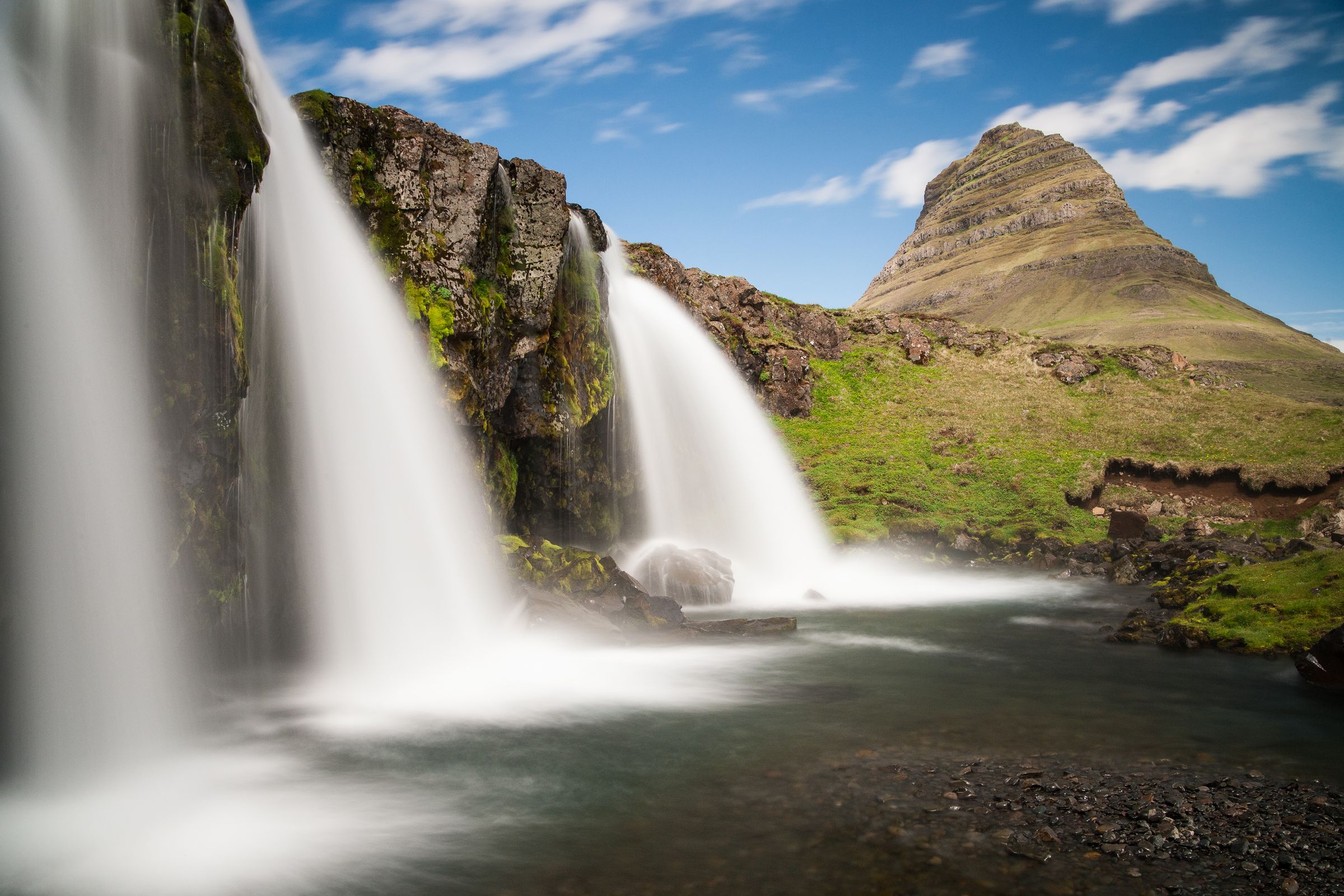
Kirkjufellsfoss is one of Iceland's most iconic waterfalls, known worldwide for its scenic location rather than its size. It doesn't have the imposing height or volume of water of the giants found in the north or south of the country, but its composition is what makes it an absolute masterpiece.
The waterfall is fed by the Kirkjufellsá River, a clear glacial stream, not especially long, that originates from the volcanic peaks in the central part of the Snæfellsnes Peninsula. As the river makes its way toward the sea, it encounters a series of rocky steps, where the water falls over volcanic rocks. Iceland is a rugged country, and there’s a lot of rivers and streams, that’s why it’s quite common to find waterfalls.
Why Is It So Special?
What makes Kirkjufellsfoss a truly fantastic traveling destination is how it interacts with the surrounding landscape.
- The dark basalt rocks around the falls make the clear water stand out even more, creating a wonderful contrast of colors.
- There’s a well-maintained walking trail that loops around both sides of the river.
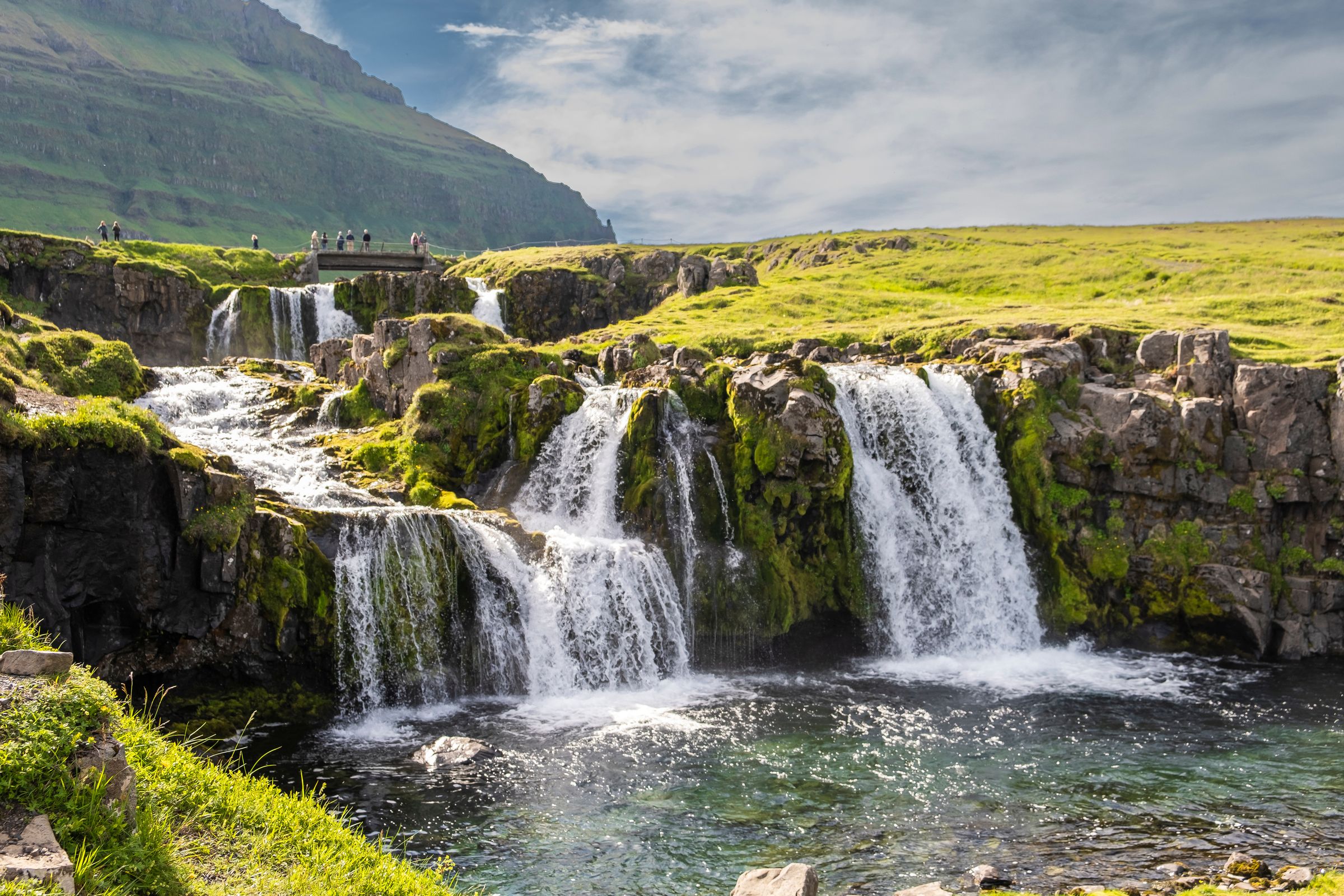
- A pedestrian bridge sits directly above the main drop, allowing visitors to see the waterfall from multiple angles.
- It’s a dream destination for:
- Photographers
- Nature lovers
- Adventure seekers
- Anyone who simply likes beautiful things
On top of that, it’s just off Route 54, the main road that goes around the Snæfellsnes Peninsula, making it a top stop in a campervan trip around the country.
However, what truly makes Kirkjufellsfoss unique is its interaction with Kirkjufell, the mountain on the other side of the road, but we’ll talk about it in detail a bit further down.
About Kirkjufellsfoss
Despite being a well-known natural landmark, Kirkjufellsfoss is relatively modest in size, which is, in fact, part of its charm.
Key Facts
- Height: About 5 meters (16 feet)
- Structure: A multi-tiered waterfall spreading across a rocky ledge
- River flow:
- A few meters upstream, the river splits into three different streams
- These streams join together again in the quiet pool below
- The river then continues its short journey into the fjord
Name Meaning
The name Kirkjufellsfoss literally translates to “Church Mountain Waterfall.”
- Kirkjufell = “Church Mountain”
- Foss = “Waterfall”
The waterfall gets its name from the mountain located directly across the road.
Geological Formation
Geologically, the rocks forming the waterfall are the result of millions of years of volcanic activity and glacial carving.
- Ancient volcanic eruptions sent lava flowing toward the sea.
- Later, glacial streams carved through the rock.
- This process revealed the different volcanic layers that can still be seen today.
It’s almost like a vertical timeline of Iceland’s geological evolution.
Game of Thrones Fame
In recent times, Kirkjufellsfoss has become even more popular, especially among foreign visitors, because it appeared several times in the later seasons of Game of Thrones.
Both the waterfall and the mountain can be seen in a few episodes.
Kirkjufell
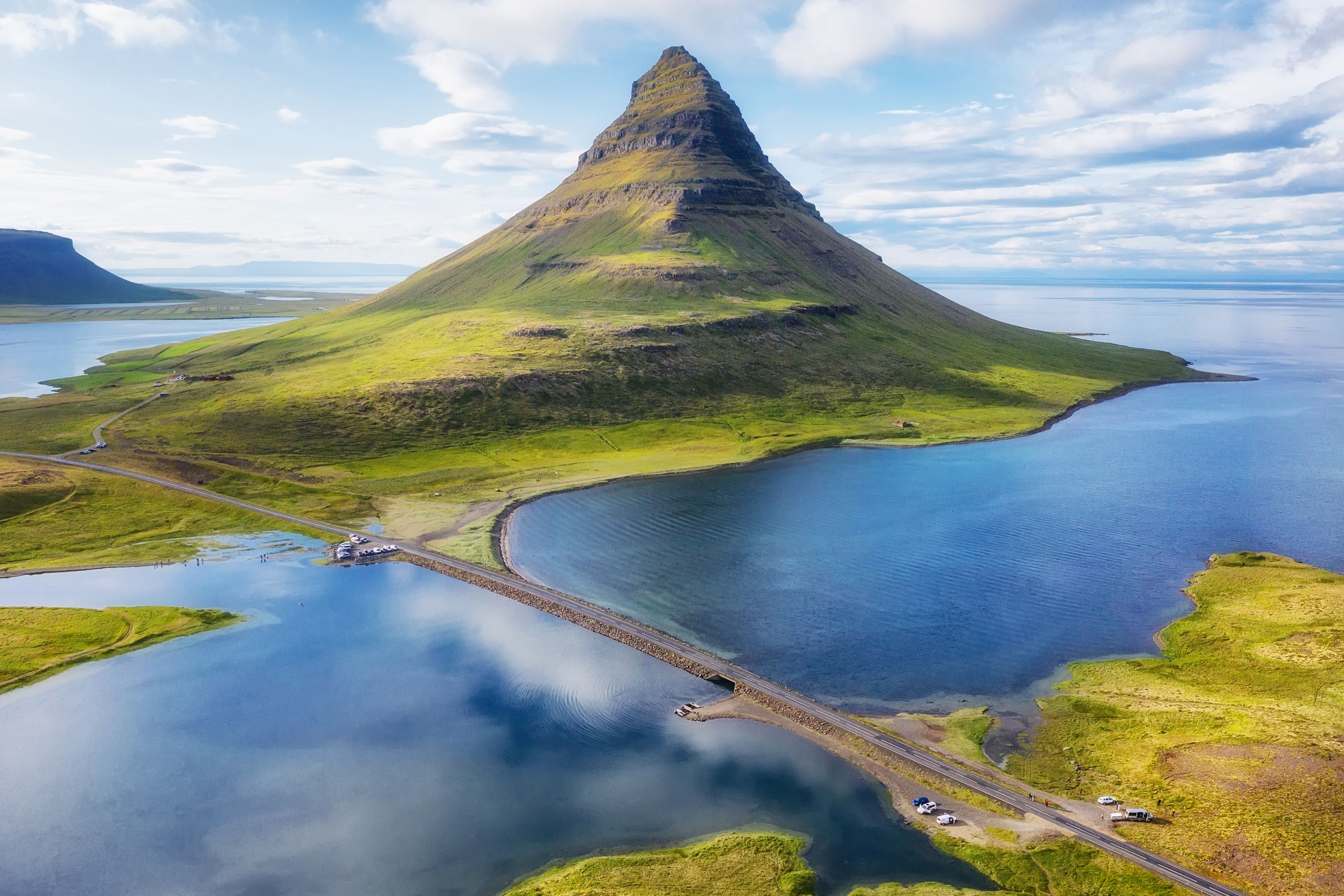
You cannot talk about Kirkjufellsfoss without focusing on Kirkjufell, the mountain that shares its name and appears in nearly every photo taken here.
The waterfall is located just across Route 54 from this dramatic peak, which rises 463 meters (1,519 feet). That might not seem very tall, but because it stands right by the seashore on a small peninsula, it has a very imposing presence.
Why Is Kirkjufell So Famous?
Kirkjufell is widely considered one of the most iconic mountains in Iceland, if not the number one, because of its distinct, symmetrical shape.
Depending on the angle, the mountain resembles:
- A pointed church steeple
- A massive witch’s hat
- The keel of a ship
This makes it an extraordinarily unique geological feature.
The Iconic Photo Spot
There’s a very famous viewpoint on the southern shore of Kirkjufellsfoss where visitors can photograph both the waterfall and the mountain together.
It’s one of the most commonly used images in travel guides and blogs to showcase the beauty of Iceland.
Where’s Kirkjufellsfoss and How to Get There
Kirkjufellsfoss is located on the northern coast of the Snæfellsnes Peninsula in western Iceland, very close to the town of Grundarfjörður.
Best Way to Visit
For travelers exploring Iceland, the best way to reach this natural wonder is by:
- Car
- Campervan
This gives you the freedom to travel at your own pace and avoid the tight schedules of organized tours. That said, because it’s such a famous landmark, most tour operators include it as a stop.
Driving from Reykjavik
The route from Reykjavik is simple and scenic.
- Take the Ring Road (Route 1) north from the capital.
- After Borgarnes, connect to Route 54 toward the Snæfellsnes Peninsula.
- Many travelers also use Route 56 as a shortcut across the peninsula before rejoining Route 54.
- The waterfall is located just after the town of Grundarfjörður.
The drive from Reykjavik takes around 2.5 hours in good conditions, covering approximately 180 kilometers (112 miles). The roads are entirely paved and well-marked, making it an easy drive for all sizes of campervans.

Where to Stay Near Kirkjufellsfoss
Traveling by campervan gives you the luxury of sleeping closer to nature, and the Snæfellsnes Peninsula provides several excellent campsites that allow easy access to Kirkjufellsfoss. Here are the best spots to park your van for the night:
Grundarfjörður Camping Ground
Distance to Kirkjufellsfoss: 3 kilometers (1.8 miles).
Opening period: May 1 to September 30.
This campsite is the closest possible option to the waterfall, located on the edge of the Grundarfjörður village. It offers fantastic views of Kirkjufell mountain directly from your campervan window. The grounds are split into two separate areas to manage crowds, providing flat grassy pitches. It’s a modest site, equipped with toilets, hot and cold water taps, and electricity hookups. There’s a public swimming pool next door, and the clients can use the showers there, but it costs extra. You’ll find everything you need for your trip in Grundarfjörður: supermarket, gas station, bars, and restaurants.
Ólafsvík Camping Ground
Distance to Kirkjufellsfoss: 22 kilometers (13.7 miles).
Opening period: May 1 to September 30.
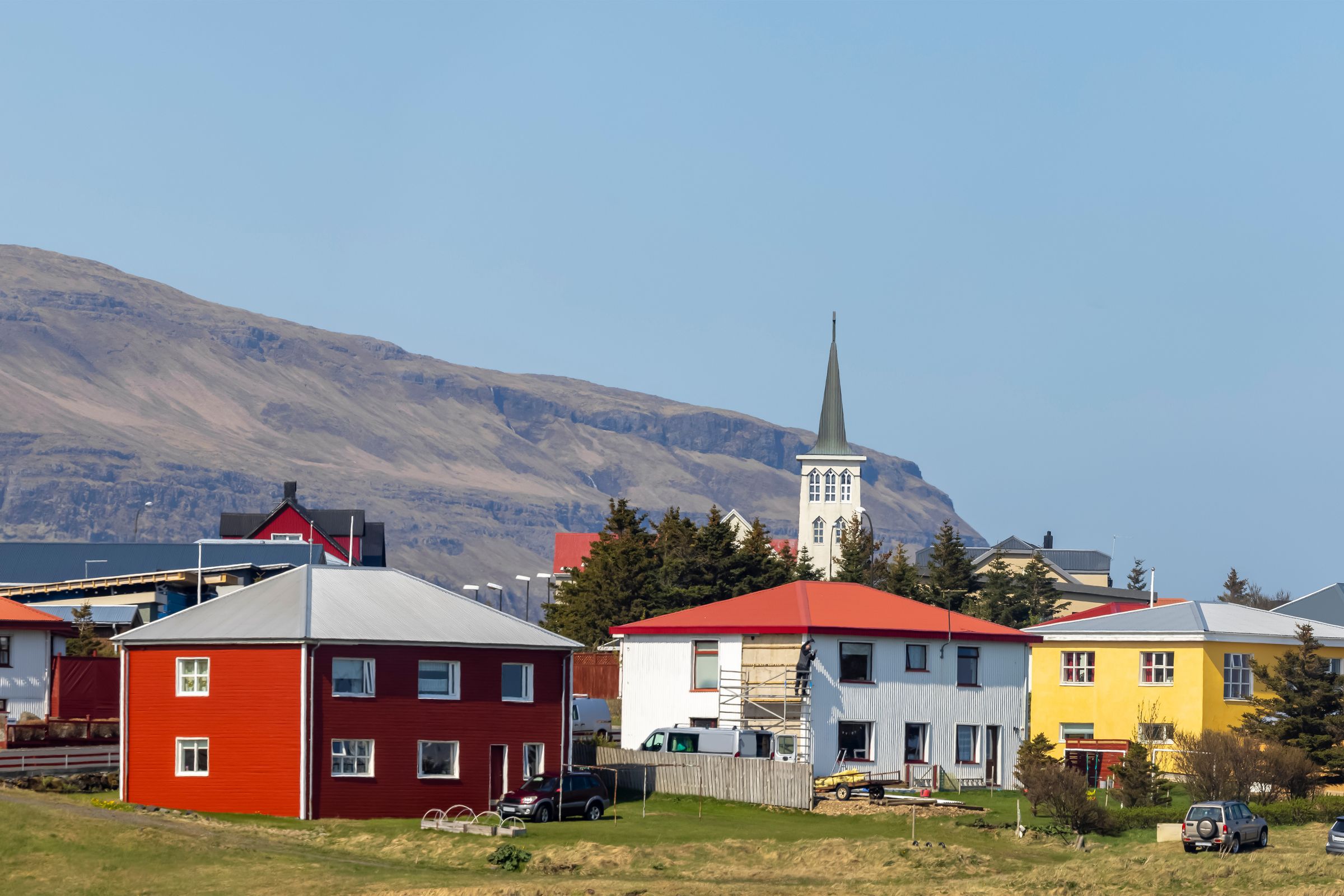
Situated just outside the neighboring town of Ólafsvík, a few kilometers west. This town is well-known all over Iceland for being one of the best places for whale watching. Located on the eastern edge of the town, this site features grassy pitches in a beautiful natural setting, as well as showers, toilets, Wi-Fi, electricity, and a playground for children. Its proximity to the center gives access to shops, restaurants, and other services.
Hellissandur Camping Ground
Distance to Kirkjufellsfoss: 32 kilometers (19.8 miles)
Opening period: May to September (sometimes mid-October).
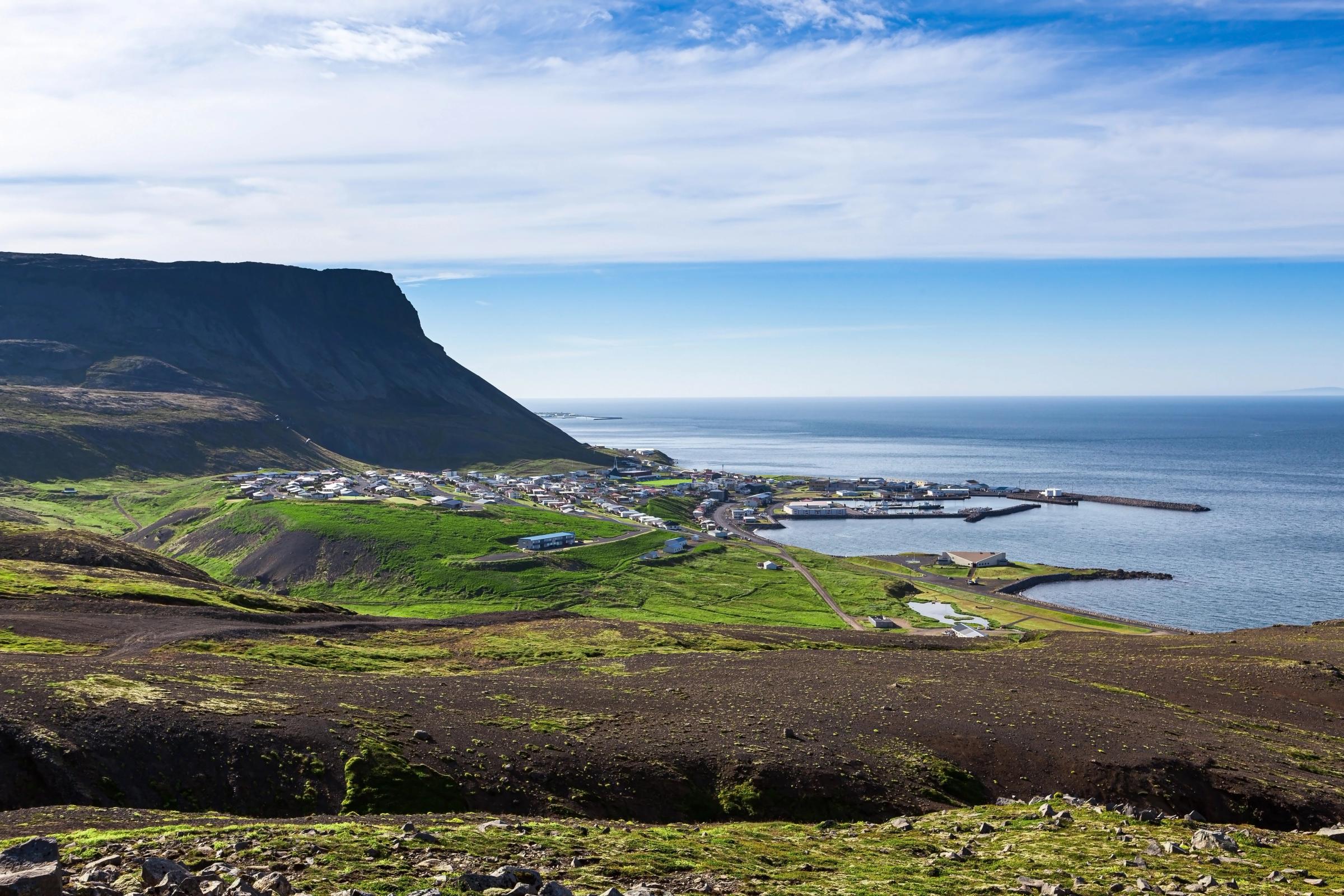
Located on the westernmost tip of the peninsula, Sandasandur campsite at Hellissandur offers an immersive nature experience. The site is situated within an ancient lava field, providing a dramatic landscape around you with views extending out toward the Snæfellsjökull glacier. It features high-quality facilities, including a common area with toilets, showers, and sinks. There are also several trails from the camping ground to explore the area.
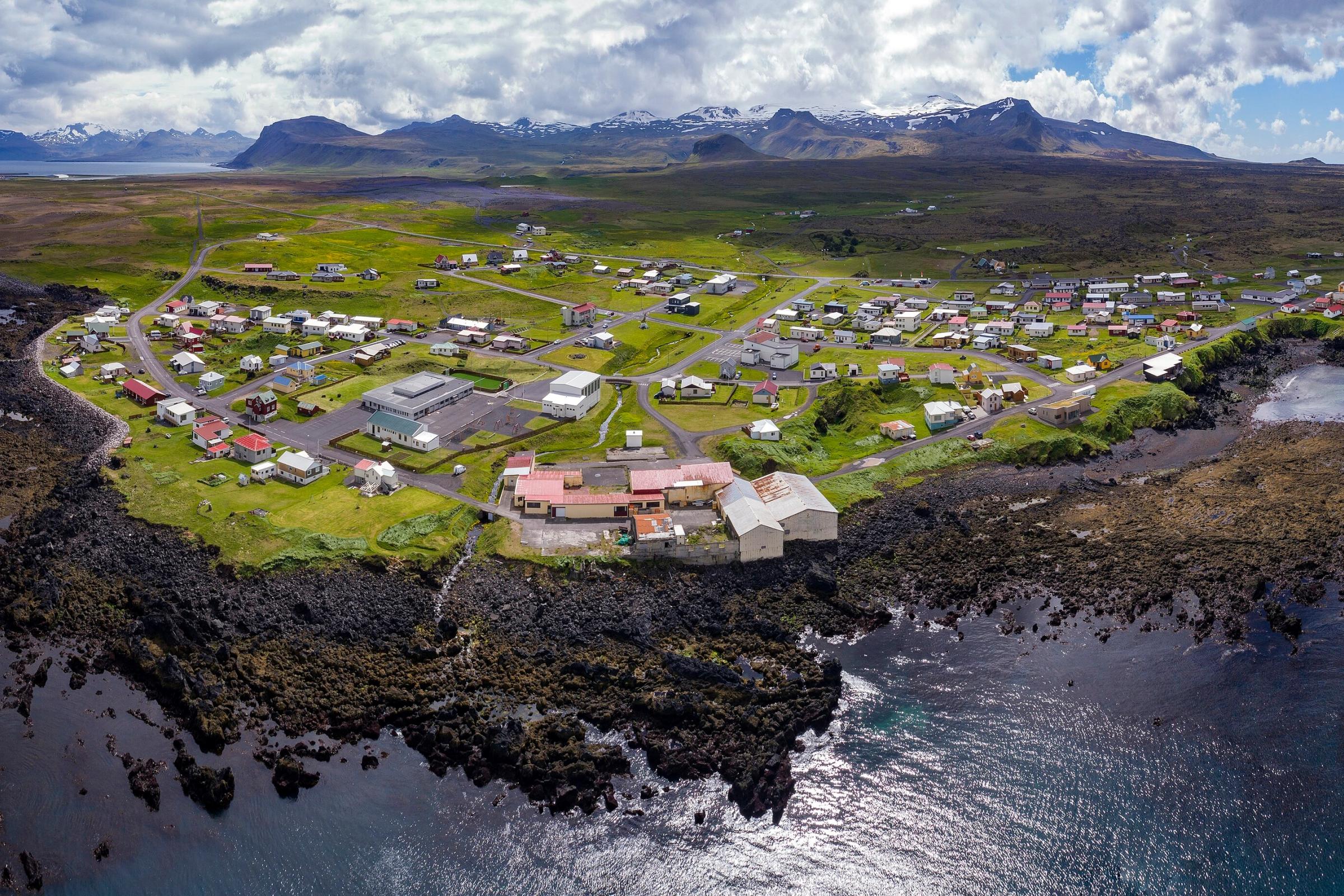
Arnarstapi Camping Ground
Distance to Kirkjufellsfoss: 50 kilometers (31 miles).
Opening period: May to September.
Arnarstapi is a charming fishing village on the southern shore of the peninsula. The local camping ground is close to the center, so you’ll have access to all the services, like shops, a gas station, and restaurants, that can be found there. The site has showers, toilets, Wi-Fi, electricity hookups, and a sink for washing dishes. It also features 13 cottages suitable for two adults and a child, perfect for a cozier stay, and they offer free Wi-Fi. It’s not very big, so it’s better to book in advance, especially during peak season (June to August).
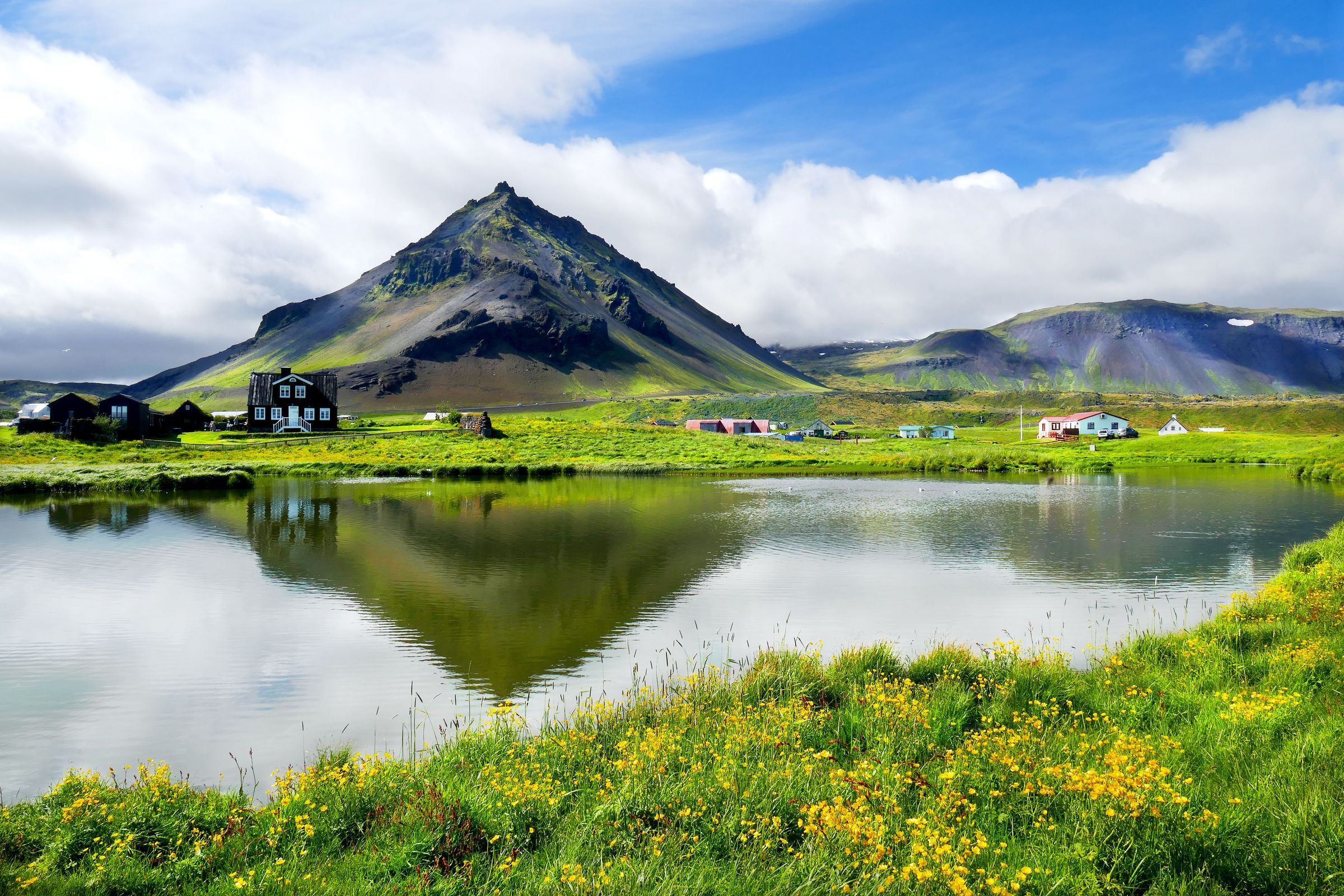
Stykkishólmur Camping Ground
Distance to Kirkjufellsfoss: 41 kilometers (25.5 miles)
Opening period: All year.
Located in the largest town on the peninsula, this award-winning campsite is exceptionally well-maintained and sits right next to the town’s geothermal swimming pool. The campsite is very well-maintained, although a bit basic. It has toilets, a washing machine, and electricity. It’s close to the town’s center, so you can get easy access to supermarkets, gas stations, and other services.
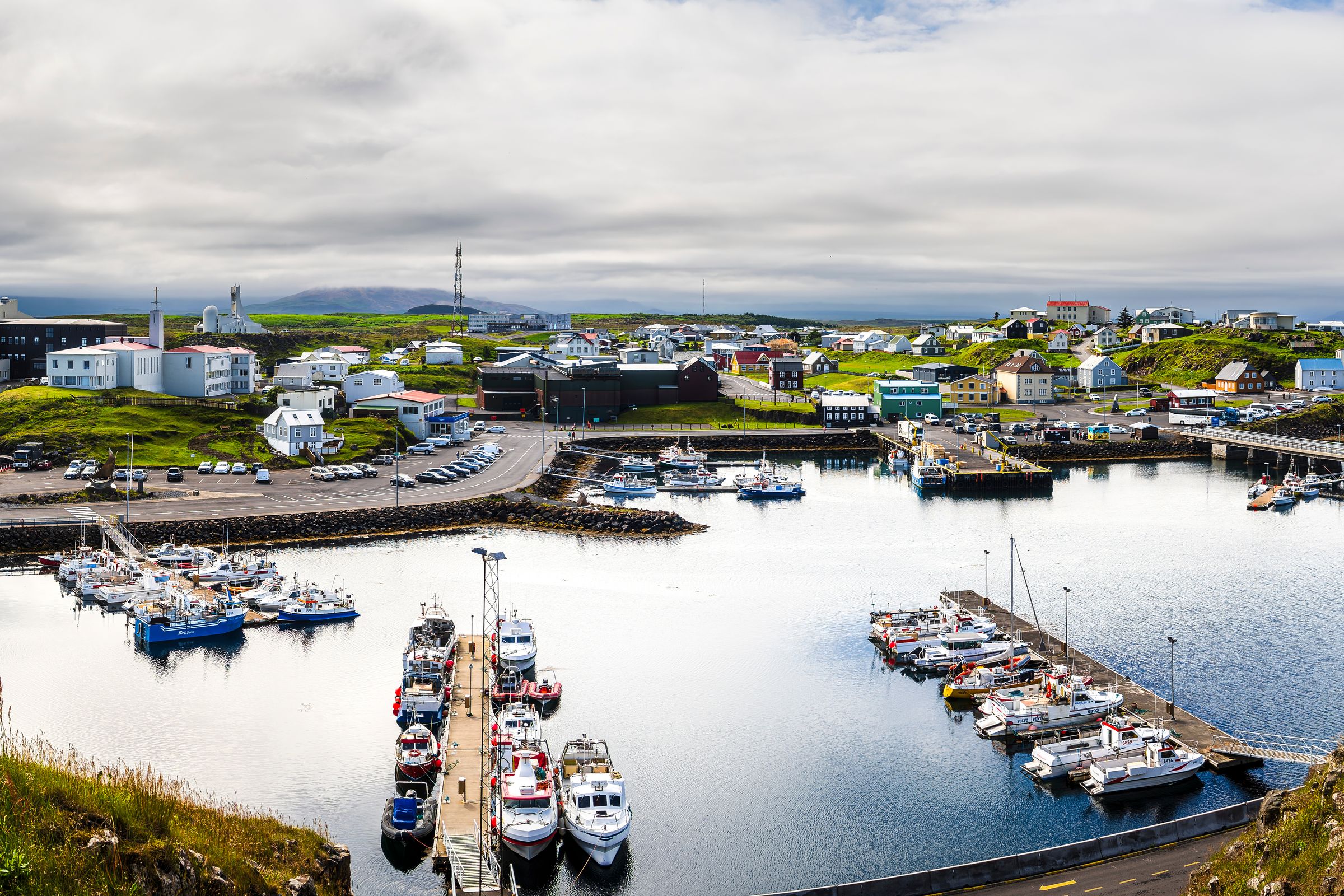
Snorrastaðir
Distance to Kirkjufellsfoss: 72.5 kilometers (45 miles).
Opening period: Open year-round.
This farm-based campsite near a stream has fantastic mountain views and separated areas for tents and vehicles. It’s a traditional farm that has been operated by the same family since 1883. It has a camping area with toilets, showers, kitchen and electricity. They also have several cabins for up to five people. If you want a different stay, you can opt for the guest house with rooms equipped with bunk beds. Surrounded by hills and lava fields, it’s a charming spot for those seeking solitude and a taste of traditional Icelandic farm life. It is a bit far from but serves as an ideal first or last stop when entering or leaving the peninsula.
What to See and Do Near Kirkjufellsfoss
The Snæfellsnes Peninsula is often referred to as "Iceland in Miniature" because it contains almost every type of natural wonder you can find across the country. Using Kirkjufellsfoss as your reference, you can easily explore a few spectacular sights within a short drive.
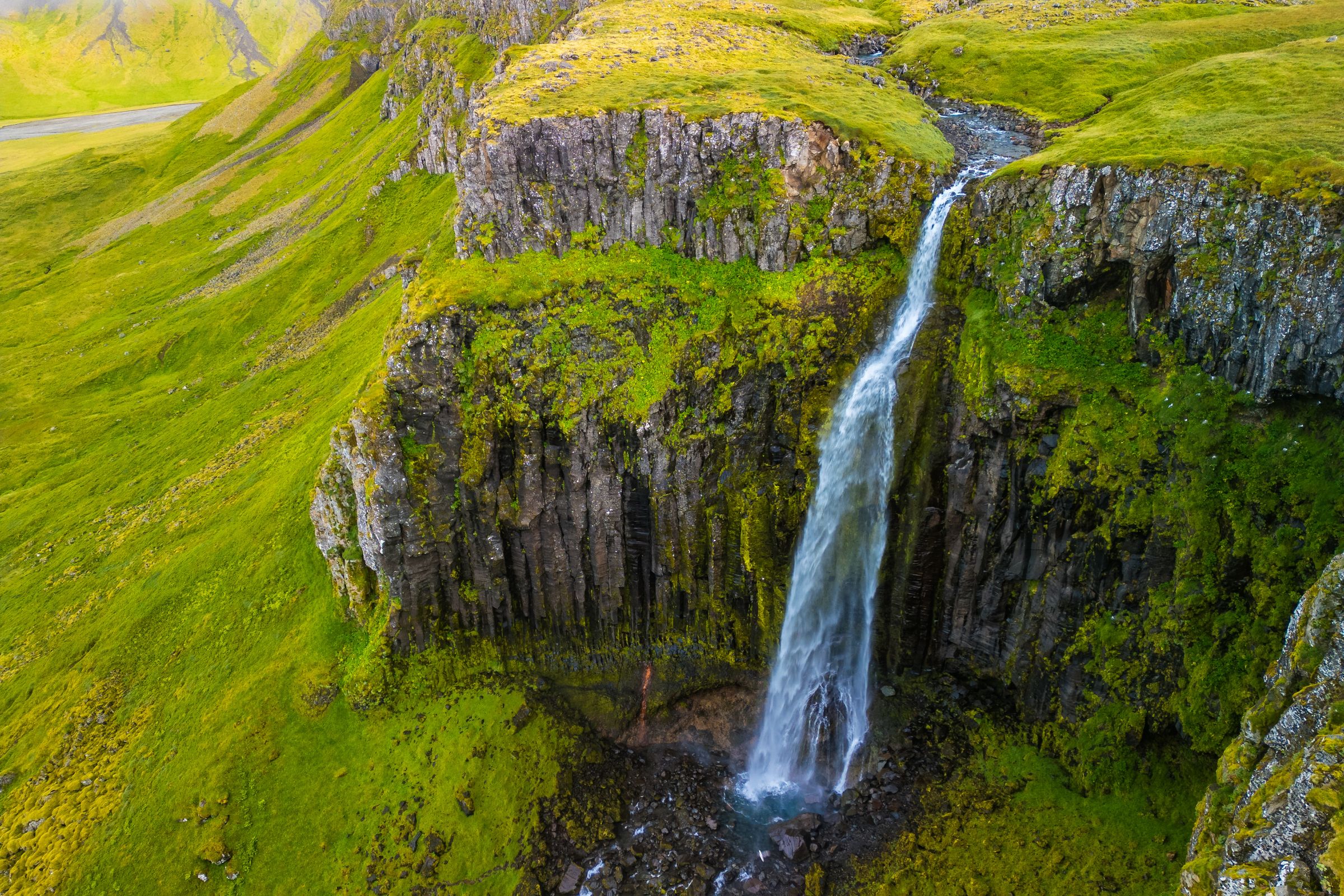
Grundarfoss
Located just a few minutes east of Grundarfjörður, Grundarfoss is a hidden gem that many travelers accidentally skip. This magnificent waterfall drops an impressive 70 meters (230 feet) down a sheer cliff face of dark basalt columns. There is a small pull-off area along Route 54, from which you can take a relatively short, flat walk through a farm pasture to reach the base of the falls. The contrast between the vertical drop and the peaceful green sheep meadows below makes it a highly rewarding stop. And not many people go there, so you can have an intimate experience.
Snæfellsjökull National Park
Occupying the entire western tip of the peninsula, this national park is established around the majestic Snæfellsjökull glacier, a 7,000-year-old stratovolcano covered in ice. The park offers an extensive network of hiking trails, rugged lava tubes, and dramatic viewpoints. Route 54, the main road on the peninsula, goes around the park, offering views of black sand beaches, jagged lava fields, and the towering white dome of the glacier. The volcano is a place of literary fame, as it was the entrance to the subterranean world in Jules Verne’s classic novel, Journey to the Center of the Earth.
Bjarnarfoss
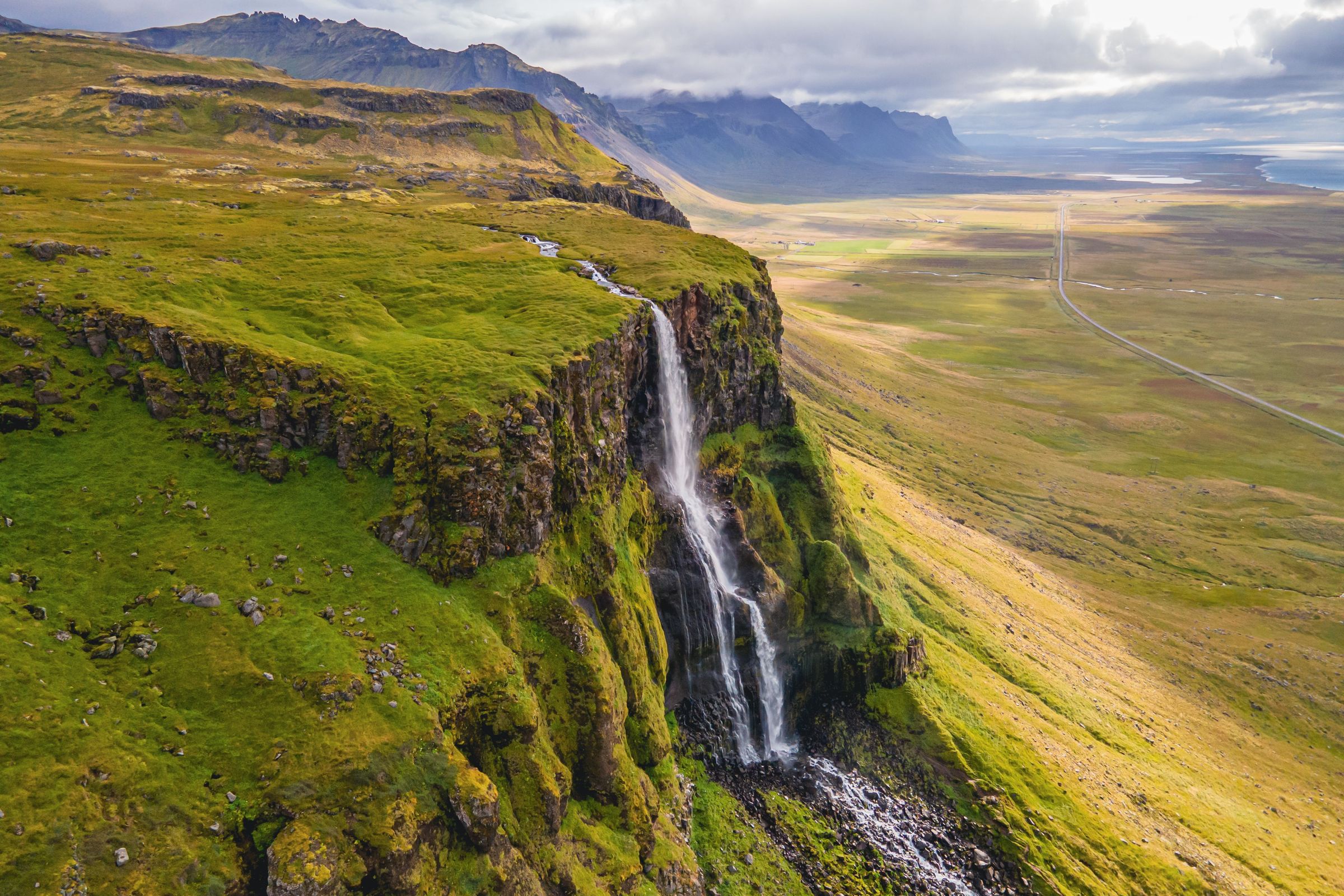
Bjarnarfoss is on the southern side of the Snæfellsnes Peninsula, and it’s the tallest waterfall in this region. It drops 80 meters (262 feet) in two separate tiers. The falls, whose name can be translated as “bear’s waterfall,” are part of the river Bjarná. The origin of the name remains a mystery, as there are no bears native to Iceland. The upper part, more exposed, catches the wind, and the water sways and dances against the cliff.
Rauðfeldsgjá Gorge
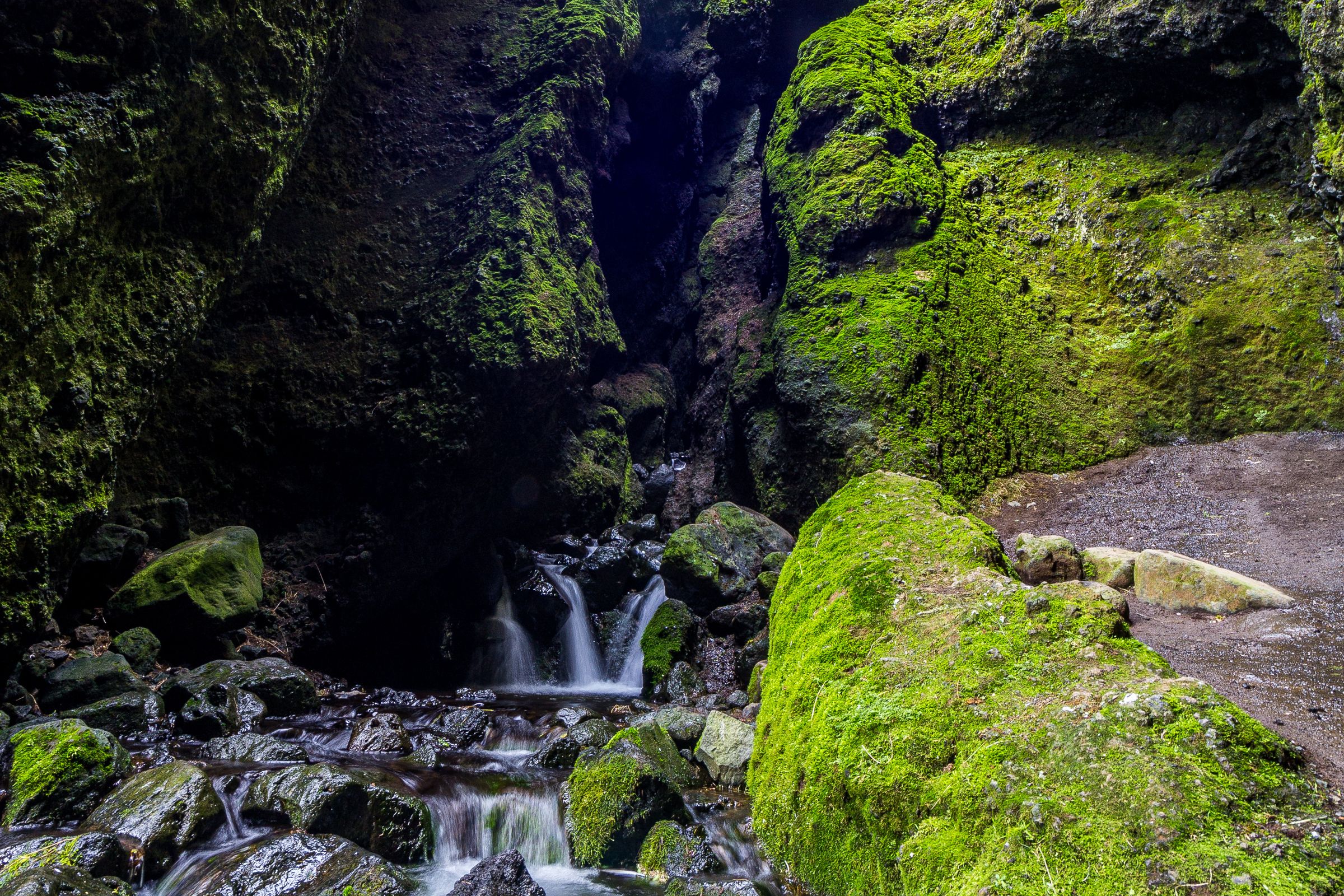
Rauðfeldsgjá is a narrow gorge that cuts like a scar into the side of a mountain. It was formed by glacial meltwater carving through rock over time. This amazing geological feature, which looks hidden, is about 100 meters (328 feet) deep, with moss-covered walls and a stream running through its base. There’s a short but moderate trail from the parking area to the entrance of the gorge. Inside, the air is damp and always cool, even on the warmer summer days.
Arnarstapi and Hellnar
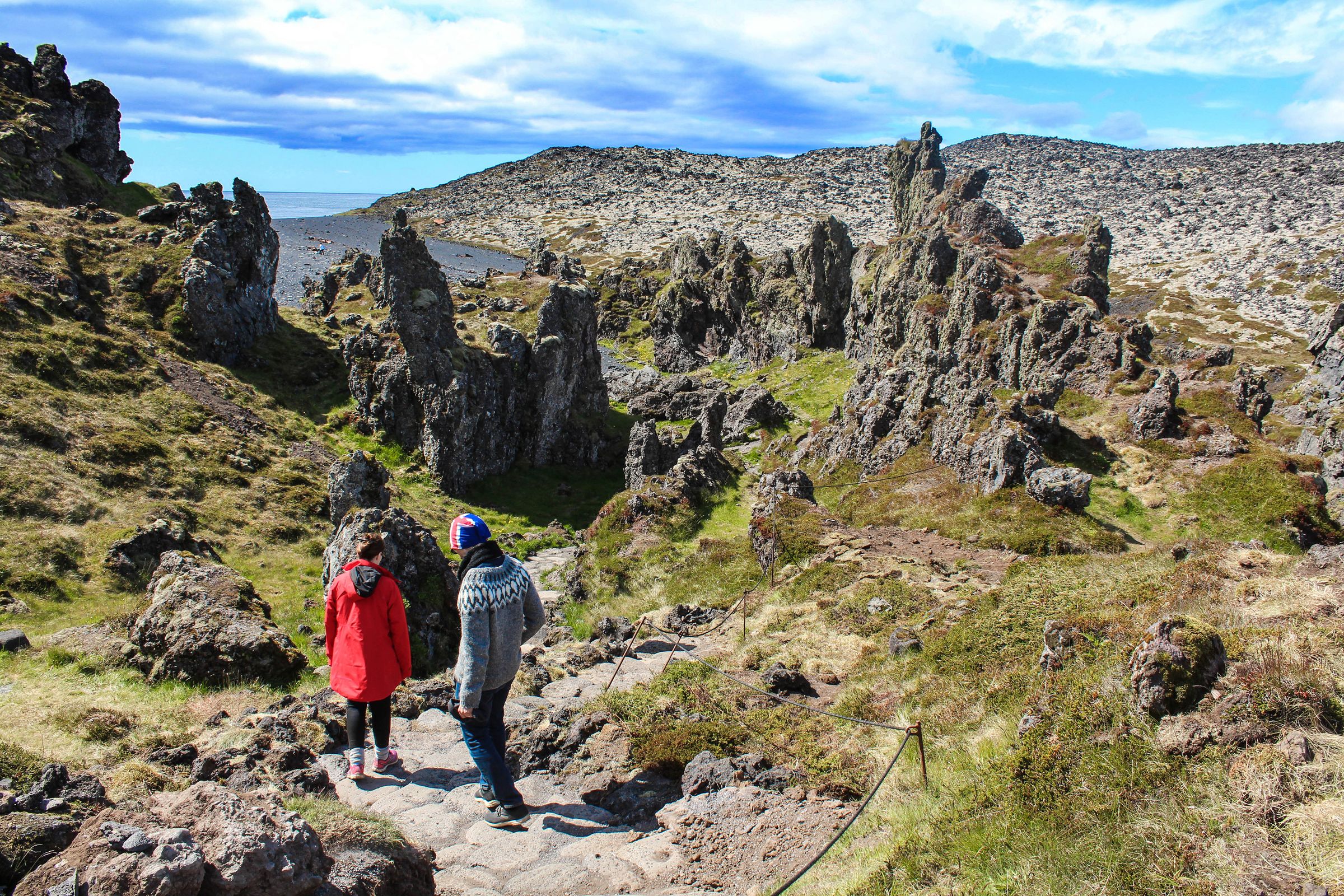
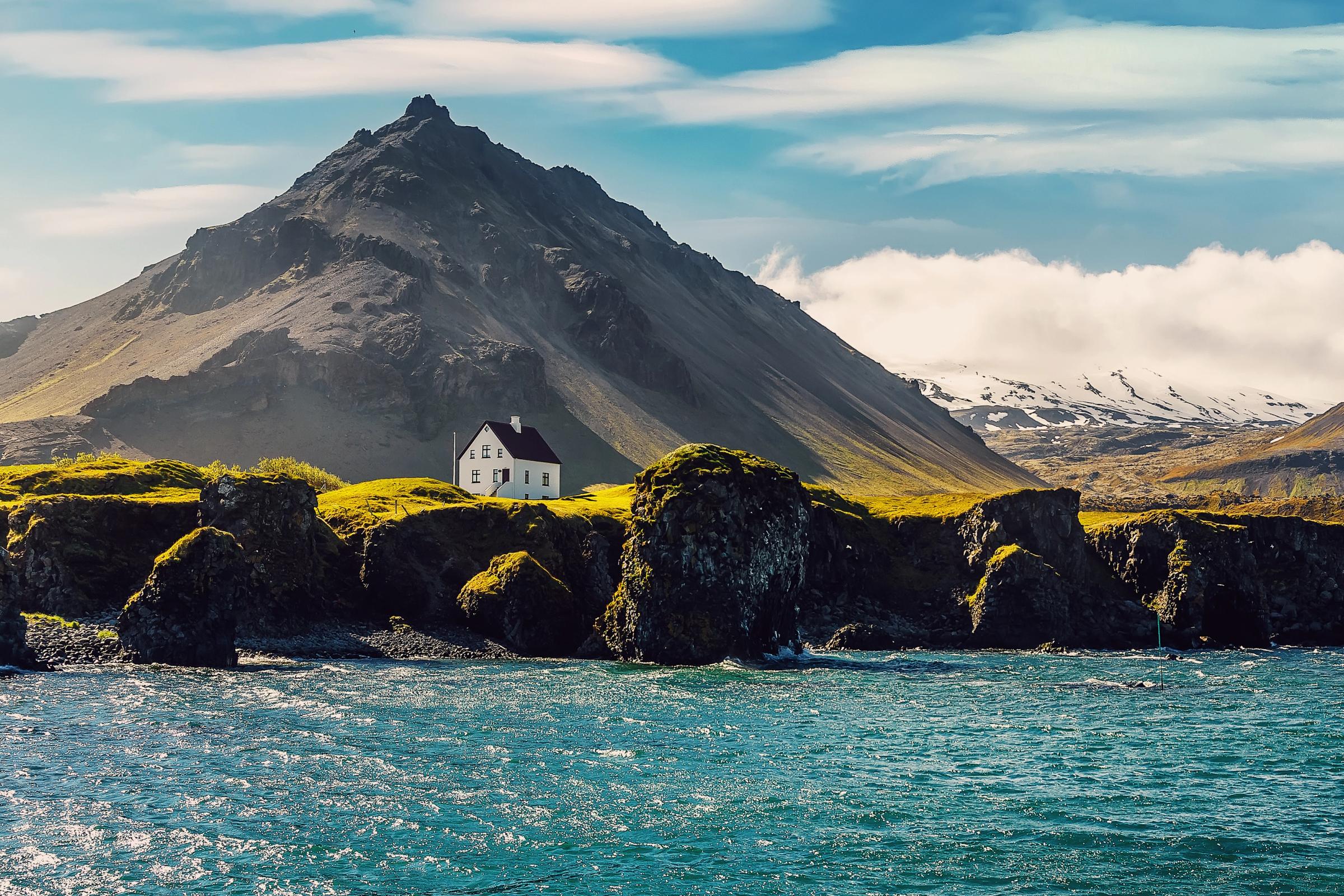
Arnarstapi and Hellnar are two historic fishing villages are famous for being a great example of the traditional Icelandic way of life. They were bustling fishing hubs in the past, but nowadays, they perfectly showcase a quiet life with a strong connection with the sea. There’s a scenic 2.5-kilometer (1.5-mile) trail that connects the two settlements, winding past spectacular sea arches and basalt rock formations constantly battered by the North Atlantic waves. The area is also home to a thriving colony of nesting seabirds, including puffins, kittiwakes, and fulmars.
Búðakirkja
Búðakirkja is one of Iceland's most minimalist and striking structures. This tiny wooden church is painted completely black, with bright white windows and a vivid green door. The contrast between the dark building, the golden grass fields, and the distant blue ocean makes it an incredibly popular spot for photography.
Ytri-Tunga Beach
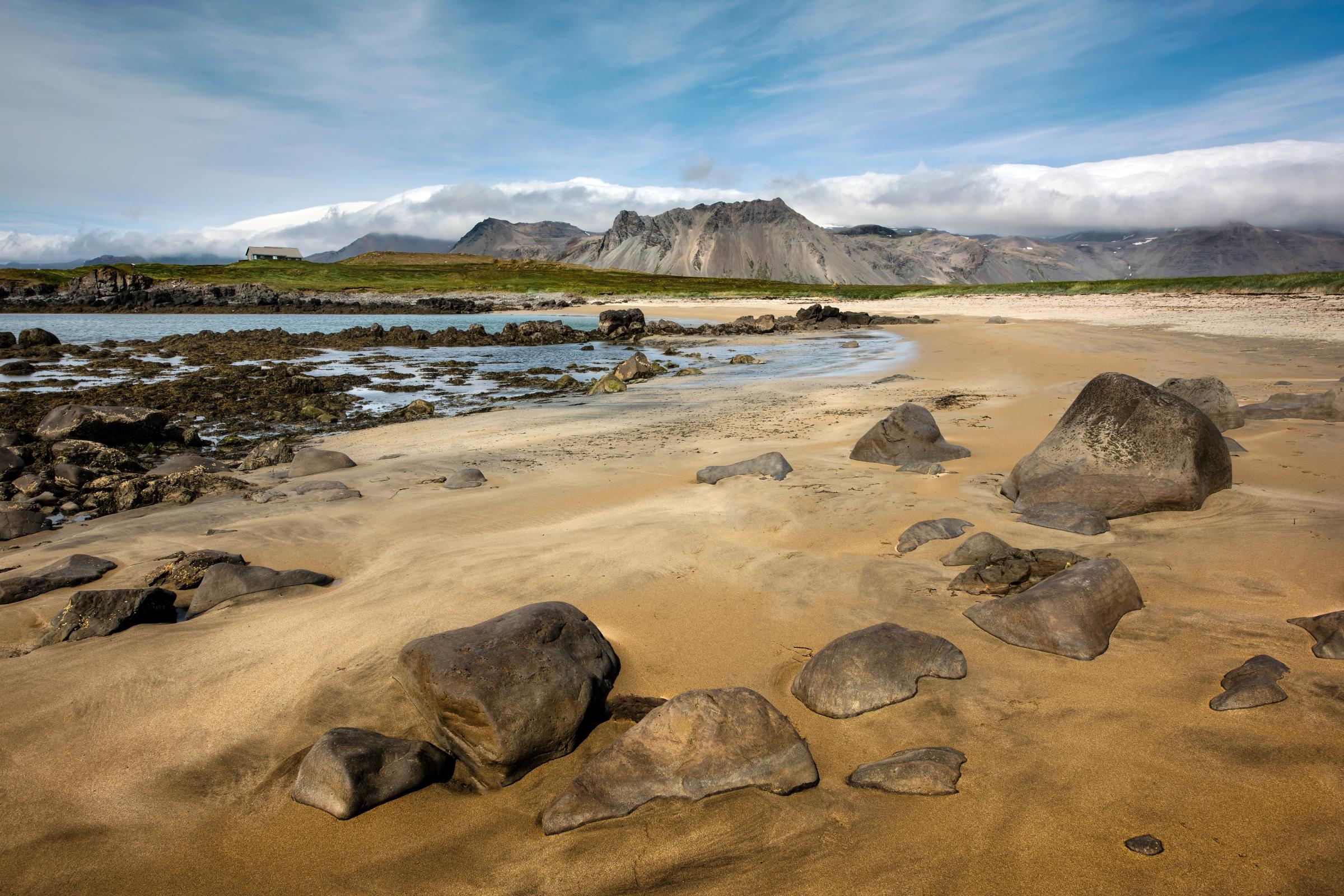
Unlike most beaches in Iceland that feature dark volcanic sand, Ytri-Tunga is unique for its golden sand. However, its primary attraction is its resident wildlife. Ytri-Tunga is home to one of the largest seal colonies in Iceland. Harbor seals are often seen there lounging on the rocks or swimming playfully, but there are chances to spot some grey seals, too. Keep 50 meters away to avoid disturbing them.
Lóndrangar
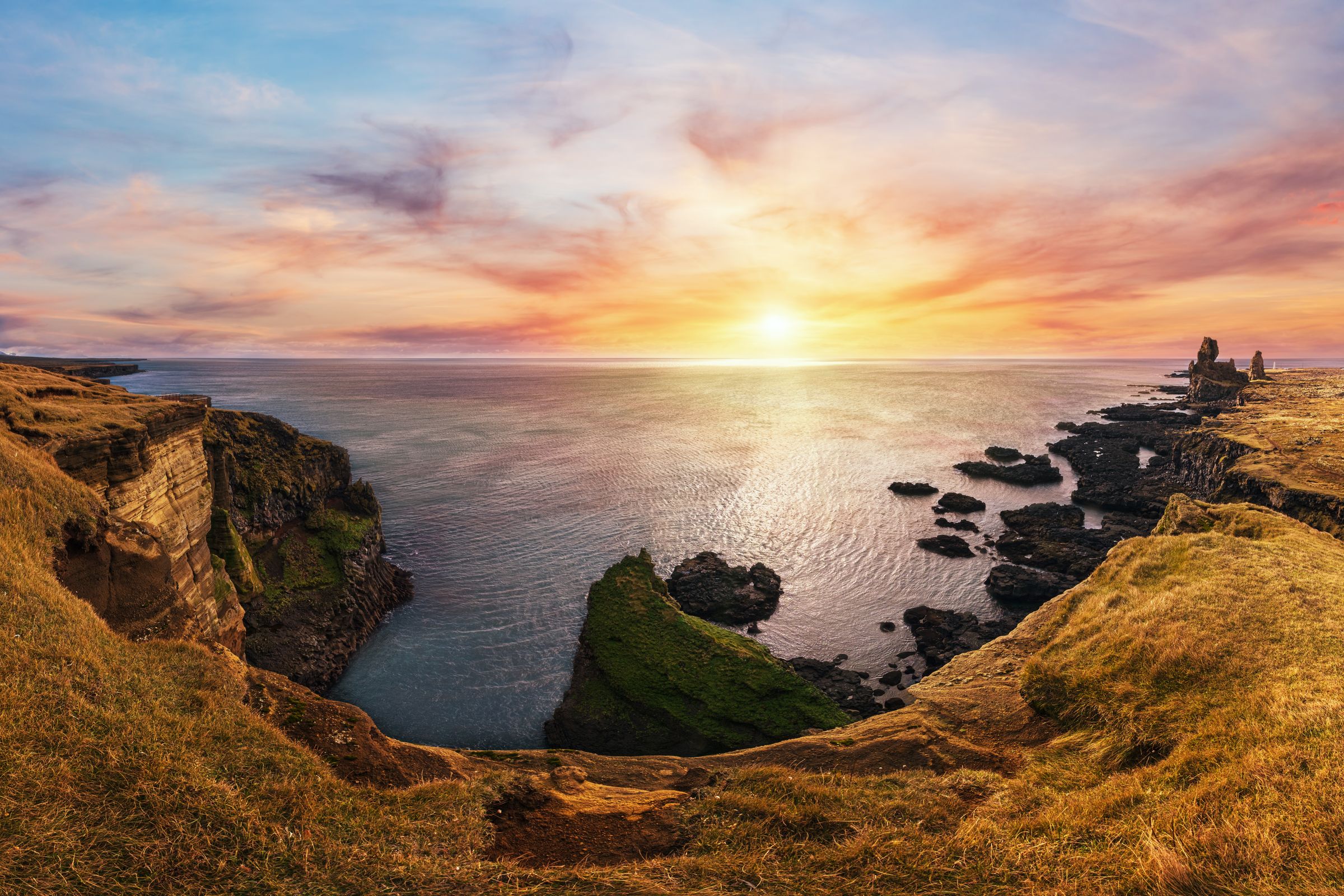
These huge formations are two massive pillars of rock that rise directly out of the ocean cliffs to heights of 75 and 61 meters (246 and 200 feet) respectively. They are the remains of an ancient volcanic crater that has been almost entirely eroded away by the sea. However, the legends say something different. According to local tales, they are two trolls that went out at night and were surprised by the sun, turning into stone forever.
The Seasons at Kirkjufellsfoss
When traveling to Iceland, the weather can play a major role in your experience. In this country, the weather is unpredictable and can change in a matter of minutes, but it’s good to know what to expect in each season.
Summer (June to August)
Summer brings the best conditions for travel. The temperatures are usually mild, and the days are really long. By the end of June, the sun barely sets, giving you plenty of time to discover Kirkjufellsfoss and its surroundings. You can go at midnight and see the waterfall under natural light. The skies are a mix of sun and clouds, and rain hits occasionally. The main disadvantage is that this is peak tourist season, meaning the parking lots and viewing platforms can become crowded during the middle of the day, and campsites fill up quickly.
Autumn (September to October)
Autumn is a magical time when the vegetation surrounding the waterfall shifts to hues of red, gold, and orange. The daylight hours shrink week after week, and the weather is more unstable, with stronger winds and frequent rain showers that can make driving conditions more challenging.
Winter (November to March)
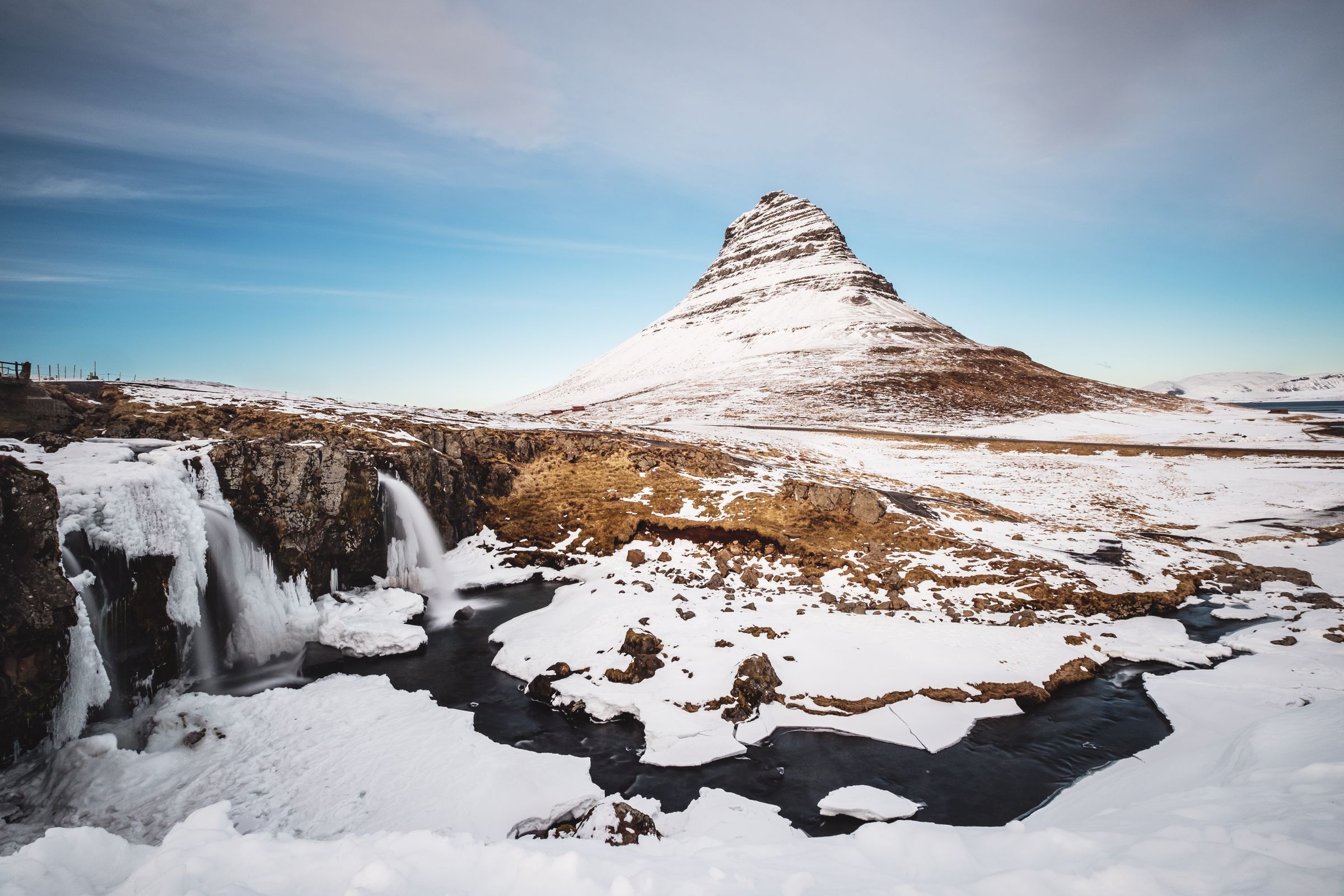
Winters are long and harsh in Iceland, although the location of Kirkjufellsfoss, near the sea, makes it less cold than some regions further inland. Everything is covered in snow, and the waterfall partially freezes, creating unique ice sculptures. It’s also the season when the Northern Lights happen, so you may see the waterfall under the aurora. On the other hand, there are barely 4-6 hours of natural light a day and the driving conditions can be challenging. Many roads, especially secondary ones, close for the season.
Spring (March to May)
Spring is a season of transition, with melting snow and rising temperatures. As the winter ice thaws, the Kirkjufellsá River swells significantly, making the waterfall more powerful, loud, and impressive. The temperatures go up, but stay relatively cold, and it’s a rainy season. There are not many tourists.
What to Pack to Visit Kirkjufellsfoss
- Waterproof Jacket: A high-quality windproof and waterproof jacket is essential to protect you from sudden rain showers, which can happen in every season.
- Sturdy Hiking Boots: The trails around Kirkjufellsfoss consist of gravel, stone steps, and the paths that can become slippery when wet or icy. Visiting Iceland usually involves hiking, so a good pair of boots is essential.
- Dress in Layers: The best way to adapt to the constant temperature changes is to dress in layers rather than big, bulky clothes.
- Waterproof Pants: Regular jeans or sweatpants soak up water quickly and dry slowly. Lightweight waterproof trousers are excellent for staying dry on the trails.
- Gloves and a Warm Hat: Even during the summer months, the winds sweeping across the Snæfellsnes Peninsula can be cold.
- Photo camera: Kirkjufell and Kirkjufellsfoss are the most photographed natural monuments in Iceland for a reason.
Travel Tips
- Arrive Early or Late: To avoid the large tour buses that travel from Reykjavik, try to visit the waterfall before 9:00 AM or after 6:00 PM.
- Pay for Parking: The parking lot at Kirkjufellsfoss uses an automated camera system that scans your license plate. Be sure to pay the parking fee via the designated machines or mobile apps. There’s another parking area free of charge, but it’s further from the waterfall.
- Stay on Marked Trails: The soil and moss surrounding the waterfall are incredibly fragile. Always stay within the roped paths to protect the local environment.
- Check Road Conditions Daily: Before driving your campervan across the peninsula, always check updated websites like IRCA and the Icelandic Met Office for wind alerts, road closures, and weather updates.
- Use the Pedestrian Bridge: Walk all the way up and across the bridge spanning the river. From the other is where you’ll get the iconic view of the waterfall and the mountain together.
Conclusion
Some natural monuments in Iceland remain a secret for foreigners, while others have become famous all over the world. It’s normal to try to discover those hidden gems, but the well-known have gained fame rightfully so. Kirkjufellsfoss is not as famous as its neighbor mountain but it’s a place where time seems to have stopped. This place is so unique, so perfect, that it has to be on your travel list.