One of the best stops on Iceland's Snæfellsnes Peninsula is a crack in a mountain. It's free, it takes under an hour, and it's unlike anything else on the peninsula.
Here's what you need to know before you go.
Overview
Rauðfeldsgjá is a deep rock fissure in Botnsfjall Mountain on the southern Snæfellsnes Peninsula, about 4-5 km north of Arnarstapi and ~189 km from Reykjavík. Inside are steep moss-covered walls, a stream, and small waterfalls, and most people spend 30-60 minutes here. The trail is ~1.1 km round trip with 82 m elevation gain and rated moderate due to trickier conditions inside. It is free, open 24/7, with a small gravel parking lot near the trailhead.
The Story Behind the Name
The name comes from the 13th-century Bárðar saga Snæfellsáss. Rauðfeldur pushed Helga onto an iceberg that drifted to Greenland, and Bárður, thinking she died, threw Rauðfeldur into this gorge and Sölvi off a nearby cliff. Afterward, Bárður disappeared into Snæfellsjökull glacier and is said to still watch over the peninsula. The story connects directly to the place and shapes how it feels.
How to Visit Rauðfeldsgjá
Getting here is easy with a small parking area off Route 574 and a short 10-15 minute walk to the entrance. By car from Reykjavík, follow Route 1 to Borgarnes, then Route 54 and 574; no 4WD is needed in summer. Tours often include the stop, but there is no direct public bus. The parking lot is free but small, and fills up in summer midday.
Things to Do at Rauðfeldsgjá
The main activity is walking into the gorge, going as far as conditions and confidence allow. Photography works well here, especially in overcast light that brings out moss and reduces contrast. The approach also offers views of the Snæfellsnes coastline toward Arnarstapi. Even a short distance inside gives a completely different experience.
Is Rauðfeldsgjá Worth It?
It is worth it if you are already on Snæfellsnes because it is free, quick, and different from open landscape attractions. The narrow canyon passage, cold air, moss, and saga connection make it feel unique. It fits easily into a road trip with minimal time and effort. It suits self-drivers, photographers, and those interested in sagas and geology.
What the Experience Is Actually Like
From the parking lot it looks like a crack, but inside it becomes enclosed, cool, and quiet with a stream at your feet. The first meters are easy, but further in requires stepping on slick rocks and through cold water. A small waterfall marks where many people turn around. The contrast between open landscape outside and tight interior is what people remember.
Difficulty, Safety, and What to Wear
The approach is easy, the entrance manageable, and the inner gorge more difficult due to slippery rocks, cold water, and narrow passages. Weather changes quickly and there are no facilities nearby, so planning is important. Waterproof hiking boots or rubber boots are essential, along with waterproof layers and warm clothing. You can stop at any point and still have a good visit.
Best Time to Visit
Summer (June-August) offers the easiest conditions, long daylight, and accessible paths, but more visitors. Shoulder seasons have fewer people and better light but more rain and mud. Winter makes the inner gorge dangerous due to ice, so most stay near the entrance. Overcast mornings and early or late hours provide the best experience.
Nearby Attractions to Combine with Rauðfeldsgjá
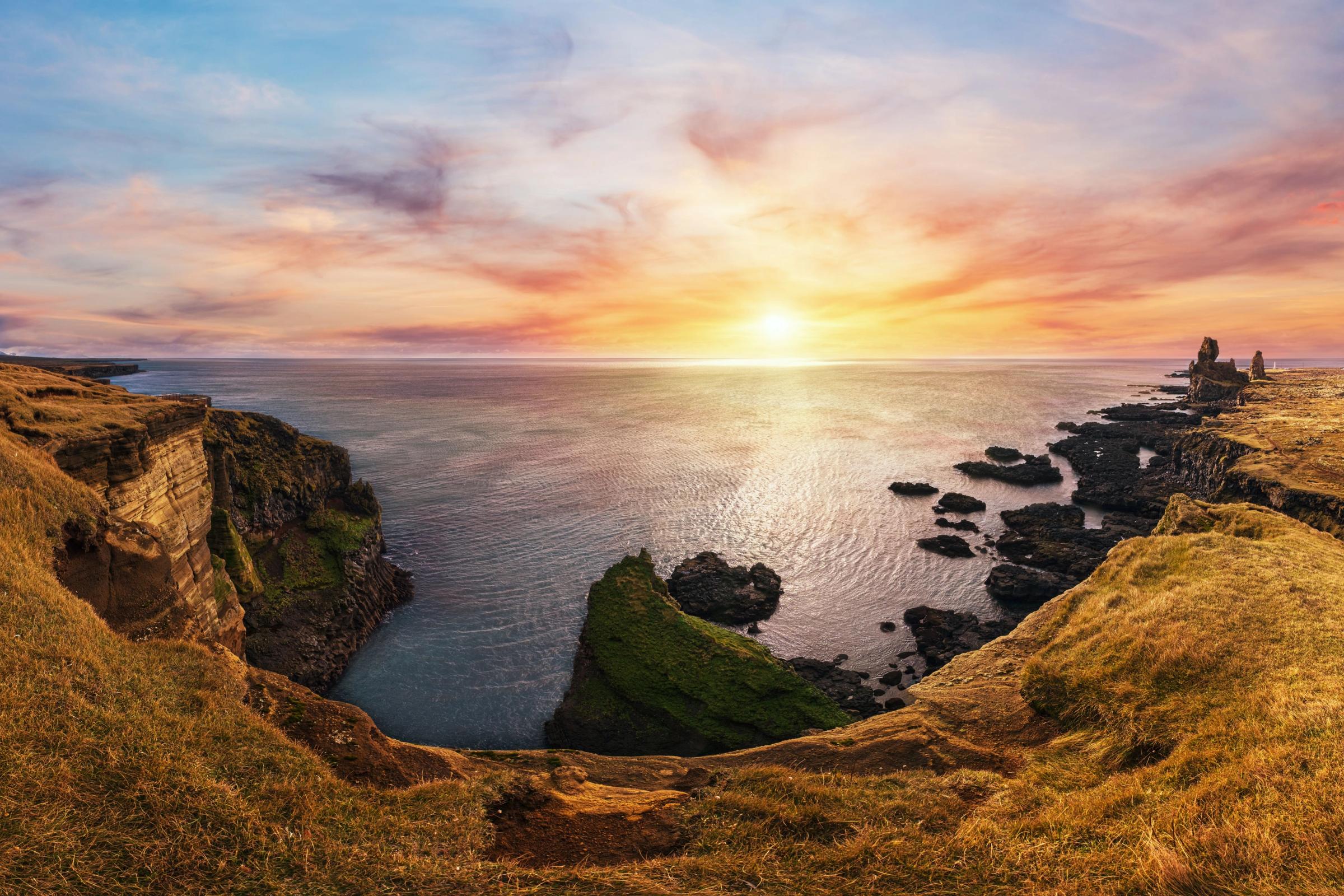
Arnarstapi, 4-5 km away, has basalt cliffs, seabirds, and a statue of Bárður Snæfellsás. Hellnar offers a small harbor, rock formations, and a café. Lóndrangar sea stacks and Djúpalónssandur black pebble beach are nearby stops on a southern loop. Snæfellsjökull National Park and glacier offer hiking, lava caves, and views across the peninsula.
Conclusion
Rauðfeldsgjá is a short, free stop where you can walk into a gorge with a stream, moss-covered walls, and a small waterfall. It takes under an hour and works with any rental car. The experience combines physical exploration with a saga tied directly to the المكان. Pair it with nearby stops like Arnarstapi for a complete trip.
What Is Rauðfeldsgjá?
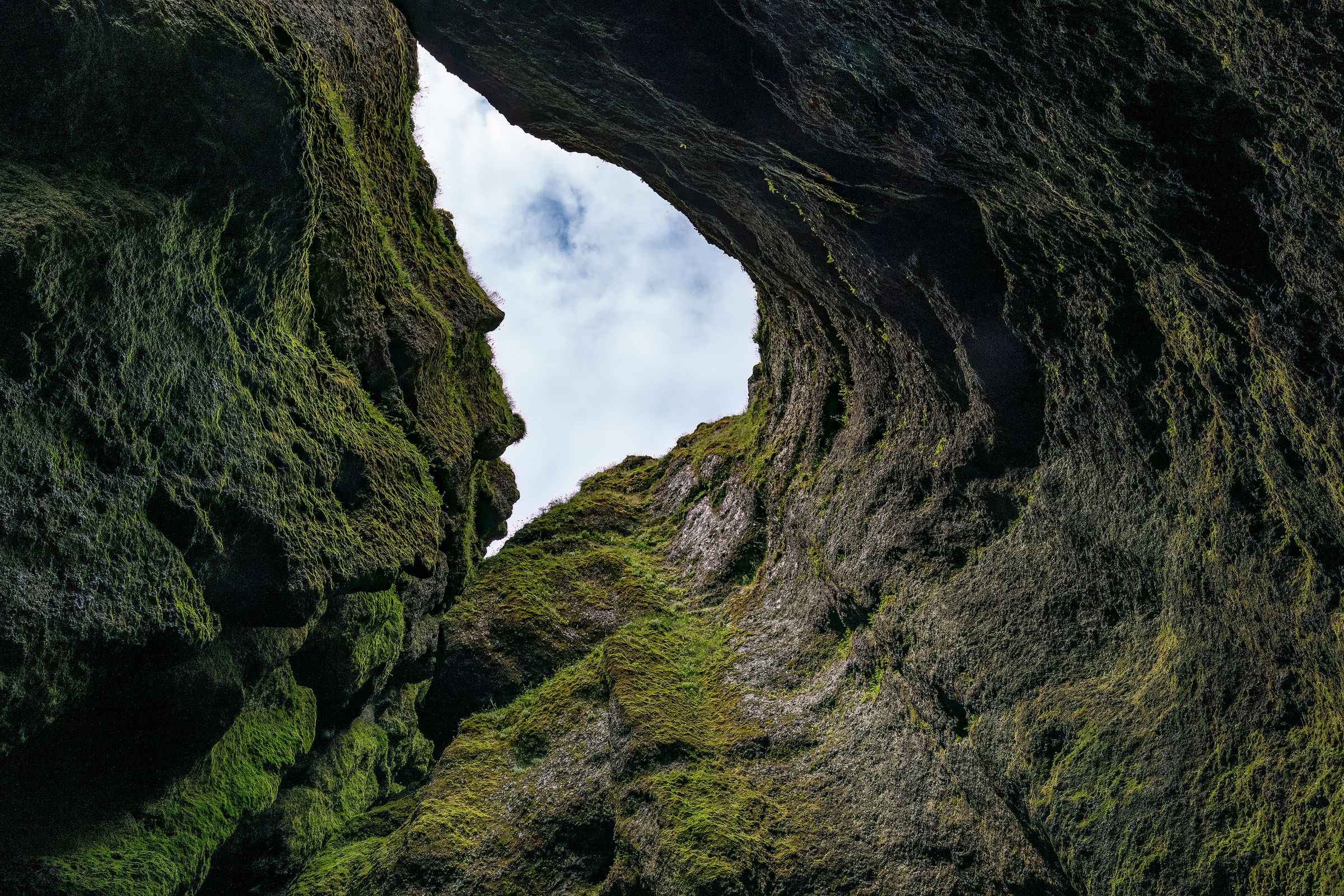
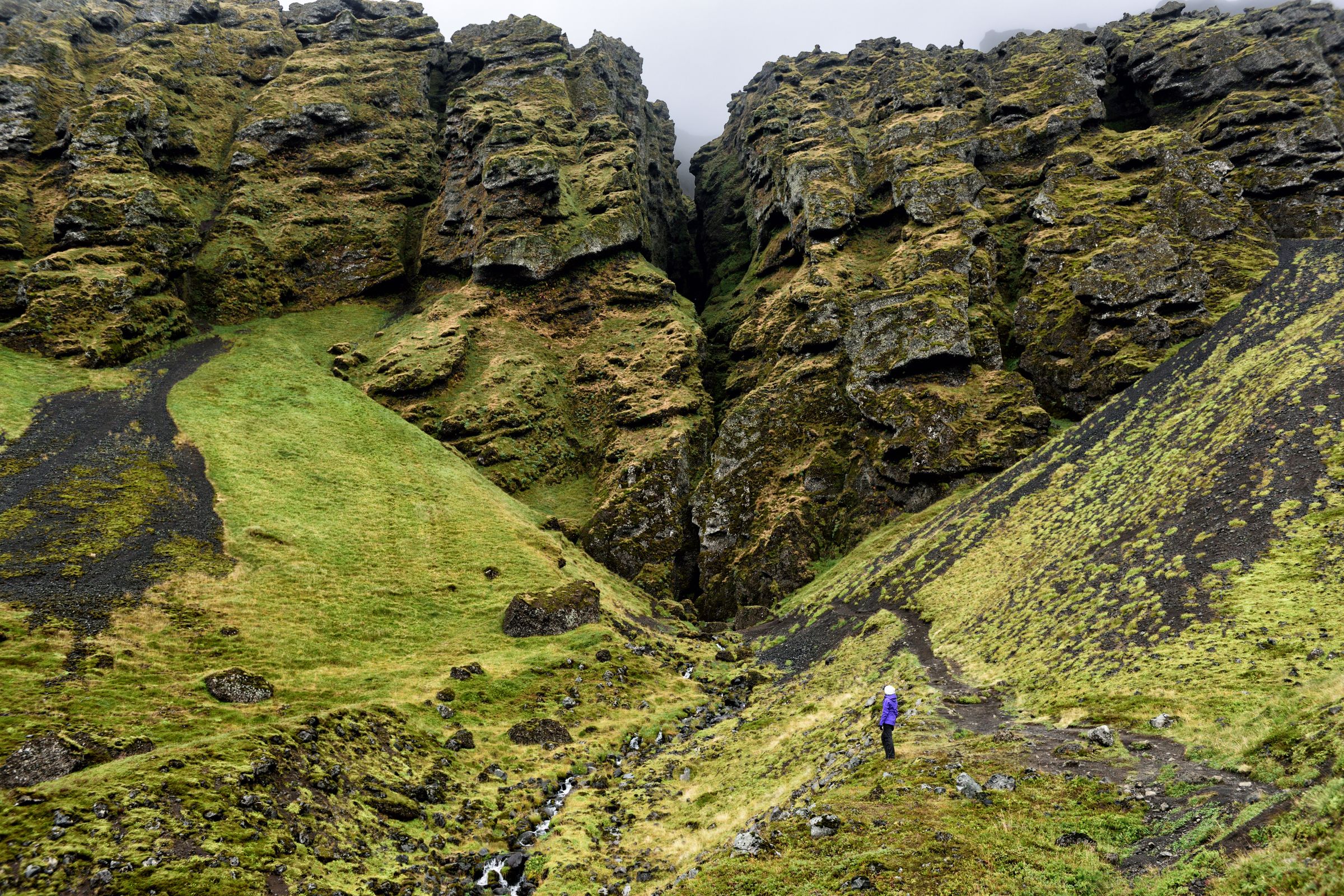
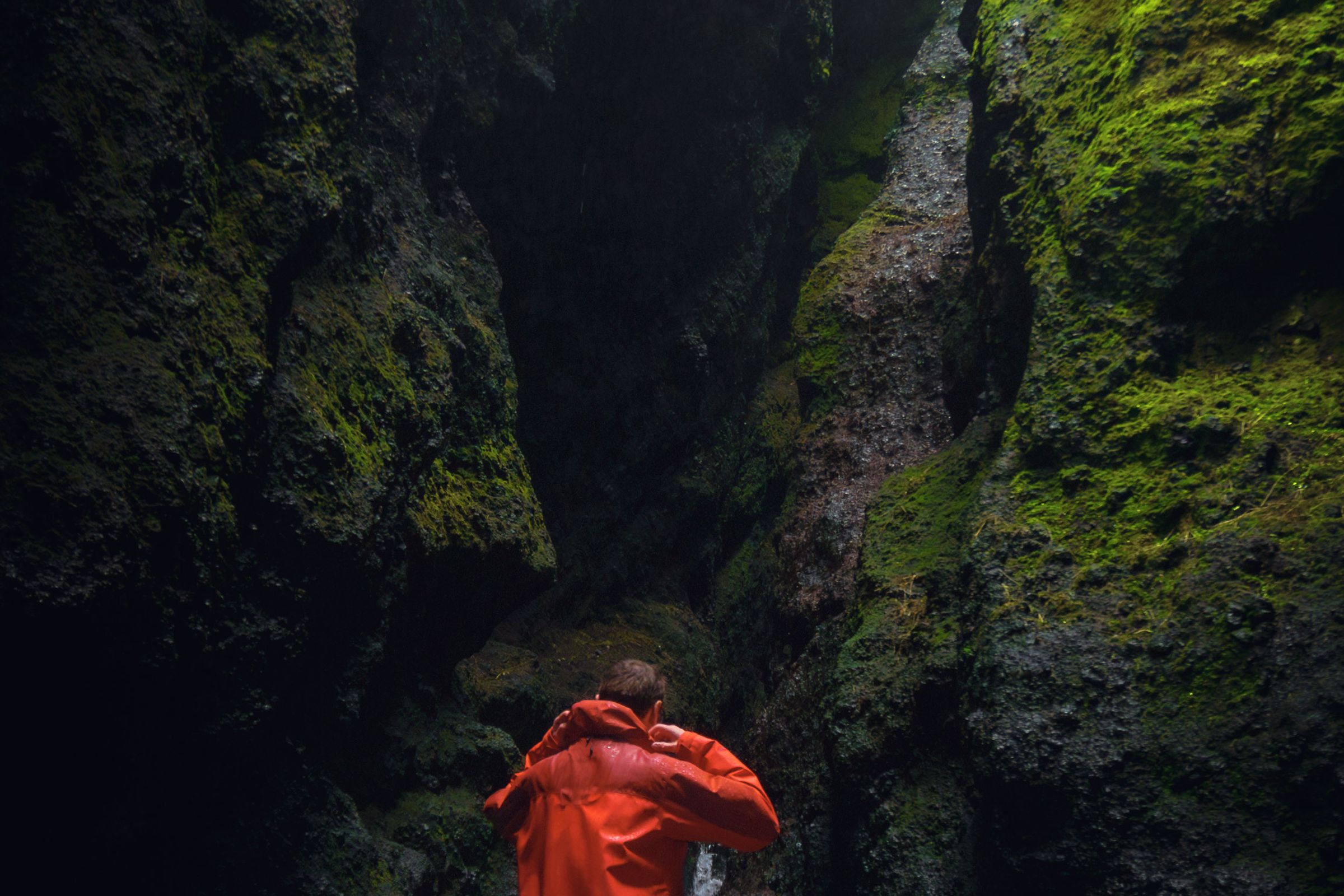
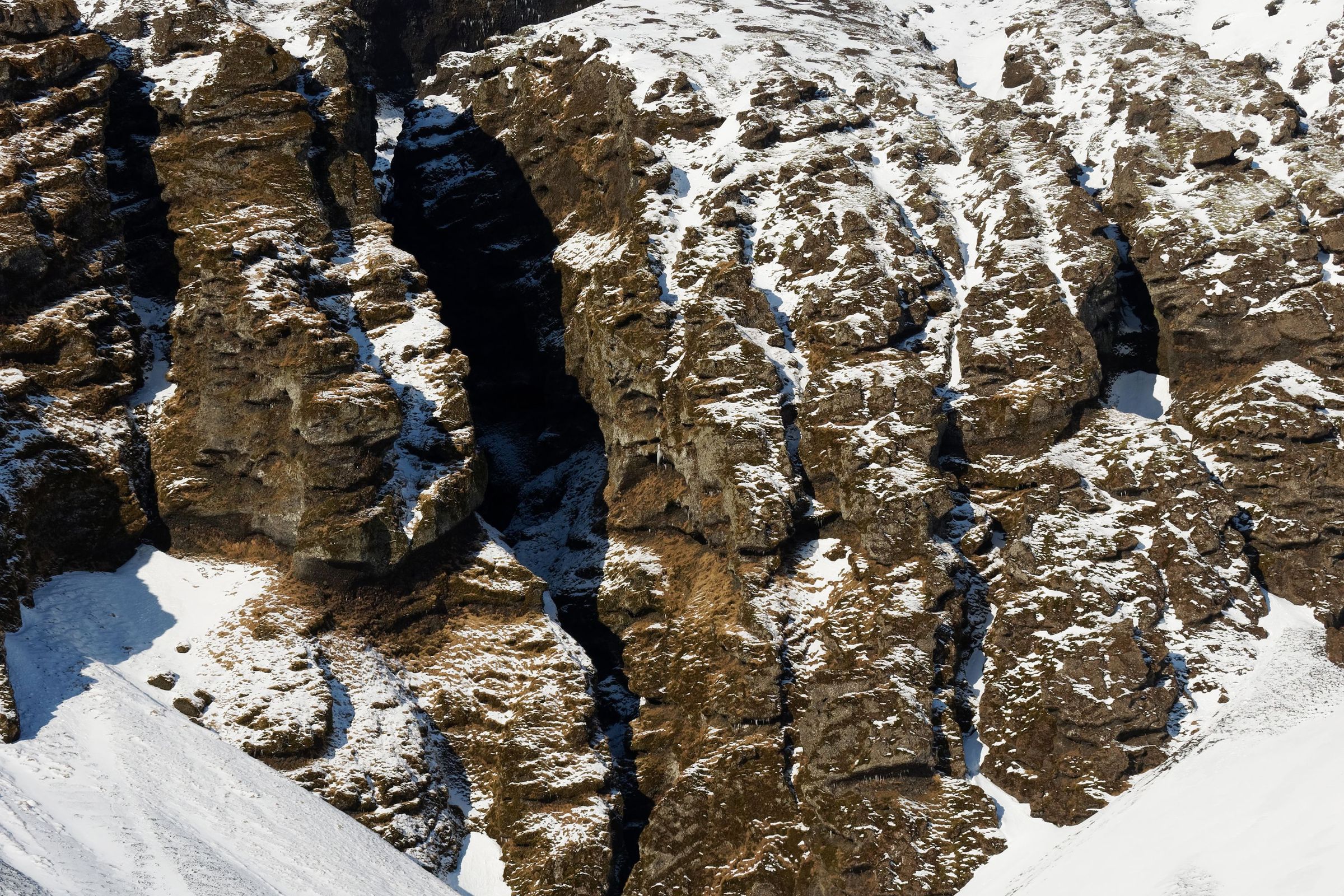
From the road, Rauðfeldsgjá looks like a thin dark line in a mountain. Walk up to it and go inside, and it's a totally different thing: cold air, narrow walls covered in moss, a stream on the floor, and a quiet that feels cut off from everything outside.
Overview
Rauðfeldsgjá, also called “Rauðfeldar Canyon” or the "Red Cloak Rift," is a deep rock fissure in Botnsfjall Mountain on the southern side of Iceland's Snæfellsnes Peninsula, in West Iceland. It sits about 4-5 km north of Arnarstapi village, just off Route 574, near the Snæfellsjökull National Park area.
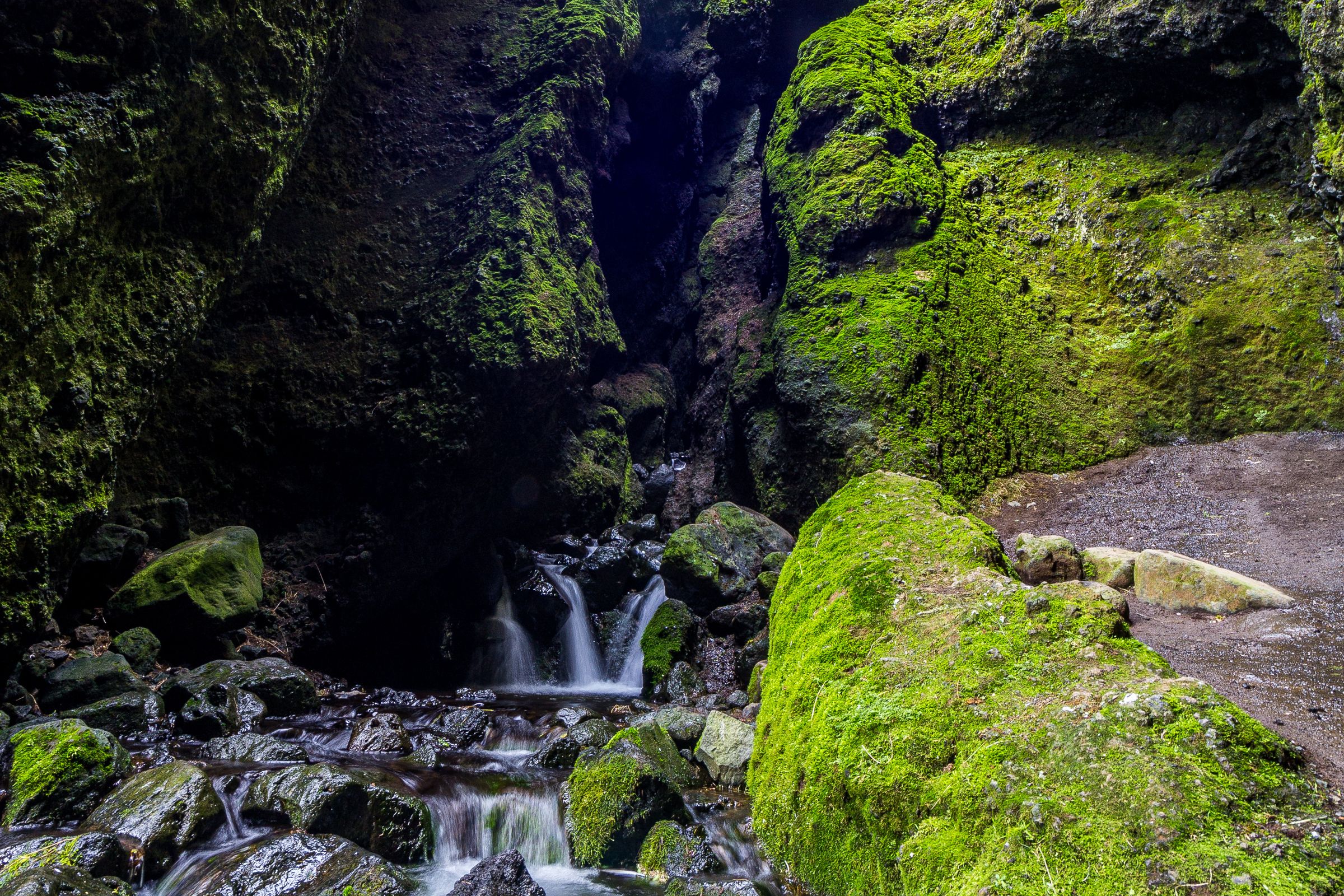
Inside, there are steep, moss-covered walls, a stream running along the bottom, and small waterfalls farther in. Most people spend 30-60 minutes here. It fits easily into a Snæfellsnes road trip without eating up your whole day.
Quick facts:
Location: Botnsfjall Mountain, southern Snæfellsnes Peninsula, West Iceland
Nearest village: Arnarstapi (4-5 km)
Distance from Reykjavík: ~189 km (about 3 hours by car)
The name comes from a saga, and once you know the story, the place feels different.
The Bárðar saga Snæfellsáss is a 13th-century Icelandic saga set on the Snæfellsnes Peninsula. In it, a guy named Rauðfeldur ("Red Cloak") was playing by the shore with his brother Sölvi and their cousin Helga, the daughter of Bárður Snæfellsás, a half-human, half-troll figure who was the guardian of the peninsula. Rauðfeldur pushed Helga onto a drifting iceberg, which carried her all the way to Greenland. She survived and spent the winter with Erik the Red's family, but Bárður thought she was dead. He grabbed Rauðfeldur and threw him into this gorge, killing him. Then he threw Sölvi off a nearby cliff, now called Sölvahamar. After that, overcome with grief, Bárður walked into a cave on the Snæfellsjökull glacier and never returned. According to Icelandic folklore, he's still there, watching over the peninsula.
That's where the name comes from. And it's why the whole south coast of Snæfellsnes feels like a landscape people have been telling stories about for over a thousand years.
How to Visit Rauðfeldsgjá
Getting here is easy. There's a small parking area right off Route 574 and a short walk to the entrance. No tickets, no booking, no guide needed.
Getting There
By car (recommended): From Reykjavík, take the Ring Road (Route 1) north to Borgarnes, then pick up Route 54 along the southern coast of the peninsula and connect to Route 574 toward Arnarstapi. The signed gravel turnoff to the parking lot is easy to spot from the road. Any standard rental car handles this fine in summer. No 4WD needed.
By tour: Most Snæfellsnes day tours from Reykjavík include Rauðfeldsgjá as a stop. There's no direct public bus to the gorge.
Parking and Access
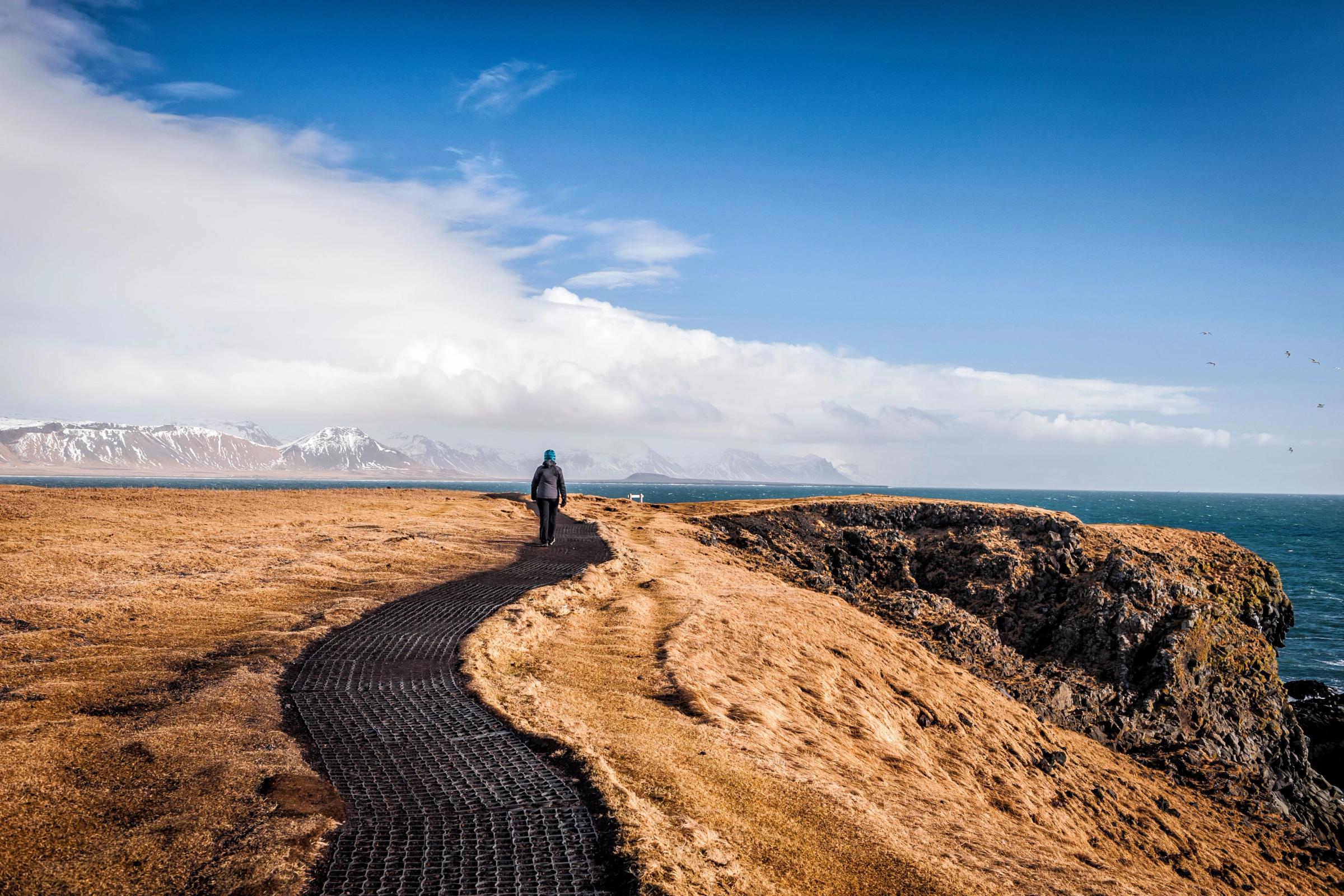
The parking lot is free and small, with around 10-15 cars. In July and August, it can fill up by midday. Getting there before 10 am or after 5 pm usually means no hassle finding a spot. From the lot, it's a 10-15 minute walk up a rocky, sometimes muddy path to the gorge entrance. On the way up, you get decent views of the peninsula and the Atlantic Ocean behind you.
What to Expect on the Walk
As you get closer, you start to see the crack in the mountain. It looks small from a distance. At the entrance, the walls are already taller than they seemed from below, and the air coming out is noticeably colder and damper.
How far you go inside is up to you, your footwear, and the conditions that day. Most people go in far enough to feel the walls closing in on both sides, then turn around. Going further means stepping through cold ankle-deep water and watching your footing on slick, wet rock.
Rent a Campervan in Iceland
Get to every corner of the island with total freedom and comfort
There's no long list of activities here. The gorge is the main thing. But there are a few different ways to experience it depending on what you're after.
Walk Into the Gorge
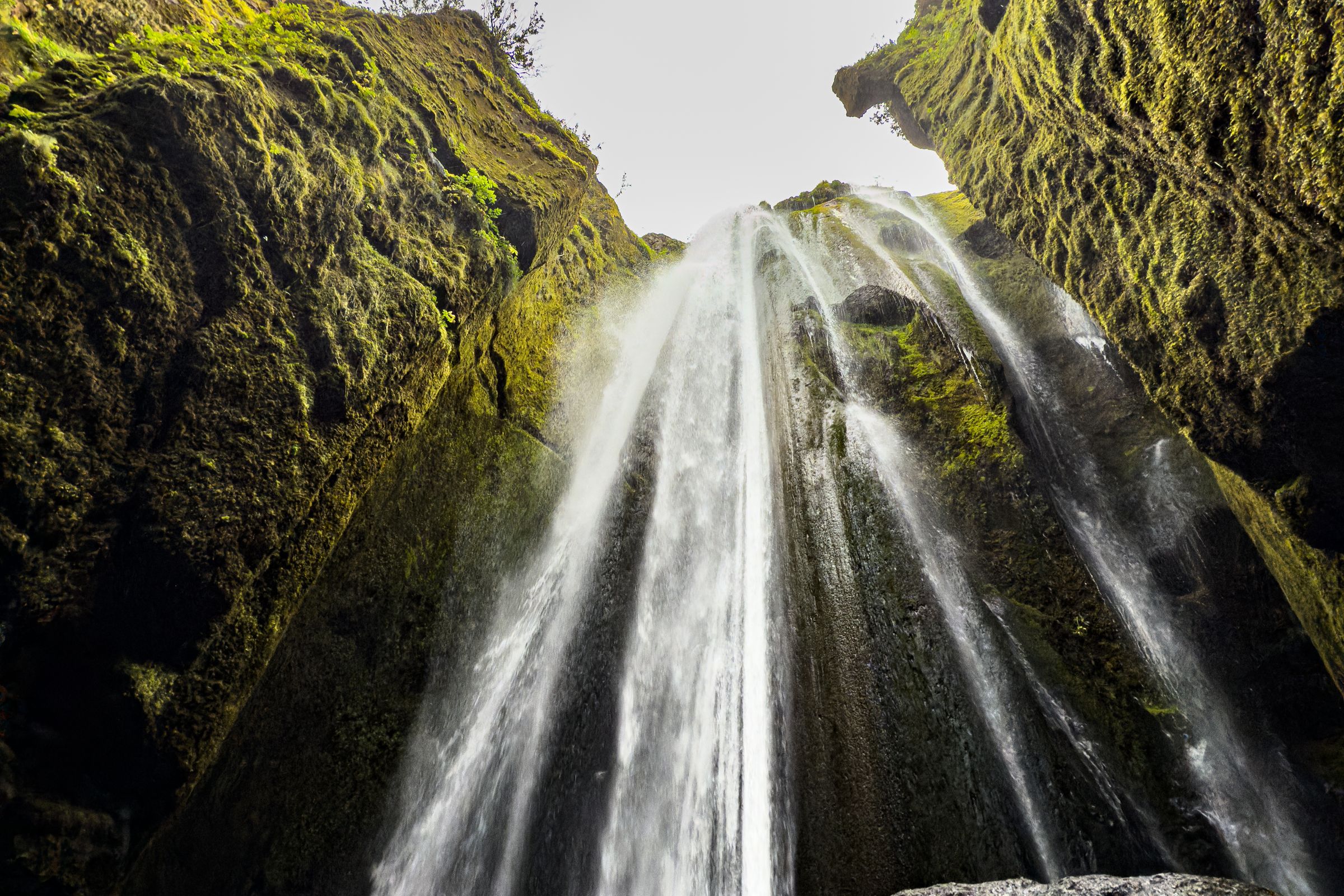
This is the point of the visit. You walk in, the narrow canyon passage tightens around you, and you go as far as conditions and confidence allow. The deepest section most people reach has a small waterfall and sometimes a rope to help with footing. You don't need to get to the back to make it worthwhile. Even 20-30 meters in is a completely different experience from standing at the entrance.
Photography
Rauðfeldsgjá is good for photos without needing perfect conditions. From further away, you can frame the cleft against the mountain face. At the entrance, shooting up the walls shows the scale. Inside, the moss-covered rocks, running water, and light filtering down from above all give you something to work with.
Overcast light works better than direct sun here. It brings out the green in the moss and cuts the contrast between the bright entrance and the dark interior. A wide-angle lens is useful near the entrance; inside the narrow canyon passage it gets tighter but more interesting.
Take In the Surroundings
The walk to the gorge has good views that are easy to miss if you rush straight to the entrance and back. The Snæfellsnes Peninsula opens up behind you on the approach, with the coastline stretching toward Arnarstapi. Worth a few minutes on the way in or out.
Is Rauðfeldsgjá Worth It?
If you're already on Snæfellsnes, yes. It's free, takes under an hour, and it's a different kind of stop from everything else on the peninsula.
What Makes It Special
Most of the big Snæfellsnes attractions are wide open: cliffs, black beaches, a glacier in the distance. Rauðfeldsgjá is the opposite. It's tight and enclosed, and you're inside it rather than looking at it from a distance. The narrow canyon passage, the stream, the cold air, the moss, the saga story tied directly to the spot you're standing in: it adds up to something that doesn't feel like a standard Icelandic nature stop.
It's also genuinely easy to fit in. Free entry, any rental car, 30-60 minutes, right off the main road.
Who Will Enjoy It Most
It works best for people who like places that feel a bit away from the main tourist spots, who enjoy Icelandic sagas and geology, or who want something more active than a viewpoint but less demanding than a full-day hike. Self-drivers doing a Snæfellsnes Peninsula loop will find it sits naturally between Arnarstapi and the other southern coast stops. Photographers tend to rate it highly.
Who May Want to Skip It
If you have mobility issues or trouble on wet, uneven ground, the inner gorge is going to be hard work. The outside view and approach are fine for most people, but the actual experience inside requires careful footwork. If the weather is bad and you don't have the right gear, it's better to just see the entrance and leave the interior for another time.
What the Experience Is Actually Like
It helps to know what to expect so you don't show up with the wrong idea.
From the parking lot, the gorge looks like a crack in a mountain. The 10-15 minute walk up builds some anticipation without giving much away. At the entrance, the first thing you notice is the temperature drop and the sound of water.
The first few meters inside are fine for almost anyone. The rock fissure narrows, the stream runs at your feet, and the walls are close enough to touch on both sides. Further in it gets more physical: you're picking your steps on slick moss-covered stones, the water is cold when you step through it, and the passage tightens. Deeper in, a small waterfall is usually where people decide whether to keep going or turn around.
What people remember is the contrast. Outside, it’s an open Icelandic landscape. Inside, it's enclosed, quiet, cool, and a bit eerie. The fact that a 13th-century saga describes a man being thrown into that exact spot doesn't make it feel any less strange.
Difficulty, Safety, and What to Wear
Rauðfeldsgjá isn't a hard hike, but the inside can catch people off guard if they come without the right gear.
How Hard Is It?
There are three stages. The approach from the parking lot is easy: a short uphill path of about 500 meters (546 yards). The entrance section is fine for most people with decent footwear. The inner gorge, where you're dealing with cold water, slippery rocks, and narrow passages, is where the moderate rating comes from.
You can stop at any point and still have a good visit. AllTrails rates the full out-and-back as moderate: 1.1 km (0.7 mi), 82 m (269 ft) of elevation gain.
Main Safety Concerns
A few things worth knowing before you go:
Slippery rocks: The moss-covered surfaces inside are wet all year and can be very slick, especially further in
Cold water: The stream runs ankle-deep in places; if you go far enough in, you'll step through it
Narrow passages: The walls press close in spots; worth knowing if tight spaces bother you
No facilities on site: The nearest help is in Arnarstapi, 4-5 km away; plan accordingly
Download the free SafeTravel app before your Iceland trip. It lets you share your GPS location with emergency services (112) and sends real-time safety alerts. Takes two minutes to set up.
What to Wear
Footwear is the most important thing. Waterproof hiking boots with grip are the minimum. Rubber boots are a solid option if you want to wade through the stream without thinking about it. Regular sneakers will leave you cold, wet, and unsteady.
Beyond that: a waterproof jacket (the gorge is colder and damper than the parking lot), warm layers underneath, and waterproof pants if you're planning to go deep. In colder months, gloves and a hat. A small backpack keeps your hands free for balance.
Best Time to Visit
The gorge is open year-round, but when you go makes a real difference.
Summer (June-August)
Summer is the easiest time. Daytime temperatures run around 11-13°C, you get 20+ hours of daylight, and the gorge interior is wet but accessible. The moss is at its greenest, the path is in its best shape, and you can fit the stop into a full Snæfellsnes day without rushing. July and August weekends get the most visitors, especially midday. Weekday mornings are much quieter.
Shoulder Season (May and September-October)
Fewer people and often better light. The trade-off is more rain, muddier paths, and cooler temperatures between 4-10°C. Doable with the right gear, and the autumn tones on the approach slopes in September and October are a bonus.
Winter (November-April)
Winter changes what's safe here. Ice makes the inner gorge genuinely dangerous, so most people stick to the entrance area. The approach path gets icy too; bring crampons. The exterior can look good with snow and icicles inside the passage, but be realistic about how far you'll get.
Best Time of Day
Soft light works better than direct sun in an enclosed space like this. Overcast mornings are good for photos. Going before 10 am or after 5 pm in summer also means fewer people, which makes the whole visit better.
Nearby Attractions to Combine with Rauðfeldsgjá
Rauðfeldsgjá is on the southern side of the Snæfellsnes Peninsula, and there are several good stops nearby that fit naturally into the same day.
Arnarstapi
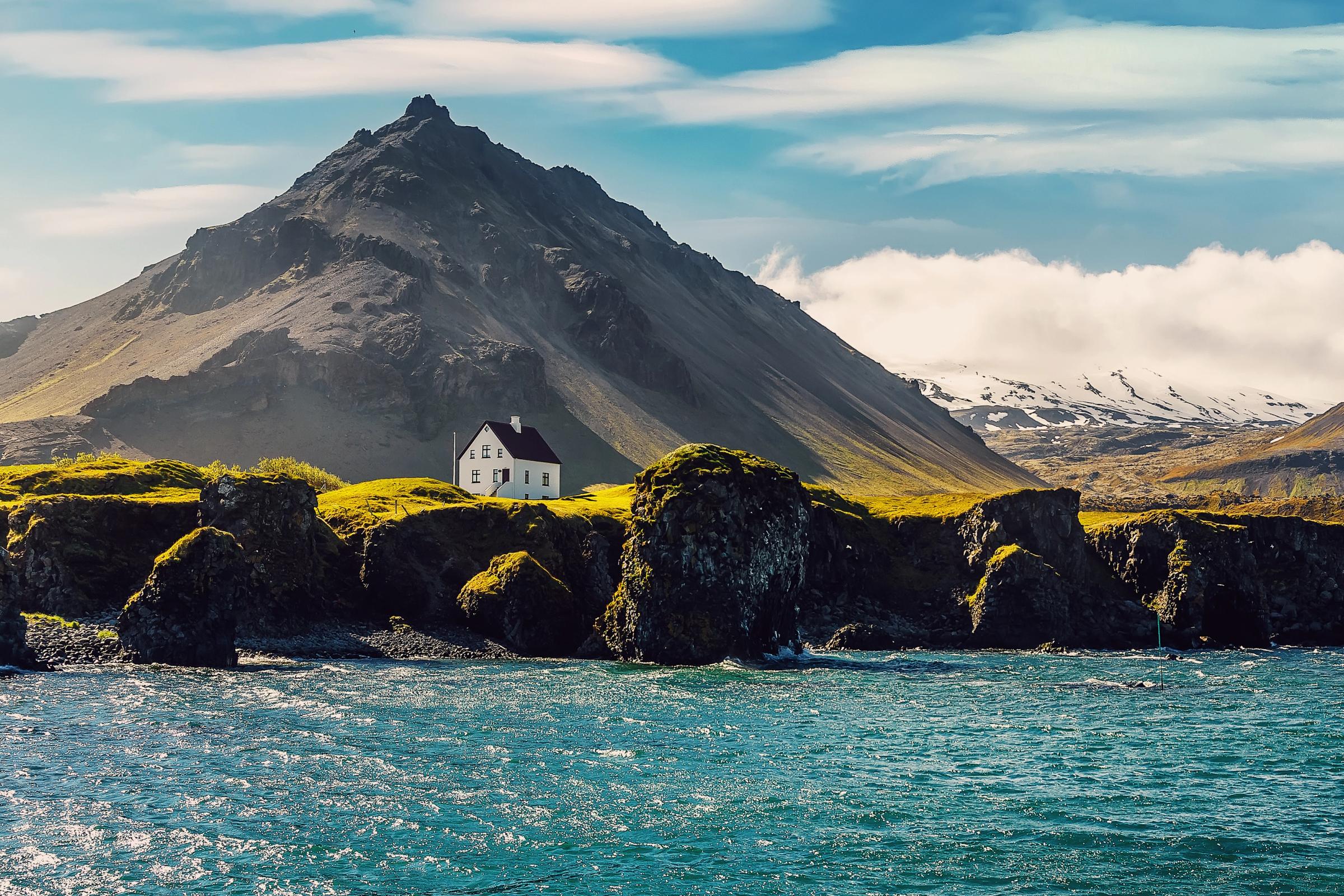
Arnarstapi is 4-5 km (3 miles) south, and it is the most natural pairing. The village is on dramatic basalt cliffs with seabirds, sea caves, and rock arches. There's also a large stone statue of Bárður Snæfellsás here, the same saga figure whose story is behind the gorge's name, so there's a good thread between the two stops. From Arnarstapi, a marked coastal path leads to Hellnar through some of the peninsula’s best coastal scenery.
Hellnar
A short drive from Arnarstapi, Hellnar is a small village with a harbor, rock formations, and a cafe. It's a low-key stop that feels different from both the gorge and the open cliff scenery nearby.
Lóndrangar and Djúpalónssandur
Lóndrangar is a pair of basalt sea stacks, the remains of an eroded volcanic crater, about 11 km (6.8 miles) west. Djúpalónssandur is a black pebble beach about 18 km (11.2 miles) from the gorge, with shipwreck remains and a set of old "lifting stones" that fishermen used to test their strength. Both are worth a stop on a southern peninsula loop.
Snæfellsjökull National Park and Glacier
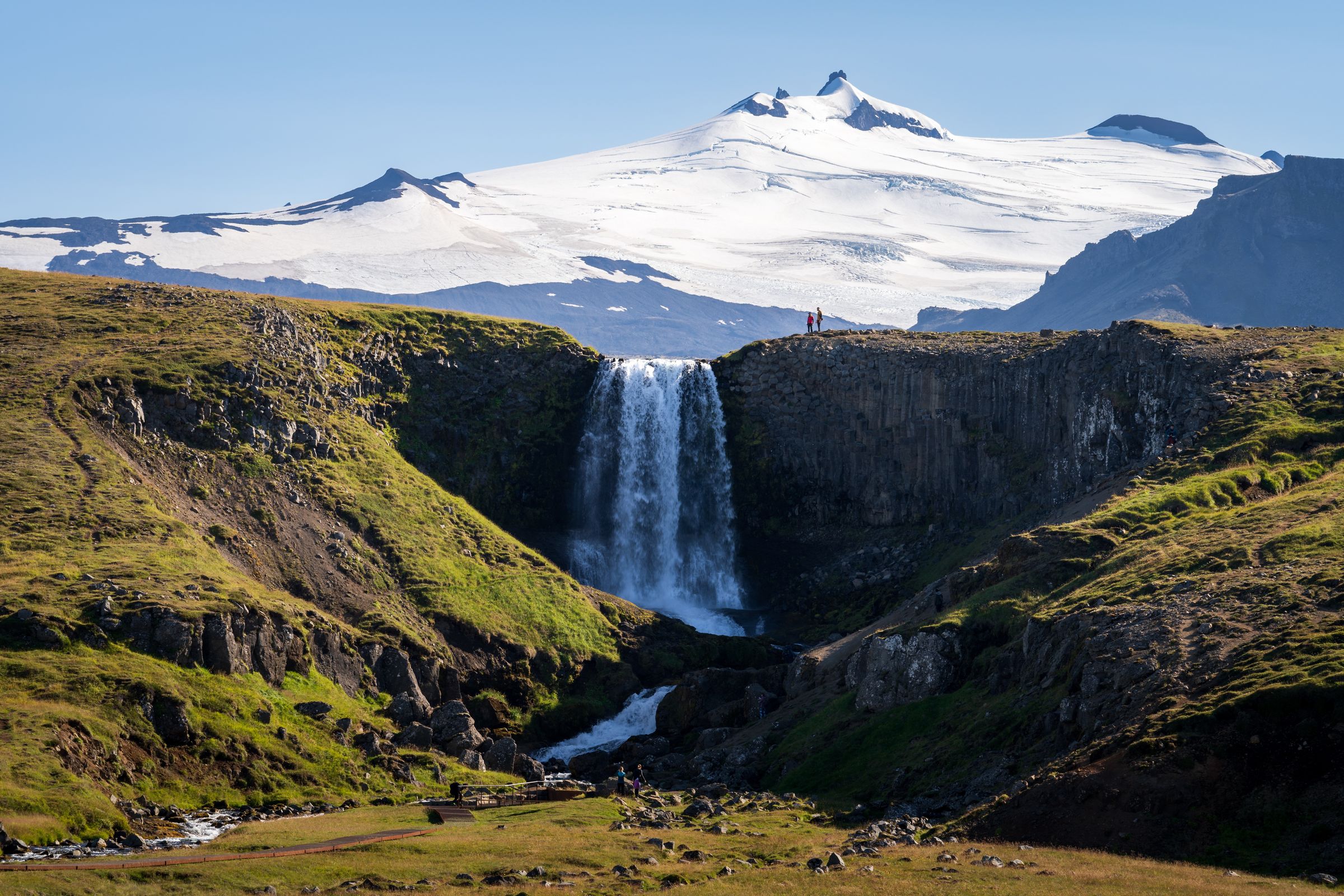
The glacier-capped volcano of Snæfellsjökull sits at the western end of the peninsula and is visible from most of it on a clear day. It's the same landscape Jules Verne used as the entrance to the center of the earth. Hiking, lava cave tours at Vatnshellir, and the national park visitor center at Malarrif are all nearby.
Conclusion
Rauðfeldsgjá is easy to miss on a map and hard to forget once you've been inside. It's free, takes under an hour, and works with any rental car. What you get is a gorge you can actually walk into, a stream, moss-covered walls, a small waterfall if you go far enough, and a place name that comes straight from a 13th-century saga about a man being thrown into that exact spot.
Bring waterproof boots, check the weather on vedur.is before you go, and pair it with Arnarstapi and a couple of other south-coast stops. That's the trip worth doing.
Frequently Asked Questions About Rauðfeldsgjá Gorge
It’s generally quieter than major Iceland attractions, but the small parking lot can fill up in peak summer midday hours.
Yes, it’s open all year, but winter conditions often limit access to the entrance area because of ice and safety risks deeper inside.
Older children with good balance can enjoy it, but the slippery rocks and cold water inside make it less suitable for very young kids.
Yes, you can stay near the entrance and avoid water. Going deeper into the gorge usually requires stepping through ankle-deep water.
About the author
Aron Freyr
Local expert
Born and raised in Iceland, Aron Freyr has spent all 28 years of his life exploring the country and getting to know its landscapes, regions, and ever changing conditions.