One of the most authentic geothermal baths in Iceland: Fosslaug Hot Spring
Iceland has an enormous source of geothermal energy underground, which has generated many natural hot springs and thermal rivers all over the island. Some have turned into sophisticated spas, while others remain rustic and natural. Among these, there’s a spot in North Iceland that represents the quieter side of this magnificent experience: Fosslaug Hot Spring.
Come with us to discover this fantastic destination.
Key Takeaways
- Fosslaug is a small natural hot spring near Varmahlíð in North Iceland, with water temperatures of 38–40°C (100–104°F) and views of the nearby Reykjafoss waterfall.
- It receives far fewer visitors than Iceland’s better-known hot springs, making it a good choice for travelers looking for a quieter bathing spot.
- The pool sits just 50 metres from the cold Húseyjarkvísl River, allowing visitors to combine a hot soak with a refreshing cold plunge.
- Access to the pool is free, but parking costs ISK 1,500 per vehicle. There are no toilets, changing rooms, showers, or other facilities on site.
- Fosslaug has been used for generations and remains one of the most natural and traditional geothermal bathing spots in Iceland.
What is Fosslaug?
Fosslaug is a small, natural hot pool built into the earth on the banks of the Húseyjarkvísl River in North Iceland. Unlike the commercial and modern spa complexes found elsewhere in the country, it offers a simple, open-air bathing experience where the warm geothermal water contrasts sharply with the cold northern winds.
The bottom of the pool is made up of smooth river gravel and soft volcanic mud, giving it an authentic, wild character that sets it apart from modern concrete swimming pools.
An Off-the-Beaten-Path Experience
If you're planning a campervan road trip around Iceland, Fosslaug makes an excellent stop. The Northern Region receives fewer visitors than the South, but it is equally fascinating and full of things to do. Since the pool is easy to access, it offers a relaxing cultural experience you can easily add to your itinerary.
Another advantage is that Fosslaug remains relatively unknown compared to many of Iceland’s famous bathing spots. As a result, visitor numbers are generally low, allowing for a quieter and more peaceful experience.
Hot and Cold Bathing
One of Fosslaug’s most distinctive features is its location just 50 meters from the cold-water Húseyjarkvísl River. This allows visitors to alternate between the hot geothermal pool and a refreshing cold plunge, creating a temperature contrast that is said to improve blood circulation.
Be warned, however, the river is exceptionally cold.
Views of Reykjafoss
The pool enjoys beautiful views across meadows, pastureland, and dramatic mountain landscapes. It also has a spectacular neighbour: Reykjafoss, a powerful waterfall on the Húseyjarkvísl River.
The waterfall cascades over a series of dark basalt steps, dropping 20 metres (66 feet) before reaching the pool below. Rather than plunging in a single stream, the water spreads across broken rock ledges, creating a dramatic white curtain that serves as a stunning backdrop to the thermal area.
In fact, the name Fosslaug translates as "pool of the waterfall", a reference to the excellent views of Reykjafoss from the bath.
Why Visit Fosslaug?
Fosslaug combines several qualities that make it a worthwhile stop in North Iceland:
- Natural geothermal waters
- Free access
- Scenic mountain and countryside views
- Fewer visitors than most Icelandic hot springs
- An authentic connection to Icelandic bathing culture
A small parking area is located just upstream, and from there it is only a short walk of a couple of minutes to reach both the pool and the waterfall.

History of Fosslaug
The Skagafjörður region is quite relevant in the history of Iceland, serving as the setting for some of the most dramatic conflicts in the medieval Icelandic Sagas.
Geothermal features like Fosslaug were very important to the early Norse settlers who arrived in the late ninth and tenth centuries. They used to go to these naturally heated waters for washing wool, bathing, and surviving the brutal winters. The valley where the pool is set has been inhabited for centuries, used for sheep farming, and the hot spring has been used by locals during all this time.
The Age of the Sturlungs
According to historical records from the Age of the Sturlungs, the surrounding fields were a source of dispute for tribal chieftains. Many legends and historical texts suggest that travelers and warriors would go to thermal springs to rest and heal their wounds.
These spots were so important that warlords would go there to negotiate with their rivals and even broker peace treaties, treating the warm waters as neutral ground where violence was forbidden.
From the Past to the Present
Nowadays, Icelanders go there to relax, socialize, and, sometimes, conduct business, a natural evolution from those more turbulent times.
Construction of the Pool
The pool was built using regional turf and dry-stone masonry techniques around the natural thermal point to collect water efficiently. There’s a natural hot spring that comes up from underground and then flows into the river.
This way, it was separated from the cold waters of the river but without making it look artificial. This simple construction style has been carefully maintained over the decades, preserving the historical connection between human action and nature.
Details of the Pool
Here you have some practical information about Fosslaug.
- Water Temperature: Consistently stays between 38°C and 40°C (100°F to 104°F) year-round, regardless of the season or the air temperature outside.
- Dimensions: Roughly oval in shape, measuring approximately 3 meters by 4 meters across (10 by 13.1 feet).
- Depth: An average of 60 centimeters to 80 centimeters deep, allowing bathers to sit comfortably on the underwater stone ledges.
- Capacity: Accommodates four to seven people comfortably without crowding the pool area.
- Water: Clear, continuously circulating geothermal water with a high mineral content and a soft, natural mud floor.

General Information About Fosslaug Hot Springs
Fosslaug is accessible to everyone. It’s rustic and natural, so don’t expect anything “commercial” there.
Timetable and Access
The hot spring is open 24 hours a day, 365 days a year. Because there’s no artificial lighting along the trail or around the pool, if you come outside summer, you’ll have to plan your visit to the few hours of natural light. That, or bring headlamps or flashlights. In summer, you can enjoy the bath under daylight almost all day.
Prices and Fees
There is no formal entry ticket required to bathe in the water. However, the road leading to the pool and Reykjafoss waterfall cross private land, and is fenced at certain points. The parking area costs ISK 1,500 per vehicle (€10.40 or $12.20). This can be paid via an honesty box located at the gate or through a digital QR code posted on the informational sign.
On-Site Facilities
The infrastructure at Fosslaug is minimal, designed to protect the rural environment from commercial exploitation. There’s nothing there. No dressing rooms, no toilets, no showers, no lockers to leave your things. Most travelers use their campervans as private changing spaces.
Where's Fosslaug and How to Get There
Fosslaug is located in the northern part of Iceland. More precisely, it belongs in the Northwestern Region, known as Norðurland vestra in the native tongue. It’s part of the agricultural valley of Skagafjörður, and situated approximately 7 kilometers south of the small town of Varmahlíð, which serves as the primary service hub along the main Ring Road route. For this reason, in spite of being in a rural area, it’s quite close to Iceland’s main highway. The best way to get there is by having your own car or campervan. Public transportation routes do not service Fosslaug or Reykjafoss.
Driving from Reykjavík
To reach the hot spring from the capital city, take Route 1 (the Ring Road) heading north. Drive for 290 kilometers (180 miles) and, just before arriving at Varmahlíð, there’s a road to the right with a sign that indicates Route 752. That road passes close to the river, but on the other side. So, five kilometers (3 miles) into that road, take a turn to the left onto Route 753, a gravel road. Shortly after you cross the wooden bridge over the river, take a smaller road to the right. There’s a sign on the crossroads that says Reykjafoss. You’ll soon get to the parking area. From there, it’s just a couple of minutes on foot.
The total distance is 300 kilometers (186 miles).
Driving from Akureyri
For those traveling from the capital of the north, the drive is considerably shorter. Take Route 1 for roughly 90 (56 miles) and then turn left onto Route 753, the same as described before, but from the other end. You’ll find the diversion for the dirt track to the parking area five miles in. The total distance is 98 kilometers (61 miles).

Where to Stay Near Fosslaug
Even if you might feel like staying there, by the pool and waterfall, is a great idea, wild camping is illegal in Iceland. You can’t just park anywhere and sleep there; you need to stick to designated areas. Luckily, there are a few near Fosslaug.
Bakkaflöt Camping Ground
Distance to Fosslaug: 8 kilometers (5 miles).
Opening Period: All year.
This campsite is a family-owned business located very close to Fosslaug. The site has a renovated service building, and gives access to toilets, electricity, hot water, showers, swimming pool, Wi-Fi, waste disposal for mobile homes, and cooking facilities. The campsite welcomes dogs and has cottages available for rent. If you did not have enough at Fosslaug, they also have a hot tub. The same family owns a guesthouse next door with 22 rooms.

Varmahlíð Camping Ground
Distance to Fosslaug: 8.5 kilometers (5.3 miles).
Opening Period: May 15 to October 31.
A great campsite located in the town of Varmahlíð. It has separate areas for tents and vans, and the pitches are separated by trees. It features toilets, showers, a washing machine and dryer, electricity hookups, an indoor kitchen area, a common area, and Wi-Fi. It’s a couple of minutes on foot to the shops and cafés that can be found in Varmahlíð.

Húnaver Camping Ground
Distance to Fosslaug: 27 kilometers (16.8 miles).
Opening Period: May 15 to September 15.
Located to the west along the Ring Road near the Blanda River, Húnaver offers a peaceful environment away from the busier coastal towns. It’s great for nature lovers, as the setting is really beautiful, in a green meadow surrounded by mountains. The site emphasizes basic comforts in a rural setting, with facilities like showers, toilets, and electricity.
Sauðárkrókur Camping Ground
Distance to Fosslaug: 32 kilometers (19.8 miles).
Opening Period: May 1st to October 1st.
This campsite is located in the town of the same name, next to the local swimming pool. The facilities include toilets, showers, electricity hookups, and hot and cold water. It’s accessible for people in a wheelchair. The proximity to restaurants, bakeries, and shops makes it practical for restocking. There’s a gas station just on the other side of the road.
Glaðheimar Cottages and Camping
Distance to Fosslaug: 56 kilometers (34.8 miles).
Opening Period: Year-round.
This place is more focused on cottages, but it includes a camping area. You can choose different types of accommodation: cottages (different sizes and capacities) with bathroom and kitchen; a room in the guesthouse with a private bathroom; or a camping area for tents and vans. All the pitches have access to electricity.

Hólar Camping Site
Distance to Fosslaug: 46 kilometers (28.5 miles).
Opening Period: May 15 to September 15.
Surrounded by a forest, which is not common in Iceland, Holar is one of the most interesting camping grounds in Northern Iceland. The facilities are basic, with toilets and showers. There are several hiking trails around the campsite. Hólar Cathedral is a popular tourist attraction, and the Icelandic Horse History Centre is another.

What to See and Do Near Fosslaug
Visiting Fosslaug is a great experience on its own, but becomes even better if you combine it with some of the great sights nearby.
Glaumbær Farm & Museum
Located roughly 15 kilometers (9.32 miles) north of Varmahlíð, Glaumbær is the place to go if you’re into history. Especially if you want to know how Icelanders lived a couple of centuries ago. The site features a remarkably preserved complex of traditional Icelandic turf houses dating back to the eighteenth and nineteenth centuries. You can visit the kitchen, pantry, and common areas to learn about daily routines. The exhibition displays crafts and folkloric elements to understand the country’s heritage.

Örlygsstaðir Historical Site
This historic field marks the location of the Battle of Örlygsstaðir, which took place in the year 1238. It stands as the largest and bloodiest military clash in Icelandic history, where rival family clans fought for ultimate control of the island during the chaotic Sturlung Era. There are memorial markers and detailed informational signs that help visitors visualize the tactical movements of this medieval conflict.
Bólugilsfoss
A short distance from the main road lies Bólugilsfoss, an elegant waterfall tucked inside the dramatic stone throat of the Bólugil ravine. The trail leading to the falls offers fantastic views of steep rock walls carved over millennia by glacial runoff. It is significantly less crowded than other northern waterfalls, offering an intimate hiking experience for those who appreciate hidden canyons.
Grettislaug
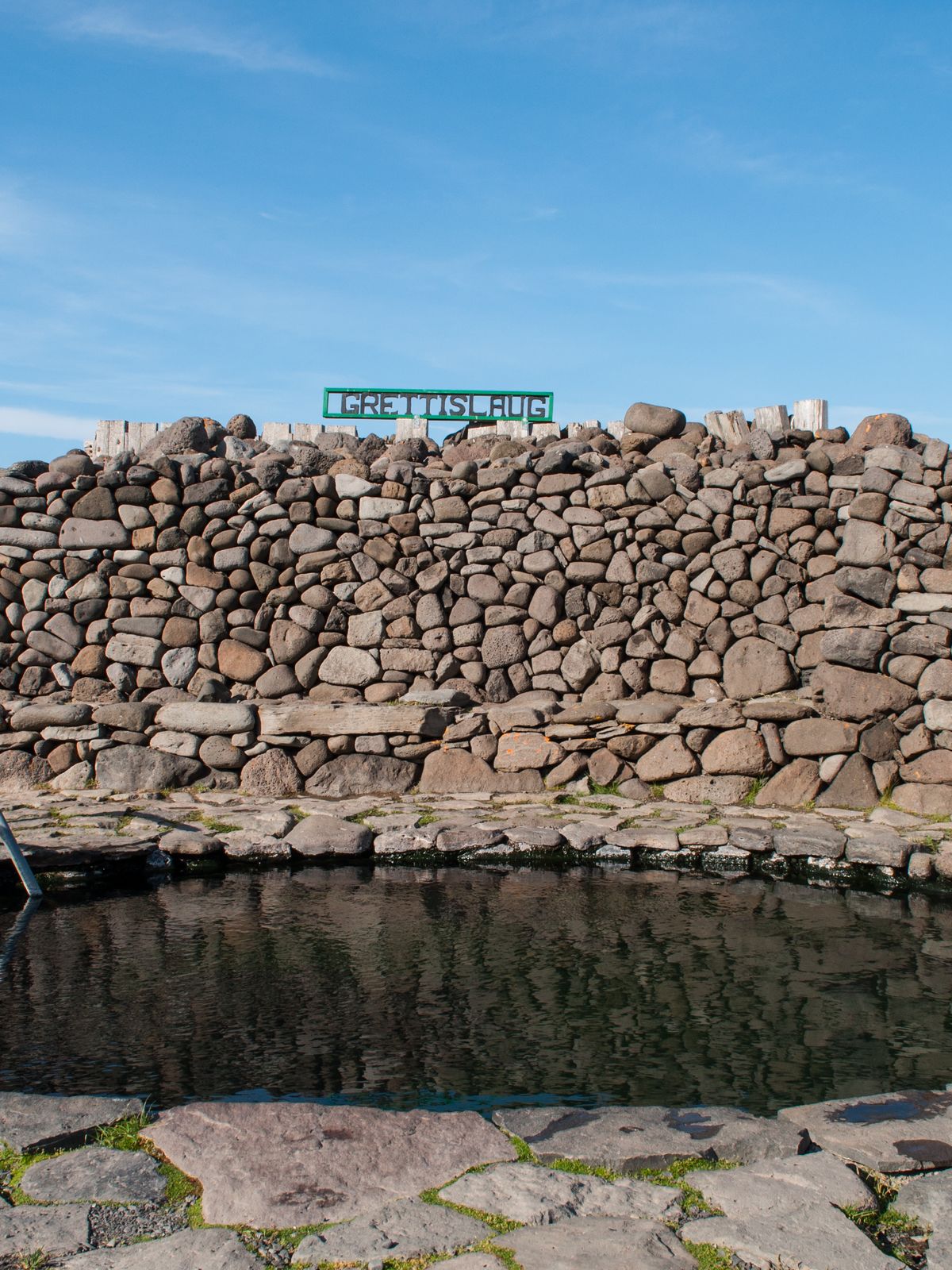
A little bit further north, on the shores of the Skagafjörður fjord, Grettislaug is another geothermal spot. It consists of two stone-lined geothermal pools named after the legendary Grettir the Strong, an outlaw from the Icelandic sagas. The site offers an incredible contrast between the warm water and the crashing waves of the North Atlantic.

Þrístapar
Located further west near the Ring Road, Þrístapar is a collection of three distinct grass-covered mounds that marks a somber turning point in national history. This place, whose name can be translated as “three hillocks,” is where the last execution in the history of Iceland was held. In 1830, a man and a woman were sentenced to death for two murders committed two years before. They were beheaded and their two heads were put on spikes. There’s a sculpture of a giant axe to commemorate this event.
Drangey Island
Drangey Island is a flat-topped volcanic rock in the middle of the Skagafjörður fjord, in front of Grettislaug. This small island is rich in birdlife and is a central element in the Grettis Saga, as it’s the place where Grettir the Strong hid from his enemies. There are boat tours from the town of Sauðárkrókur that allow you to see lots of puffins, terns, and guillemots in the summer months.

The Seasons at Fosslaug
The climate is a key element in every trip to Iceland. Here, the weather is notoriously unpredictable and can change in a matter of minutes. As Fosslaug is outdoors, this becomes even more relevant. Here’s an overview season by season.
Summer
The summer months bring the warmest weather and long hours of daylight, which makes it the easiest time to visit the pool. The access roads are free from snow, and temperatures are pleasant for walking along the river. The primary disadvantage of a summer visit is the increased number of fellow travelers, which means you may have to share the small pool with other bathers during mid-day hours.
Autumn
Autumn brings a dramatic color shift as the valley grass turns deep shades of gold and copper, creating a beautiful view from the pool. The cool ambient temperatures make slipping into a 40°C thermal pool feel incredibly rewarding. It’s also the season with the fewest tourists, so you have more chances to have the pool all to yourself. On the other hand, it rains often, and winds can be strong.
Winter
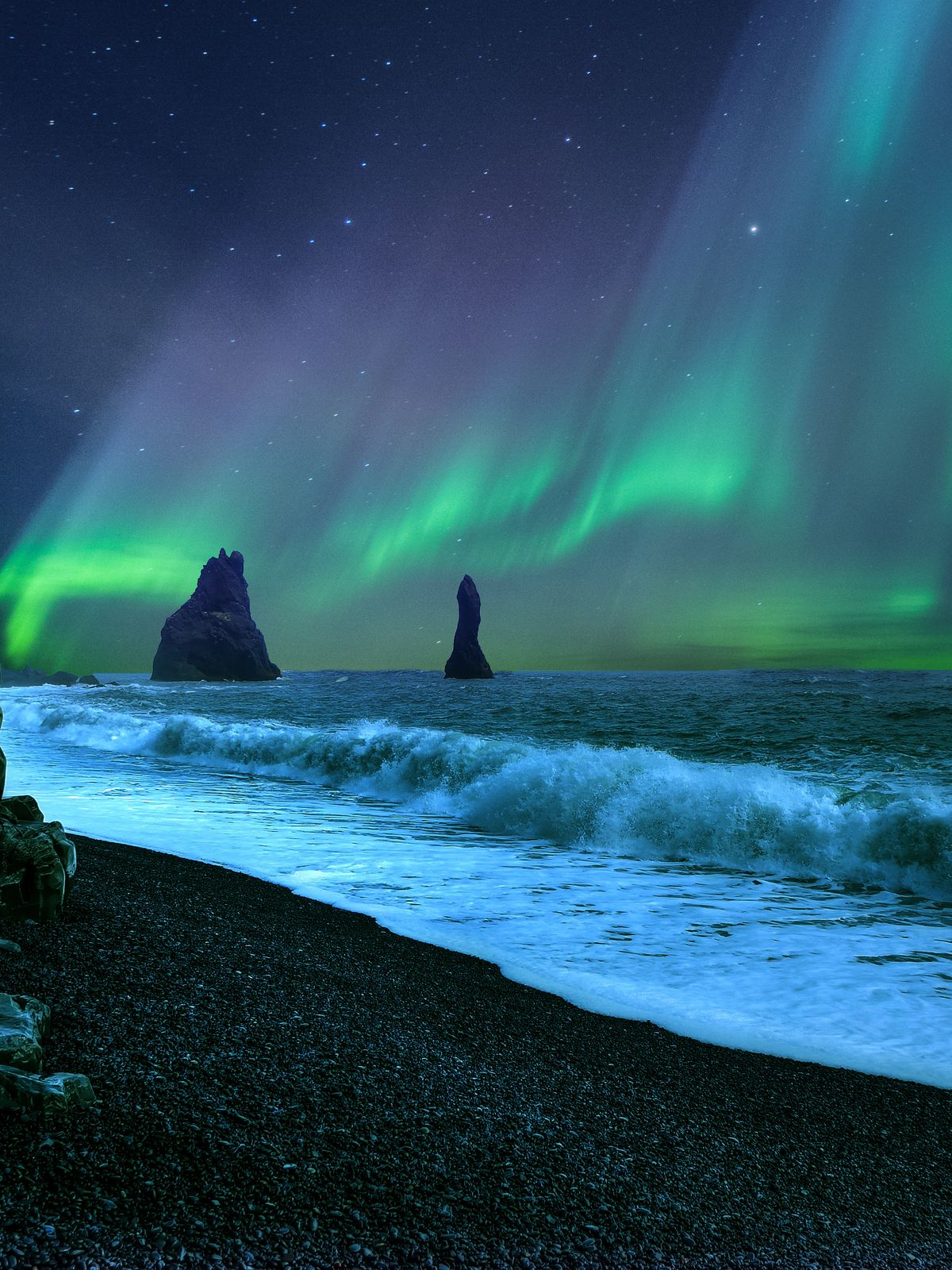
Visiting Fosslaug in the winter can be an experience of a lifetime, but it comes with disadvantages. The temperature is quite cold, normally around freezing point, and travelling can be difficult. The main roads are usually open, but secondary and gravel ones, like the ones going to Fosslaug, can be closed because of the adverse weather. It’s compulsory to have a 4x4 vehicle. On the other hand, if the conditions are good for traveling, this is the season with more chances to see the Northern Lights, so you can have a bath under the aurora.
Spring
Spring is a period of transition as the winter snow melts away and the local bird populations begin to return to the valley. The Reykjafoss waterfall runs at its maximum volume, creating a powerful, roaring image. The main disadvantage of visiting during this time is that the trail from the parking area to the pool can be quite muddy. Some roads are still closed at the beginning of the season.
What to Pack to Visit Fosslaug
- Swimsuit: Necessary for bathing. There’s no possibility of rent there, so you have to bring your own.
- Towel: Essential for drying off quickly in the chilly open air after leaving the warm pool. Better if it’s quick-dry.
- Sturdy Hiking Boots: The trail leading to the pool can be muddy and slippery, and it’s uneven and rocky.
- Windproof and Waterproof Jacket: Rain is always a possibility in Iceland.
- Water Shoes: Helpful for walking over the stone edges of the pool.
- Small backpack: To carry your things, as well as water and snacks, there are no bars or shops near the pool.
- Trash Bag: There are no bins around the pool, so you must take all your trash with you back to the camper.
Travel Tips
- Change at the Vehicle: Use the interior of your campervan as your primary changing area.
- Leave No Trace: Respect the delicate environment by carrying all garbage back.
- Secure All Gates: Always close and latch the farm gates along the walking trail to prevent sheep from escaping. Remember you’ll be crossing private land.
- Avoid Soap Products: Do not use shampoos, body washes, or soaps in or near the pool, as the water drains directly into the local river system.
- Arrive Early or Late: Time your visit for the early morning hours or late evening to maximize your chances of enjoying a peaceful, solitary soak.
- Check Road Conditions: Always look up the IRCA website before departing to avoid setbacks.
Conclusion
Fosslaug Hot Spring offers a genuine geothermal experience. There are many places in Iceland to enjoy this wonderful activity, but not many are as natural and rustic as this one. The only noise you’ll hear comes from Reykjafoss or an occasional bird passing by, so you’ll feel a true connection with this country and its traditions.