Aldeyjarfoss Waterfall: One of the best-kept secrets in Northern Iceland
In the northern part of the Icelandic Highlands, there’s a waterfall that stands out as one of its most visually striking natural wonders. Its name is Aldeyjarfoss, and not many people outside the country have heard of it. Located along the powerful Skjálfandafljót river, this waterfall provides a more secluded and raw experience compared to the most famous waterfalls of the north, like Goðafoss and Dettifoss.
If you are one of those adventurers looking for something off the beaten path, this remote site deserves your time. The journey to this place is as much a part of the adventure as the destination itself.
You’ll need a sturdy 4x4 campervan to get there, but once you do, you’ll be rewarded with a unique view.
Key Takeaways
- Aldeyjarfoss is a waterfall located in North Iceland.
- It’s part of the Highlands, the wildest region of the country.
- To get there, it’s necessary to have a 4x4 vehicle.
What’s Aldeyjarfoss?
Aldeyjarfoss is one of the many waterfalls that can be found in Iceland. But it’s no ordinary waterfall. It’s not very famous outside the country due to its remote location. However, the locals love it and often describe it as the "hidden crown jewel" of the North. In general, North Iceland is not as visited and known as other regions of the country when it comes to tourism. But it’s, perhaps, the most surprising of them all.
Going back to Aldeyjarfoss, not many waterfalls have the architectural precision that can be found here. The most striking element of the waterfall is its dramatic backdrop of hexagonal basalt columns. This rock is formed when lava, after a volcanic eruption, meets water or ice and cools down slowly, creating geometrical shapes. These columns are at the edge of a huge lava field called Suðurárhraun, which originated from eruptions nearly 9,500 years ago. The way the black stone contrasts with the white foam of the falling water creates an image that seems from another world.
The area surrounding Aldeyjarfoss is quite special. The Icelandic Highlands are a huge area with no population and very difficult access. In the past, only the hardiest of travelers and outlaws would venture this far into the interior, as the terrain was unforgiving and the weather unpredictable. Today, Aldeyjarfoss remains a bit isolated, but modern advances have made the access easier. However, to get there, you’ll need to navigate an F-road, the infamous mountain tracks that go deep into the highlands. To drive on them, it’s necessary (well, in fact, mandatory) to have a 4x4 vehicle, so bear that in mind when renting your campervan.
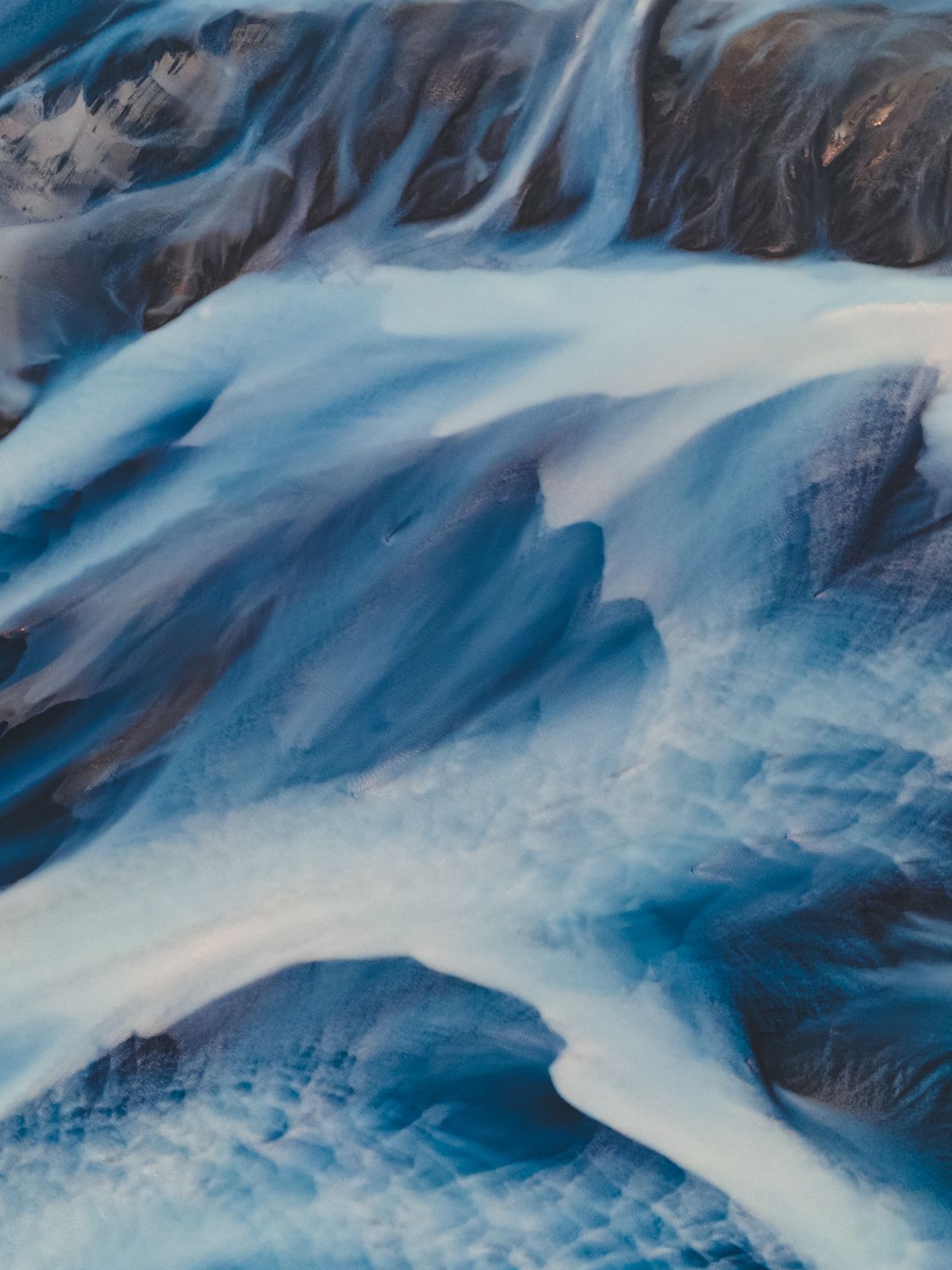
The falls are fed by the Skjálfandafljót river. The river's name translates roughly to "trembling river," a nod to the powerful vibrations felt along its banks during glacial melts. The river is at its highest flow in early summer, when the glacier that feeds the river melts a bit. Then, the sheer force of the water plunging into the pool below is something to behold. Also, the color of the water is of an intense blue, adding even more to the scene.

About Aldeyjarfoss waterfall
It’s not clear where the name Aldeyjarfoss comes from. In Iceland, the name of places is usually quite descriptive. “Ey” means island, and could be a reference to an island that may have existed in the Skjálfandafljót river in the past, but there is no evidence. Then, “foss” means waterfall. Every place name you see ending like this, it’s a waterfall. The Skjálfandafljót is the fourth longest river in Iceland, and carries meltwater from the Vatnajökull glacier, the largest glacier in Iceland, all the way to the north coast.
In terms of size, Aldeyjarfoss drops from a height of approximately 20 meters (65 feet). While it is not the tallest waterfall in the country, its beauty lies in its symmetry and the shape of the amphitheater the river has carved in the basalt columns over time. The width of the falls varies depending on the season and the amount of glacial melt, but it normally maintains a concentrated, powerful flow.
The basalt columns surrounding the falls are among the most perfect examples of columnar jointing in the world. As the thick lava flow cooled, it contracted, cracking into these peculiar hexagonal shapes. At Aldeyjarfoss, you can see these columns in different states: some standing perfectly vertical, others twisted and warped. The basin into which the water falls is wide and circular. There’s a viewing point, not far from a parking area, from where you can see the waterfall in all its glory.

Where’s Aldeyjarfoss and How to get there
Aldeyjarfoss is located in the northern part of the Icelandic Highlands, situated at the northern end of the Sprengisandur route (F26). Because of its location, it is essential to understand that reaching the falls requires a 4x4 vehicle. Most standard campervans are not permitted on F-roads, so you must ensure your rental is specifically rated for highland driving.
If you’re coming from Reykjavik, the drive is long but incredibly scenic. Most travelers will head north on the Ring Road (Route 1). After 380 kilometers approximately (236 miles), you’ll reach Akureyri, the main town in North Iceland. Pass through the city, and not long after, when you get to Goðafoss, turn right onto Route 842. You will drive along this gravel road for about 40 kilometers (25 miles) until it transitions into the F26 (Sprengisandur).
From the start of the F-road, it is only a short, bumpy drive to the parking area for the waterfall. The distance from Reykjavik to Aldeyjarfoss is approximately 450 kilometers (280 miles) and usually takes around 5.5 to 6 hours without stops. Some people make it in 2 or 3 days, making stops to see other things.
If you’re coming from Akureyri, the capital of North Iceland, you just have to follow the route described above. Aldeyjarfoss is about 90 kilometers (56 miles) from Akureyri. The drive takes approximately 1 hour and 15 minutes.
Once you arrive at the parking lot, there is a short, marked trail that leads down to the viewing area. The hike is not hard, but the terrain can be rocky and slippery, especially near the edge of the falls.

Where to stay near Aldeyjarfoss waterfall
Iceland is a paradise for campervan travelers. There are hundreds of camping sites where you can park for the night. However, there’s none directly at the waterfall, but there are a few not far from it. It’s important to know that wild camping is illegal in Iceland, so you can’t spend the night there.
Kiðagil
Distance to Aldeyjarfoss: 18 km (11.2 miles).
Opening period: Year-round. Camping area from June 1 to August 31.
Kiðagil is the closest campsite to the waterfall, located in the Bárðardalur valley. It’s halfway between Aldeyjarfoss and Goðafoss. This place is a guesthouse that also has a camping area, so you can choose between staying in private rooms with a shared bathroom or staying in the van. The camping area, which is only available in summer, gives access to toilets, showers, electricity hookups, a playground for children, and a football field. The guesthouse also has a restaurant.
Fossholl
Distance to Aldeyjarfoss: 41 km (25.5 miles).
Opening period: Year-round (services may be limited in winter).
Just a stone’s throw from Goðafoss, Fossholl Guesthouse is a very popular spot for campers. It has basic facilities, including toilets, showers, and running water. The adjacent guesthouse has a café and shop, and is a good option if you want a more comfortable stay. It is recommended to book well in advance, as its unique location can make it fill up fast.
Laugafell
Distance to Aldeyjarfoss: 100 km (62 miles - requires 4x4).
Opening period: July to August (depends on road conditions).
This is an option for the truly adventurous campervan traveler. Laugafell is in the middle of the Highlands, located further south on the F26 and F752. These roads are rocky and bumpy, and include potential river crossings. It’s a rustic stay, with outdoor toilets and changing facilities. There’s also a hut with capacity for 20 people. There are hot showers in the main building and a geothermal pool.
Lífsmótun - CJA
Distance to Aldeyjarfoss: 55 km (34 miles).
Opening period: Year-round.
Lífsmótun, mostly known as CJA Camping Ground, is situated near the village of Laugar, in the forest farm Hjalli, in the valley Reykjadalur. It’s a family-friendly site with toilets, showers, electricity, washing machine and dryer, and cooking facilities. The owners also run a small guesthouse.
Vaglaskógur Campsite
Distance to Aldeyjarfoss: 62 km (38.5 miles).
Opening period: May to September.
Set in a beautiful forest in Fnjóskárdalur valley, Vaglaskógur is one of the most complete camping grounds in North Iceland. It features toilets, showers, electricity, a washing machine and dryer, a children's playground, and sheltered pitches for windy days. The facilities are also accessible to individuals using wheelchairs.
Systragil Camping Ground
Distance to Aldeyjarfoss: 64 km (40 miles).
Opening period: June to September.
Located in the same valley as Vaglaskógur, about 20 minutes from both Goðafoss and Akureyri. It has spacious pitches for tents and campervans sheltered by trees, toilets, showers, electricity, a washing machine and dryer, and cooking facilities.

What to see and do near Aldeyjarfoss
The region surrounding Aldeyjarfoss is packed with geological wonders and scenic lakes. You can easily spend several days exploring the North using your campervan as a mobile base.
Hrafnabjargafoss
Located just a few kilometers upstream from Aldeyjarfoss, Hrafnabjargafoss is another spectacular waterfall on the Skjálfandafljót river. It is often overlooked because Aldeyjarfoss is more famous, but Hrafnabjargafoss is arguably just as beautiful. It features a horseshoe shape and falls into a rugged, rocky canyon. The access is also via the F26, and it provides a much more intimate experience as you are likely to be the only person there.

Lake Íshólsvatn
This is one of the largest lakes in the northern highlands and is located just on the other side of the F26 from Hrafnabjargafoss. Lake Íshólsvatn is known for its clear waters and excellent fishing opportunities, particularly for Arctic char and trout. The surrounding landscape is desolate and beautiful, offering great opportunities for landscape photography. It’s a perfect spot for a quiet picnic by the water before heading back to the main roads.
Goðafoss
This is one of the most iconic and beautiful waterfalls in all of Iceland. It’s located just off the Ring Road, right when the road leading to Aldeyjarfoss begins. The waterfall is approximately 12 meters (39 feet) high and 30 meters (98 feet) wide. It’s not its size that makes it appealing, but its looks. It has a crescent shape and the water is of an intense turquoise color. Its name means “waterfall of the gods,” because, in the year 1000, local chieftain Þorgeir Ljósvetningagoði threw his statues of Norse gods into the falls when Iceland converted to Christianity.
Lake Ljósavatn
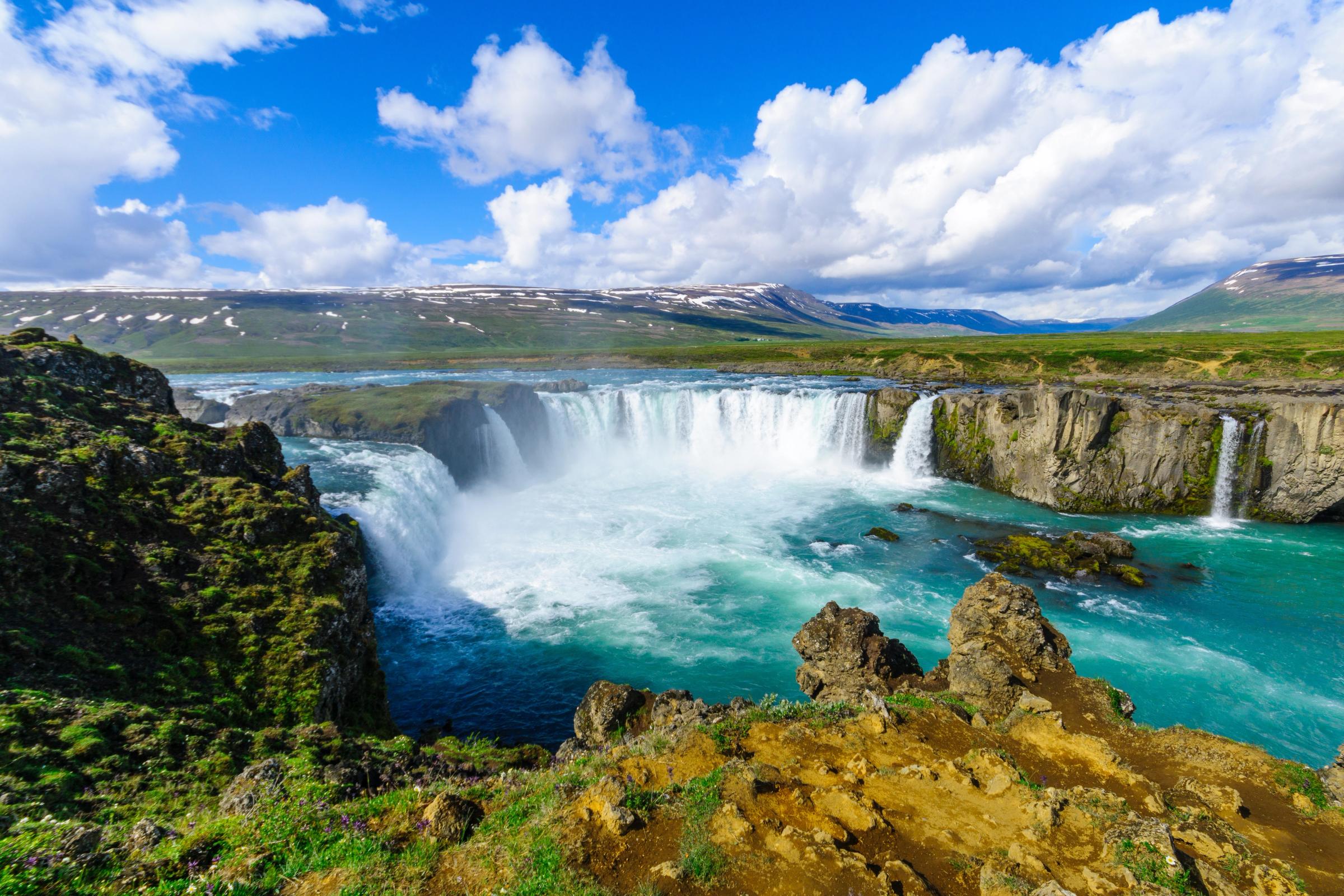
Located between Akureyri and Goðafoss, Lake Ljósavatn is a serene body of water that reflects the surrounding mountains like a mirror. There is a nice parking area with information boards about the local history, including the story of Þorgeir Ljósvetningagoði, who lived at a farm nearby. The lake is a great spot for a quick break to stretch your legs and enjoy the beautiful landscapes of the north.
Lake Mývatn
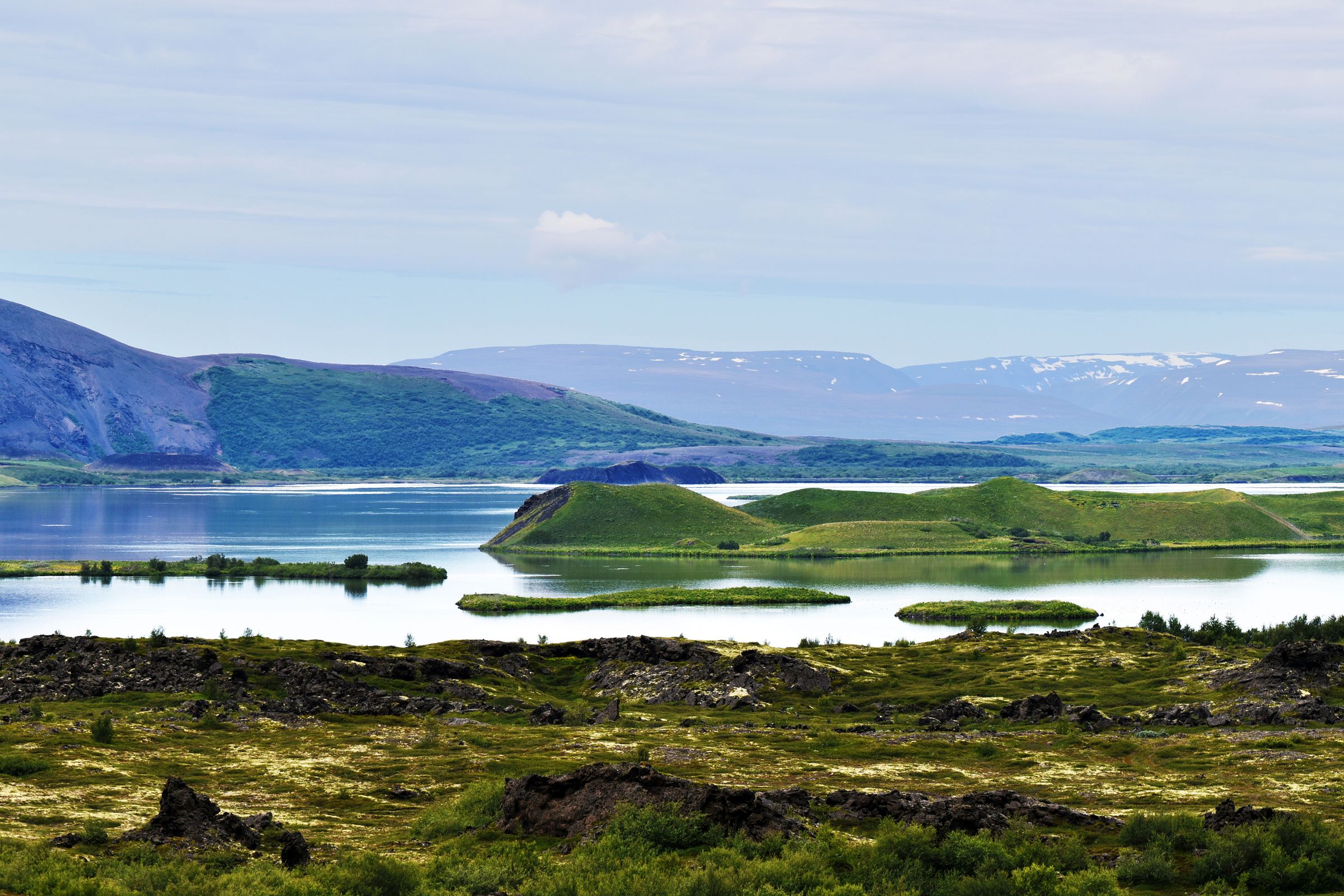
No trip to North Iceland is complete without visiting the Mývatn area. This volcanic lake and its surroundings offer an incredible variety of sights, including the Dimmuborgir lava formations, the Hverir geothermal area with its bubbling mud pools and steam vents, and the pseudo-craters. You can also visit the Mývatn Nature Baths (Earth Lagoon Mývatn) for a relaxing soak in mineral-rich waters. It’s one of the best geothermal spas in Iceland. The area is a haven for birdwatchers, especially during the summer months.
Forest Lagoon
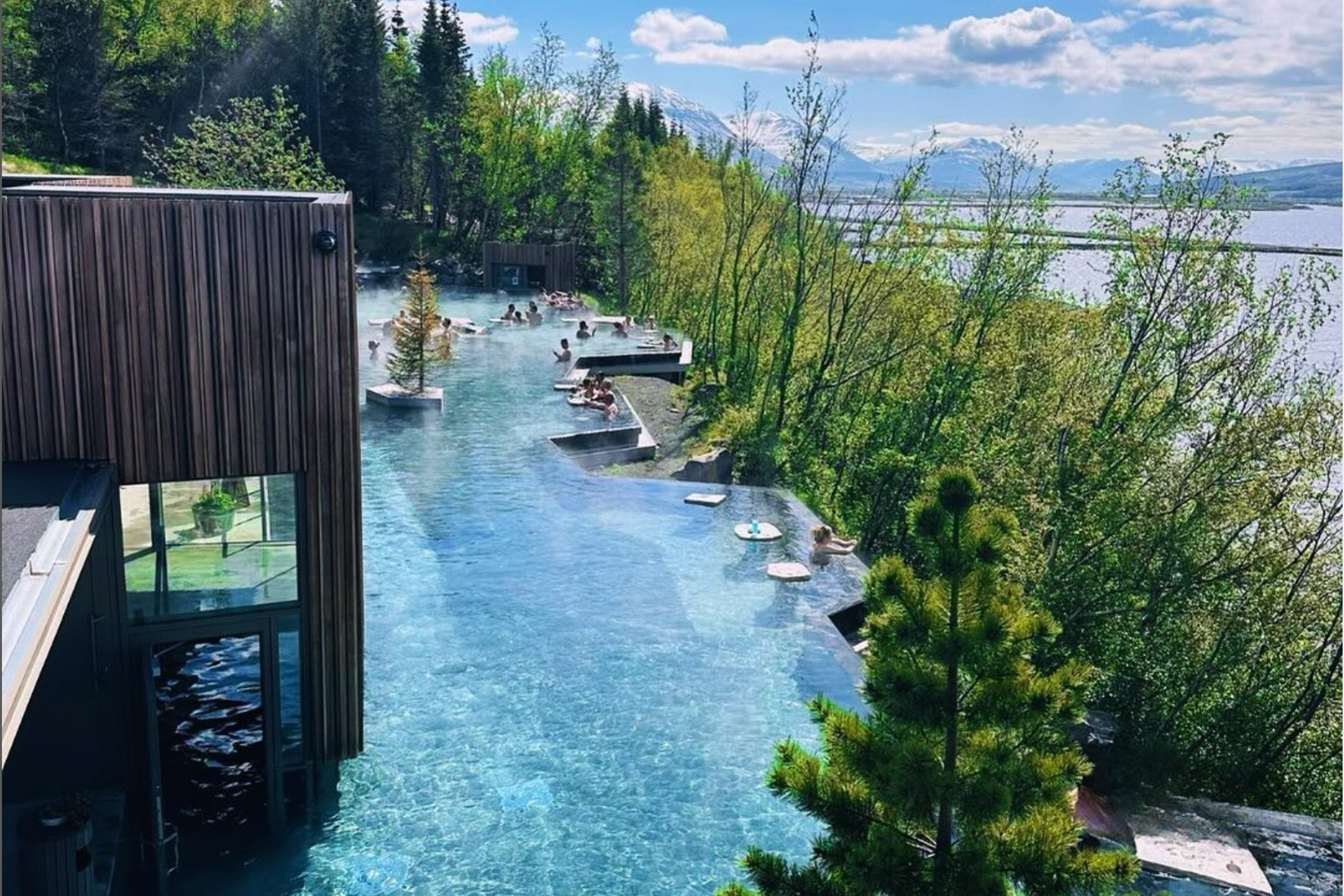
Located just across the fjord from Akureyri, the Forest Lagoon (its official name in Icelandic is Skógarbaðin) is one of the latest additions to the country’s geothermal scene. Geothermal bathing is an important part of the nation’s culture, and this is a great place to discover it. Icelanders go to geothermal baths to relax, socialize and, sometimes, conduct business. Unlike many Icelandic spas that are set in volcanic plains, this one is nestled within a forest. It features two main pools, at different temperatures, both filled with geothermal waters that come from the nearby Vaðlaheiði mountain, a Finnish-style sauna, and a cold pool.
Best time to visit Aldeyjarfoss
Timing is everything when planning a trip to Aldeyjarfoss. Because the waterfall is located on an F-road, it is generally only accessible during the summer months. Typically, these mountain roads open in late June and stay open until early or mid-September. These dates are entirely dependent on the snow levels and the condition of the road. The Icelandic Road and Coastal Administration (Vegagerðin) monitors these routes closely to ensure safety.
You can’t go with a regular campervan there. A 4x4 vehicle is a legal requirement for the F26 section. Even in summer, with good weather, the road can be rough, with irregular surfaces and loose gravel. During the late spring and early autumn, you might find the road open, but weather becomes a significant factor. Heavy rain can make the gravel sections muddy and slippery, while early snow can trap unprepared vehicles.
The falls are technically "closed" to self-driving in the winter, but some private tour operators use modified "Super Jeeps" with massive tires to take visitors to Aldeyjarfoss and other places in the Highlands during the colder months. Seeing the basalt columns covered in ice and snow is a magnificent sight, but it is not something you should attempt in a standard campervan, even if it’s an all-terrain vehicle.
In terms of summer weather, North Iceland is often drier than the south, but it is still unpredictable. Average temperatures in the summer range from 8°C to 13°C (46°F to 55°F), though on sunny days it can reach 20°C (68°F). Wind is a constant factor in the highlands, and it can significantly drop the feeling. Always check the weather forecast and road conditions before heading out.

What to pack to visit Aldeyjarfoss
- Sturdy Hiking Boots: The terrain around the falls is rocky and can be very slippery if it has rained. If it’s windy, the mist can reach the viewing point, too, so be careful there. A good pair of boots with good grip are essential. Better if they are waterproof.
- Layered clothing: The weather in Iceland is unpredictable, and even more in the Highlands. The best way to adapt to the almost certain changes of temperature is to dress in layers. A good thermal inner shirt; wool or fleece for the intermediate; and a waterproof jacket on top. Waterproof trousers can be really helpful if it rains.
- Hat, scarf, and gloves: Even in summer, days, and especially nights, can be chilly.
- Power Bank: If you go into the highlands, it’s probably not going to be for a little while. You’ll have a long day out, so better be prepared and don’t run out of battery.
- Snacks and Water: There are no services, cafés, or shops at Aldeyjarfoss or nearby. Make sure you have enough food and water for the day.
- Sunscreen and Sunglasses: The reflection of the sun off the water and the snow (if present) can be very bright.

Travel Tips
- Check Road Conditions Daily: Always visit the IRCA website before heading toward an F-road. Conditions can change in hours.
- Fuel Up: There are no gas stations in the highlands. Fill up your tank in towns and cities like Akureyri.
- Be careful near the edges: Stay on the marked paths and don’t get too close to the cliff’s edge near the viewing point. The rocks near the edge are unstable.
- Leave No Trace: The highland environment is extremely fragile. Pack out all your trash and never drive off-road (it is illegal and could result in heavy fines).
- Download Offline Maps: Cell service can be spotty, or even nonexistent, in some areas of the highlands. You can also get an old-school paper map.
Conclusion
Iceland has a lot to see and do, most if outdoors. However, not all the best things are near the main roads or even easy to access, but that’s what makes a road trip through this country so exciting. Some outstanding places, like Aldeyjarfoss, are in the middle of an isolated valley that is part of the most remote region of the country. But if you decide to come see this natural wonder, you’re in for an unforgettable experience.