A Landscape Straight Out of a Movie: Dimmuborgir Lava Field
Dimmuborgir is one of the strangest places you'll find in North Iceland. It's a lava field near Lake Mývatn where volcanic rock has hardened into towers, arches, caves, and narrow passages that look more like old ruins than anything natural. It's not hard to get to, the hiking is easy, and there are a bunch of good stops nearby.
What Is Dimmuborgir?
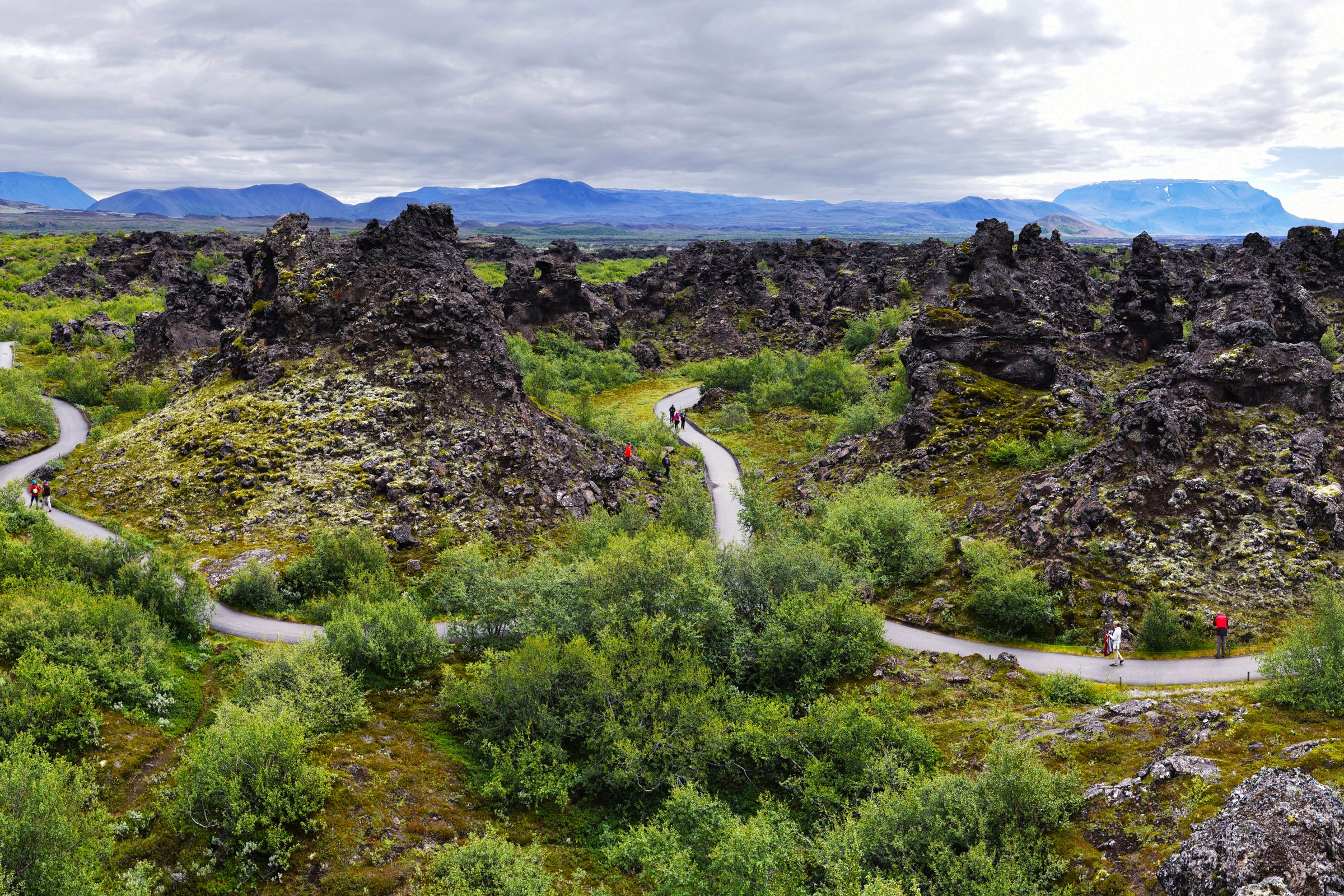
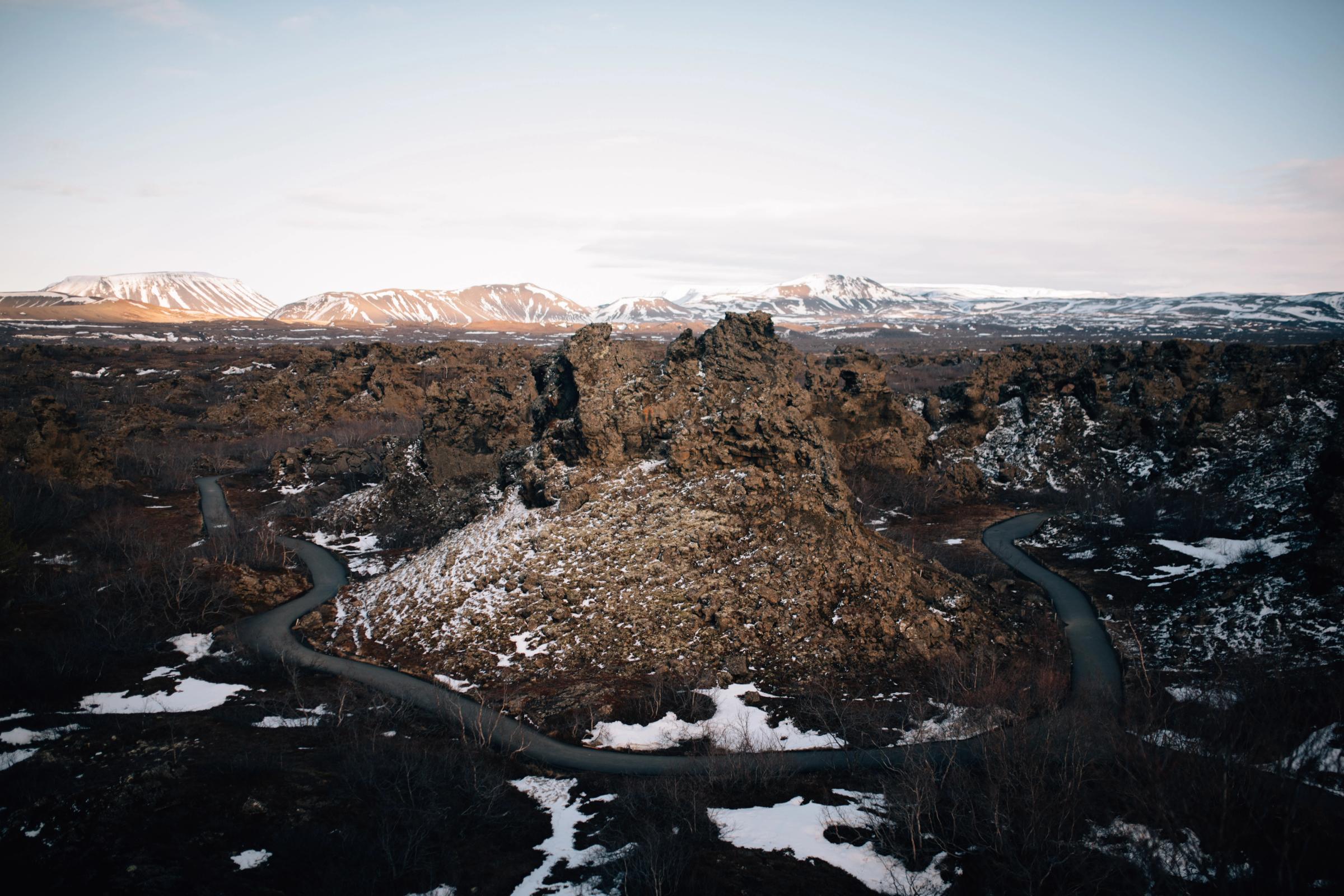
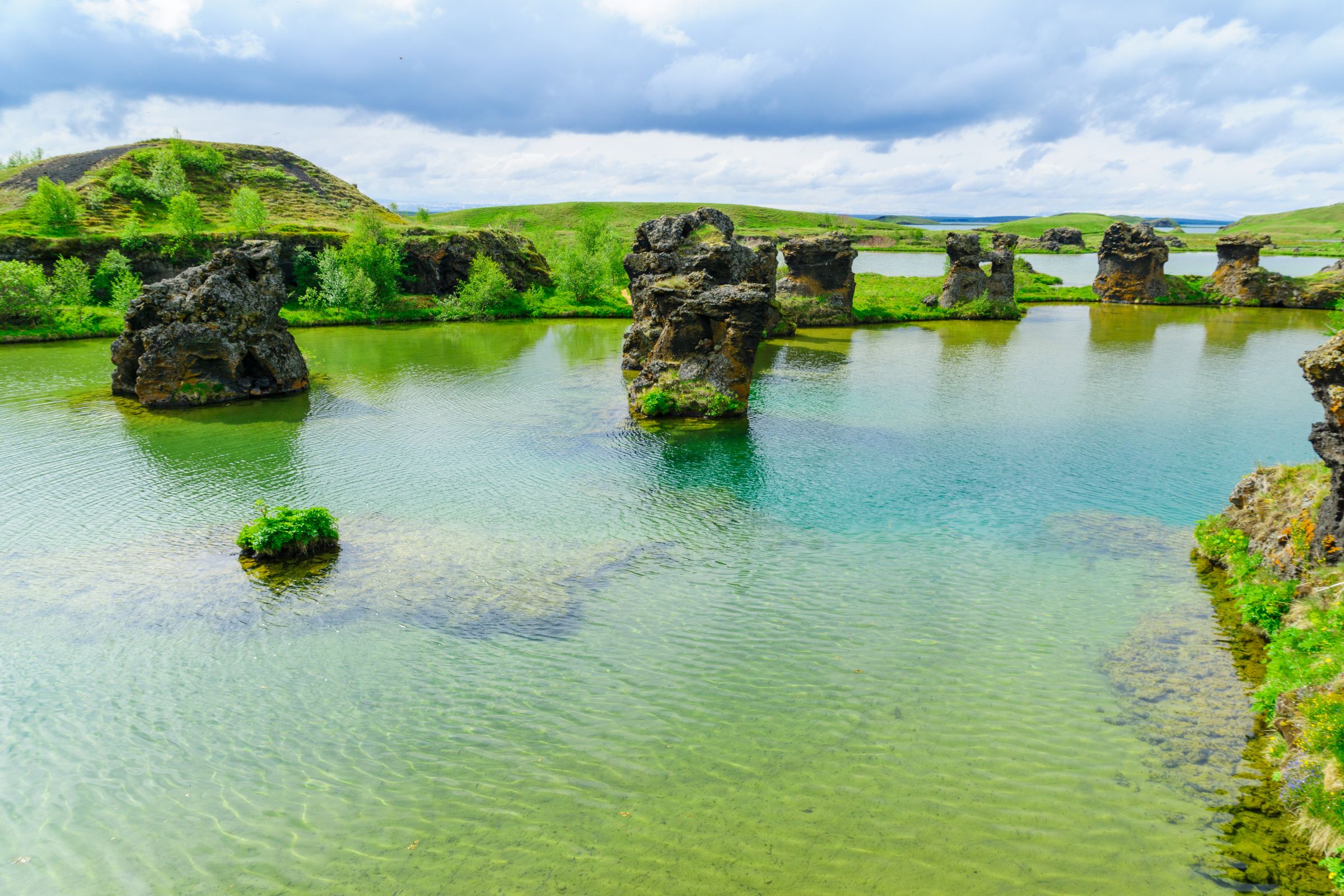
Dimmuborgir is a protected lava-formation area on the east side of Lake Mývatn in northeast Iceland. The name means "Dark Castles," and it's pretty accurate: the rock formations look like collapsed towers, fortress walls, and broken arches made out of black volcanic stone.
The protected area covers about 423 hectares and has marked trails, a parking area, and basic visitor facilities. It sits in one of Iceland's most geologically active regions and shows up on pretty much every Diamond Circle itinerary and North Iceland road trip.
How Did It Form?
About 2,300 years ago, basaltic lava from a volcanic eruption near the Lúdentsborgir and Þrengslaborgir crater row flowed into a wet, marshy area close to what is now Lake Mývatn. The lava pooled under a hardened crust, and as steam pushed through the molten rock, it created hollow pillars and chambers. When the lava drained away, the rock structures it left behind are what you walk through today.
USGS researchers have looked into this more closely and describe Dimmuborgir as a rootless shield complex rather than just a drained lava lake. The difference is technical, but the end result looks the same either way: lava pillars, arches, caves, and hollow formations up to 20 meters tall, all shaped by lava, water, and steam. The rock is mainly basalt, which is the most common rock type in Iceland's volcanism along the Mid-Atlantic Ridge.
Why Visit Dimmuborgir?
You don't just pull over and look at it from the road. Dimmuborgir is something you walk through. The experience changes depending on the light, the season, and how far in you go.
It suits a lot of different people. Hikers and photographers will find plenty to keep them busy. Families can do the short loops without any trouble. Game of Thrones fans will know the place right away. And if you're into Icelandic folklore, the setting makes the stories feel a lot more real.
It's also right next to several other good stops around Lake Mývatn, so it fits easily into a half-day or full-day loop.
Best Things to See and Do at Dimmuborgir
You're mostly here to walk through the lava landscape and look at the formations up close. Going slow makes it better. Here's what to focus on.
Kirkjan — The Church
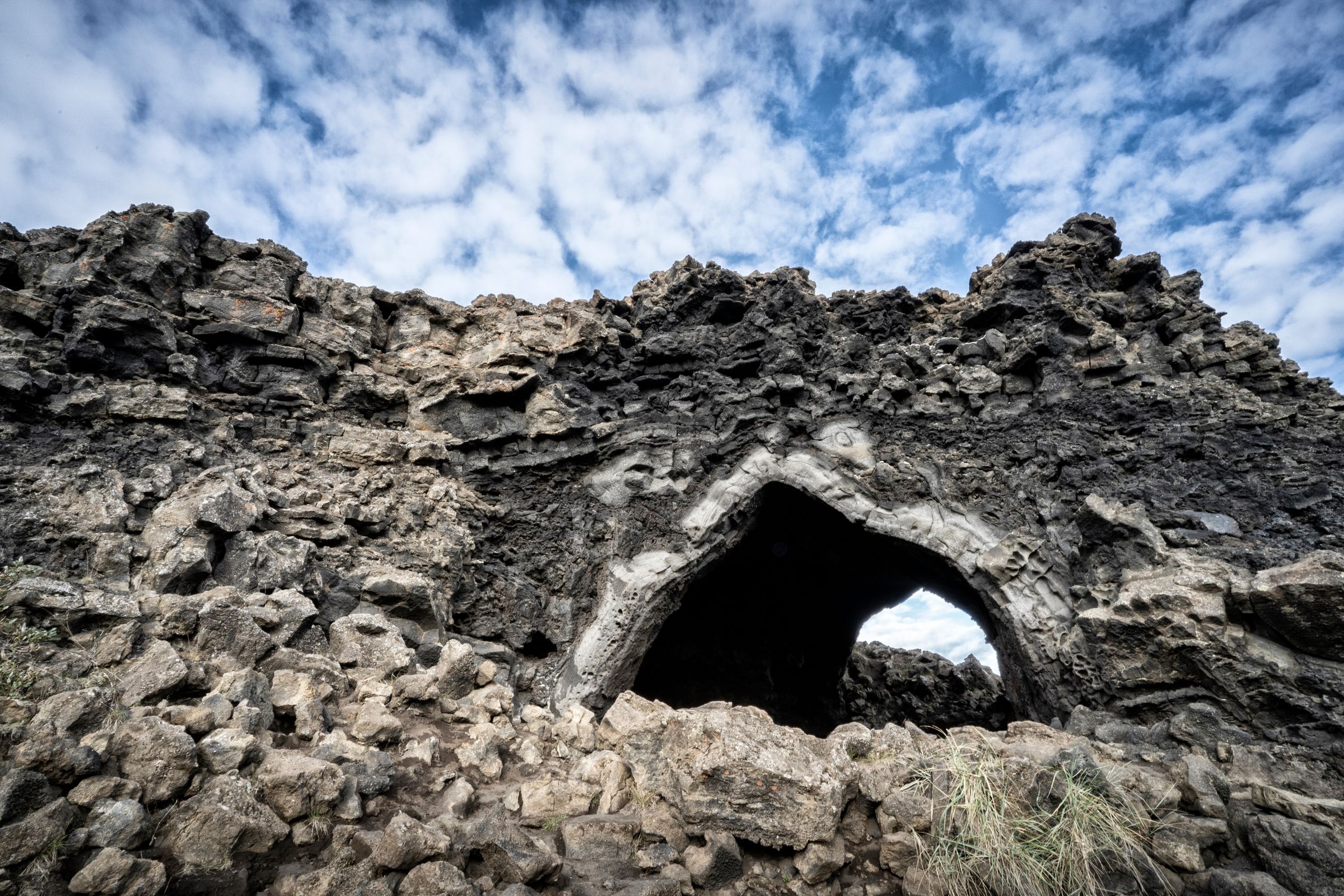
The most well-known formation at Dimmuborgir is Kirkjan, which means "The Church." It's a tall, arched lava structure that genuinely looks like the inside of a ruined chapel. You walk through a bunch of jagged rock passages and then come out at something that looks like someone carved it. It's a bit of an odd feeling.
It's the main landmark at the site and the reason most people do the Church Circle trail. Worth spending a few minutes there instead of just snapping a photo and moving on.
Walk the Lava Corridors
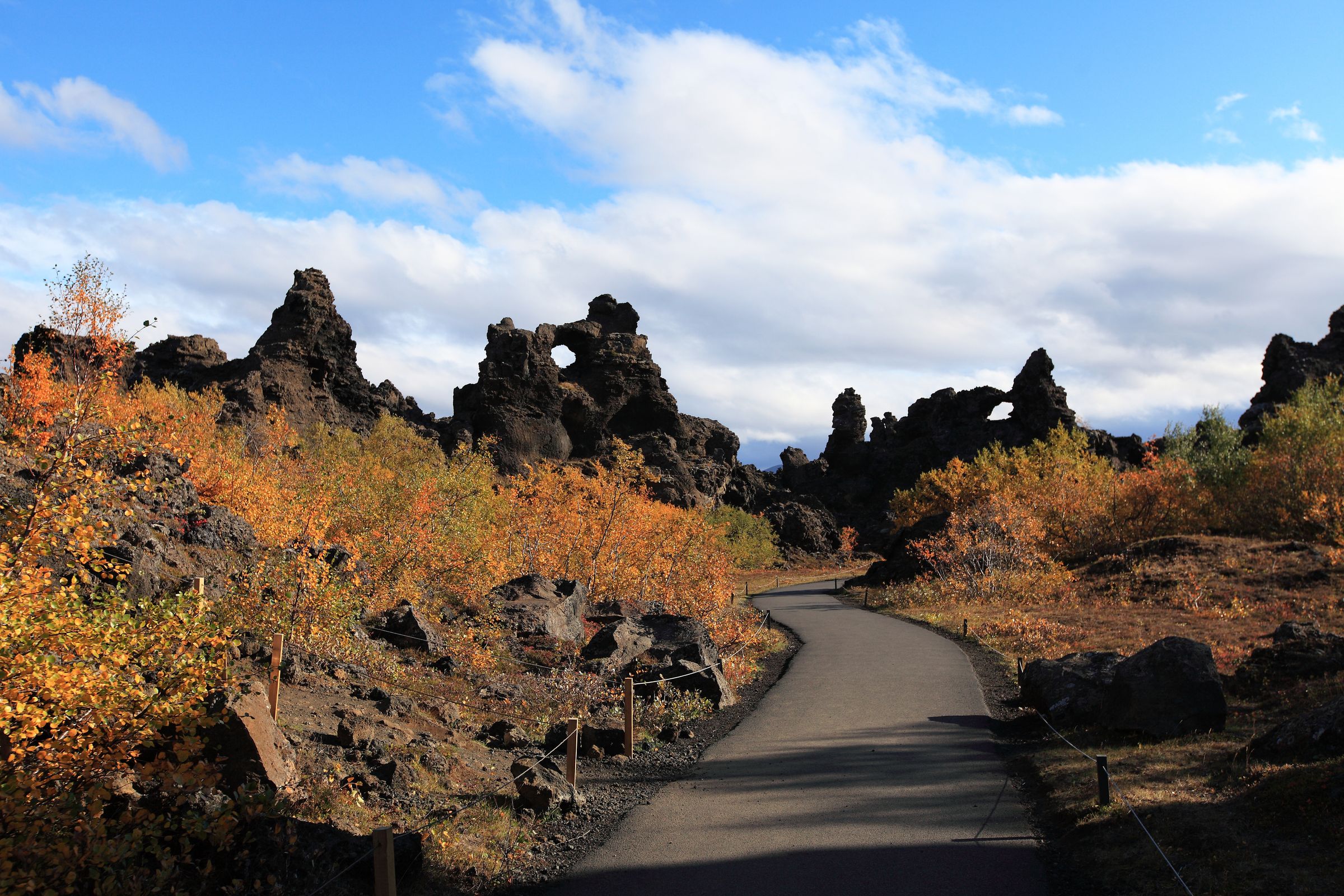
A lot of visitors make a beeline for Kirkjan and call it done. But the smaller passages, the side routes, and the enclosed spaces deeper in the lava field are where things actually get interesting. The place feels different once you're surrounded by rock on all sides.
Photography
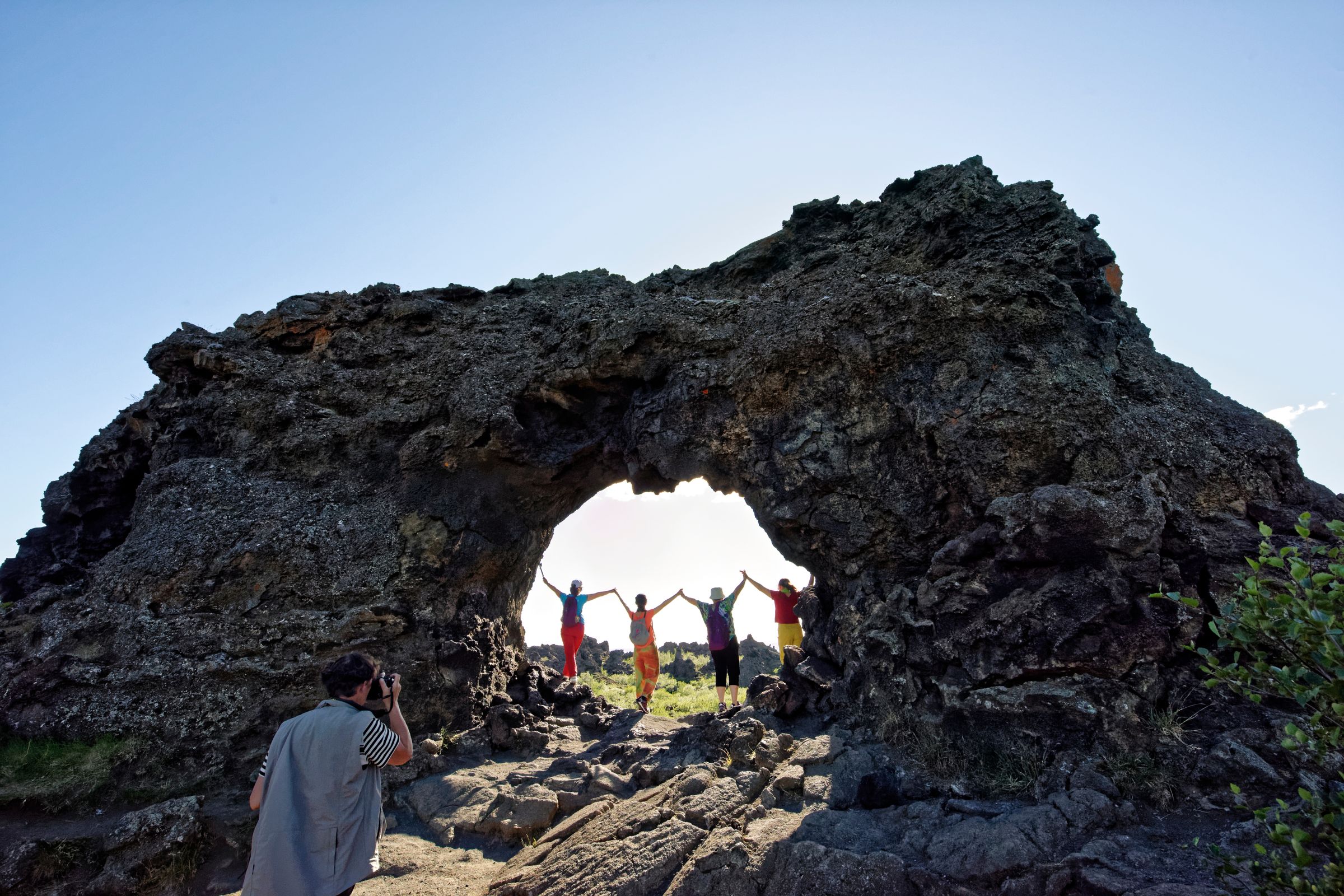
Dimmuborgir is good for close-up shots, not just wide landscape photos. The textures are interesting; the light that comes through gaps in the rock changes throughout the day, and the contrast between black lava and green vegetation in summer (or snow in winter) gives you plenty of options.
Early-morning or late-evening light works best. Overcast days can also be good since the cloud cover softens the shadows. If it's foggy, even better.
Hiking Trails in Dimmuborgir
All trails are marked and easy enough for most people. There are maps at the junctions so you won't get lost. The main thing to watch out for is winter: snow, ice, and slush can make even the easier paths a lot trickier.
Small Circle (Litli Hringur)
The shortest loop, somewhere between 10 and 30 minutes, depending on your pace. Good if you're short on time or just want a quick look. Easy ground, no real climbing.
Big Circle (Stori Hringur)
A longer loop that goes further into the lava field. Around 30 to 45 minutes. Still easy walking, but you'll see more of the formations and get a better sense of how big the place is.
Church Circle (Kirkjuhringur)
If you only do one trail, make it this one. It takes about an hour and goes to Kirkjan, the most famous formation at the site. Around 2.2 km, easy to moderate terrain.
Most people should use the Church Circle as the default and adjust from there depending on time and energy.
How to Get There
Dimmuborgir is on the east side of Lake Mývatn in northeast Iceland, close to the village of Reykjahlíð.
By Car
Driving is the easiest way to get there. From Akureyri, it's about 82 km (51 miles) east on the Ring Road (Route 1), then south on Route 848, roughly a 1-hour drive. From Reykjavík, it's about a 6-hour drive.
Parking at Dimmuborgir is free.
By Tour
Plenty of Lake Mývatn and Diamond Circle day tours include a visit to Dimmuborgir. Good option if you're in Akureyri without a car or if you'd rather not handle driving and navigation yourself.
By Public Transport
Not many options here. Strætó runs buses from Akureyri toward the Mývatn area, but for a specific stop like Dimmuborgir, a rental car or campervan is a lot more practical. Check Strætó's timetables if you're planning a car-free trip.

How Much Time You Need
Dimmuborgir works for different schedules.
- Quick stop (30–45 min): Short loop, main highlights. Works if you're tight on time.
- Standard visit (1–1.5 hrs): Church Circle at a comfortable pace. Right for most people.
- Longer visit (2–3 hrs): Multiple loops, a lot of photography, or you can combine it with a hike up Hverfjall nearby.
Most people underestimate how much time they want to spend here. It looks quick on a map, but it's more interesting the slower you go. Budget more time than you think you need.
Best Time to Visit
Dimmuborgir is open year-round. Each season is a bit different.
Summer
Summer (June–August) is the easiest time to go. The trails are clear, daylight goes almost 24 hours, and the green vegetation against the black rock looks good. More tourists, but the site is big enough that it doesn't usually feel too crowded.
Winter
Winter looks more dramatic. Snow on the lava towers gives the place a very different feel, and the dark atmosphere works well with the folklore. The downside is that icy trails take more care, and some paths can be blocked after heavy snow. The Mývatn area is also one of the better places in North Iceland for seeing the Northern Lights, so if that's on your list, winter makes sense.
The Mývatn area is a great aurora destination. If you're chasing the Northern Lights, basing yourself here in winter is a solid plan.
Shoulder Seasons
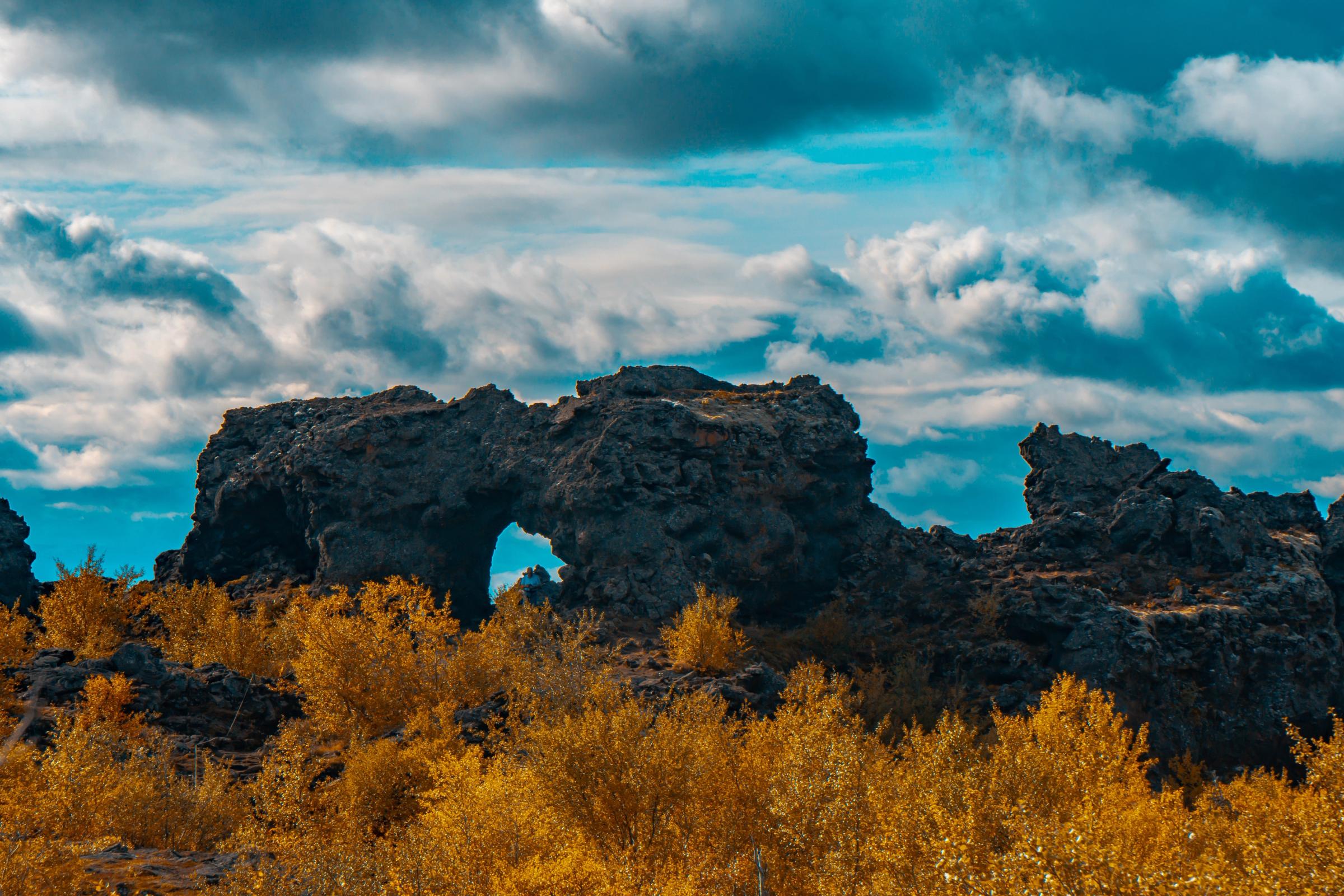
Late May, September, and October tend to be the best mix of good conditions and fewer people. You get interesting light, sometimes snow on higher ground, and the trails are still walkable.
Useful Travel Tips
- Stay on the marked trails. Dimmuborgir is a protected area and the formations and vegetation can be damaged easily. It also just keeps you safer on uneven ground.
- Wear decent shoes. The trails are easy, but volcanic rock is irregular underfoot. In winter, it can get slippery quickly.
- Check conditions before you go. The Icelandic Meteorological Office (Veður.is) and the Icelandic road authority are the right places to look before driving in winter or the shoulder season.
- Go early or late. Fewer people in the morning and evening, and the light is much better for photos.
- Take your time. The loops are short, but the slower you go, the more you get out of it. Don't treat it like a quick checkbox stop.
On-site facilities include toilets, a cafe, and a souvenir shop near the parking area, handy if you're spending a full day in the Mývatn area.
Folklore and Fun Facts
The place looks so much like old ruins that it's always had a reputation for being a bit eerie. Icelandic folklore ties Dimmuborgir to trolls, elves, and hidden folk, with the idea that the caves and passages connect to other worlds.
The Yule Lads
In Icelandic Christmas tradition, Dimmuborgir is where the 13 Yule Lads live. These are the mischievous Christmas characters who show up at homes one by one in the 13 days before Christmas. They're the sons of Grýla, a troll, and her husband Leppalúði. Local tourism treats Dimmuborgir as its official home, and the site holds seasonal events in December around this tradition.
Game of Thrones
Dimmuborgir was used as a filming location for HBO's Game of Thrones in Season 3, specifically for the wildling camp and Mance Rayder's base north of the Wall. The dark, broken terrain didn't need much help to look the part. Even people who haven't seen the show tend to describe the landscape as looking like something from a fantasy story.
The Name
"Dimmuborgir" comes from Icelandic words for dark and castles or cities. The name isn't a marketing invention: the rock formations really do look like old fortifications, which is exactly where the name came from. The Norwegian black metal band Dimmu Borgir was also named after this place.

Nearby Attractions to Combine with Dimmuborgir
There are a lot of good stops within a short drive. Dimmuborgir is better as part of a day in the Mývatn area than as a solo trip.
Hverfjall
A big, nearly round explosion crater right next to Dimmuborgir. About 1,000 meters (0.62 miles) wide and 140 meters (459 feet) deep. The hike around the rim offers views of the entire Mývatn region. Doing both Dimmuborgir and Hverfjall in the same half-day is a natural combination.

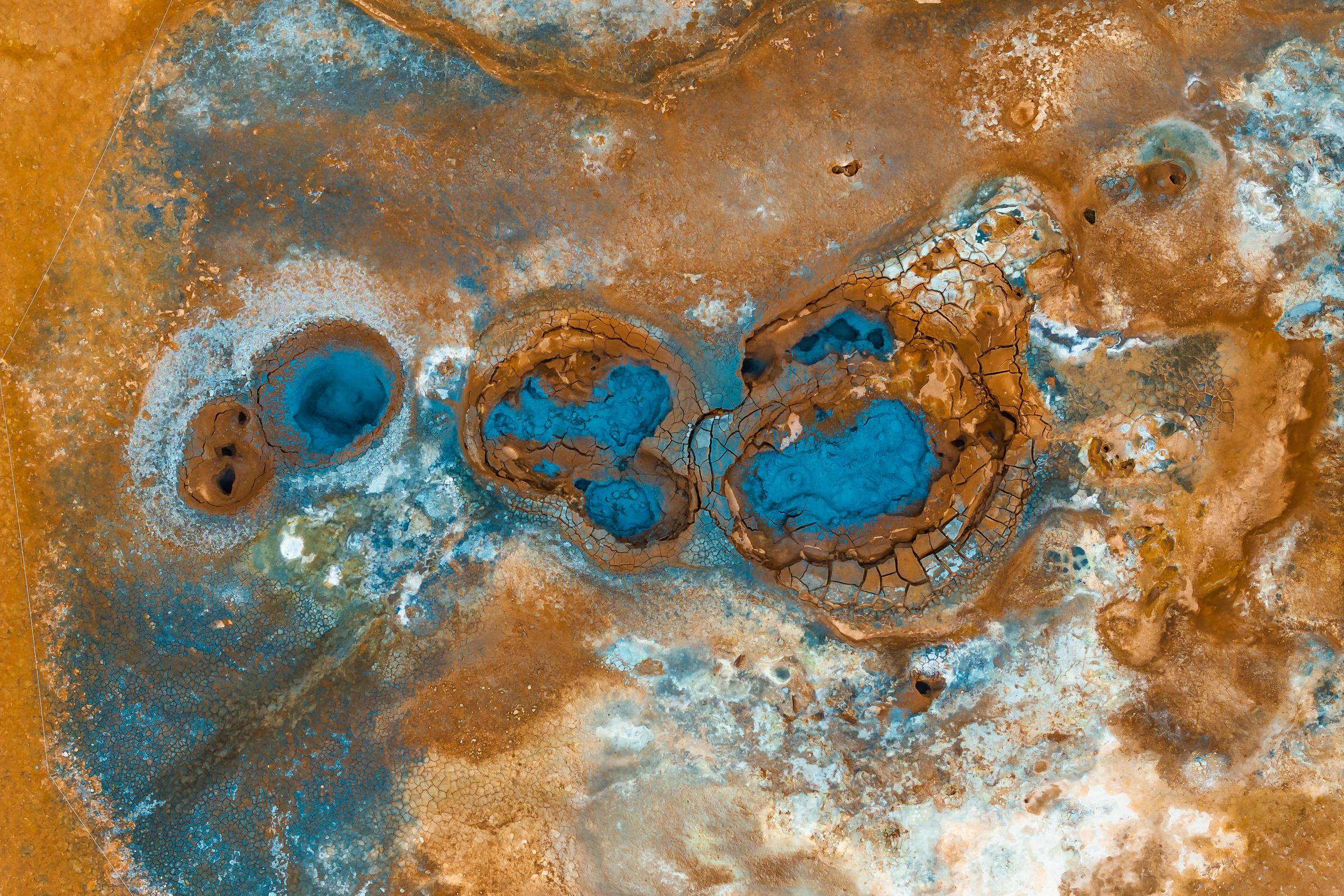
Hverir (Námafjall Geothermal Area)
Boiling mud pots, steam vents, and ground that looks yellow and orange from sulfur deposits. It's a short drive from Dimmuborgir and feels totally different: one is frozen lava, the other is still active. Worth seeing both on the same day.
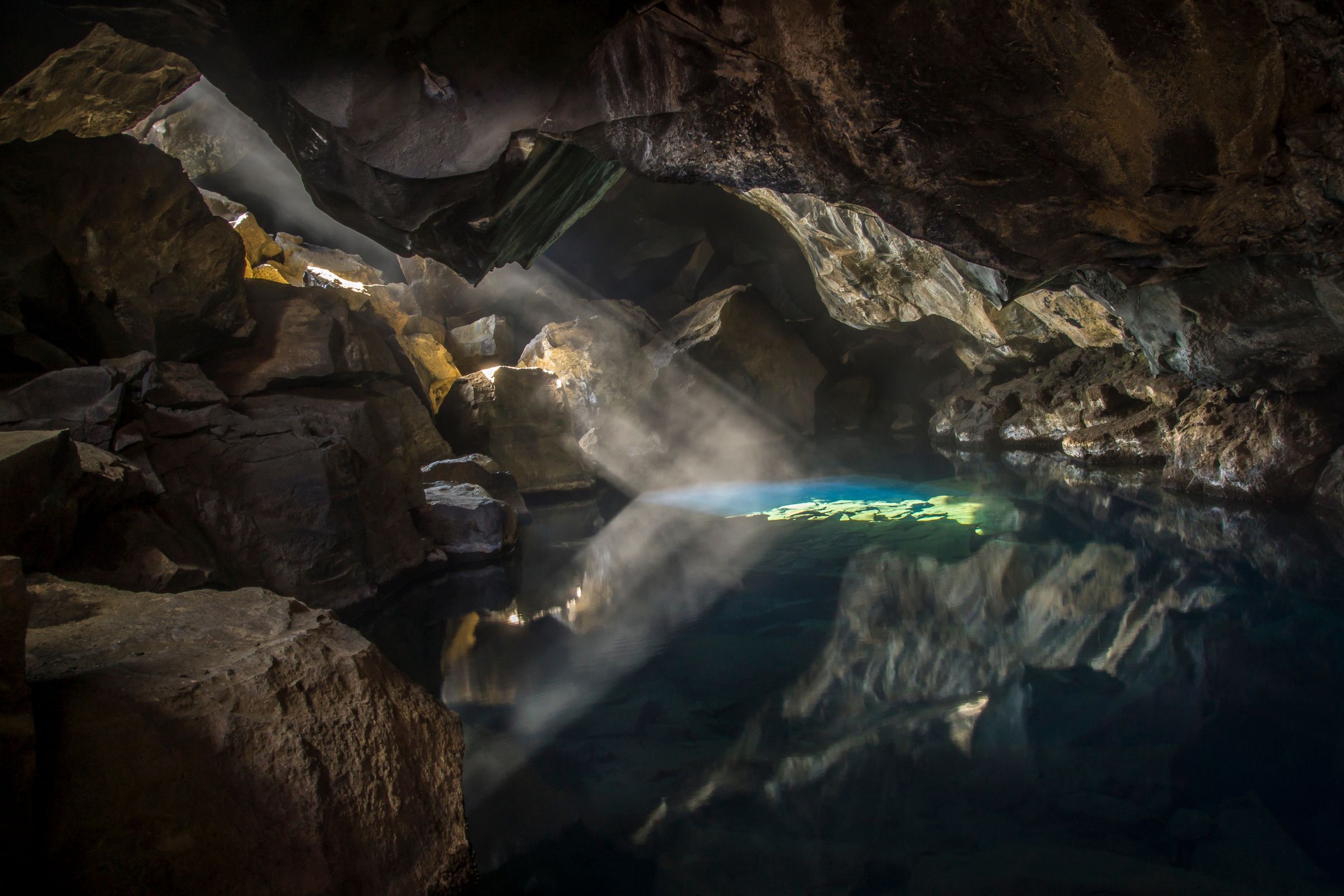
Grjótagjá
A lava cave with a warm geothermal spring inside. Also appears in Game of Thrones. It's small and easy to add to the day alongside Dimmuborgir.
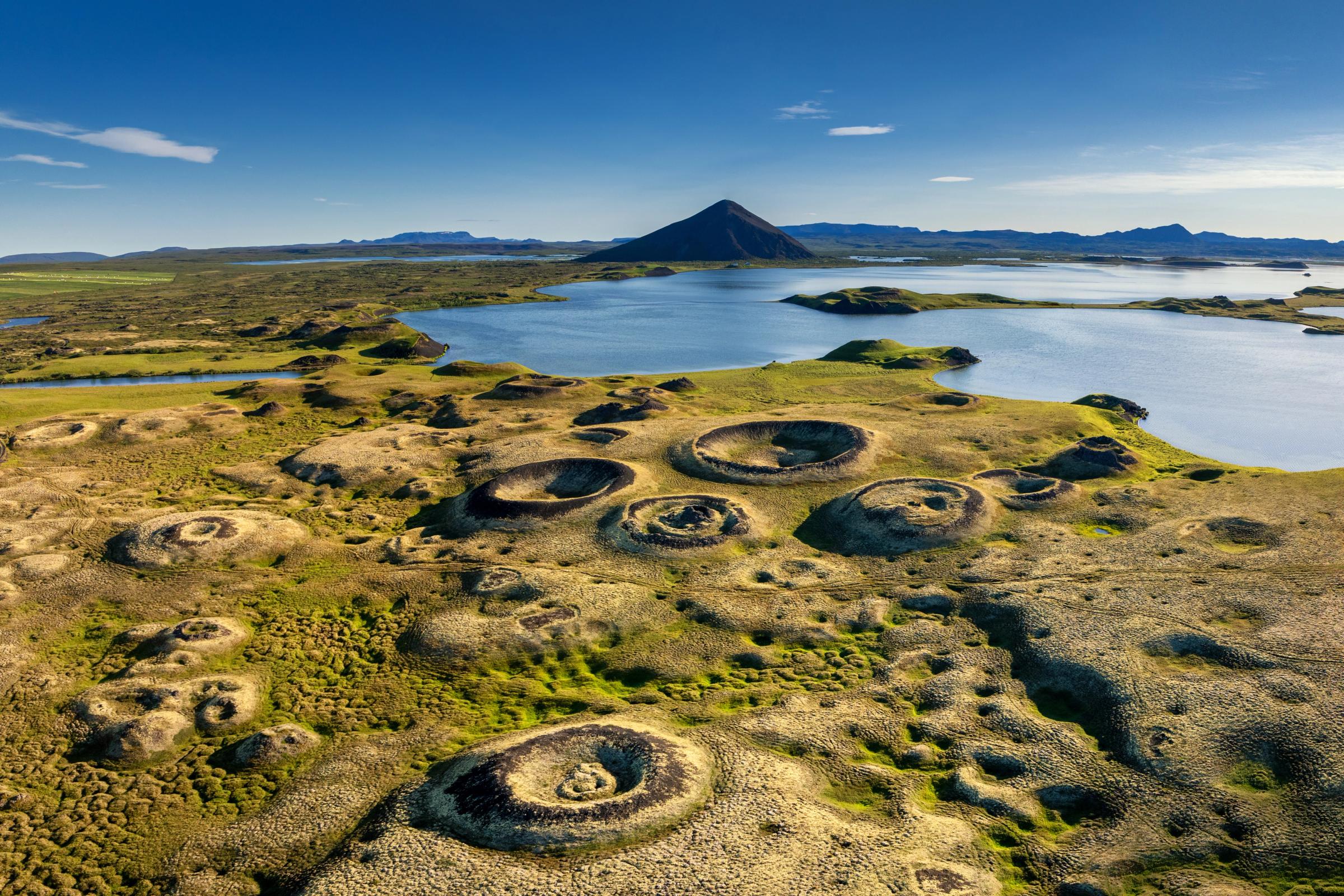
Skútustaðagígar
Pseudocraters along the south shore of Lake Mývatn. They formed when lava flowed over wetlands and triggered steam explosions beneath, which is basically the same kind of lava-meets-water process that created Dimmuborgir.
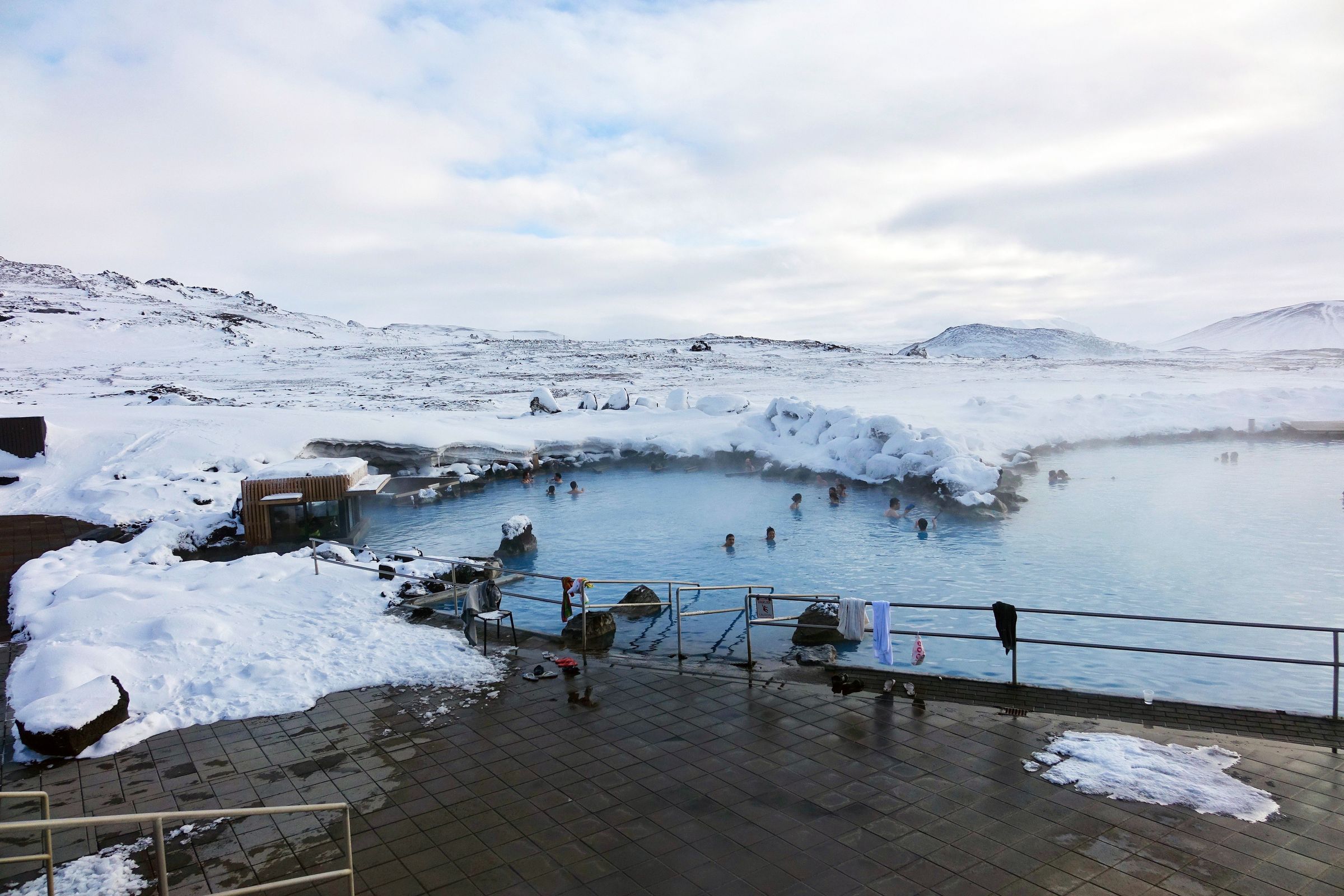
Mývatn Nature Baths / Earth Lagoon
The geothermal bathing spot near Dimmuborgir. Good way to end a day of walking around. It’s set to open in Spring 2026, so check before you go.
Lake Mývatn and Höfði
The lake is worth a bit of time. The Höfði promontory has nice views and good birdwatching. More duck species gather around Mývatn in summer than almost anywhere else on the planet.
Conclusion
Dimmuborgir isn't one of those places you look at from a car window. You walk through it, and the geology and the folklore end up making a lot more sense when you're inside it. It's easy to visit and fits well into a full Lake Mývatn day. Walk past the first formations, take your time, and you'll understand why it keeps showing up on North Iceland itineraries.
Frequently Asked Questions About Dimmuborgir