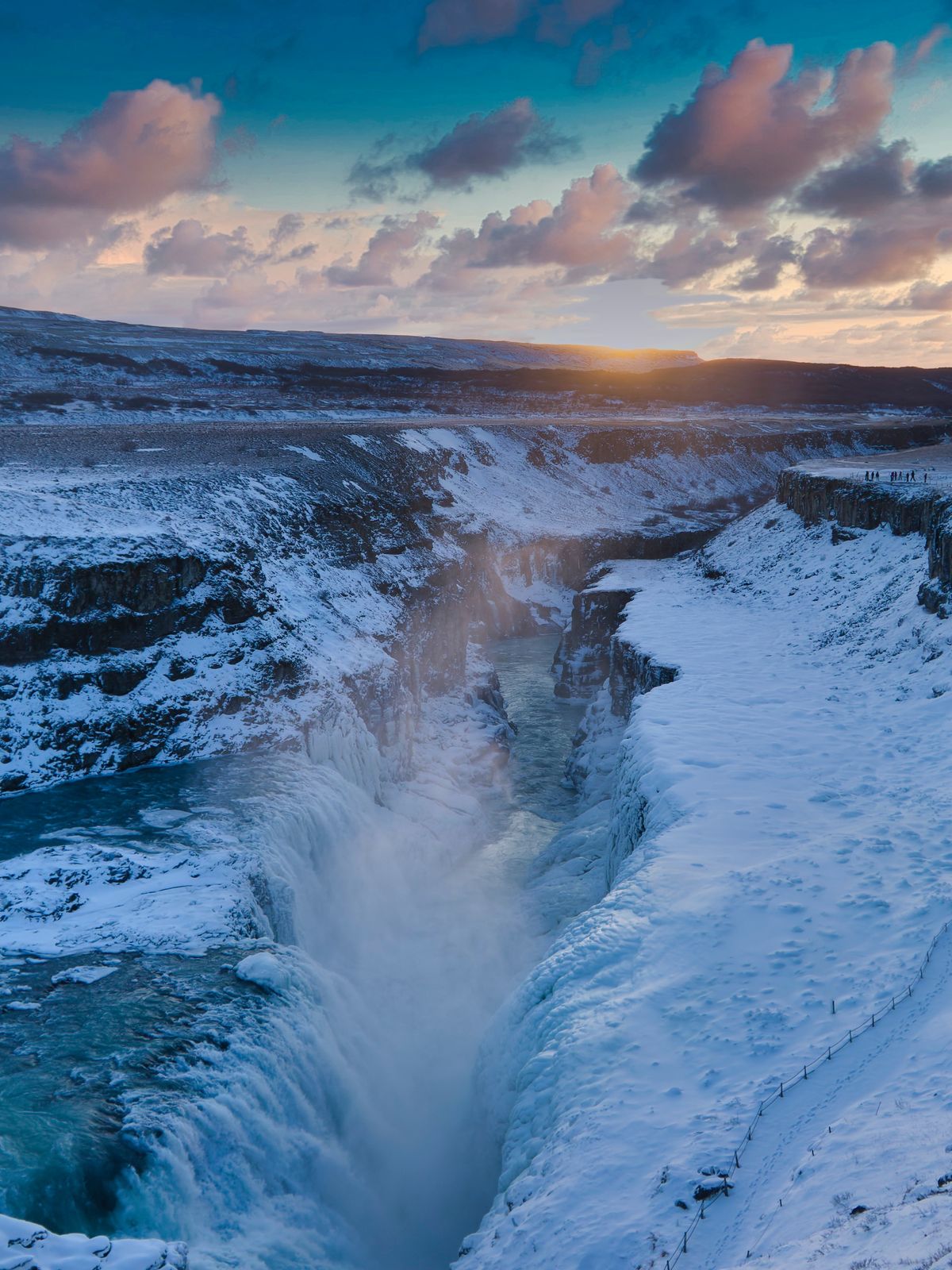
Faxafoss Waterfall (Faxi) Travel Guide
Faxafoss, also called Faxi, is a wide, low waterfall in South Iceland just off the Golden Circle route. It's not the most famous waterfall in Iceland, and it's not supposed to be. It's wider than it is tall, almost always quiet, and it has a fish ladder on the side of it for salmon. If you're driving the Golden Circle, it's a solid 20-minute stop.
Key Takeaways
- Faxi is a wide, low waterfall on the Golden Circle, close to Geysir and Gullfoss. Most people only need about 20 to 30 minutes here.
- The fish ladder is the most unusual part. In late July and August, you might see salmon moving through it.
- It’s easy to reach from Route 35. You don’t need a 4x4 in summer, and the walk from the parking area is very short.
- Parking costs around 700 ISK, but the waterfall itself is free. There are also toilets, picnic tables, and a seasonal restaurant.
- It makes the most sense as part of a Golden Circle day. Add it between stops like Þingvellir, Geysir, Gullfoss, or Skálholt.
Concise Overview of Faxafoss
This waterfall goes by three names: Faxafoss, Faxi, and Vatnsleysufoss. They all mean the same place on the Tungufljót River in South Iceland. Most maps and travel sites just say Faxi, which is the short version, so that's mostly what we'll use here, too.
The name comes from the Icelandic word fax, which means "mane," like a horse's mane. The water spreads out over a wide rock ledge in a smooth sheet rather than falling straight down. That's what the name is getting at.
Faxi is worth stopping for because of the fish ladder on the side of it, the salmon river it's on, how easy it is to reach, and the fact that most Golden Circle visitors skip it, so you'll usually have the place to yourself.
Quick Facts
- Names: Faxafoss / Faxi / Vatnsleysufoss
- Region: South Iceland
- Municipality: Bláskógabyggð
- River: Tungufljót
- Height: ~7 m (23 ft)
- Width: ~80–91 m (260–300 ft)
- Route: Golden Circle area, off Route 35
- Closest major sights: Geysir (~11 km), Gullfoss (~21 km)
- Best for: Quick stops, photography, salmon viewing, easy detours
- Parking fee: ~700 ISK per vehicle
- Entrance fee: None

Where Is Faxafoss in Iceland?
Faxi is in South Iceland, in a municipality called Bláskógabyggð, on the Tungufljót River. That river flows into the Hvítá, the same river system connected to Gullfoss further along the Golden Circle.
Getting there isn't a detour. Faxi is in the middle of the Golden Circle route, which is the most-visited sightseeing road in Iceland.
Key Distances
Here's where Faxi sits in relation to the other main Golden Circle stops:
- Reykjavík: ~105 km or 65 miles (about 1.5 hours by car)
- Geysir geothermal area: ~11 km (6.85 miles) south
- Gullfoss: ~21 km (13 miles)
- Skálholt: ~17 km (11 miles)
- Þingvellir National Park: ~48 km (30 miles)
- Bruarfoss waterfall: ~20 km (12.4 miles)
The waterfall is signposted off Route 35. You turn onto a short gravel road, and the parking area is right there. Search "Faxi Waterfall" or "Við Faxa" on Google Maps, and it'll take you directly.
Since it's on the main Golden Circle corridor and not off some remote track, it fits easily into a day trip from Reykjavík, especially when you're already visiting Geysir, Gullfoss, and Þingvellir.
Why Visit Faxafoss and What Makes It Special?
Most people add Faxi to their Golden Circle day because it's a different kind of stop. Þingvellir, Geysir, and Gullfoss are all worth seeing, but they get busy. Faxi is calm, quiet, and adds almost no time to your day.
The Wide, Gentle Waterfall Shape
Most Icelandic waterfalls are about height or force. Faxi isn't. It's about 80–90 meters wide and only drops around 7 meters, so you can see the whole thing from one spot without moving around. No crowding for a view, no craning your neck.
Because it's wide rather than tall, it's also easy to photograph as a full scene rather than just a falling column of water.
The Fish Ladder and Salmon
What makes Faxi stand out from other waterfalls is the fish ladder on the left side as you face the falls. It's a concrete structure with stepped pools that lets Atlantic salmon swim around the 7-meter drop and continue upstream through the Tungufljót River.
Around 400 salmon use it every year. If you visit in late July or August, migration is at its peak, and you can actually watch them moving through the steps. It's not a sure thing, but it does happen, and it's not something you see at many waterfalls.
Outside migration season, the ladder is still interesting to look at. The Tungufljót is a well-known salmon and brown trout fishing river, and the pool just below the falls is a popular fishing spot. That's part of why Faxi has a local identity beyond tourism.
The Name and Alternate Names
If you're planning a visit, know that Faxafoss, Faxi, and Vatnsleysufoss are all the same waterfall. "Faxi" is what you'll see most on maps and in travel writing. "Faxafoss" is the longer version. "Vatnsleysufoss" comes up in older references and loosely translates to "Empty Falls," which doesn't make much sense since the river flows year-round.
All three names are in the same place on the Tungufljót River.
How to Get to Faxafoss
Getting to Faxi is straightforward. No mountain roads, no 4WD needed in summer, no major detour from the Golden Circle loop.
From Reykjavík
Take the Ring Road (Route 1) east, then switch to Route 35 south toward Geysir and Gullfoss. Faxi is about 105 km (65 miles) from Reykjavík, which is roughly 1.5 hours under normal conditions. Look for signs saying "Faxi" or "Við Faxa" on Route 35. A short gravel road leads directly to the parking area from there.
A regular 2WD car works fine in summer. In winter, a 4WD is the smarter option. Check road.is before you leave, no matter the season.
From Geysir
Faxi is 11 km (6.85 mile) south of the Geysir geothermal area, around 10 to 15 minutes on Route 35. If you're already at Geysir watching Strokkur, Faxi is the obvious next stop. Look for the signed left turn toward "Við Faxa."
From Gullfoss
Gullfoss is about 21 km (13 miles) away. Faxi works as a stop before or after Gullfoss, depending on which direction you're doing the loop. Route 35 covers both directions.
Good to know: Public Golden Circle buses don't always stop at Faxi. Many small-group tours include it as an optional add-on. If you're doing a self-drive (the easiest way to visit), it's just a quick 5-minute turn-off from the main route.

Parking, Walking Distance, and Accessibility
Faxi doesn't require any effort to reach on foot. The parking lot is right next to the waterfall, and the walk to the main viewing platform is two to five minutes.
Parking
There's a paid parking lot at the site. The fee is around 700 ISK per regular vehicle. You pay on site. The lot is well-maintained and rarely full, even in summer.
You only pay to park. The waterfall itself is free.
Important: you can reclaim the parking fee if you order from a nearby restaurant.
The Walk and Viewing Area
A short flat path from the car park leads to the main viewing platform. There's also a wooden deck, a walkway near the spillway where you can get a bit closer, and some spots along the river edge to explore.
The main path works for most people, including families with strollers and older visitors. The lower spots near the water have some uneven ground and a few steps. In winter, paths can ice over, so microspikes are worth bringing.
Facilities
There are free toilets and picnic tables at the site. There's also a seasonal restaurant called Við Faxa with a patio facing the waterfall. Hours are limited and vary by season.
Best Things to Do at Faxafoss
Faxi is a short stop, but there's more to do than just look at it from the platform. Here's what's worth your time.
Enjoy the Main Viewpoint
The platform gives you a clear view of the full waterfall. Spend a couple of minutes actually standing there and looking rather than going straight for your phone. The sound of the water, the open farmland behind the falls, and the quiet of the spot are a good part of what people remember.
Take Waterfall Photos
The width is what makes Faxi interesting to shoot. Wide-angle lenses work well here. In summer there's greenery and lupines in the foreground. In winter, ice along the edges adds contrast. On sunny days, rainbows appear in the mist, especially in the morning.
For smooth water, bring a tripod and use a slower shutter speed. The spray can hit your lens, so bring a cloth.
Watch the River and Fish Ladder
The fish ladder is on the left as you face the falls. Even outside salmon season, it's worth a look; it's an interesting thing to see, and not something that comes up at most waterfalls. In late July or August, you might actually see salmon moving through the stepped pools. It doesn't happen on command, but it's worth watching for.
Use It as a Calm Break
After the crowds at Geysir and the sheer size of Gullfoss, Faxi is a good place to sit for a minute, eat something, and slow down before the next stop.
Stop for a Short Picnic
There are picnic tables near the parking area. When the weather cooperates, eating lunch here with the waterfall in view is a good way to spend 15 minutes.


Best Time to Visit Faxafoss
Faxi runs year-round. The waterfall doesn't dry up in any season. The choice is really about conditions and what you want from the visit.
Summer (May–September)
Summer is the easiest time to visit. There's a lot of daylight (close to 24 hours in June), the roads are in good shape, and the surroundings are green. Lupines bloom along the riverbanks in late spring and early summer. July and August are when salmon migration peaks, which is when you have the best chance of seeing fish in the ladder.
Even in peak summer, Faxi stays much quieter than Geysir or Gullfoss.
Winter (October–April)
In winter, the place looks different. Ice builds up along the edges of the falls, snow covers the banks, and the light is low and flat. You'll almost certainly be there alone.
The trade-offs: daylight as short as 4–5 hours in December, cold temperatures, and icy paths. Check road.is and vedur.is before any winter drive. Plan to visit midday to make the most of daylight.
Shoulder Seasons (Spring and Autumn)
Spring and autumn are a reasonable middle ground: fewer people than summer, less extreme than winter. Spring brings migratory birds. Autumn changes the color of the surrounding landscape. Good options if you want to avoid the crowd without dealing with ice and snow.
Timing tip: Golden Circle tour buses typically leave Reykjavík between 8 and 10 AM, so the main stops get busiest mid-morning to early afternoon. Going to Faxi early or in the late afternoon usually means fewer people.

Travel Tips for Visiting Faxafoss
Here are the practical things worth knowing before you arrive.
Faxi is easy by Icelandic standards, but you're still outside next to a river in Iceland, where the weather can change fast. A few simple things make the visit better.
- Wear solid shoes. The main path is fine, but the ground near the water is uneven and gets slippery. In winter, microspikes help.
- Bring a waterproof jacket. The falls produce mist, and Iceland's weather moves quickly. Even on a dry morning, carry something you can put on.
- Don't plan it as a solo trip. Faxi is best as part of a Golden Circle day. On its own, it's 15–30 minutes, which isn't worth a 2-hour drive each way. Paired with Geysir, Gullfoss, and Þingvellir, it fits naturally.
- Check road and weather conditions first. Road.is and safetravel.is are the places to look. Do this in every season, not just winter.
- Time to budget: Most visitors spend 15–30 minutes. Photographers or anyone watching the fish ladder during salmon season might stay up to an hour. If your schedule is tight, 20 minutes covers everything.

Nearby Attractions to Combine with Faxafoss
Faxi works best as part of a bigger day. The Golden Circle puts several major sights close by, and Faxi slots in between them without adding much time.
Geysir Geothermal Area
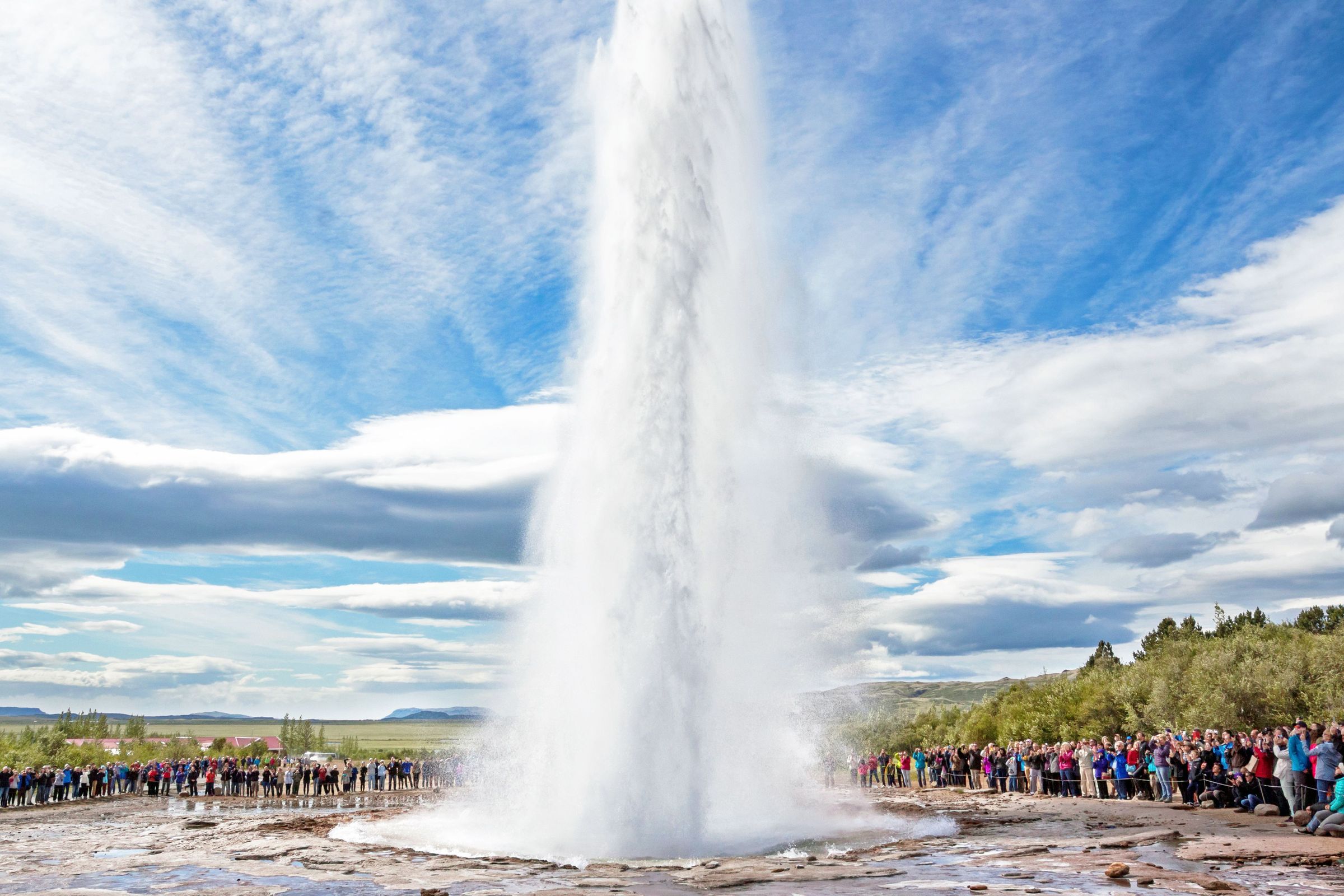
Geysir is the closest big stop. The area has hot springs, mud pools, and Strokkur, which erupts every 5–10 minutes and shoots water up to 15–20 meters. It's one of the main Golden Circle anchors and the most natural stop to pair with Faxi.

Strokkur
Strokkur is the active geyser in the Geysir area. The original Geysir geyser barely erupts anymore, so Strokkur is what you're going to see. It goes off on a short, regular cycle and gets a crowd every time. It's one of those things that still impresses people even when they expect it.
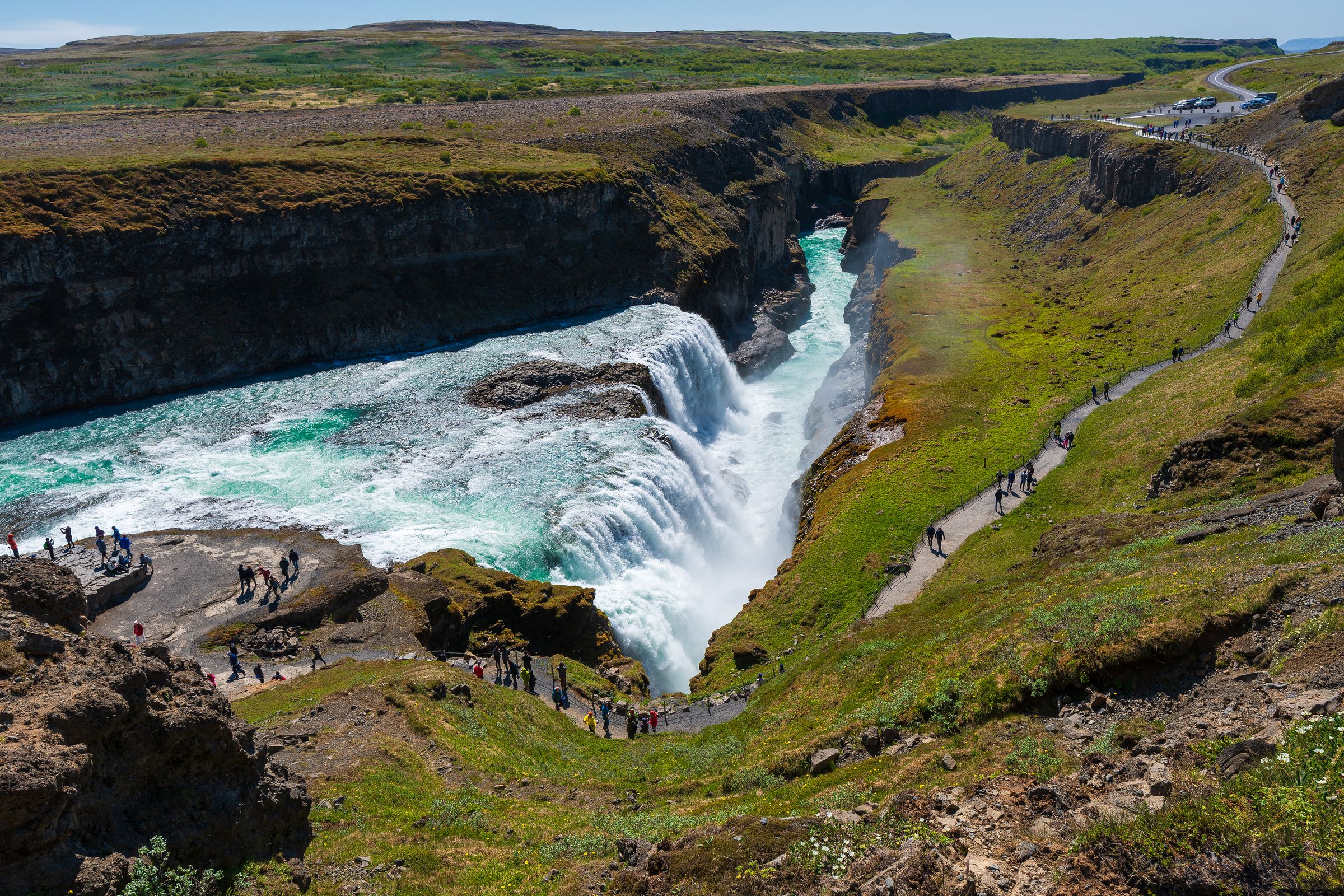
Gullfoss
Gullfoss is about 21 km (13 miles) from Faxi. It's a two-tiered waterfall that drops into a deep canyon, and it's much louder and more powerful than Faxi. Doing both on the same day makes sense because they're very different. Faxi is wide and calm. Gullfoss is big and loud. Together, you get a fuller sense of what waterfalls in Iceland actually look like.
Þingvellir National Park
Þingvellir is a UNESCO World Heritage Site where the North American and Eurasian tectonic plates are visibly pulling apart, and it's also where Iceland's parliament, the Althing, was held from 930 AD. You can snorkel or dive in Silfra, the rift between the plates, which is a pretty unusual thing to be able to do anywhere.

Skálholt
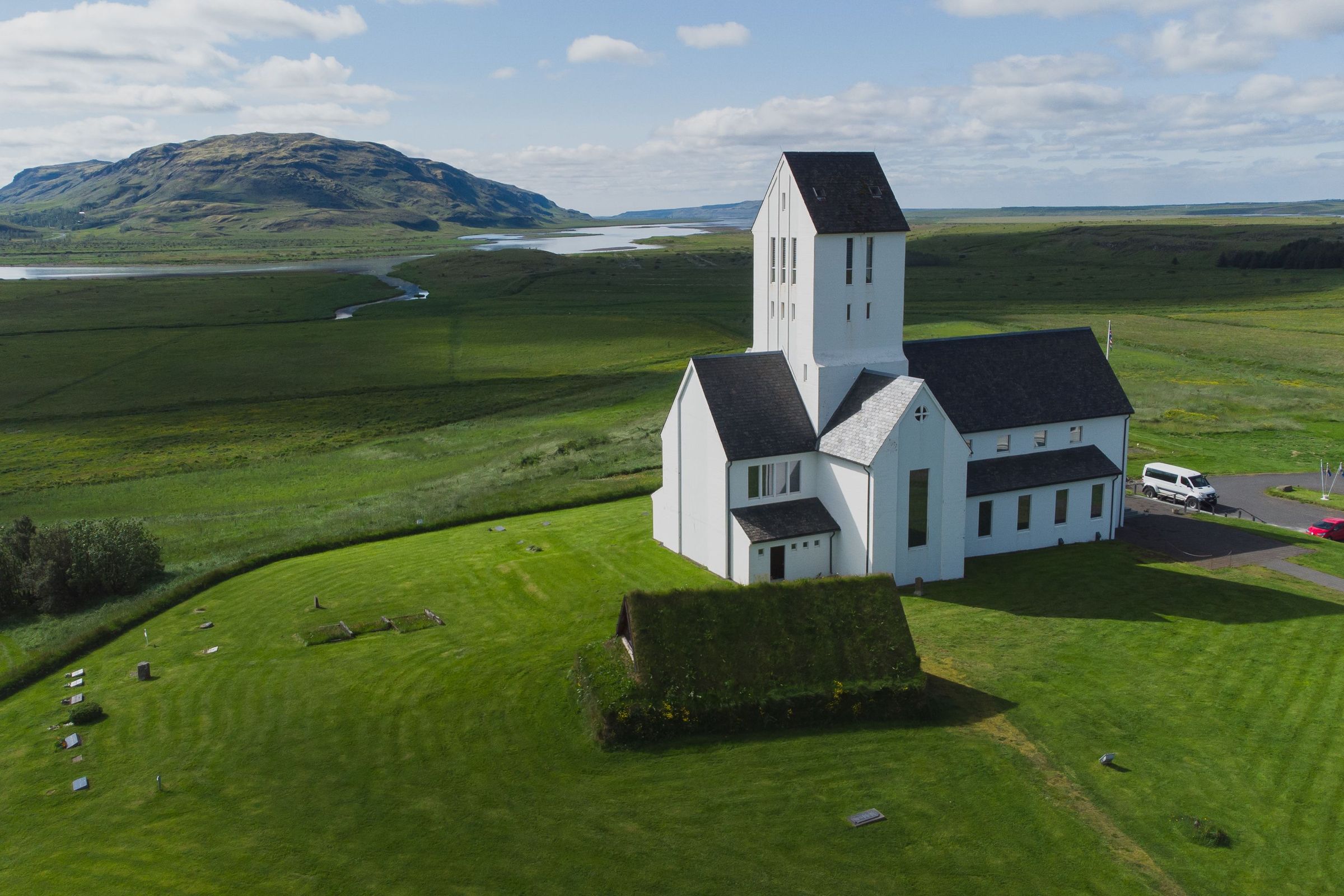
Skálholt was Iceland's main church and political center through most of the medieval period. The current cathedral was built in 1963 on the same site as a line of earlier cathedrals going back to around 1000 AD. It's a calm, low-key stop that adds some history to a day that's otherwise mostly geology.
Reykholt
Reykholt is a small village about 8 km (5 miles) from Faxi. It's not a major attraction on its own, but there are guesthouses, geothermal greenhouses, and horse farms nearby. Useful for an overnight stop or a break while driving through.

Faxafoss vs. Gullfoss
A common question: is it worth seeing both when they're so close together? Yes. They're not the same experience at all.
Here's a side-by-side comparison:
| Faxafoss (Faxi) | Gullfoss | |
| Height | ~7 m | ~32 m (two tiers) |
| Width | ~80–90 m | ~70 m |
| Character | Wide, calm, horizontal | Powerful, canyon, loud |
| Crowds | Usually light | Often busy |
| Time needed | 15–30 min | 30–60 min |
| Fish ladder? | Yes | No |
| Accessibility | Very easy | Easy, but more walking |
| Photography style | Wide landscape, scenes | Dramatic spray and scale |
For first-time visitors to Iceland, Gullfoss is the more important stop. It earns its reputation. Faxi is the quieter one who rounds out the day and gives you something different. They're not the same thing, which is why doing both makes sense.
Sample Itinerary: How to Add Faxafoss to a Golden Circle Day
A Golden Circle day from Reykjavík takes about 8–10 hours. Adding Faxi doesn't change that. It just replaces a stretch of driving with a short, worthwhile stop.
Here's a practical route:
- Reykjavík — Leave around 7–8 AM to get ahead of tour groups
- Þingvellir National Park (~45 min from Reykjavík) — Allow 1.5–2 hours for the rift valley and history
- Geysir / Strokkur (~40 minutes from Þingvellir) — Allow 45–60 minutes
- Faxafoss (Faxi) (~11 km from Geysir) — Allow 20–30 minutes
- Gullfoss (~21 km from Faxi) — Allow 45–60 minutes
- Skálholt (~17 km from Faxi, slight detour on the return) — Allow 30 minutes if you want the history
- Return to Reykjavík — Back by early evening
If you want a slower pace, staying overnight near Reykholt or Laugarvatn lets you spread the Golden Circle over two days. That gives you time to visit Brúarfoss (about 20 km from Faxi), which has some of the bluest water in Iceland, and to watch the fish ladder at Faxi in morning light.
Conclusion
Faxi is a wide, calm waterfall with a fish ladder on it. It's easy to get to, rarely crowded, and takes about 20 minutes. Most people driving the Golden Circle skip it, which means it's usually quiet when you show up.
Add it to your Golden Circle self-drive between Geysir and Gullfoss. It's worth the stop.
FAQs About Faxi Waterfall