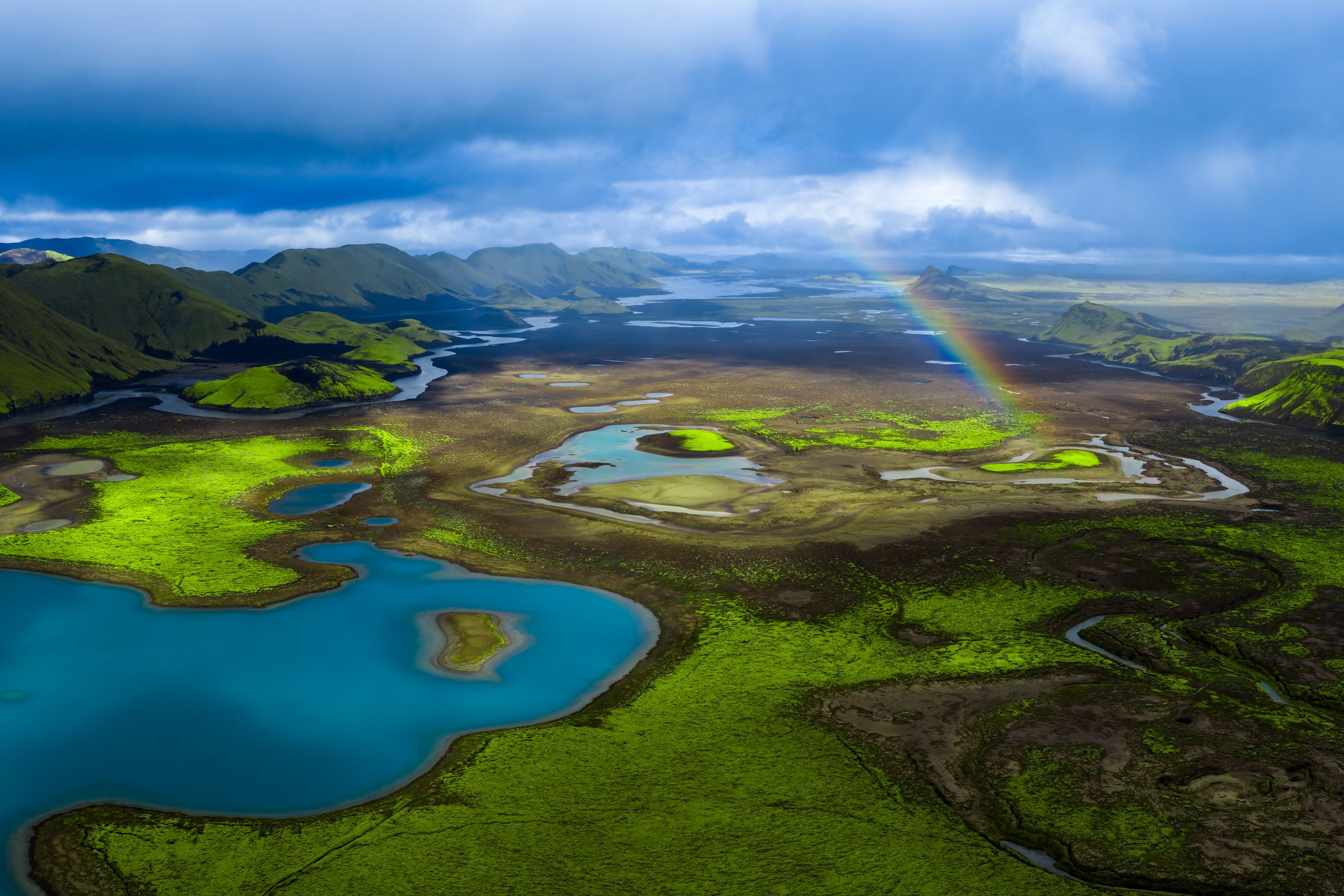
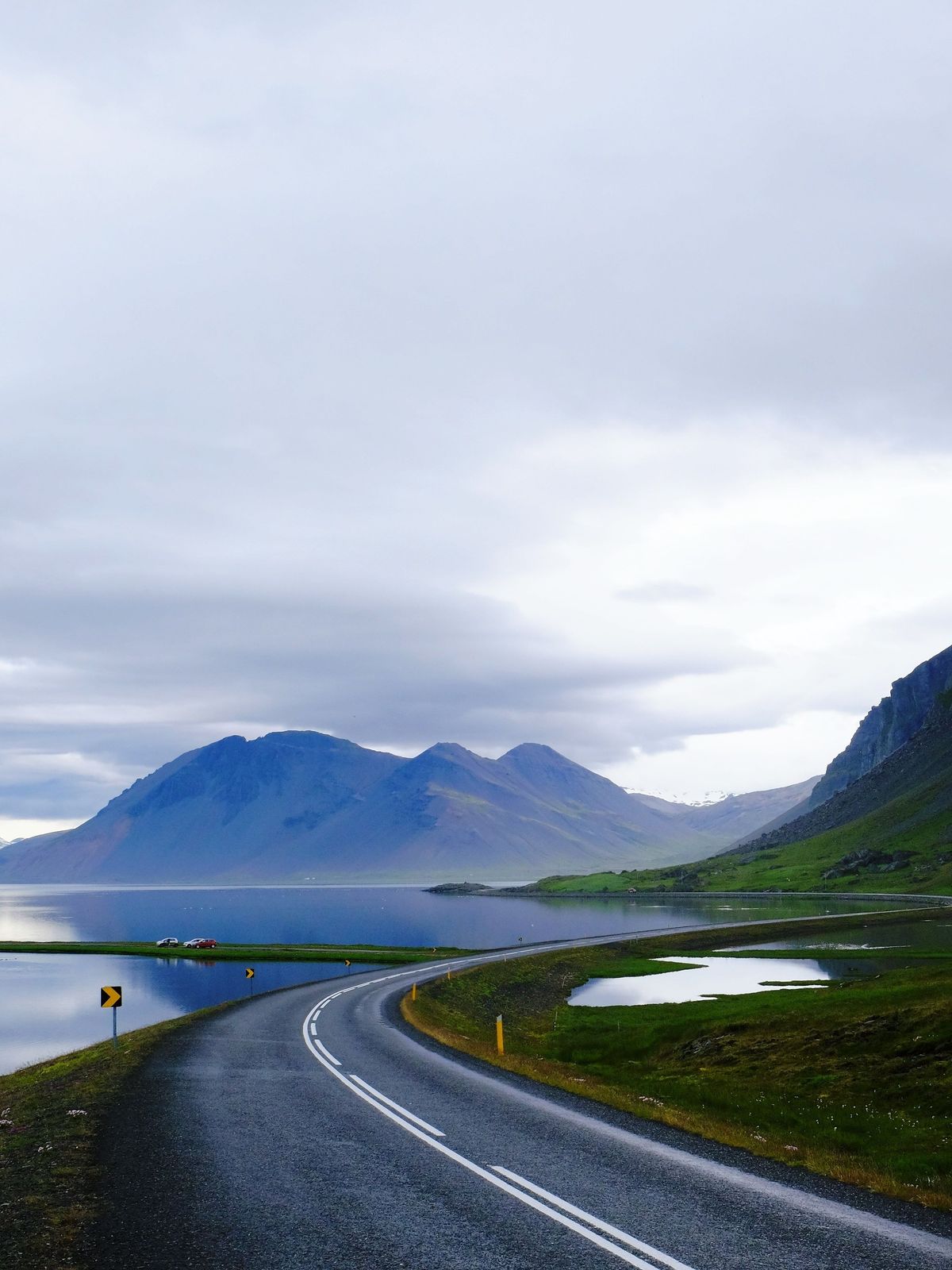
Sigöldugljúfur is a canyon in the Icelandic Highlands. There's a blue-green river at the bottom and dozens of small waterfalls coming down the walls. People call it the "Valley of Tears." It's near Landmannalaugar, in Iceland's interior, and you need to plan ahead to get there.
Here’s everything you need to know to plan your visit.
Key Takeaways
Sigöldugljúfur is a small canyon in the Highlands with more than 50 little waterfalls, green moss, dark rock, and blue-green water below.
You need a 4x4 to visit. The canyon is off the F208 and is usually only reachable in summer, when the Highland roads are open.
You probably won’t spend long here. Most people stay for around 20 to 45 minutes, not counting the walk from the parking area.
There are no toilets, railings, shops, or phone signal. Bring what you need, download maps before you go, and keep well back from the edge.
It works best as part of a Highlands day trip. Most people pair it with Landmannalaugar, and you can add Háifoss or Ljótipollur if the roads and timing work out.
What Is Sigöldugljúfur?
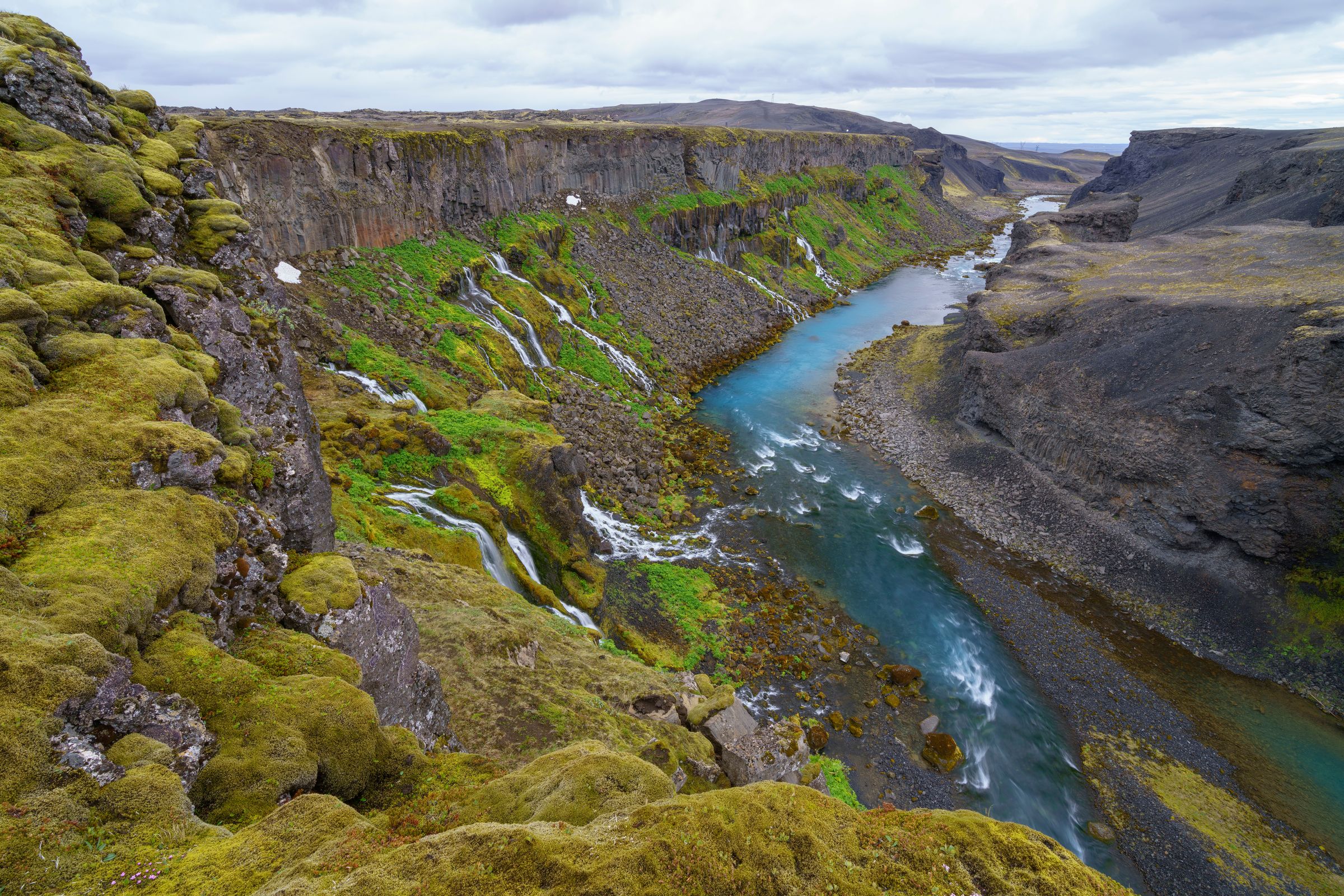
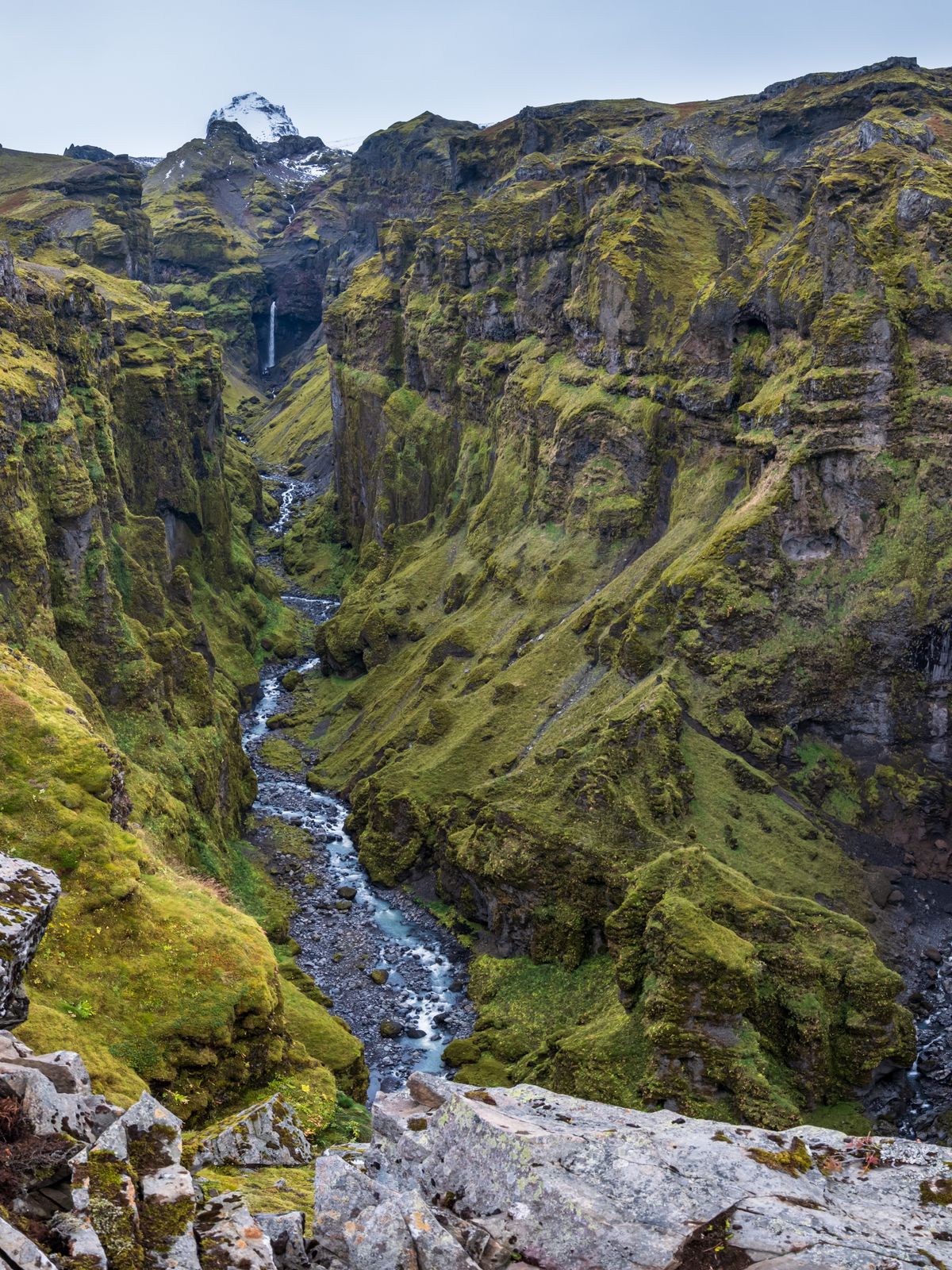
Sigöldugljúfur is a canyon in Iceland's interior, about 2 kilometers long and up to 30 meters deep. The walls are covered in green moss. The water at the bottom is blue-green. Dozens of small waterfalls run down the sides into the gorge. You don't come here for one big waterfall. You come for a whole wall of them at once, and that's a different experience.
Why It's Famous
Most places people visit in Iceland are impressive because of their size. Skógafoss is tall. Gullfoss is wide and loud. Sigöldugljúfur isn't like that. There's no single dramatic thing. What people react to is everything at once: the narrow gorge, the water color, the waterfalls all over the wall, the green moss on the dark rock.
The name "Valley of Tears" comes from the way the waterfalls look. Dozens of them run down the canyon wall at the same time, and the cliff genuinely looks like it's crying. It's not an old Icelandic name or a piece of folklore. It's just a nickname travelers started using because it describes it well.
Photographers have noticed this place a lot in recent years because you get a clean, contained scene in one frame: dark rock, green moss, turquoise water, and falling water. It's not hard to get a good photo here.
Here's what you're actually looking at when you visit:
A narrow canyon approximately 2 km (1.25 miles) long and 20 to 30 meters (65 to 98 feet) deep
More than 50 small waterfalls along the eastern wall
Moss-covered cliffs that stay green because of the constant moisture from the falls
A blue-green river along the canyon floor, fed by spring water coming through the volcanic rock
Elevation of around 500 meters (1640 feet) above sea level
No visitor infrastructure: no barriers, no railings, no toilets, nothing
How Sigöldugljúfur Was Formed
Iceland sits on the Mid-Atlantic Ridge. The whole country is geologically active. The ground is a mix of lava fields, basalt, and volcanic rock. Sigöldugljúfur formed the usual way: water cutting into rock over a long time.
What's less obvious is that the canyon's current look isn't purely natural. In 1978, the Sigalda hydropower station was built upstream. The dam created a reservoir called Krókslón by rerouting the Tungnaá River. That dropped the water level in the canyon significantly. Before the dam, the walls were partly underwater. After it, the porous volcanic rock was exposed, and water started seeping through the cracks and coming out as those side waterfalls you see today.
The rock is ancient, over 10,000 years old. But the way the canyon looks in every photo is partly because of a hydropower project from the 1970s.
Where Is Sigöldugljúfur and How Do You Get There?
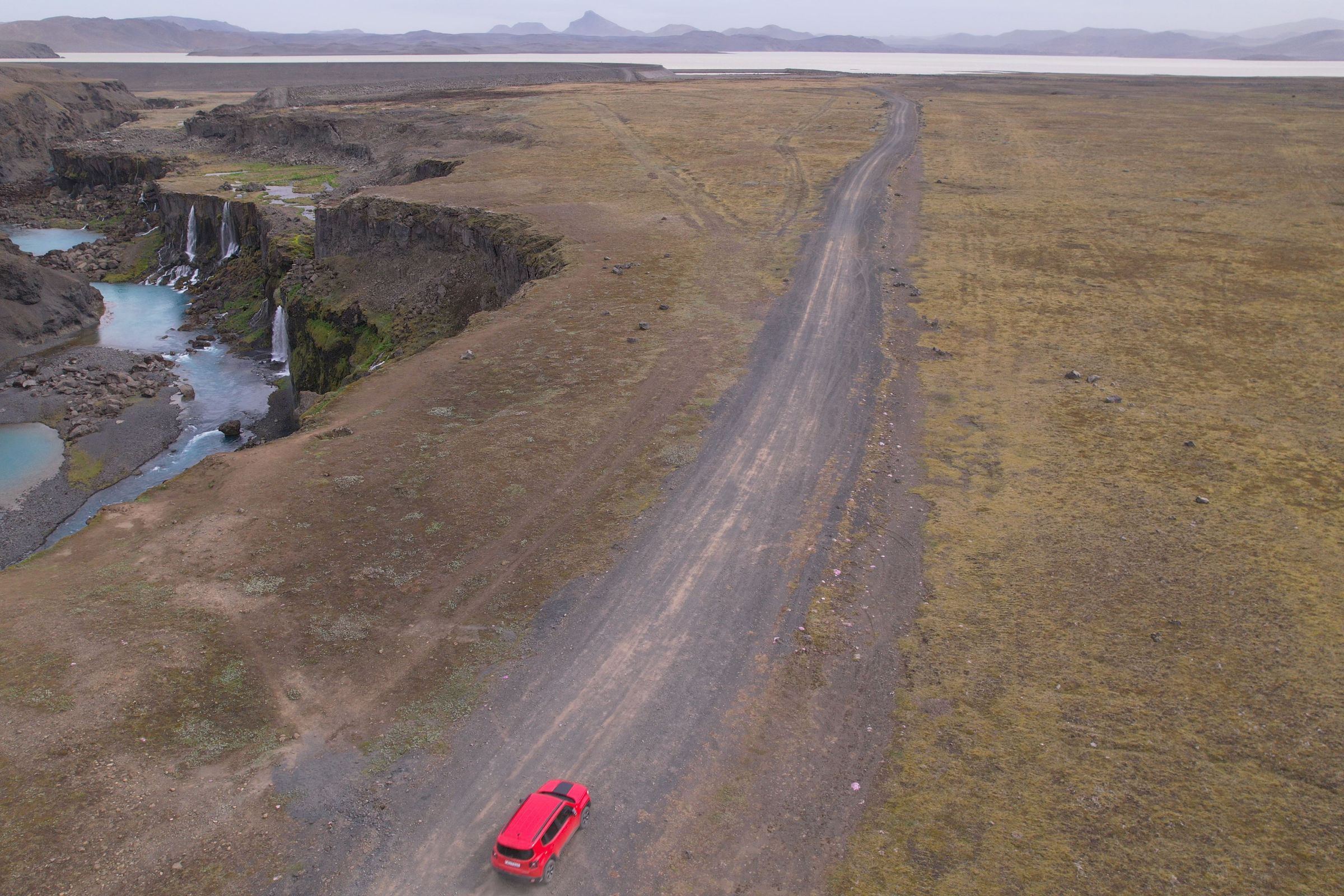
Sigöldugljúfur is in Iceland's Central Highlands, north of Fjallabak Nature Reserve, on the road toward Landmannalaugar. It's not on the Ring Road. It's not a short detour from Reykjavík. It's in the interior, and getting there means driving F-roads in a 4x4.
The location in plain terms: Iceland → Central Highlands → near Landmannalaugar → north of Fjallabak Nature Reserve. That tells you it's a Highlands trip, not a South Coast day.
Driving Routes to Sigöldugljúfur
Most people come from the south. You drive inland from the Ring Road (Route 1), connect to Route 26, then get onto F208 (Fjallabaksleið nyrðri), the Highland road toward Landmannalaugar.
A few things to know:
The canyon is right off F208, and Landmannalaugar is roughly 24 km (15 miles) further south
Most people visit both on the same day
Highland Center Hrauneyjar is at the edge of the interior and is the last place with fuel and services before the F-roads
Check road status at umferdin.is on the day you're driving, not just while you're at home planning
Do You Need a 4x4 to Visit Sigöldugljúfur?
Yes, there’s no way around it.
F-roads are Iceland's Highland mountain roads. They're unpaved, only open in summer, and some have river crossings. F208 is one of the easier Highland routes, but it's still rough gravel, uneven in spots, and conditions can change quickly.
A regular rental car won't handle it. Most rental insurance policies don't cover F-road damage either. So if you try it in the wrong vehicle and something breaks, you're covering the cost.
If you'd rather not drive the Highlands yourself, guided super-jeep day trips from Reykjavík include both Sigöldugljúfur and Landmannalaugar, and cost around 46,000 ISK ($370)
Before driving any Highland route, check road conditions at umferdin.is and safety guidance at safetravel.is. Roads that are open in the morning can close by afternoon.
Rent a Campervan in Iceland
Discover Iceland's Unique Canyons with Total Comfort and Freedom
Iceland has plenty of waterfalls and beautiful scenery. What's different here is how it all shows up in one small space.
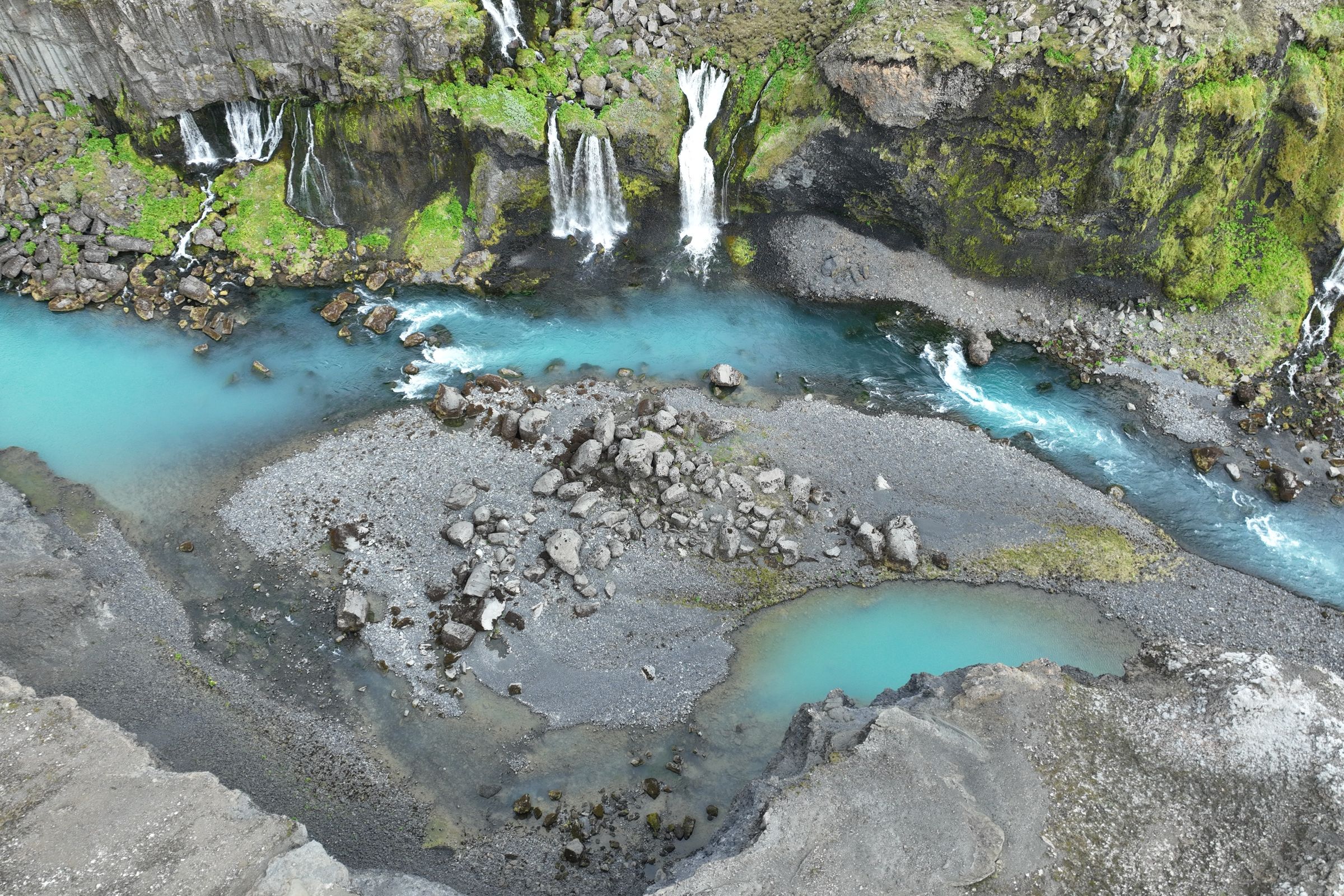
The "Valley of Tears" Waterfalls
There's no single main waterfall. There are 50-plus small ones, all running down the canyon wall at the same time. The whole wall moves. Most people end up staying at the rim longer than they expected, just looking at it. The light shifts the scene constantly.
Turquoise Canyon River
The river at the bottom is a vivid blue-green. That color comes from spring water seeping through the porous volcanic rock and coming back out along the canyon walls. The water is clear, and in good light, the color looks almost fake. People post photos of it online and get told they've over-edited it, even when they haven't touched it.
Moss-Covered Volcanic Cliffs
Green moss covers the dark rock all along the walls. It grows there because the waterfalls keep the canyon wet. The moss grows slowly in Iceland's climate and takes years to come back if it's damaged. Stepping on it isn't just bad manners. It leaves visible marks that stick around.
Remote Highland Landscape
The drive in matters. You pass through flat lava fields for a while. Dark, almost no plants, no people. Then you get to the canyon. That shift from the empty landscape to the green gorge with the blue water is a big part of why the first view lands the way it does.
Best Things to Do at Sigöldugljúfur
This is a scenic stop, not somewhere you spend a full day. Most people are here for 20 to 45 minutes. Photographers stay longer. Here's how to make good use of the time.
Enjoy the Canyon Viewpoints
The walk from the parking area to the rim takes about 15 to 20 minutes each way. Once you're there, you can go in either direction along the rim. The eastern wall with the waterfalls is what most people come for, but walking south along the rim gives you a view of the full canyon length and the river below.
Keep your distance from the edge. It's a 20 to 30 meter drop (65 to 98 feet), there are no barriers, and the ground near the rim can be loose after rain.
Photography
This is one of the main reasons people make the trip. You get dark rock, green moss, blue water, and a narrow gorge all in one frame. Overcast light works better than direct sun here. The sun can flatten the moss and wash out the watercolor.
A wide-angle lens picks up the full wall and river. A telephoto lets you zoom in on individual waterfalls and moss detail. A polarizing filter helps with glare on the water. Early morning and late afternoon give the most dimension to the light.
Short Walks Along the Canyon Rim
There's no marked trail past the access path from the parking area. But walking the rim is easy. You'll see paths worn by previous visitors. Use those instead of making new ones through the vegetation.
The round trip from the parking to the main viewpoint is about 2 km (1.25 miles). Walking slowly in both directions along the rim takes another half hour or so and gives you a better feel for the whole place.
Nature Observation
The Fjallabak Highlands have birds that have adapted to the volcanic terrain. Golden plovers, ptarmigans, and ravens are the most common in this area. The moisture around the canyon pulls in species you won't find out on the dry lava fields. If you sit still at the rim for a few minutes before shooting, you'll usually see something.
Best Time to Visit Sigöldugljúfur
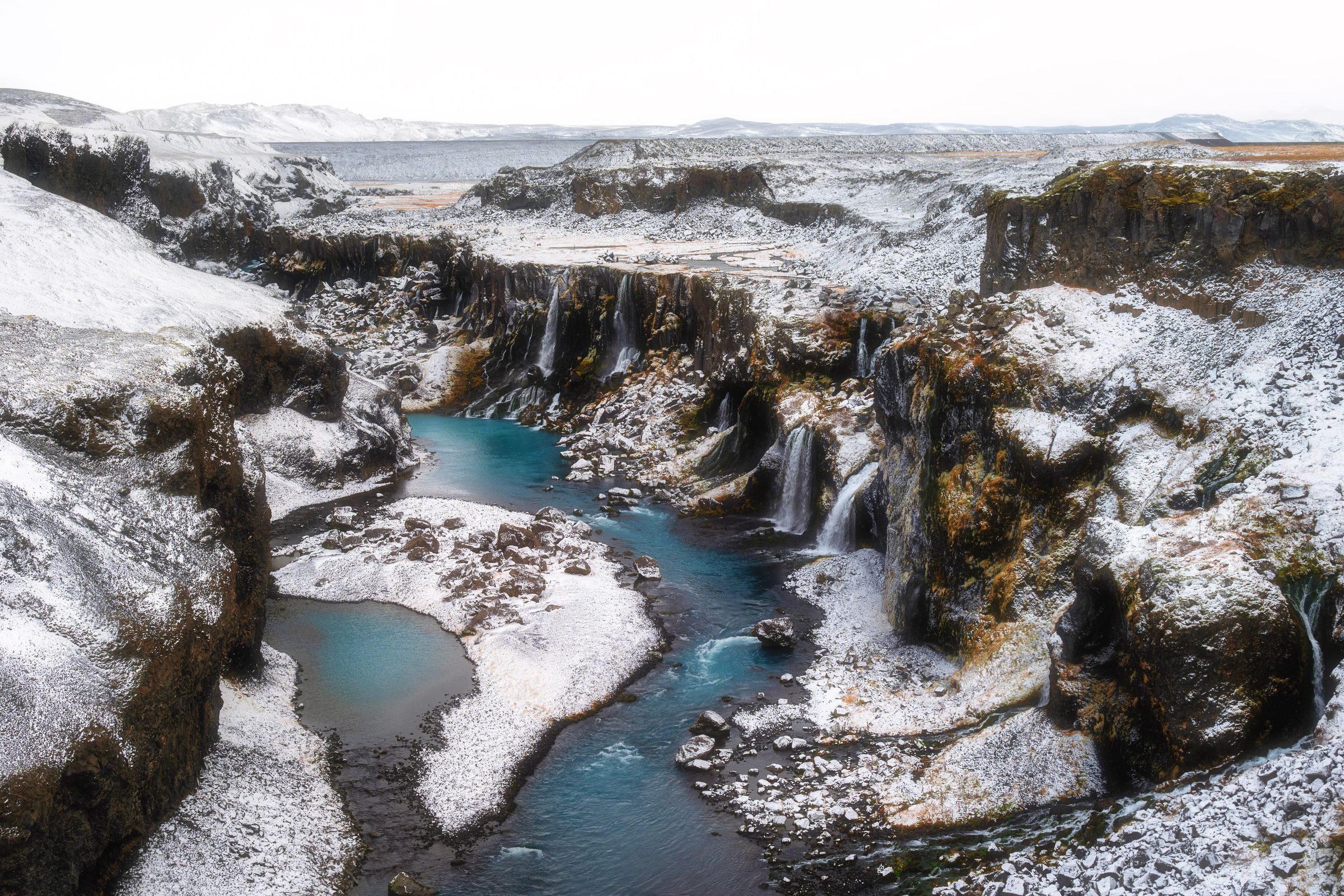
Sigöldugljúfur is a summer destination. The Highland F-roads open when conditions allow and close when they don't. There are no fixed dates. For most years, you can plan on late June through early September.
Highland Summer Season
Summer gives you the greenest walls, the most reliable road access, and long daylight hours. In late June, you can be at the canyon at 11 PM with good light because of the midnight sun. That's real, and it's worth thinking about when you plan.
July and August are busy in Iceland overall, but Sigöldugljúfur gets far fewer visitors than the South Coast spots. Going early in the morning on a weekday gives you the best chance of being alone at the rim.
Road Openings and Weather
Don't plan your trip around assumed road opening dates. Check umferdin.is for the actual road status on the morning you're going. Even in the middle of summer, a snowfall, flood, or strong wind can close a Highland road fast.
And even with open roads, Highland weather can be bad. Temperatures drop quickly, fog can appear fast, and rain can show up at any time. Check the forecast at vedur.is and look at SafeTravel Iceland's guidance before you head out.
Travel Tips for Visiting Sigöldugljúfur
This place is remote. You need to prepare before you go.
Before You Leave
Check road conditions: Use umferdin.is the morning you're driving. Not the night before.
Check the weather: Vedur.is is the Icelandic Met Office. Look at it before you leave.
Fill your tank before the F-roads: There's no fuel in the Highlands. Fill up at the last town or at Highland Center Hrauneyjar.
Register your trip: SafeTravel Iceland at safetravel.is is run by ICE-SAR. You can file a travel plan there. If something goes wrong, rescue teams know where to look.
At the Canyon
Don't walk on the moss: Stick to existing paths. The moss takes years to grow back, and it's what gives the canyon its look.
Stay back from the edges: No barriers, big drop, and the ground near the rim can give way. Three meters back is a safe distance.
No facilities: No toilets, no water, no shelter. Bring everything you need before you get there.
No cell signal: Download offline maps before you go. Google Maps and maps.me both work offline once downloaded.
Responsible Visiting
Sigöldugljúfur is in a sensitive area near Fjallabak Nature Reserve. Stay on authorized tracks, don't disturb vegetation or rock formations, and don't drive off-road. Off-road driving is illegal in Iceland, and the damage lasts for decades.
Emergency number in Iceland: 112. The nearest hospital is over two hours away. Rescue teams can take four to six hours to reach the Highlands. Don't skip the preparation.
Nearby Attractions to Combine With Sigöldugljúfur
The canyon fits best as part of a bigger day in the Highlands. These are the places that go with it well.
Landmannalaugar
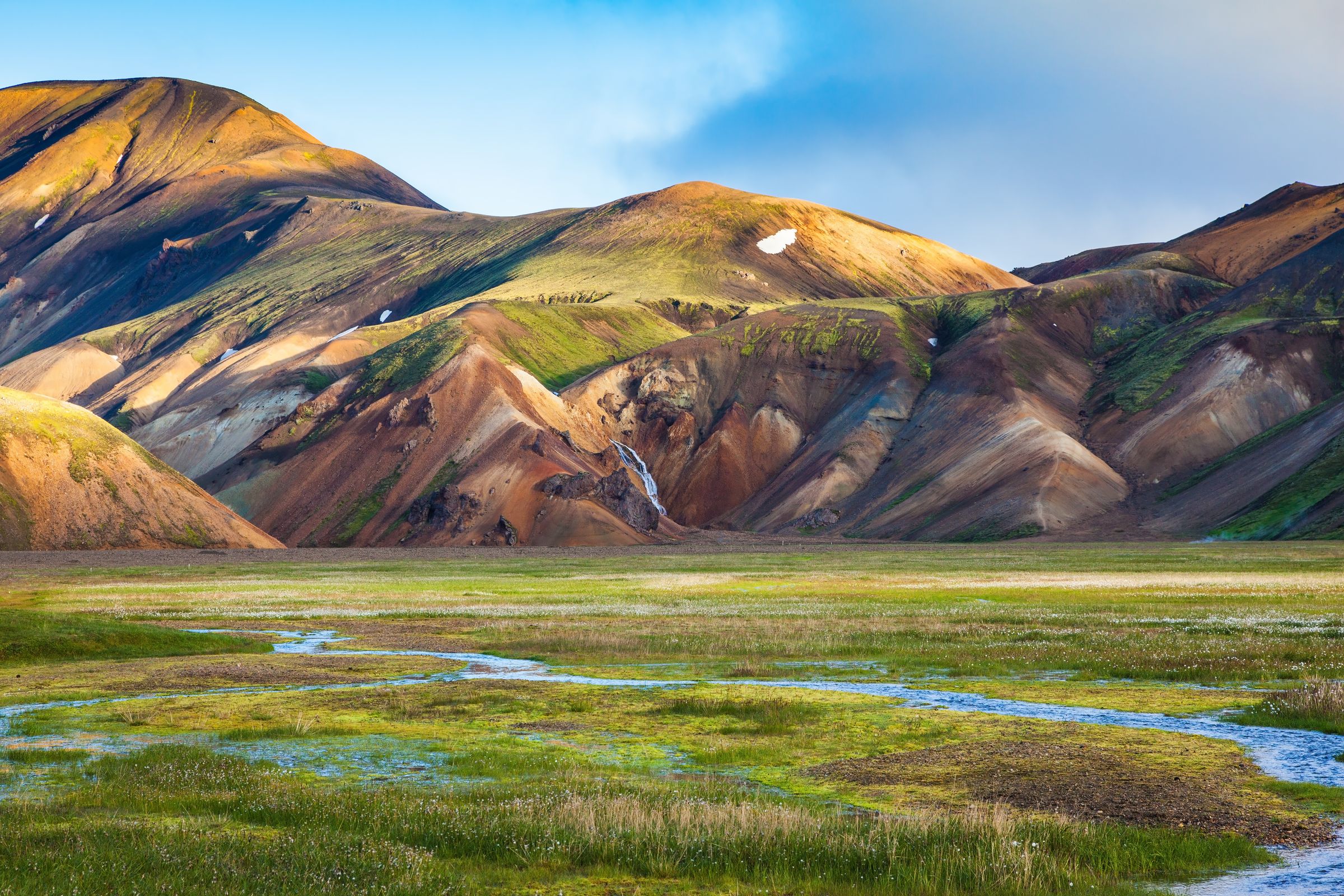
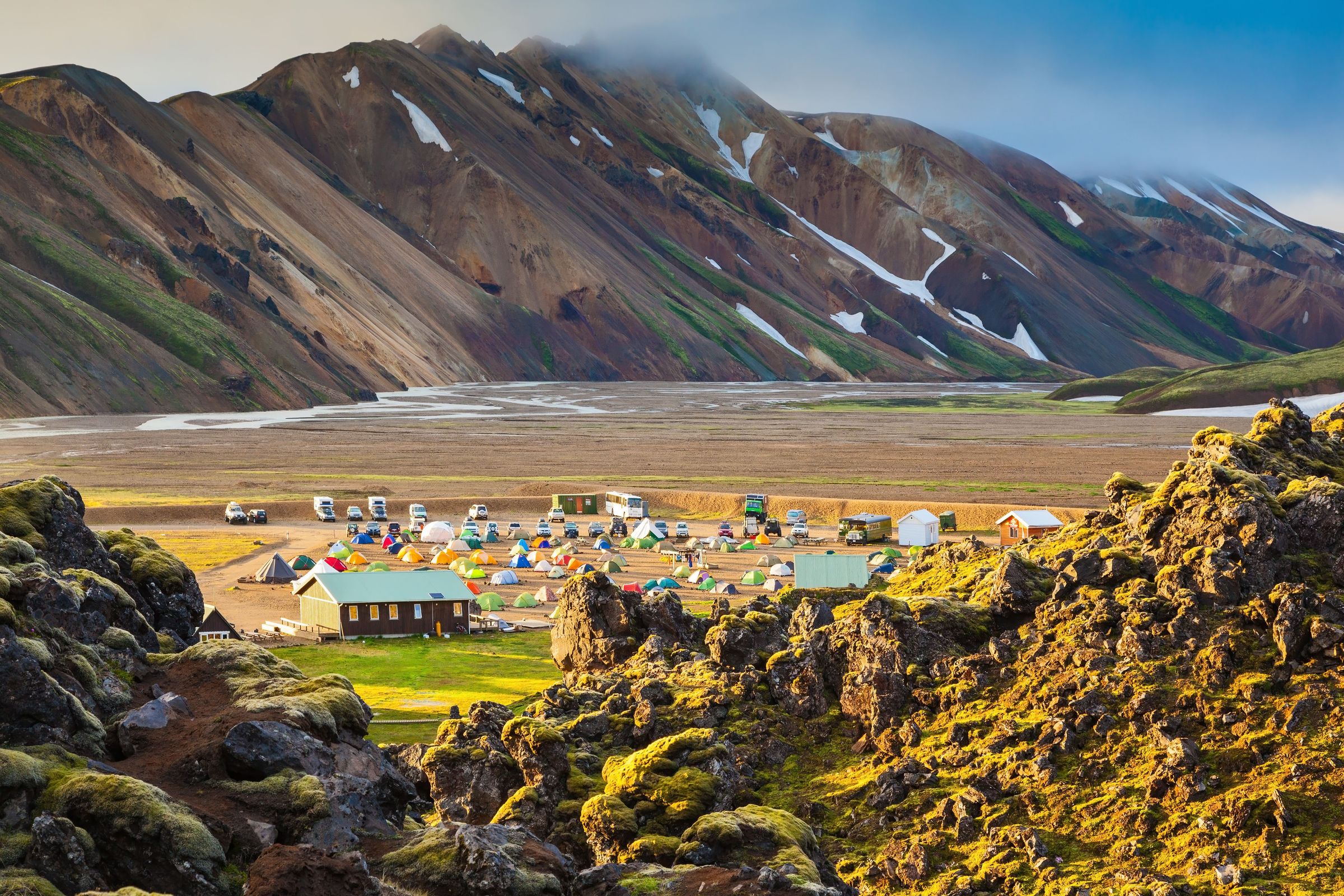
Most people doing this area visit both. Landmannalaugar is inside the Fjallabak Nature Reserve. It has colorful rhyolite mountains, geothermal hot springs, hiking routes, and a campsite that's the starting point of the Laugavegur Trail. Budget 2 to 3 hours if you want to hike and use the hot pool.
It’s very important to know that you must book a spot at the parking in advance if you want to go with your own vehicle. You can do it through the official website.
Laugavegur Trail
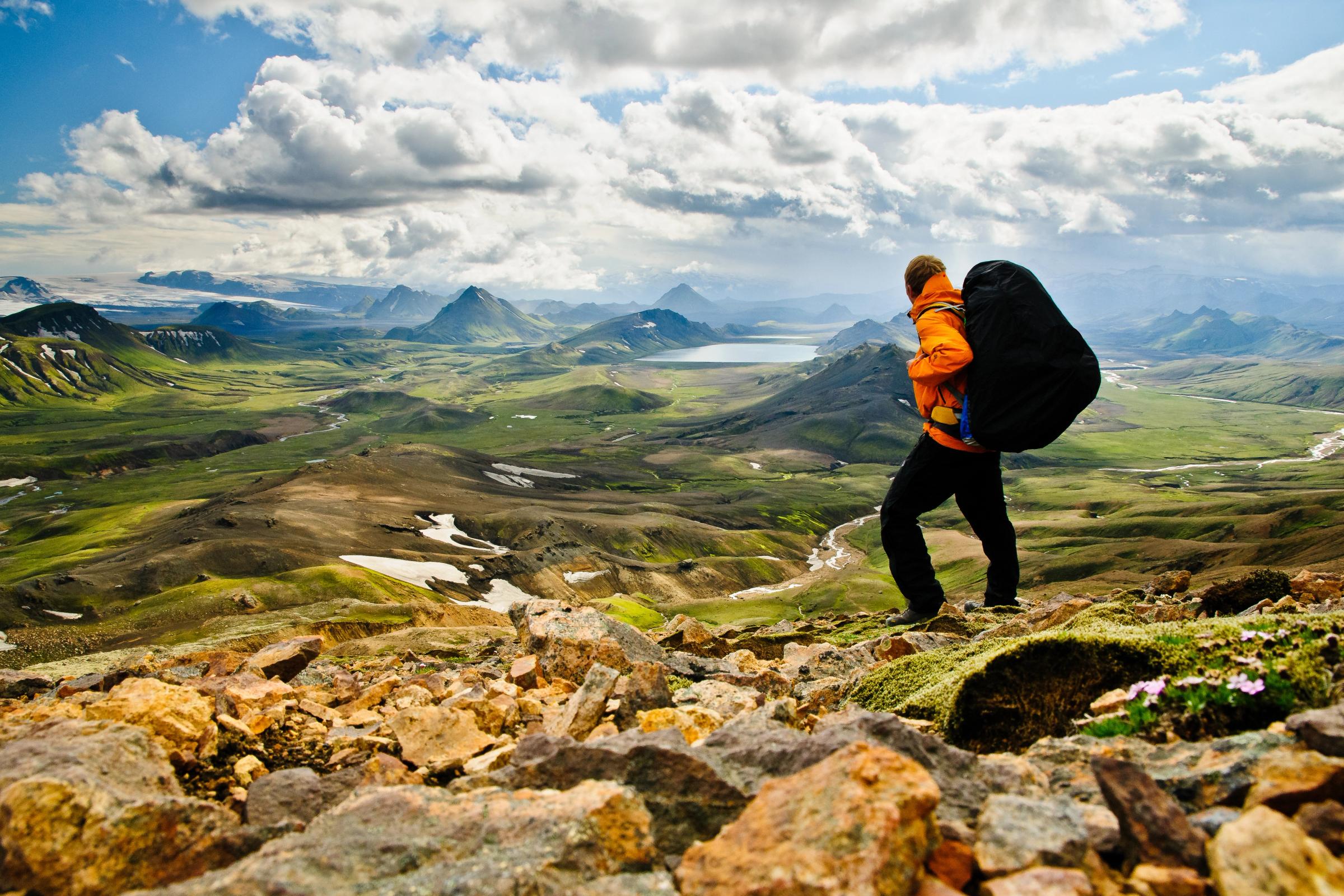
The Laugavegur Trail is one of Iceland's best-known multi-day hikes. It starts at Landmannalaugar and goes through volcanic terrain, geothermal areas, and glacial landscapes. If you're in Iceland for a longer trip, adding a Sigöldugljúfur stop around the Laugavegur makes sense.
Fjallabak Nature Reserve
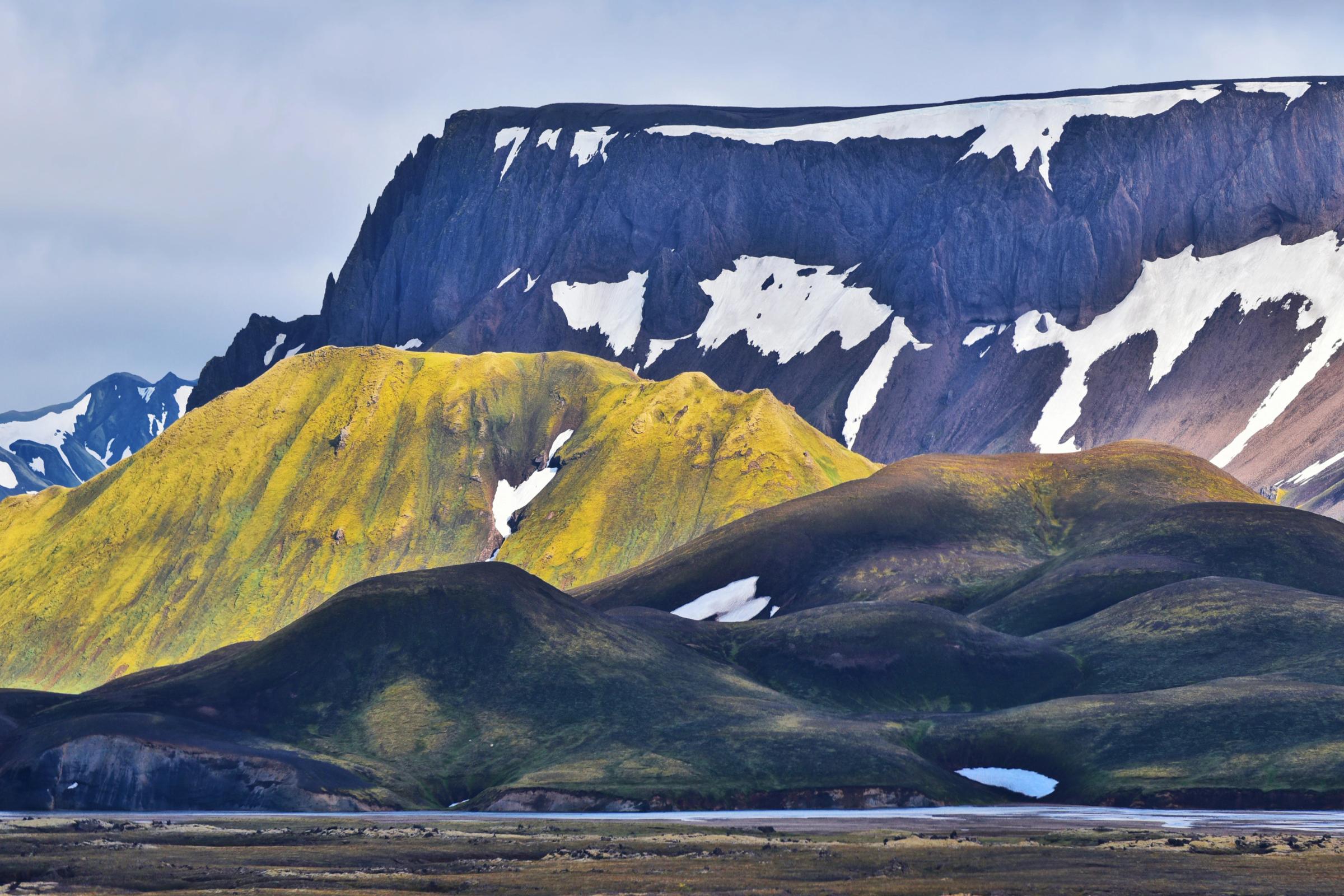
The reserve around Landmannalaugar is worth more than a drive-through. There are rhyolite mountains, volcanic craters, lava fields, and highland lakes across a big protected area. Ljótipollur, an explosion crater lake inside the reserve, works well as another stop on a Highlands day alongside Sigöldugljúfur.
Háifoss Waterfall
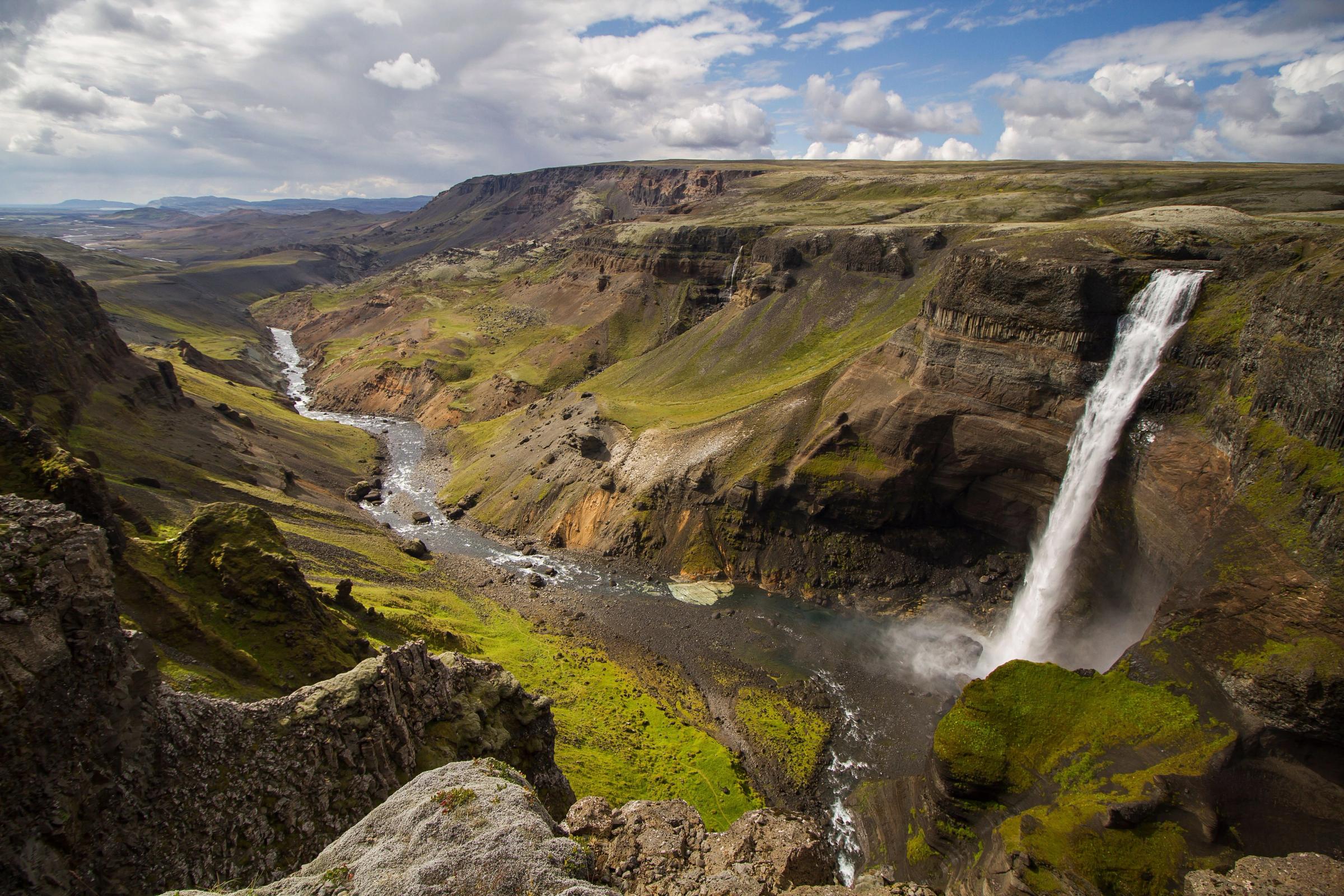
At 122 meters, Háifoss is one of the tallest waterfalls in Iceland. It's in the Þjórsárdalur Valley, about 45 km from Sigöldugljúfur. If you're doing a full Highland driving day, combining Háifoss, Sigöldugljúfur, and Landmannalaugar gives you three very different things to see.
Sample Highlands Itinerary Including Sigöldugljúfur
Here's a typical way to structure a Highland day around the canyon.
Morning: Drive inland from the south coast, fill up at Highland Center Hrauneyjar before the F-roads start
Mid-morning: Stop at Sigöldugljúfur Canyon for 30 to 45 minutes, walk the rim, look at the waterfalls
Late morning to early afternoon: Continue south on F208 to Landmannalaugar
Afternoon: Hike the rhyolite mountains around Landmannalaugar, then use the hot springs
Evening: Drive back out on F208 and head south to the coast
The whole day takes 10 to 12 hours depending on pace and roads. It's a long day, but both places are worth it and they're very different from each other.
If you're combining Sigöldugljúfur and Landmannalaugar in one day, check road conditions and Landmannalaugar parking rules before you leave. Roads can close mid-day, and Landmannalaugar has had advance reservation requirements for parking during peak summer in recent seasons.
Best Campsites Near Sigöldugljúfur
Camping is a practical way to explore this part of the Highlands. Here are the best options close to the canyon.
Landmannalaugar Campsite
This is the most popular campsite in the area and the best base for spending more than one day in Fjallabak. It's inside the nature reserve, next to the Landmannalaugar hot springs, and it's the main starting point for the Laugavegur Trail. You'll have access to marked hiking routes and some of the most colorful scenery in the Icelandic Highlands.
Facilities usually include toilets, showers, and a mountain hut nearby operated by FÍ (Ferðafélag Íslands). The 2026 camping fee at Landmannalaugar is 3,400 ISK per person per night.
Sigöldugljúfur is about 50 minutes by car from the campsite.
Hrauneyjar Highland Center
This one is more comfortable than a campsite. It's right at the edge of the Highlands before the F-roads begin. There's accommodation, a restaurant, fuel, and basic supplies. It's also the last place with proper services before going into the interior.
Prices for a double room start at 29,000 ISK ($232).
If you want a comfortable base for a Highland day trip, this is the sensible option. Sigöldugljúfur is doable as a day trip from here.
Highland Campsites Around Fjallabak
Fjallabak has smaller campsites and mountain huts run by FÍ spread through the reserve. Facilities are minimal, but the settings are good. Camping in the reserve is only allowed at designated sites. You can't just pitch a tent anywhere in a protected area.
Conclusion
Sigöldugljúfur is a narrow canyon with dark rock, green moss, blue-green water, and over 50 small waterfalls running down the wall at the same time. There's nothing else quite like it in Iceland.
You need a 4x4, a summer visit, and the usual preparation for F-road driving. But if you're already doing a Highlands day or heading to Landmannalaugar, it's a straightforward stop to add. Most people are happy they went.
Frequently Asked Questions About Sigöldugljúfur Canyon
If you're into photography, already going to Landmannalaugar, or planning a Highlands day, yes. It's a short stop with a lot to look at. The main thing is that you need to drive F-roads to get there, which doesn't work for everyone.
20 to 45 minutes for most people. Photographers tend to stay longer. It works better as one stop in a Highland day than as the only reason to make the trip.
No. The Highland roads are only open in summer, roughly late June to early September. Check umferdin.is for current road status before going.
Road conditions at umferdin.is, weather at vedur.is, and safety guidance at safetravel.is. If you're also going to Landmannalaugar that day, check their current parking rules too.
About the author
Aron Freyr
Born and raised in Iceland, Aron Freyr has spent all 28 years of his life exploring the country and getting to know its landscapes, regions, and ever changing conditions. From long summer road trips to winter journeys through remote areas, he has traveled across Iceland more times than he can count. As part of the Go Car Rental Iceland team, Aron turns this firsthand experience into trustworthy, practical guidance that helps visitors navigate Iceland with confidence. His deep local insight makes him one of the most reliable voices on Icelandic travel today. He claims this expertise also includes knowing exactly which gas stations make the best hot dogs.