The Basalt Wonders on the Snæfellsnes Peninsula: Gerðuberg Cliffs
In general, Iceland is a country that packs a lot in a relatively small territory. The diversity of landscapes and natural features that can be found here is simply astonishing. The entire island is a collection of monuments shaped by the powerful forces of nature. Doing a road trip in a campervan through Iceland is an unforgettable experience, and a growing number of travelers from all the corners of the world come to this island in the middle of the North Atlantic Ocean searching for unique sights and experiences.
Amazing sites can be found all over Iceland, but there are certain areas that concentrate a lot in a small piece of land. That’s the case of the Snæfellsnes Peninsula, in West Iceland. This area, nicknamed Iceland in Miniature for its diversity, stands out as one of the best regions to visit. There, there’s a natural monument that is often overlooked but that usually leaves visitors speechless. These towering basalt columns, formed from ancient volcanic activity, create a dramatic wall that rises from the landscape. It’s a fantastic spot to add to an itinerary in this part of the country. Come with us to discover all there’s to know about the Gerðuberg Cliffs, as well as places where you can go for the night with your van.
Key Takeaways
- The Gerðuberg Cliffs are a row of basalt formations.
- They are located in the eastern part of the Snæfellsnes Peninsula, in West Iceland.
- Basalt is formed when lava cools down rapidly, creating unique shapes.
What are the Gerðuberg Cliffs?
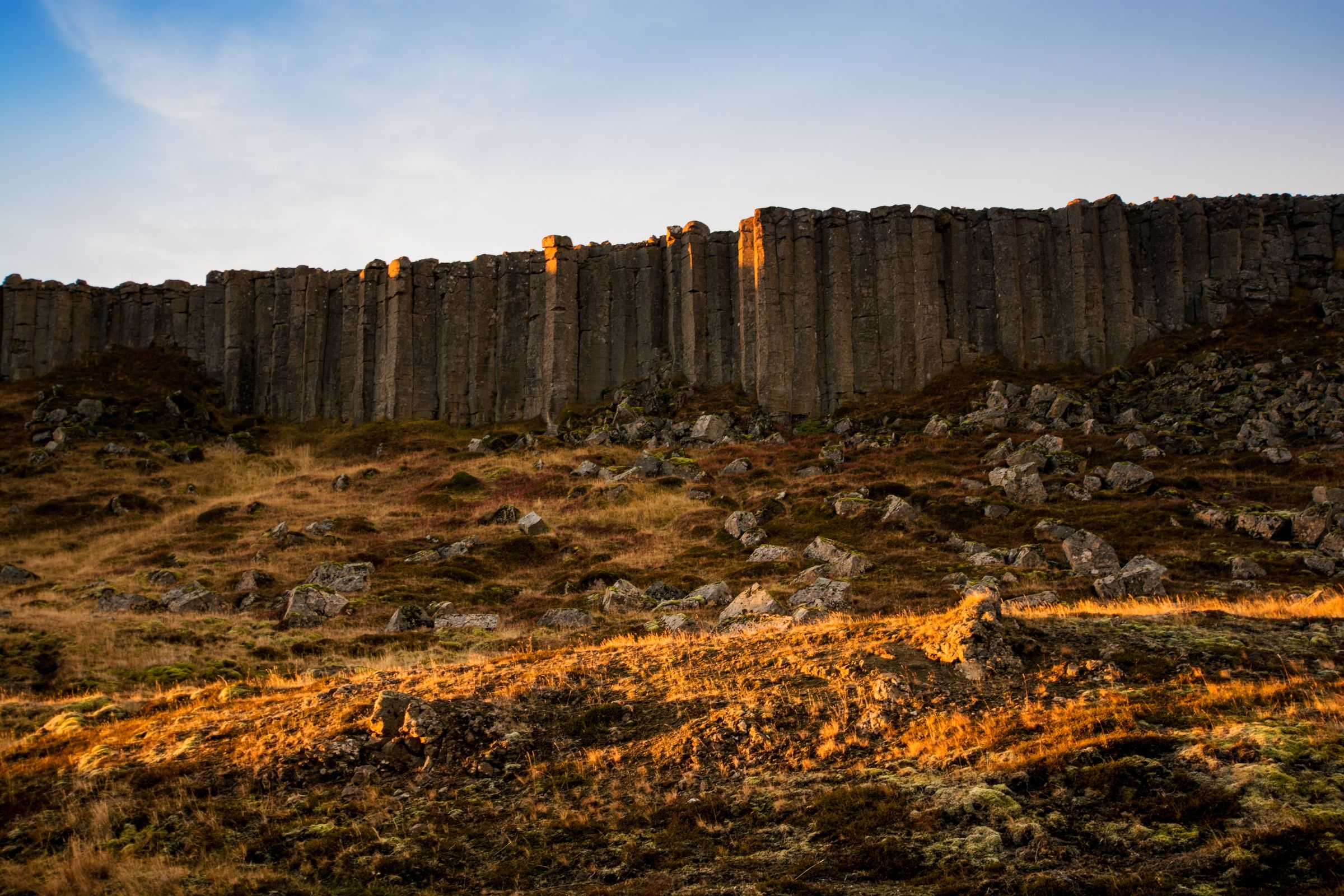
The Gerðuberg Cliffs are a row of hexagonal basalt columns that form a natural cliff face on the southern edge of the Snæfellsnes Peninsula, in West Iceland. These columns, which look a lot like a fortress wall, stretch for about 500 meters to a kilometer. The individual pillars reach heights of 7 to 14 meters (23 to 46 feet) and widths up to 1.5 meters. The dark gray rock contrasts with patches of green moss in certain spots and grass at the base, creating a mix of textures that changes with the light and the seasons. Some columns lean slightly forward, adding another layer to the site's dynamic look. There are rocks at the bottom, pieces of the columns that have cracked and fallen from the wall as a result of centuries of erosion.
Iceland is known as the ‘Land of Ice and Fire.’ There are many natural forces that have played their part in shaping this unique country, and two of the most evident and spectacular ones are glaciers and volcanoes, hence that nickname. Iceland is home to many glaciers, some of them absolutely massive. At the same time, there are tens of volcanoes, many of them still active, that still change the surface of the island. On many occasions, these two forces interact, and the results are astonishing, and the Gerðuberg Cliffs are one example of the landscapes created by these powerful natural forces.
Geologically, the cliffs formed thousands of years ago during the Tertiary period from basaltic lava flows. Basalt rocks are formed when hot lava from a volcanic eruption cools rapidly upon contact with the sea, a lake, or a glacial river. Then, it contracts into symmetrical hexagonal shapes through a process known as columnar jointing. This even cooling resulted in the uniform patterns that we can see today. There are a few similar basalt formations in Iceland, in places like Reynisfjara, Svartifoss, or Hofsós.
The Gerðuberg Cliffs are part of the Snæfellsnes Peninsula, which is home to the Snæfellsjökull National Park, one of the three national parks in Iceland. This region is a nature reserve with protected status. For that reason, it has remained free of heavy development, so it feels pretty natural, there are not many artificial things around. This way, you can have an immersive experience in Iceland’s rawest side.
Visiting the Gerðuberg Cliffs
One of the perks of visiting the Gerðuberg Cliffs is that they are very accessible; it’s quite easy to reach them. A short detour from a main road via a gravel road leads to a parking area, from where you can walk along the base for close-up views or hike a 3-kilometer trail to the top for panoramic sights. From there, you can see glacial lakes and mountains in the distance. In winter, icicles form on the columns, transforming the area into a frozen spectacle.
The name Gerðuberg can be translated to “fortified wall,” which perfectly describes the appearance of the cliffs. It’s quite common in Iceland that natural places have descriptive names, and it’s no different.
The Snæfellsnes Peninsula
The Snæfellsnes Peninsula, where the Gerðuberg Cliffs are, is a stretch of land that extends about 90 kilometers in West Iceland. This area is nicknamed "Iceland in miniature" for its varied landscapes packed into a compact area. Here you can find a bit of everything Iceland is famous for. If you’re going to see the Gerðuberg Cliffs, you might as well extend your visit and discover this amazing part of the country. It’s a fantastic region to go on a campervan trip.
There’s a central mountain range that runs its length, from east to west, dotted with mountains, many of them volcanoes. The centerpiece is the iconic Snæfellsjökull, a glacier-capped stratovolcano rising to 1,446 meters (4,744 feet). But not only that. There are also lava fields, black-sand beaches, and rugged cliffs, most of them attached to legends of elves and trolls. A few charming fishing villages add a cultural touch.
This region showcases Iceland's geological diversity, from ancient craters to hot springs and sea stacks. Wildlife thrives here, with puffins, seals, and whales visible along the coasts. Hiking trails wind through moss-covered lava, and national parks protect unique features. Accessible year-round by campervan, the peninsula offers a loop drive that highlights its contrasts, making it a favorite for those seeking a microcosm of the country's natural wonders.
Where are the Gerðuberg Cliffs and How to Get There
Going to the Gerðuberg Cliffs as part of a road trip through Iceland is quite easy. Even if the location feels remote and isolated, it’s not. The cliffs are quite close to a main road. They are at the southeastern side of the Snæfellsnes Peninsula, about 120 kilometers (65 miles) north of Reykjavik, the capital of Iceland. That makes them easy to reach for day trips or as the first stop on a loop around the peninsula.
The best way to arrive is by car or campervan. There are no public transport options to reach the Gerðuberg Cliffs, and this way you can continue to another fantastic site afterwards.
From Reykjavik, head north on the Ring Road (Route 1) toward Borgarnes, a drive of about 75 kilometers (47 miles) taking roughly an hour. After crossing the city, turn left onto Route 54 for another 40 kilometers (25 miles), passing through farmland and lava fields. Then, you’ll see a gravel track to the right and a sign on the lefthand side that says Gerðuberg. From there, it’s just a couple of kilometers on said road until you reach the parking area. This gravel road is suitable for most vehicles in good weather, though potholes may appear after rain, and it can become slippery. The total journey is around 1.5 to 2 hours, depending on stops.
If you’re coming from Akureyri, the main city in the north, the route is longer, covering about 350 kilometers (217 miles). You just have to take the Ring Road heading west and continue until you reach Borgarnes. There, repeat the itinerary explained before. It takes about 4 hours.

Where to Stay Near the Gerðuberg Cliffs
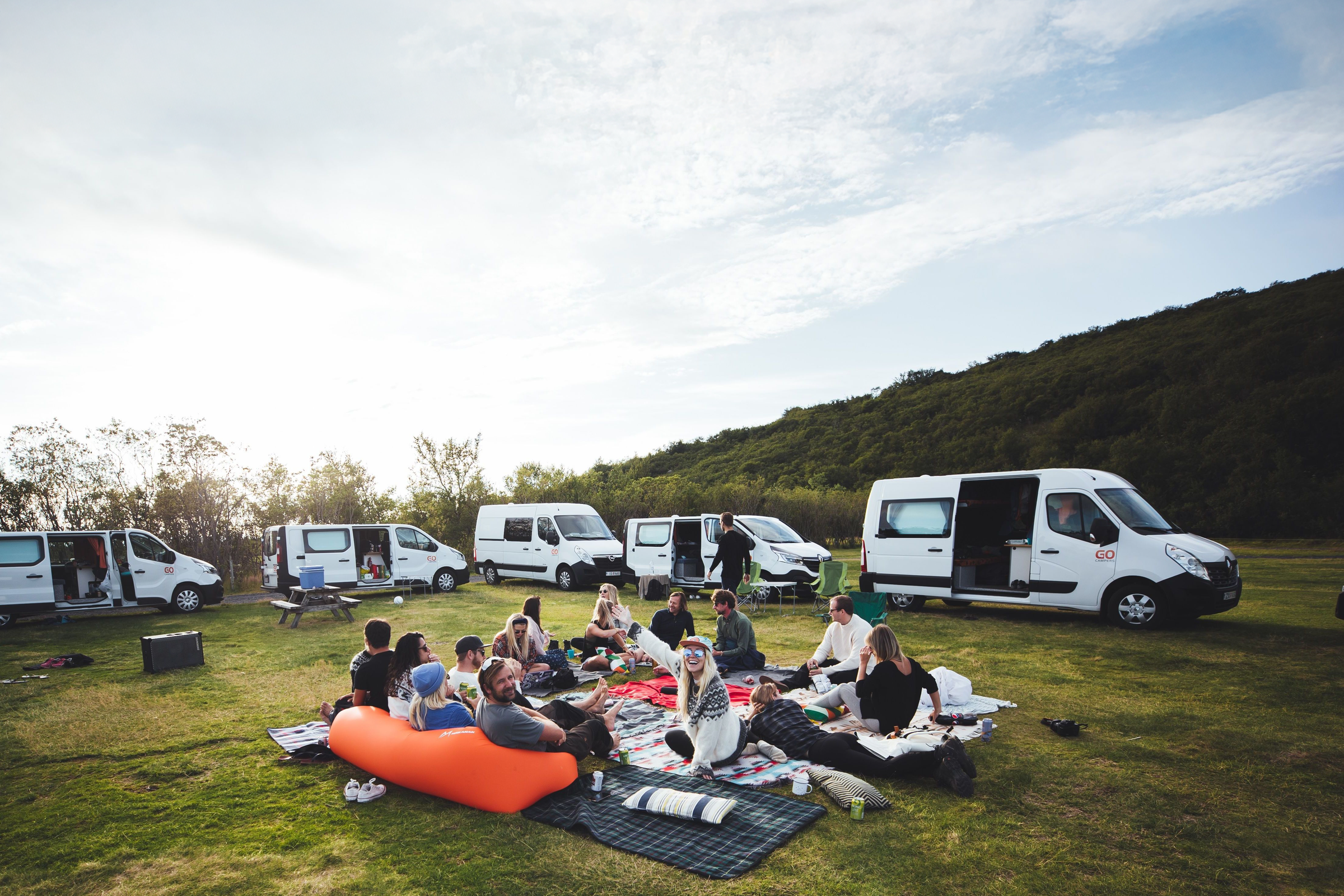
Renting a campervan to travel around Iceland is a fantastic way to discover the country. You’ll have a means of transport and a place to sleep in. And, luckily, camping culture is very strong in this country, so you always have a few good options to spend the night. It’s important to know that it’s forbidden here to park wherever you want and sleep there; you have to stick to designated places.
Snorrastaðir Campsite
Distance to Gerðuberg Cliffs: 14 kilometers (8.7 miles) Open: Year-round.
This farm-based campsite near a stream has fantastic mountain views and separated areas for tents and vehicles. It’s a traditional farm that has been operated by the same family since 1883. It has a camping area with toilets, showers, kitchen and electricity. They also have several cabins for up to five people. If you want a different stay, you can opt for the guest house with rooms equipped with bunk beds. Surrounded by hills and lava fields, it’s a charming spot for those seeking solitude and a taste of traditional Icelandic farm life.
Varmaland
Distance to Gerðuberg Cliffs: 68 kilometers (42 miles). Open: Mid-June to late August.
Just outside the small town of Varmaland, this camping ground is spacious, with grassy pitches and access to toilets, running cold and hot water, electrical hookups, free Wi-Fi, a sink to do the dishes, and a swimming pool.
Borgarnes Camping Ground
Distance to Gerðuberg Cliffs: 46 kilometers (29 miles). Open: Late May to Late September.
Many towns and cities in Iceland have camping grounds, and Borgarnes is no different. The campsite is basic, with toilets, electrical hookups, BBQ area, and free Wi-Fi. Being close to the city center, you’re minutes away on foot from stores, banks, gas stations, restaurants, a playground, a football field, a golf course, a swimming pool, a bar, and a post office. There’s an age limit, only for 20+ year-olds.
Sælureiturinn Árblik
Distance to Gerðuberg Cliffs: 71 kilometers (44 miles). Open: Early May to September.
This seasonal campsite is known in the country for its natural beauty. On top of that, is quite complete, with toilets, showers (heated by geothermal water), electricity hookups, kitchen area, and open outdoor space with football goals and grass resting areas. The campsite also has a small café offering lunch, coffee, and local products.
Búðardalur Campsite
Distance to Gerðuberg Cliffs: 70 kilometers (43.5 miles). Open: All year.
Located in the town of the same name, it’s near the sports center and swimming pool and just a short walk from the town’s services. The facilities include toilets, showers, washing machine and dryer, electricity hookups, and playground for children.
Stykkishólmur Camping Ground
Distance to Gerðuberg Cliffs: 53 kilometers (33 miles). Open: Year-round.
Positioned next to a golf course in Stykkishólmur, on the northern shore of the peninsula, this basic campsite has toilets, a washing machine, and electricity. It’s close to the town’s center, so you can get easy access to supermarkets, gas stations, and other services.
What to See and Do Near the Gerðuberg Cliffs
The adventure doesn’t end at Gerðuberg. As we have already explained, this area is full of wonder, so make the most of your trip and visit some other sites.
Ytri-Rauðamelskúla
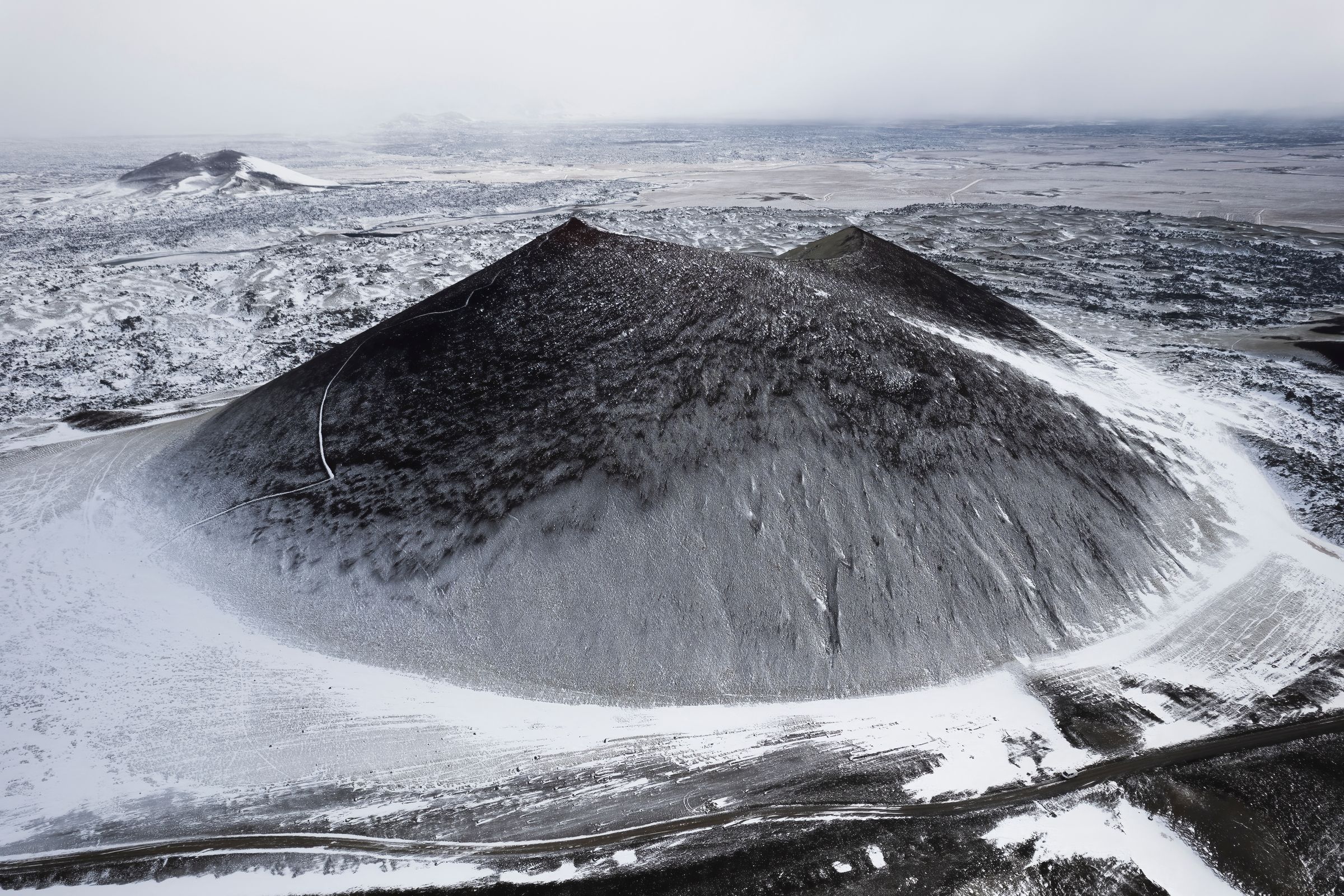
Ytri-Rauðamelskúla is a dormant cone volcano standing 222 meters tall. Its slopes, made of scoria, are painted in red and black hues due to oxidization of the lava rocks. A short drive from Gerðuberg, you can hike all the way up to the summit for amazing views of the surrounding landscapes. The climb is a bit demanding, though. This place offers a great contrast to the cliffs, as here we can see another side of volcanic action.
Landbrotalaug Hot Springs
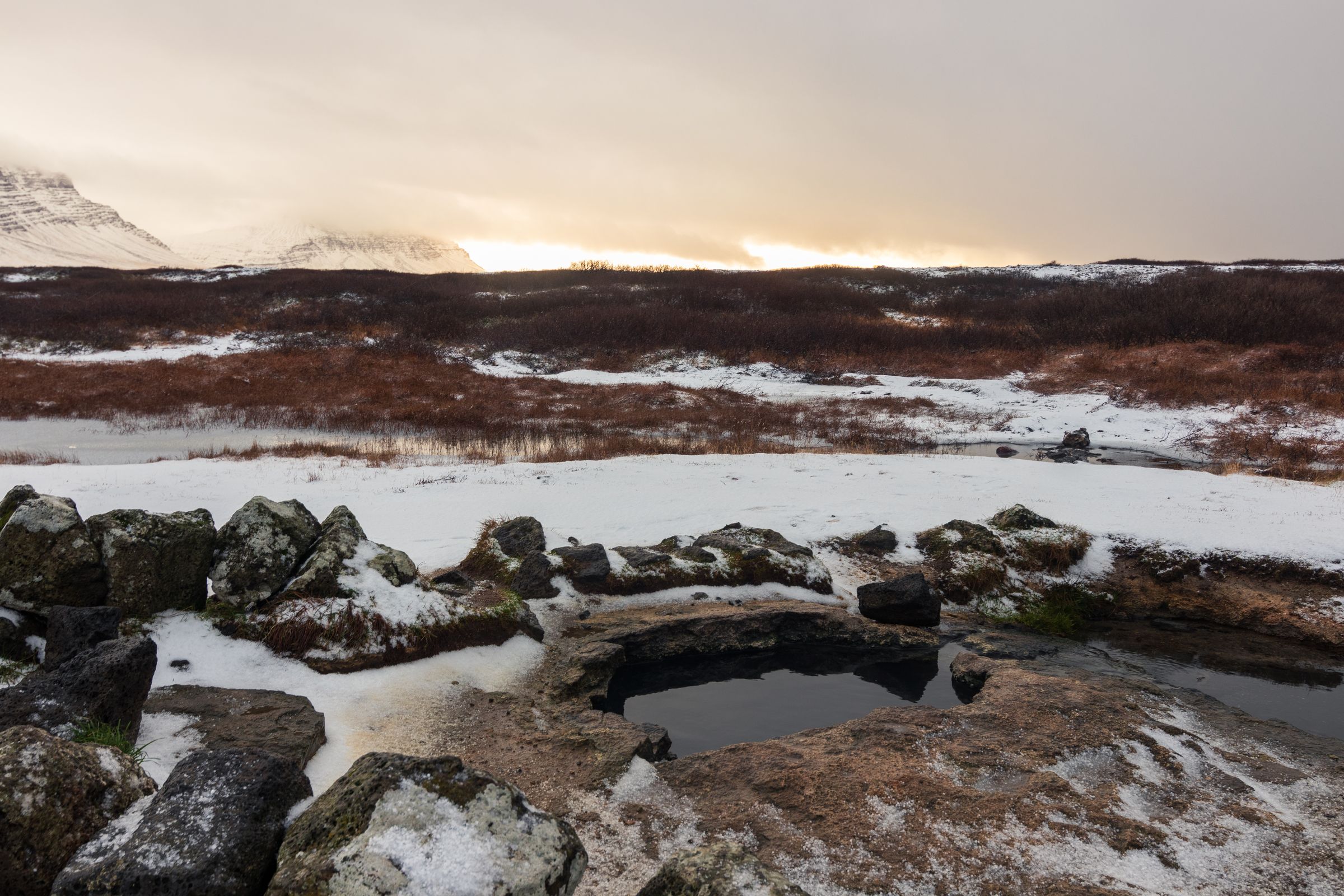
Taking a geothermal bath is one of the best cultural (and relaxing) activities that can be enjoyed in Iceland. There are hundreds of places for it all over the island, from sophisticated spas to more natural and rustic baths. The Landbrotalaug Hot Springs fit in the latter. It’s just a small natural pool near a lake hidden off Route 54, perfect for a soak in geothermal waters reaching 36-40 degrees Celsius (97-104°F). Secluded behind a stone wall to protect it from the wind, it fits just a few people, so you’ll have a quiet and intimate break. You’ll need to leave the van in a parking area and walk to the pool. There are no changing facilities or anything at all.
Rauðamelskirkja
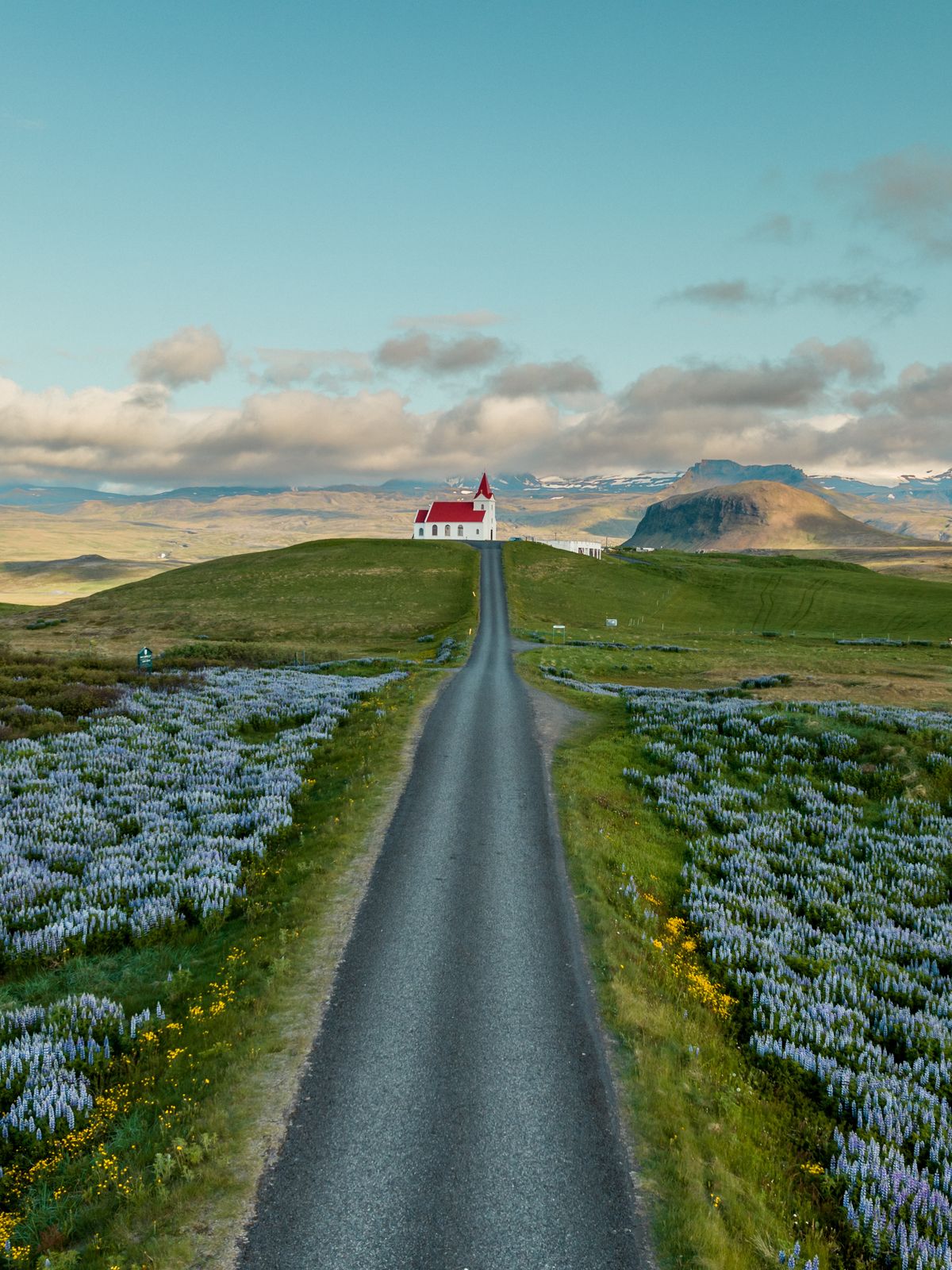
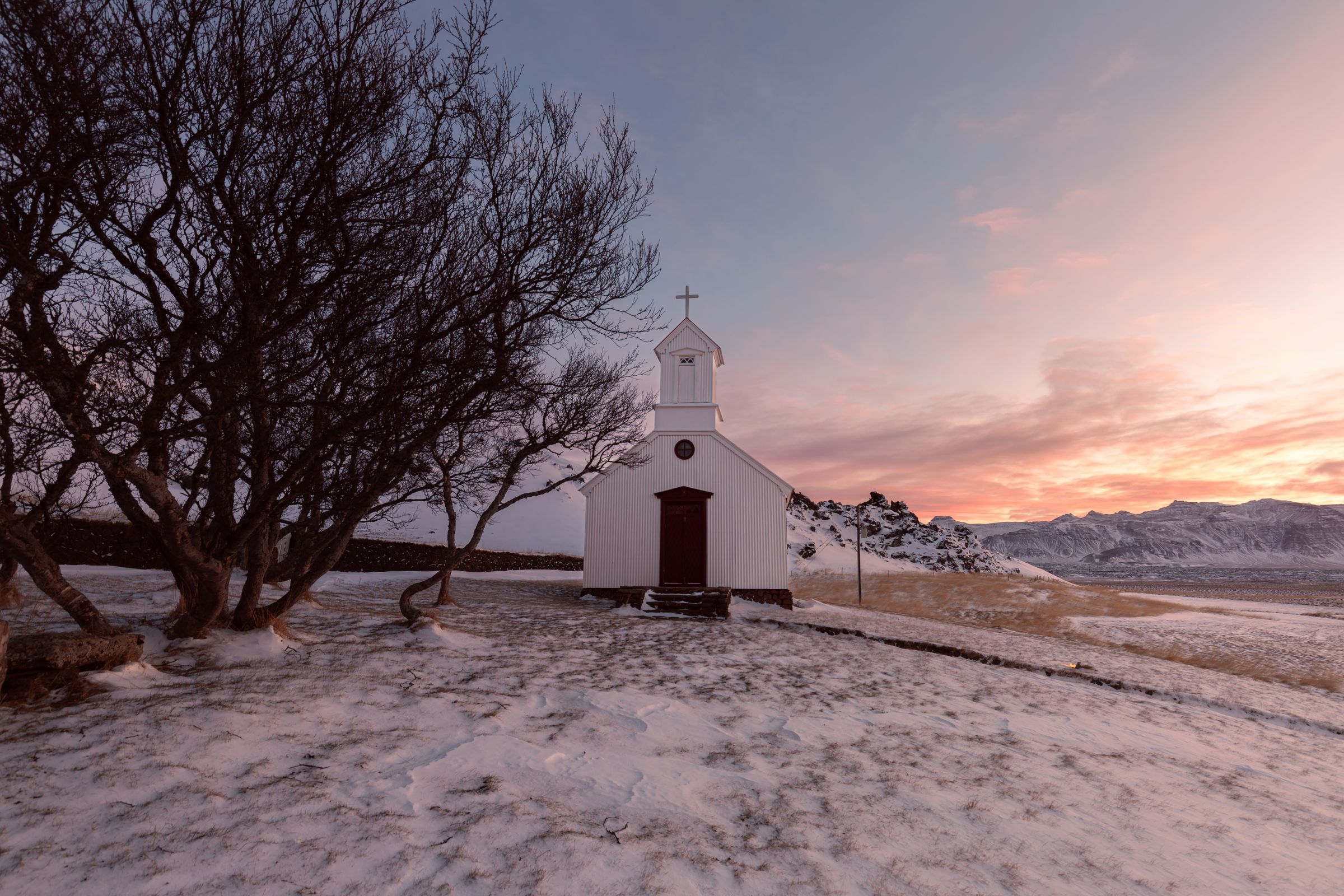
Rauðamelskirkja is a small church in the middle of a lava field near Gerðuberg. Its red roof and simple design are perfect examples of Icelandic traditional architecture. It stands out against the dark rocks, creating a beautiful postcard.
Hlíðarvatn Lake
Hlíðarvatn is a beautiful and quiet lake in Hnappadalur valley, a short detour off the Snæfellsnes main road. It stretches for 4-5 kilometers, and its calm surface reflects the surrounding hills and lava fields. It’s a peaceful contrast to the region’s more dramatic spots. The lake is well known among fishing lovers, who come to its shores looking for Arctic char and brown trout. Like many other lakes and rivers in Iceland, Hlíðarvatn is a nesting area for many bird species in the summer months.
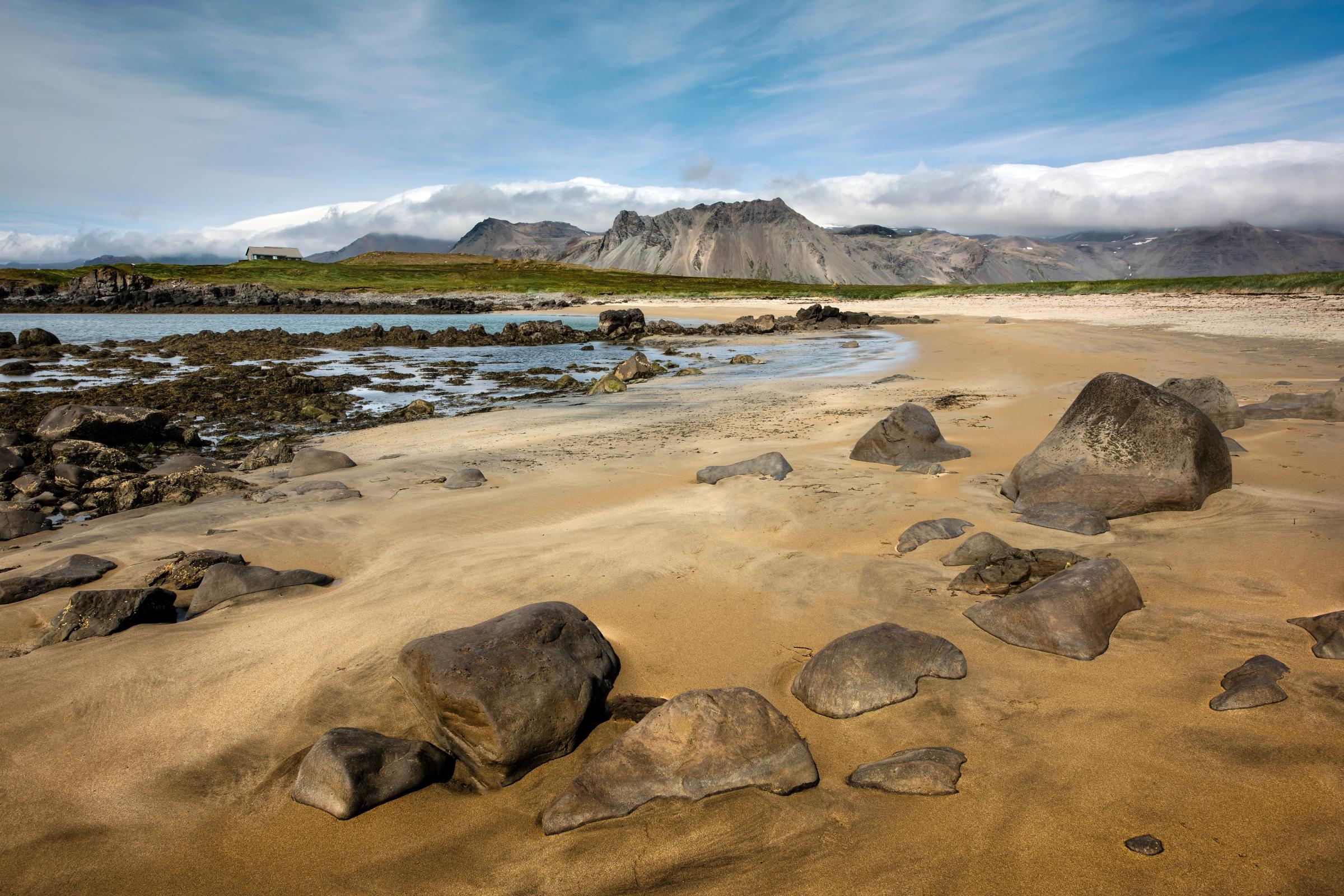
Ytri-Tunga Beach
This golden sand beach, something rare in Iceland, is located on the southern shore of the Snæfellsnes Peninsula. In fact, if you’re going further into the peninsula after seeing the Gerðuberg Cliffs, it's a quick detour. Ytri-Tunga is home to one of the largest seal colonies in Iceland. Harbor seals are often seen there lounging on the rocks or swimming playfully, but there are chances to spot some grey seals, too. Keep 50 meters away to avoid disturbing them.
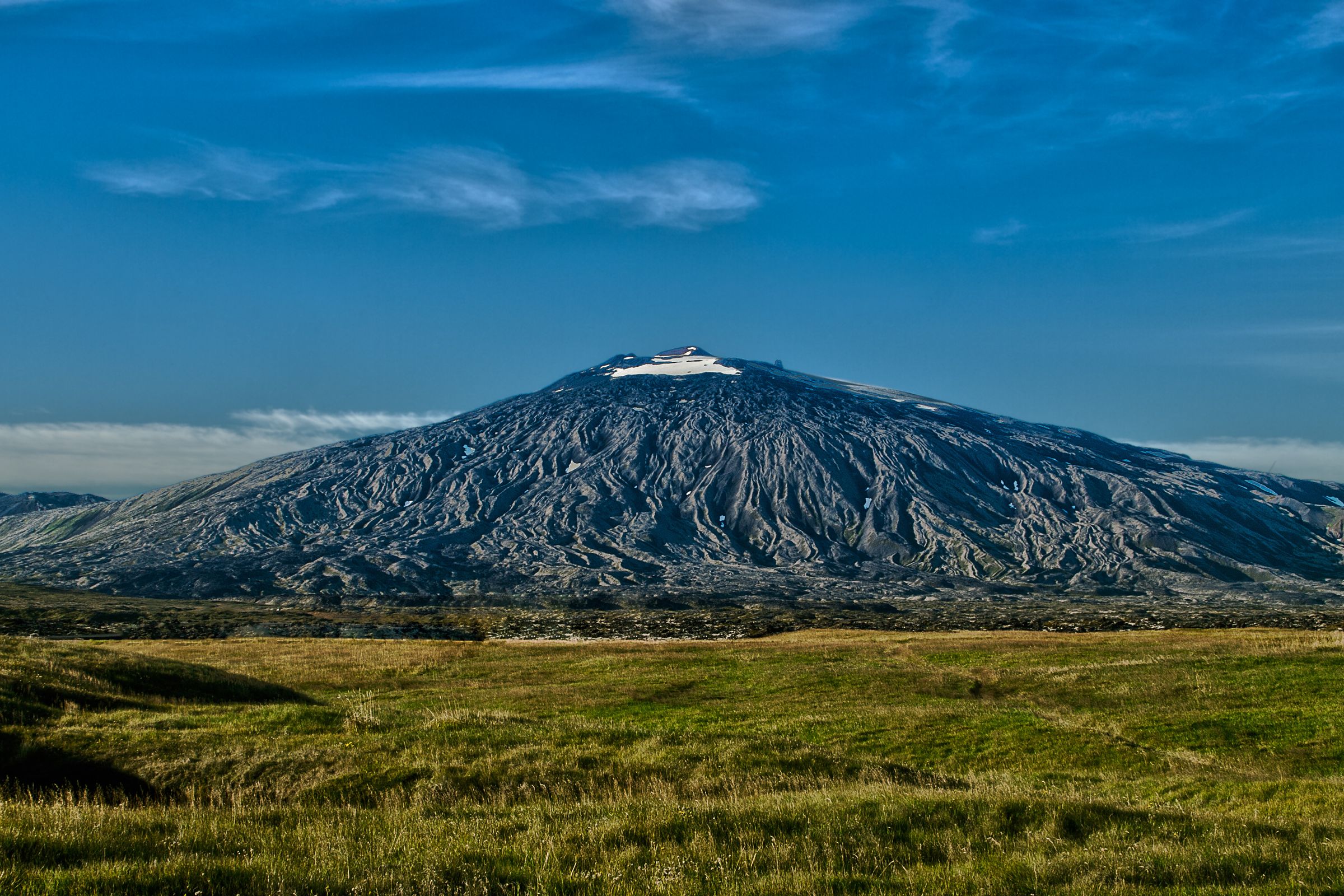
Snæfellsjökull National Park
This amazing national park is one of the three that can be found in Iceland, and the only one that features marine and terrestrial areas. With 170 square kilometers, it covers most of the Snæfellsnes Peninsula. The main attraction is Snæfellsjökull, which gives name to the park, a glacier-covered volcano. But there’s much more than that. You can explore lava tubes, black pebble beaches, and coastal cliffs attached to folkloric tales. There are many hiking paths to discover the park on foot. And wildlife! The park is home to many seabirds, and Ólafsvík on the northern shore is a prime destination for whale watching.
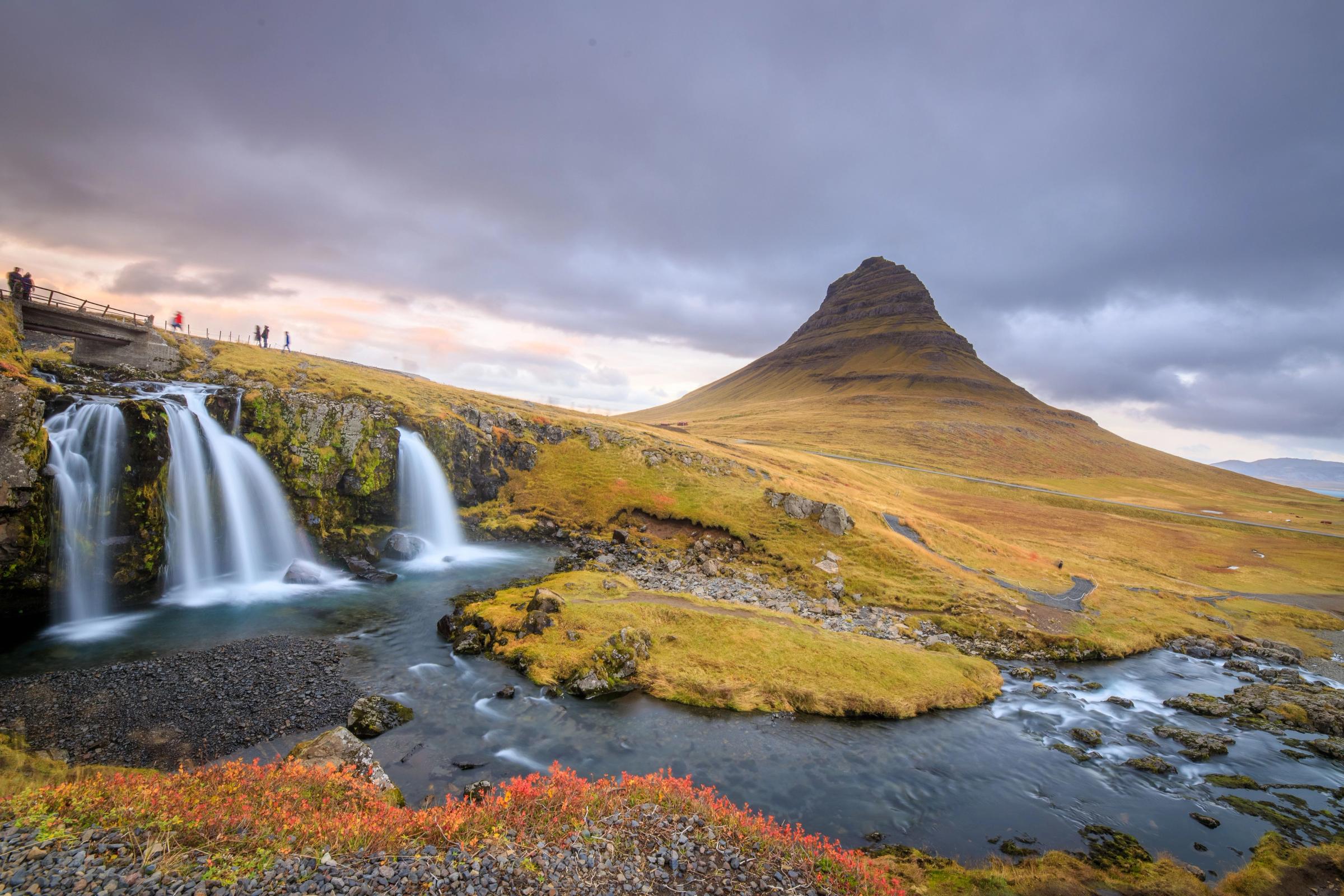
Kirkjufell and Kirkjufellsfoss
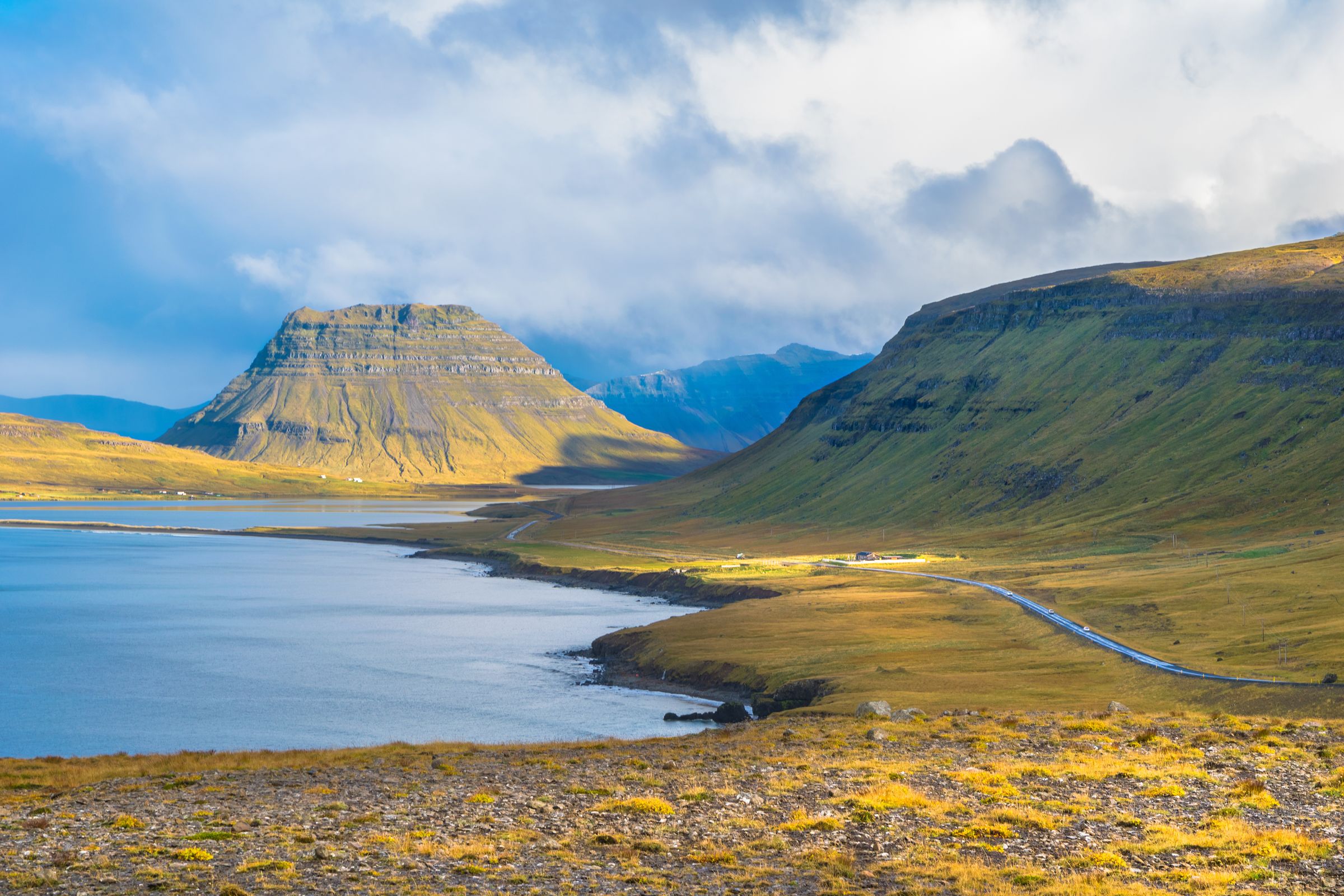
These two natural monuments are inside Snæfellsjökull National Park, but they deserve a mention apart. Kirkjufell is a 463-meter mountain (1,519 feet) that is one of the most photographed landmarks in Iceland. Its iconic shape resembles a church spire (in fact, Kirkjufell means “church mountain” in Icelandic), but some people see it looks like a witch’s hat. Kirkjufellsfoss is a beautiful waterfall just by its side, and together they create an astonishing view.
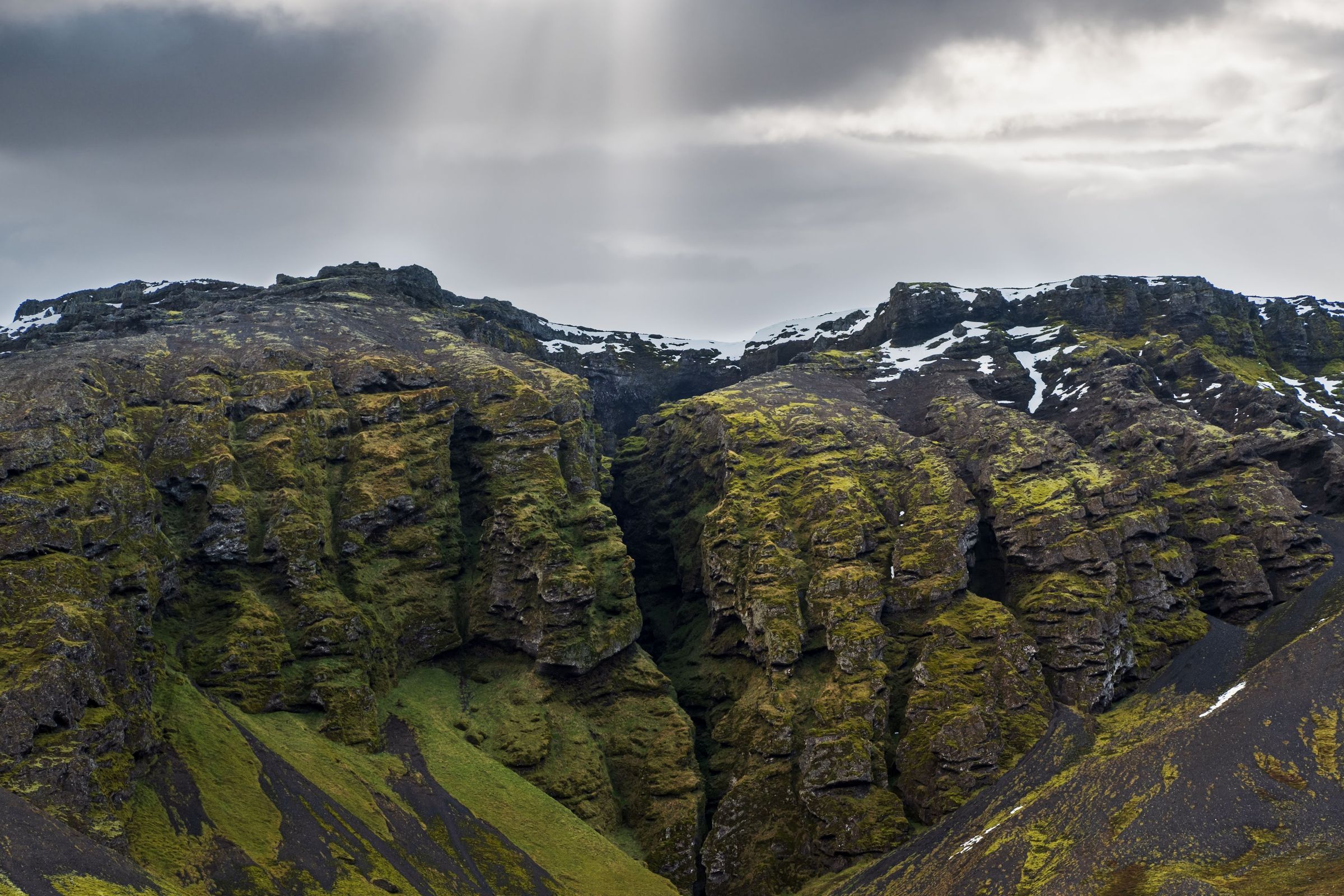
Rauðfeldsgjá Gorge
Rauðfeldsgjá Gorge is a narrow canyon carved into Botnsfjall Mountain, with a stream running at its bottom, surrounded by mossy walls. It’s almost hidden and can't be seen from the outside. You’ll have to wade through the water to reach a chamber at the end, where there’s a nice waterfall.
Best Time to Visit the Gerðuberg Cliffs
In West Iceland, like in the entire country, the weather is unpredictable and is constantly changing. For this reason, it is essential to be well prepared for all conditions. The Snæfellsnes Peninsula is not as cold as the north or the center of the island, but it’s wetter and windier.
Summer, from June to August, brings average temperatures of 10°C to 15°C with nearly 24 hours of daylight, which are perfect for exploring the cliffs and their surroundings. The weather is a mix of sun and rain showers, and the wind is always a factor to consider, especially in this region. All the campsites are open and the migratory birds come to the coast to nest. On the other hand, it’s the season with more tourists, although the Gerðuberg Cliffs are still a well-kept secret.
Autumn, spanning September and October, sees temperatures drop to 5°C to 10°C, with shorter days and higher probabilities of rain. The landscapes get beautiful changing colors, adding a layer of beauty to the already astonishing natural environment. The weather becomes even more unpredictable, with stronger winds and frequent rain that can complicate road travel. Also, some camping grounds are starting to close for the season. On a positive note, there are not many visitors.
Winter weather, from November to March, averages -5°C to 5°C, milder than the north or the center of the country due to the sea influence. However, snow and storms are common, and the days are really short. If you’re coming in this season, beware that some roads are closed due to adverse weather, and it’s necessary to rent a 4x4 campervan to drive on the gravel road that leads to the cliffs. But, on clear nights, there are chances to see the Northern Lights.
Spring, April to May, offers temperatures from 0°C to 10°C, with melting snow revealing green fields and blooming flowers. Nature begins to wake up after the long winter, but the weather shifts constantly. There can still be snow and ice on roads and trails, so drive and tread carefully.


What to Pack to Visit the Gerðuberg Cliffs
- Waterproof jacket and pants for sudden rain.
- Sturdy hiking boots with good grip for the uneven trails.
- Dressing in layers is the best way to adapt to the temperature changes. Base thermal; mid wool or fleece; outer waterproof.
- Hat, gloves, and scarf for wind and cold nights.
- Snacks and water, there are no facilities nearby.
- Portable charger for devices on long days.
- Map or GPS app for navigation. Don’t rely exclusively on online maps, cell phone signal can be spotty in some areas.
Travel Tips
- Check the road conditions before heading out, especially the gravel track.
- Park responsibly to avoid blocking access to others.
- Stay on marked paths to protect the fragile environment.
- Plan for variable weather. Always have an alternative in case the weather is bad.
- Combine your visit with other attractions on the peninsula to maximize your day.
- Fuel up in cities like Borgarnes, there are no gas stations in rural areas.
- Leave no trace; pack out all trash.
Conclusion
Some natural monuments in Iceland are so unique that they seem man-made. Here, nature has gone the extra mile to create some of the most astonishing landscapes in the world. The Gerðuberg Cliffs sure fit this category, and are not as visited as other monuments in the country. If you’re planning to visit West Iceland, leave a spot for this amazing place, you won’t regret it.