Hjálparfoss: The Twin Waterfalls of South Iceland
Of all the regions that make up Iceland, eight in total, not many can compete with South Iceland. They are all beautiful and full of wonders, but this part of the country holds an unbelievable number of top attractions. In fact, most of the most famous landmarks on this island belong to this region. Among those, there are others that, while not being as known as some of their neighbors, still are astonishing places. If you draw an itinerary in the south, you can combine those top hits with the hidden gems.
One of the latter is Hjálparfoss, a gorgeous waterfall that is the perfect quiet stop. Well, it’s actually two in one. This twin waterfall sits in the Þjórsárdalur Valley, where the Fossá River meets Iceland’s longest river, the Þjórsá. It’s easy to reach, it has free parking, and it’s near other places that will enhance your visit. On top of that, there are a good number of camping grounds to go with your campervan to spend the night. The area feels like a hidden oasis for those who prefer nature over packed monuments, yet it’s only a short detour from main routes. Come with us and discover why this spot earned its name as a true Icelandic experience.
Key Takeaways
- Hjálparfoss is a twin waterfall located in South Iceland.
- It’s part of the Fossá River.
- The waterfall is in the southern part of the Icelandic highlands.
What's Hjálparfoss?
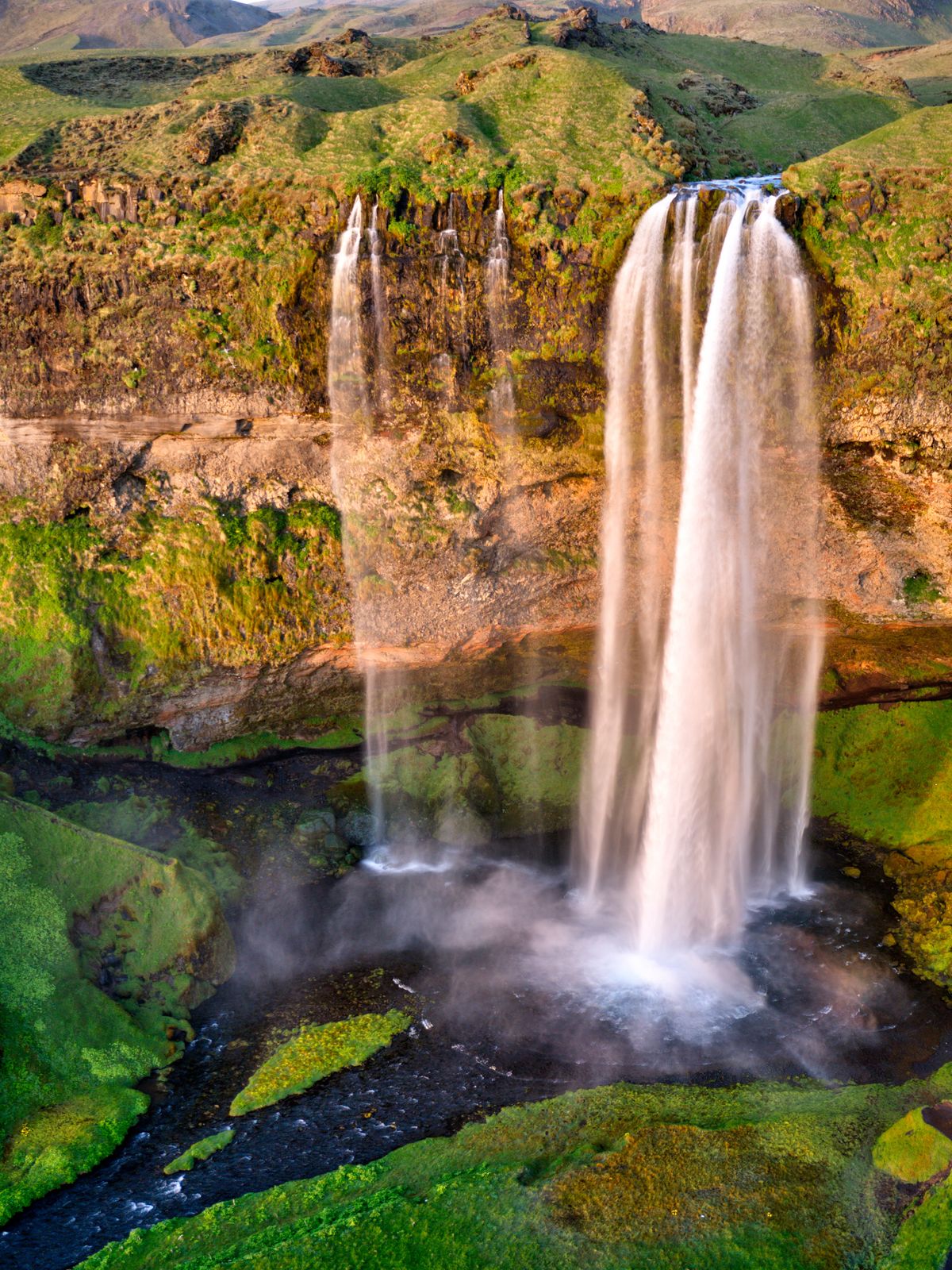
This unique waterfall is located in the Þjórsárdalur Valley in South Iceland. And we say unique because, a few meters upstream, the Fossá River splits into two branches that then drop side by side before joining in again in a pool. The huge rock that splits the waterfall in two, as well as the walls of the canyon that frames Hjálparfoss, are made of dark basalt. Then, at the top, we’ve got some trees, creating an image that is both powerful and beautiful. On the other side of the pond, there’s a green meadow that gets full of wildflowers in spring and summer.
Unlike the most famous waterfalls in the region, which attract buses full of tourists, Hjálparfoss gives you space to linger, take photos from different angles, and even dip your toes in the cold water if you dare. But beware, the water is really cold. The lava rocks and fields in the Þjórsárdalur Valley, where the river flows through, are the result of ancient eruptions from Hekla, one of Iceland’s most active volcanoes.
What makes this place especially appealing for campervan travelers is how easy it fits into a road trip. You can park right near the viewpoint, spend an hour or two exploring, then head to a nearby campsite without taking huge detours. It’s true that Hjálparfoss is not close to the famous Ring Road, but it sits quite close to a main road, and the area has a lot to see. So, if you’re planning on visiting several things around, it’s really easy to save a couple of hours for this great waterfall.
The surrounding terrain shows Iceland’s volcanic power up close: the Great Þjórsá Lava flow, the largest post-Ice Age lava field on Earth, shapes the twisted rock formations around the falls. The site sits at the edge of massive lava fields. The basalt here cooled unevenly thousands of years ago, creating swirling, contorted columns instead of straight pillars. Basalt is formed when lava comes into contact with water and cools rapidly, sometimes forming geometric shapes. But not here. In summer, the mist keeps the area lush with moss and flowers, while in winter, ice forms in the edges of the cascade and snow covers the valley. The river has carved a wide basin where the twin falls meet at a 45-degree angle, forming a V-shape before hitting the pool.
Folklore at Hjálparfoss
The area also connects to Icelandic history. The valley has evidence of settlements from the early stages of the island’s colonization. Some of the Vikings who came from Scandinavia chose this valley to establish farms, but many of them were buried under Hekla’s eruptions.
For those traveling with a campervan, the combination of natural beauty and cultural depth turns a simple waterfall visit into a full day of discovery. You can easily pair it with a hike or other natural monuments before going to one of the local campsites for the night.

About Hjálparfoss waterfall
In Iceland, most of the names of natural places are quite descriptive. They usually have an adjective and then a noun. It applies almost everywhere. But not here. The name Hjálparfoss translates directly to “Help’s Waterfall.”
The name ties directly to the valley’s history. Centuries ago, travelers crossing the highlands on horseback struggled to find land where their animals could graze or drink; most of the area is barren. When they reached the lower Þjórsárdalur area near the waterfall, the grass along the banks offered what the animals needed. That practical “help” for weary travelers and their livestock gave the falls their name.
Hjálparfoss is also nicknamed the Waterfall of Lovers by the locals. That is due to the river splitting in two. Then, both streams meet again after the fall, like a pair coming together.
Regarding its size, the falls drop approximately 20 meters (about 66 feet) each; they are the same size. Each stream measures roughly 10 meters (33 feet) wide at the top, though the exact width varies with the water flow, which changes with the seasons.
The two branches tumble at an angle toward each other rather than straight down, creating a distinctive V-shape as they hit the deep pool below. Water flows year-round from springs and glacial melt higher up, staying strongest in late spring and early summer. The pool below has a striking teal color thanks to the minerals carried from the lava fields.

Where's Hjálparfoss and how to get there
Hjálparfoss is located in South Iceland, inside the Þjórsárdalur Valley. This area is on the southern edge of the Highlands. The waterfall is 123 kilometers /76 miles) from Reykjavik, the capital of Iceland. The best and really the only practical way to reach it is by car or campervan. Public transport doesn’t stop at the waterfall, and not many tourist buses go there. In this part of the country, most of them focus on the Golden Circle, neglecting other amazing sites. Also, having your own vehicle gives you the freedom to stop whenever you want and continue to nearby campsites afterward.
From Reykjavik, start by taking the Ring Road (Route 1) east. About 60 kilometers (37 miles) in, you’ll pass Selfoss, the most important city in the Southern Region. Continue for another 13 kilometers (8 miles), take Route 30, a road on the left. There’s a sign at the crossing that says Flúðir. Drive on this road for 18 kilometers (11.2 miles) and then turn right onto Route 32. The sign is marked for Árnes. Then, it’s 30 kilometers (19 miles) on said road until you see a smaller road on the right. There’s a sign marking Hjálparfoss, but it’s just on the far side of the crossing, so pay extra attention.
From the capital, the drive takes 1 hour and 45 minutes in normal conditions. All the roads are paved and in good condition, so a standard campervan will suffice. However, if you’re coming in winter, consider renting a 4x4 campervan, as the snow makes it almost compulsory.

Where to stay near Hjálparfoss waterfall
If including Hjálparfoss in your itinerary in South Iceland is a priority, here are some campsites that are very close.
Árnes Camping Ground
Distance to Hjálparfoss: 23 km (14.3 miles). Opening period: May 15 to September 15.
Located in a wooded area within the Þjórsárdalur valley, this campsite offers sheltered pitches for campervans. Facilities include toilets, hot showers, around 60 electricity hookups, a washing machine, a playground, a football field, an on-site hostel, a café and small store, and a visitor center with exhibits about the river region. There’s a swimming pool next door, great after a day on the road. The wooded setting protects against wind, and the central location makes it easy to reach both Hjálparfoss and other valley attractions the next morning.
Alfaskeið Camping Ground
Distance to Hjálparfoss: 39 km (24 miles). Opening period: Year-round (limited facilities in winter).
Tucked in a green meadow not far from Flúðir, this basic campsite provides open spaces perfect for campervans seeking peace. You’ll find a small cabin with toilets, sinks, and cold water, though hot showers and electricity are not available. There are several hiking trails that start right from the site, and the location offers a beautiful rural feel with room to spread out. It’s a simple option that suits travelers who want to focus on the surrounding nature rather than luxury facilities.
Flúðir Camping Ground
Distance to Hjálparfoss: 45 km (28 miles). Opening period: May to September.
This well-equipped site sits right in the small village of Flúðir, a small and nice village. This site provides campervan spots with modern facilities. It features toilets, showers, Wi-Fi, laundry, an outdoor BBQ area, and a playground. It also has a small shop for basics like food and camping supplies. The famous Secret Lagoon is also in town.
Landmannahellir
Distance to Hjálparfoss: 55 km (34 miles). Opening period: June to mid-September.
Set deeper into the highlands, this campsite mixes basic camping with simple huts. The huts are heated, have running water, cooking facilities, and a toilet, but need to be booked in advance. The large camping area, suitable for tents and vans, gives access to toilets, showers, and running water. There’s also a communal hut where you can cook, eat, or just wait out the bad weather.
Faxi Camping Ground
Distance to Hjálparfoss: 57 km (35 miles). Opening period: May to September.
Positioned near the Faxi waterfall on the edge of the Golden Circle route, this grassy site offers simple but practical facilities for campervans. Expect toilets, cold water sinks, electricity, and picnic tables. There’s also a café on site that serves meals and drinks.

What to see and do near Hjálparfoss
South Iceland has a lot to see and do. There are a lot of amazing natural monuments, and drawing an itinerary through this region can be an amazing traveling experience. Hjálparfoss is a bit remote, but is well connected by road.
Háifoss
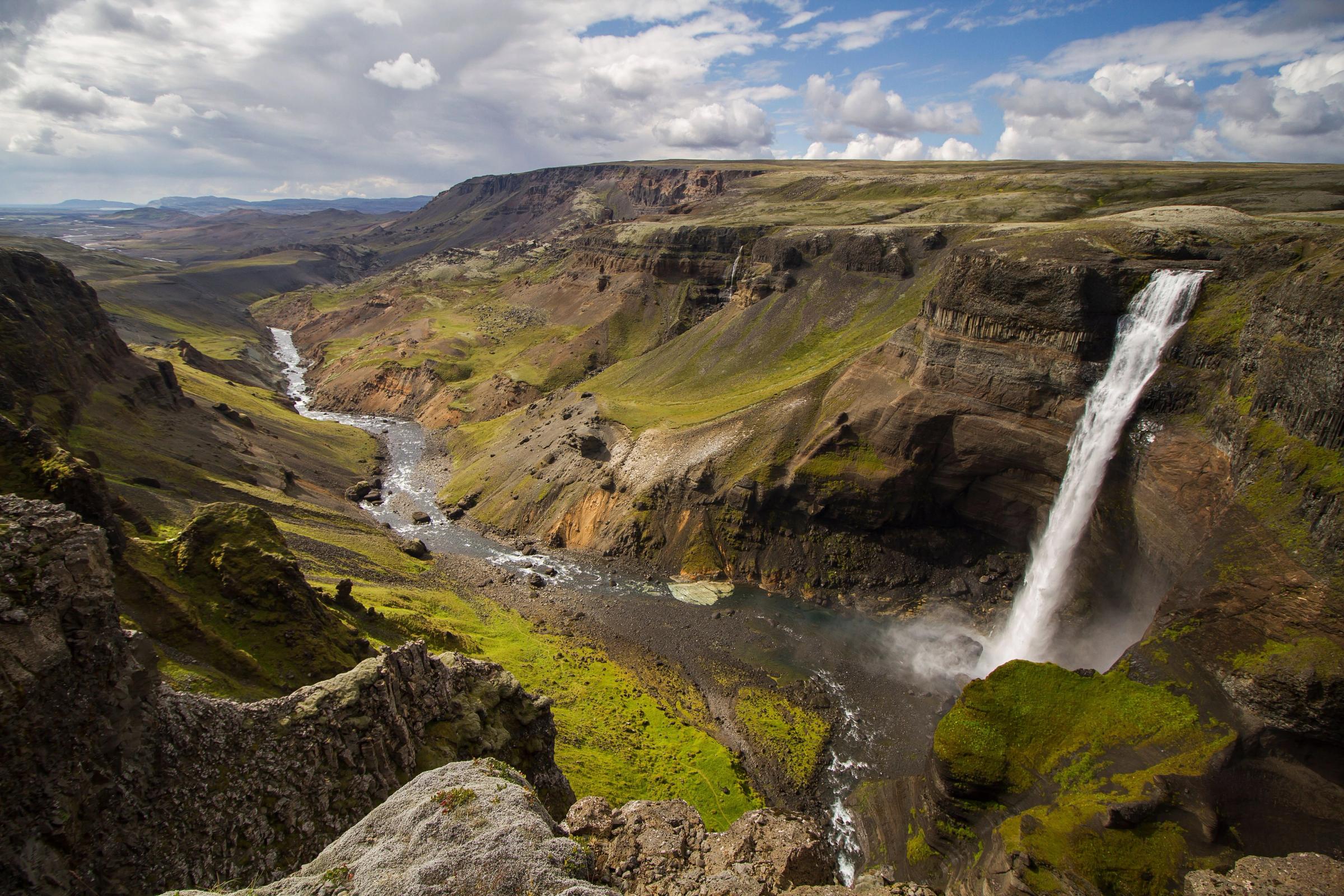
It’s the obvious next stop, as it’s quite close to Hjálparfoss. Háifoss is one of Iceland’s tallest waterfalls at 122 meters (400 feet). In fact, it’s fourth on the list, just after Morsárfoss, the tallest, Glymur, and Hengifoss. Here, the water drops straight down into a rugged canyon carved by the Fossá river, which eventually joins the Þjórsá, the country's longest river. The surrounding landscape, mostly volcanic rocks, adds even more to the already amazing setting. In spring and summer, the lava rocks are partially covered in a thick layer of green moss.
Granni Waterfall
Right next to Háifoss, Granni provides a perfect contrast with its narrower flow. A couple of hundred meters before the drop, the Fossá river splits into two separate branches and, then, two different waterfalls. Although impressive, Granni is slightly smaller than Háifoss. It measures 101 meters (331 feet) tall, which is still quite a lot.

Gjáin
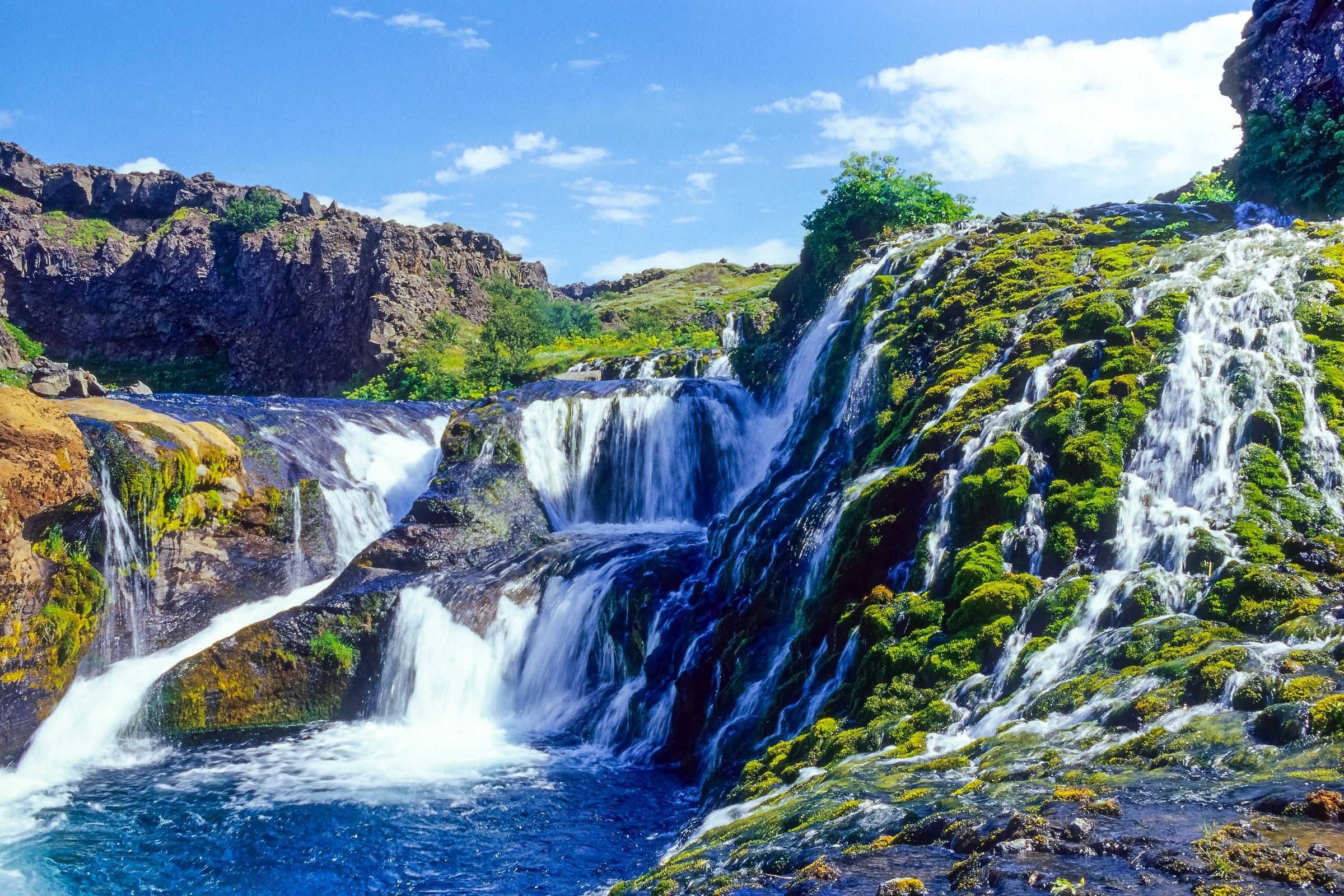
Gjáin is a lush valley that is considered a hidden paradise by the locals. This small and green meadow is crossed by a river that creates a series of small waterfalls that pour into clear pools surrounded by green vegetation and volcanic rocks. There are several trails that wind through the area, ideal for a peaceful walk or a picnic. The contrast with the stark highlands makes it feel like an oasis.
The Secret Lagoon
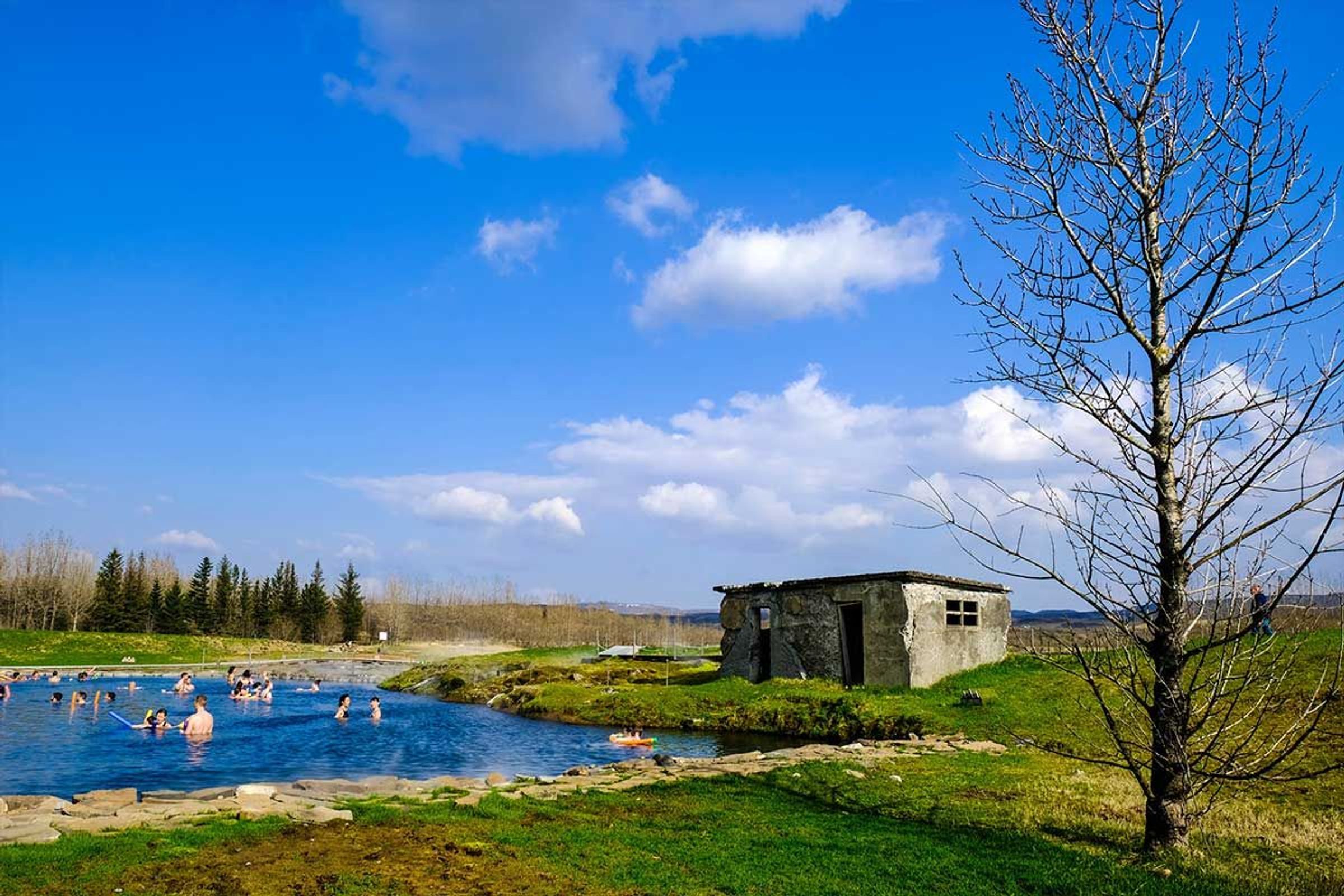
In the nearby village of Flúðir, this natural hot pool is a fantastic place to enjoy one of the most appealing experiences of Icelandic culture: a geothermal bath. Icelanders go to spas and natural hot springs to unwind, socialize and, sometimes, conduct business. It’s not only relaxing, but this practice also has numerous benefits for the body. The Secret Lagoon, Gamla Laugin in Icelandic, is the oldest geothermal pool in the country. Established in 1891, the main bathing area is fed by a natural hot spring and maintains a constant temperature throughout the year at 38-40°C (100-104°F). The facilities include changing rooms, showers, and a small café. Towel and swimsuit rentals are available if you need them.
Stöng í Þjórsárdal
This reconstructed Viking-age farm offers a look into Iceland's medieval past. The original Stöng was destroyed by an eruption of the Hekla volcano in 1104 and was buried under ash. The site that was rebuilt nearby recreates the longhouse style, with turf roofs and simple interiors. It's a quick stop to discover part of the country’s cultural heritage and see how the first settlers of the island, who came from Scandinavia, lived. Visitors can enter the buildings to see recreated furnishings and tools, imagining daily life in the valley centuries ago. There are information boards that explain the excavation and eruption's impact.
Landmannalaugar
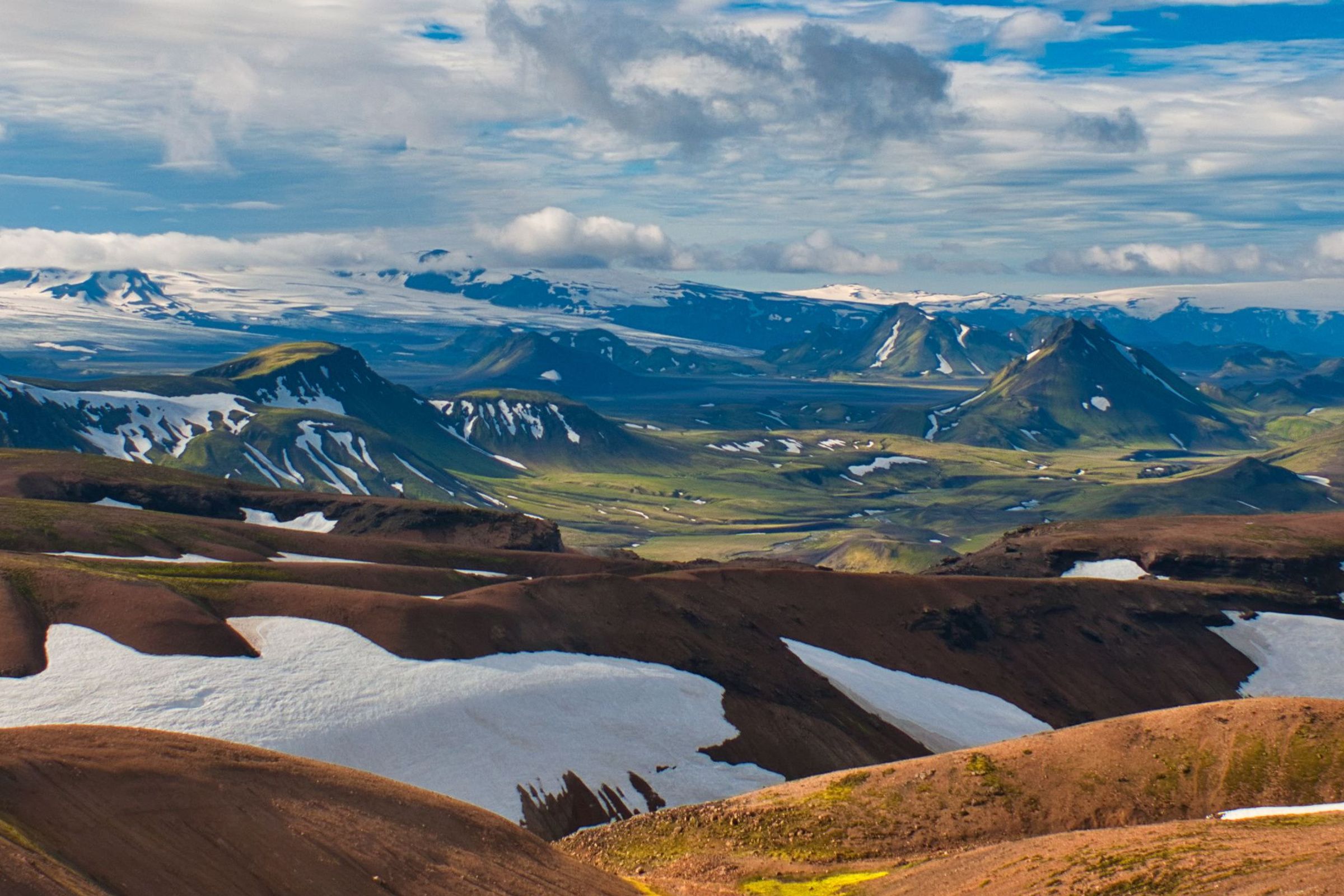
If you want to venture into the Highlands, this place should be one of your stops. Its most distinctive feature is the rhyolite mountains, which have different shades due to their mineral composition, ranging from pink, red, orange, green, yellow, and blue. There are several trails to explore the area, with different lengths and difficulty levels. Then, you can relax in the Landmannalaugar hot springs, natural hot baths. There are a camping area and a small shop there. This area is also the starting point of the Laugavegur Trail, the most famous hiking itinerary in Iceland. It’s a 55-kilometer route, completed in 3-4 days, that ends in the beautiful valley of Þórsmörk. Landmannalaugar is only accessible via F-roads, and one can only get there between June and September.
Best time to visit Hjálparfoss
The weather can have a huge impact on a trip to Iceland. Here’s what you can expect in each season.
Spring (April and May) arrives with low temperatures that go gradually up. The snow begins to melt, increasing the river flow, making the falls more powerful, especially by the end of the season. Seasonal campsites reopen, but there are not many tourists. Temperatures hover between 0–10°C (32-50°F), and it rains quite frequently. This leaves trails muddy, and the roads to the Highlands remain closed. The fields start to wake up, and the area around Hjálparfoss looks amazing with green grass and blooming flowers.
Summer (June to August) offers the best conditions with mild 10–15°C (50-59°F) temperatures and nearly 24 hours of natural light in late June. The valley looks astonishing, and all campsites and roads operate fully. This is peak season, so expect more visitors at popular spots, but Hjálparfoss is rarely crowded. Book accommodation in advance.
Autumn (September and October) paints the valley in golden and orange tones as vegetation changes color. It’s the season with the fewest tourists, so you’ll have a quieter visit. Many campsites start to close for the season, but the ones that don’t, have high availability. Temperatures drop back to 0–10°C (32-50°F), with more wind and rain.
Winter (November to March) transforms the area. Everything’s covered in snow, changing the appearance of the falls completely. The days are very short, barely 4-6 hours of natural light. Traveling by road can be difficult, as many roads, especially secondary ones, close in bad weather. It’s compulsory to rent a 4x4 campervan. On a positive note, it’s the time when the northern lights can be visible.

What to pack to visit Hjálparfoss
- Waterproof jacket and trousers. Sudden rain is always a possibility.
- Sturdy hiking boots with good grip.
- Layered clothing including thermal base layers and a fleece – weather changes fast in the valley.
- Hat, gloves and scarf – even in summer the wind can feel cold, especially at night.
- Sunscreen and sunglasses. UV Rays are strong in Iceland in summer.
- Reusable water bottle. Tap water is clean and safe to drink.
- Small first-aid kit and blister plasters. In case you go on long hikes.

Travel Tips
- Check the road conditions and the weather forecast before driving, especially for gravel sections or Route 32 after rain.
- Fill your tank in towns like Flúðir or Selfoss — services get sparse further into the valley.
- Arrive early or late in the day during summer to enjoy the waterfall with fewer people.
- Download offline maps — mobile signal can drop in the valley.
- Respect quiet hours at campsites and always leave no trace.
- Combine the visit with Háifoss and the Secret Lagoon for a perfect day.
Conclusion
Hjálparfoss may not be the tallest or most famous waterfall in Iceland, but is one of the most striking of them all. The Þjórsárdalur Valley is one of those places where Iceland can be truly felt in many aspects, both natural and cultural. Pick your van, draw an itinerary through this region, and prepare for a unique experience.