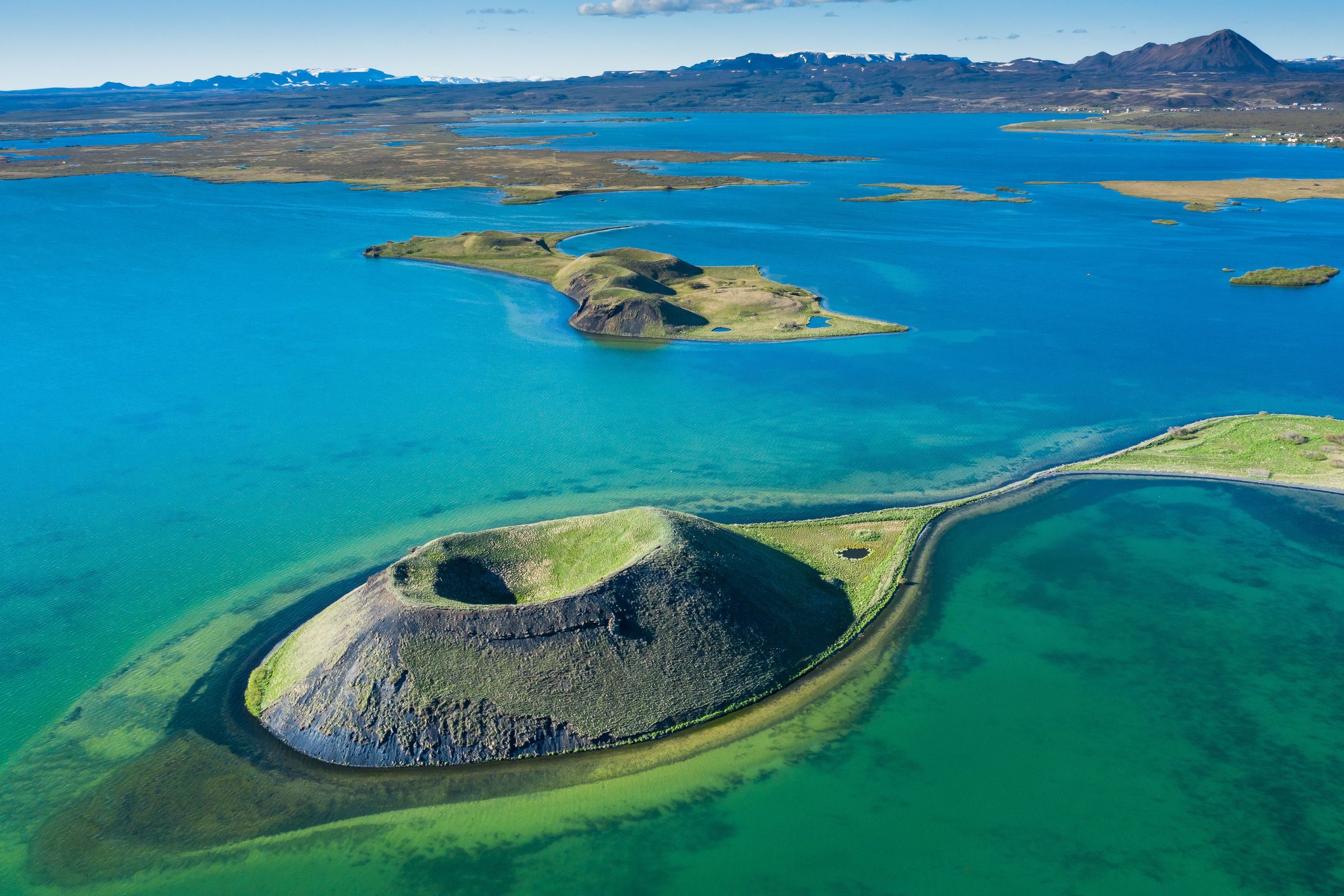
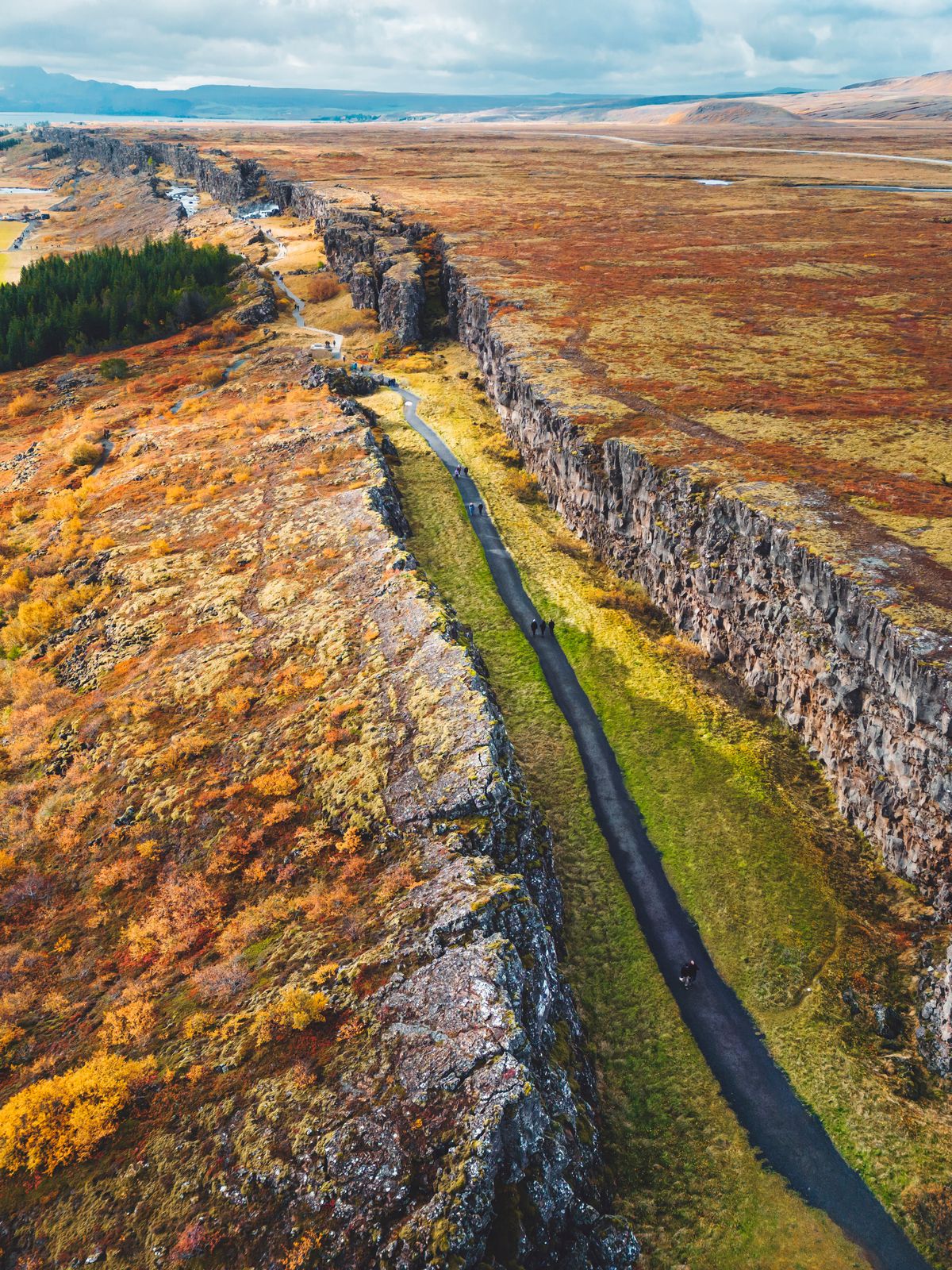
Iceland sits on the Mid-Atlantic Ridge, where the Eurasian and North American tectonic plates slowly move apart at about 2 cm per year. There’s also a mantle plume hotspot underneath the island. That’s why Iceland looks the way it does. The landscape is still forming. You can drive a short distance and pass lava fields, glaciers, black sand beaches, and waterfalls all in the same day.
The island covers about 103,000 km². Around 63% is barren lava and ash, 11% is glaciers, 23% is vegetation, and about 3% is lakes and wetlands. It sounds harsh, but that’s what gives Iceland its character. Volcanoes and glaciers are always reshaping the land. Iceland today already looks different from how it did 20 years ago.
Volcanic Landscapes
Iceland sits on the Mid-Atlantic Ridge and above a mantle plume hotspot, which makes it one of the most volcanically active places in the world. There are more than 30 active volcanic systems, and something erupts somewhere every 3 to 5 years. Volcanic zones mostly follow the plate boundary from southwest to northeast, and eruptions tend to repeat in the same areas.
Mountains and Highland Plateaus
The Icelandic Highlands cover about 40,000 km² and are mostly high ground above 300 to 400 meters, with no permanent السكان. There are no paved roads across the interior, only rough F-roads that open for a short summer window. Even in summer, temperatures usually stay below 15°C and weather changes fast.
Glaciers and Ice Caps
Glaciers cover about 11% of Iceland, around 11,400 km², and they feed most of the country’s rivers. Volcanoes under ice can melt it quickly and cause sudden floods called jökulhlaups. Since around 2000, Iceland’s glaciers have been shrinking and have already lost about 7–10% of their total volume.
Ice Caves and Glacial Lagoons
Ice caves form inside glaciers and can become stable enough for guided visits in fall and winter, while glacial lagoons form as glaciers retreat and meltwater fills low areas. Both change constantly as ice shifts, melts, collapses, or calves into water. Places like the Crystal Cave, the Katla ice cave, and Jökulsárlón show how temporary these features are.
Waterfalls
Iceland has over 10,000 waterfalls fed by glaciers, rain, and steep terrain. Many of the biggest ones are strongest in summer when snowmelt and rain increase flow, while winter can freeze them partly or completely. Some are roadside stops, and others require longer hikes.
Black Sand Beaches
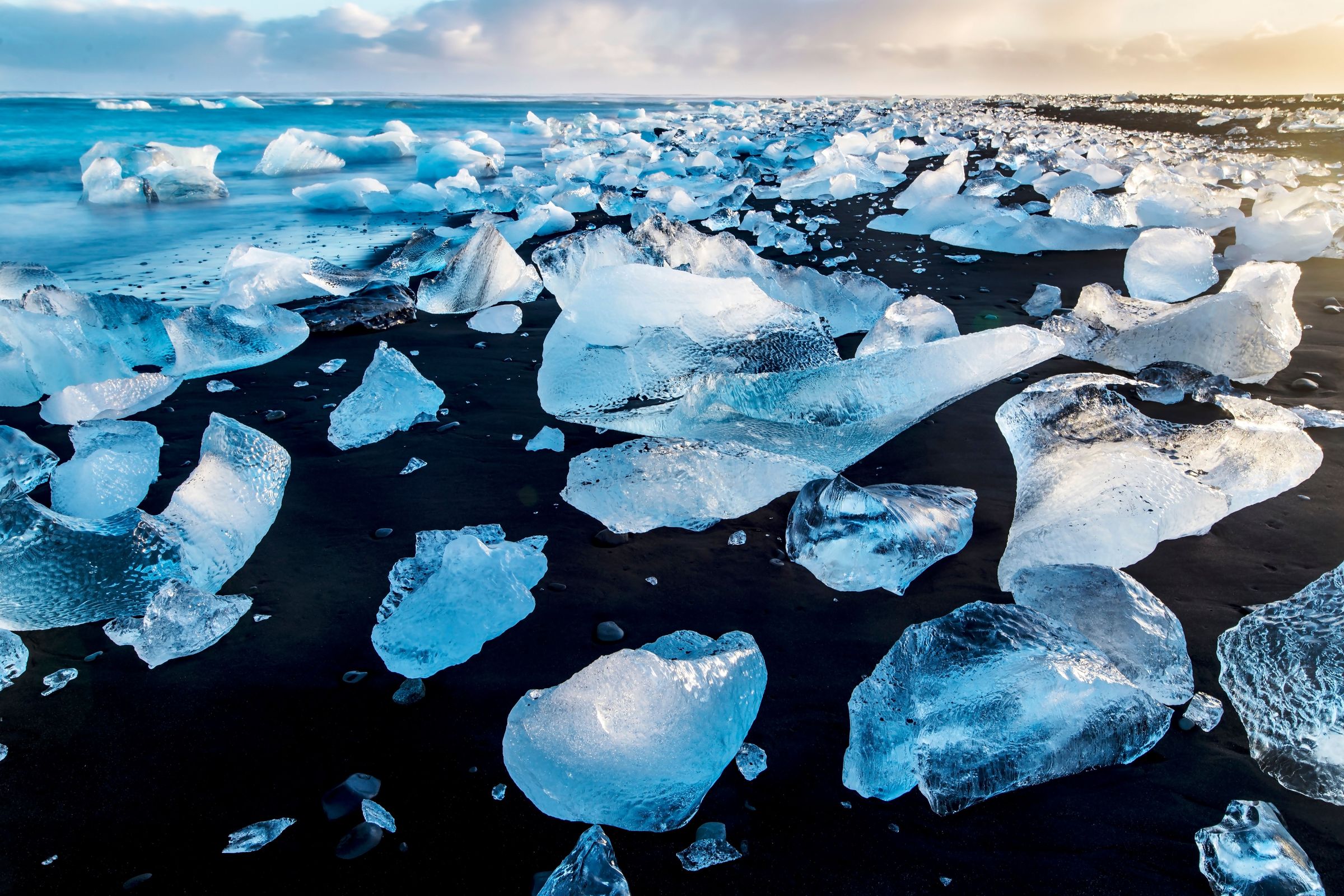
Black sand beaches form when basalt lava is ground into fine grains over thousands of years, so the sand stays dark gray or black. These coasts face the Atlantic, so waves are strong and unpredictable and swimming isn’t safe. Beaches like Reynisfjara and Diamond Beach are famous for basalt cliffs, sea stacks, and ice on black sand.
Basalt Columns and Rock Formations
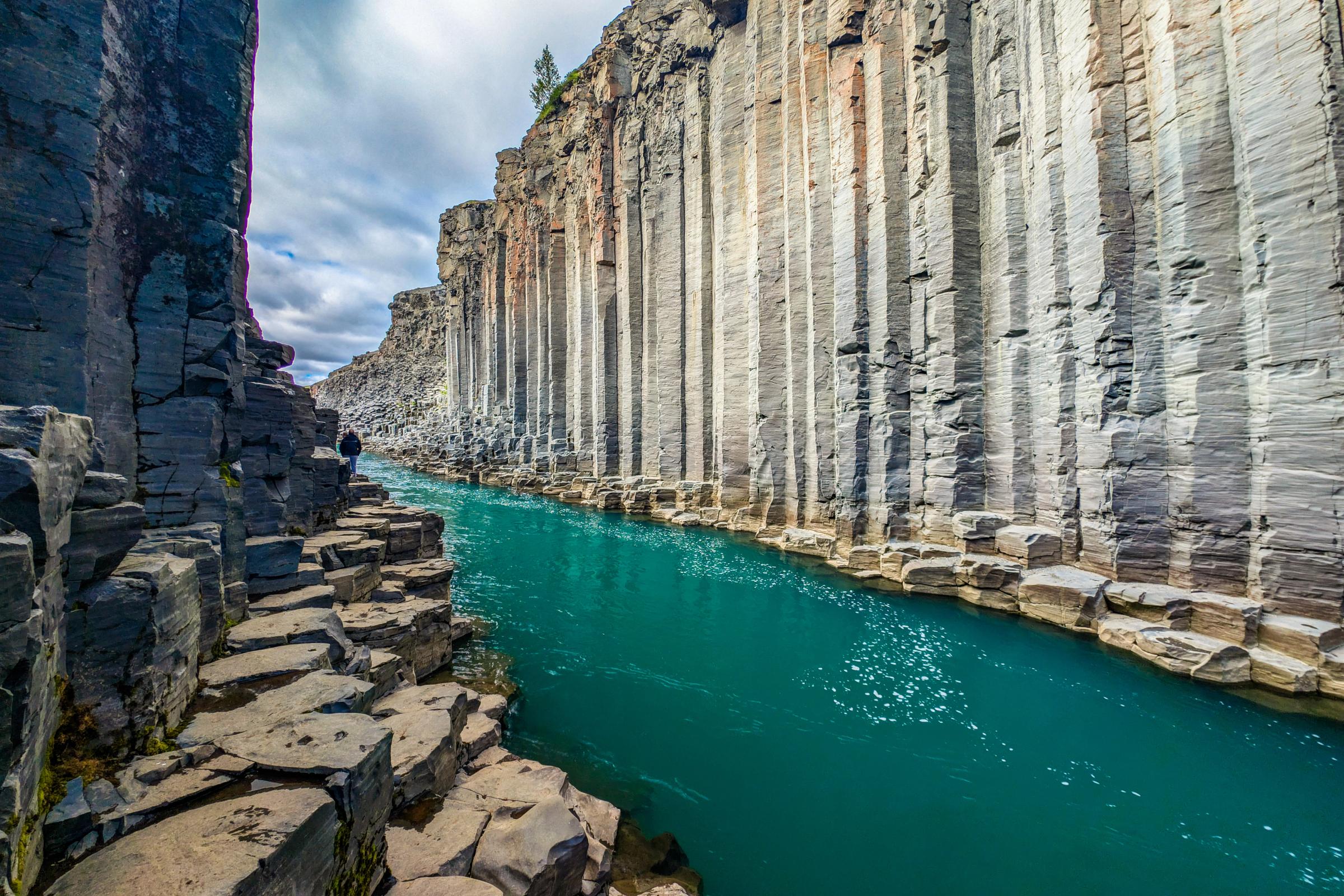
Basalt columns form when lava cools slowly and cracks into shapes that are often six-sided. Erosion then exposes the columns as walls, cliffs, caves, and canyon sides. Iceland has many striking examples, including Reynisfjara and Stuðlagil Canyon.
Sea Cliffs, Arches, and Stacks
Much of Iceland’s coastline is made of tall cliffs shaped by waves cutting into the land until parts collapse. This process forms arches and isolated stacks standing offshore. Many of these cliffs are also major nesting areas for seabirds, including puffins in summer.
Fjords
Iceland has more than 100 fjords, mainly in the Westfjords and Eastfjords, shaped by glaciers during the Ice Ages. When the ice melted, the sea filled those valleys and created long, narrow inlets with steep mountains on both sides. Many towns sit at the ends of fjords, where fishing has long been central to daily life.
Geothermal Areas
Geothermal heat comes from magma close to the surface, heating groundwater that rises back up as hot springs, geysers, steam fields, and mud pots. Iceland uses this energy widely, heating most homes and producing a large share of electricity from geothermal power. Some geothermal places are meant for bathing, but others have thin ground and boiling steam, so staying on marked paths matters.
Conclusión
Iceland’s landscape is shaped by active volcanoes and glaciers, so it keeps changing over time. Access to some areas depends on season, weather, and road conditions. Being there feels like visiting a place that is still taking shape.
National Parks
Iceland has three national parks, and they cover the main things that shape the country. Plate movement, glaciers, volcanoes, rivers, and the coastline all show up here in a clear way. A lot of Iceland’s most important landscapes are protected inside these parks instead of being spread out everywhere. Þingvellir shows where the plates pull apart and where early Icelandic society formed. Vatnajökull is built around the biggest ice cap in the country and the volcanoes under it. Snæfellsjökull brings together volcanic land and the ocean in one area. If you want to understand how Iceland works as a landscape, these three parks tell most of the story.
Þingvellir National Park
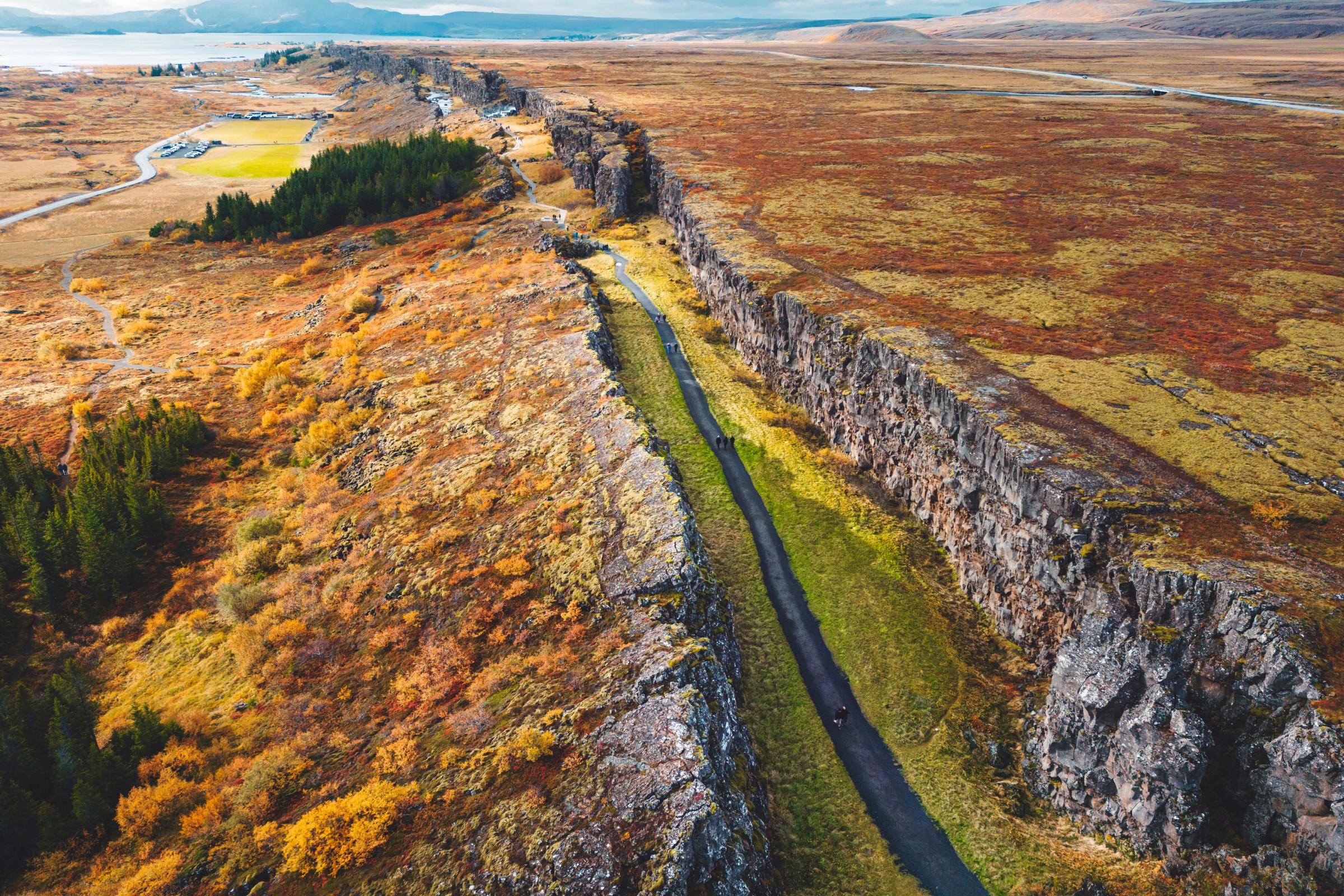
Þingvellir National Park sits right on the Mid-Atlantic Ridge, where the North American and Eurasian tectonic plates are slowly moving away from each other. You don’t need to know geology to get it. You can see it in the land. Long cracks and cliffs like Almannagjá and Hrafnagjá show where the ground has pulled apart over time. Þingvallavatn, Iceland’s largest natural lake, sits in a low area created by that movement and plays a big role in shaping the park.
Þingvellir is also one of the most important places in Icelandic history. This is where the Alþingi was founded around the year 930, and where the national parliament met for centuries. Places like Lögberg are still there today, which makes the history feel very real when you walk through the area. Because of this mix of visible plate movement and human history, Þingvellir is a UNESCO World Heritage Site and one of the easiest places in Iceland to see how the land and the people are connected.
Vatnajökull National Park
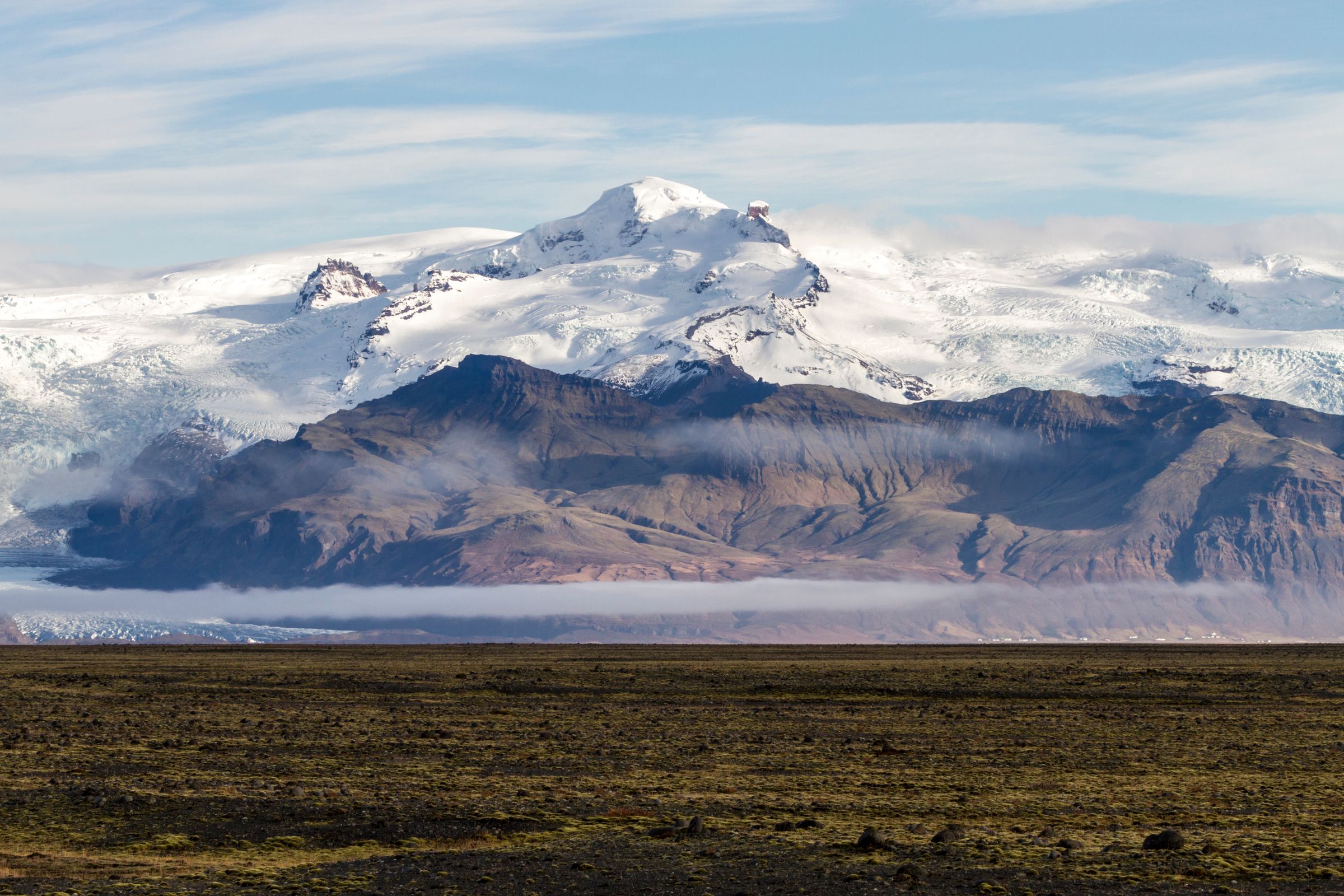
Vatnajökull National Park is built around Vatnajökull, the largest ice cap in Europe by volume. The glacier is the main feature, but a lot is happening under and around it. Active volcanic systems like Grímsvötn, Bárðarbunga, and Öræfajökull sit beneath the ice, and their eruptions have shaped huge parts of the country. When these volcanoes erupt, they can melt large amounts of ice and cause jökulhlaups, sudden glacial floods that rush across wide sandur plains like Skeiðarársandur.
The park includes several different areas, including Skaftafell in the south and Jökulsárgljúfur in the north. Rivers and meltwater have carved deep canyons and created well-known places like Dettifoss, Svartifoss, and Jökulsárlón glacier lagoon. Vatnajökull National Park is one of the clearest places in Iceland to see how glaciers, volcanoes, rivers, and climate all affect each other, often changing the landscape faster than people expect.
Snæfellsjökull National Park
Snæfellsjökull National Park is centered on Snæfellsjökull itself, a glacier-covered stratovolcano that rises about 1,200 meters above the Snæfellsnes Peninsula. It stands out from almost everywhere in the area and can even be seen from Reykjavík on clear days. The volcano sits at the western tip of the peninsula and shapes the whole park.
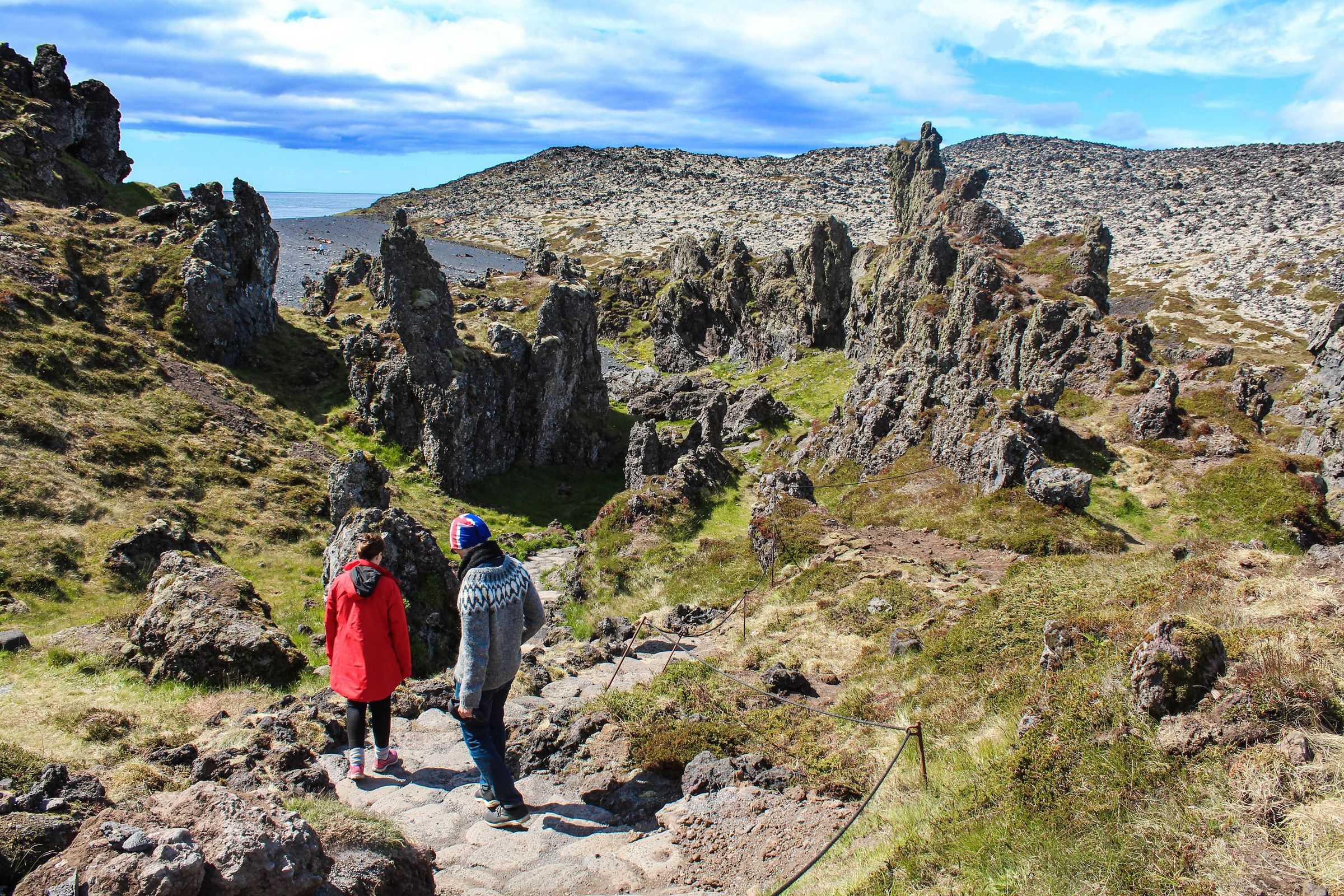
Around it, you’ll find lava fields like Berserkjahraun, coastal cliffs near Arnarstapi, and beaches such as Djúpalónssandur. Underground, volcanic activity created lava tubes like Vatnshellir. The ocean is part of the park too, with protected waters that support seals, seabirds, and seasonal whale populations. What makes Snæfellsjökull National Park special is the variety packed into one place: glaciers, lava, cliffs, caves, and the sea, all close together.
Volcanic Landscapes
Iceland sits directly on the Mid-Atlantic Ridge and above a mantle plume hotspot. That makes it one of the most volcanically active places in the world. There are more than 30 active volcanic systems across the island. On average, something erupts somewhere every 3 to 5 years. What kind of eruption happens depends on the magma and whether the volcano is under ice.
Most volcanic zones run southwest to northeast, following the plate boundary. Eruptions don’t happen everywhere. They tend to happen in the same areas over and over.
Lava Fields
Lava fields form when cracks open in the ground, and lava flows out. The lava spreads until it cools and hardens. Some lava fields are small. Others cover hundreds of square kilometers. It depends on how long the eruption lasts and how much lava comes out.
There are two main lava types. Pāhoehoe lava cools slowly and forms smooth, rope-like surfaces. ʻAʻā lava cools faster and breaks into sharp, jagged rock. At first, lava fields are just black rock. Over time, moss and lichen slowly grow on them. That process takes a very long time.
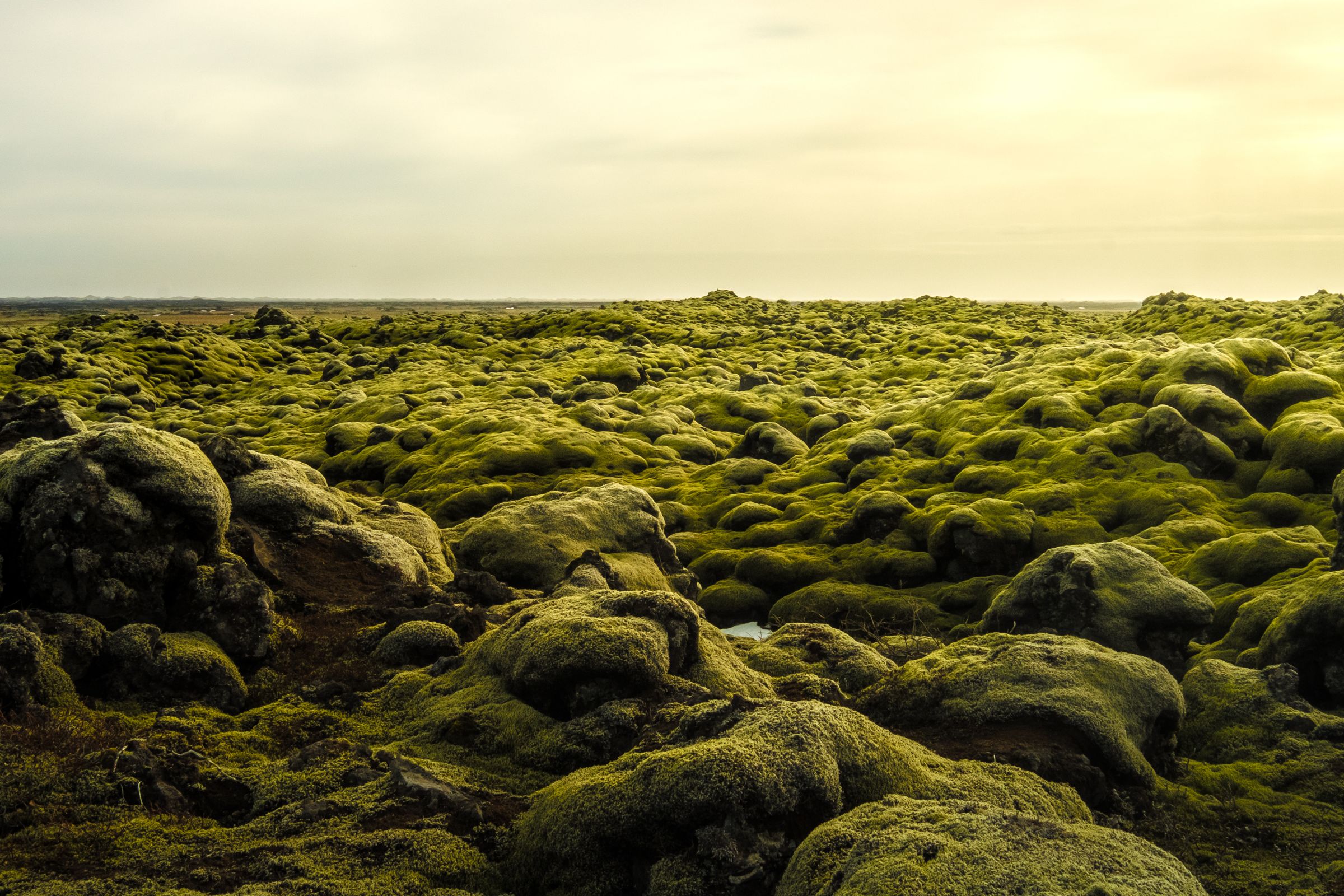
Eldhraun is one of Iceland’s best-known lava fields. It covers about 565 km² in the south and came from the 1783–84 Laki eruption, which lasted eight months. Today, the entire field is covered in thick green moss. It took more than 100 years for that moss to grow. In some spots, it’s so thick you could sink ankle-deep if you stepped on it. You shouldn’t, though. The moss is very fragile and takes decades to recover if damaged.
If you want to see fresh lava, the Reykjanes Peninsula shows it clearly. The Fagradalsfjall eruptions from 2021 to 2023 and the Sundhnúkur eruptions from 2023 to 2025 created new lava fields that you can visit. Some areas still steam when rainwater hits hot cracks. Walking on lava that formed recently makes it clear that Iceland is still changing.
Craters and Calderas
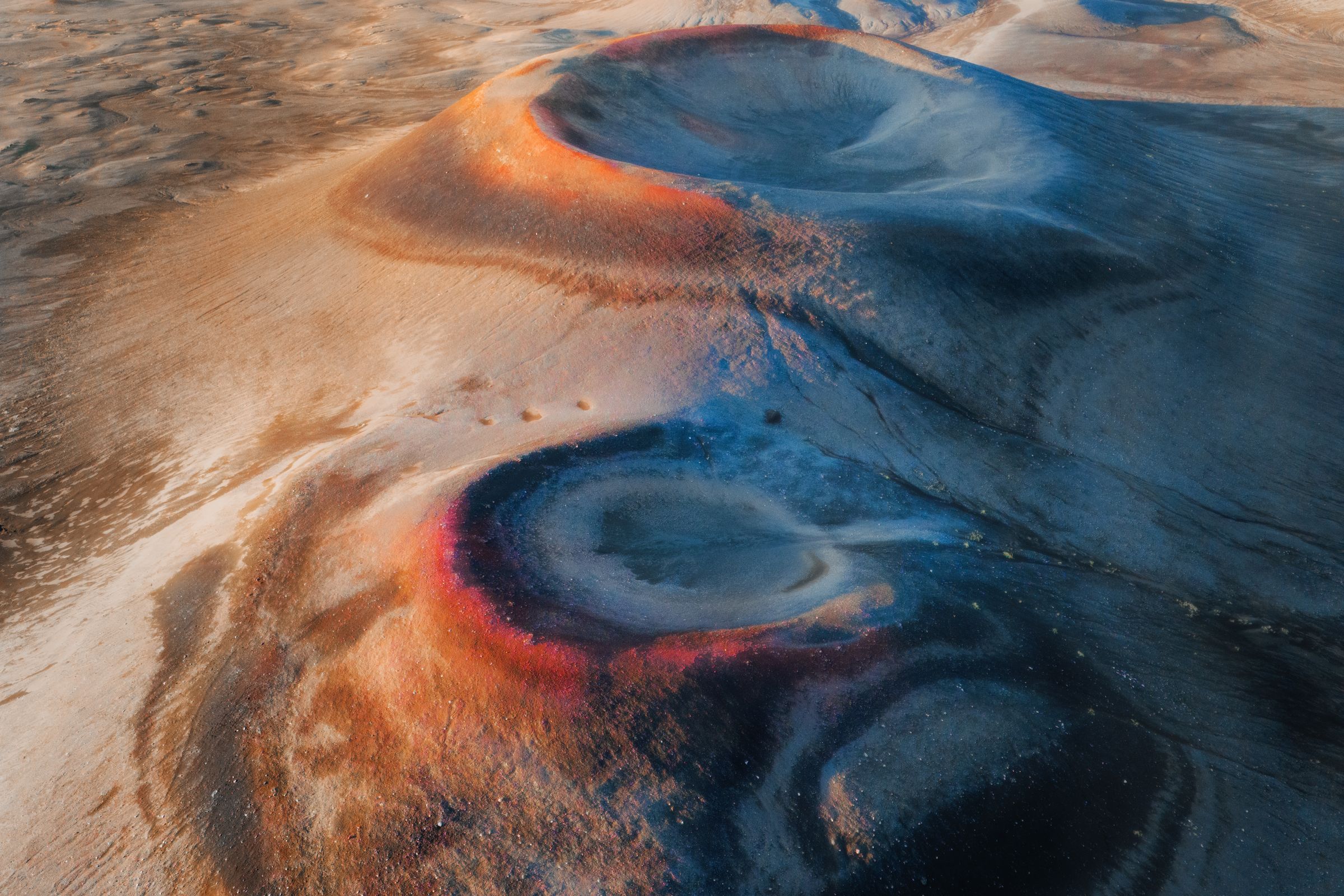
Craters form when volcanic vents explode or collapse, leaving round depressions. Some are small pits. Others are several kilometers wide. Calderas are much larger. They form when a magma chamber empties and the ground above it collapses. Iceland has hundreds of craters and calderas across the island.
Askja lies deep in the central highlands and covers about 50 km². Inside it is Öskjuvatn, Iceland’s deepest lake at 220 meters. You can only reach Askja by 4x4 in summer. Inside the larger caldera is Víti crater, a warm lake where people swim. The area around it is bare and remote. The drive there crosses long stretches of empty volcanic land.
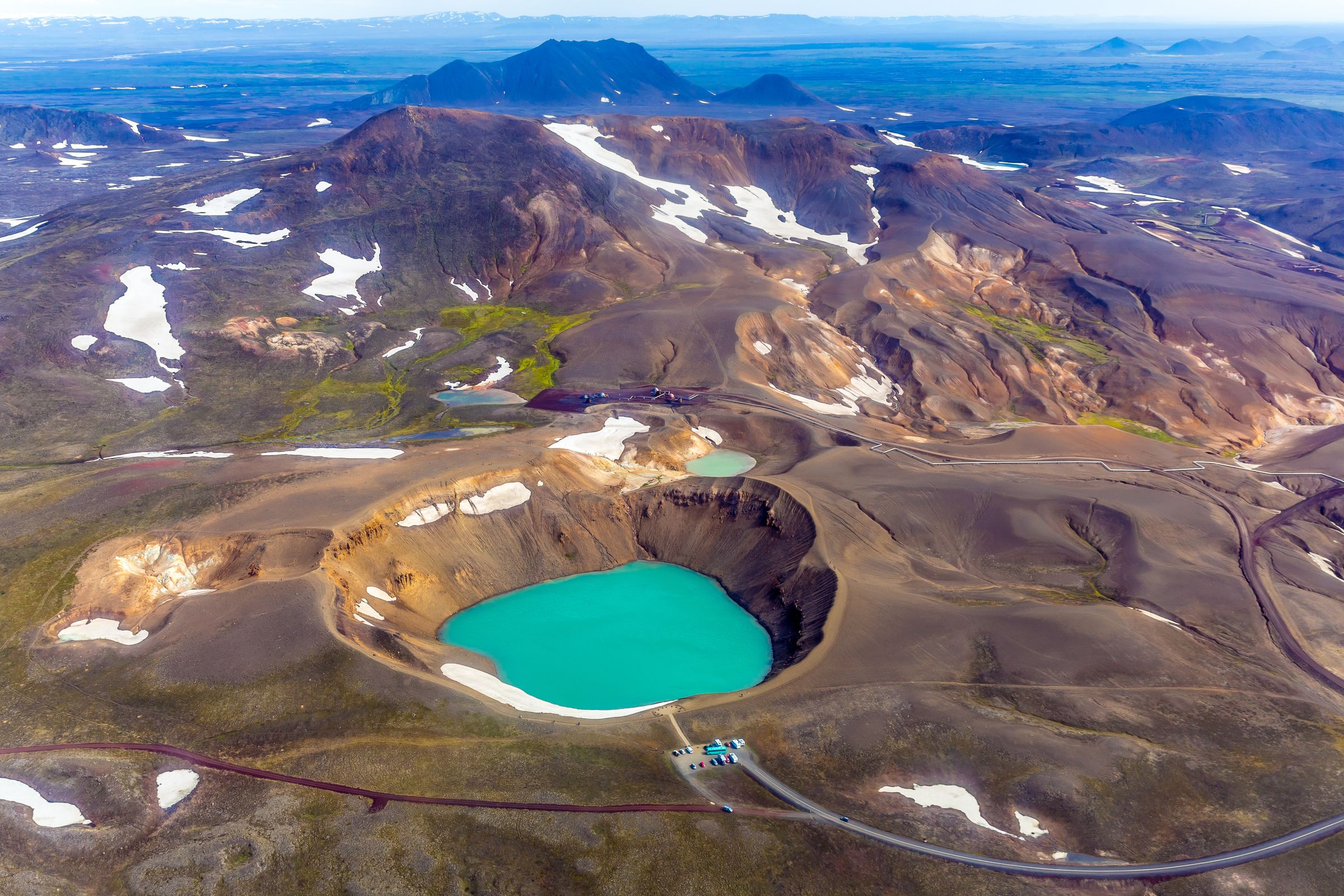
Krafla in the north has many craters spread across a volcanic field that last erupted in 1984. Víti crater holds a pale blue lake heated from below. Nearby, the Leirhnjúkur lava field still steams decades later, and minerals color the ground.
Some of Iceland’s most active volcanoes are hidden under glaciers. Grímsvötn lies under Vatnajökull and is Iceland’s most active volcano. When it erupts, it melts large amounts of ice and causes sudden floods called jökulhlaups. Katla under Mýrdalsjökull poses similar risks. Bárðarbunga, also under Vatnajökull, caused the large 2014–15 Holuhraun eruption.
Safety and Access
Volcanic areas in Iceland are watched closely by the Icelandic Meteorological Office. They track earthquakes, ground movement, and gas levels all the time. Before going into volcanic or highland areas, it’s smart to check Safetravel.is. Conditions can change fast.
Eruptions release gases that can be dangerous. Sulfur dioxide and carbon dioxide can collect in low areas and cause problems even far from an eruption. Wind direction matters. A place that feels fine can become unsafe quickly.
In geothermal areas, always stay on marked paths and boardwalks. The ground can look solid but be very thin. Boiling mud or steam can be right underneath. Temperatures can be over 100°C just below the surface. People have been badly burned by stepping off paths at places like Hverir and Gunnuhver. These rules exist for a reason.
Mountains and Highland Plateaus
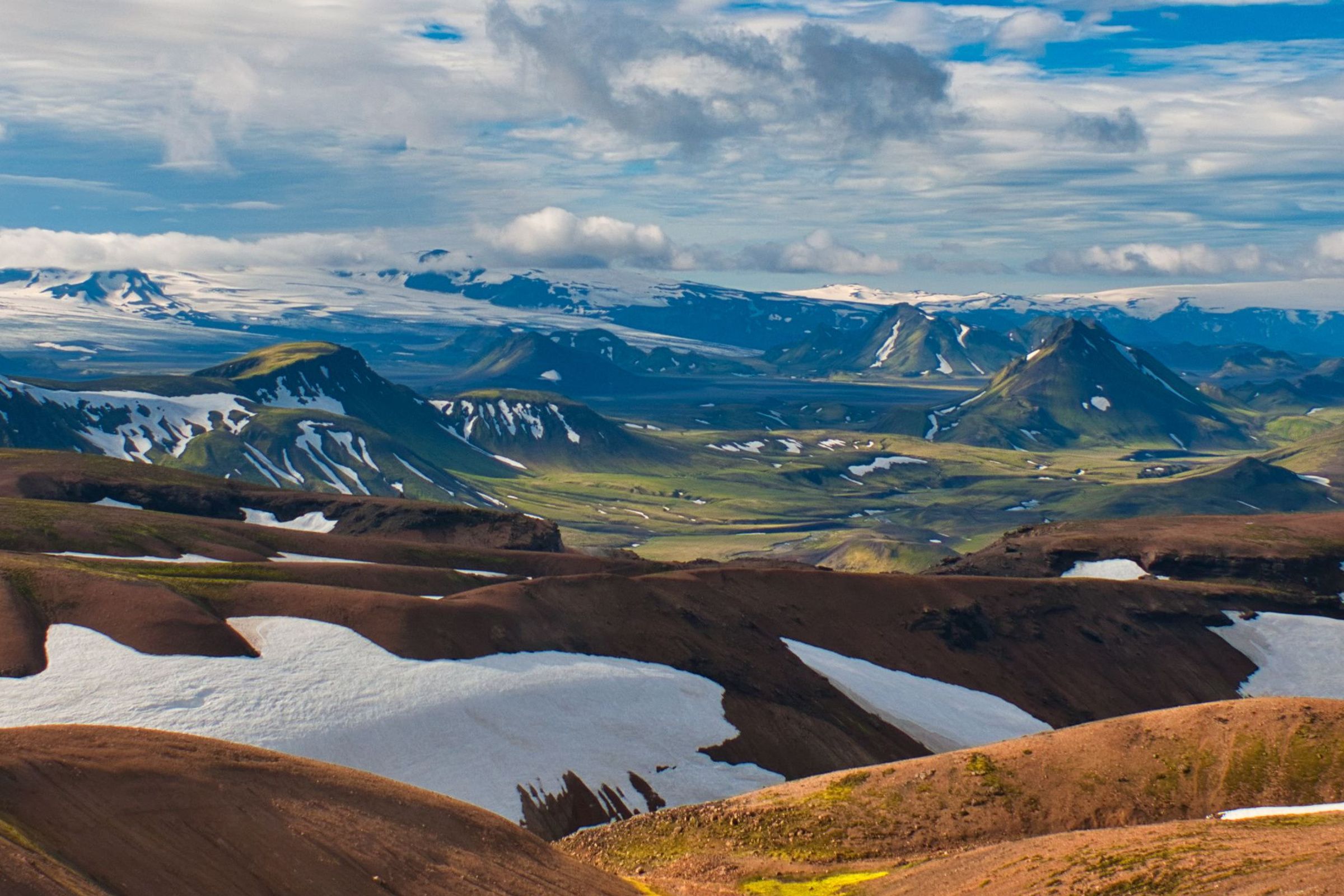
The Icelandic Highlands cover about 40,000 km² in the middle of the country. This is high ground, mostly above 300 to 400 meters, with volcanic peaks and wide plateaus. No one lives here permanently.
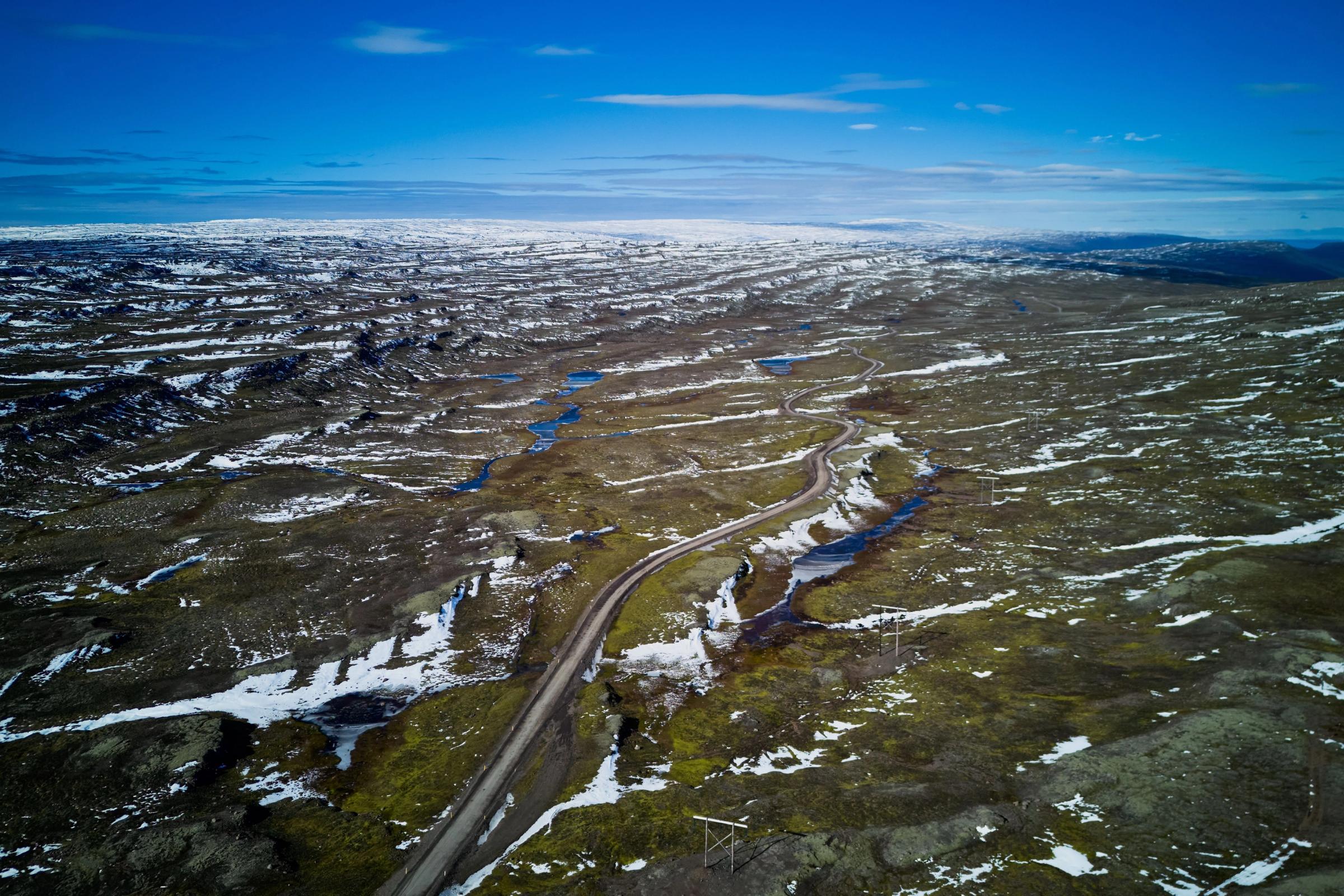
For a long time, the highlands were barely explored because the conditions were harsh. Even now, there are no paved roads crossing the interior. Only rough mountain roads, called F-roads, go through parts of it. They usually open for just a couple of months in summer when snow melts. The land formed from layers of lava and ash over millions of years, then glaciers shaped it during the Ice Ages.
Even in summer, daytime temperatures usually stay below 15°C. Frost can happen any night. Weather changes fast, and you have to be prepared for that.
Rhyolite Mountains
The Rhyolite Mountains stand out for their color. You’ll see reds, yellows, oranges, and greens across the slopes. These colors come from minerals in the rock reacting with air and water. Most of Iceland is dark basalt, but rhyolite formed from magma with higher silica content that cooled slowly underground before erosion exposed it.
Landmannalaugar is the easiest place to see these mountains. There are marked trails and a natural hot spring where people soak after hiking. It’s part of the Fjallabak Nature Reserve, and many people spend several days walking here. The Laugavegur trail starts in Landmannalaugar and runs 55 km to Þórsmörk. It’s the most popular long hike in the country.
Highland Plateaus
Highland plateaus cover huge parts of Iceland’s interior. These areas are wide and open, made up of gravel, sand, and very little vegetation. They formed from lava flows stacked on top of each other over long periods. Glaciers later flattened much of the surface.
The space is what stands out most. You can look in any direction and see almost nothing. No trees. No buildings. Just open land and distant mountains.
Sprengisandur is one of the largest of these plateaus. It’s a black gravel desert with very little plant life and is one of the largest deserts in Europe. The F26 road crosses it and is usually open from late June to early September. You can drive for hours without seeing another vehicle. Snow can fall at any time of year, and summer temperatures often stay below 10°C.
Kjölur is another main highland route. The F35 road runs between Langjökull and Hofsjökull glaciers. It’s a bit lower than Sprengisandur and supports more vegetation. About halfway along is Hveravellir, where there are hot springs and a mountain hut where people can stay overnight.
Access and Timing
To get into the highlands, you need a real 4x4 with good clearance. Many roads involve driving through rivers instead of over bridges. These roads usually open around mid-June and close again sometime in September. The exact dates change every year depending on the snow, so you always need to check road.is before going.
Rent a Campervan in Iceland
Explore Iceland's Breathtaking landscapes with Complete Comfort and Freedom
Glaciers cover about 11% of Iceland, around 11,400 km². They feed most of the country’s rivers, affect the climate, and cover several active volcanoes. When volcanoes erupt under ice, they melt large amounts of it very quickly. That meltwater causes sudden floods called jökulhlaups, which can tear through valleys and lowlands.
The glaciers also show how fast the climate is changing. All of Iceland’s glaciers have been shrinking since around 2000. They’ve already lost about 7–10% of their total volume, and the loss is speeding up. Many places that are open land now were covered by ice just a few decades ago.
Major Ice Caps
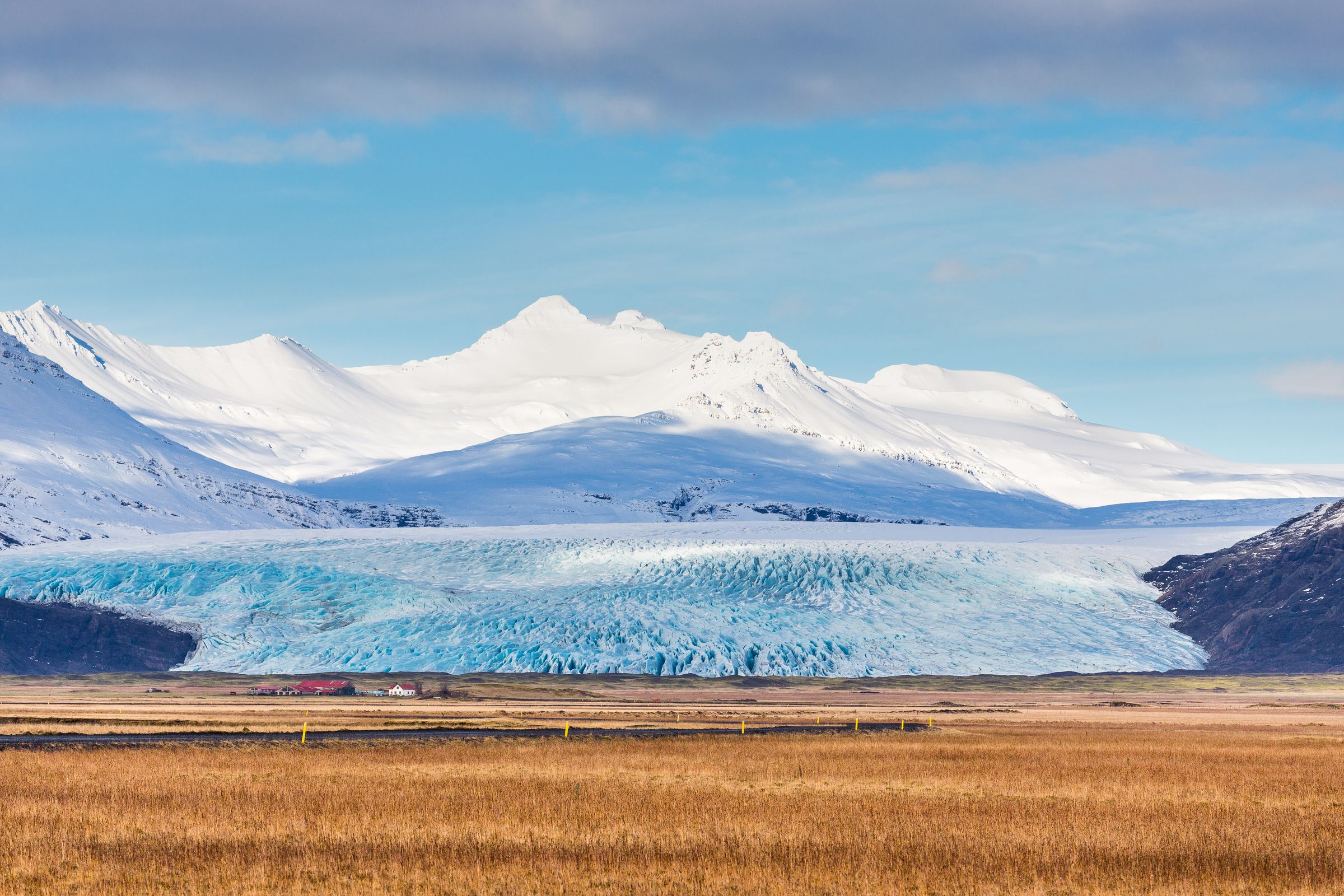
Vatnajökull covers much of southeast Iceland and is the largest ice cap in Europe by volume. It’s about 8,000 km² in size, and in some places the ice is up to 1 km thick. Several active volcanoes sit under it, including Grímsvötn, Bárðarbunga, and Öræfajökull. Many outlet glaciers flow from Vatnajökull, and each one looks and feels a bit different.
Breiðamerkurjökull feeds the Jökulsárlón glacier lagoon. It has retreated a lot in recent decades. The lagoon barely existed in 1935. Today it covers about 18 km². Skaftafellsjökull and Svínafellsjökull are easier to reach and are common places for guided glacier walks. Falljökull is known for steep ice and ice caves. Skeiðarárjökull sometimes sends out large floods when Grímsvötn erupts beneath it.
Langjökull is the second-largest ice cap at about 950 km². It sits in the west-central highlands. You can actually walk inside this glacier through man-made tunnels carved into the ice. Like the others, it has lost a lot of ice since 2000. Scientists think it could disappear completely by around the year 2200 if warming continues.
Mýrdalsjökull lies in the south and covers Katla volcano, one of Iceland’s strongest volcanic systems. Sólheimajökull flows out from it and is a popular place for guided walks. Katla last erupted in 1918 and caused major floods along the south coast. It’s considered overdue for another eruption.
Glacier Activities
Glacier walks are always done with guides. They range from short, easy walks to long, challenging days. Guides provide all the gear, including crampons, ice axes, and helmets. You should never go onto a glacier on your own. Crevasses can be hidden under thin snow, and they can collapse without warning. Every year, people die after falling into crevasses or deep meltwater holes called moulins.
Snowmobile tours run year-round on the higher parts of Langjökull and Vatnajökull. They cover a lot of ground quickly and give wide views of the surrounding area. They’re expensive, usually around $150–250 per person for 1–2 hours.
Ice climbing is possible on some glacier fronts where guides set routes. Beginners can try it with instruction, and experienced climbers can go for harder climbs. Conditions change often as the ice shifts and melts.
Climate Impact
Iceland’s glaciers have been shrinking fast. Since around 2000, they’ve lost about 7 to 10% of their total volume, and the pace keeps increasing. Scientists expect that if warming continues at the same rate, about half of Iceland’s current ice could be gone by 2100.
As the ice pulls back, new land is exposed. Glacial lagoons grow larger. Rivers that rely on summer meltwater may carry less water later in the season. Trails and access routes also change as glacier fronts move hundreds of meters over just a few years. Places that were solid ice not long ago are now bare ground or water.
Because things change so quickly, guides and tour companies constantly adjust routes. What was safe or accessible one year might not be the next.
Ice Caves and Glacial Lagoons
Ice caves and glacial lagoons show two different sides of how glaciers interact with the land. Ice caves form inside the ice itself. Lagoons form when glaciers melt and pull back. Both are temporary. Neither stays the same for long.
Ice caves let you step inside a glacier and see the ice from within. Lagoons show what happens when ice breaks off and slowly disappears. Both are fragile places, and both change every season.
Natural Ice Caves
Ice caves form when meltwater flows through glaciers during summer. The water melts tunnels and chambers inside the ice. When colder weather arrives in fall and winter, these passages can become stable enough for guided visits.
The blue color comes from compressed ice. Over time, air bubbles get squeezed out, and the dense ice absorbs most colors of light except blue. That’s why the walls seem to glow.
Ice caves don’t last. Glaciers move. Ice melts. Tunnels collapse or flood. A cave that’s open one winter may not exist the next. Every visit is different.
The Crystal Cave under Vatnajökull is usually accessible from November through March, depending on conditions. Tours take you through narrow entrances into large ice chambers with thick blue walls. Each winter, different caves open as the glacier shifts. Tours usually cost around $150 and last 2 to 3 hours, including transport from the Jökulsárlón area.
The Katla Ice Cave under Mýrdalsjökull is one of the few that’s accessible year-round. It sits near the glacier edge. The ice here has dark ash layers from past volcanic eruptions. Each layer marks an eruption that covered the glacier before being buried by snow. Tours usually cost $100 to $150.
Glacial Lagoons
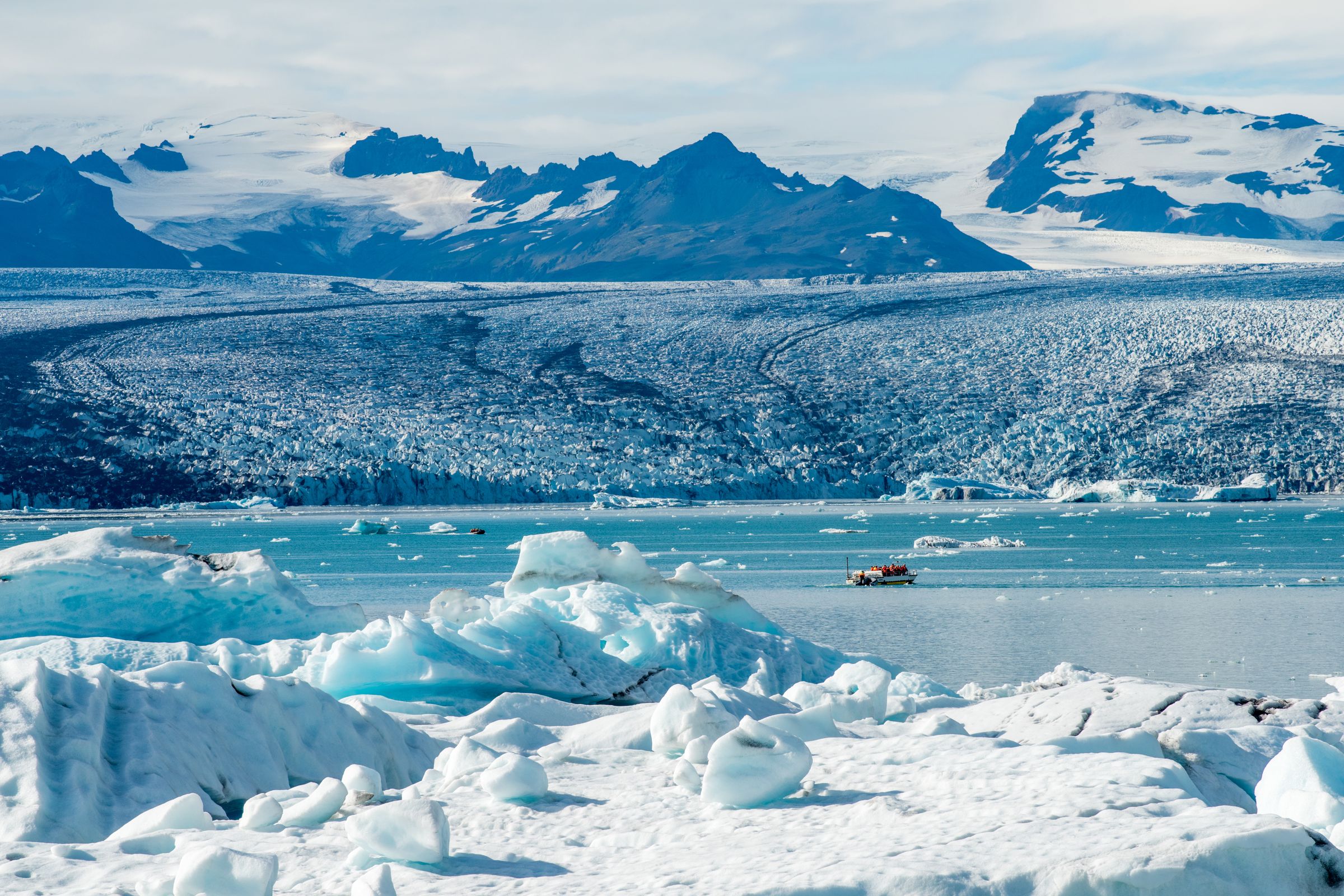
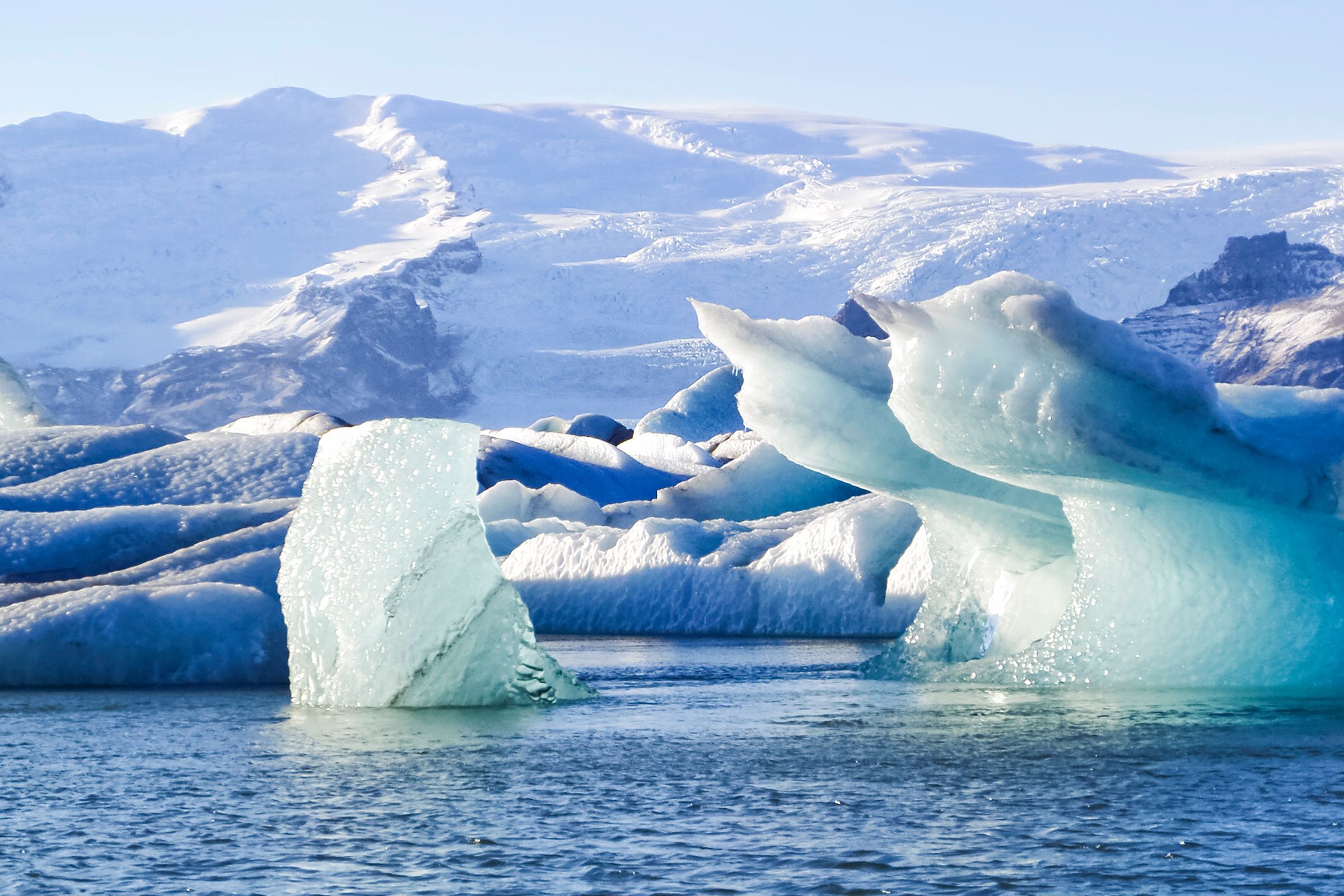
Glacial lagoons form when a glacier pulls back and leaves a low area that fills with meltwater. Ice breaks off the glacier front and floats in the lagoon. Over time, the ice melts or drifts out to sea.
These lagoons have grown quickly as glaciers retreat faster.
Jökulsárlón formed as Breiðamerkurjökull retreated. The lagoon covers about 18 km² and reaches depths of up to 284 meters, making it Iceland’s deepest lake. It barely existed in 1935. Icebergs break off the glacier year-round and drift slowly toward the ocean. Seals often rest on the ice.
Fjallsárlón sits just west of Jökulsárlón and is smaller and quieter. Zodiac tours here often get closer to the glacier face. Calving happens regularly, where large pieces of ice break off and crash into the water.
Waterfalls
Iceland has a lot of waterfalls. Over 10,000 of them. They come from glaciers, rain, and steep land. Water moves fast here, and it has a long way to fall.
Some waterfalls are huge and loud. Others are small and easy to miss. Some are right next to the road. Others take a long hike to reach. You’ll see waterfalls all over the country.
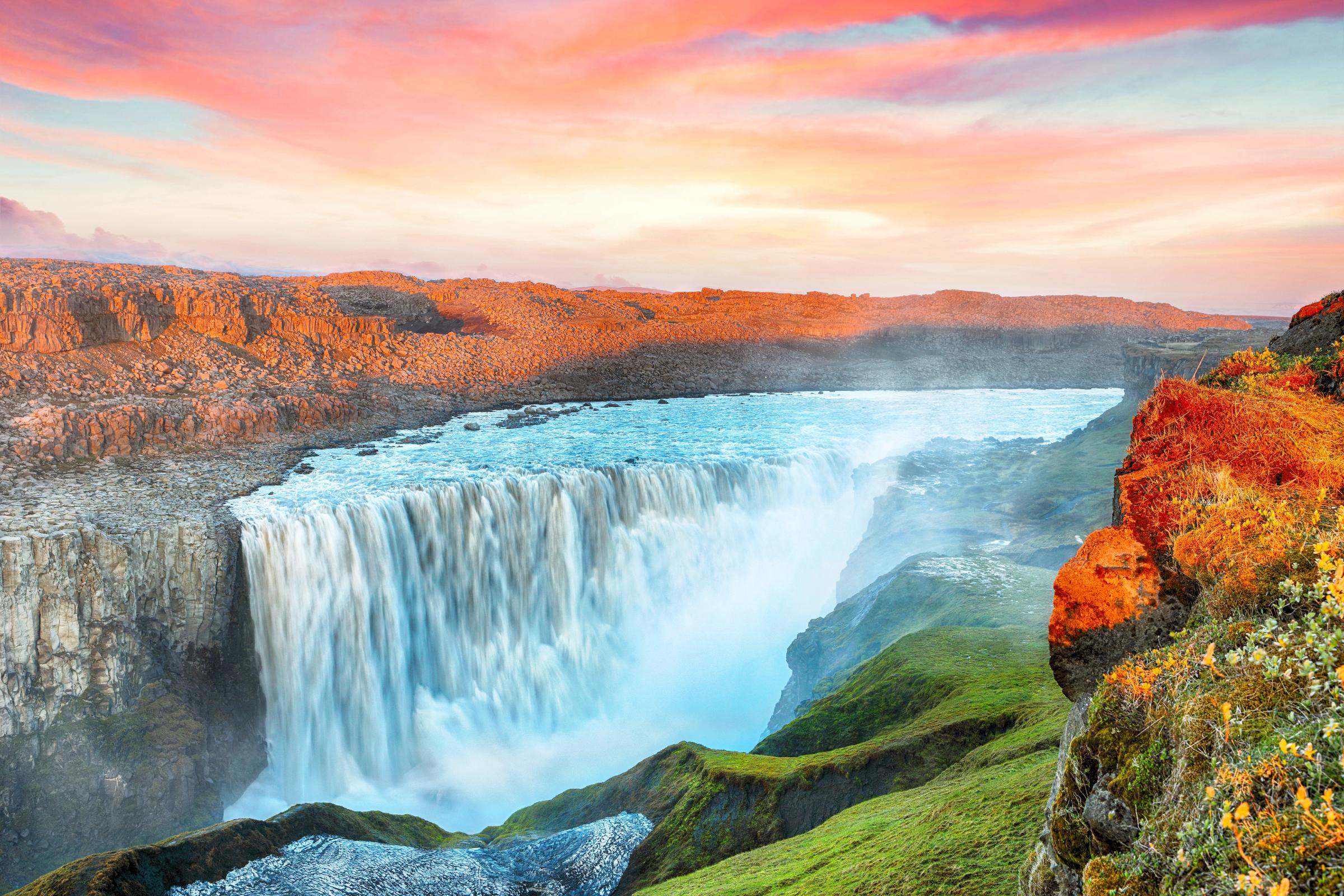
Many of the biggest ones are fed by glacial rivers. These carry a lot of water, especially in summer. Dettifoss moves about 193 cubic meters of water per second, which makes it the most powerful waterfall in Europe by volume.
The Best Waterfalls in Iceland
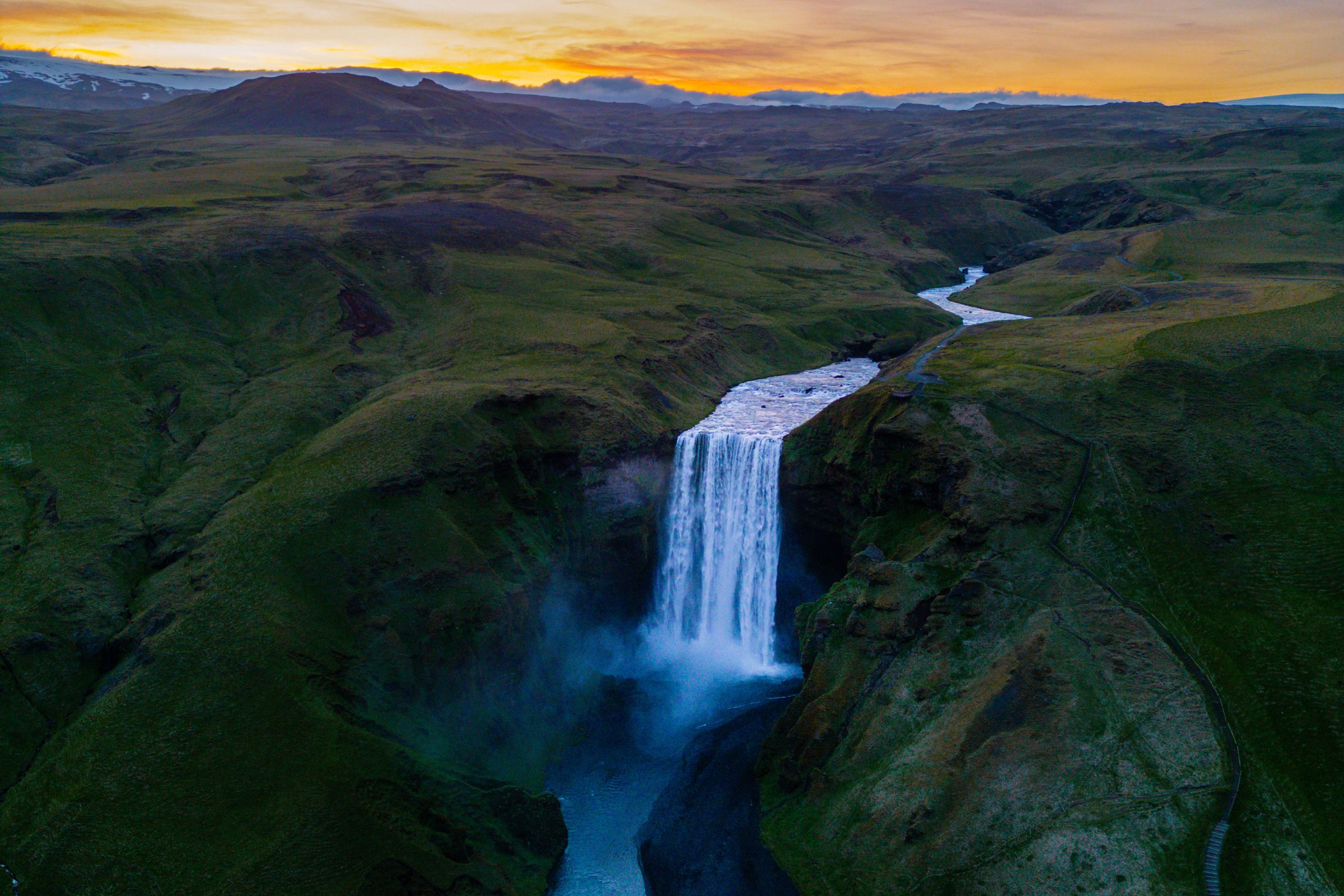
Along the south coast between Vík and Höfn, you’ll see a lot of Iceland’s best-known waterfalls, and many of them are right next to the Ring Road. Skógafoss drops 60 meters straight down in a wide sheet of water, and you can walk right up to it or climb the stairs to look down from the top, with rainbows often showing up in the mist when the sun’s out. Close by, Seljalandsfoss is the one you can walk behind, so you should expect to get wet, and right next to it Gljúfrabúi sits hidden inside a narrow opening in the rock that many people walk past without noticing. Farther east in Skaftafell, Svartifoss drops about 20 meters and stands out because of the dark rock columns behind it, which later inspired the design of Hallgrímskirkja in Reykjavík.
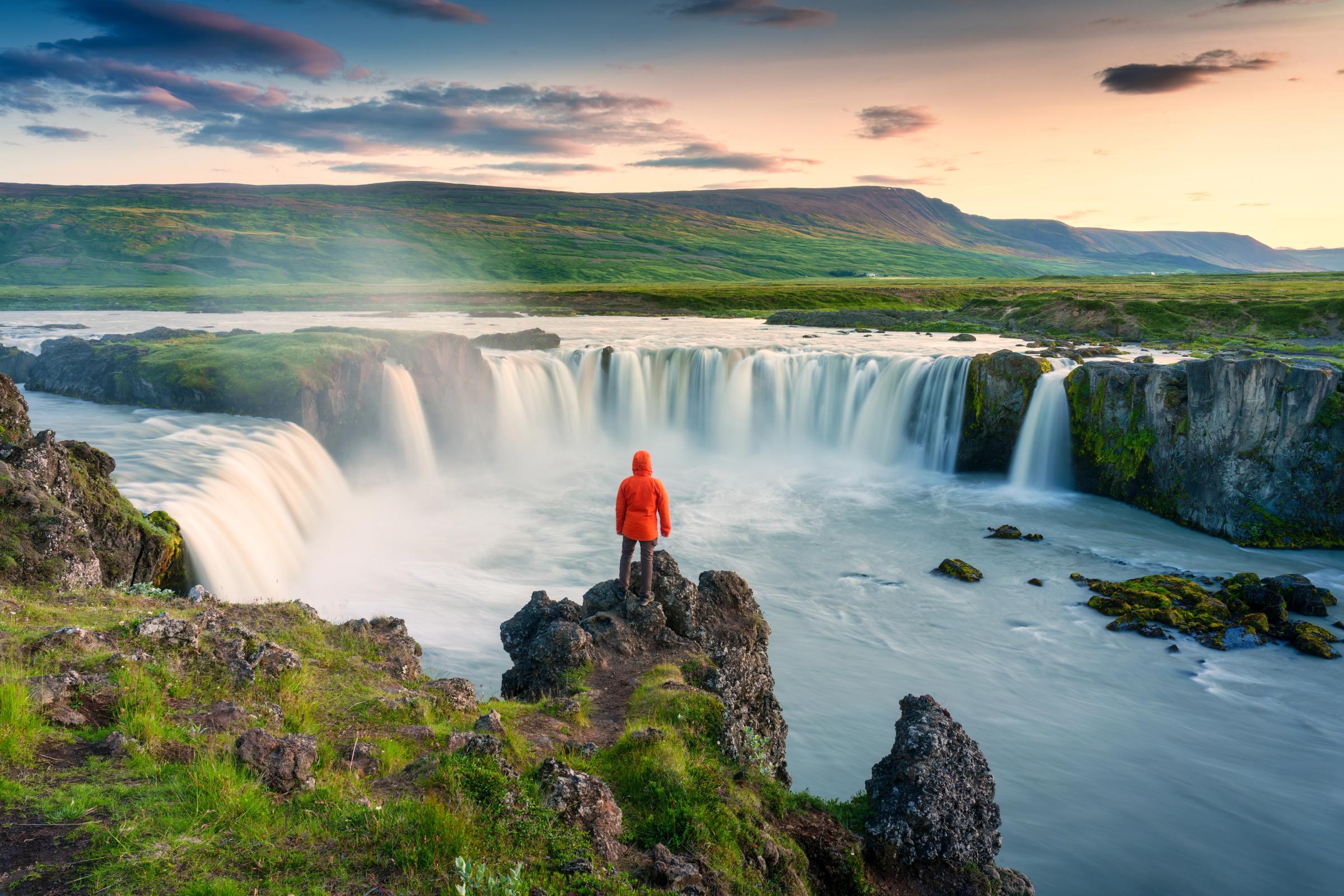
On the Golden Circle and up north, the waterfalls feel rougher and louder. Gullfoss drops in two steps into a narrow canyon, and the paths let you get close enough to feel the spray, even though it almost got turned into a dam in the early 1900s before locals stopped it. Öxarárfoss in Þingvellir is smaller, but it’s interesting because it falls straight into a crack between tectonic plates. In the north, Dettifoss is the most powerful waterfall in Europe, crashing into a deep canyon with enough force that the ground can shake, and Selfoss and Hafragilsfoss are right nearby on the same river. Goðafoss spreads out in a wide horseshoe shape right by the Ring Road, while Aldeyjarfoss and Hrafnabjargafoss sit farther upstream among tall rock columns and usually feel much quieter.
Some waterfalls take more effort to get to, and that’s usually why they feel calmer. Glymur was long thought to be Iceland’s tallest waterfall at 198 meters, and getting there means a longer hike with a river crossing and some steep sections before you reach the canyon. In the Westfjords, Dynjandi isn’t just one waterfall but a whole series flowing down the mountainside, with the main one wide at the top and smaller ones below, and because it’s so far from the main roads, the walk up often feels slow and peaceful compared to the busy stops along the Ring Road.
Seasonal Changes
Waterfalls in Iceland change a lot depending on the season.
In summer, snowmelt and frequent rain increase water flow, and this is when most waterfalls are at their strongest. In winter, many of them freeze partly or completely, turning flowing water into thick ice and changing their shape and feel.
These seasonal changes also affect how easy places are to reach. Ice and snow can make trails unsafe or closed in winter, while heavy meltwater in summer can make river crossings harder.
Black Sand Beaches
Black sand beaches form when waves slowly grind basalt lava into fine grains over thousands of years. Basalt doesn’t turn into light-colored sand like quartz does, so the result stays dark gray or black. In summer, the sand can heat up quickly in the sun, while in winter it feels cold and firm underfoot.
These beaches are fully exposed to the Atlantic Ocean, which means waves are strong and unpredictable. Swimming isn’t safe, but walking along the shore and watching the ocean is enough for most people. Basalt cliffs, sea stacks, and wide open views are common along these coasts.
Reynisfjara Beach
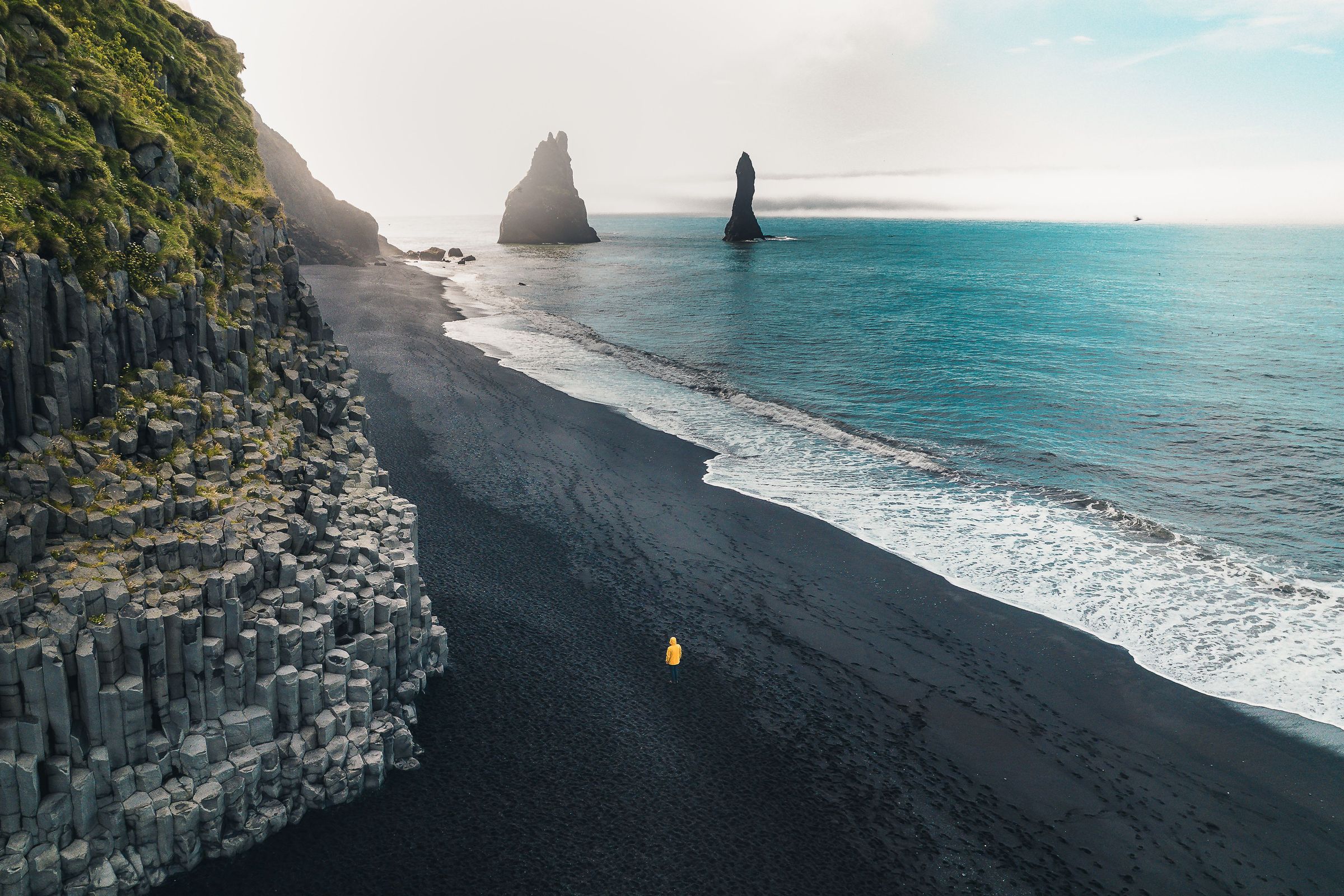
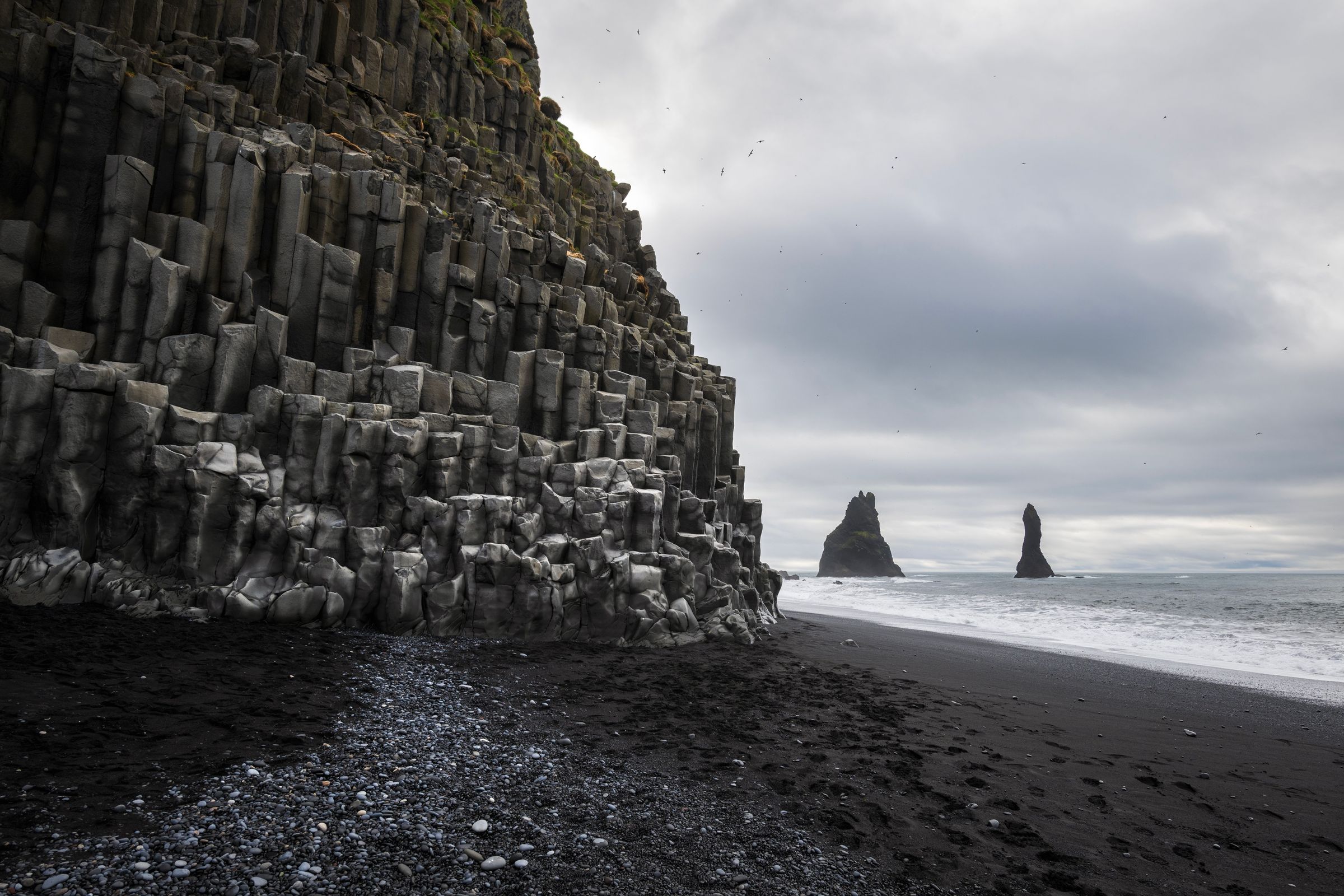
Reynisfjara, near the town of Vík, is the most well-known black sand beach in Iceland. The sand is deep black, and tall basalt columns line the cliffs behind the beach. Offshore, the Reynisdrangar sea stacks rise out of the water. There are three main pillars, with the tallest reaching about 66 meters.
Reynisfjara is also one of the most dangerous beaches in the country. Sneaker waves can rush much farther up the sand than expected, and people are killed here almost every year after turning their backs on the sea. Warning signs and lights are in place, but they don’t remove the risk. Staying well back from the water and keeping an eye on the waves is essential.
At the eastern end of the beach is Hálsanefshellir cave. The walls and ceiling are made of basalt columns, and waves crash straight into the opening. During high tide or rough seas,
Diamond Beach
Diamond Beach is right across the road from Jökulsárlón. Ice breaks off the glacier, floats through the lagoon, goes out to sea, and then gets pushed back onto the beach by the waves.
The ice comes in all sizes. Some pieces are small. Others are huge, like car-sized. The ice is clear and sits on black sand, which is why people started calling it Diamond Beach. It never looks the same twice because the waves keep moving the ice around and breaking it up.
You can walk around the ice and take photos, but climbing on the big pieces isn’t safe. They can shift or roll without warning. Waves can also come farther up the beach than you expect, so it’s best to stay back and keep watching the water.
Other Black Sand Beaches
Djúpalónssandur on the Snæfellsnes Peninsula is covered in black stones instead of sand. Pieces of a British fishing boat that wrecked here in 1948 are still lying around the beach. There are also four lifting stones that fishermen used to lift in the past to prove they were strong enough to work on boats.
Stokksnes, near Höfn, is a black sand beach with a sharp mountain called Vestrahorn right behind it. The mountain is tall and fills most of your view when you’re there. The land is private, so you pay a small fee to enter.
Rauðasandur in the Westfjords is different from most beaches in Iceland. The sand is reddish rather than black because crushed shells mixed with volcanic material. It’s far from the main roads, and you reach it by driving on rough gravel roads. Nearby Breiðavík has darker sand and tall cliffs where lots of birds nest.
Basalt Columns and Rock Formations
Basalt columns form when lava cools slowly and hardens. As it cools, cracks form in the rock, often making six-sided shapes. Over time, wind and water wear away the surrounding rock and leave the columns exposed.
Some columns stand in straight rows. Others are broken or leaning. It depends on how the rock around them wore away.
Stuðlagil Canyon
Stuðlagil Canyon in east Iceland wasn’t well known until 2009, when a dam lowered the river and exposed the rock walls. What you see now is a narrow canyon with tall dark rock columns and bright blue-green water at the bottom.
The walk to the main viewpoints takes about an hour and a half round trip. Parts of the trail cross private land, so you need to stay on marked paths and close gates behind you. You can reach the canyon from either side. One side makes it easier to get closer to the river. The other side gives higher views looking down.
Reynisfjara Columns
At Reynisfjara, the cliffs behind the beach are made of tall rock columns packed tightly together. Some are still sharp and clean. Others have broken off and now lie on the sand.
Hálsanefshellir cave is also made from these columns. They form the walls and ceiling of the cave. Waves hit the opening directly, so it’s only safe to go near it when the sea is calm.
Other Column Formations
Gerðuberg on the Snæfellsnes Peninsula is a long straight wall of rock columns. You can park nearby and walk along the bottom.
Around Arnarstapi, the same kind of rock forms arches, stacks, and shapes along the coast where the sea has worn the land away. Aldeyjarfoss in the north shows these columns around a waterfall. Hljóðaklettar has twisted and broken shapes left behind after old volcanic areas eroded.
Sea Cliffs, Arches, and Stacks
Iceland has a very long coastline, and much of it is made up of tall cliffs shaped by the ocean. Waves hit the base of the land over time, weaken it, and parts eventually collapse, leaving steep cliff edges.
Birds nest wherever they can find space. When waves cut into land from more than one side, arches form. When an arch collapses, a single rock stack is left standing in the water.
Látrabjarg Cliffs
Látrabjarg in the Westfjords is a long stretch of cliffs, about 14 km in total, rising more than 400 meters above the sea. It’s the largest bird nesting area in Europe. From May to August, millions of birds nest here, including puffins and other seabirds.
Puffins nest right at the grassy edge of the cliffs, often very close to where people stand. Getting here takes hours of driving on gravel roads, which keeps the number of visitors lower. The far end of Látrabjarg is Iceland’s westernmost point.
Dyrhólaey Promontory
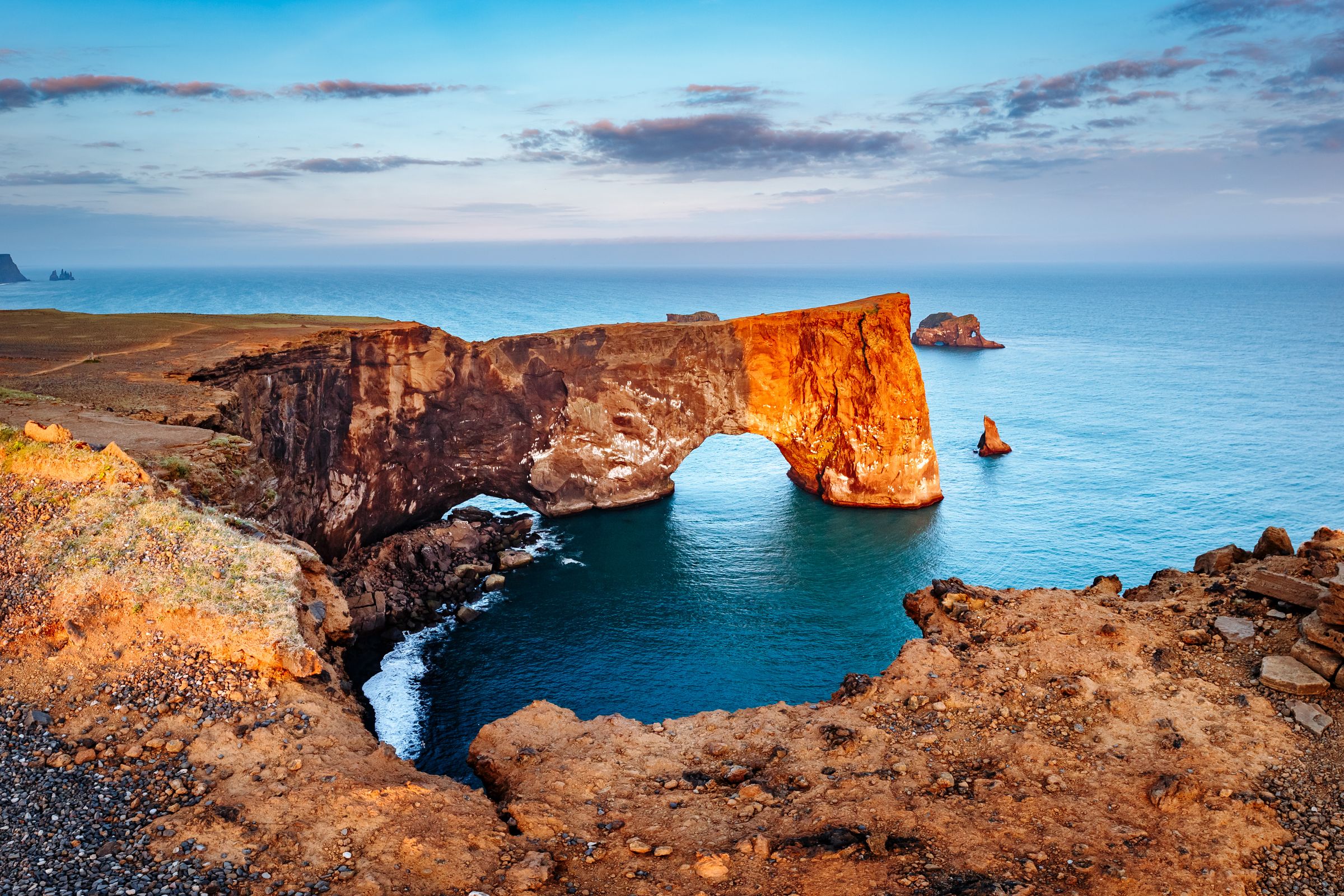
Dyrhólaey is a headland near Vík that rises about 120 meters above the sea. There’s a large hole in the rock where the ocean has cut through, and a lighthouse sits on top. From there, you can see the coastline stretching in both directions.
Puffins nest here in summer, and parts of the area are closed for a few weeks to protect them. The land sticks out into the ocean, so it feels exposed and windy.
Reynisdrangar Stacks
The Reynisdrangar sea stacks stand just offshore from Reynisfjara and rise about 66 meters out of the water. Stories say they’re trolls turned to stone. In simple terms, they’re hard bits of rock left behind after the sea wore away everything else.
Birds nest on the stacks, and during storms, waves hit them hard and throw water high into the air.
Fjords
Iceland has more than 100 fjords, and most of them are in the Westfjords and the Eastfjords. They were shaped during the Ice Ages, when glaciers moved slowly down mountain valleys toward the sea and dug deep paths into the land. When the ice melted, the sea filled those valleys and turned them into fjords.
Fjords are long and narrow, with steep mountains on both sides. Many towns sit at the very end of them, where the land flattens out a bit and boats could land safely. Fishing is why people settled in these places in the first place, and in many towns it’s still a big part of daily life.
Westfjords
The Westfjords are almost entirely made up of fjords. Deep inlets cut between steep mountains, and the roads follow the coastline instead of crossing straight through. This part of Iceland is very old, with rocks that are about 14 to 16 million years old, much older than most of the country.
Ísafjarðardjúp is the largest fjord system in the Westfjords. It stretches about 75 km inland and branches off into many smaller fjords. The town of Ísafjörður sits on a narrow strip of land with mountains rising steeply around it. Avalanches are a real concern here, so large protective barriers have been built above the town.
Arnarfjörður runs deep into the southern Westfjords and has Dynjandi waterfall at the far end. Dýrafjörður is known for its steep peaks, sometimes called the Westfjords Alps. Roads in this area are long and winding, and it’s common to drive for a long time without passing another car.
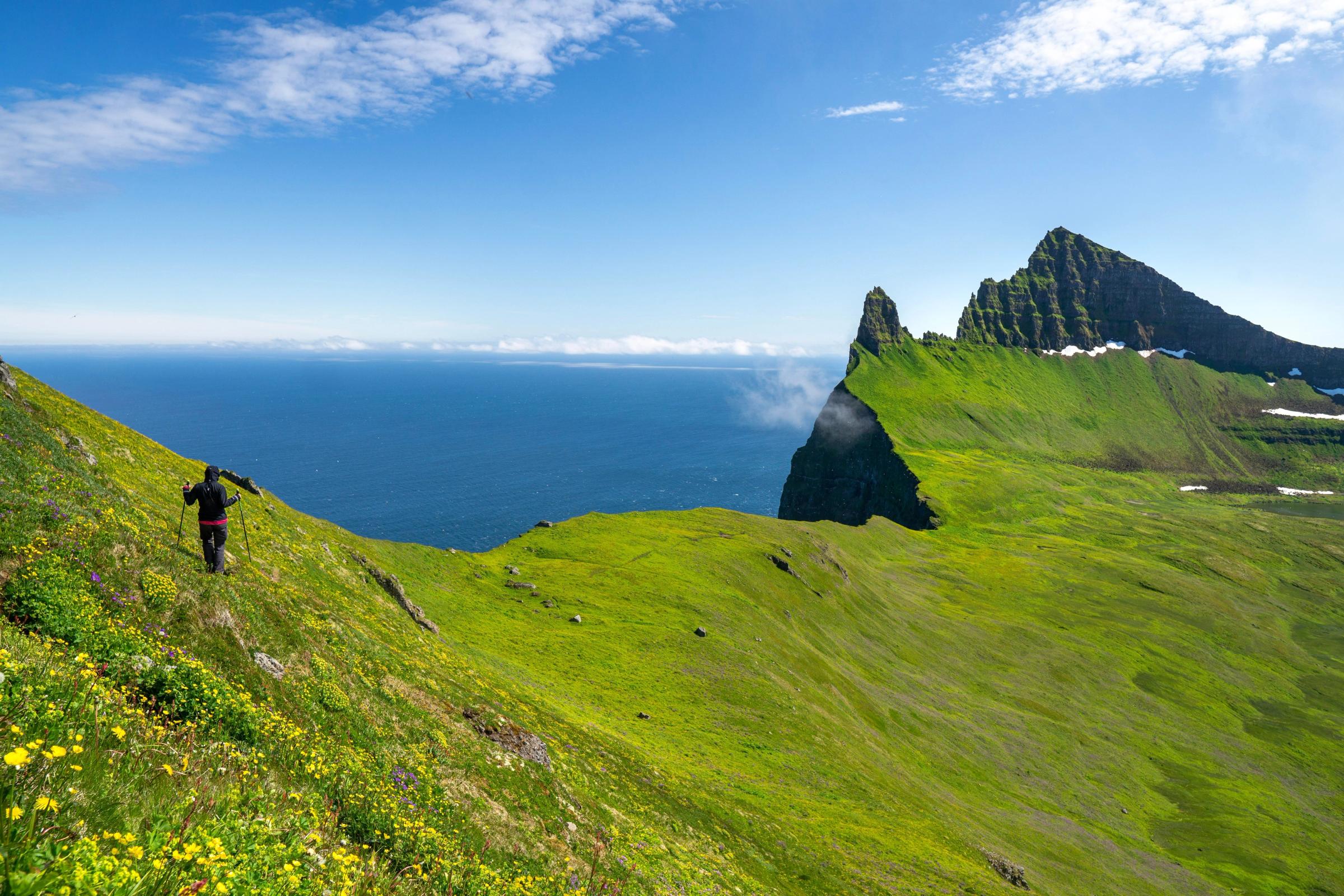
The northern part of the Westfjords is even more remote. Hornstrandir Nature Reserve has no roads at all. You can only get there by boat or by hiking in. Old farms were abandoned many years ago, and now the area is left mostly untouched. Some of Iceland’s tallest bird cliffs are here, including Hornbjarg, which rises 534 meters straight up from the sea.
Eastfjords
The Eastfjords are easier to reach because parts of the Ring Road run through them. Each fjord usually has one small town at the end, with mountains rising sharply on both sides. Waterfalls often run straight down the slopes and drop directly into the sea.
Seyðisfjörður is one of the better-known towns in the Eastfjords. It has colorful wooden houses and a strong creative community. A ferry connects the town to Denmark and the Faroe Islands. Mjóifjörður is Iceland’s narrowest fjord, only about 200 meters wide in some places, with steep walls closing in on both sides.
Borgarfjörður Eystri, farther north, is known for puffins. At Hafnarhólmi, puffins nest right by the harbor, close enough that you don’t need to walk far to see them. Reyðarfjörður is one of the longest fjords in the east and was used as a military base during World War II.
Stöðvarfjörður has a well-known stone and mineral museum that reflects the area’s geology. Berufjörður and Breiðdalsvík have wider valleys with more open land than many other fjords, which makes farming easier there.
Northern Fjords
Eyjafjörður is Iceland’s longest fjord, stretching about 60 km. The town of Akureyri sits at the end of it and is often called the capital of North Iceland. The fjord is known for whale watching, especially humpback whales, which often feed in the calm water.
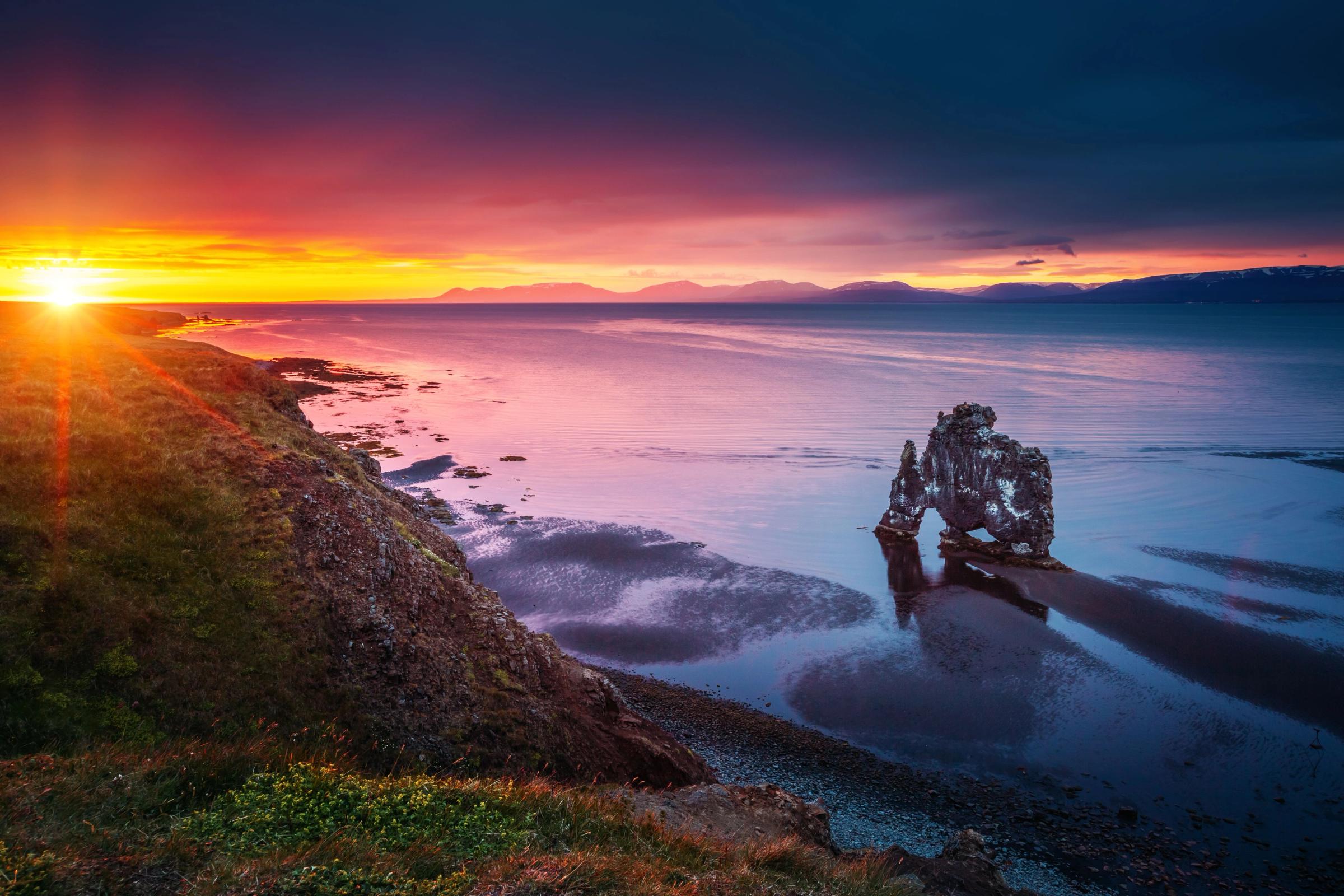
Skagafjörður is nearby and is known for horses and farming. Drangey island rises steeply out of the fjord and stands out clearly from the shore. Húnafjörður cuts into the northwest coast, with the Hvítserkur rock formation standing near the mouth of the fjord.
Geothermal Areas
Iceland has a lot of heat coming from underground because magma sits fairly close to the surface here, sometimes only a few kilometers down, and water that sinks into the ground heats up and then finds its way back up again. That’s why you see hot springs, geysers, steam rising from the ground, and mud bubbling in certain places. Iceland uses this heat every day, with most homes heated this way and a good portion of the country’s electricity coming from geothermal power.
Some geothermal places feel calm and relaxed, especially the ones meant for bathing, while others are rough and noisy, with steam blasting out of the ground, mud boiling, and soil that’s hot enough to burn you if you step in the wrong place, so those areas need extra care.
Geysers
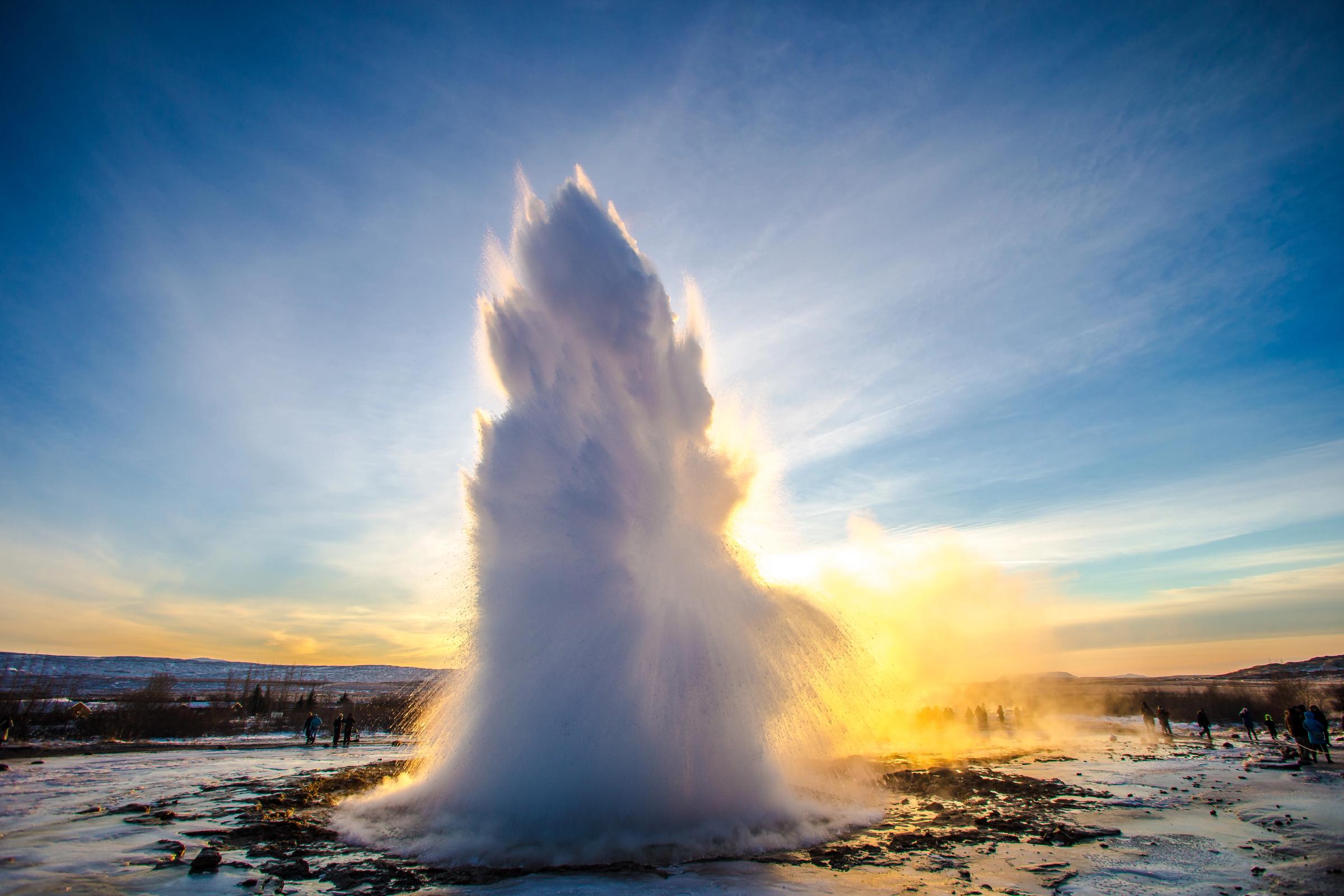
Geysers happen when hot water gets trapped underground, builds pressure, and then suddenly shoots up through the surface. The word “geyser” actually comes from Iceland, from a place called Geysir, which used to erupt regularly but doesn’t do so very often anymore unless there’s an earthquake.
Right next to it is Strokkur, which erupts every five to ten minutes, and you can stand there watching the water rise, start to bubble, and then suddenly burst into the air, usually reaching about fifteen to twenty meters. The area around Strokkur has several hot pools and spots where steam comes straight out of the ground, and there are wooden paths to walk on because the ground just below the surface can be extremely hot, with a strong sulfur smell that you notice right away.
Hot Springs
Hot springs form where heated water reaches the surface naturally, and some of them are simple pools in the ground, while others have been shaped a bit so people can sit in them more easily. At Landmannalaugar, there’s a warm stream where people soak after hiking, and at Reykjadalur, you walk uphill for about an hour to reach a hot river, where the water gets warmer the farther upstream you go.
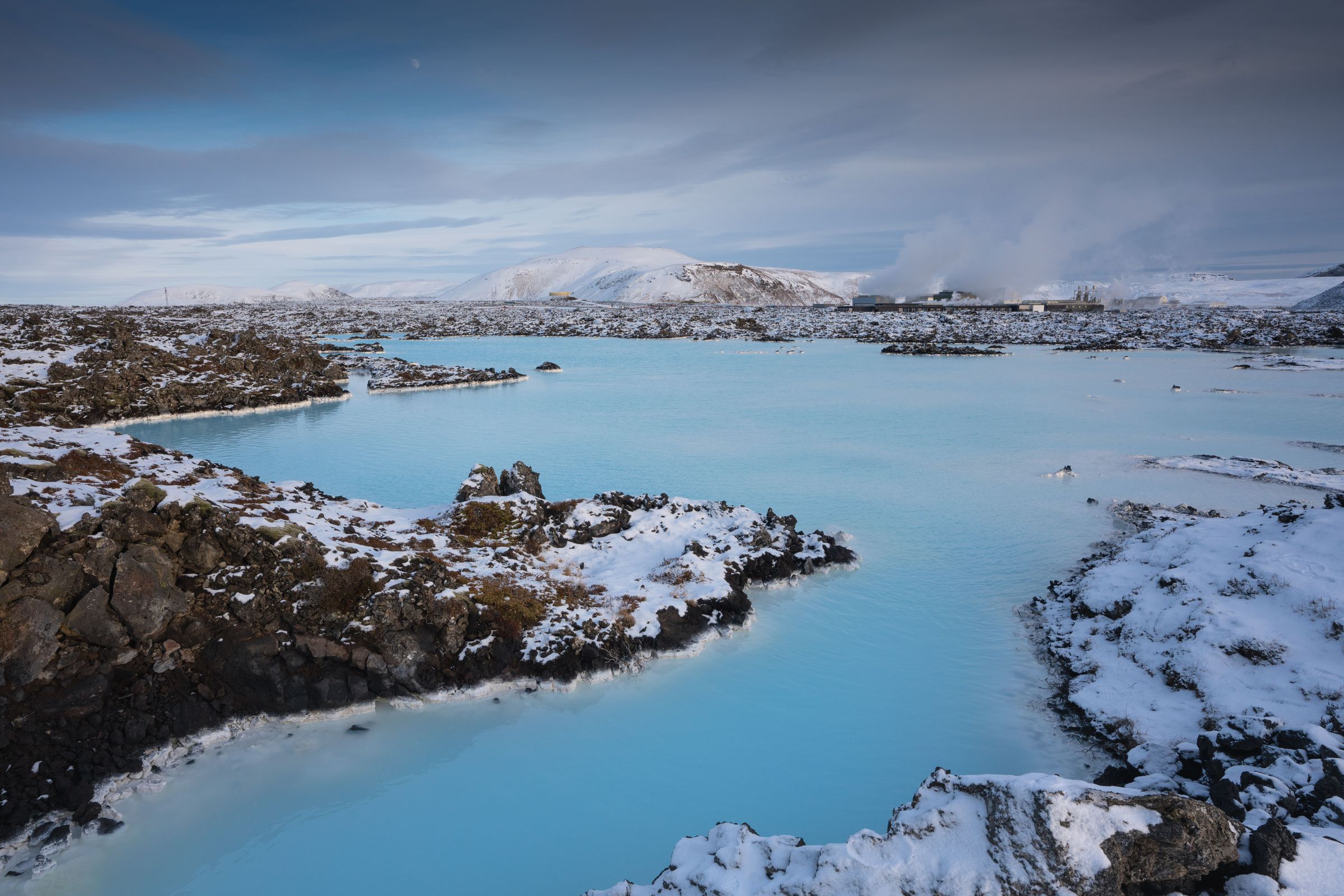
The Blue Lagoon looks natural, but it’s actually filled with water from a nearby power plant, and the water stays warm, around body temperature, with a cloudy blue color that a lot of people recognize right away. In the north, the Mývatn Nature Baths offer a similar experience but usually feel less crowded, while Vök Baths near Egilsstaðir float on a lake, so you sit in warm water with cold water all around you. The Secret Lagoon near Flúðir is one of the oldest swimming pools in the country and has been used since the late 1800s, fed by natural hot springs.
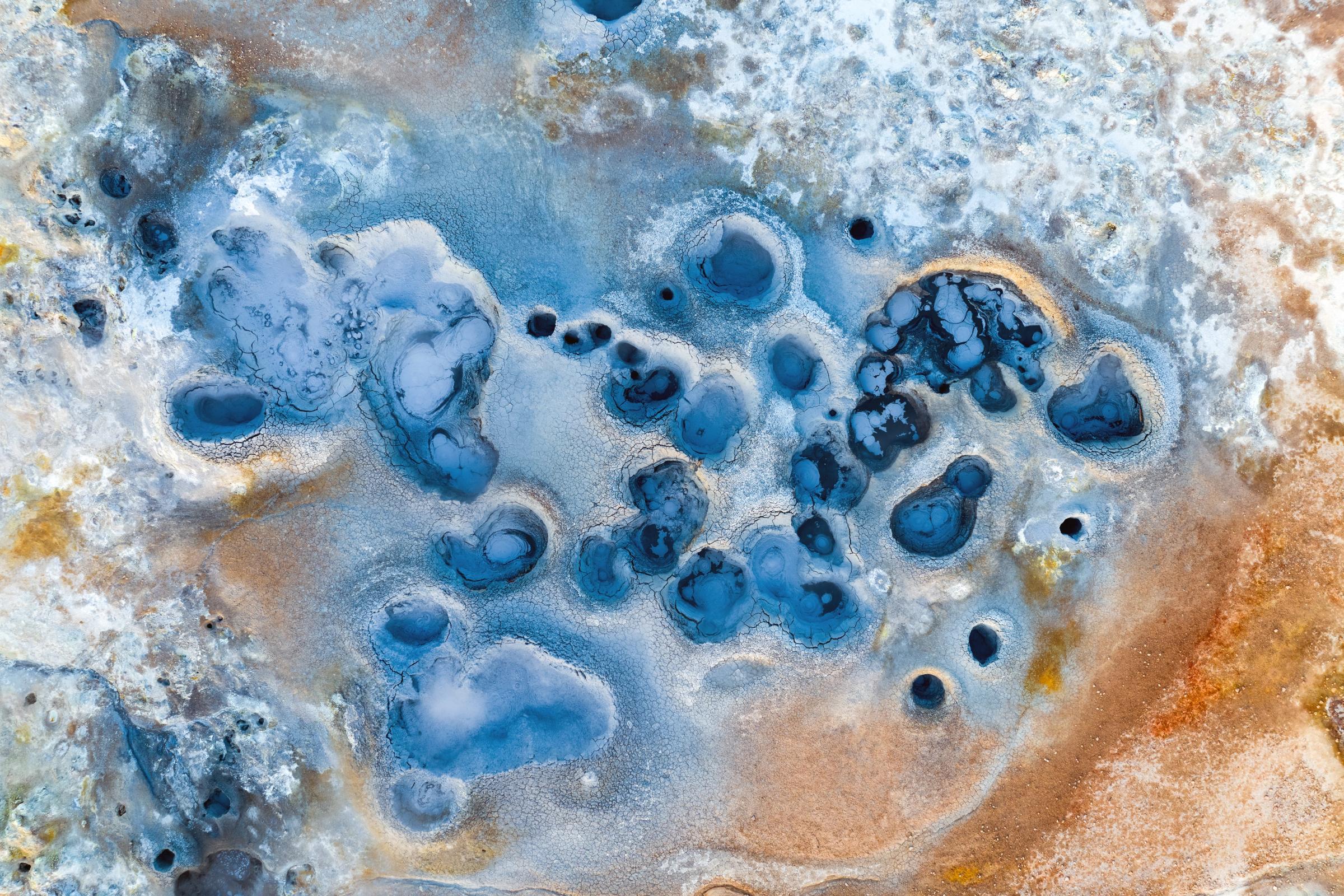
Steam fields and mud pots are places where the heat from underground comes very close to the surface, so instead of clear hot water, you mostly see steam, bubbling mud, and ground that looks unstable. These areas feel unfinished, like the land hasn’t settled yet and is still active right under your feet.
Near Lake Mývatn, the Námafjall–Hverir area is full of gray mud that bubbles slowly, steam rising from cracks in the ground, and patches of yellow and orange spread across the hills. The mud pots bubble and pop, sometimes throwing small bits of mud into the air, while steam vents make constant hissing sounds. The smell is strong and unpleasant, and the ground around you often feels warm even through your shoes.
Safety Considerations
Geothermal areas can be dangerous even when they look calm and quiet. The ground can be thin, with boiling water or hot steam just below the surface, and breaking through can cause serious injuries.
Staying on marked paths and walkways is important, even when the ground nearby looks fine. Signs and barriers are there because people have been hurt or killed in those exact spots before. Keeping a close eye on children and moving slowly through these areas helps avoid accidents.
Conclusión
Iceland’s landscape is shaped by active volcanoes and glaciers, so things change all the time. New lava shows up, ice slowly pulls back, and rivers and coastlines don’t stay in the same place for long. Some areas are only reachable at certain times of year, and plans often depend on weather and road conditions. Being there feels less like visiting a finished place and more like seeing the land while it’s still taking shape.
Frequently Asked Questions About Iceland's Landscapes
Yes. Eruptions are closely monitored, and most occur far from towns. Travelers are usually safe if they follow official guidance and local warnings.
Late June to early September offers the widest access, including highlands and F-roads, while winter highlights ice caves, glaciers, and frozen waterfalls.
Many highlights are reachable via paved roads, but highlands, remote plateaus, and some volcanic areas require a proper 4x4 vehicle.
It depends on your plans. Scenic stops can be easy, but hiking glaciers, highlands, or fjords requires good fitness and preparation.
About the author
Aron Freyr
Born and raised in Iceland, Aron Freyr has spent all 28 years of his life exploring the country and getting to know its landscapes, regions, and ever changing conditions. From long summer road trips to winter journeys through remote areas, he has traveled across Iceland more times than he can count. As part of the Go Car Rental Iceland team, Aron turns this firsthand experience into trustworthy, practical guidance that helps visitors navigate Iceland with confidence. His deep local insight makes him one of the most reliable voices on Icelandic travel today. He claims this expertise also includes knowing exactly which gas stations make the best hot dogs.