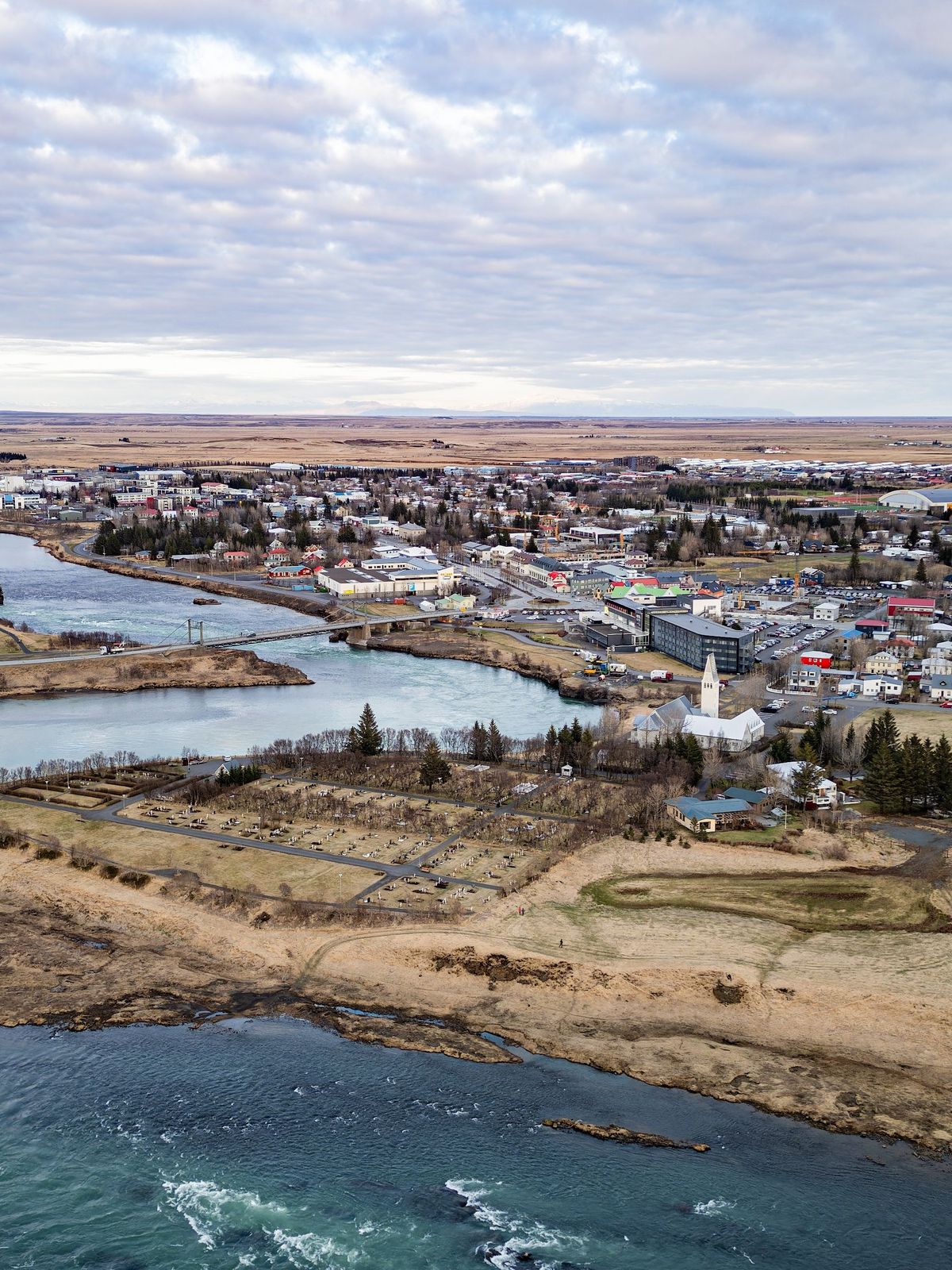
On the west coast of Iceland, a few miles north of Reykjavik, there’s a town that sometimes goes unnoticed for travelers who come to Iceland. It’s at the tip of a small peninsula, between two fjords, and its name is Akranes. As the Ring Road, the country’s main road, passes close to the town, many people use it just as a restocking stop, especially if they’re doing a road trip through the island. However, this town is much more than that. It’s an understated jewel that shines brightly for those who take their time to visit it.
This port city is, indeed, an important service hub, but it goes well beyond that. It’s a great example of the deep connection between Icelanders and the sea, but also a great link between national culture and nature. Campervan travelers find it especially appealing, with easy access to campsites and scenic drives that wind through basalt cliffs and amazing views. If, as part of your itinerary, you pass close to Akranes, you’ve got to stop and discover it. Let’s dive into everything there’s to know about this charming town.
Why is Akranes Worth a Visit?
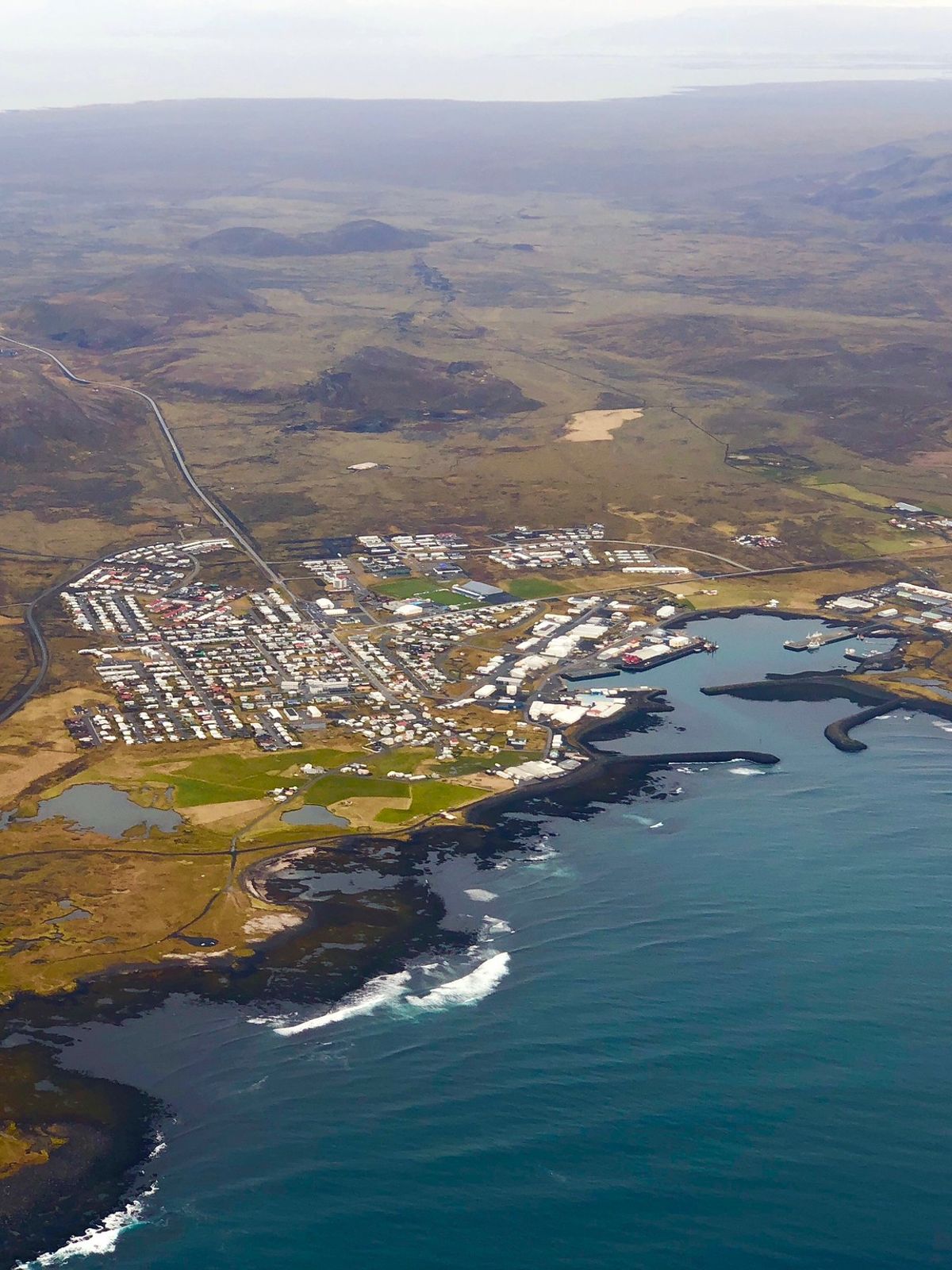
Akranes is a small town of around 7,400 people located on a 9 square kilometer peninsula in West Iceland, shaped by fishing, industry, and the ocean. It has deep historical roots dating back to the 9th century and became an official town in 1942. Today, it combines a working harbor, cultural attractions, strong football traditions, and growing tourism. Its location just 42 kilometers north of Reykjavik makes it a practical and authentic base for travelers.
What to See and Do in Akranes
Akranes offers more than a quick stop, with attractions that reflect its maritime history and local culture. Highlights include twin lighthouses, museums, historical ships, World War II relics, geothermal baths, and coastal activities. The town also features a golf course and a small ocean water park. Many attractions are within walking distance.
Where’s Akranes and How to Get There
Akranes sits between Hvalfjörður and Borgarfjörður in West Iceland, sheltered from the open sea. It is 42 kilometers from Reykjavik and reachable in about 40 to 45 minutes by car. The fastest route goes through the Hvalfjörður tunnel, while Route 47 offers a longer but scenic drive. Public buses run daily between Reykjavik and Akranes.
Where to Eat in Akranes?
Akranes has a small but solid selection of restaurants and takeaways. Options range from seafood and Icelandic lamb to pizza, kebabs, Chinese food, and ice cream. Most places are casual and centrally located. The town is well suited for relaxed meals after sightseeing.
Where to Stay in Akranes and Nearby
Akranes is well suited for campervan travelers, with several designated campsites in town and nearby. Facilities generally include toilets, showers, electricity, kitchens, and laundry. Camping options range from family run sites to farm stays and forest locations. Wild camping is illegal, so only official campsites should be used.
What to See Near Akranes
The area around Akranes features mountains, waterfalls, hot springs, and historical sites. Akrafjall offers a relatively easy hike with wide views, while nearby attractions include Glymur waterfall, Hvammsvik Hot Springs, and the War and Peace Museum. Smaller waterfalls and unique rock formations add variety. Many sites are reachable by short drives.
The Weather in Akranes
Akranes has a coastal climate that is milder than inland areas but often windy and rainy. Summer temperatures average 10 to 15°C, while winter temperatures range from -5 to 3°C. Autumn and spring bring changing conditions, fewer tourists, and strong colors or flowing waterfalls. Weather can change quickly year round.
What to Pack to Visit Akranes
Packing for Akranes requires preparation for rain, wind, and changing temperatures. Waterproof clothing, layered outfits, and sturdy hiking boots are essential. A swimsuit is needed for thermal baths, and winter visits require extra insulation. Practical items like a power bank and reusable water bottle are useful.
Travel Tips
Weather conditions strongly affect driving, so road status should always be checked. Stock up on food and fuel in town before heading into rural areas. Wild camping is illegal and fines are high. Booking accommodation and attractions early is recommended in summer.
Conclusion
Akranes connects Icelandic nature with everyday local life through history, industry, and culture. It offers easy access, varied attractions, and nearby natural highlights. The town provides a quieter alternative to larger destinations. Akranes fits well into a balanced Iceland itinerary.
Key Takeaways
Akranes is a town located on Iceland’s west coast, a few miles north of Reykjavik.
It has a population of 7,400 inhabitants.
It’s famous in the country for its twin lighthouses.
Why is Akranes Worth a Visit?
Akranes holds a special place in Iceland, even if it’s not one of the biggest cities. It has been shaped by the relentless ocean and the steady hands of its fishermen. It has a population of around 7,400 and occupies 9 square kilometers on the peninsula that divides the Hvalfjörður and Borgarfjörður fjords.
Some of the earliest settlers of Iceland established themselves here. History says that, in the 9th century, Irish brothers Þormóður and Ketill made this place their home even before the first Norse settlers arrived from Scandinavia. Over time, the area evolved from a small outpost into a bustling fishing port by the 18th century. It gained official town status in 1942, riding a wave of industrial growth, mainly of fishing processing plants in this part of the North Atlantic. Today, the town is still an important fishing center, alongside a cement plant and an aluminum factory, making it an important industrial city. On top of that, there’s a growing tourism scene.
What sets Akranes apart is its dual role as both a working harbor and a gateway to untamed nature. Not to forget the cultural attractions that can be found here. And sports! The town has a strong football culture. It’s home to Íþróttabandalag Akraness, one of the most successful clubs in the country. Its academy has produced some of the best talents in the country.
For campervan travelers, Akranes shines as a practical base. Its position, just 42 kilometers (26 miles) north of Reykjavik, means you can stock up on supplies before continuing your journey. But it goes well beyond that. There’s a lot to do both in town and the surrounding area. It's a place where history feels tangible. There are historical boats and wooden houses that show the marks of time and weather. In a country known for extremes, Akranes delivers balance: accessible yet authentic, quiet but full of surprises.
What to See and Do in Akranes
For many travelers, Akranes is a practical stop on a trip through the country. However, those who stay in town discover much more than meets the eye.
The Lighthouses (Akranesviti and Gamli Akranesvitinn)
The most iconic buildings in Akranes are the twin lighthouses located at the tip of the peninsula. The one closest to the sea and smallest of the two is called Gamli Akranesvitinn, or the “Old Lighthouse,” which was built in 1918 from concrete, a rarity at the time, making it one of Iceland’s earliest such structures. It functioned for 30 years until his bigger sibling took over, becoming a quiet monument. The passing of time can be seen in its base, worn by the elements decade after decade.
The tallest of the two is called Akranesviti, which literally means Akranes’ lighthouse in Icelandic. It was erected in 1947 and is 20 meters tall (66 feet). It stands out in the city, all in white with a bright red lantern room. Apart from its iconic silhouette, it’s also a cultural center. It hosts art exhibitions and other events. You can also climb the spiral stairs for 360-degree vistas. There’s a walking path that connects the two lighthouses. It's especially nice at dusk, as they are looking west, where the sun sets.
The Akranes Visitor Center is just by Akranesviti. There, you can get information about things to see and do in town and the surrounding area, as well as maps and practical information.
Step back into Akranes' soul in the Garðar district. This area has several preserved buildings and colorful wooden houses from the late 19th and early 20th century. Among these historic homes, where fishermen used to live, we can find the Folk Museum, with exhibitions that focus on the town’s early times, especially its seafaring past. The district gets its name from Garðar, Iceland's first concrete house from 1876. It was, originally, a vicarage, and later served as a school and library. Outside, there are vintage boats and dwellings with old objects and artifacts.
Höfrungur AK 91
For those interested in the nation’s maritime past, there’s an old Höfrungur AK 91 fishing ship docked by the harbor. It’s a testament to the Akranes’ fishing heritage, it’s hull rusty and battered by the sea. With the mountains as background, it’s a great place to take pictures.
Fallbyssan
Located close to the town’s center, Fallbyssan is a cannon from the World War II era, used to protect the town from a potential invasion. Nothing major happened in Iceland during the war, but its strategic location made it an interesting place for both sides—another great place to snap some unique pictures.
Guðlaug Baths
Taking a relaxing thermal bath is one of the best experiences that one can enjoy in Iceland. And Akranes has a great spot for it. Guðlaug Baths are located in the eastern part of town, just in front of Langisandur beach. Open all year, it features one pool and one hot tub kept at 38–40°C (100-104°C) regardless of the temperature outside. It also has a viewing platform, dressing rooms, showers, and toilets. Taking a hot bath looking at the cold North Atlantic Ocean is a great feeling.
Hoppland
Akranes' playful side comes to life at Hoppland. It’s a small water park with trampolines and a 10-meter diving platform to jump into the ocean. They have wetsuits for rent.
Leynir Golf Club
If you like golf, Akranes has one of the 18-hole courses in the country, the Leynir Golf Club. Opened in 1965, this course is just north of the town. It’s mainly flat, but quite demanding, with rocky hills, bunkers, trees, and water hazards. It’s really well-maintained and hosts tournaments annually.
Where's Akranes and How to Get There
As we mentioned at the beginning, Akranes sits on a small peninsula between two fjords: Hvalfjörður and Borgarfjörður, in West Iceland. In spite of being on the coast, it’s in a bay, shielded from the open sea, so the water here is calmer and the area is not as windy as other parts of the west coast.
If you’re coming from Reykjavik, the trip is short and easy. Akranes is only 42 kilometers (26 miles) north of the capital, and the route can be covered in 40-45 minutes. Just start by taking the Ring Road (Route 1) northbound and drive for about 30 minutes. Once you’ve crossed the Hvalfjörður tunnel, turn left onto Route 51 at the roundabout. This road leads straight to Akranes.
If you prefer a longer but more scenic itinerary, you can take Route 47 before entering the tunnel. This road circles Hvalfjörður Fjord and connects with Route 51 on the other side. It will add an hour to the trip, but the views from the road are great, and there are several interesting places to stop at, like waterfalls and hot springs.
There are public buses (Strætó) that run daily between Reykjavik and Akranes.
Rent a Campervan in Iceland
Explore every corner of the island with total comfort and freedom
There are a few options to go out for lunch or dinner in Akranes. Here you have some of the most popular:
Galito – The town's top restaurant: excellent seafood soup, lamb dishes, creative pizza, sandwiches, and burgers. Cozy atmosphere, perfect for a proper dinner.
Kungfu – Reliable Chinese takeaway in a truck with dumplings, noodle boxes, and prawn stir-fries. Good portions, great when cooking feels like too much effort.
Lighthouse Restaurant – A pub-style restaurant with fish and chips, burgers, pizzas, lamb chops, and a good selection of draft beer.
Flamingo Kebab – Good kebabs, salads, and sandwiches. You can choose from regular flavors, like lamb and chicken, and innovative choices, such as fish.
Frystihúsið – The local ice cream parlor. Good flavors, sundaes, and milkshakes.
Where to Stay in Akranes and Nearby
Akranes is a great destination as part of a campervan trip through Iceland, as there are several camping sites near the town. It’s important to know that wild camping is illegal in Iceland, so stay only at designated places.
Akranes Camping Ground
Distance to Akranes: 0 km (In town).
Opening period: May to September.
Located on the north side of town, this family-run place has grassy pitches with clean facilities, including showers, toilets, electricity hookups, a washing machine and dryer, and a communal kitchen. It’s within walking distance of the town’s center.
War and Peace Museum Campsite
Distance to Akranes: 27 km (16.7 miles).
Opening period: Year-round.
Located next door to this historic museum (we’ll get into it later), this ample campsite has grassy pitches for tents, campervans, and mobile homes. It includes access to toilets, showers, a washing machine, and a dryer. The campsite also has a swimming pool.
Bjarteyjarsandur Campsite
Distance to Akranes: 32 km (20 miles).
Opening period: May to September (rest of the year upon request).
Bjarteyjarsandur is a farm run by the same family for generations. They have a small campground open in summer, although they can accommodate you the rest of the year if you contact them with enough advance notice. It has toilets, showers, electricity, Wi-Fi, and a kitchen. The guests are welcome to interact with the animals on the farm, and the owners offer horse riding tours
Hjalli Kjós Campsite
Distance to Akranes: 35 km (22 miles).
Opening period: June to September.
This small and quiet campsite has toilets, showers, access to electricity, indoor cooking facilities, outdoor sink, washing machine and dryer. They have a large lounge area where you can interact with fellow travelers or the owners. Or even have a drink with them (only cash accepted).
Selsskógur Camping Ground
Distance to Akranes: 43 km (26.7 miles).
Opening period: May to September.
This campsite is located in the middle of a small and beautiful forest, and the pitches are sheltered by trees. It has basic but reliable amenities like toilets, showers, and electricity.
Mosskógar Camping Ground
Distance to Akranes: 35 km (21.7 miles).
Opening period: March to December.
Located in a small and beautiful forest, Mosskógar is a complete camping ground. The facilities are quite good, with toilets, showers, electricity hookups, kitchen, washing machine and dryer, and free Wi-Fi. The kitchen is located inside a greenhouse, with ample space for dining.
What to See Near Akranes
Akranes is a charming town, but the visit becomes even more complete with the amazing natural and cultural attractions that can be found nearby.
Akrafjall
Akranes has the Atlantic Ocean to the west and Akrafjall mountain to the east. In fact, the base of the mountain is just at the town’s edge. There’s a trail that goes all the way to the top and is relatively easy; there’s no need to be a seasoned climber. It’s 5 kilometers (3 miles) each way, and the views from the summit are astonishing: Faxaflói Bay, the ocean, the mountains to the east, and the imposing presence of the Snæfellsjökull glacier to the north.
War and Peace Museum
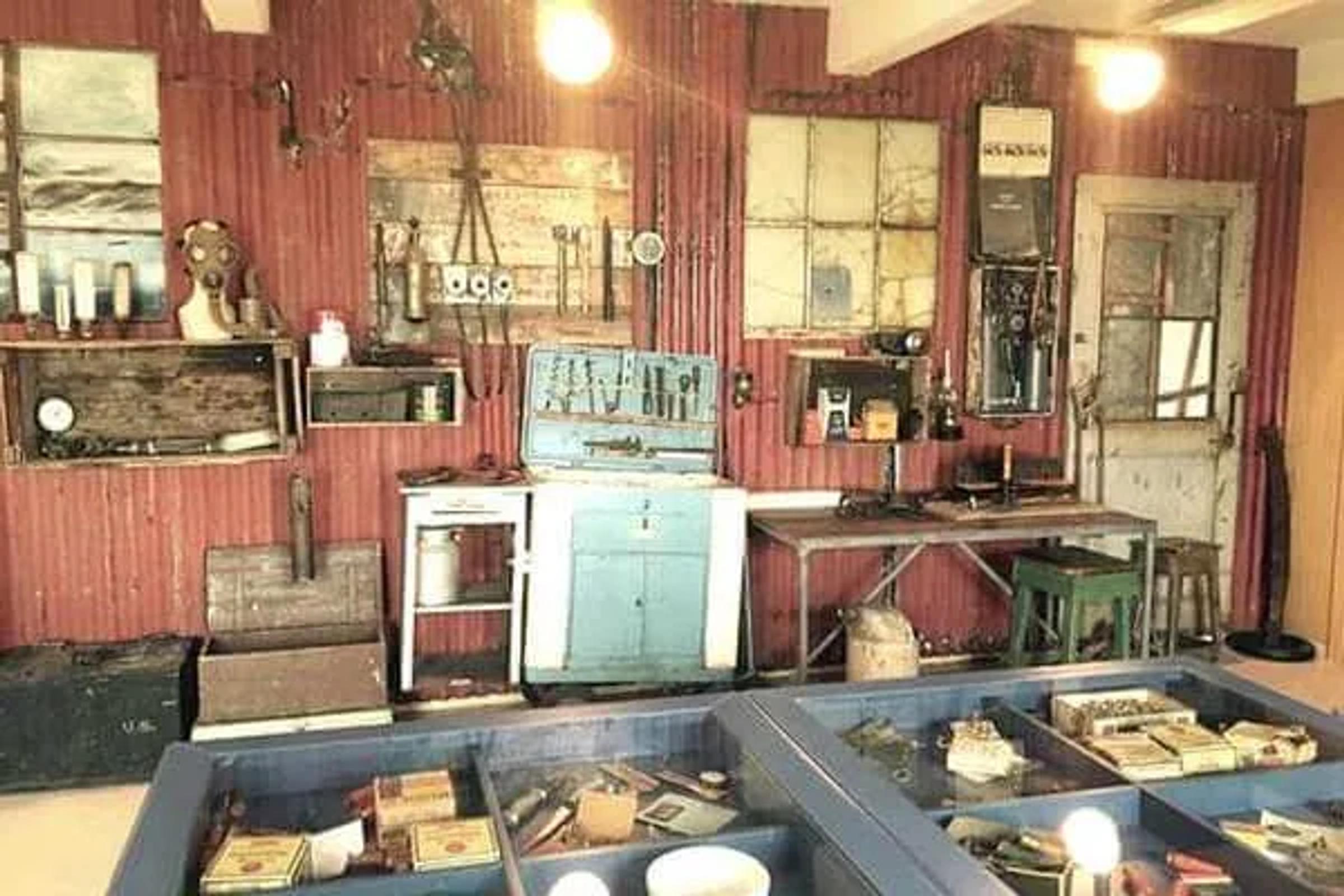
For a touch of history, go to the War and Peace Museum on Hvalfjörður fjord’s north shore. The main exhibition focuses mainly on the World War II era, and the role Iceland played in the war. No battles were fought on the island, but it became a strategic base for the allies. In fact, there are defensive posts along the coast in this region. The collection has great objects and artifacts from that time, and how this countryside transformed during that critical time. The museum has a café called The White Falcon that serves drinks and light meals. The museum is closed on Mondays and Tuesdays.
Hvammsvik Hot Springs
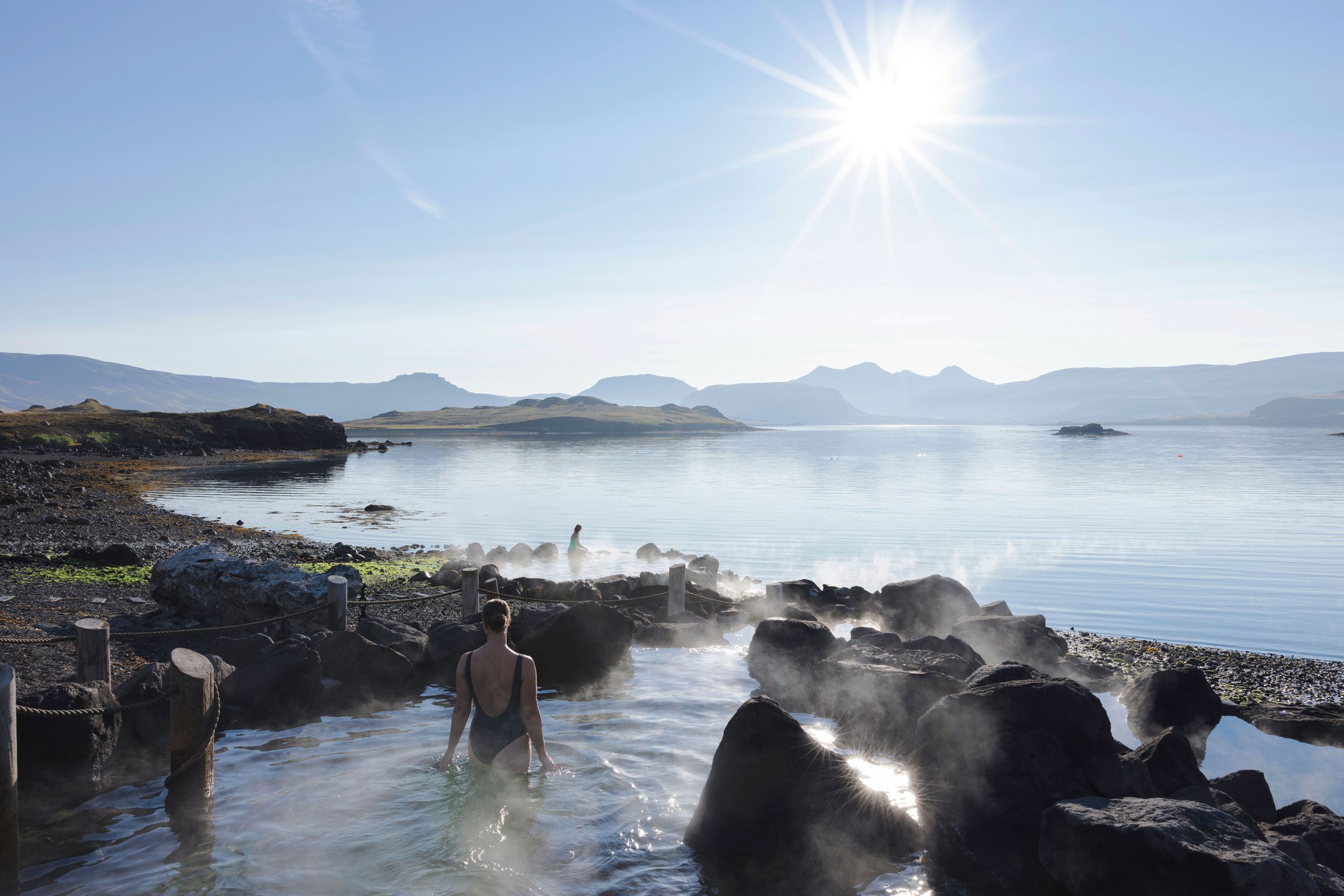
Located on the southern shore of the Hvalfjörður fjord, Hvammsvik is a geothermal spa fed by natural hot springs. It’s a great site that combines a relaxing experience in a beautiful setting. In opposition to other spas in Iceland, it doesn’t feel artificial. Its design, rustic yet modern, blends perfectly with the environment. There are eight different natural pools of different temperatures, so you can look for the ones you find more comfortable. They also have a great restaurant, called Stormur Bistro, focused on local recipes. Their star dish is the seafood soup.
Fossarétt
Waterfalls are one of the main attractions in Iceland. And, luckily, there are a few not far from Akranes. Well, there are loads of them all over the island, so you’ll always be close to one. Fossarétt is near Hvammsvik Hot Springs, where a small river falls in different tiers before flowing into the fjord. It’s not big, the highest fall is barely 6 meters (short of 20 feet), but it is very charming. The setting is unique and is one of the favorite waterfalls for the locals. Not many tourists make their way to this place, so you’ll likely have a calm visit without groups of people. If you’re visiting Akranes, it’s not far. You can also stop on your way from Reykjavik to Akranes if you choose the scenic route around the fjord instead of the tunnel.
Glymur
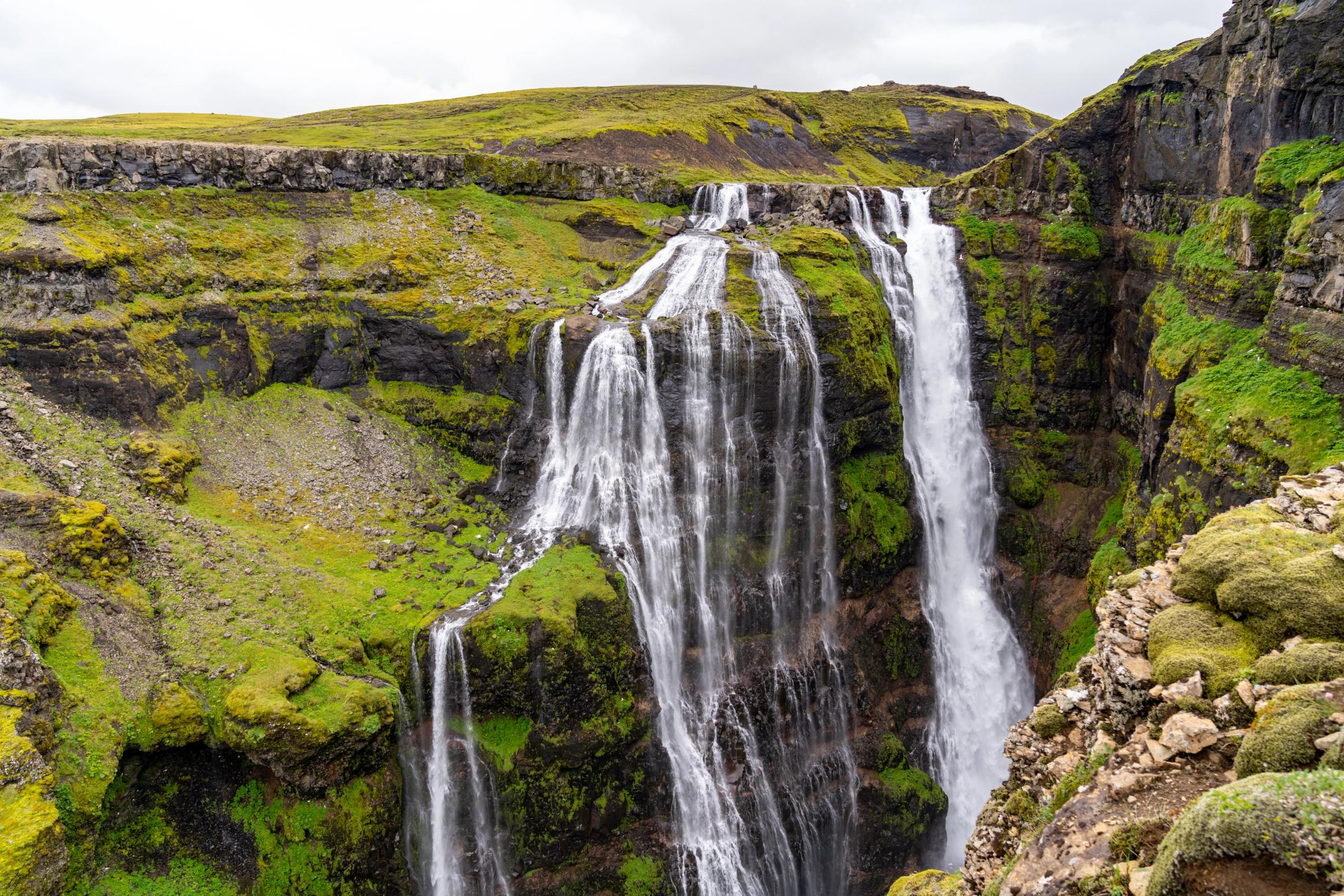
A few miles north of Fossarétt on Route 47, we get to the completely opposite idea of a waterfall. Glymur is Iceland's second-tallest waterfall, plunging 198 meters (650 feet) over a basalt wall. There’s a smaller road going right from Route 47 that snakes through Botnsdalur valley up to a parking area. From there, there’s a fantastic trail that goes to the waterfall. Once you get there, you’ll be surprised by an imposing sight, as the size of Glymur is difficult to explain with words. It’s approximately one hour each way.
Þrándarstaðir Waterfalls
Not enough waterfalls yet? Well, between those two, there’s another one. Not very well known except to locals, Þrándarstaðir is a series of waterfalls, one after the other, along a glacial river. This means its flow relies a lot on meltwater, so late spring or early summer are the best moments to see them.
Staupasteinn
Also overlooking the Hvalfjörður fjord, this unique-looking rock has become a popular attraction. Some say it resembles a goblet, with a thin base and a much wider upper part, measuring 3 meters tall (10 feet). There’s a legend in this region that says that it’s an elf with long hair and a long beard who loves playing with children. If you go there, be respectful and don’t climb the rock.
The Weather in Akranes
When planning a trip to Iceland, the weather is a huge factor to consider. This country has a peculiar climate. Akranes’ location by the coast makes it less cold than the center or north of the island, but it is more exposed to wind and rain. Here’s a breakdown, season by season.
Summer (June to August)
The weather is mostly fair, but not completely stable. The average temperature is usually at 10–15°C (50–59°F), with a mix of sun and clouds, with occasional and sudden showers. The days are really long, with 20 hours of natural light by the end of June. It’s peak season, so campsites and other accommodation may fill fast, so book yours in advance.
Autumn (September and October)
The temperature cools down gradually, moving between 5–10°C (41–50°F). The days also shorten by the week, so you’ll need to adjust your plans to maximize the hours with natural light. The fields and forests change colors, creating a different look, very appealing. Rain and wind pick up, and can be strong at certain moments, making gravel roads slippery and difficult to navigate. The first days of snow can arrive by mid-October. It’s the season with the fewest tourists.
Winter (November to March)
Winters are long and cold in Iceland, and traveling here in this season can be challenging, but it also comes with some advantages. The temperature moves around the freezing point, moving between -5 and 3°C (23–37°F). Everything is covered in snow, and many roads, especially secondary ones, close for the season. On the bright side, it’s the season when the Northern Lights happen, so the chances to see them if the night is clear are high.
Spring (April and May)
The fields start to wake up after the winter slumber. The snow recedes, giving way to fields full of flowers and green meadows. The temperature stays at 2–10°C (36–50°F), with increasingly longer days. There can still be some lingering snow, but the meltwater makes waterfalls and rivers look at their best. It’s a rainy season.
What to Pack to Visit Akranes
Preparing your bags to travel to Iceland requires careful planning. As the weather is so important, it’s key to come prepared for all events.
Waterproof jacket and pants: These will keep you dry in the rain or protect you from spray from waterfalls.
Hiking boots with a good grip: Better if they are waterproof and have ankle support.
Clothes in layers: The best way to adapt to the constantly-changing Icelandic weather is to dress in layers. The combination that works best is: thermal base layer, fleece or wool for the intermediate, and a waterproof outer layer.
If you’re coming in winter, a good waterproof coat.
Swimsuit and towel: For the thermal baths.
Hat, gloves, and buff: Even in summer, the nights can be chilly.
Reusable water bottle: Fill at springs. Icelandic water is pure and safe to drink.
Power bank: For long days out, so you won’t run out of battery. Also, not all the campsites have electricity.
A pair of comfortable shoes. For long drives or if your primary shoes get wet.
Travel Tips
The weather has a huge influence on the roads. Check their status before departing to avoid surprises and setbacks.
Stock up in Akranes’ supermarkets before moving to the next destination. There are no shops or gas stations in rural areas.
No wild camping: Stick to sites to respect nature and laws. If you do not, you can face high fines.
Download offline maps or get a paper one. Don’t rely on online maps, as cell phone signal can be low to nonexistent in certain areas.
If you’re coming in summer, book accommodation or attractions (such as Hvammsvik) well in advance.
Headlights on at all times. It’s mandatory in Iceland.
Conclusion
Nature is usually the main attraction for people visiting Iceland. It’s normal; the whole country is a collection of amazing features created by glaciers, volcanoes, and geothermal activity. There are also a good number of cities and towns that serve as a great link between the national culture and the things you want to see in the wild. Akranes definitely fits into this category. Come to discover it, you won’t be disappointed.
Frequently Asked Questions About Akranes
Most travelers need half a day to one full day to see the main attractions, including the lighthouses, town center, and a nearby hike or hot spring.
Yes. Akranes is only about 40–45 minutes from Reykjavik, making it an easy and rewarding day trip with coastal views, cultural sites, and thermal baths.
Akranes is generally slightly cheaper than Reykjavik for food, accommodation, and activities, while still offering good services and amenities.
Yes. Akranes is accessible all year, and roads are well maintained, though winter conditions may occasionally cause delays during storms.