Most of the travelers who come to Iceland are attracted mainly by its astonishing natural monuments. Others, while not losing sight of the natural side, are also searching to connect with the rich and intense culture that fills every corner of the island. Some go even further and try to follow the places where volcanoes have recently erupted, as Iceland is one of the most active locations in the world in this regard.
And what if we told you that there’s a place that combines those three elements? Welcome to Grindavík, a quiet fishing town on Iceland's southwestern coast with a deep maritime heritage with dramatic volcanic landscapes. Here, volcanic activity and national culture are closely intertwined. And, at the same time, it is close to some of the best natural elements of this part of the country. And what about Icelandic geothermal spas? Well, the most famous of them all is just a few minutes away from Grindavík.
For campervan travelers, this town offers easy access to campsites and scenic drives, allowing you to park near cooled-down lava flows and wake up to ocean views.
Key Takeaways
Grindavík is a fishing town located on Iceland’s southwestern coast.
It’s very close to the Blue Lagoon, the most famous geothermal spa in the country.
The area is volcanically active, with the last eruption in July 2025.
What is Grindavík?
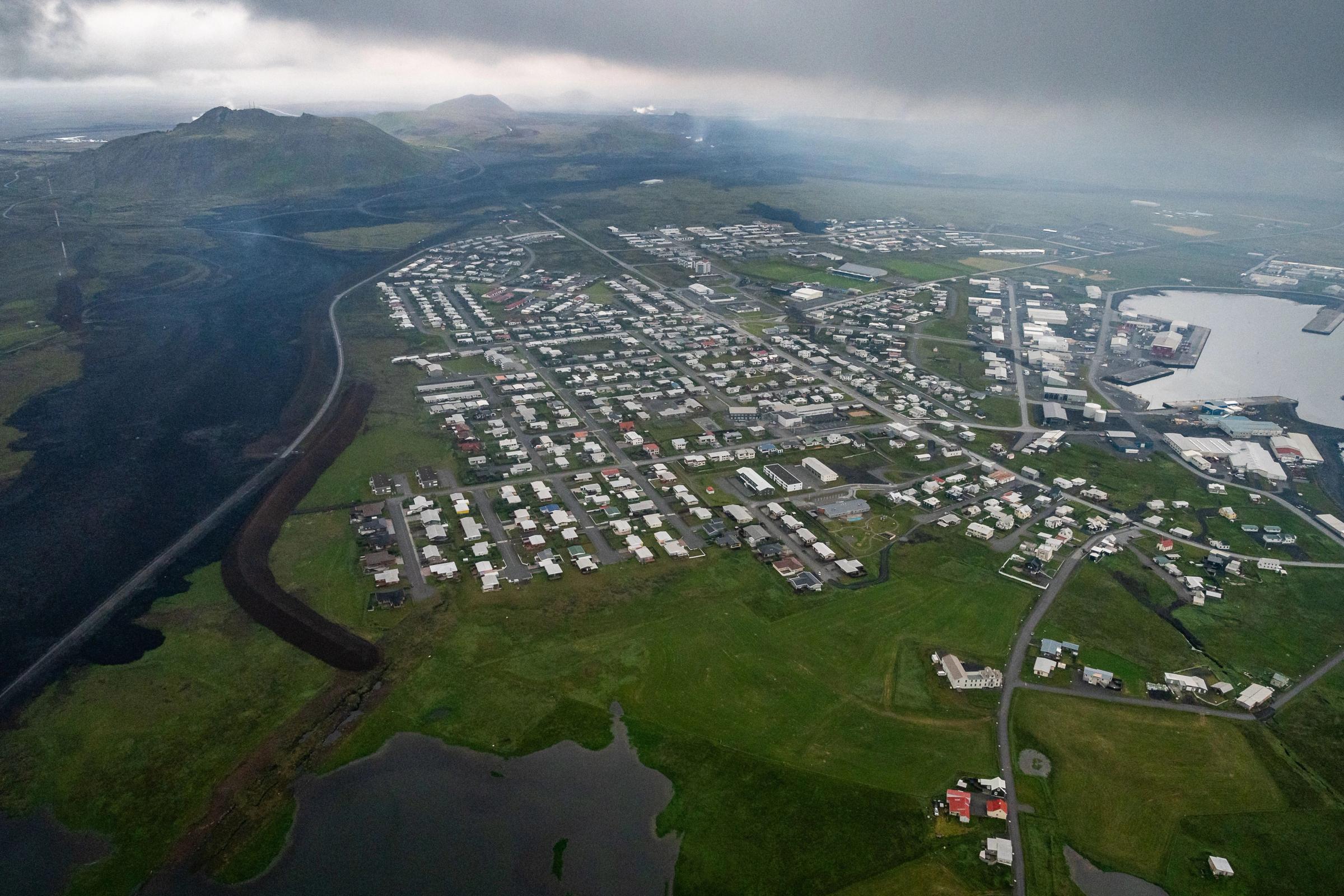
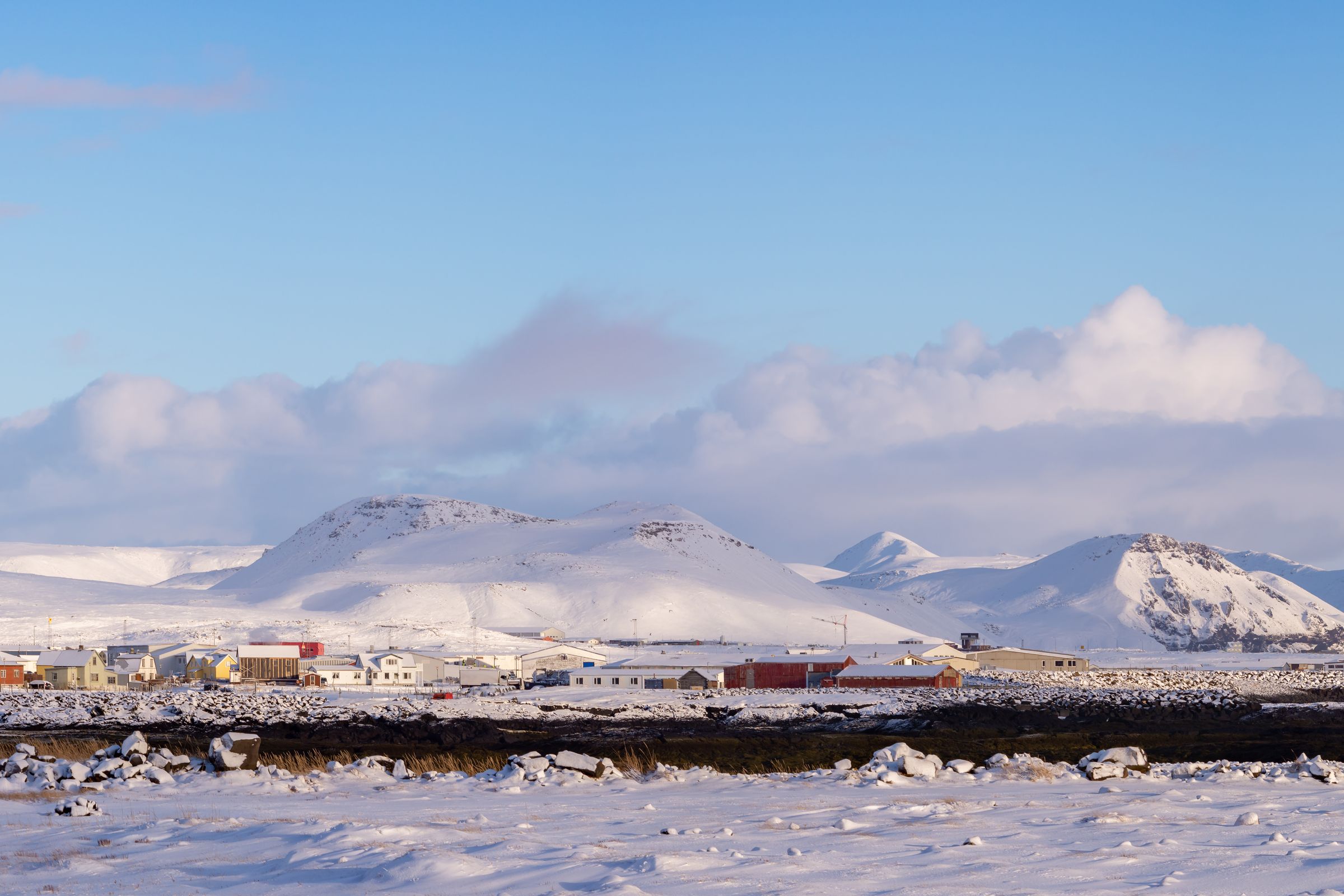
Grindavík is a fishing town on Iceland’s Southern Peninsula with about 3,600 residents, known for its natural harbor surrounded by lava fields and cliffs. Established in the 16th century, its name comes from Old Norse, meaning “gate bay,” reflecting its role as a safe passage for sailors. The town features simple, colorful architecture set against a stark volcanic landscape.
Grindavík is a fishing town home to about 3,600 residents who rely mostly on the sea for their livelihood. Many towns and villages along Iceland’s coast showcase the deep connection this nation has with the sea. And Grindavík is one of the most important ones on the Southern Peninsula, also known as the Reykjanes Peninsula. This region, known as Suðurnes in Icelandic, is one of the eight regions that comprise the country.
The town has a natural harbor, one of the few in Iceland, surrounded by lava fields and cliffs. In Iceland, the coastline is quite rugged, with cliffs for most of it. However, Grindavík lies in a flat area. The architecture is simple, not very different from other parts of Iceland, but many buildings are painted in bright colors against the stark black rock backdrop.
Established in the 16th century, the city’s name derives from Old Norse. In that language, “grind” means gate, while “vík” is the Icelandic word for bay. So, the name of the city could be translated as “gate bay”. It is believed that the origin of the name comes from the town’s location. It was used by many sailors as a safe passage and shelter while navigating the treacherous waters of the North Atlantic Ocean.
History of Grindavík
Grindavík was established in the early 16th century as a fishing hub, with its natural harbor providing shelter from Atlantic storms. The community has endured volcanic eruptions, harsh weather, and later thrived with modern fishing technology, becoming a key export center in the 20th century. Today, tourism—driven by the nearby Blue Lagoon—complements fishing, with museums, cultural offerings, and geothermal energy shaping modern life.
Grindavík’s roots trace back to the early 16th century, when it emerged as an important fishing hub on Iceland's southern coast. There had been settlements in the area long before, but this was the time when the city was established. Early inhabitants built their lives around the sea, processing cod, herring, and other catches. Initially, they worked in basic and rustic buildings that, in recent times, have evolved into modern processing plants.
The town's natural harbor has provided protection from the Atlantic storms for centuries. Although the conditions in the part of the Atlantic Ocean are usually harsh, the vessels have a safe port to return to. Even passing sailors have looked for shelter here when the conditions were not optimal in the open sea. However, the ocean is not the only element the locals have had to deal with. Over the centuries, residents have learned to live amidst volcanic eruptions and extreme weather conditions. This community has thrived through resilience and adaptation.
In the 20th century, fishing boomed with better technology, and Grindavík became an important fishing export center. Fishing is not the only industry here, though. In recent years, tourism has experienced significant growth, primarily due to the town’s proximity to the Blue Lagoon. This has also led to a boost in the local cultural and food scene. Today, the town balances its maritime past with attractions for visitors, preserving traditions in museums while embracing geothermal energy for sustainable living.
Where's Grindavík and How to Get There
Grindavík is located on the Reykjanes Peninsula in southwest Iceland, 50 km (31 miles) from Reykjavík and 25 km (15.5 miles) from Keflavík International Airport. It’s easily accessible by car, about 45 minutes from Reykjavík via Routes 41 and 43, or 20 minutes from Keflavík. You can also reach it by bus, taxi, or shuttle, though renting a campervan offers more flexibility.
As we have already mentioned, Grindavík is on the Reykjanes Peninsula, the southwestern tip of Iceland. The town is 50 kilometers (31 miles) southwest of Reykjavik and 25 kilometers (15.5 miles) from Keflavik International Airport. It has a very convenient location, as it’s not far from everything there’s to see in the Suðurnes region. For those arriving by plane, the most common way to get to the country, it could be a great first or last stop in a road trip through Iceland.
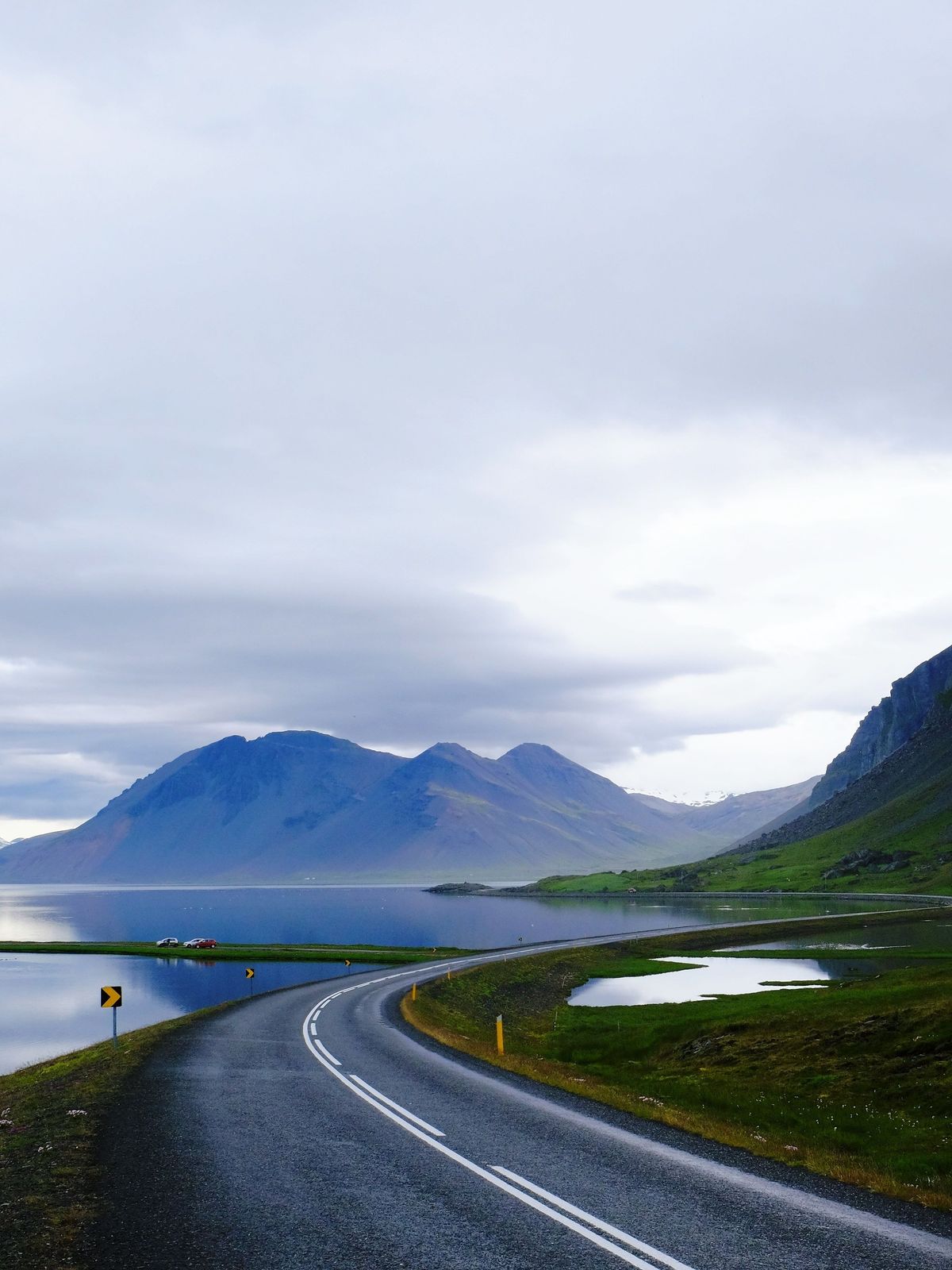
From Reykjavík, it’s a 45-minute drive. From the capital, take Route 41, the road that connects the city and Keflavík Airport. Before reaching the town of Reykjanesbær, take the exit for Route 43, which gets straight to Grindavík. The drive itself is quite beautiful, going through amazing lava fields.
For those arriving at Keflavík International Airport, Grindavík is even closer—a mere 20-minute drive along Route 41 and Route 43. Taxis and shuttles are available, but they're usually more expensive. If you prefer public transportation, buses connect Grindavík to both Reykjavík and Keflavík, though campervans let you set your own pace and camp nearby.
Rent A Campervan In Iceland
Discover every corner of the island with complete freedom
Grindavík offers authentic Icelandic experiences beyond the Blue Lagoon. You can relax at the local swimming pool with hot tubs (38–42°C) for about 1,130 ISK ($9–$10), visit the Icelandic Saltfish Museum to learn about the town’s fishing heritage, and walk 1.5 km to the Hópsnes Lighthouse through lava fields and shipwrecks. Outdoor lovers can hike Þorbjörn Mountain for panoramic views or play 18 holes at the nearby Húsatóftavöllur golf course overlooking the coast.
works well as a base to explore beyond the usual tourist spots. Most people come for the Blue Lagoon nearby, but staying longer lets you find real Icelandic experiences.
Grindavík Swimming Pool
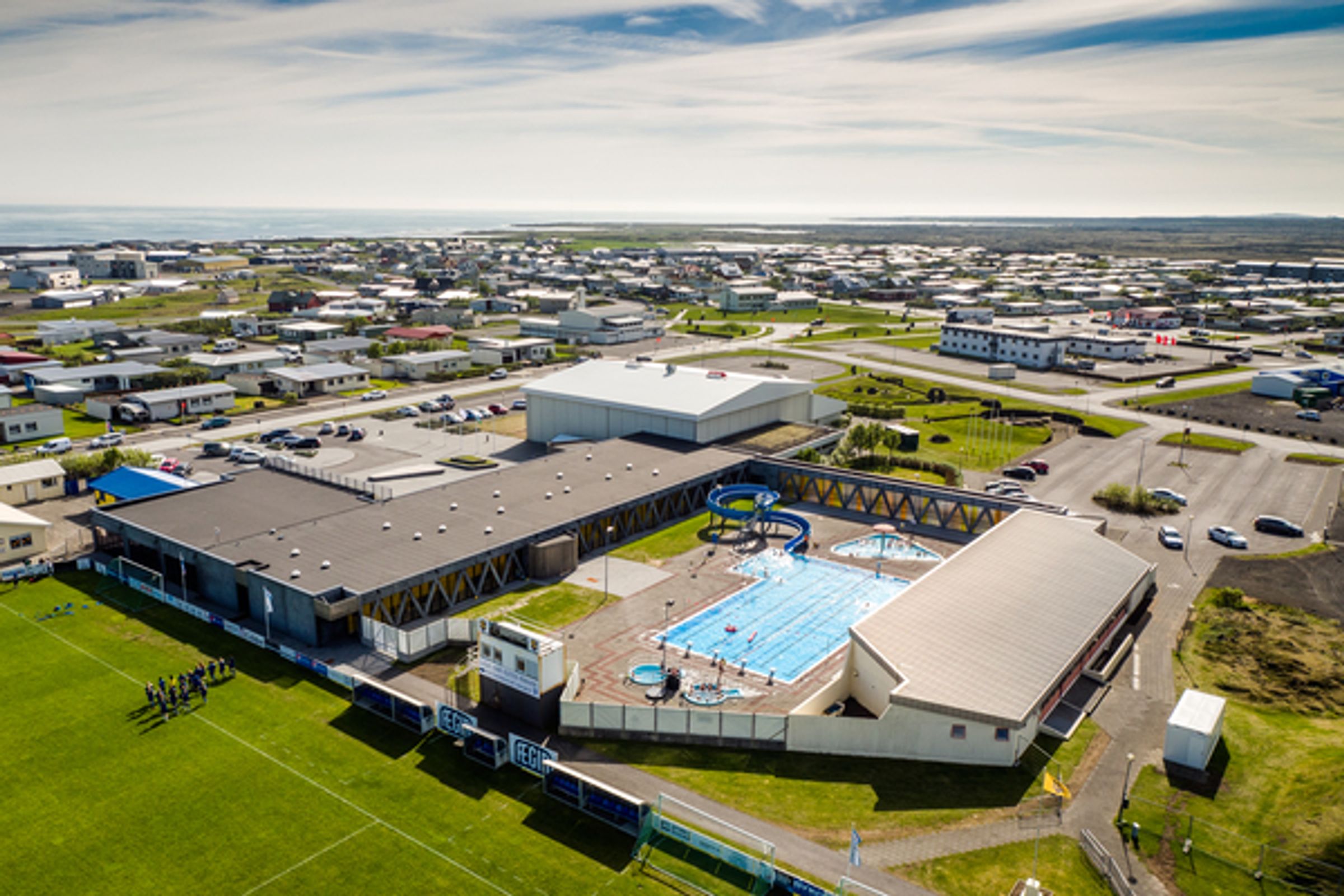
Visit Grindavík's local swimming pool instead of dealing with the crowds and high prices at the Blue Lagoon. This warm, hot-spring pool offers the same mineral water at a significantly lower cost, featuring a 25-meter outdoor pool, hot tubs ranging from 38 °C to 42°C, a steam bath, and a kids' splash area. You'll swim alongside locals who come here to relax and talk with friends.
It costs approximately 1,130 ISK ($9–$10) for adults, with reduced rates for children and senior citizens. The pool is open weekdays from 7:00 AM to 8:00 PM and weekends from 10:00 AM to 5:00 PM, but hours may change with the seasons. In Iceland, you need to shower without a swimsuit before swimming – that's just how pools work here. Bring your own towel to save money on rentals.
Icelandic Saltfish Museum
Visit the Saltfish Museum to learn how fishing built Grindavík. This small museum shows how salt cod (sometimes called "Iceland's gold") helped grow the country's economy and shaped its culture. You'll see fishing tools, old photos, and a display wall featuring cod, illustrating how salt helps keep fish fresh. A short film explains what life was like for fishermen at sea.
You'll find the museum at Austurvegur 2a in the town center, where it also serves as the local tourist office. Staff provide maps and suggest places to visit. It's usually open every day from 10:00 AM to 5:00 PM, and you'll spend between 30 and 60 minutes exploring.
The museum is currently temporarily closed. Keep an eye open in case it reopens.
Hópsnes Lighthouse
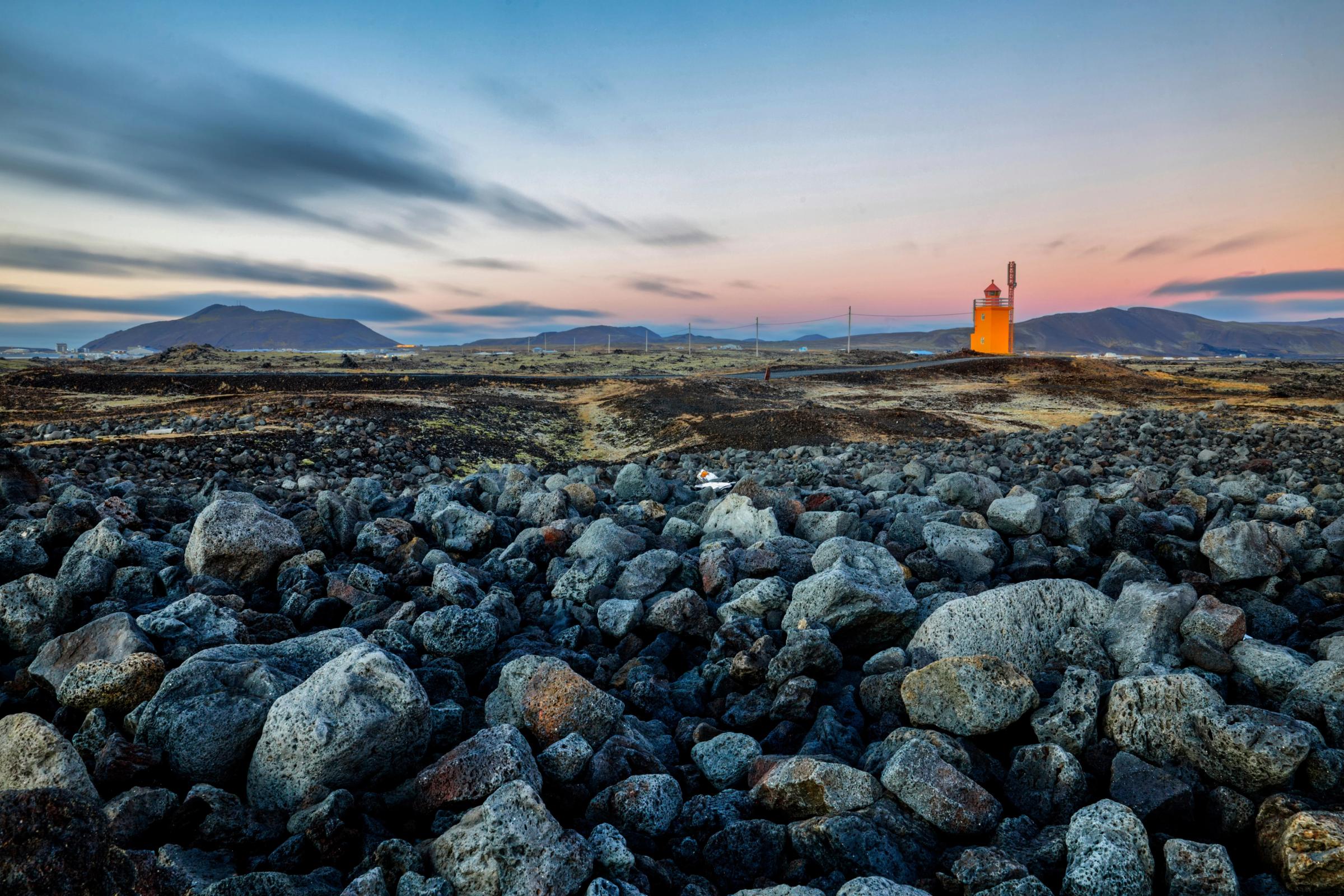
Take a quiet walk to the red-and-white Hópsnes Lighthouse on Grindavík's southeast coast. The 1.5 km path from town crosses black lava fields with old shipwrecks scattered around. These are actually remains from intense Atlantic storms throughout history. The lighthouse is small and not open to the public inside, but the surrounding area is great for bird-watching, especially from May through August when puffins and fulmars may be present.
This windy spot offers great sunset views, particularly in summer when days are longer. The walk is easy for most people, though the path can get slippery in the rain. Bring water and food, as there are no shops or cafes nearby. You can visit for free, and there's parking if you want to drive from town instead of walking.
Þorbjörn Mountain
For good views, climb Þorbjörn Mountain, the 243-meter hill north of Grindavík. The hike is pretty doable and rewards you with wide views of lava fields, the Blue Lagoon, and sometimes Reykjavík in the distance on clear days. The path begins near the Grindavík sports center and takes approximately 30-60 minutes to reach the top, with a 3-4 km round-trip on a marked trail that can be challenging in wet weather.
The mountain is part of an active volcanic area, with cracks in the ground and warm spots along the path that show Iceland's changing land. Bring binoculars for bird-watching, wear sturdy shoes, and pack a wind jacket, as the top can be cold and windy. Check safety notices before you go, as paths may close due to volcanic activity in the area.
Golfklúbbur Grindavíkur
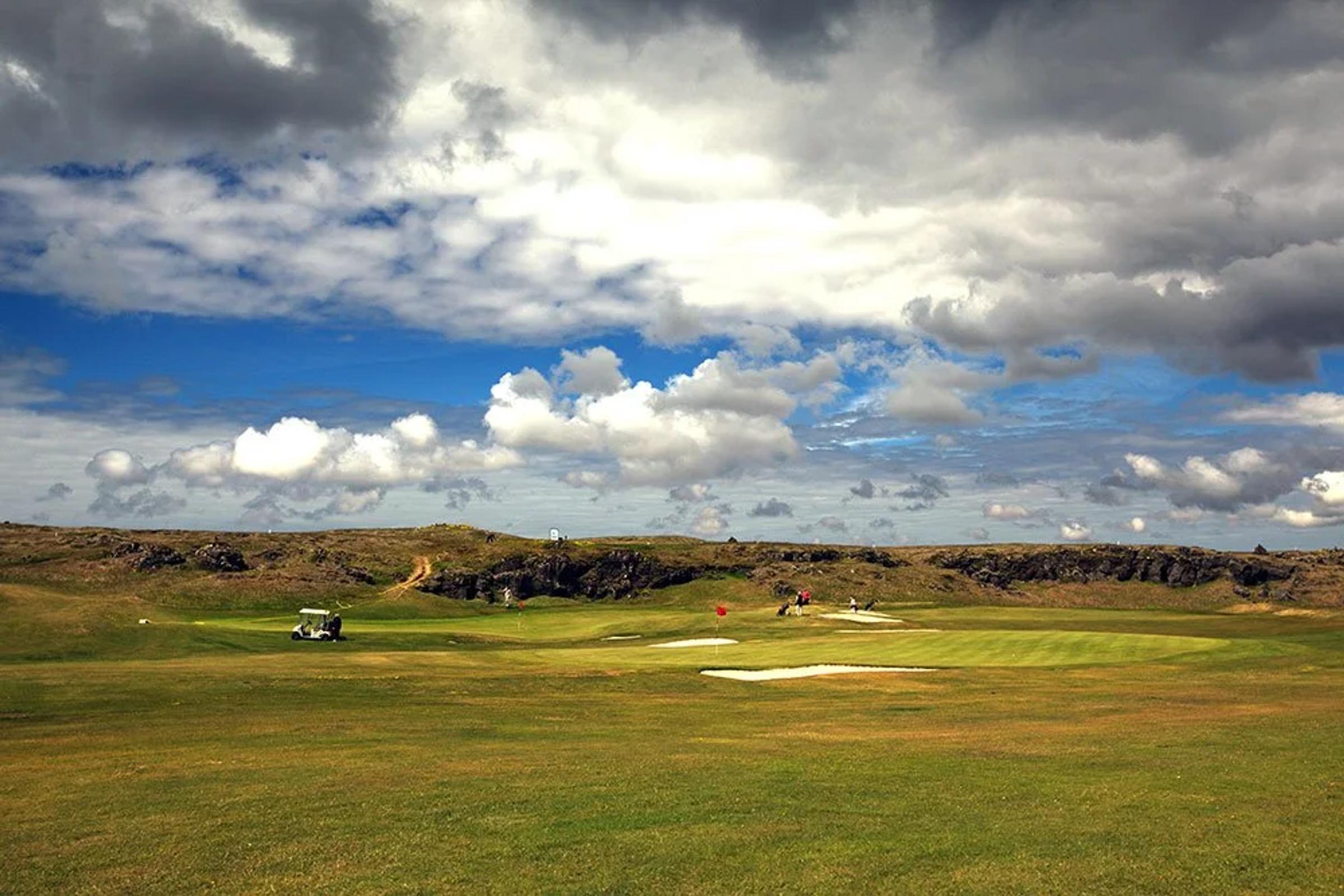
If you like golf, play a round at Húsatóftavöllur, Grindavík's 18-hole course. Cut in half by the main road, this par-70 course gives you something different, with holes that wind through lava fields and along the rocky coast. The first 12 holes are north of the road, while holes 13-17 run along the coast before hole 18 brings you back across the road to the clubhouse.
It costs around 100$ to play the whole 18 holes. The course features a driving range, putting green, and a restaurant in the clubhouse for after your game. Since it's just 7 km from the Blue Lagoon, you can easily do both in one day. Book your time through their website, especially in the summer when you can play late into the evening, thanks to the long daylight hours.
What to See and Do Near Grindavík
Near Grindavík, visitors can explore geothermal sites, lava fields, and cultural attractions. Highlights include the Grindavík Maritime and Heritage Museum, Reykjanes Geopark with craters and lava caves, the famous Blue Lagoon spa, and the Bridge Between Continents. Other must-sees are Gunnuhver Hot Springs, Brimketill lava pool, Sky Lagoon near Reykjavik, and Kleifarvatn Lake with its volcanic scenery.
The Reykjanes Peninsula has a lot to see in a relatively small territory. It has geothermal sites, lava fields, and beautiful coastal trails. It would be a great idea to draw an itinerary through the region and do a road trip with your campervan.
Grindavík Maritime and Heritage Museum
This museum in Grindavík town center displays fishing tools, old boats, and photos that tell the story of the community’s connection with the sea. It's a quiet spot to learn about local culture before heading to natural sites.
Reykjanes Geopark
The geopark covers most of the peninsula, so technically, Grindavík is part of the park. The area around the town is full of lava caves, craters, and fissures. One of the most striking features are the Eldvopr craters, all line up in the middle of a mossy field. The whole area is full of steaming vents and fumaroles, and colorful mineral deposits. It’s an active geological area.
Blue Lagoon
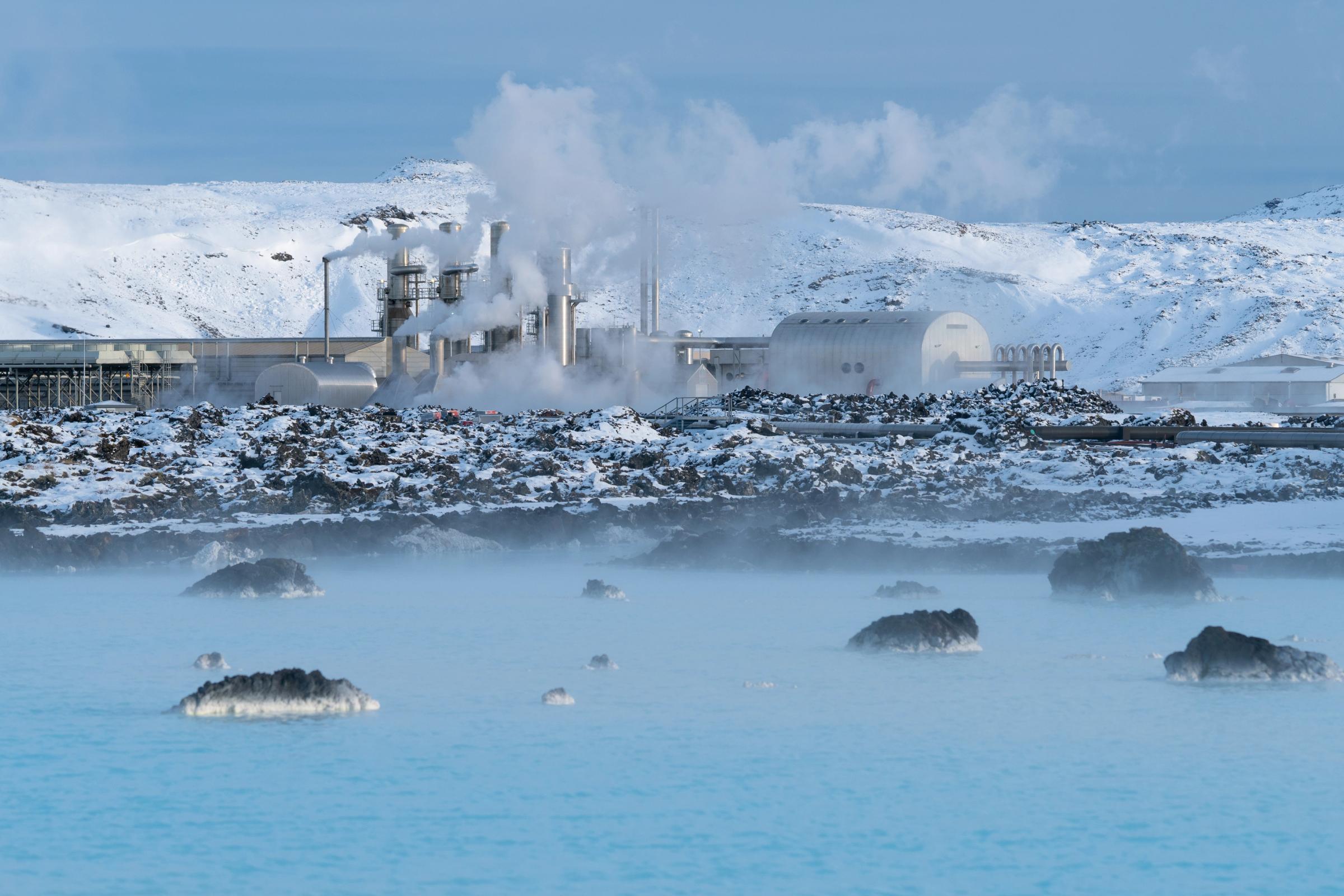
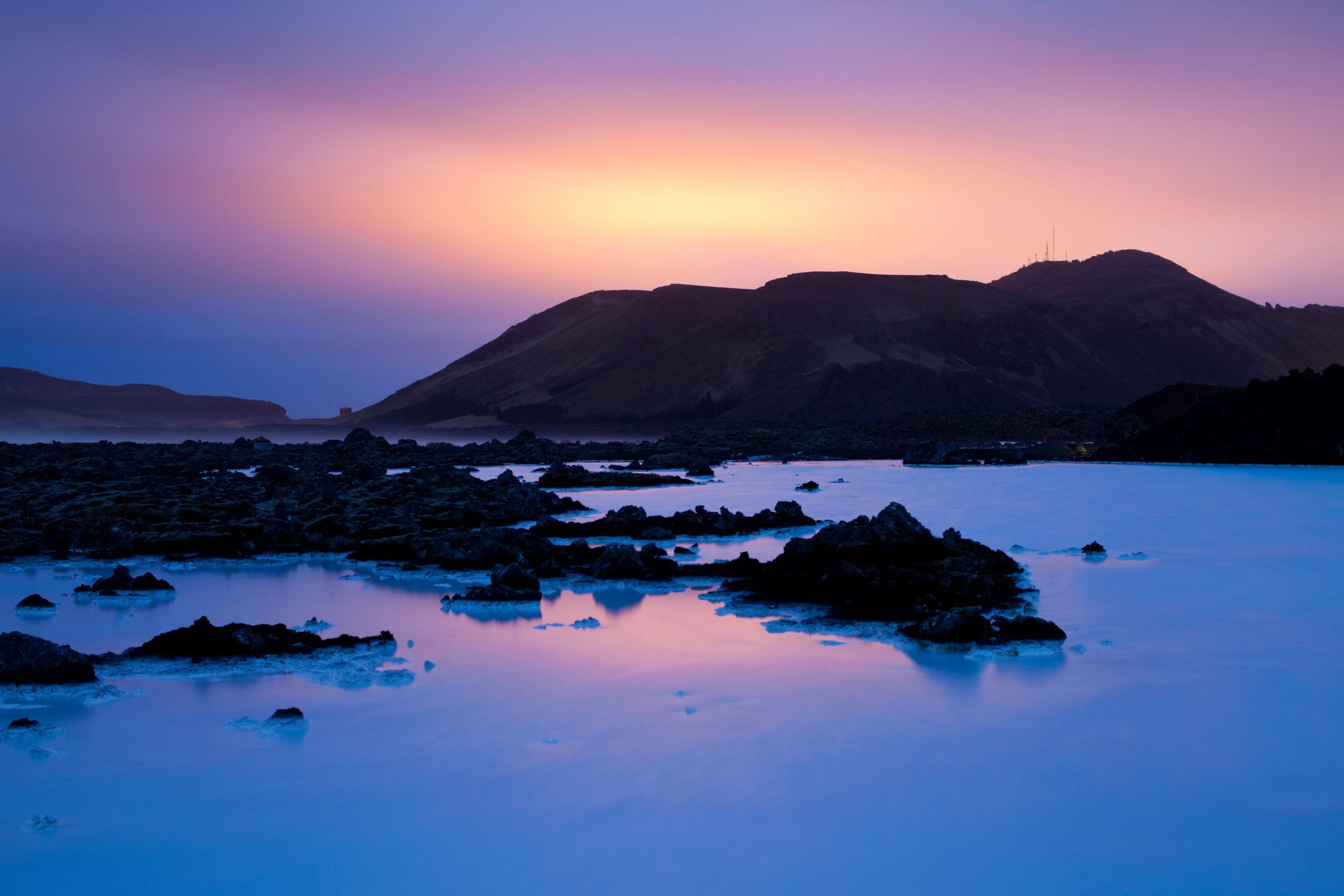
Just 5 kilometers (3 miles) north of Grindavík, you can find the most famous geothermal spa in all Iceland. The Blue Lagoon gets its name from its milky-blue waters, naturally heated by geothermal activity. It’s in the middle of a dark and beautiful lava field, so the views from inside the pools are just astonishing. Here, you can soak in the warm pools even if the temperature outside is cold. The Blue Lagoon also offers luxurious spa treatments and a restaurant where you can enjoy Icelandic cuisine. It’s highly recommended to book in advance, especially during peak season, as this iconic place is one of the most visited places by tourists in the entire country.
Relax While Looking At The Stars In The Blue Lagoon
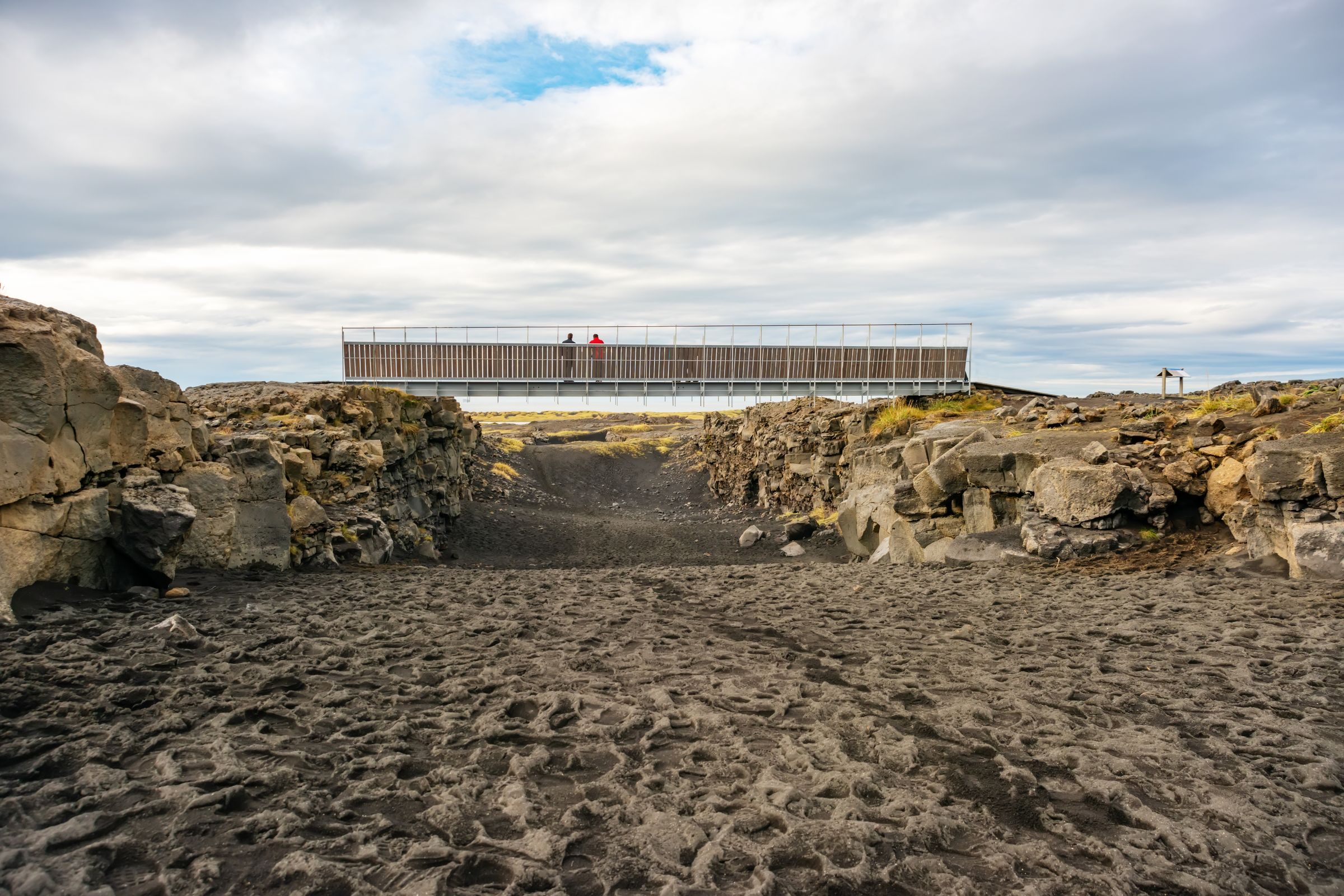
Near the southwesternmost point of the Reykjanes Peninsula, there’s a bridge that symbolically and literally connects North America and Europe. The Mid-Atlantic Ridge, which separates the North American and Eurasian tectonic plates, runs through Iceland, and this is where it extends into the country. Here, you can go from one continent to another in just seconds.
Gunnuhver Hot Springs
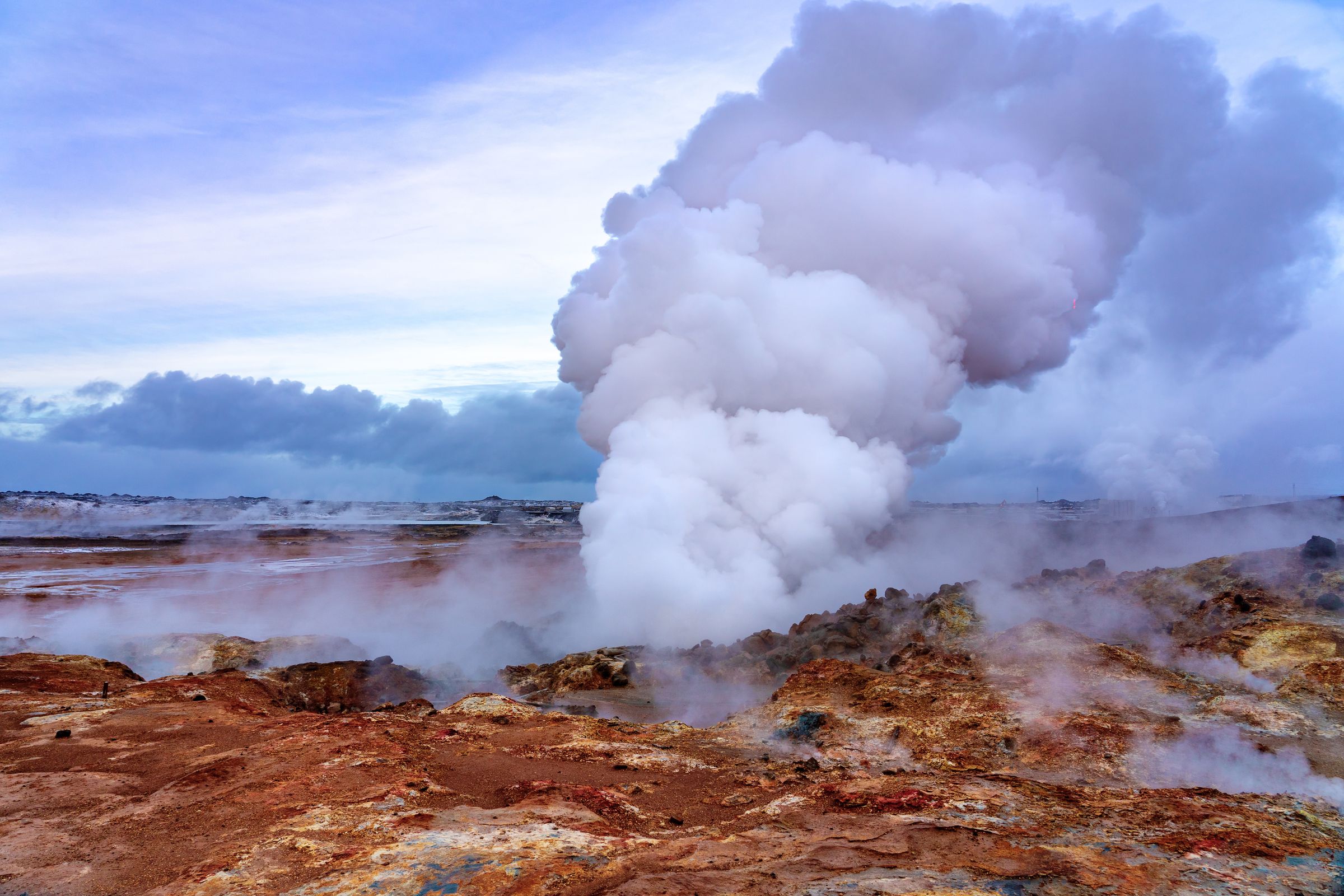
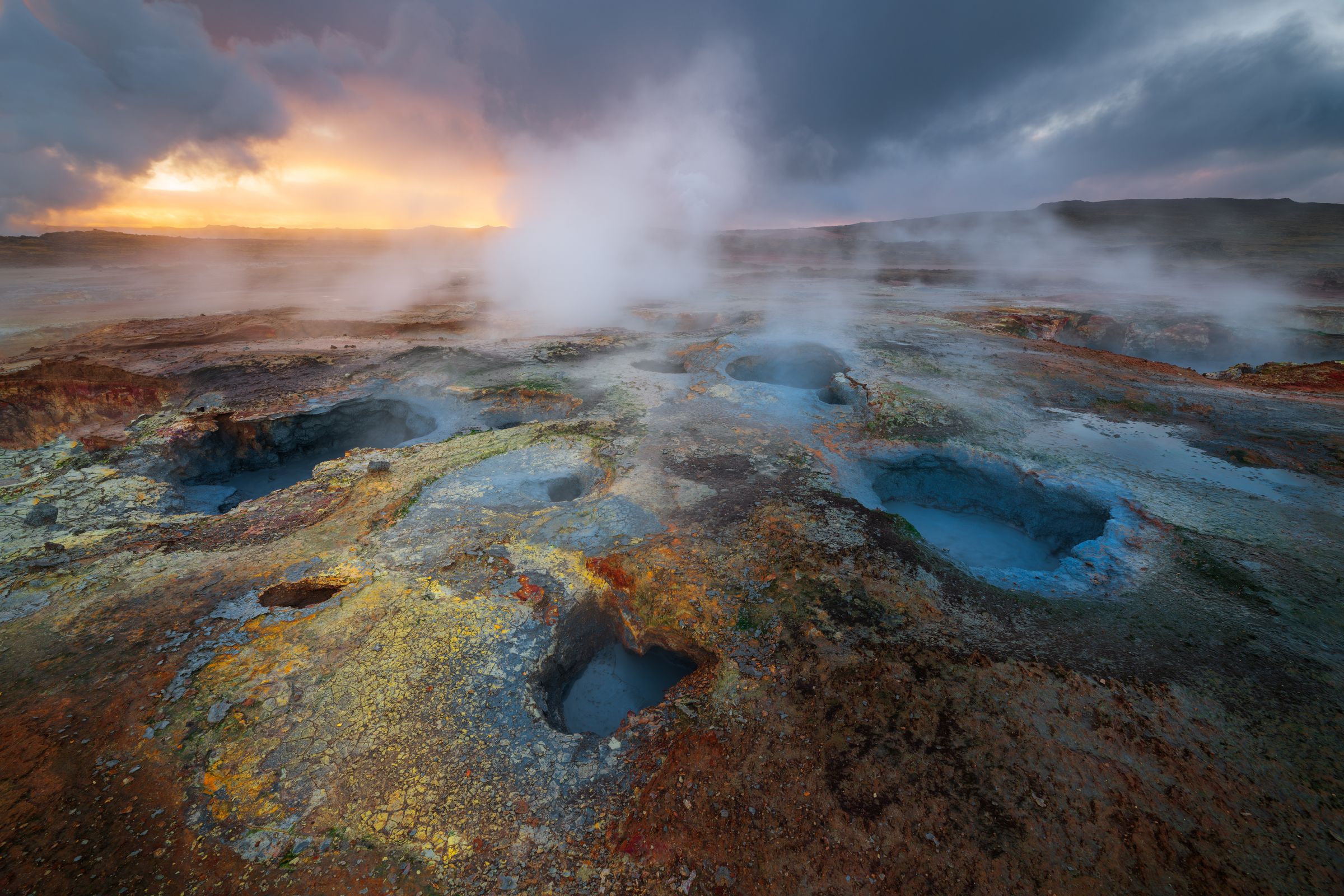
Gunnuhver is one of the most active geothermal areas in the region. Here you will find bubbling mud pools and steam vents. There are several boardwalks to explore this area, as in some parts the floors are hot and unsafe for walking. There’s a local legend that tells the story of Gunna, a ghost said to live here.
Brimketill Lava Rock Pool
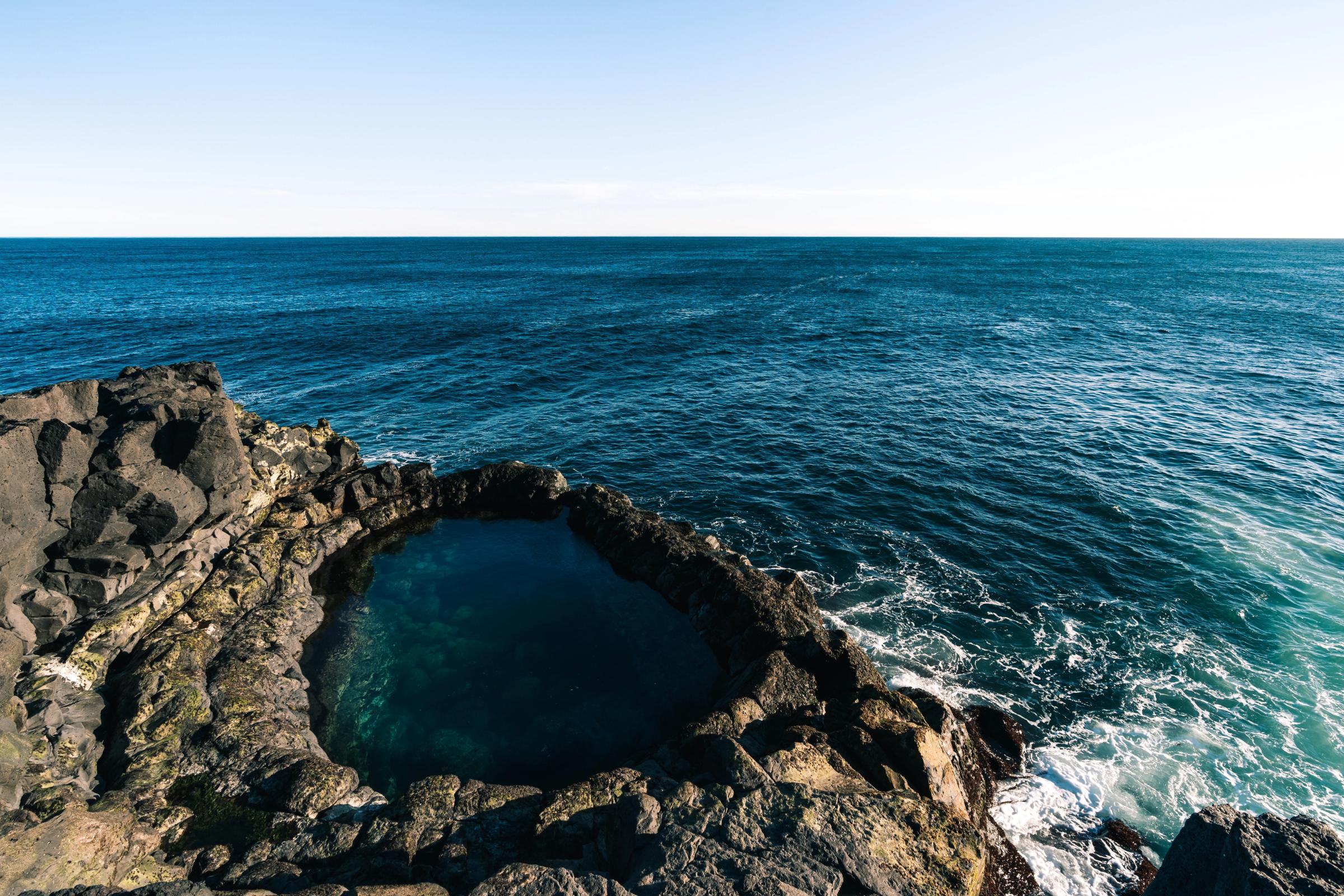
On the coast near Grindavík, the ocean waves have carved this natural pool from lava rock. Brimketill is surrounded by cliffs, and the views of the ocean from there are great. It’s not allowed to swim there, as the power of the Atlantic is very dangerous. It’s, on the other hand, a great spot for photos.
Sky Lagoon
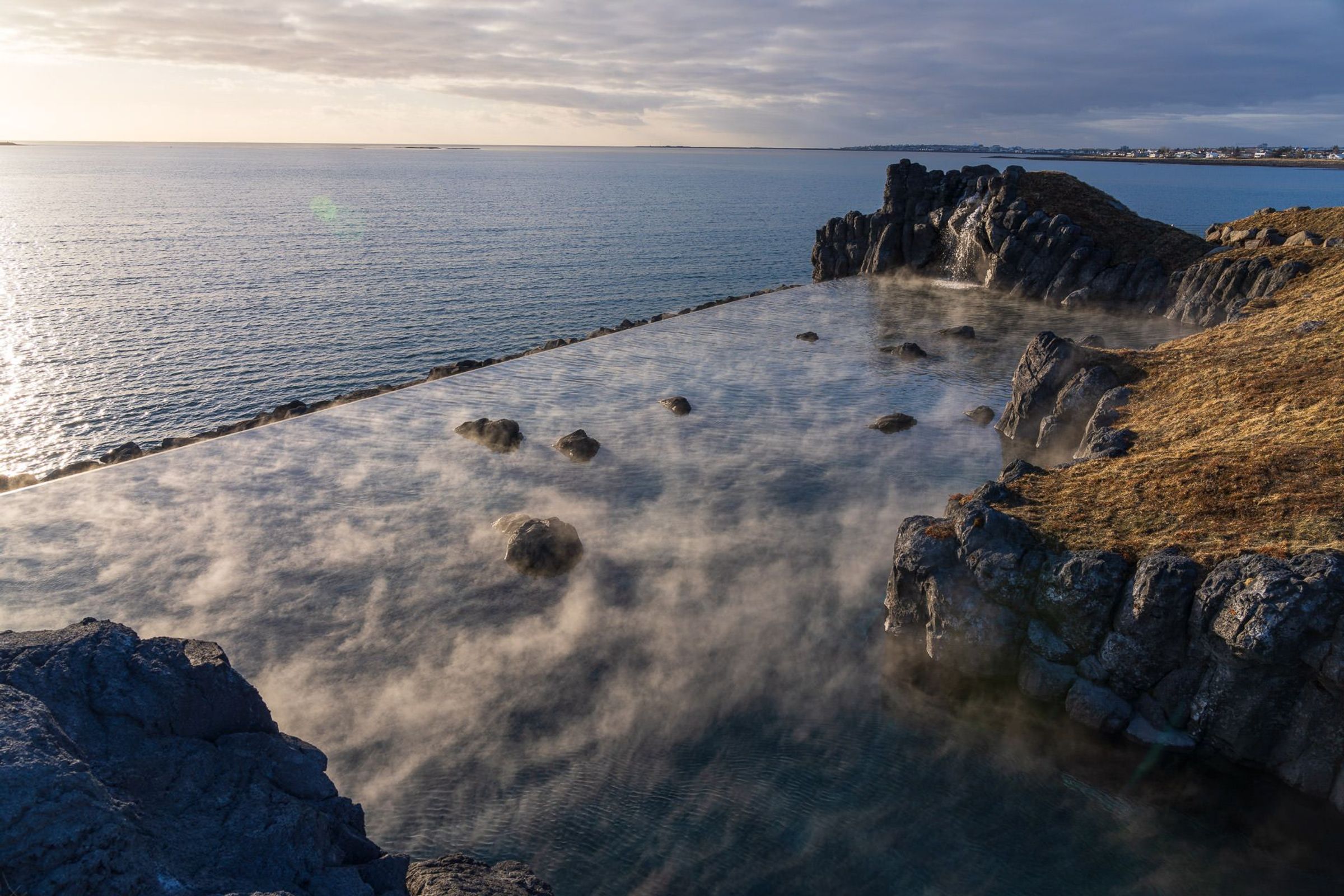
Just south of Reykjavik, we can find one of the latest additions to the geothermal scene in Iceland. The Sky Lagoon is a modern spa overlooking the ocean. It has an infinity pool that seems to blend with the sea. The spa is well known for the Skjól ritual, an eight-step experience that goes deeper into the bathing culture.
Kleifarvatn Lake
East of Grindavík, this deep lake is surrounded by volcanic hills. The level of its waters fluctuates with the earthquakes. There are black sand beaches on the shores. It’s a great place to have a picnic in the middle of a landscape that looks like the moon.
The 2023-2025 Eruptions
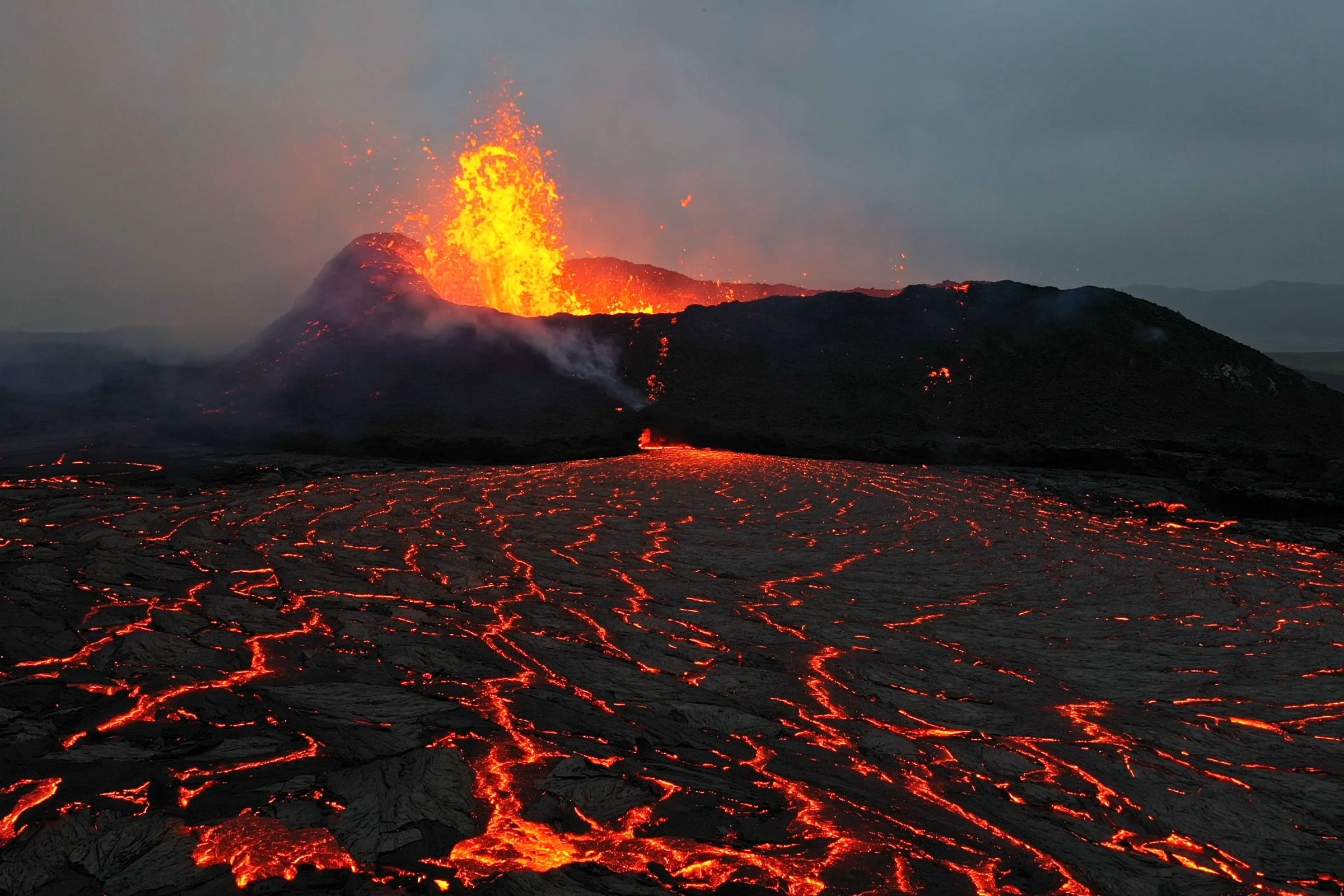
Since late 2023, Grindavík has faced multiple eruptions from the Svartsengi volcanic system after over 20,000 earthquakes and ground fractures forced evacuations. Major eruptions in December 2023, January 2024, and throughout 2024–2025 damaged homes, pipelines, and roads, with some events threatening the Blue Lagoon. Despite costly repairs, no major losses occurred, as authorities monitor activity closely, and the eruptions have drawn global scientific and tourist interest.
The Reykjanes Peninsula, including Grindavík, has seen intense volcanic activity in the last couple of years. Well, it always has, but since late 2023, Grindavík has been in the spotlight worldwide because of the eruptions that have taken place, marking a new cycle after centuries of quietness.
It all started with moderate earthquakes that began in October 2023. A magma buildup was monitored about 4-5 kilometers (2.5-3 miles) deep beneath the Svartsengi volcanic system, 5 kilometers (3 miles) north of Grindavík. By November, over 20,000 tremors hit, the strongest at magnitude 5.3, forming a graben valley and causing damage to homes and roads in Grindavík. The authorities evacuated the town once the cracks widened and some infrastructure broke.
The first eruption happened on December 18, 2023, when a 3-kilometer (2-mile) fissure opened up just north of the town and spewed lava for three days. A second followed in January 2024, closer to town, destroying three houses despite the blocking barriers that had been placed. Another eruption followed a few days later, damaging several pipelines, which cut the water supply in some areas of the town.
Longer events in March (54 days) and May (24 days) created new lava fields, and the largest of them all happened in August. In November 2024, a new big eruption buried several roads and almost hit the Blue Lagoon. In April 2025, the fissure erupted again, but was brief and with no major damage. The last one so far occurred in July 2025 and lasted for 20 days. While the lava flow had minor consequences, there were high levels of gas emissions, some residents were evacuated, and the Blue Lagoon closed temporarily.
These events highlight two key aspects of Iceland. First, the country is constantly evolving. The forces of the Earth are pretty active and strong here, and changes can happen that would lead to significant changes in the appearance of some parts of the island. Second, the citizens have learned to live with these events. The government constantly monitors volcanic and geothermal activity, acting quickly if necessary. Although the repairs cost millions, no major losses have happened, and the country is ready to deal with these events. Also, the eruptions have drawn the attention of both scientists and tourists, highlighting Iceland's dynamic geology.
Where to Stay in Grindavík & Nearby
The Reykjanes Peninsula offers several campsites near Grindavík, ranging from basic to well-equipped. Grindavík Campsite is in town with full facilities but no reservations, while Vogar, Sandgerði, and Garðskagi camping grounds offer year-round options, some with cabins. Budget travelers can try Gata Free Camping, and Lava Hostel and Camping in Hafnarfjörður combines hostel stays with seasonal campervan pitches.
The Reykjanes Peninsula is not huge in size, but it still has several campsites where you can stay with your campervan for the night. Some are basic, some others are more complete, but there are options for all tastes. If you’re coming in the summer, try to book in advance; some fill up pretty quickly, but not all of them take reservations.
Grindavík Campsite
Distance to Grindavík: Zero, it’s just there in town.
Opening period: March to November.
Luckily, one of the best-rated camping grounds in the region is just by the town’s center, just by the harbor. It has modern facilities, including toilets, showers, electricity, Wi-fi, a washing machine and dryer, a shared kitchen, dining and BBQ area, and two playgrounds for children. They don’t accept reservations.
Vogar Campsite
Distance to Grindavík: 19 kilometers (12 miles) north.
Opening period: All year.
Located on the northern coast of the Reykjanes Peninsula, near the fishing village of Vogar, this campsite is halfway between Reykjavik and Keflavik Airport. It’s open year-round and has toilets, showers, electricity, Wi-Fi, a BBQ area, and a playground for children. Apart from pitches for campers and tents, they also have 3 cabins with two bedrooms each that can be rented.
This camping ground, which is very close to the airport, is in the town of the same name. A highly-rated campsite, it has toilets, showers, outdoor sinks, electricity, a washing machine and dryer, and Wi-Fi. They also have cabins for rent. The town’s center is really close, with services all within walking distance.
At the peninsula's tip, not far from the previous camping ground, is a basic site featuring campervan pitches between two lighthouses, with views of the Atlantic Ocean. It has toilets, cold and hot water, and electricity for campers. There are no showers, washing machines or indoor facilities.
This camping ground has no fixed fee for guests. It operates with a donation box, and the amount is discretionary. The facilities are fairly basic, featuring toilets, showers (available in winter, depending on the weather), and indoor space for preparing meals. In a country where everything is quite pricey, it can be a good option if you’re traveling on a budget.
Lava Hostel and Camping
Distance to Grindavík: 41 kilometers (25.5 miles) north.
Opening period: May to September.
This place is in Reykjavik’s metropolitan area, in the city of Hafnarfjörður. The camping and campervan area is divided into three zones: one with electricity hookups and two without. The facilities include toilets, showers, and a sink to do the dishes. You can also stay in their hostel, which offers private and shared rooms, as well as shared restrooms.
Restaurants to Eat in Grindavík
Grindavík is a small fishing town, so there aren’t many places to eat. Some restaurants that were once popular, such as Salthúsið and Hjá Höllu, have closed. The choices that remain are few, but they serve good, straightforward food.
Bryggjan Grindavík / Netagerðin – A café by the harbor known for its lobster soup, fresh fish, and simple meals. Upstairs, there is a dining hall open at certain times of the year.
Papas’ Restaurant – A casual place where you can get fish and chips, baked cod, burgers, and pizza. It’s one of the main spots in town for both locals and visitors.
The Seasons at Grindavík
Grindavík’s seasons bring different travel experiences: spring (2–7°C) has blooming moss fields and fewer tourists; summer (10–15°C) offers long days and peak crowds; autumn (4–10°C) features colorful landscapes, Northern Lights, and quieter campsites; winter (-1 to 4°C) brings snow, short days, and some road closures.
When doing a road trip through Iceland, the weather can have a huge impact on your travel experience. The Reykjanes Peninsula, where Grindavík sits, is not as cold as other parts of the country, but it’s wet and windy. Many campsites in the region open all year, and the roads are normally open, but it’s good to know what to expect in each season.
Spring (April-May) is the season when nature starts waking up after the long winter. The snow starts to clear, revealing the lava fields covered in moss. Temperatures range from 2 °C to 7°C (36°F to 45°F), and rain and wind are fairly common. On the other hand, the flowers start to bloom, and there are fewer tourists.
Summer (June-August) brings mild weather, typically around 10-15°C (50-59°F), and very long days, with almost no night by the end of June and the beginning of July. The weather is a mix of sunny spells and occasional showers. The downside is peak crowds and higher campsite fees.
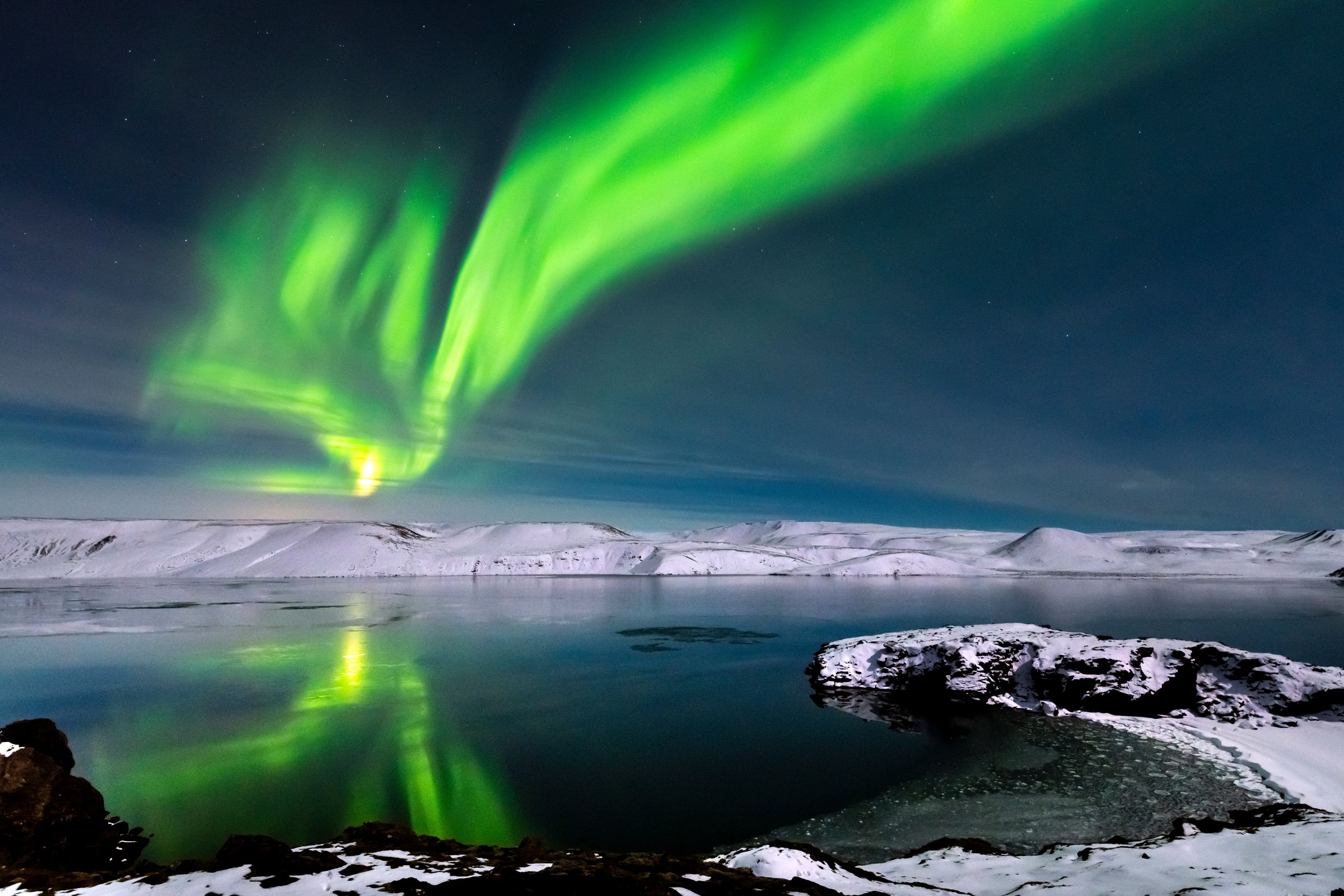
Autumn (September-October) colors the lava fields with orange and red tones, accompanied by temperatures ranging from 4-10°C (39-50°F). The days begin to shorten, but it’s the season when the Northern Lights start to be visible on clear nights. Fewer visitors mean peaceful campsites and better spa availability, but the weather can make some roads, especially secondary ones, unpassable by late in the season.
In Winter (November-March), Grindavík and its surroundings are covered in snow, with temperatures moving between -1 and 4°C (30-39°F). The days are very short, just a few hours of natural light, and some roads are closed for the season.
What to Pack to Visit Grindavík
Waterproof jacket and pants for sudden rain and wind.
Sturdy hiking boots for lava trails and uneven ground.
Warm layers like fleece and thermals to adapt to the temperature changes. This applies for all seasons.
Swimsuit and towel for geothermal baths.
Hat, gloves, and scarf for cooler seasons.
Sunglasses and sunscreen.
A portable charger for devices in case there’s no electricity in the campsites.
Map or GPS app for offline navigation in campervans.
Travel Tips
Rent a 4x4 campervan for winter: Choose a four-wheel-drive vehicle if you’re coming between November and March. Also, if you’re extending your road trip to more remote areas with gravel roads.
Book Blue Lagoon or Sky Lagoon early: Get your spa tickets weeks in advance, especially for June to August when there are more tourists.
Respect nature: Stick to marked trails to protect the delicate moss and lava formations, particularly in the Reykjanes Geopark.
Fuel up in town: Fill your campervan’s tank in Grindavík, as gas stations are scarce in rural areas.
Dump waste responsibly: Use designated campsite facilities for gray water and waste to comply with Iceland’s environmental rules.
Plan for short winter days: November to March brings 4-6 hours of daylight, so prioritize natural sites for the hours with natural light.
Conclusion
Some places in Iceland offer the perfect blend of local culture and natural treasures. Grindavík is situated in an area that offers a mix of both, making it a great destination for a campervan trip. Choose your vehicle, plan your route, and discover this beautiful corner of the country.
Frequently Asked Questions About Grindavík
Yes. Grindavík is closely monitored by Icelandic authorities, with evacuation plans in place. While eruptions have occurred nearby, safety measures ensure visitors are protected, and tourism continues with minimal disruption.
Grindavík is only about 5 kilometers (3 miles) from the Blue Lagoon, making it the closest town to Iceland’s most famous geothermal spa.
The coastal waters around Grindavík are home to seabirds like puffins, as well as occasional sightings of whales and seals along the Reykjanes shoreline.
Absolutely. Grindavík’s central location provides easy access to attractions like geothermal hot springs, lava fields, the Bridge Between Continents, and Keflavík International Airport.