Hella, a charming town in the heart of South Iceland
Iceland's Southern Region - Suðurland in Icelandic - has a series of towns and cities where nature and culture go hand in hand, making them great places to stop on a campervan trip through Iceland. They are much more than service hubs, practical bases during your road trip.
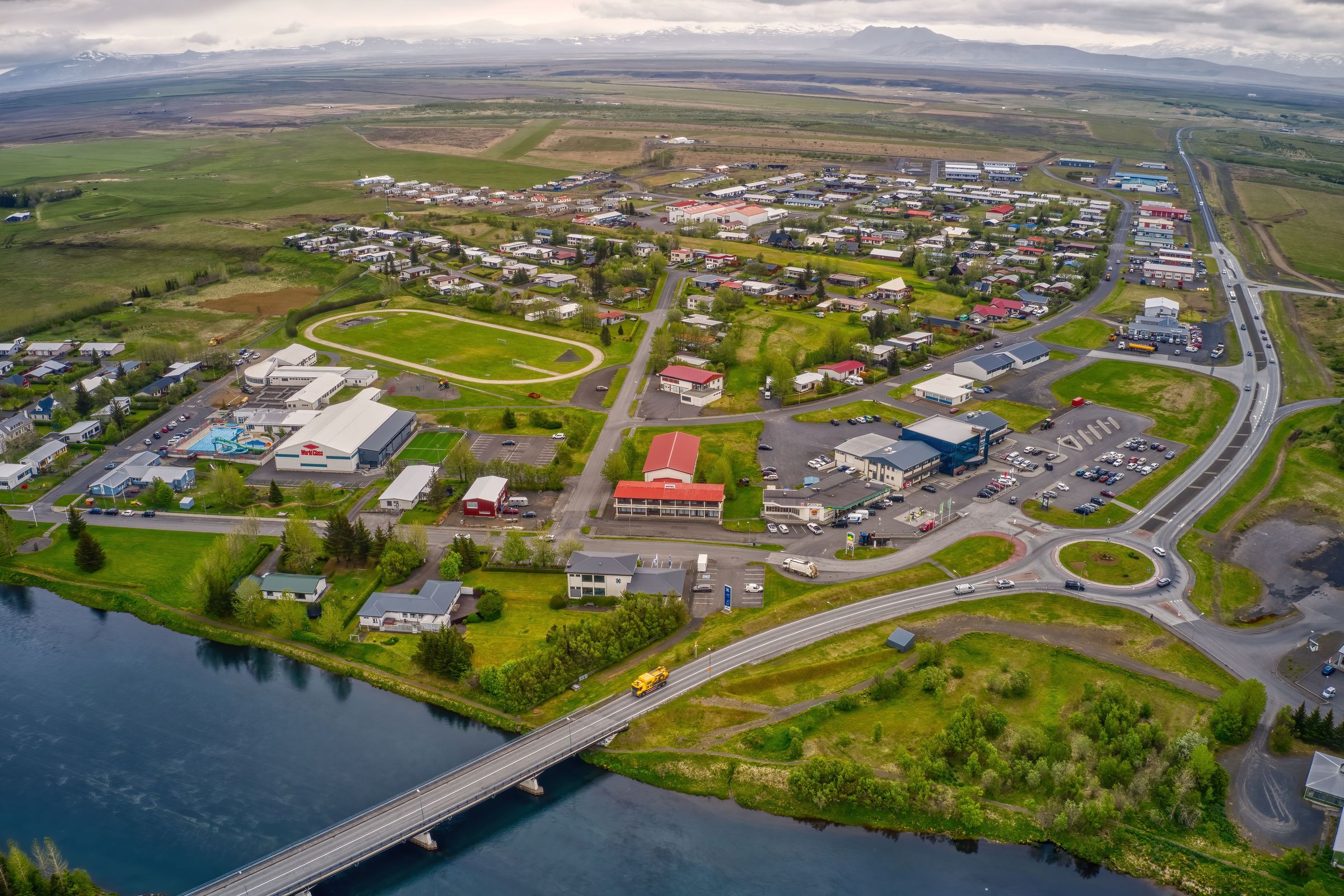
That’s the case of Hella, one of the most important towns in the region. Located by the Ring Road, here you’ll find a blend of rural charm and easy access to some of Iceland's most spectacular natural sites. It’s close enough to many of them, yet far enough to escape the crowds.
In this article, we’ll cover everything there is to know about Hella and its surroundings, as well as places to sleep with your campervan in the area.
Key Takeaways
- Hella is one of the main towns in the Southern Region, Suðurland in Icelandic.
- It has a population of around 1,000 inhabitants.
- Hekla, one of Iceland’s most active volcanoes, is very close to the town.
Why is Hella Worth a Visit?
If you’re making a road trip through South Iceland, you’re going to pass through Hella. The Ring Road, officially called Route 1, Iceland’s most important highway, passes by the town. Hella’s location makes it a smart anchor for any South Coast itinerary. The town is a great mix of natural and cultural heritage. Founded in 1927 when local merchant Þorsteinn Björnsson opened a general store and slaughterhouse near an old bridge over the Ytri-Rangá River, the town quickly grew to support the surrounding farmlands. From there, produce could travel to most populated areas, like Reykjavik.
Today, it functions as the administrative center for the Rangárþing Ytra municipality, blending agriculture with a blooming tourism scene that includes distilleries and golf courses. What draws visitors, though, is the surrounding geography: fertile meadows give way to lava fields, waterfalls, and mountains, all under the watchful eye of Hekla, one of the most impressive and active volcanoes in Iceland. It has erupted more than 20 times since the island's early settlement.
In spite of the more or less recent establishment of the town, there have been settlements in the area for a long time. The town's name derives from "hellar," meaning caves in the native language, referring to a series of man-made sandstone caverns nearby. Some of them are the longest such structures in Iceland. It is believed that Irish monks, known as papar, arrived to the island around the year 874 AD, even before the first Norse settlers, although it’s not entirely clear who came first. Either way, these monks looked for shelter in these caves during the harsh winters.
In short, it's a place where history feels tangible, and every drive reveals a new view of green valleys and snow-capped peaks.
Where's Hella and How to Get There
One of the best things about Hella is its location. It’s just 94 kilometers (58 miles) southeast of Reykjavík, along the iconic Route 1 (Ring Road). It’s also pretty close to Selfoss, the capital and biggest city in the Southern Region. It has been a natural stopping point in trips through this part of Iceland for decades.
The best way to travel to Hella is by car or campervan. This way you can go at your own pace, stopping at the natural monuments that you can find along the way. If you have a campervan, you’ll also have a place to sleep in one of the many campsites near the town.
If you’re coming from the capital, the itinerary is really easy to follow. You just have to take the Ring Road eastbound. After approximately 45 minutes, you’ll arrive in Selfoss. From there, it is just half an hour more, no need to take any other route unless you want to see something. For example, the road winds through moss-covered lava fields and past the Hveragerði geothermal area.
There are public buses between Reykjavik and Hella, taking about 1.5 hours. However, once you get to Hella, you’ll be limited to going to the many amazing landmarks near the town.


Where to Stay in Hella and Nearby
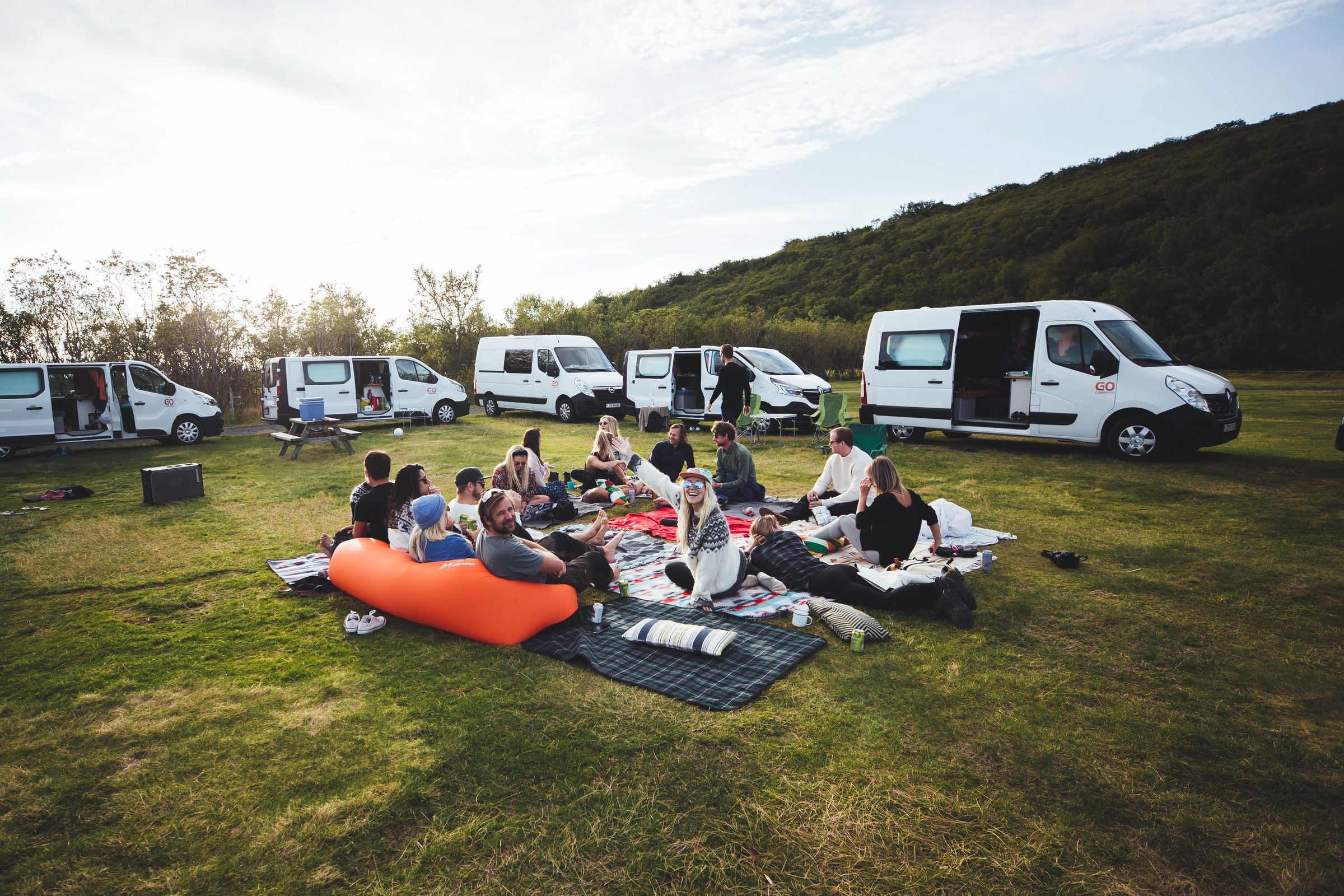
South Iceland is so impressive, you’ll want a few days to explore as much as you can. The best way to know it all is to draw an itinerary and pick camping grounds at strategic locations to continue your adventure the next day. Luckily, there are a bunch of good options near Hella to park your campervan and spend the night.
It’s important to know that wild camping is illegal in Iceland, so stick to designated areas.
Gaddstaðaflatir Camping
Distance to Hella: 0 km. In town. Opening Period: May to September.
One of the great things about Hella as a destination in a campervan trip is that there’s a good camping ground in town. Gaddstaðaflatir, also known as Hella Campsite, has ample space for tents and campervans, and access to toilets, showers, electricity, a dryer, Wi-Fi, cold and hot running water, and a shared kitchen. Pets are allowed on a leash.
Laugaland
Distance to Hella: 14 km (8.7 miles). Opening Period: May to September.
This camping ground is one of the most complete in South Iceland. This family-oriented site has three playgrounds for children and a football field. It’s divided into two different areas, with space for tents, campervans, and RVs. The facilities include toilets, showers, electricity, a BBQ area, and hot tubs.
Hvolsvöllur Camping Ground
Distance to Hella: 12 km (7.5 miles). Opening Period: March to November.
Hvolsvöllur is a town east of Hella, and it also has its own camping ground. It has a large grassy flat surface, and two service buildings, one with cooking facilities and dishwashing sinks, and another with toilets, showers, and a washing machine and dryer. It also has electricity hookups, Wi-Fi, and a children’s playground. It’s just a couple of minutes away on foot from a gas station, a supermarket, bars, and restaurants.
Þykkvibær Camping Ground
Distance to Hella: 17.5 km (10.9 miles). Opening Period: June to September.
Þykkvibær is a small village near the coast, known in Iceland for its potato farms. The village has a basic camping ground with toilets, showers, hot and cold running water, electricity, and a playground for children. There’s also a shared kitchen to cook your own meals. Simple, but with everything you'll need for a comfortable stay.
Hellishólar
Distance to Hella: 24 km (15 miles) Opening Period: All year.
Further east, near a road leading to the Highlands, we can find this large camping ground with grassy pitches for campervans and tents, toilets, showers, a laundry room, electricity, and a playground for children. You’ll also find a restaurant on-site and a 9-hole golf course. There are also cottages for rent.
Selfoss Campsite
Distance to Brúarfoss: 36 km (22 miles). Opening Period: All year.
The capital and biggest city in the Southern Region is Selfoss. It is a very interesting and vibrant city, worth a visit. It has a campsite with three different types of accommodation: bungalows, summer houses, and a camping area, with pitches for campervans and RVs with electric hookups. The camping area has restrooms, hot showers, free Wi-fi, a spacious dining room, a laundry room, and a kitchen. It's so big you won’t need to book in advance, except in August. Then, Selfoss hosts a festival, and the city is full of visitors.
What to See and Do in Hella
Even if Hella is a small town, it has a surprising number of things to do there.
Hella Thermal Pool
Iceland is known, among many other things, for its geothermal baths. They come in different shapes and sizes, but not many are swimming pools. Luckily for you, Hella has a site called Sundlaugin Hellu, in the local language, that features one large pool (25 meters long) and three smaller ones heated to different temperatures. It also has steam rooms and a sauna. It’s pretty close to the town center and opens daily.

Caves of Hella
These twelve man-made caves, "hellar" in Icelandic, giving the town its name, are probably the most famous attraction in Hella. Well, they are just outside town. They were carved hundreds of years ago on Ægissíða hill by Irish monks, seeking shelter from the elements. The longest of the caves stretches 50 meters, its walls etched with faint tool marks.
There are guided visits to the caves, and the guides tell the story of the caves and their importance to the town of Hella.

Ytri-Rangá River
This glacier-fed waterway snakes through the meadows around Hella. It’s a prime spot for salmon fishing from June to October. If you want to try your luck, you’ll need a permit that can be obtained in town. Not having one can
result in high fines. If you’re not into fishing, the river is beautiful, and there’s a path that goes along the shore, perfect for a hike.
Ægissíðufoss
A bit downstream on the Ytri-Rangá, there’s this beautiful waterfall that drops over basalt rocks. It’s 20 meters tall (66 feet). You can get there in your campervan on the west side, or by hiking a trail on the east side that departs close to the Gaddstaðaflatir camping ground. If you go with your campervan, there’s a parking area by the waterfall.

Where to Eat in Hella
There are a few options for eating out in Hella. Although the town is not huge, you’ll still have interesting places to go for lunch or dinner. They focus on local ingredients sourced from the nearby farms and rivers.
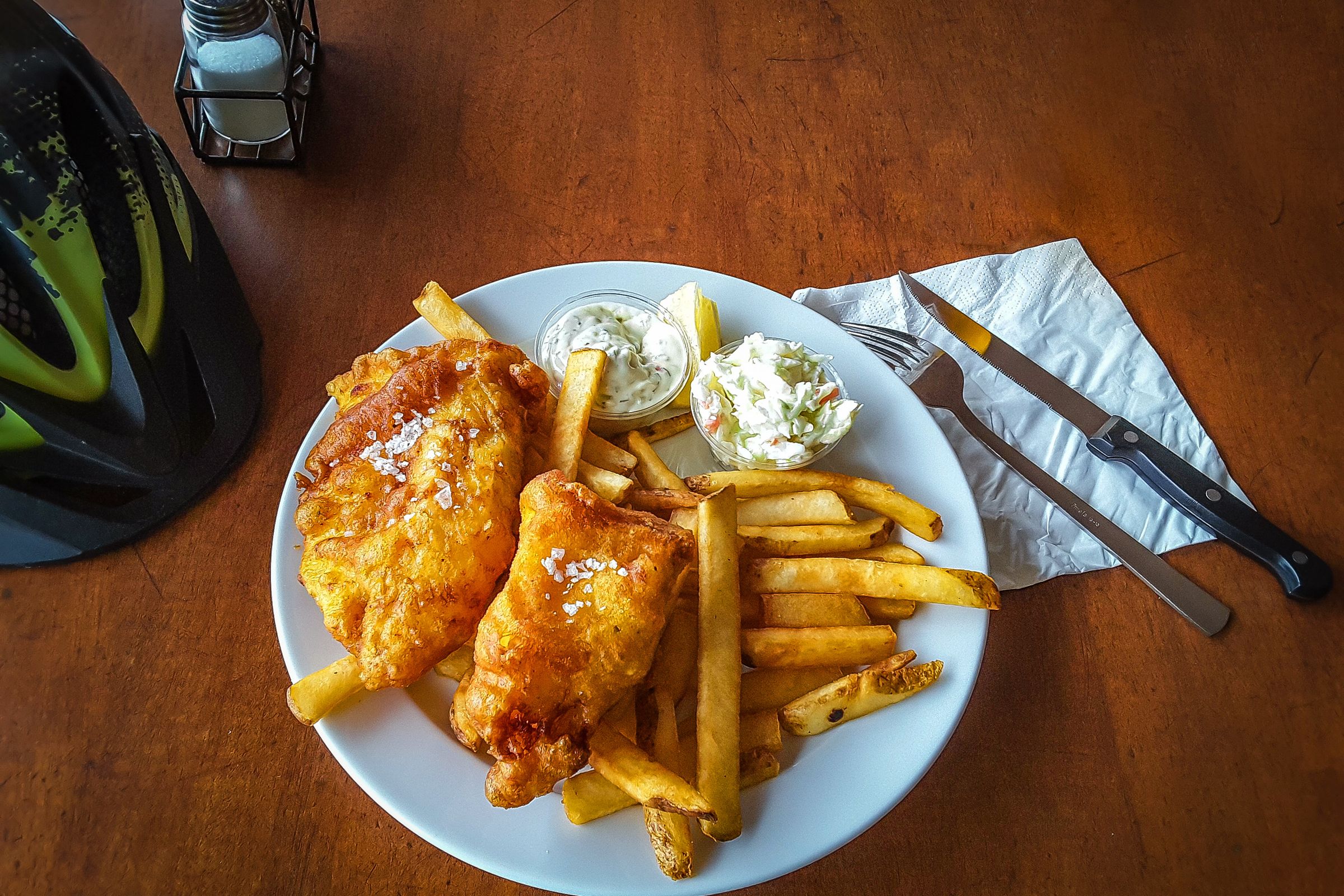
One of the most popular is Stracta Bistro at the Stracta Hotel, where the menu is simple yet varied. Soups, salads, burgers, fish and chips, and also began options.
Another option is Stracta Rótin, the hotel's Italian restaurant. Apart from their good pizzas and pastas, they have a great selection of wines and local beers.
Hekla Street Food was the place to go for an informal meal. Fish and chips, burgers, and fries. You could order to go and have a picnic by the Ytri-Rangá River or eat in your van. They are currently closed, but we hope they reopen in the future.
Located by the Ytri-Rangá, Árhús offers a mix of traditional Icelandic recipes and international cuisine. It has a nice terrace overlooking the river.
Finally, Restaurant Kanslarinn is a pub-style restaurant with meat and fish dishes. You can even order a horse steak.
What to See Near Hella
Hella is part of one of the most varied and astonishing regions in Iceland. The Southern Region, or Suðurland, has a bit of everything this country is famous for. And everything’s quite close to the town.
Hekla Volcano
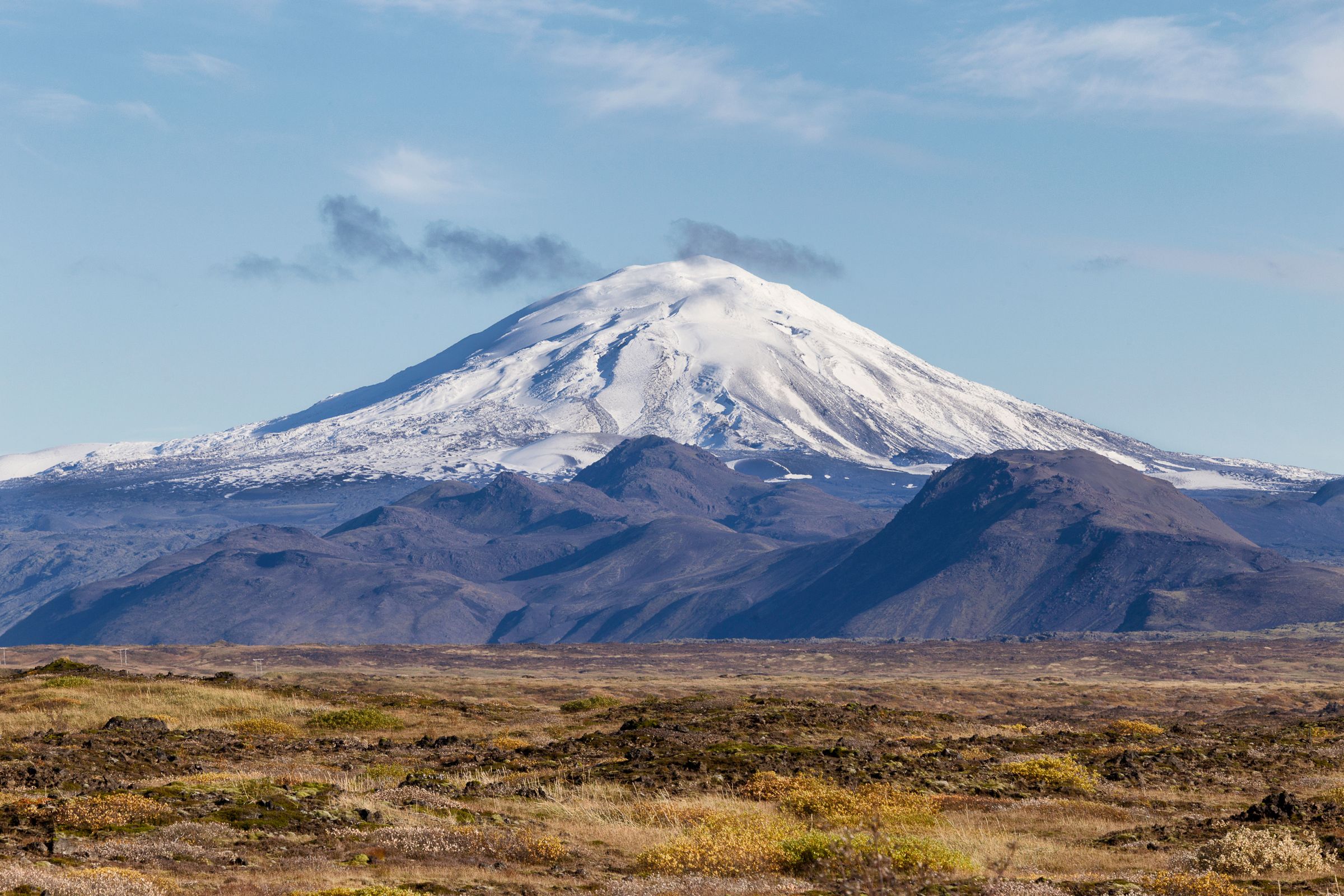
25 miles (40 kilometers) north of Hella, Hekla is a 1,491-meter (4,890-foot) volcano with a glacier on its summit. It’s visible from many points in the region, like a constant, glooming presence. It’s one of the most active volcanoes in Iceland, and there are records of at least 20 eruptions since the first settlers arrived in Iceland in the 9th century.
Although the top is covered in snow for most of the year, Medieval Icelanders used to call it the “Gateway to Hell.” Don't worry, the authorities monitor its activity and are ready to act if they believe it can erupt again. The last one happened in the year 2000. You can embark on a guided climb to the top, but it’s pretty hard. If not, there are trails at the base that go through lava fields.
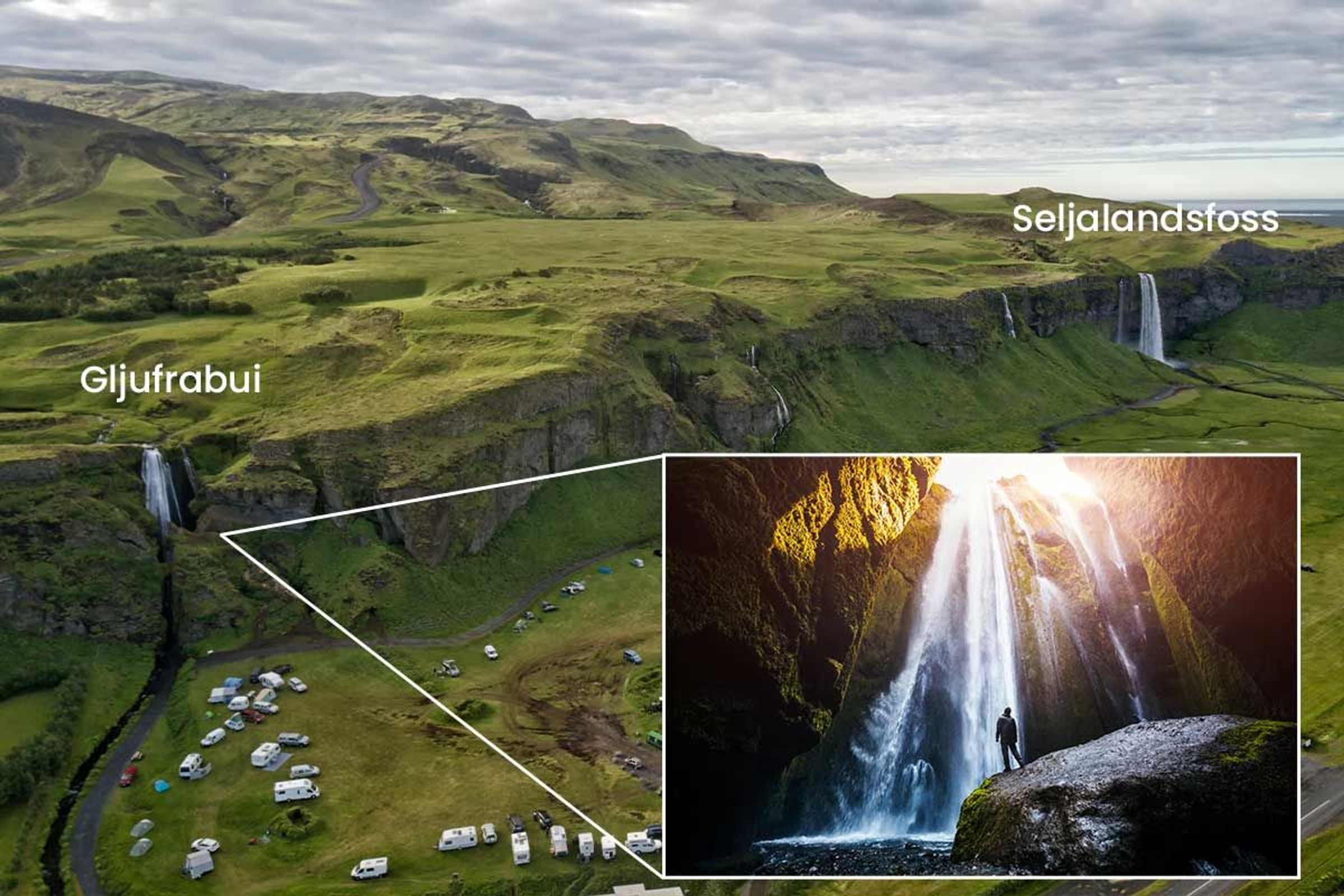
Seljalandsfoss
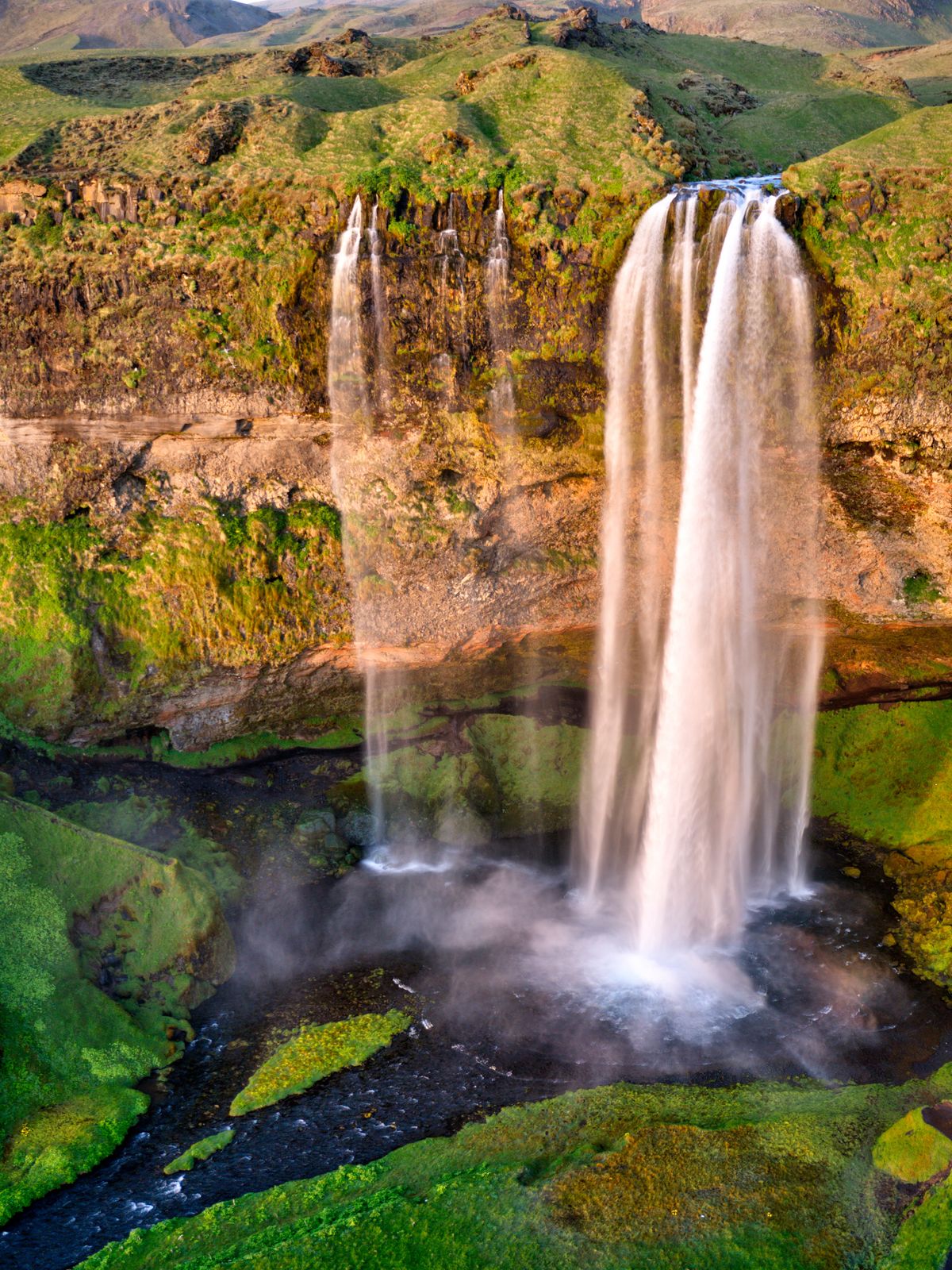
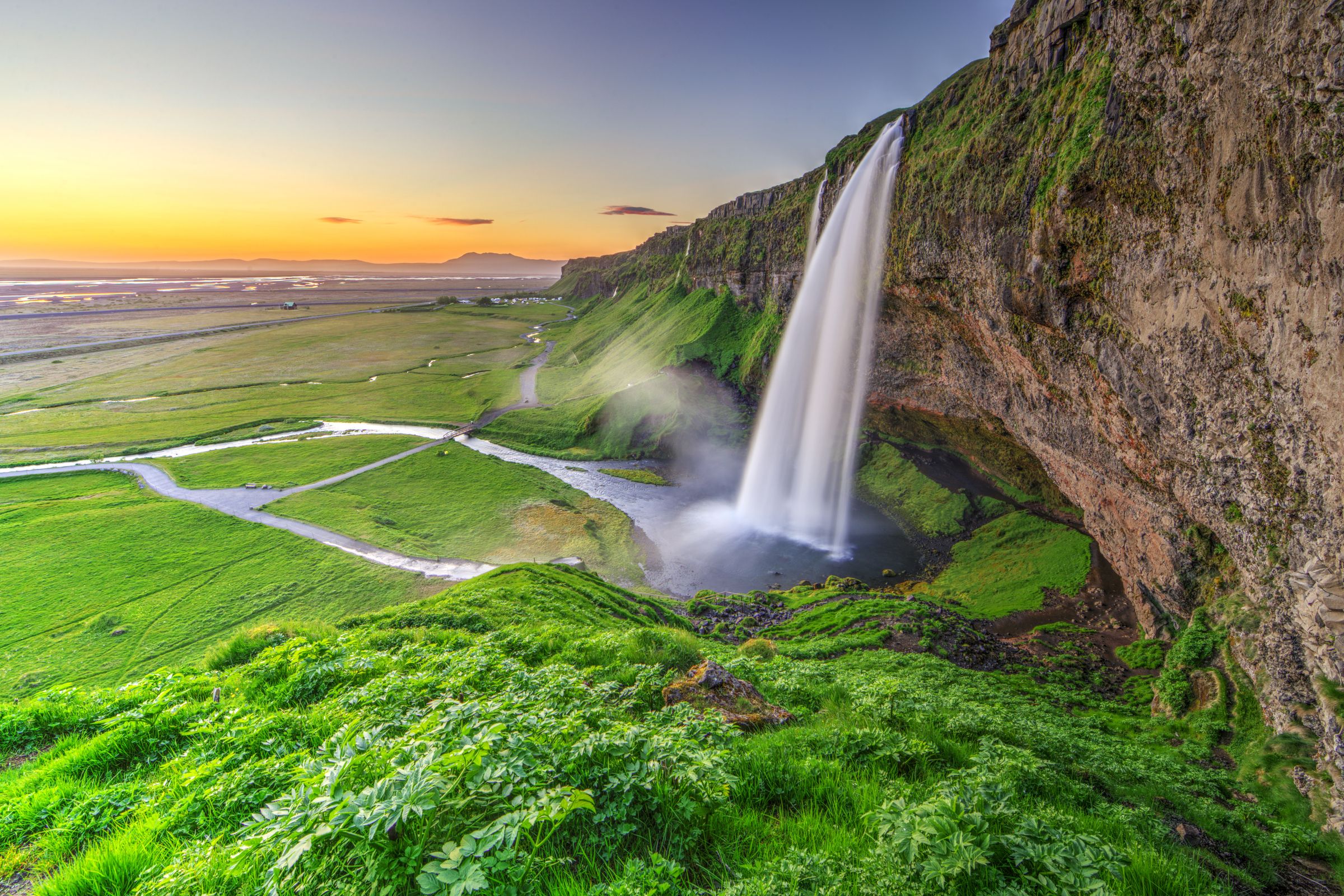
This 60-meter (128 feet) tall waterfall is one of the most iconic in the country. Seljalandsfoss is tall, slender, and its surroundings are beautiful. However, its most distinctive element is a walking path that goes behind the water curtain into a small cave. The views from there are pretty unique. Wear waterproof clothes and shoes, as you’ll most likely get wet.
Gljúfrabúi
If you’re going to see Seljalandsfoss, you’ve also got to visit its hidden neighbor, called Gljúfrabúi, just 200 meters away. It’s another waterfall, a bit smaller, around 40 meters tall (131 feet). Its name can be translated as the “canyon dweller”, as it’s completely invisible from the outside. To see it, you’ll need to walk through a shallow stream inside a narrow gorge till you get to a chamber where the waterfall pours over mossy rocks into a quiet pool.
It’s not as visited as Seljalandsfoss, but it is a fantastic surprise to those who go see it.
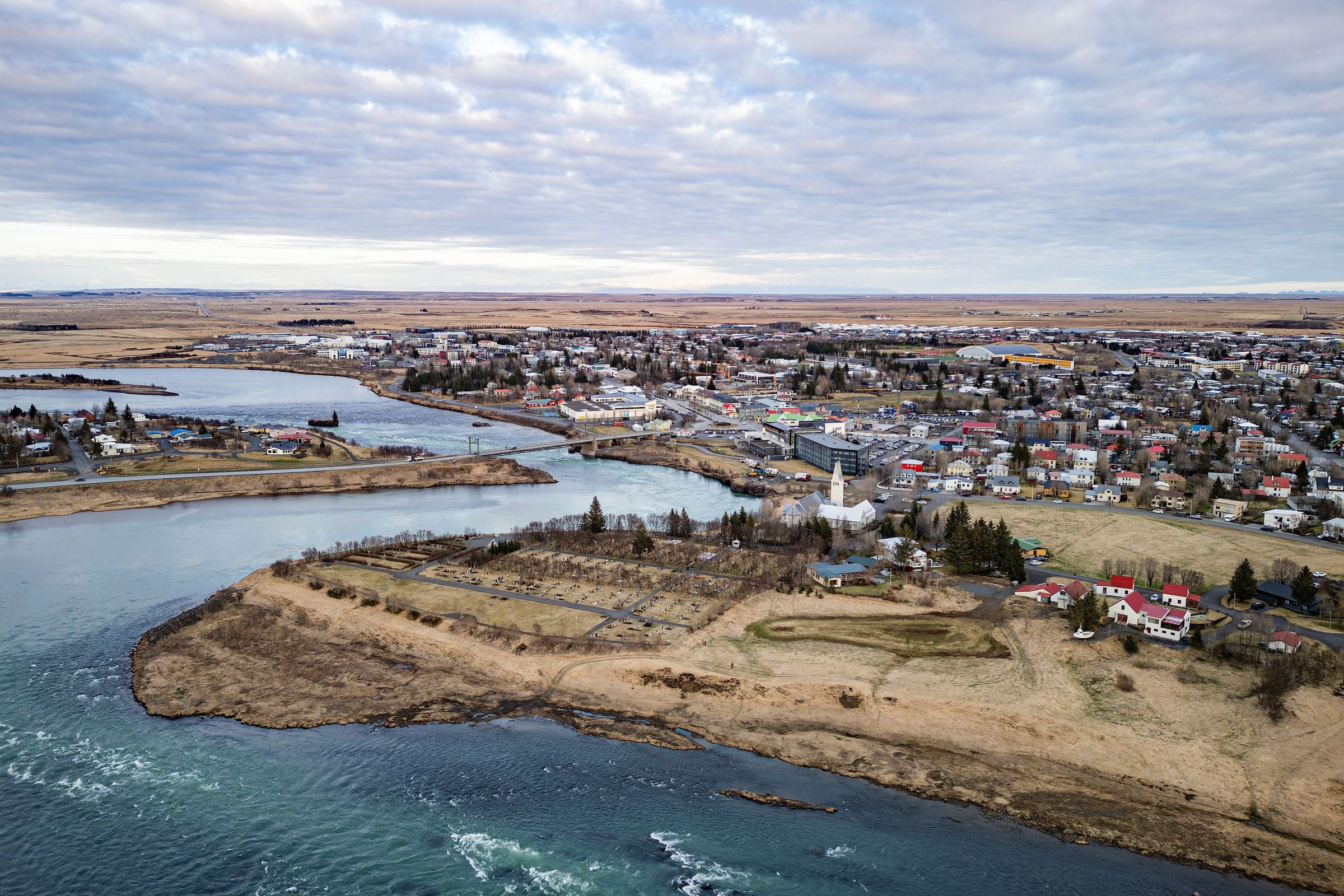
Selfoss
The main city in South Iceland is just 20 minutes away from Hella by car. Selfoss has the buzz of a larger town, with many interesting cafés and restaurants, some of them really good. There’s another river, Ölfusá, that passes by the city, and the park by the banks is a lovely place to take a stroll or have a picnic.
Visit the New Old Town project, in the city center, with several restored, colorful wooden houses. If you want a touch of culture and history, you can visit the Bobby Fischer Center, a museum dedicated to the chess grandmaster. His tomb can also be visited, just north of the city.
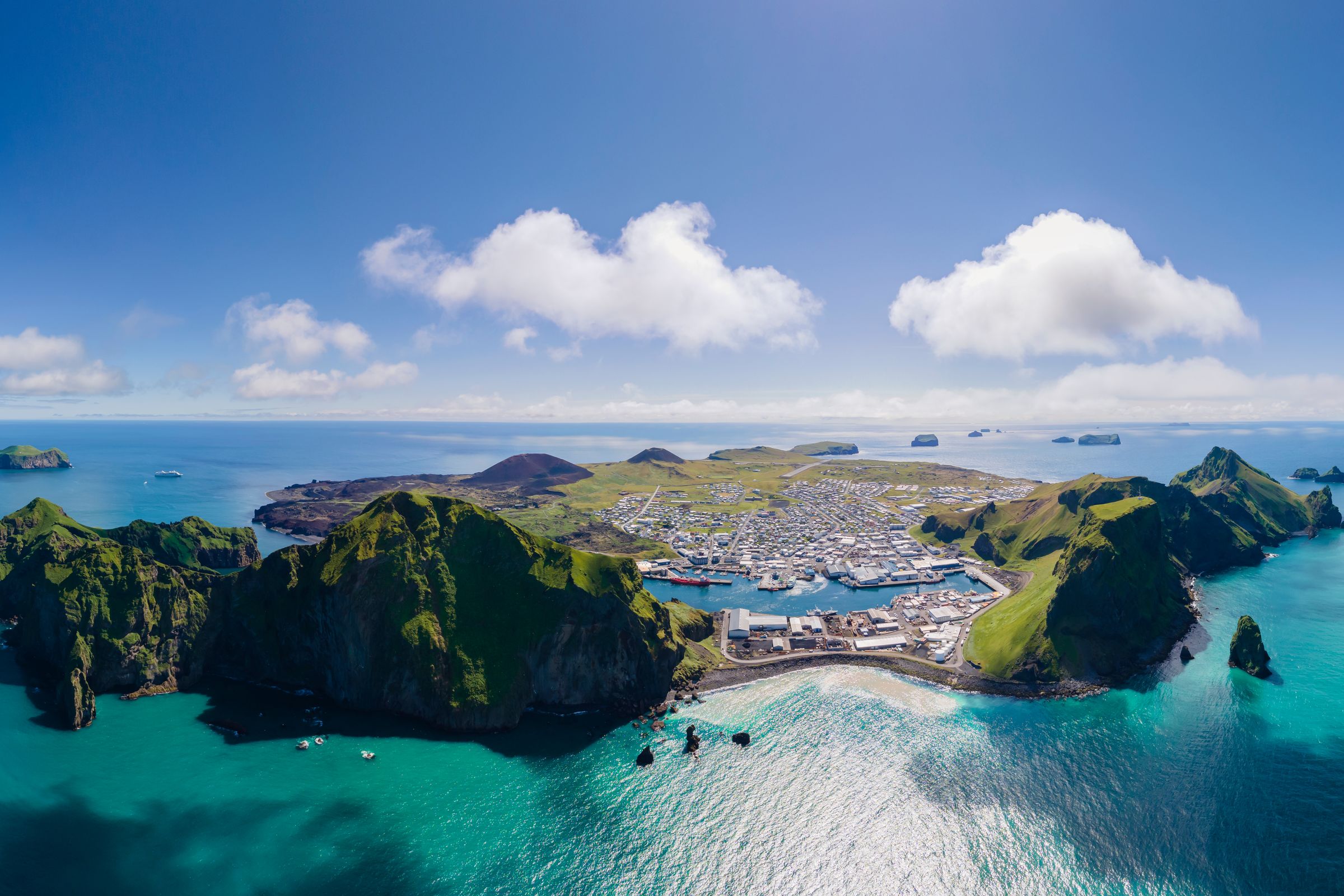
Westman Islands
A great idea for a day excursion is to catch a 30-minute ferry from Landeyjahöfn (25 km southeast) to Heimaey, the main and only inhabited island in this archipelago off the south coast. These islands are one of the best places in Iceland for birdwatching, with thousands of puffins coming to the cliffs to nest in the summer months. Another great option is to hike to Mount Eldfell, a volcano that crowns Heimaey.
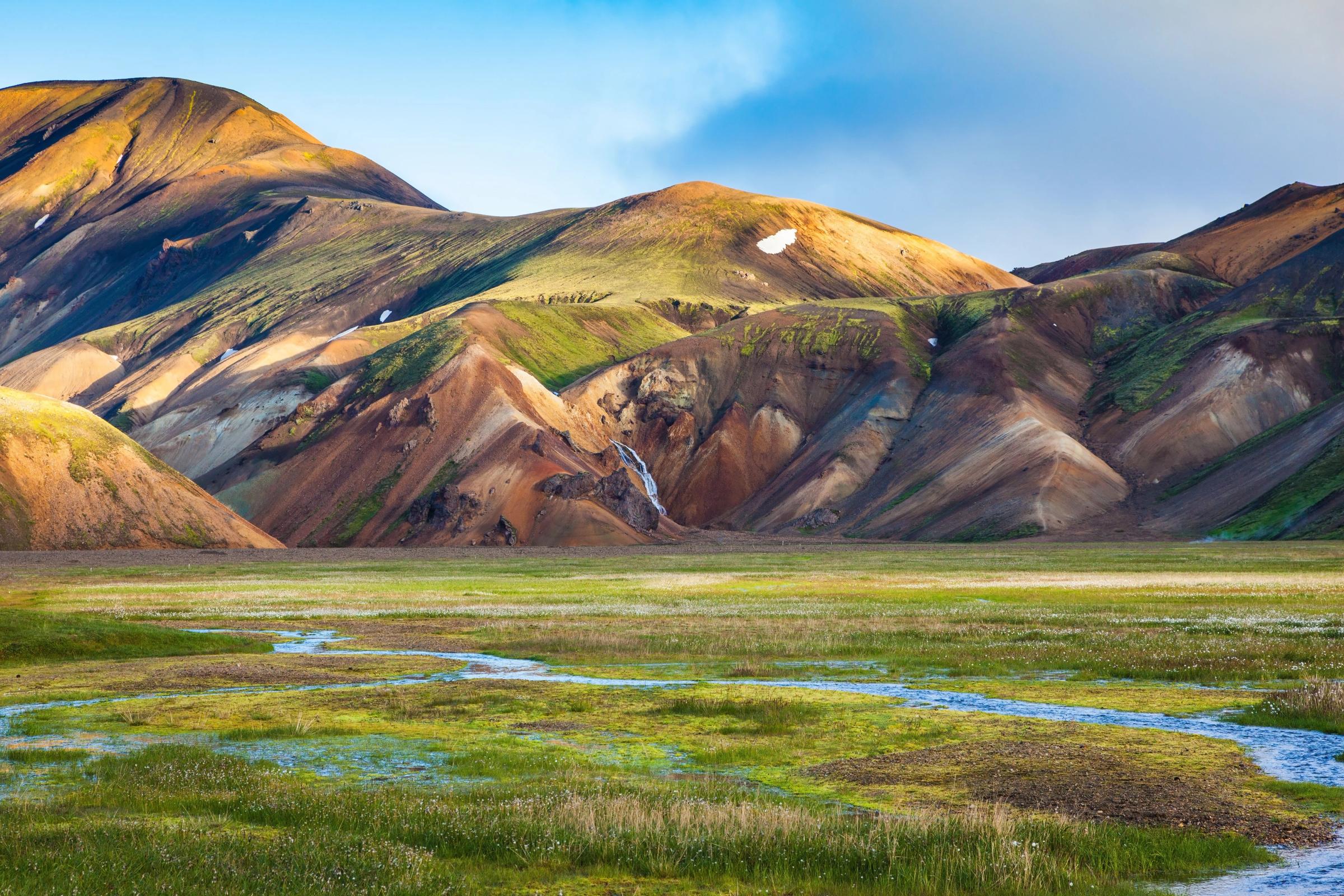
Landmannalaugar
Hella is one of the gates to access the Icelandic Highlands from the south. That vast and uninhabited region is full of natural wonders. One of them is the Landmannalaugar geothermal area. The main attractions there are the colorful rhyolite mountains, the sulfur deposits, and the steam vents. You can also enjoy a relaxing thermal bath in the Landmannalaugar natural hot springs.
Þórsmörk
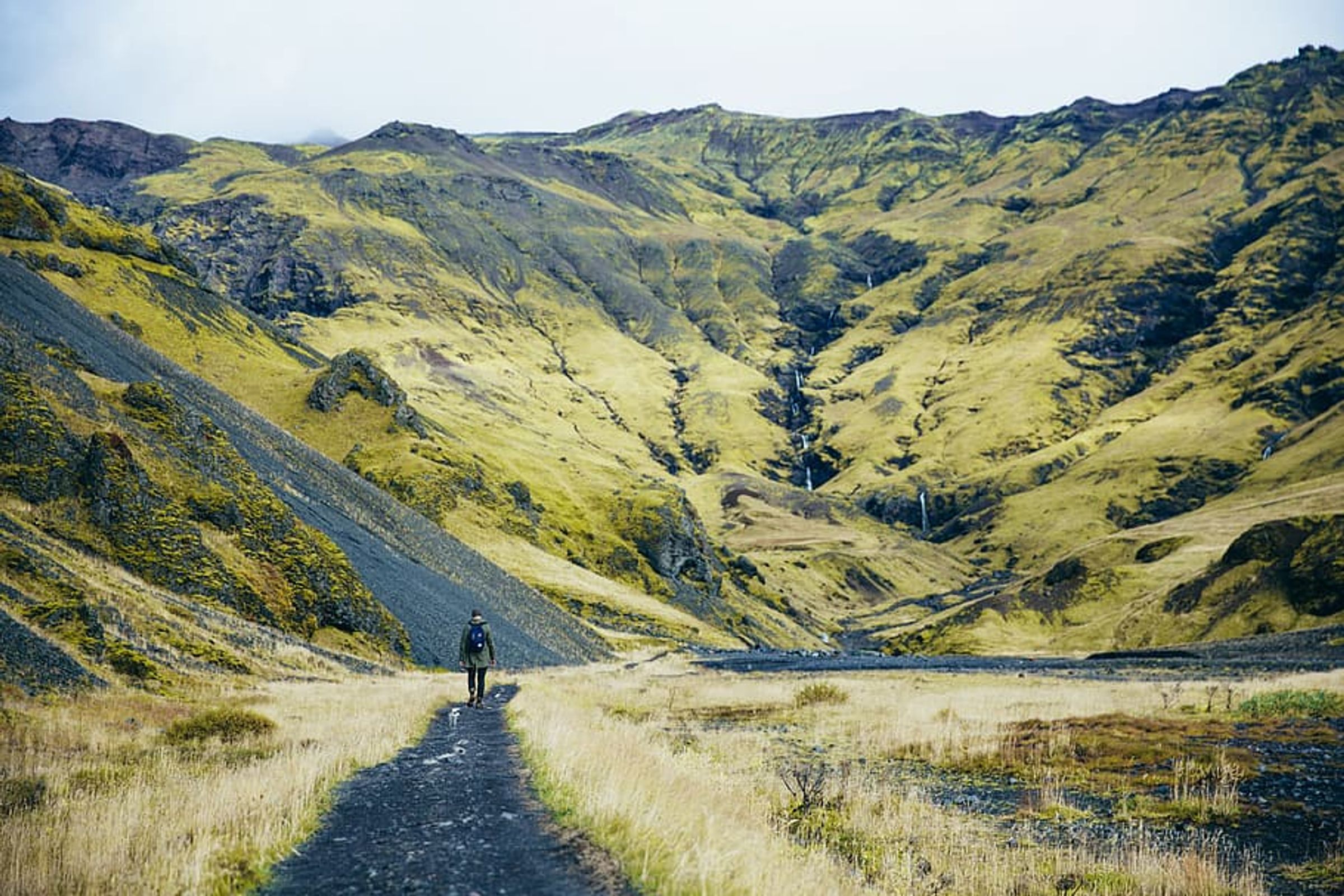
Sixty kilometers east through F-roads, this green valley creates a fantastic contrast with the lava fields and glaciers that surround it. It’s so astonishingly beautiful that it looks as though it were from a different planet. There are several hiking routes there.
Laugavegur Trail
The Laugavegur Trail is Iceland's most famous hiking route. It’s a 55-kilometer trek that connects Landmannalaugar and Þórsmörk, and it usually takes 3 to 4 days to complete. There are mountain huts and camping areas along the trail where you can spend the night.
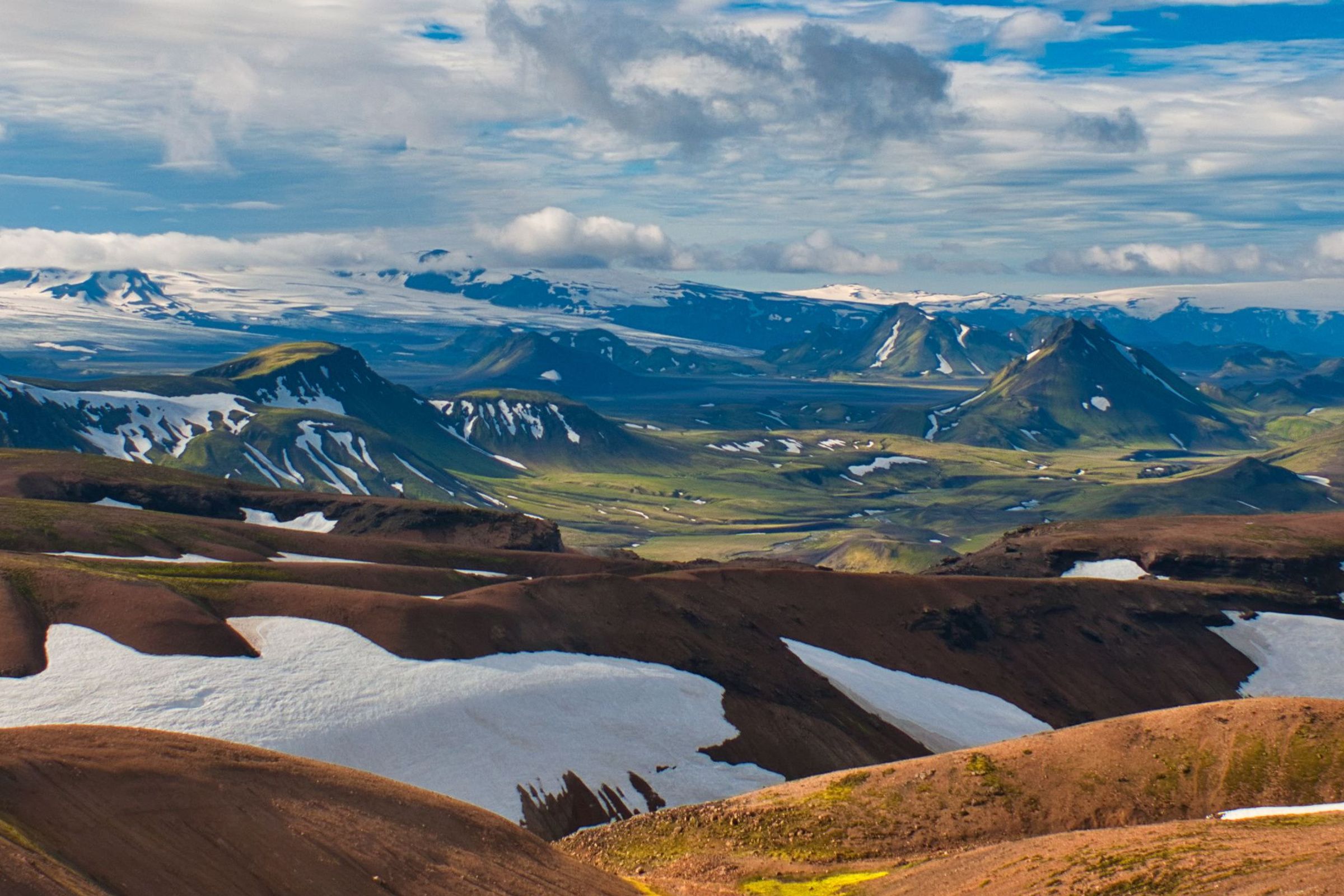
It goes through many different ecosystems, it's like doing a miniature tour of the Highlands. The weather in the Highlands is too harsh outside the summer months, so it can only be done between June and September.
The Weather in Hella
When traveling to Iceland, it’s essential to always keep the weather in mind, as it can significantly impact your travel experience. In general, South Iceland is not as cold as the north or the center of the country, but it tends to rain more. Here’s a breakdown, season by season.
Spring (April and May): Winter snow begins to melt, revealing the green meadows around town. The temperatures usually range from 0 to 10°C (32-50°F). The days are growing longer, but rain is common, leaving the trail muddy. Most campsites that close for winter reopen, and there are few tourists.
Summer (June to August): The weather is mild, with a mix of sunny days and occasional rain. The temperatures hover around 10-15°C (50–59 °F). There are almost 24 hours of natural light per day by the end of June, and the Ytri-Rangá river is in full flow. It’s peak season, so book your camping spots well in advance.
Autumn (September and October): This season cools down to 0-10°C (32-50°F), very similar to spring but going in the opposite direction. The days are significantly shorter, and there are few visitors, so you can enjoy the natural monuments in a quieter atmosphere. Rain and wind pick up, turning gravel roads slippery.
Winter (November to March): Winters are long and cold in Iceland, and Hella is no exception. The temperature is usually below freezing, and the days are very short, with barely 4 to 6 hours of natural light in late December.
Many campsites close for the season, and driving can be a bit tricky. Many roads, especially secondary ones, close if the weather is too harsh, so always check the road status before traveling. On the other hand, it’s the season when the Northern Lights start to be visible.

What to Pack to Visit Hella
Packing for a trip to Iceland requires careful planning. Regardless of the season, there are a few items that are always necessary.
- Waterproof hiking boots with good grip and good ankle support.
- The best way to adapt to the constantly changing weather is to dress in layers. The best combo is a thermal base layer; fleece or wool and a waterproof jacket.
- Quick-dry swimwear and a towel for thermal pool dips or natural hot springs.
- A small backpack to carry essential items for excursions. Better if it’s waterproof.
- Download offline maps or carry a GPS device, some areas have low cell phone signal.
- A portable power bank for your devices. It comes in handy for long days out and not all the camping grounds have access to electricity.
- Reusable water bottle. Tap water is pure and safe to drink.
- Compact sleeping bag rated for low temperatures. Even in summer, the nights can be cold.
Travel Tips
- Fuel up in Hella or Selfoss before traveling to see more remote monuments. There are barely any gas stations in rural areas.
- If you’re coming outside of summer or are planning on going on F-roads, rent a 4x4 campervan. It’s safer, and it’s also illegal to drive a conventional vehicle on F-roads.
- Drive with your headlights on at all times; it’s mandatory in Iceland.
- Shower thoroughly before entering pools and geothermal baths.
- The Icelandic Met Office provides the best weather information.

Conclusion
Hella captures the essence of Iceland's Southern Region. It’s not a huge town, but there you can discover the real Icelandic way of life while being close to many of the most amazing natural landmarks in the country. If you draw an itinerary through this region, make sure to reserve a spot for Hella. You won’t be disappointed.