Háifoss, one of the tallest waterfalls in Iceland
Iceland is home to countless waterfalls, each shaped by the island's unique environment. Here, many natural forces have combined to create a unique orography: volcanoes, tectonic plates, glaciers, earthquakes, and rivers. And these rivers, many of them glacial, have carved their courses through this one-of-a-kind land. And, in some cases, they encounter a cliff, creating waterfalls that come in different sizes and shapes.
Among them, Háifoss stands out for its sheer height and remote setting in the southern highlands. This powerful cascade, the fourth tallest in the entire country, plunges into a deep canyon, creating a dramatic view that feels far from the usual tourist routes. It doesn’t stand alone, though. It has a neighbor called Granni, slightly smaller but equally impressive, making the visit even better. Travelling there in a campervan is a fantastic idea, but it has its own peculiarities. Come with us to discover all there’s to know about this place.
Key Takeaways
- Háifoss is a waterfall located in the southern part of the Icelandic Highlands.
- It measures 122 meters (400 feet) tall.
- Its name means “high waterfall” in Icelandic.
What's Háifoss?
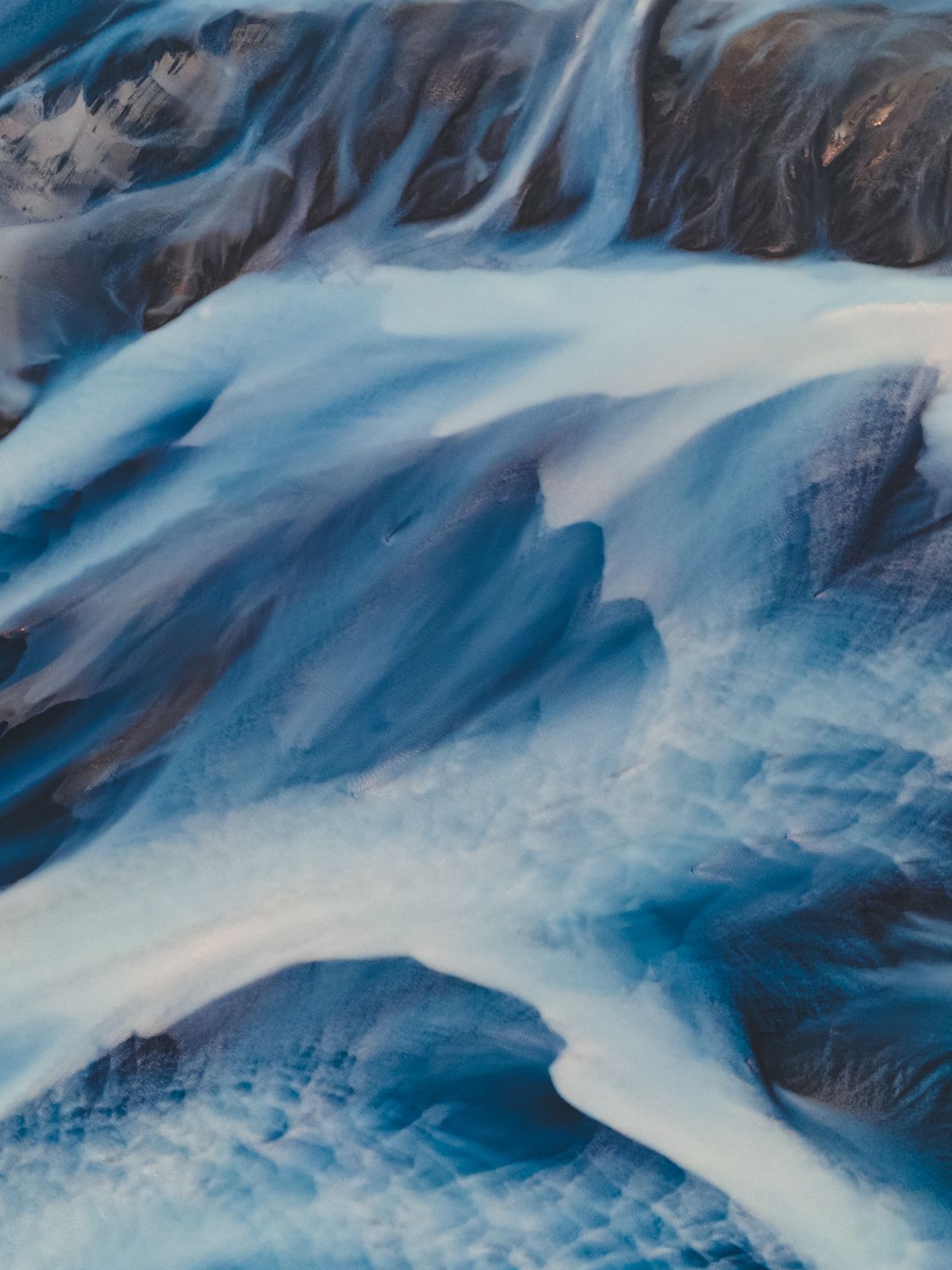
Háifoss is one of Iceland's most impressive waterfalls, located in the Fossárdalur valley, part of the larger Þjórsárdalur region. The water drops straight down into a rugged canyon carved by the Fossá river, which eventually joins the Þjórsá, the country's longest river. The Fossá is a glacial river, with its source in one of the many glaciers in the Highlands.
What strikes the most about Háifoss is its impressive height. But not only that. The surrounding volcanic terrain creates an environment that is beautiful and otherworldly at the same time. The rocks are black and red, covered in green moss at certain points. The Hekla volcano, the most active in Iceland, looms in the distance, reminding visitors of the forces that shaped this landscape. The area has a quiet, untamed feel, with basalt rock formations and open valleys that highlight Iceland's geological history. It’s one of those places where Iceland can be enjoyed at its wildest and rawest side.
Although it is not as famous as some other waterfalls closer to the coast, such as Seljalandsfoss or Gullfoss, Háifoss draws those who appreciate highland scenery and fewer crowds. Nearby, the reconstructed Viking-era farm at Stöng adds a historical layer, as the original was buried by a Hekla eruption centuries ago.
Facts about Háifoss Waterfall
In Iceland, most natural monuments have descriptive names. Háifoss translates directly to "high waterfall" in Icelandic, a name that perfectly fits its impressive stature. It measures 122 meters (400 feet) in height, making it the fourth-tallest in Iceland, behind Morsárfoss, the tallest, Glymur, and Hengifoss. The drop is nearly vertical, creating a single, powerful curtain of water that crashes into the canyon below.
The waterfall is fed by the Fossá river, a river that is fed by several glacial springs. It has a steady flow throughout the year, but late spring and early summer are the moments when the river is at its best. Its neighbor, Granni, stands close by but is shorter and less forceful. The river splits a couple of hundred meters upstream, generating these two separate cascades. After the fall, they rejoin again. The surrounding canyon features layered basalt columns and green patches in summer, creating a nice contrast with the dark volcanic rock. Together, they form a striking view, visible in one frame from the main viewpoint, located on the other side of the canyon and close to the parking area.

Where's Háifoss Waterfall and How to Get There
Háifoss sits in the southern part of the Highlands of Iceland, in the Þjórsárdalur valley. The Highlands occupy the central area of the island. It’s a huge and uninhabited region with high mountain ranges and deep valleys. The best way to get there, and frankly, practically the only one, is by renting a campervan or car. There’s no public transport to this remote location, so you’ll need your own vehicle to go there. However, the last part of the route is on an uneven gravel road, so you’ll need a 4x4 camper to deal with that road.
If you’re coming from Reykjavik, the total distance is 140 kilometers (87 miles). You need to start by taking the Ring Road, whose official name is Route 1, eastbound and drive until you reach the town of Selfoss. Cross the city, and 15 kilometers (9 miles) later, turn left onto Route 30. Drive on it for 18 kilometers and then turn right onto Route 32, which goes along the valley of the Þjórsá river. At some point, you’ll see a gravel road to the left with a sign that says Láxargljúfur. That’s Route 332, and it goes directly to the parking area next to Háifoss.
That last road is uneven and bumpy, and can become quite slippery if it has rained before. It’s mandatory to have an all-terrain vehicle for that road, and driving on it with a conventional vehicle can be dangerous. It can also result in high fines, as it is illegal.

What to See and Do Near Háifoss Waterfall
Háifoss is almost always visited alongside Granni, its close neighbor. The two waterfalls share the same canyon and viewing area, so you’ll get two amazing natural monuments instead of one.
Granni Waterfall
Right next to Háifoss, Granni provides a perfect contrast with its narrower flow. A couple of hundred meters before the drop, the Fossá river splits into two separate branches and, then, two different waterfalls. Although impressive, Granni is slightly smaller than Háifoss. It measures 101 meters (331 feet) tall, which is still quite a lot. Its name means "neighbor" in Icelandic, a name that suits it well, as the two complement each other without one overshadowing the other. A short walk along the trail offers different angles, and the sound of both cascades fills the air. Granni's water tumbles in a more stepped manner over the rocks, creating additional smaller drops before joining the canyon. Háifoss dominates the view while Granni adds depth and variety.

Gjáin
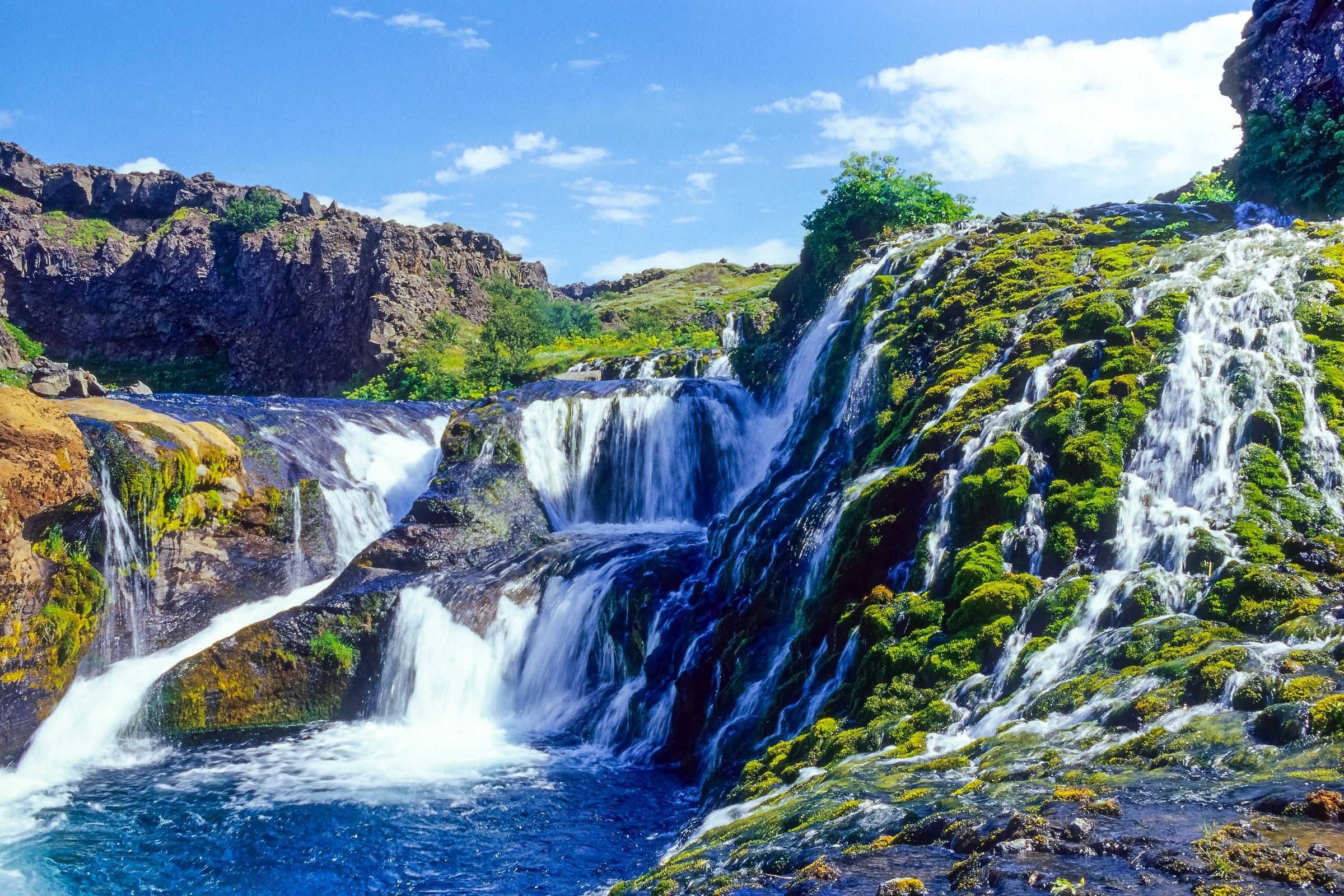
A short detour from Route 32, the road that leads to Háifoss, gets you to Gjáin, a lush valley that is considered a hidden paradise by the locals. This small and green meadow is crossed by a river that creates a series of small waterfalls that pour into clear pools surrounded by green vegetation and volcanic rocks. There are several trails that wind through the area, ideal for a peaceful walk or a picnic. The contrast with the stark highlands makes it feel like an oasis.
As the weather in this region is harsh in winter, there are no forests and barely any vegetation, so this place stands out for its colors. In summer, wildflowers and thick moss cover the ground, creating a setting that seems out of a fairy tale. The valley's sheltered position protects it from the wind, which allows plants to strive in a richer environment than the surrounding barren terrain. There's a loop trail that takes about an hour around the valley, passing lava caves and streams for a quiet break after viewing the powerful drops at Háifoss.
Stöng í Þjórsárdal
This reconstructed Viking-age farm offers a look into Iceland's medieval past. The original Stöng was destroyed by an eruption of the Hekla volcano in 1104 and was buried under ash. The site that was rebuilt nearby recreates the longhouse style, with turf roofs and simple interiors. It's a quick stop to discover part of the country’s cultural heritage and see how the first settlers of the island, who came from Scandinavia, lived. Visitors can enter the buildings to see recreated furnishings and tools, imagining daily life in the valley centuries ago. There are information boards that explain the excavation and eruption's impact.
The location near the river adds to the atmosphere, with Hekla visible as a backdrop, a menacing presence that reminds of the power of nature. Combining this cultural visit with the waterfalls provides a fuller understanding of this area’s story.

Hjálparfoss
Also located off Route 32, Hjálparfoss is another waterfall that is also part of the Fossá river. A few miles downstream from Háifoss, it’s situated just before the place where the Fossá joins the bigger Þjórsá river. Here, the river features two streams merging into a pool surrounded by basalt formations. The falls split around a rock island, creating a gentle double cascade. There’s a parking area off the road and, from there, a short trail that leads to a beautiful viewing point. The name means "help waterfall," as this place was used by travelers to get fresh water while going through the highlands.

Secret Lagoon (Gamla Laugin)
In the nearby village of Flúðir, this natural hot pool is a fantastic place to enjoy one of the most appealing experiences of Icelandic culture: a geothermal bath. Icelanders go to spas and natural hot springs to unwind, socialize and, sometimes, conduct business. It’s not only relaxing, but this practice also has numerous benefits for the body. The Secret Lagoon, Gamla Laugin in Icelandic, is the oldest geothermal pool in the country. Established in 1891, the main bathing area is fed by a natural hot spring and maintains a constant temperature throughout the year at 38-40°C (100-104°F). The facilities include changing rooms, showers, and a small café. Towel and swimsuit rentals are available if you need them.

Fjallabak Nature Reserve
Fjallabak Nature Reserve is a protected area that covers much of the southern part of the Highlands. The name means “behind the mountains” and features diverse ecosystems, including colorful rhyolite mountains, lava fields, and geothermal areas. The reserve has a huge network of trails that cross all types of landscapes and offer chances to spot arctic foxes or ptarmigans. The reserve has a strict conservation policy, so stick to marked paths to avoid damaging the fragile ecosystem. It's ideal for day hikes or even multi-day treks.
Landmannalaugar
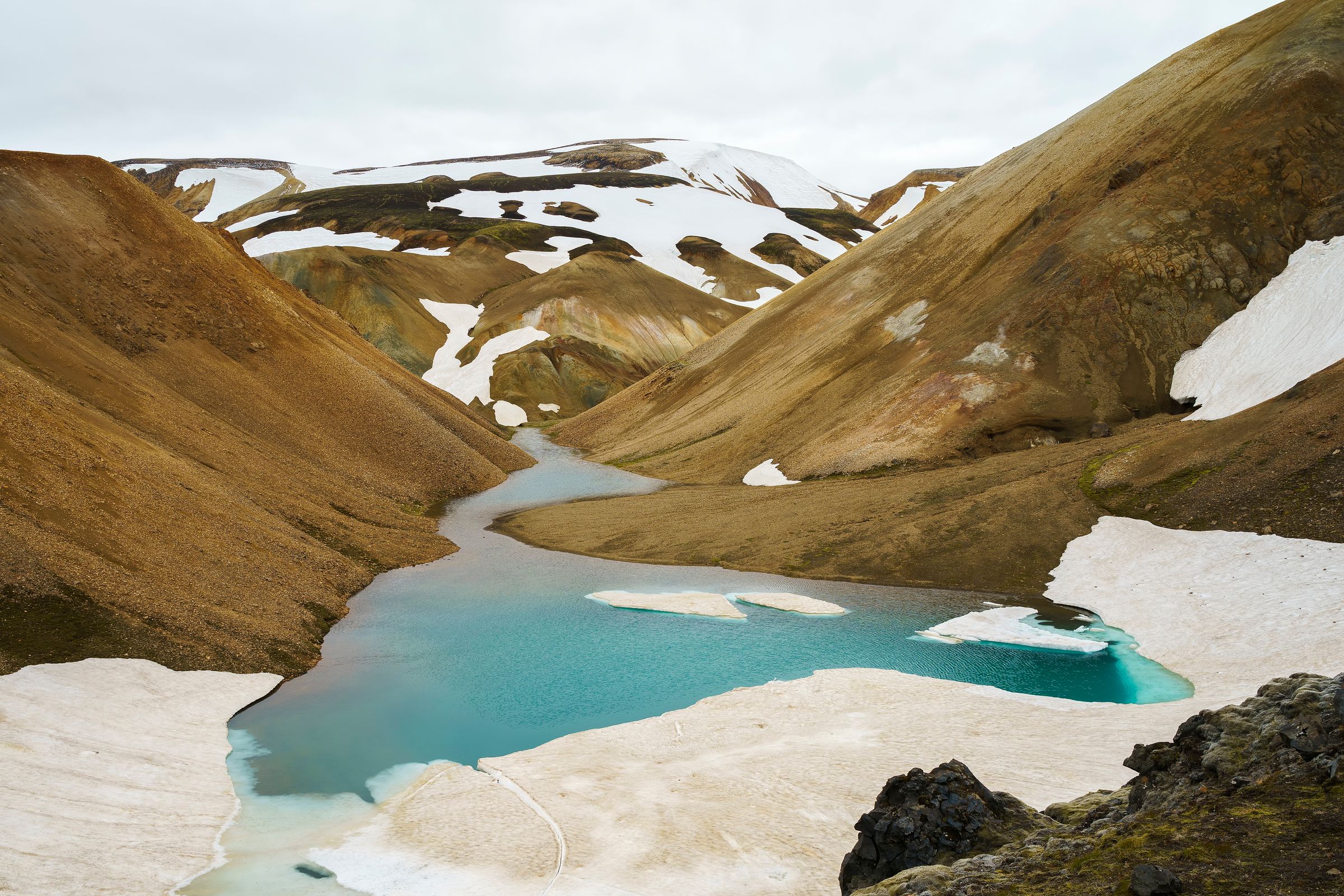
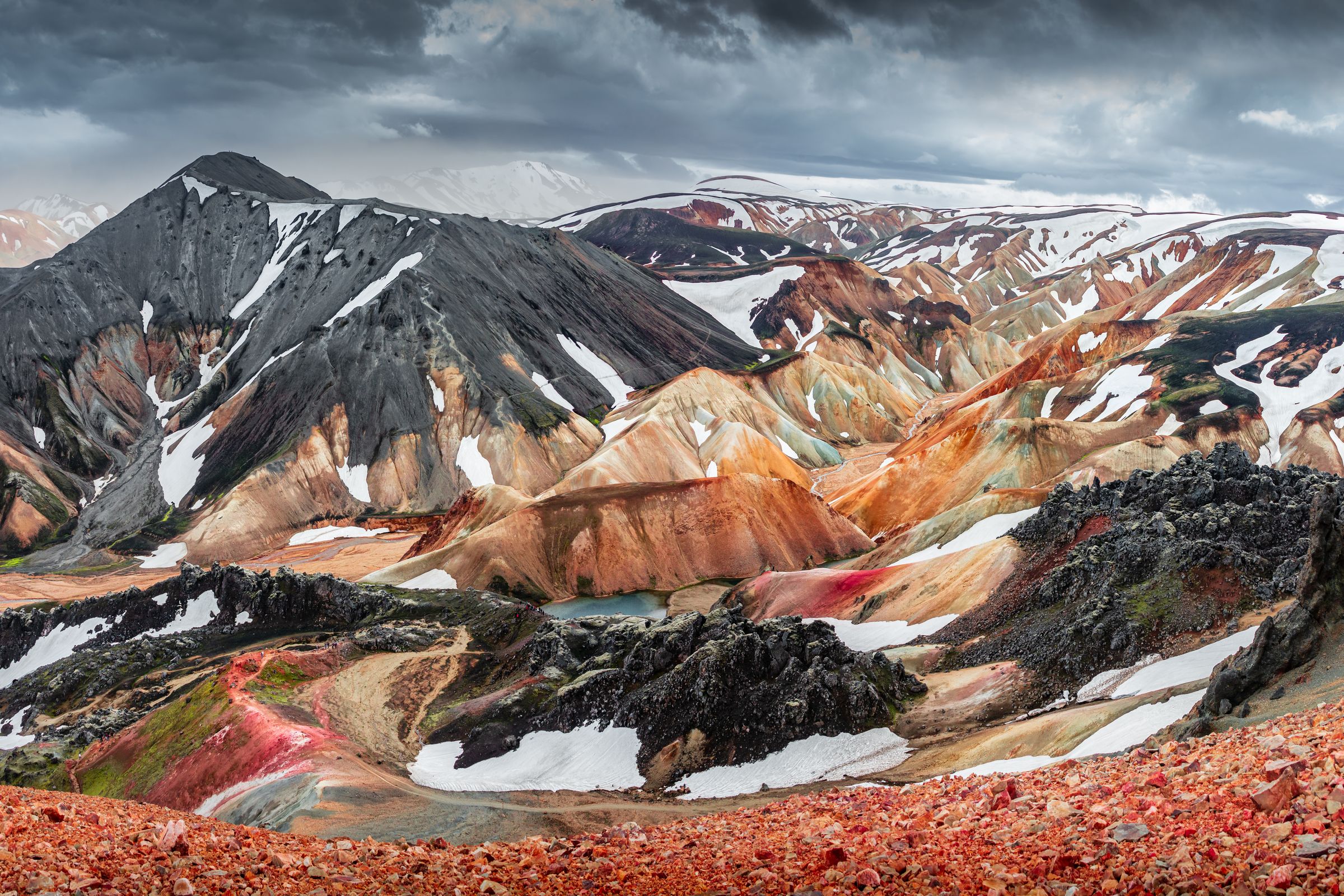
Known for its colorful mountains and natural hot springs, Landmannalaugar is one of the most astonishing parts of the Highlands. Its most distinctive feature are the rhyolite mountains, which have different shades due to its minerals, with hues of pink, red, orange, green, yellow and blue. There are several trails to explore the area, with different lengths and difficulty levels. Then, you can relax in the Landmannalaugar hot springs, natural hot baths. There is a camping area and a small shop there. This area is also the starting point of the Laugavegur Trail, the most famous hiking itinerary in Iceland. It’s a 55-kilometer route, completed in 3-4 days, that ends in the beautiful valley of Þórsmörk. Landmannalaugar is only accessible via F-roads, and one can only get there between June and September.
Where to Stay Near Háifoss Waterfall
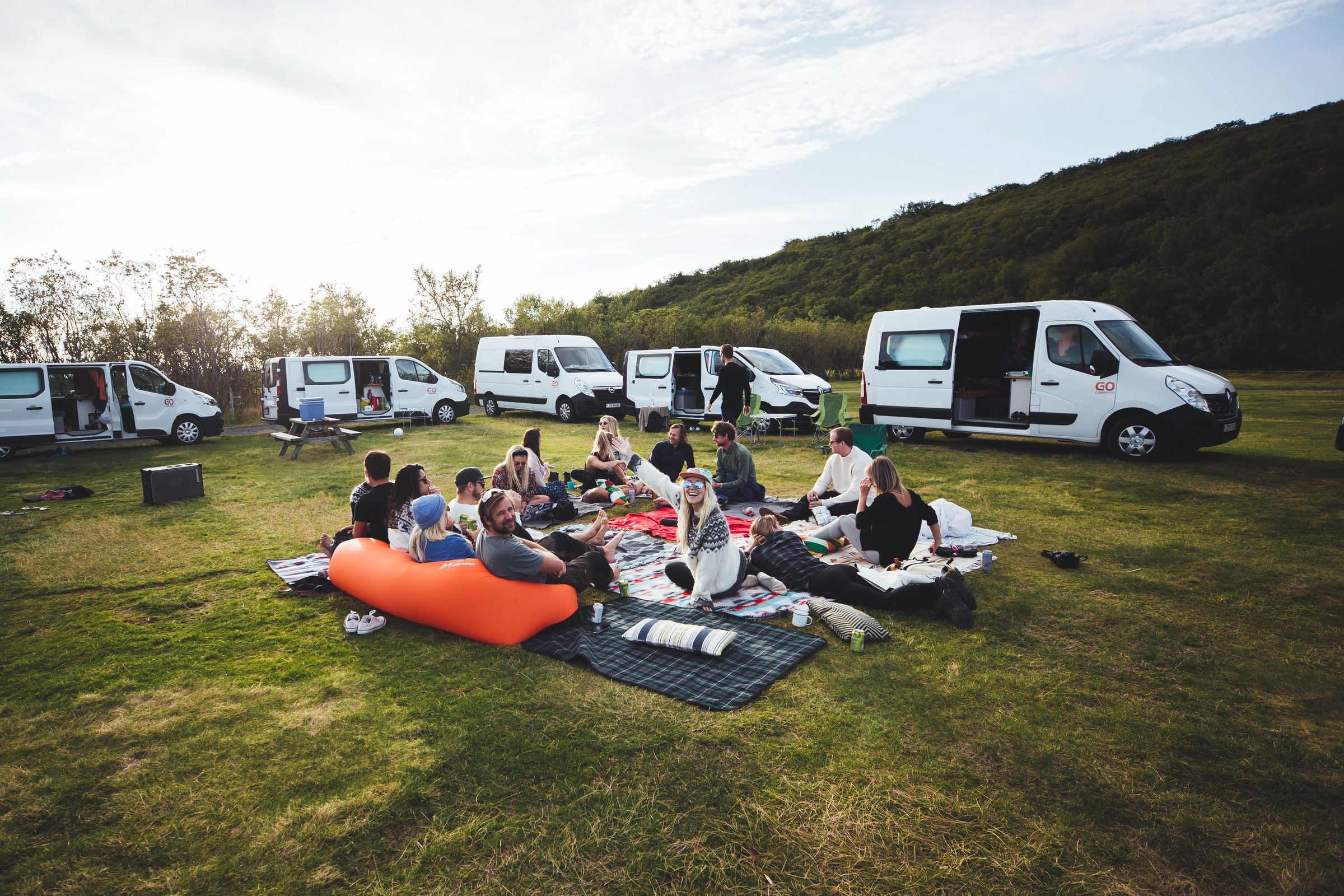
Although Háifoss is in a remote location, there are plenty of camping grounds where you can go with your campervan for the night. Camping culture is strong in Iceland, so there’s always a site nearby. Even if the temptation of sleeping in the middle of an impressive landscape may be big, wild camping is illegal in this country, so stick to designated places.
Landmannahellir
Distance to Háifoss: 60 km (37 miles). Opening period: June to mid-September.
This site is a bit far from Háifoss, but it is a great stay in the Highlands. It’s equipped with several huts and a camping area. The huts are heated, have running water, cooking facilities, and a toilet, but need to be booked in advance. The large camping area, suitable for tents and vans, gives access to toilets, showers, and running water. There’s also a communal hut where you can cook, eat, or just wait out the bad weather. It’s more basic than the one in Landmannalaugar, but considerably less crowded.
Árnes Camping Ground
Distance to Háifoss: 43 km (26.7 miles). Opening period: May 15 to September 15.
Located in a wooded area in the Þjórsárdalur valley, this site offers sheltered pitches for campervans. Amenities include toilets, showers, electricity hookups (around 60), washing machine, playground for children, football field, an on-site hostel, café/store, and a visitor center with multimedia exhibits on the Þjórsá River region. Its proximity to local services and a swimming pool makes it convenient for longer stays.
Álfaskeið Campsite
Distance to Háifoss: 60 km (37 miles). Opening period: Year-round (limited in winter).
Not far from Flúðir, this campsite provides open spaces with basic facilities. It features a small cabin with toilets and sinks and cold water—there’s no hot water and no electricity available on-site. There are several hiking trails nearby, and the location, in a green meadow, it’s very beautiful.
Flúðir Camping Ground
Distance to Háifoss: 65 km (40 miles). Opening period: May to September.
Flúðir is a small and nice village that has its own campsite. This site provides campervan spots with modern facilities. It features toilets, showers, Wi-Fi, laundry, outdoor BBQ area, and a playground. It also has a small shop for basics like food and camping supplies. As it’s close to the town’s center, you’ll have access to bars and shops. The Secret Lagoon is also in town.
Faxi Camping Ground
Distance to Háifoss: 80 km (50 miles). Opening period: May to September.
Set near the Faxi waterfall on the Golden Circle, it has grassy pitches and toilets, cold water sinks, electricity, and picnic tables. There’s also a café on site that serves meals and drinks.
Geysir Camping Site
Distance to Háifoss: 89 km (55 miles). Opening period: May to September.
Opposite the famous Geysir geothermal area, this site provides spacious pitches for vans. It has toilets, showers, electricity, Wi-Fi, and a washing machine. There’s a restaurant across the road, and there’s even a golf course nearby. The setting makes it unique, but it can get quite busy during peak season.
Úthlíð Cottages
Distance to Háifoss: 86 km (53.4 miles). Opening period: Year-round.
This site is located in a beautiful rural setting, with pitches for campervans sheltered by trees. It has toilets, showers, electricity, a laundry room, a restaurant with free Wi-Fi, a swimming pool, a playground for children, and hot tubs. They also have cottages for rent if you want a more comfortable stay. The camping area is big enough and there’s no need to book in advance.
Skjól Camping
Distance to Háifoss: 89 km (55 miles). Opening period: May to September.
Halfway between Gullfoss and Geysir Geothermal Area, Skjól is a well-equipped campsite with toilets, showers, electricity hookups, free Wi-Fi, BBQ area, and a playground for children. It also has a bar that serves food and drinks.
The Seasons at Háifoss Waterfall
As most of the things that you’ll want to see and do in Iceland are outdoors, like Háifoss, the weather is a major factor to consider. Here’s a breakdown season by season.
Summer (June to August)
This is the prime time for visiting Háifoss. Roads are generally clear and dry, with long daylight hours, almost 24 at the end of June, for extended exploration. In other seasons, the weather can make some roads leading to this natural monument impassable. Temperatures range from 10-15°C (50-59°F). With the warmer water, the snow melts, which means the waterfall is at full flow. The weather is mostly fair, but rain is always a possibility. It’s peak season, which means more visitors, though the site remains quieter than major attractions.
Autumn (September and October)
Fewer crowds and changing colors in the vegetation bring a different look to Háifoss. Days are shorter, but weather can still be mild at 5-10°C (41-50°F). Roads may get muddy after rain, especially secondary ones made of gravel, and some facilities close. It's a good shoulder season and not many tourists travel to see the waterfall, so you’ll probably have a quiet visit.
Winter (November to March)
Access becomes challenging with snow and ice on gravel roads. The best thing you can do to deal with these difficult travelling conditions is to rent a 4x4 campervan. Even then, it’s possible that some of the roads in the area where Háifoss is close if the weather is too adverse. Temperatures drop to -5 to 0°C (23-32°F), and daylight is limited to 4-6 hours.
Spring (April and May)
As the season advances, the snowmelt gradually increases the water volume in the waterfall. The temperature goes up after the long winter, usually moving between 0-10°C (32-50°F), but paths can be icy or wet. Roads open gradually and there are not many tourists.

What to Pack to Visit Háifoss Waterfall
- Sturdy waterproof hiking boots. Regardless of the season, rain is always a possibility.
- Layered clothing. It’s the best way to deal with the temperature changes so common in Iceland. Base thermal layer; fleece or wool for the intermediate; waterproof layer on the outside.
- Waterproof jacket and pants to stay dry.
- Hat, gloves, and warm socks, as winds can be cold even in summer.
- Snacks and plenty of water. There are no shops, bars, or restaurants near Háifoss.
- Power bank for long days out. You won’t want to run out of battery. Also, not all the campsites have access to electricity.
- Backpack to carry essentials, preferably with a rain cover.

Travel Tips
- Use a 4x4 campervan for the gravel road to Háifoss. In winter, it’s absolutely necessary. In other seasons, their high clearance and powerful engines are great to deal with the most difficult roads.
- Check the road conditions before departing to avoid surprises.
- Arrive early or late in the day during summer to enjoy a quieter visit.
- Stick to marked trails to protect the fragile environment.
- Fuel up in towns like Selfoss before heading into the valley, there are no gas stations there.
- Download offline maps or carry a paper one. Cell phone signal can be low to nonexistent in the Highlands.
- Check weather forecasts daily, even a few times a day. The conditions can change quickly.
- Leave no trace: pack out all waste to preserve the natural setting.
Conclusion
In terms of waterfalls, not many in Iceland are as impressive as Háifoss. One of the tallest in the whole country, visiting it is an unforgettable experience. It’s relatively easy to go there; it has a neighbor, Granni, that enhances the view, and there are other natural monuments nearby that make it a prime travel destination. If you’re doing a road trip through Iceland, Háifoss should be in your radar.