A natural hot river in the heart of Iceland: Reykjadalur Hot Spring
In Iceland, geothermal activity is one of the main forces that have shaped the country. As a result, it has generated a great number of thermal areas and hot springs where people can enjoy a nice and relaxing hot bath. These baths come in different shapes and sizes. Some are modern spas, with luxurious treatments and fantastic facilities. Others are more rustic yet great places to have a fantastic time for little to no cost.
In South West Iceland, there’s a valley called Reykjadalur that is an active geothermal area. There’s a lot of geothermal activity happening underground and some of it can be seen above the surface. Among the many elements that we can find there, one of the most appealing is the Reykjadalur Hot Spring, a completely natural warm river where one can enjoy a wonderful experience. This valley, alive with steam vents and bubbling pools, sits close to the town of Hveragerði, making it a straightforward stop on any road trip. The hike to the springs is also part of the adventure, leading through landscapes shaped by volcanic forces.
Key Takeaways
- The Reykjadalur Hot spring is a natural geothermal river.
- The river has different sections at different temperatures.
- The main bathing area keeps a constant temperature throughout the year between 36 and 40°C (97-104°F).
What's Reykjadalur Hot Spring?
Reykjadalur is a valley in South West Iceland known for its active geothermal activity. The name Reykjadalur can be translated as “smoke valley” or “steam valley”. Reykja means smoke in Icelandic, and dalur is valley. Most of the natural features in Iceland have descriptive names. For example, Reykjavik means “smoke bay,” sharing part of its name with this beautiful valley. The main reason for this name is that the intense geothermal activity happening below the surface creates a good number of steam vents, so it looks like there’s smoke constantly coming out from underground.
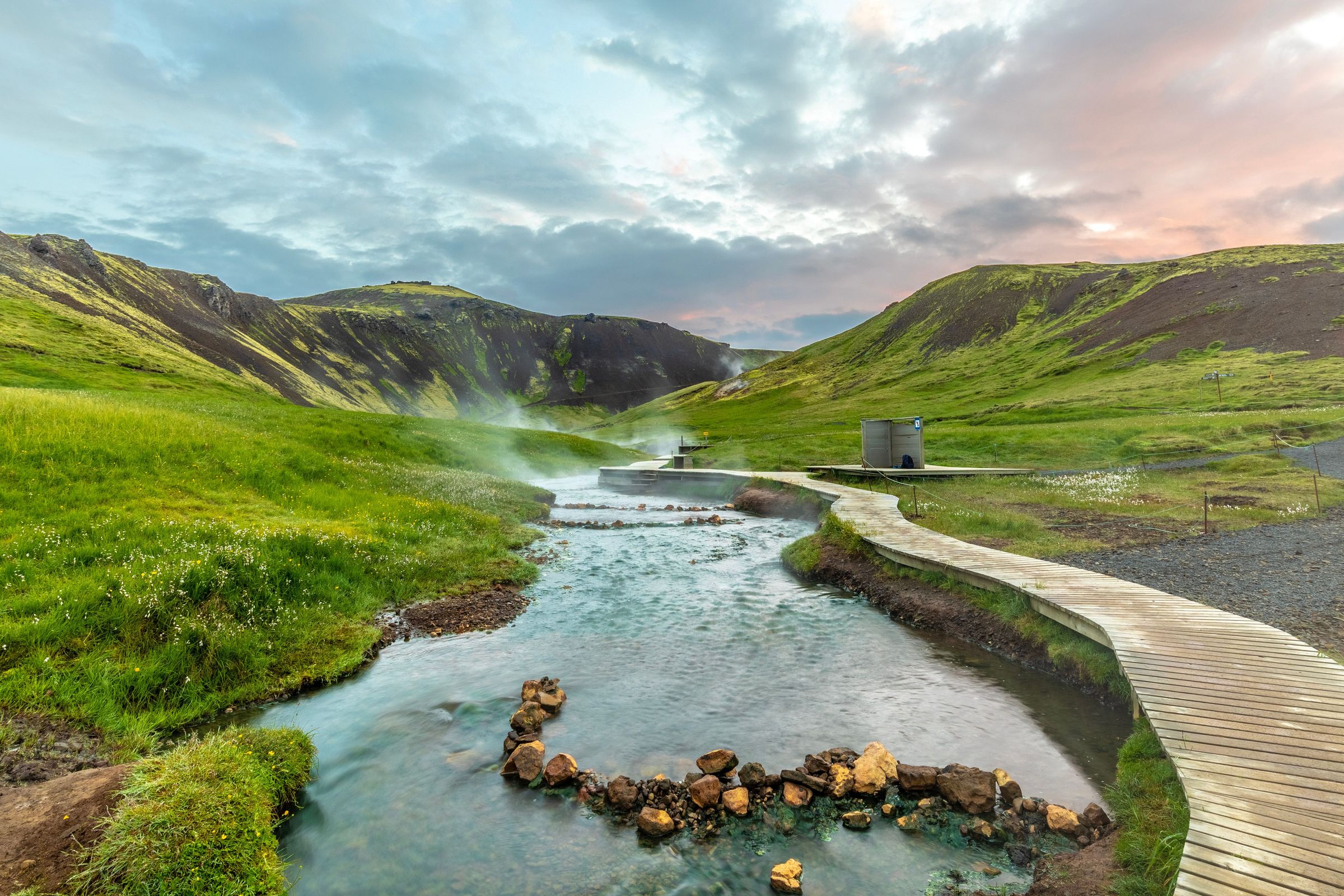
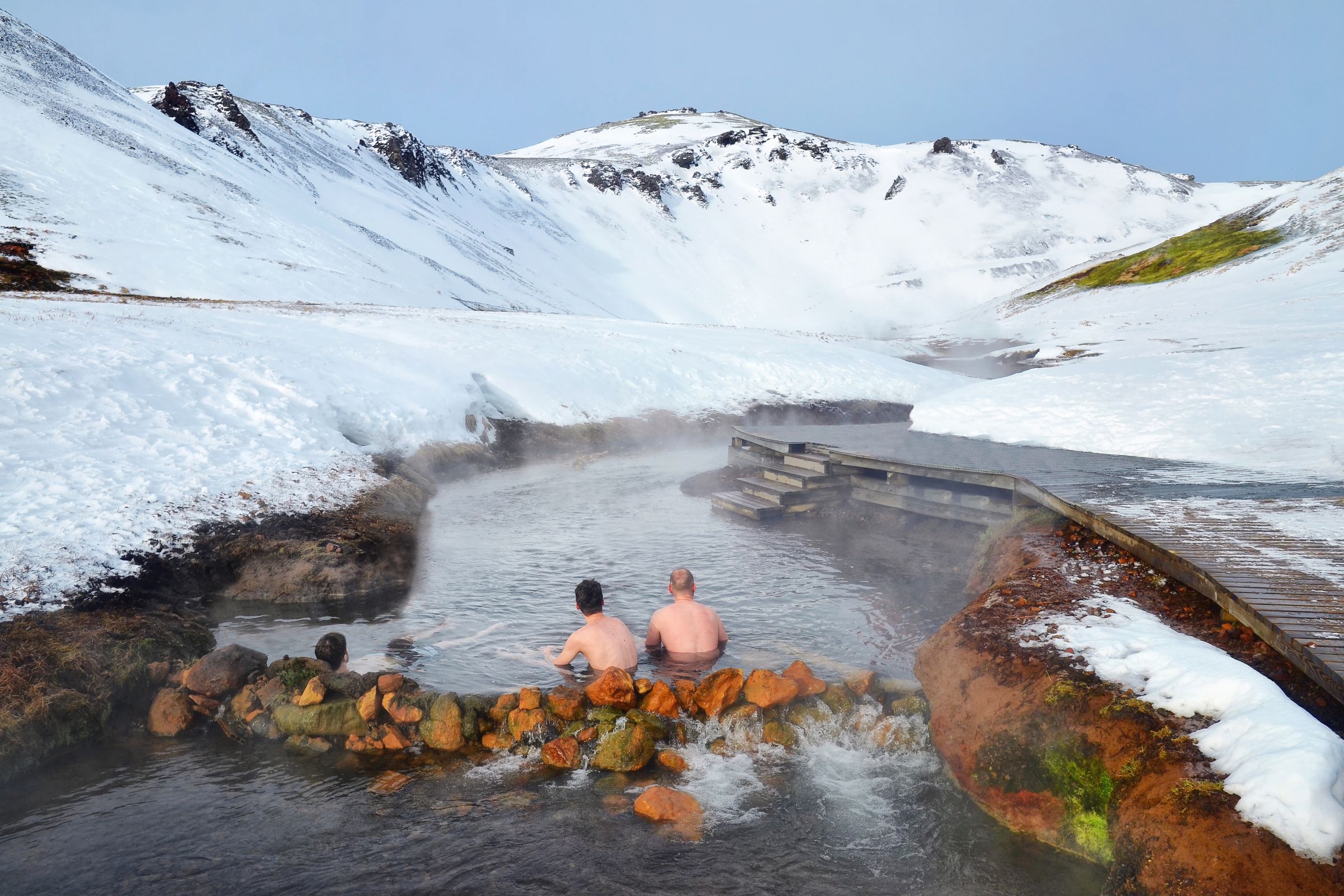
The valley is crossed by a geothermal river that flows hot all year, regardless of the season or the temperature outside. It’s naturally heated by underground volcanic activity, and the water reaches temperatures between 36°C and 40°C (97-104°F). That’s in the main bathing area, because it varies quite a lot depending on the part of the river. At certain points, the water is too hot and unsafe for bathing. The more upstream you go, the hotter it usually is. But there are lower sections where the current mixes hot springs with cooler streams, generating a comfortable and constant temperature. The best part of this is that, like in a spa, you can have baths at different temperatures. You can go a bit up or down the shore until you find the one that suits you best.
Surrounding the river, steam rises from vents in the ground, and there are several mud pools that bubble with minerals that paint the earth in reds, yellows, and greens. The valley itself stretches through green hills, part of the Hengill volcanic area, where tectonic plates pull apart slowly over time. Iceland is on the Mid Atlantic Ridge, the separation between the North American and the Eurasian plates. This means this area is in constant evolution and change, it’s a dynamic landscape.
One of the best aspects of the Reykjadalur Hot Spring is its raw, untouched feel. Unlike more developed hot springs, more modern but feeling artificial. This place offers a simple immersion in nature. The contrast of the warm water against the cool air is a fantastic feeling.
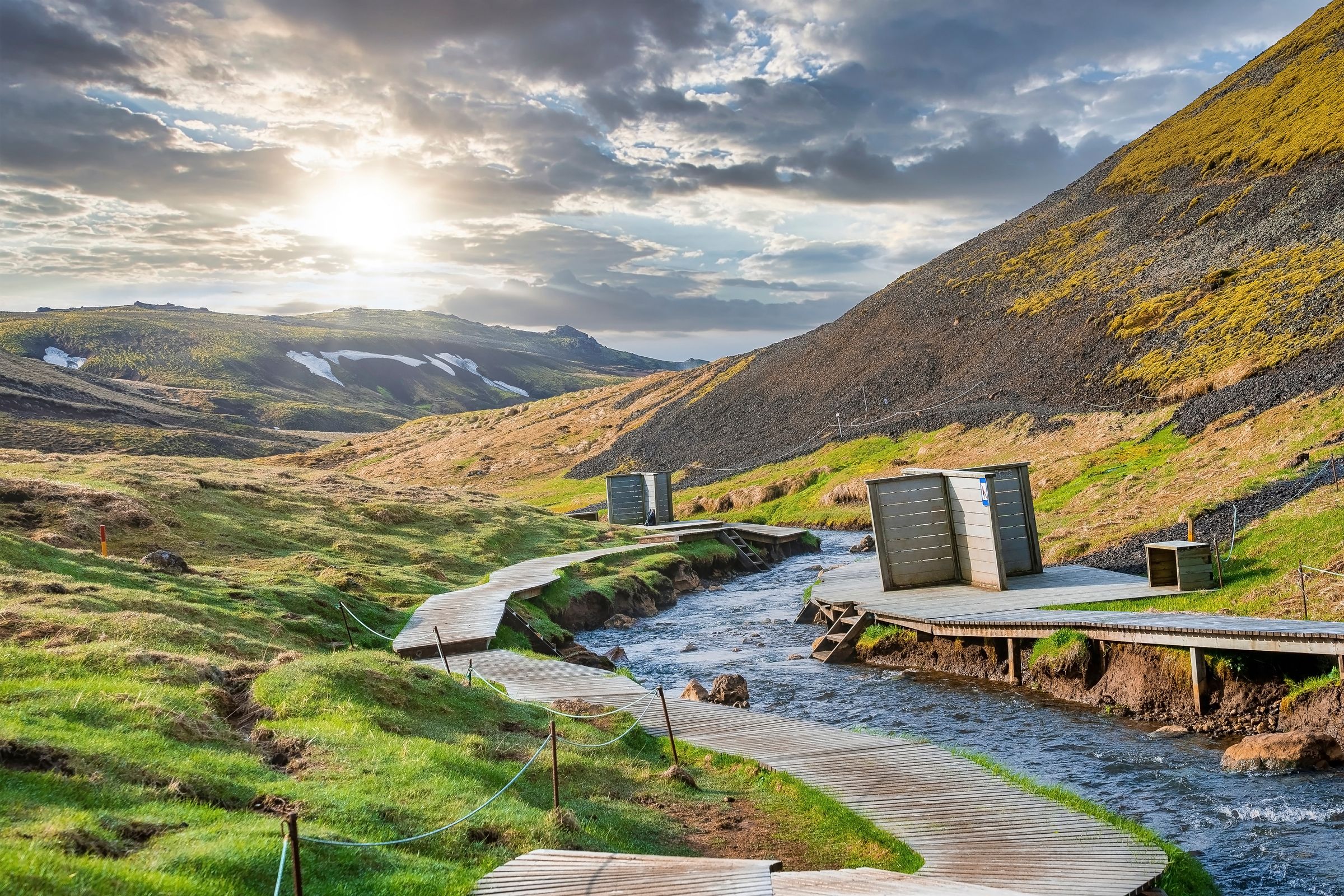
Historically, locals have used these waters for centuries, dating back to Iceland's settlement around the 9th century. The first inhabitants of the island relied on geothermal sources for bathing, washing, and even cooking, turning natural heat into everyday tools. Well, that’s something that still happens to this day. Over time, as roads improved, the valley shifted from a local secret to a draw for visitors. It’s quite close to Reykjavik, so both Icelanders and tourists come to this place each year. This has led to improvements around the river, such as boardwalks and basic facilities.
Useful Information about Reykjadalur Hot Spring
Entry to Reykjadalur Hot Spring is free, keeping it accessible for everyone, both locals and travelers. The main expense comes for leaving your car or campervan in the parking lot by the river. General price is 200 ISK (€1.35 or $1.60) for the first hour and 250 ISK (€1.70 or $2) for each additional hour. For a typical visit lasting 2-3 hours, expect to pay about 700 ISK total (€4.75 or $5.60). You can pay through an app like Easy Park or the machines you’ll find there. This fee supports maintenance of the area, including paths and signage.
The site operates without set hours, available 24/7 throughout the year, though weather can affect access. In winter, snow or ice might close the trails, so check apps like Safetravel before you go. In summer, the days are really long, so you can have a bath with natural light at almost all times. In winter, daylight reduces drastically, but if the night is clear and the weather allows it, there are chances to enjoy the thermal river under the Northern Lights.
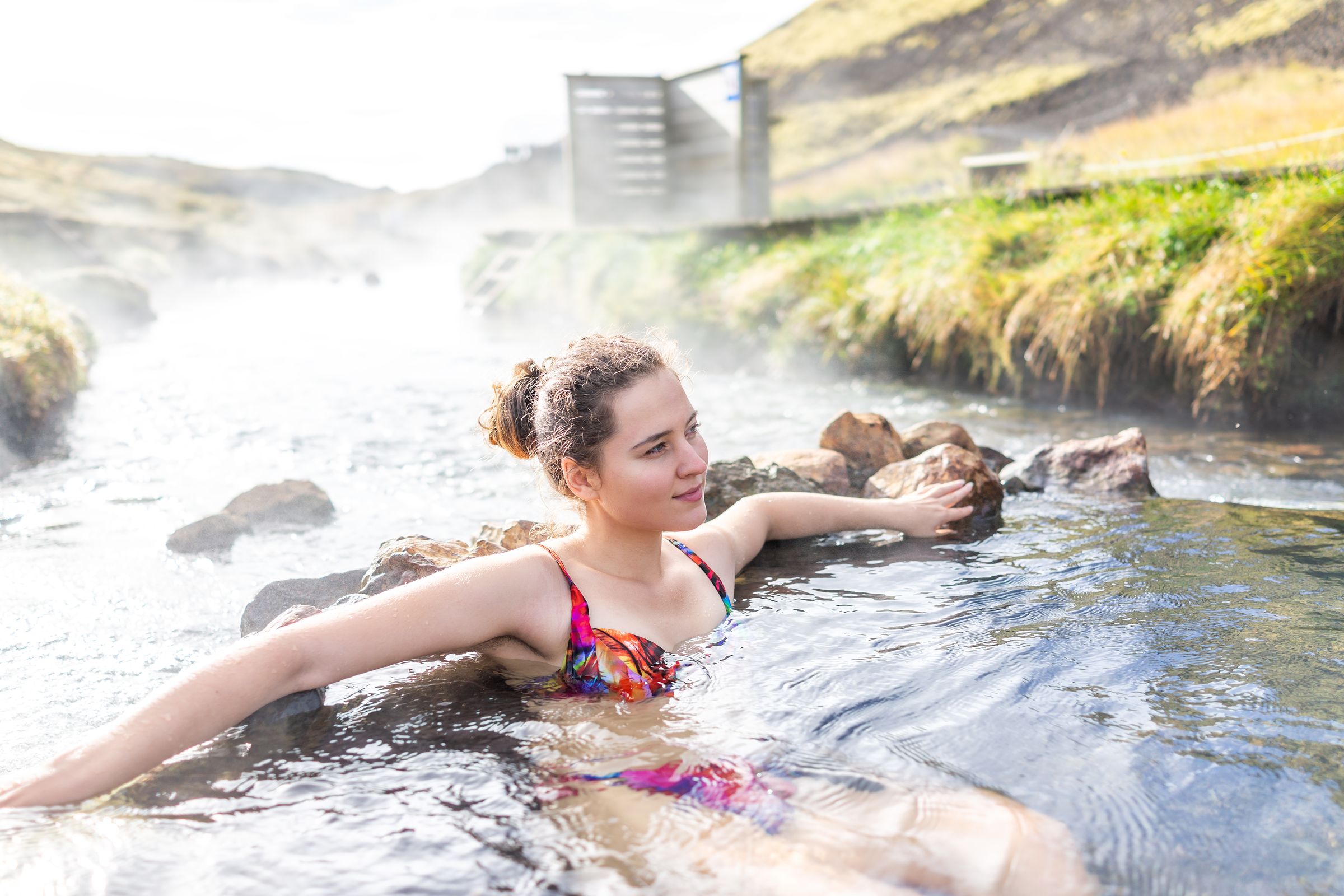
The facilities by the hot spring are quite basic, mainly to preserve the natural setting and atmosphere. There are a few wooden screens to provide some privacy for changing, but there are no lockers, showers, or restrooms at the springs themselves. There’s a small cabin by the parking area with toilets.
It's necessary for you to bring your own swimsuit and towel, there are no rentals on site. If you’re renting a big campervan or caravan, the parking lot has a few spaces for larger vehicles. However, these spots fill up fast in peak hours, so consider coming early in the morning or late in the afternoon to secure your chances.
Use the parking lot's toilets before starting the hike. The price includes nothing beyond access; bring your own swimsuit and towel, as no rentals exist on-site. The town of Hveragerði is very close, and there you’ll find cafés, shops, and services for your trip.
Where's Reykjadalur Hot Spring and How to Get There
The Reykjadalur geothermal valley is in southwest Iceland, nestled in the Hengill volcanic area near Hveragerði, about 45 kilometers (28 miles) east of Reykjavik. It’s not far from the Golden Circle, the most famous scenic route in the country. On top of that, South Iceland is one the most complete regions in Iceland, full of natural wonders, so you can add Reykjadalur Hot Spring as a stop in a larger itinerary. It’s really close to the Ring Road (Route 1), the main road in Iceland.
The best way to go there is by renting a car or campervan. If you rent a campervan, you can go there at the time you prefer and also have a place to sleep in one of the many campsites in the area afterwards. From Reykjavik, start by taking the Ring Road (Route 1) for about 40 kilometers (25 miles) until you reach Hveragerði. Turn left following signs for the town center, then continue uphill on a road for another 3 kilometers (1.9 miles) until you see the parking area for the hot spring. The total drive takes around 45 minutes in good conditions. All the roads are paved and in great condition, so any type of vehicle can make it. In winter, a 4x4 is highly recommended to deal with the snow, though the route is generally cleared.
There are public buses from Reykjavik to Hveragerði. Route 51 and 52 connect the two cities, but don’t go up to the Reykjadalur Hot Spring. From Hveragerði’s center, you’ll need to walk for 4 kilometers (2.5 miles) until you get to the bathing area. Also, you’ll probably want to continue your journey later, and having your own vehicle means freedom of movement.

What to See and Do near Reykjadalur Hot Spring
As we just mentioned, there’s a lot to see and do in the region where Reykjadalur is in.
Djúpagilsfoss
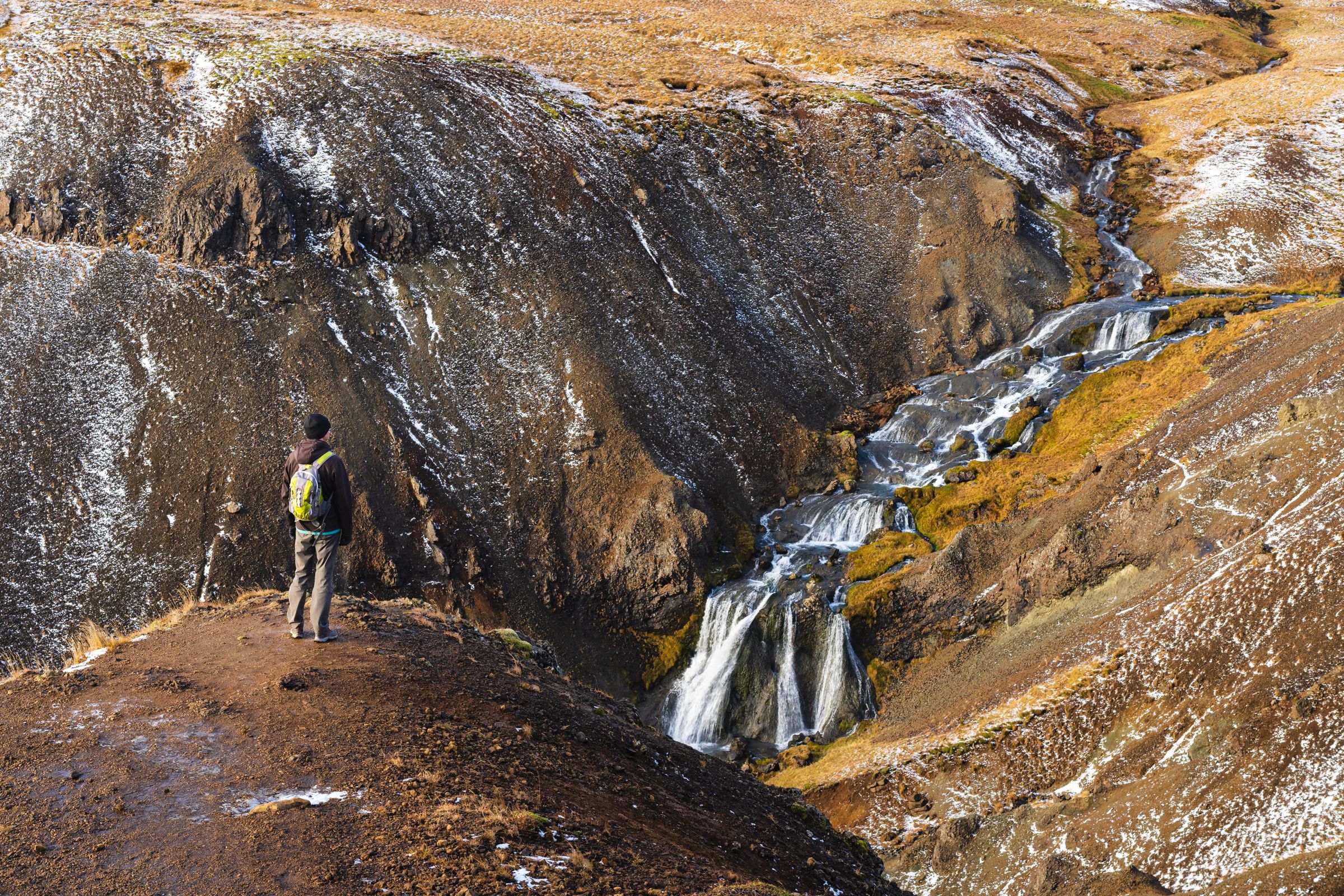
Have you come to Iceland searching for waterfalls? Well, you have one just two kilometers (1.2 miles) away from the Reykjadalur Hot Spring. Djúpagilsfoss is a waterfall that is part of one of the rivers in the valley. It drops in several tiers over rocks inside a narrow canyon. It's not a massive drop but offers a close-up of Iceland's glacial rivers in action. There’s a trail that starts at the Reykjadalur Hot Spring parking lot and gets there. It’s a great activity, the trail goes through a gorgeous landscape, and you can always have a bath at the end to relax your legs.
Hveragerði
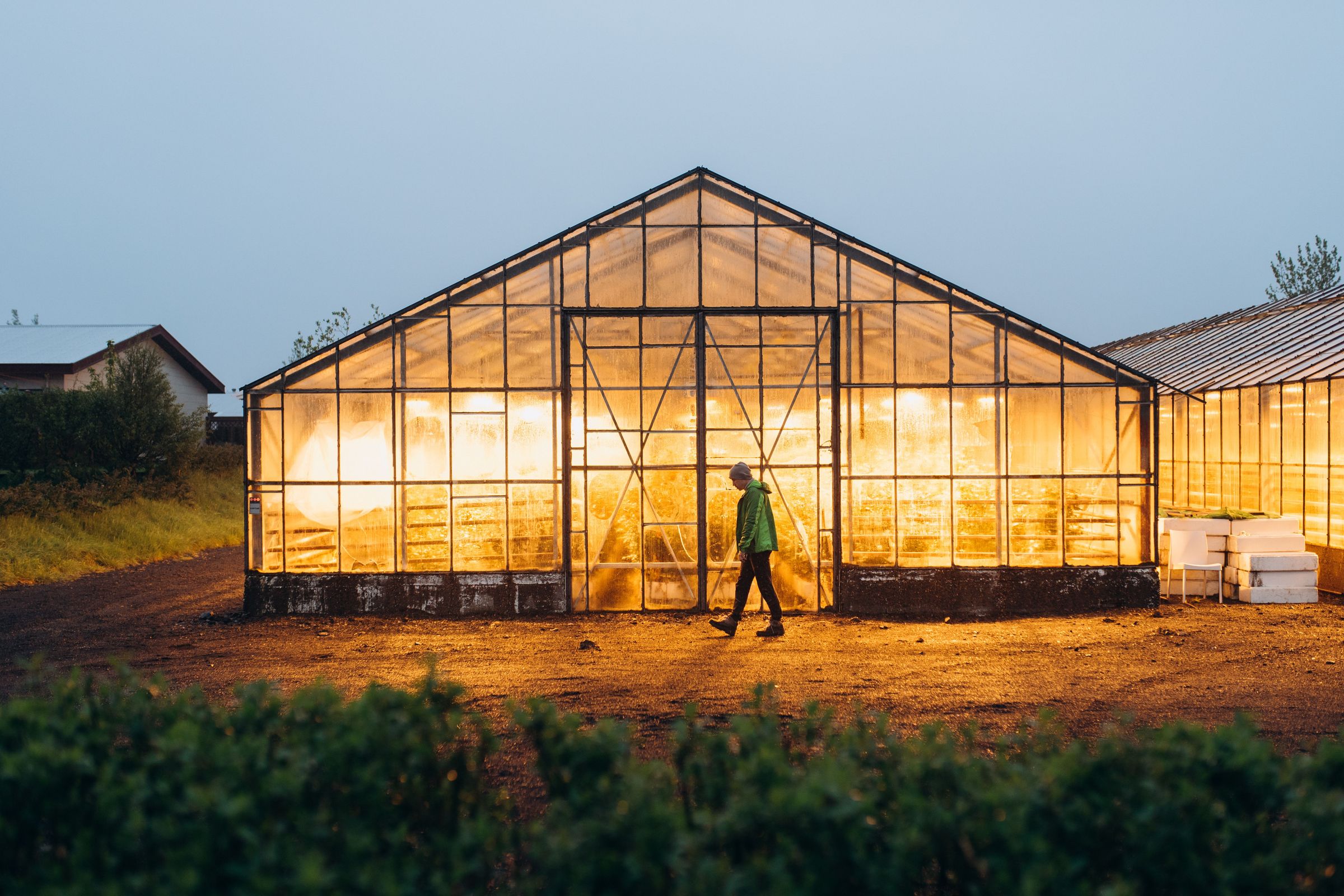
Hveragerði is a nice little town that serves as the gateway to Reykjadalur. It’s known in the country for its geothermal energy that powers greenhouses growing tropical fruits like bananas. A small geothermal park in the center lets visitors see boiling mud pools and steam vents up close. The town has cafes where you can discover Icelandic food, and there’s a bakery that cooks rye bread using the heat from earth. They bury the dough in the ground for 24 hours and the land does the rest. For a campervan road trip, it’s a great stop for services, like fuel and groceries, and can also serve as a great base to explore the region.
Hveragerði Golf Club
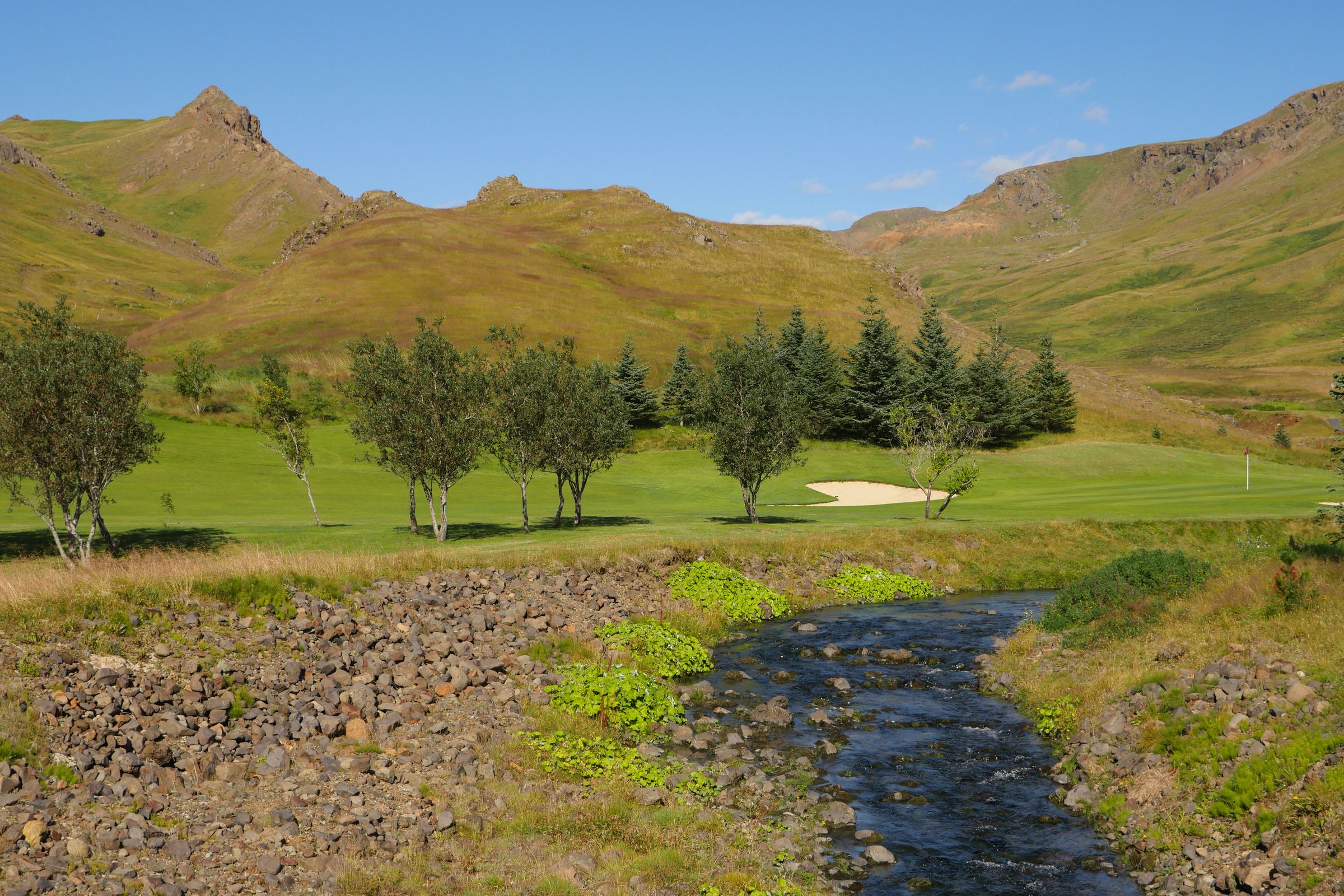
Just north of the town, quite close to the hot spring, there’s a golf course. The Hveragerði Golf Club is a nine-hole course amid rolling hills and geothermal spots, where steam sometimes rises near the greens. It's open to visitors, with clubs available for rent, so if you like golf, you can have a great time without the need of bringing your own clubs. The layout takes advantage of the landscape, with views over the town and distant mountains. Fees are reasonable and it's playable from spring to fall.
Hveradalir Geothermal Area
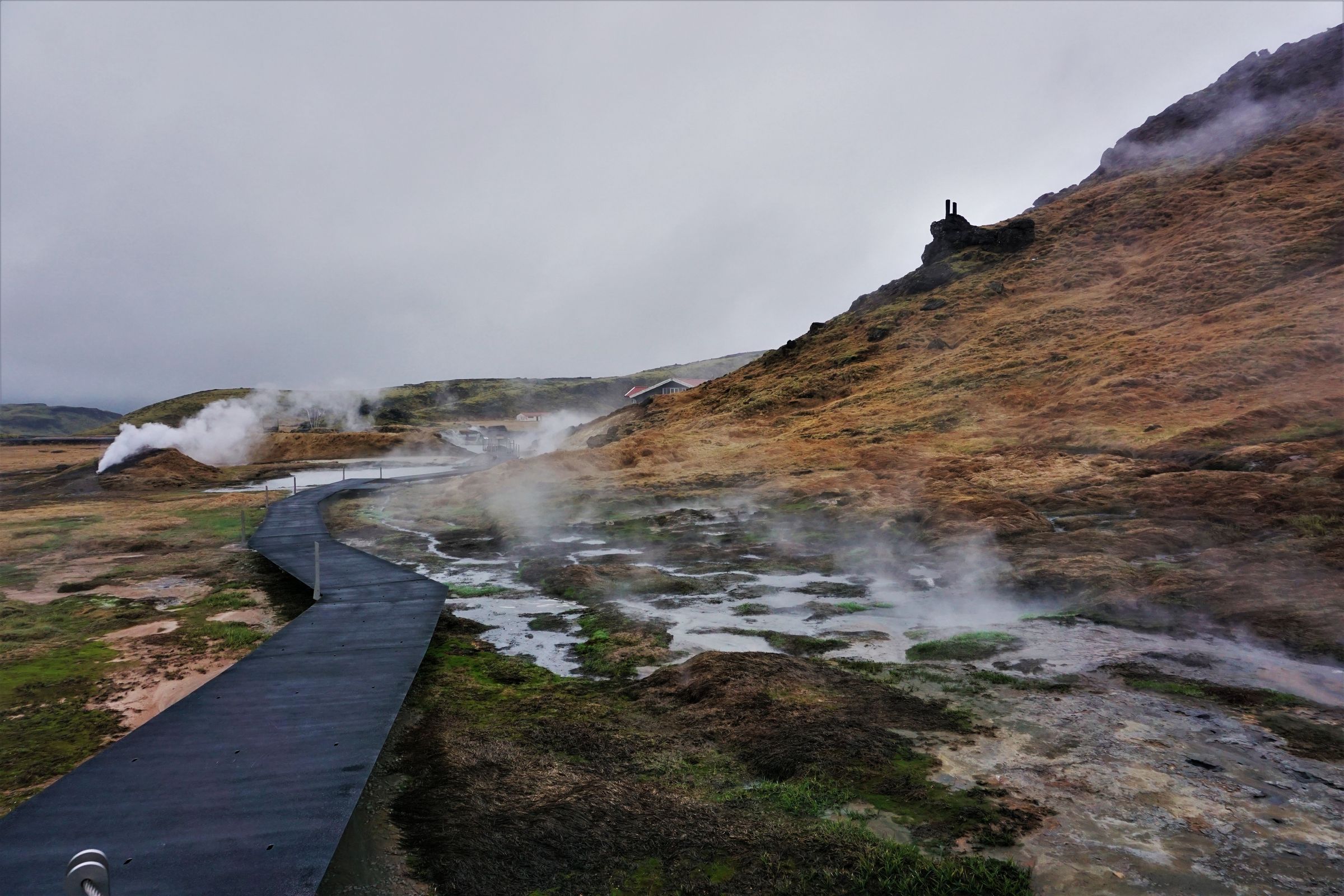
For those interested in geothermal activity, Hveradalir extends this theme beyond Reykjadalur. It’s quite close, part of the same geothermal system, with more diverse elements to see this source of energy from up close. There are several trails that lead to more vents, hot springs, mineral deposits, and mud pots in the Hengill region.
Selfoss
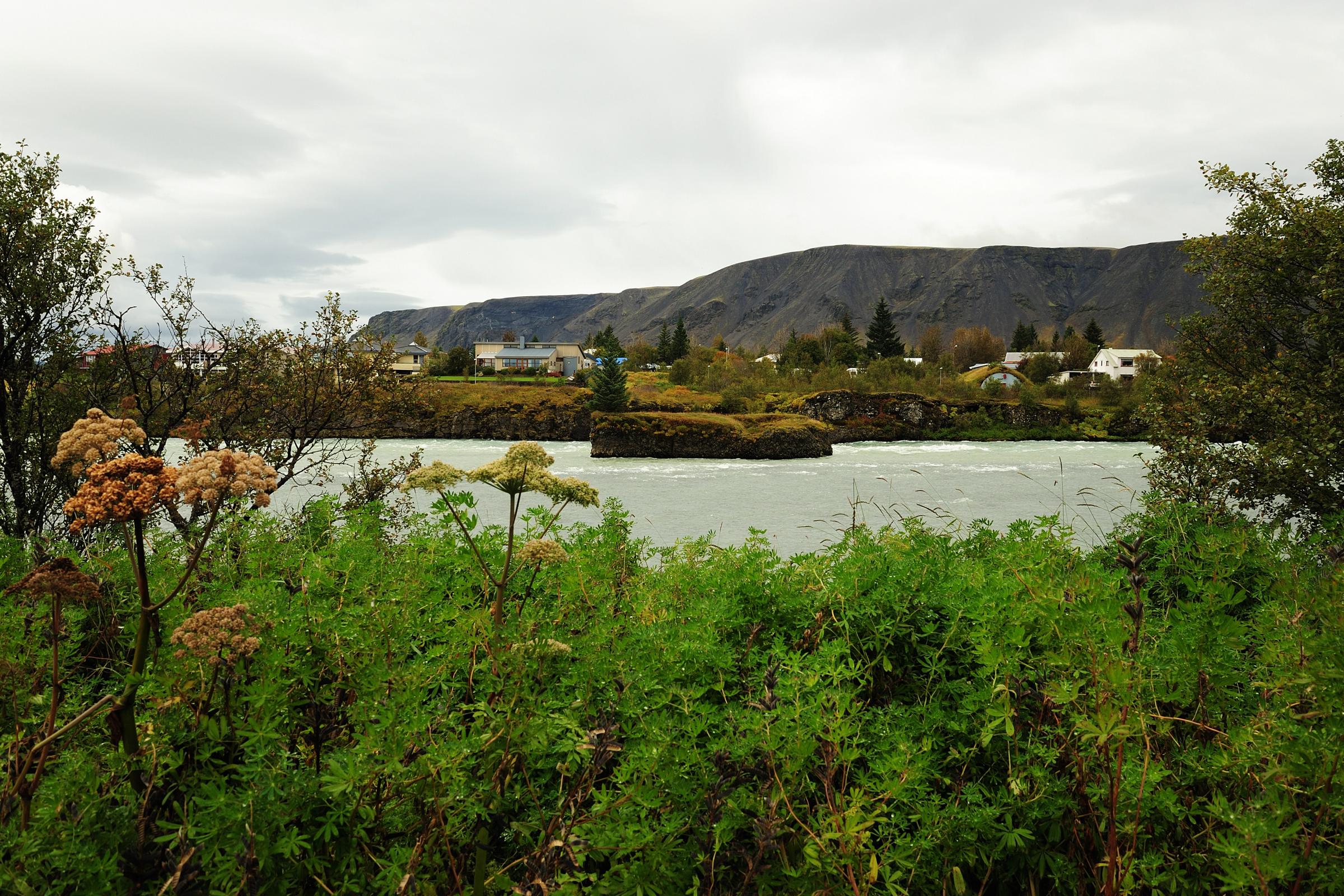
Selfoss, a short drive from Hveragerði, is the capital and most important city in the Southern Region. It’s an active hub with shops, bars, restaurants, and a beautiful historic center. The project New Old Town has refurbished several traditional colorful wooden houses. This area has several pedestrian streets with shops. If you want a touch of culture and history, you can visit the Bobby Fischer Center, a museum dedicated to the chess grandmaster. His tomb can also be visited, just north of the city. The area by the Ölfusá river is really nice for a stroll or having a picnic.
Raufarhólshellir
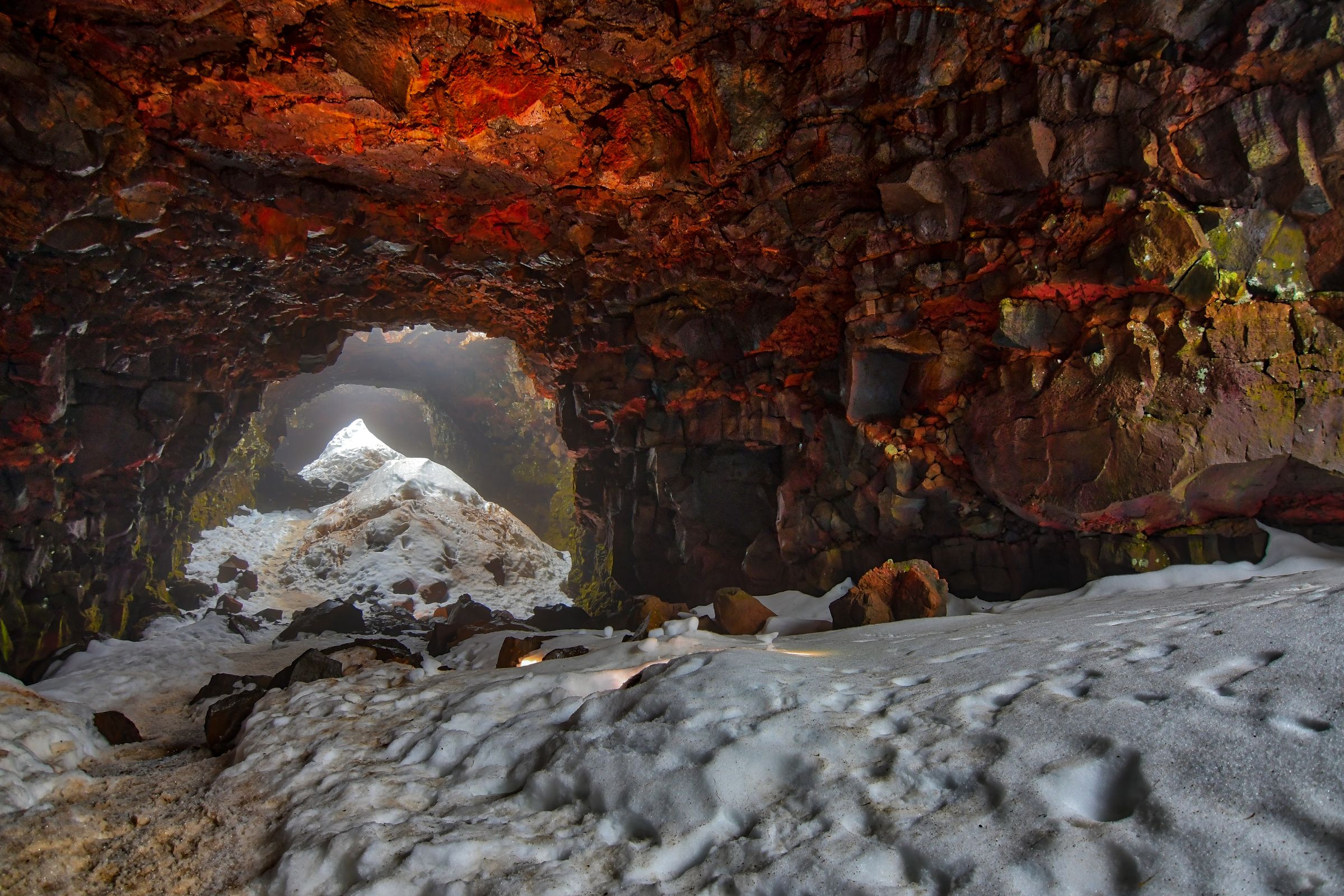
Raufarhólshellir, a lava tube cave roughly 18 kilometers (11 miles) from Reykjadalur, is a great place to see the effects of lava flows from the inside. There are guided tours, that last about an hour, that go underground to discover ice formations and colorful walls inside the 1,360-meter (4,460-foot) tunnel. Helmets and lights are provided, and the paths have been improved for safety.
Where to Stay near Reykjadalur Hot Spring
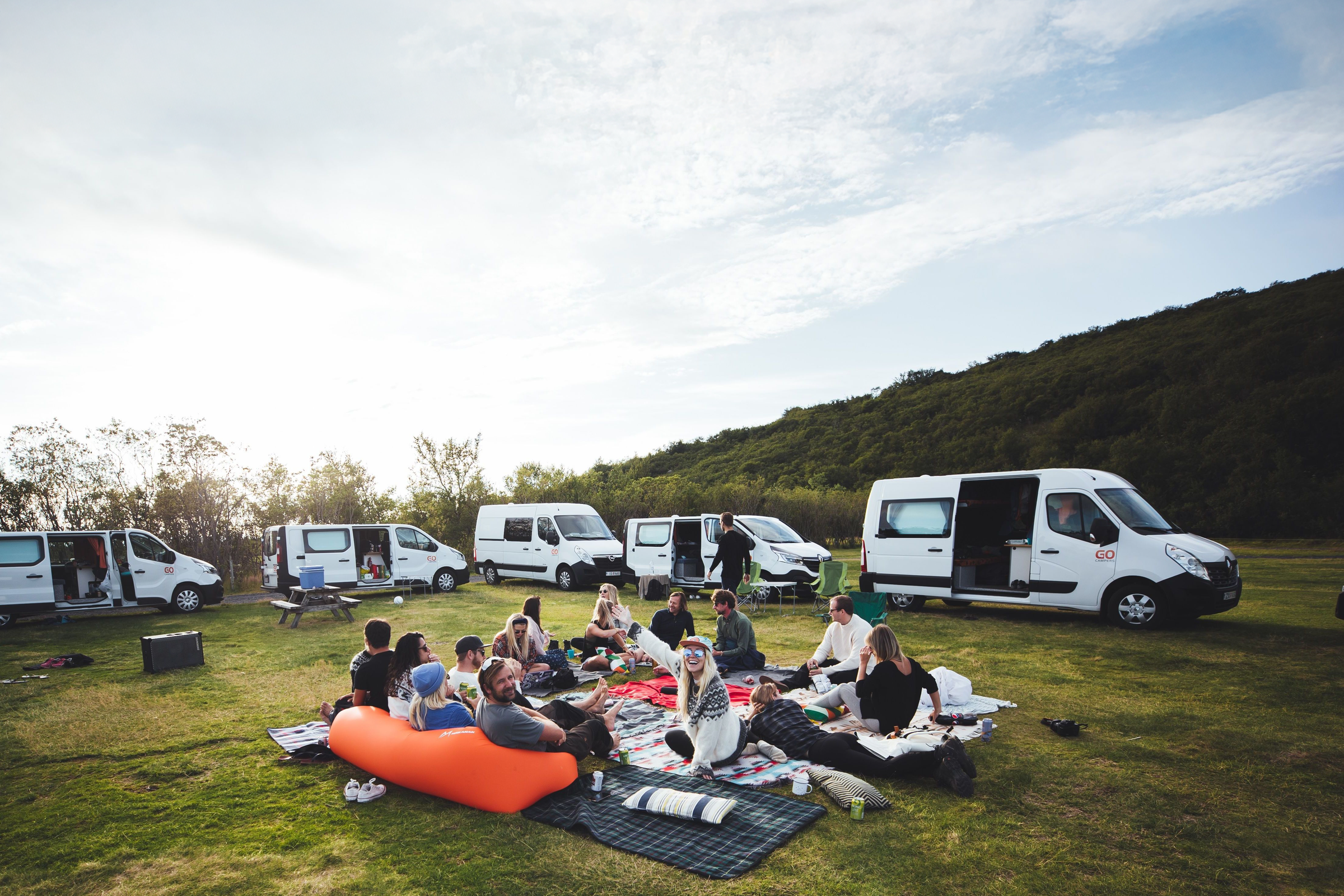
Visiting the Reykjadalur Hot Spring as part of a road trip has the advantage of having a few camping grounds nearby where you can go with your campervan for the night. It’s important to know that wild camping is forbidden in Iceland.
Reykjamörk Hveragerði Camping Ground
Distance to Reykjadalur Hot Spring: 4 kilometers (2.5 miles). Opening period: Year-round, with full services in summer.
This campsite is the closest to the Reykjadalur Hot Spring, right in the center of Hveragerði. It’s equipped with clean toilets, hot showers, electricity, washing machine and dryer, a dishwashing area with hot and cold water, a kitchen area with cooking facilities, and large barbecues for communal use. The location allows quick trips to the hot spring, plus walks to local shops or cafes.
Úlfljótsvatn Campsite
Distance to Reykjadalur Hot Spring: 33 kilometers (20.5 miles). Opening period: June 1 to August 31 with full services. September 1 to November 15, limited services.
This site by Lake Úlfljótsvatn is one of the largest camping grounds in Iceland, with a capacity for 5,000 guests. It has toilets, showers, electricity, a BBQ area, playgrounds for kids, and a shop for basics. It’s a great site for outdoor activities that can be organized through the staff at the campsite. These include fishing, football, canoeing, and disc golf. The limited services for autumn: Only one toilet and shower facility open, limited camping zones, and designated "winter camping" areas.
Þrastaskógur Campsite
Distance to Reykjadalur Hot Spring: 22 kilometers (13.7 miles). Opening period: Year-round.
A few minutes on the road north of Selfoss and you’ll get to this quiet camping ground situated in a beautiful forest. This place has restrooms, showers, cooking facilities, laundry room, and free Wi-Fi. They don’t take reservations, it works on a first-come, first-served basis.
Selfoss Campsite
Distance to Reykjadalur Hot Spring: 17 kilometers (10.5 miles). Opening period: Year-round.
This site is in the city of Selfoss, and offers three different types of accommodation: bungalows, summer houses, and camping area, with pitches for campervans and RVs with electric hookups. The camping area has restrooms, hot showers, free Wi-fi, a spacious dining room, laundry room, and a kitchen. It’s quite big, so there’s no need to book in advance, except when the Sumar á Selfossi festival is held in summer.
Þorlákshöfn Campsite
Distance to Reykjadalur Hot Spring: 25 kilometers (15.5 miles). Opening period: May 1 to September 15.
Þorlákshöfn is a quiet coastal town that has its own camping ground. It has a service house with toilets, showers, and dishwashing facilities. The site also features free Wi-Fi, washing machine, and dryer. It’s close to a leisure area with a playground for children and a swimming pool.
Hraunborgir Camping Ground
Distance to Reykjadalur Hot Spring: 35 kilometers (21.7 miles). Opening period: May 23 to August 31.
Located in Grímsnes, this is a complete and family-friendly campsite. It’s close to the Golden Circle and has toilets with cold and hot water, electricity hookups, laundry room, swimming pool, hot tubs, and a restaurant that serves meals and drinks. The service center by the campsite offers access to several activities, such as mini-golf, basketball, playground, and playroom.
Best Time to Visit Reykjadalur Hot Spring
Summer months from June to August bring long daylight hours. This allows visitors to enjoy a thermal bath with natural light at almost all times. It’s also the best season for hiking, as the weather is more stable, although a sudden shower is always a possibility. The temperatures usually hover between 10 and 15 °C (50–59 °F). As a disadvantage, it’s the time with more tourists, so the baths can be crowded at certain times.
Autumn, spanning September and October, offers milder conditions with fewer visitors, which means you can have a more peaceful and relaxing experience at the hot spring. The temperatures move between 2 and 10°C (35-50°F), which creates a nice contrast between the chill air and the hot water. On the downside, it rains quite often and winds can be strong.
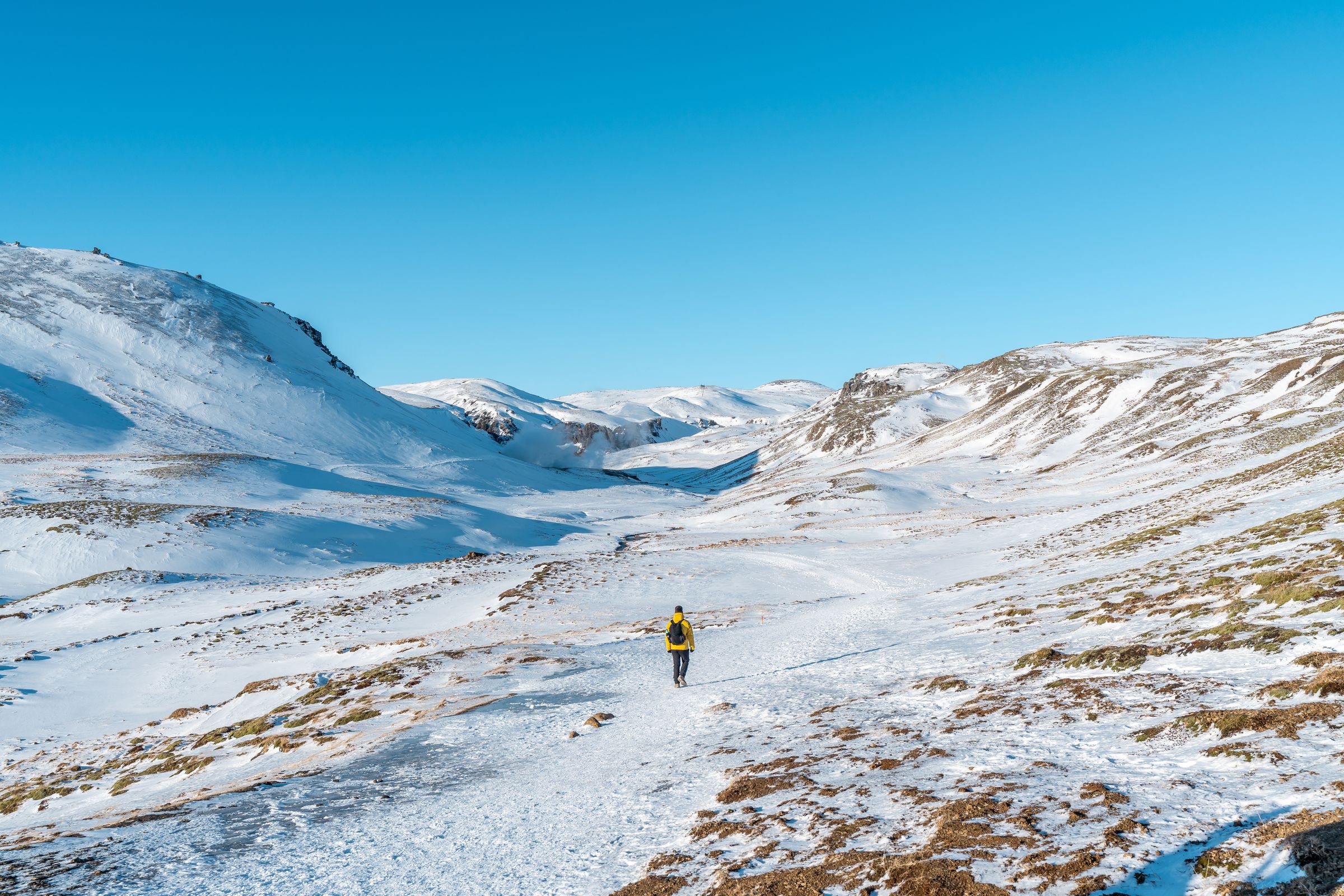
Winters are long in Iceland, from November to March, and usually cold, and can be difficult. Almost everything is covered in snow and the temperatures are often below freezing point. Roads can be difficult to navigate and some may even close if the weather is adverse. The ones leading to the Reykjadalur Hot Spring are usually clear, though. The days are really short, barely 4-6 hours of natural light. On the other hand, one of the best things of this season is the possibility of seeing the Northern Lights, and having a geothermal under the aurora is an unforgettable experience.
Spring, which spans April and May, sees the valley exploding with colors. The snow gives way to green pastures full of wildflowers. There are not many visitors, so the pools are moderately empty. Rain is common.
What to Pack to Visit Reykjadalur Hot Spring
- Swimsuit: Absolutely essential for dipping into the hot river. There are no rental options at Reykjadalur.
- Towel: Better if it’s the quick-dry type.
- Hiking shoes: These are basic for any trip to Iceland. Waterproof and with good grip for muddy and uneven trails.
- Layered clothing: The weather changes constantly in Iceland, and the best way to adapt to it is to wear layers. Inner thermal; fleece or wool intermediate; waterproof outer layer.
- Waterproof jacket: Protects against the rain
- Water bottle: Thermal baths can dehydrate you more than you would expect.
- Plastic bags: For wet clothes or trash to keep the area clean.
- Sunscreen and sunglasses: In summer, the UV rays are quite strong in Iceland. In winter, the reflection off snow can harm your eyes and skin.
- Flashlight: Can come in handy in winter, when there’s barely any natural light. Not all the area is illuminated.
Travel Tips
- Check weather updates and trail conditions before heading out, especially in off-seasons.
- Start early in summer to beat crowds and secure parking at the lot.
- Test water temperature with your hand before entering—upstream is hotter, downstream cooler.
- Stay on marked paths. Two reasons for that. First, to protect the natural environment. Second: some spots can be too hot.
- Don’t use shampoo or soap in the river to preserve its natural state.
- Pack out all waste, leave no trace.
- Wear your swimsuit under your clothes, since changing facilities are minimal.
- Make the most of your visit by taking a hike before or after the soak. There are some amazing trails that start at the Reykjadalur Hot Spring.
- Go to Hveragerði to eat or have a coffee. It’s a nice town and you have to pass by it anyway.
Conclusion
There are tens of options to take a geothermal bath in Iceland. The natural forces of the earth have created many places in the country where the water comes out naturally hot, and Icelanders have known how to take advantage of it for centuries. Of all those places, not many are as natural and beautiful as the Reykjadalur Hot Spring. Here, you can relax in a river, in the middle of a beautiful landscape, and enjoy a one-in-a-lifetime experience.