Stakkholtsgjá: The Narrow Canyon with a Hidden Waterfall in South Iceland
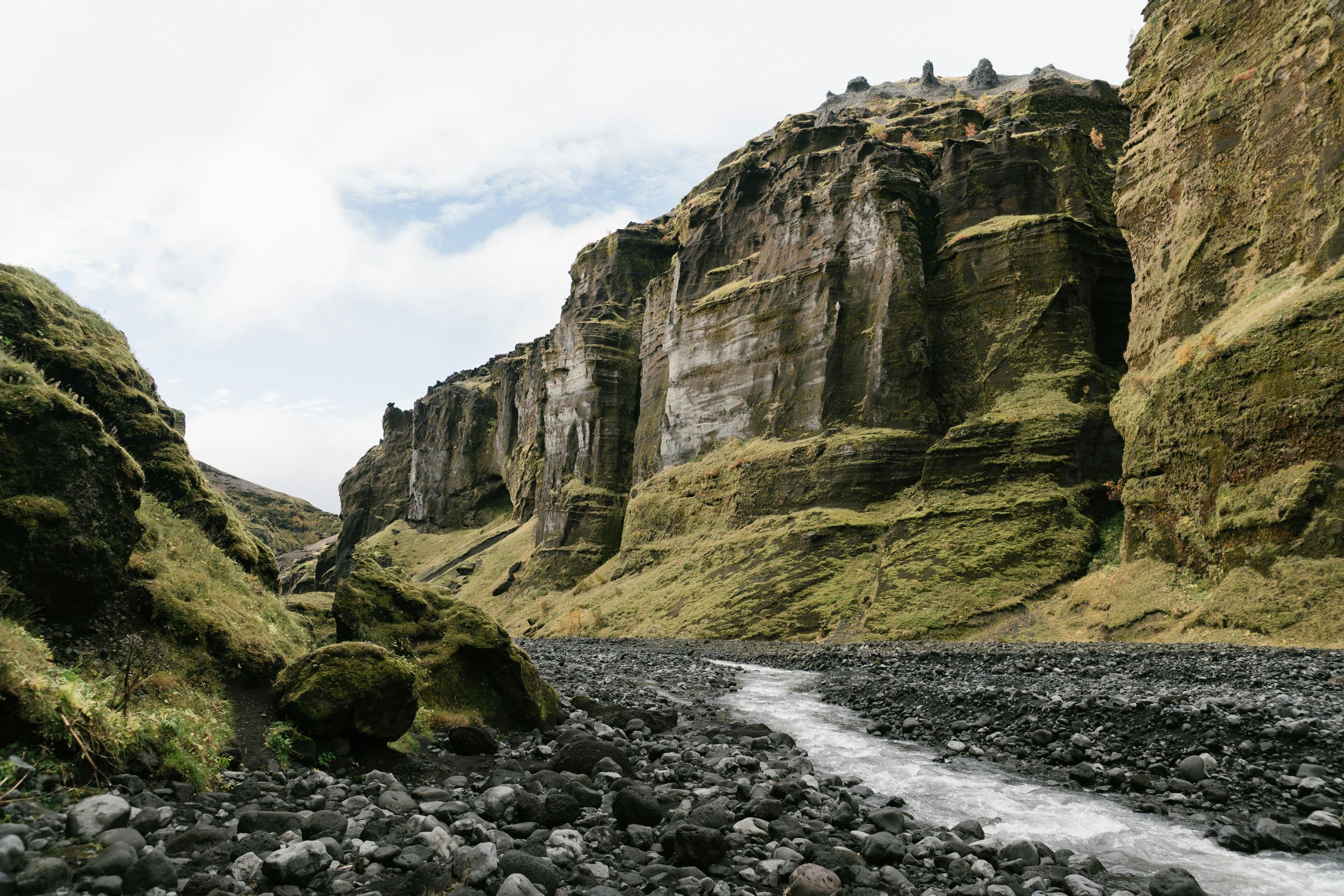
Stakkholtsgjá is a narrow canyon in the Þórsmörk Nature Reserve in South Iceland. You walk along a riverbed; the mossy walls get closer as you go deeper. You cross a few shallow streams, and it ends at a waterfall inside a dark cave. It's a short hike, and it's one of the best ones in Iceland.
Getting there takes real planning, though. This guide covers what the canyon is, how to get there, what the hike is like, and what else is worth doing in the area.
What Is Stakkholtsgjá?
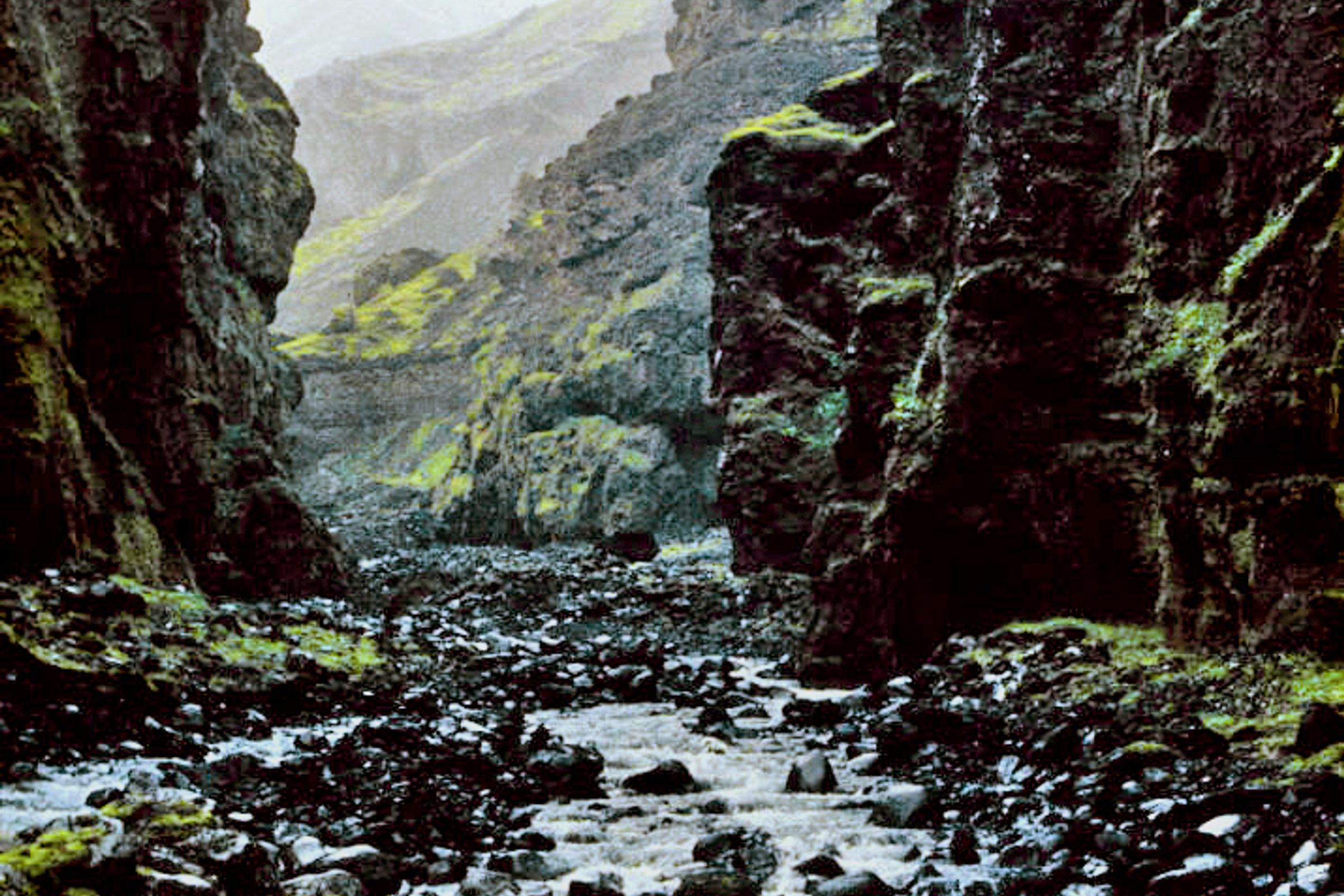
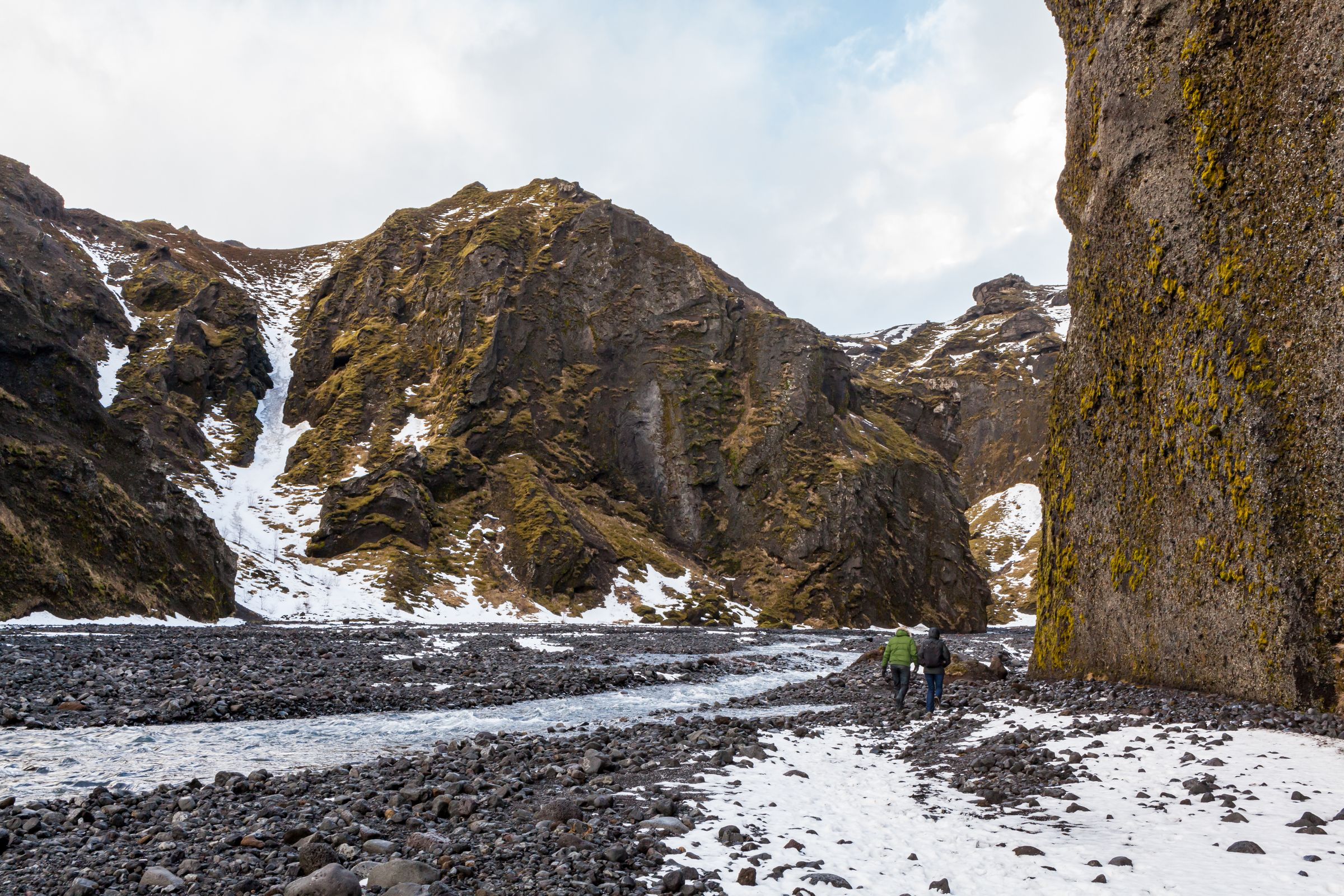
Stakkholtsgjá (also written Stakkholtsgja) is a narrow volcanic canyon in the Þórsmörk Valley in South Iceland. It's about 2 km long, with walls up to 100 meters high. Most of those walls are covered in thick green moss. The rock itself is mostly palagonite, a yellowish-brown volcanic material that forms when lava hits ice or water. That's what gives the walls their dark, rough look.
The canyon started forming about 9,000–10,000 years ago. Glaciers from Eyjafjallajökull melted and cut through soft volcanic rock. Then the Stakkholtsá River and glacial meltwater continued to wear it down over thousands of years until it became what you walk through now.
People don't come here mainly for the geology, though. They come for the walk: the cool, damp air, the sound of the river, the walls getting closer on each side, and the waterfall at the end inside a dark cave chamber. It's quieter than the famous South Coast waterfalls, and you won't have to push through a crowd.
Where Is Stakkholtsgjá Located?
The canyon is inside the Þórsmörk Nature Reserve, on the northern slopes of Eyjafjallajökull in South Iceland. Eyjafjallajökull is to the south, Mýrdalsjökull is to the east, and the Fjallabak Nature Reserve is just to the north.
From Reykjavík, it's about 150 km by road, which is roughly 2.5 hours of driving when conditions cooperate. The nearest town with fuel and food is Hvolsvöllur, about 34 km from the canyon. Stop there before heading inland.
Þórsmörk is not a normal roadside stop. It's a remote highland area with difficult access, almost no services, and trails that range from short walks to long multi-day routes like the Laugavegur and Fimmvörðuháls. The reserve has been protected since the 1918 Katla eruption. For most people, getting to Þórsmörk is the hardest part of the whole day.
How to Get to Stakkholtsgjá
Most guides just say "you need a 4x4" and leave it there. That's not enough. The road into Þórsmörk has real unbridged river crossings where the water level can change fast. It's not a normal drive, and it has caused fatal accidents. There was one at the Steinholtsá crossing in 2018.
From Reykjavík, you take the Ring Road (Route 1) east, then turn inland near Seljalandsfoss onto Road 249. That becomes the F249 highland road further in, which is one of the more difficult F-roads in Iceland.
You have three ways to get there.
Your Three Access Options
Pick based on your experience and comfort level, not just what kind of car you rented.
Highland Bus (Best for Most People)
In summer, highland buses run from Reykjavík and from South Coast stops directly into Þórsmörk. For most independent travelers (especially anyone without F-road experience), this is the safest and most practical option. The bus drops you near the trailhead. You can also send luggage ahead to one of the Þórsmörk bases (Húsadalur, Langidalur, or Básar) if you're staying overnight.
Guided Super Jeep Tour (Safest Option)
Several operators run Super Jeep tours from Reykjavík and the South Coast that go to Stakkholtsgjá or into Þórsmörk more broadly. They cost around €150–250 per person, but you don't have to worry about the river crossings. The driver handles all of that. If you want to see more of Þórsmörk on the same day, a tour usually makes that easier too.
Self-Drive 4x4 (Only If You Know What You're Doing)
You can self-drive in summer if you have the right vehicle and you've actually done highland roads before. A few things to know:
- You need a high-clearance 4x4 approved for F-roads. Most standard rental insurance doesn't cover F-road damage or river crossing damage
- Cross the Steinholtsá river early in the morning, when meltwater levels are lower
- Check road conditions at road.is right before you leave. Access can close without much warning
- Parking at the trailhead costs around 750–1,000 ISK, paid through the Parka app
- The 2018 fatal accident at Steinholtsá is not a footnote. Those crossings are genuinely dangerous
If you haven't driven Icelandic highland roads before, take the bus or a tour. It's not worth guessing.
Callout: Check road.is and vedur.is before you go. F249 conditions can change within hours. A crossing that was fine in the morning might not be safe by afternoon.

The Stakkholtsgjá Hike
The trail follows the Stakkholtsá riverbed into the canyon and back the same way. There's no marked path. You follow footprints in the black volcanic sand and pick your way over rocks when the ground gets rougher.
Trail Details
The basics:
- Distance: 2–4 km round trip, depending on how far you explore the side ravines
- Time: 45 minutes to 2 hours; most people take 1–1.5 hours
- Difficulty: Moderate. Almost no steep climbing, but the footing is tricky in places
- Elevation gain: Minimal, around 120–125 meters total
What the Terrain Is Like
It starts wide and easy. Then the walls start rising, and the path gets narrower. The further in you go, the more closed in it feels. That's the whole appeal. It keeps changing as you walk.
You'll cross the Stakkholtsá and its smaller branches 3–5 times. Most of the time, the water is ankle-deep, and you can hop across on rocks. After rain or during heavy snowmelt, it can be deeper. The real challenge isn't the distance or the incline. It's not slipping on wet rock. Side ravines branch off to the left as you approach. Some lead to smaller cave spaces and extra waterfalls, so take a quick look if you have time.
The Final Section
Most people slip near the end. The canyon gets very narrow, the rock gets wetter and more polished, and people rush because they can hear the waterfall before they see it. Slow down. That last stretch near the cave chamber is the slickest part of the whole hike.
Waterproof hiking boots with a solid grip are not optional here. You'll know that within the first 10 minutes. Regular sneakers won't cut it.
The Hidden Waterfall at the End of the Canyon
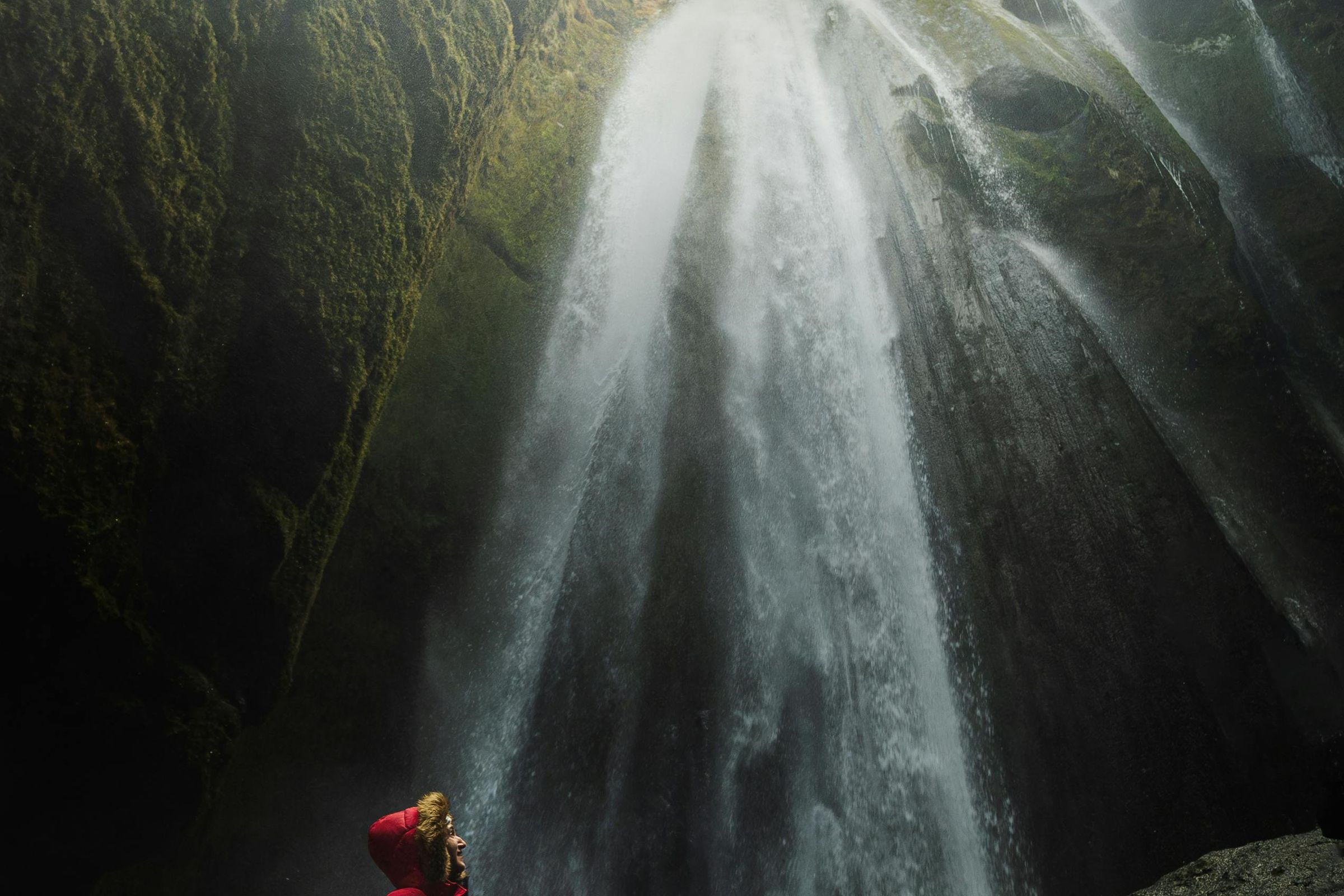
You can't see the waterfall until you're almost at it. It sits inside a narrow cave-like chamber at the very end of the canyon. As you get close, the walls tighten, it gets darker, and then you're standing in front of it. Water falls from above, with a slot of open sky visible overhead.
The combination of the tight space, the mist, and the way the light comes in is why it photographs so well. It doesn't look like any other waterfall in Iceland. Most people end up staying longer than they planned.
Photography Tips
A few things worth knowing if you're bringing a camera:
- Wide-angle lens: You need one to get the cave chamber and the sky slot into the same frame
- Overcast days: These are actually better for photos here. Soft light makes the moss and rock textures easier to capture without blowing out the sky above
- Long exposure: Works well with a tripod, but bring lens cloths because the spray is constant and will fog your glass fast
- Waterproof protection: Put your phone or camera in a waterproof bag or sleeve before you reach the final section. Drops and mist are common
The best spot is directly in front of the waterfall inside the chamber. A lot of people spend 20–30 minutes there. On a cloudy day, it's worth every minute.
Safety Near the Waterfall
The rock inside the chamber is the slippiest of the entire hike. Go slowly, look at where you're stepping, and don't assume it's safe just because the person in front of you made it. Take your time.
What Makes Stakkholtsgjá Unique
Iceland has a lot of canyons. What's different here is that you walk inside it rather than standing on the edge looking down. That makes it feel completely different.
The Canyon Itself
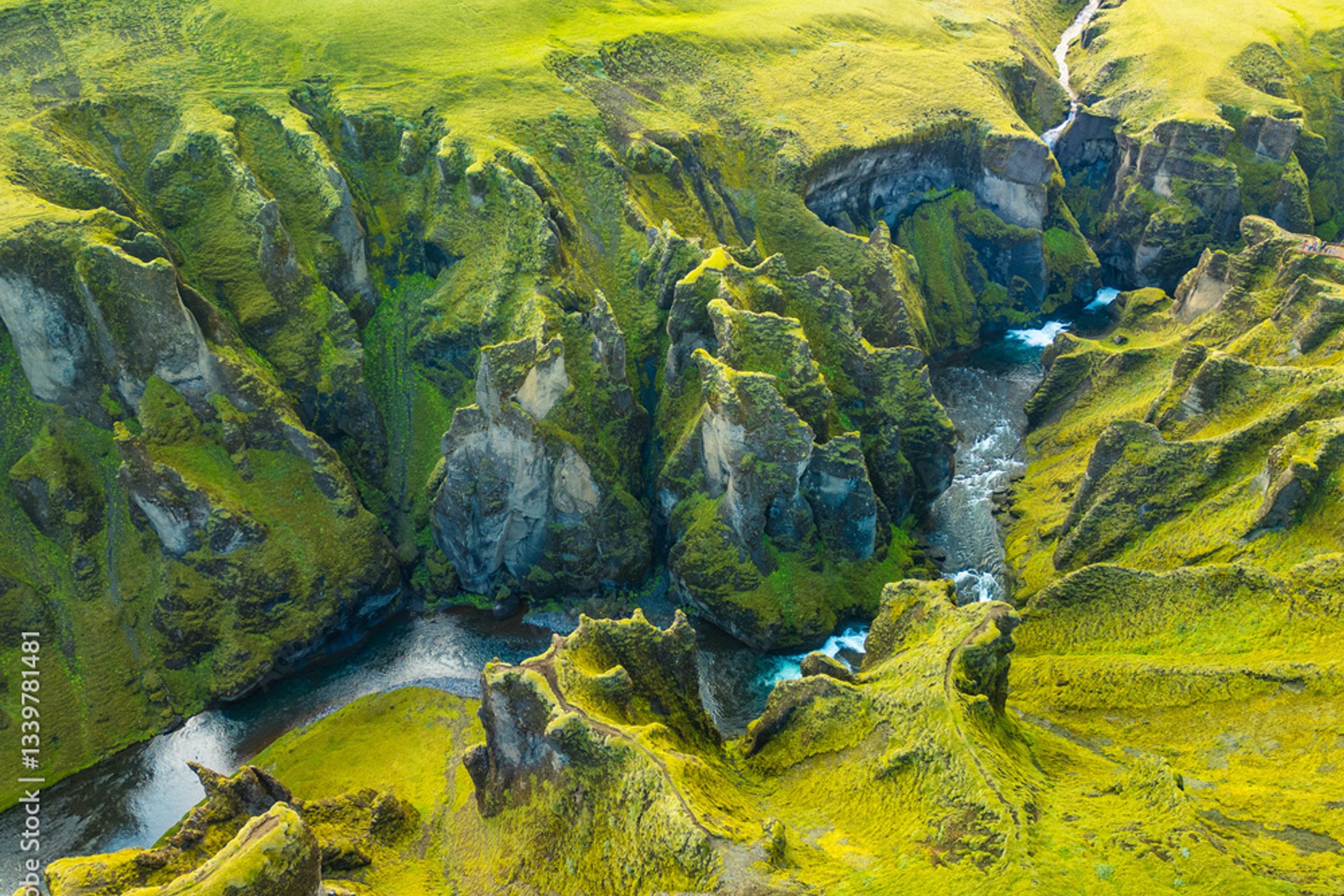
At a place like Fjaðrárgljúfur, you look at the canyon from the rim. At Stakkholtsgjá, the walls are on both sides of you. The sound echoes. The light changes as you go deeper. The palagonite cliffs are covered in moss because the canyon stays damp and sheltered from wind. That's why you get that deep green against dark volcanic brown, which looks very different from Iceland's more exposed highland areas.
That same sheltered microclimate is why the whole Þórsmörk area feels greener than most of Iceland's interior. Shade, moisture, and protection from wind keep the moss thick on almost every surface.
How It Compares to Other Canyon Hikes in Iceland
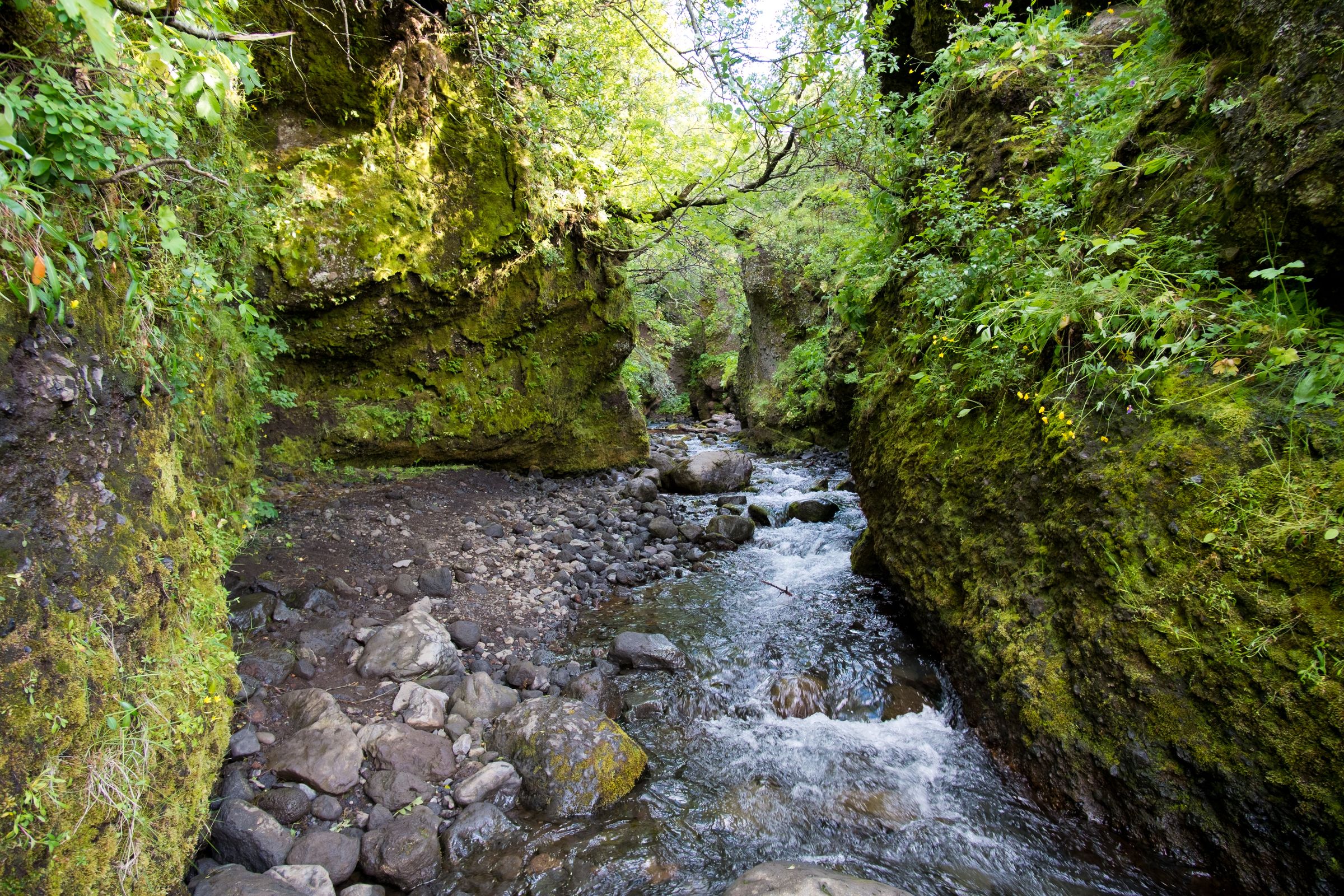
Nauthúsagil is the most similar canyon in the area. It’s also enclosed, has stream crossings, and ends at a waterfall. It's easier to reach because it doesn't need F-road access, and it's a bit smaller. Stakkholtsgjá is the bigger, more dramatic version. Nauthúsagil is useful to know about as a backup or if you want to do two canyon hikes in a day.
The wider Þórsmörk setting also adds something that most Icelandic canyons don't have. The reserve has more vegetation than you'd expect for a highland area (birch scrub, ferns, wildflowers in July), so the surroundings feel different from a canyon sitting in a bare lava field.
Best Time to Visit Stakkholtsgjá
You can only realistically visit in summer. F249 closes once snow and ice make the river crossings too dangerous, which is usually from late October until late May or early June.
Summer: June to September
This is the window. Roads usually open somewhere between late May and mid-June, depending on the year, and the hiking season runs through early September. July is the most reliable month: roads are open, the weather is more stable, and the vegetation is at its greenest. June and early September have fewer people. July and August are busier, though still much quieter than the big South Coast stops. Going early in the day is always a good idea: lower river levels, better light, and fewer people.
Shoulder Seasons
Late May and early June can work if conditions allow, but check road.is before assuming it's open. Early October is sometimes possible, but the access window can close quickly, and the weather gets less predictable.
Winter
In winter, F249 is closed to regular vehicles. The only way to get there is through a specialized Super Jeep excursion, which is rare and expensive. If you're in Iceland in winter and want a similar type of canyon hike, Fjaðrárgljúfur is accessible year-round from Route 1 and is worth looking at instead.
Callout: A calm, overcast day in July is probably the best day to visit. The light is soft, the moss is bright green, and there's enough dampness to make the cave feel interesting without making the rocks dangerously slippery.
Travel Tips for Visiting Stakkholtsgjá
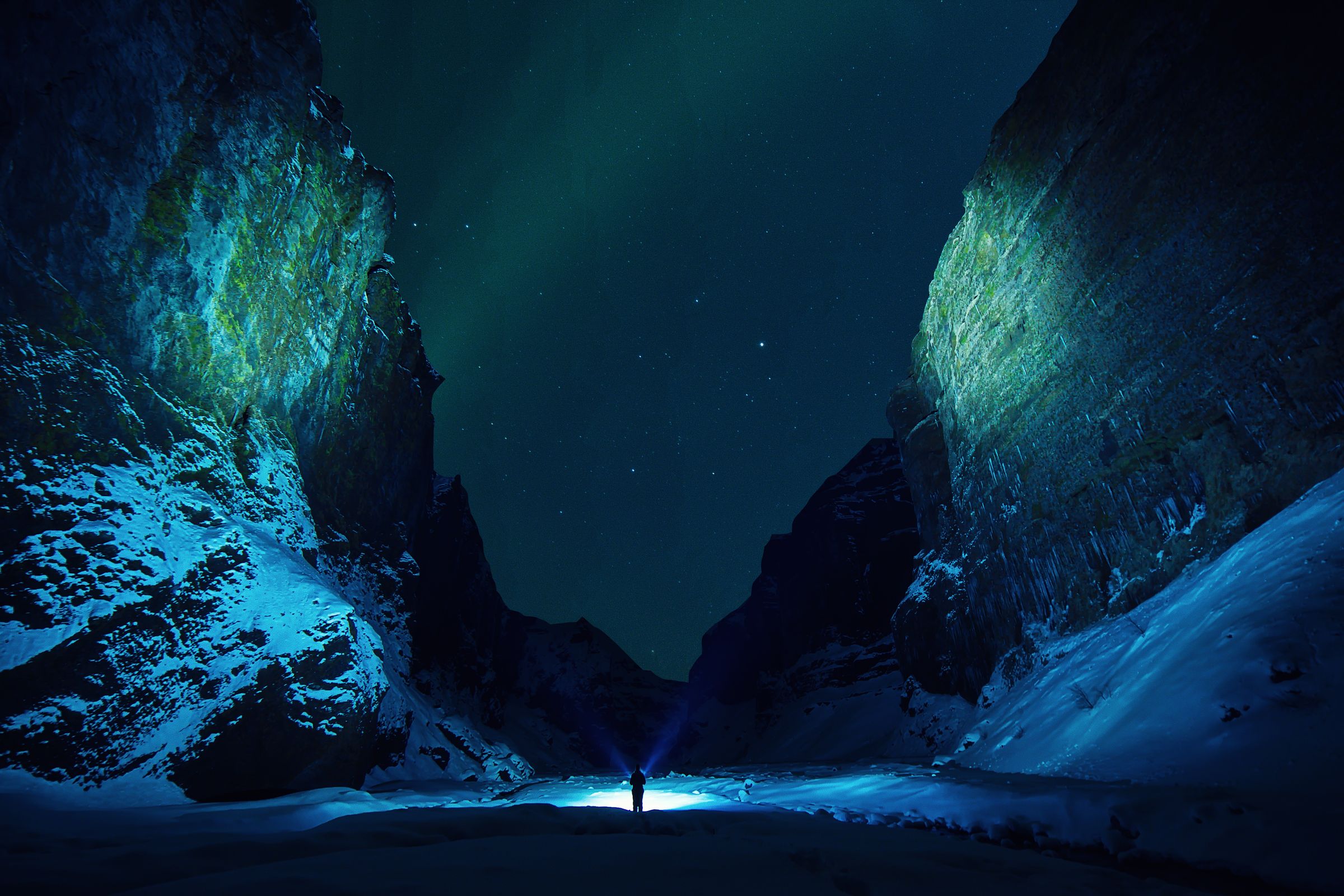
The hike is short, but the location is remote. The wrong gear will make your day a lot worse. Here's what matters.
What to Wear and Pack
Bring all of these:
- Waterproof hiking boots with grip: the most important thing on this list, by far
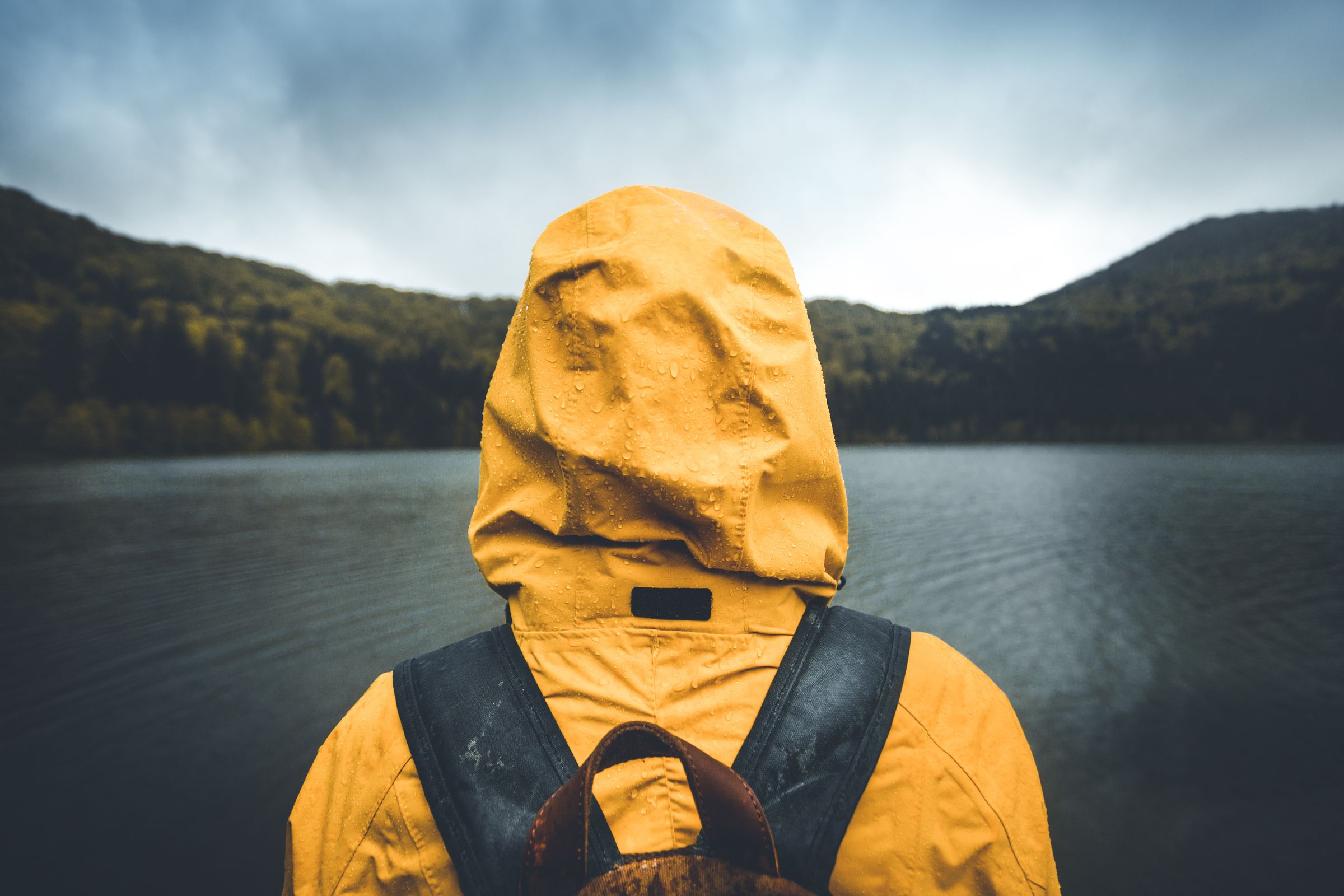
- Waterproof jacket and pants: the canyon is wet inside even when it's dry outside
- Extra socks: your feet will probably get wet, so plan for it
- Trekking poles: optional, but helpful if wet rocks make you uneasy
- Headlamp: the cave chamber is genuinely dark
- Snacks and water: there's nothing to buy at the trailhead or inside the canyon
- Dry bag or waterproof sleeve for your phone and camera
- Offline maps: cell signal in Þórsmörk is unreliable; download AllTrails or Gaia GPS before you go
SafeTravel Iceland and Safety
SafeTravel Iceland recommends registering a travel plan before going into remote highland areas. It's free, takes two minutes at safetravel.is, and rescue services will be notified automatically if you don't check in at the end of the day.
Don't cross any stream that's thigh-deep or moving fast. Glacial rivers can look calm and change within an hour after rain. If you're unsure, don't try. Just turn back.
Leave No Trace
The moss in Stakkholtsgjá and across Þórsmörk is fragile. Walk on rocky paths and black sand rather than on moss, where you can help it. Drones aren't allowed in the reserve without a permit. Take everything out that you brought in.
Things to Do Nearby (Þórsmörk Area)
Getting to Þórsmörk takes effort. It's worth putting more than just the canyon into your day.
Þórsmörk Valley
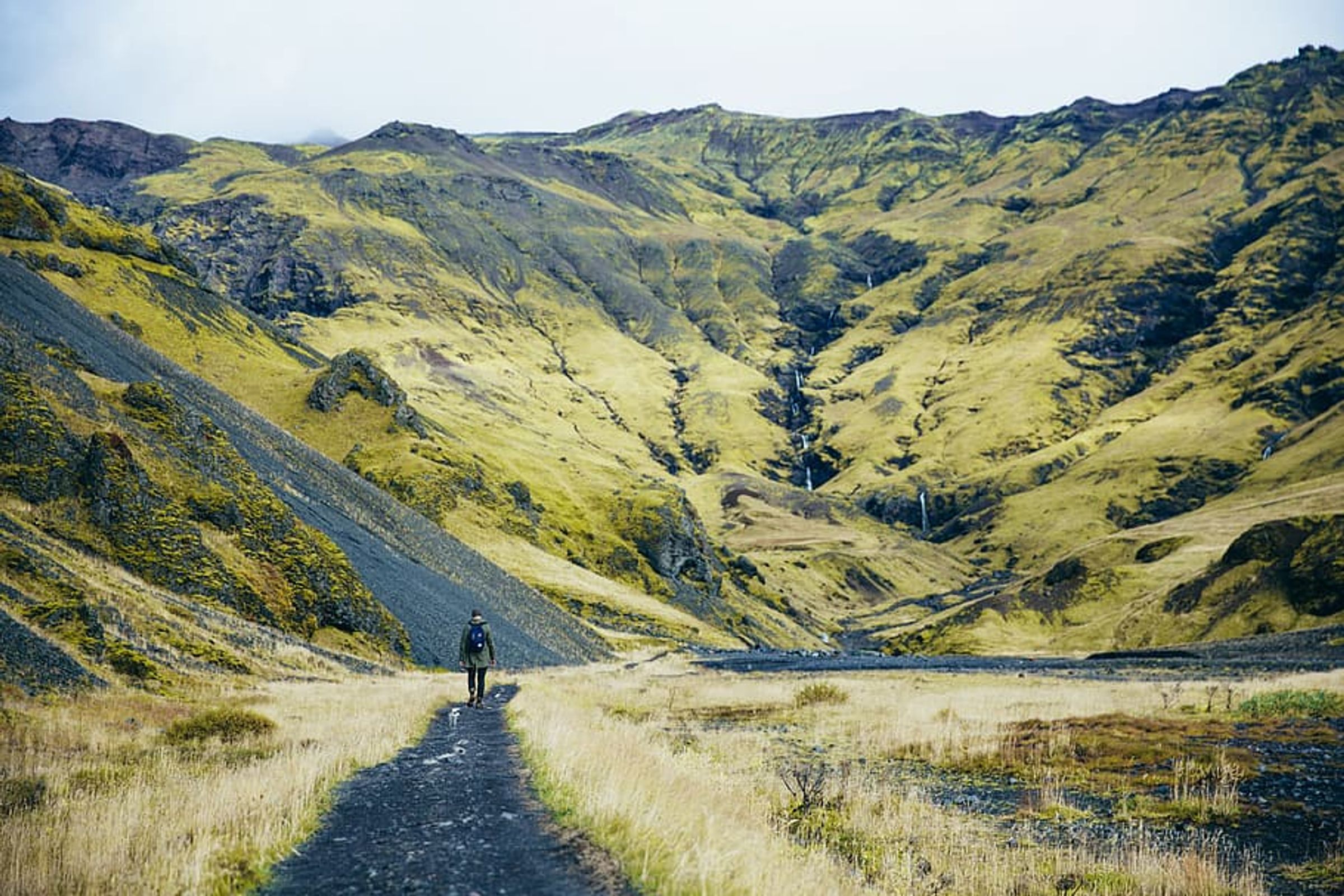
Þórsmörk is one of Iceland's best hiking areas. There are shorter walks, views toward Eyjafjallajökull and Mýrdalsjökull across the glacial rivers, and access to big multi-day routes. The Laugavegur trail starts and ends here. The Fimmvörðuháls pass connects Þórsmörk to Skógar on the south coast. Even just spending an afternoon around one of the three hut bases (Húsadalur, Langidalur, or Básar) gives you a good afternoon of scenery without committing to a full hiking day.
Eyjafjallajökull
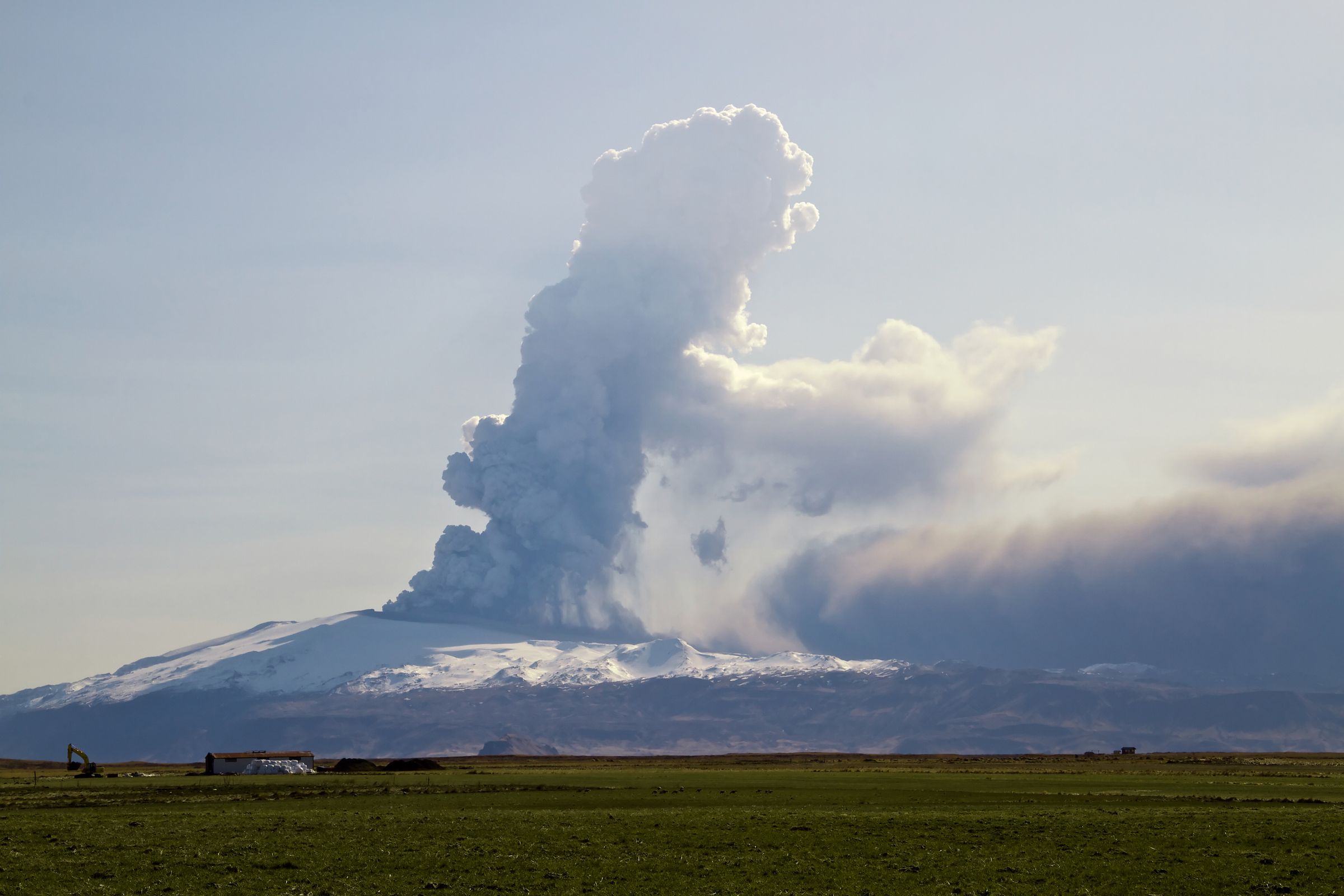
The glacier-volcano that closed European airspace in 2010 is right above the whole Þórsmörk area. You can't summit it from the canyon in a single day, but it shapes everything around you: the canyon walls, the rivers, the access road. Some guided tours in the area include glacier walks on Eyjafjallajökull.
Seljalandsfoss and Gljúfrabúi
On the way in from the Ring Road, Seljalandsfoss is worth a stop. It's the waterfall you can walk behind. Right next to it, Gljúfrabúi is a waterfall hidden inside a crack in a cliff. Both are worth 30–45 minutes and go well with a Þórsmörk day.
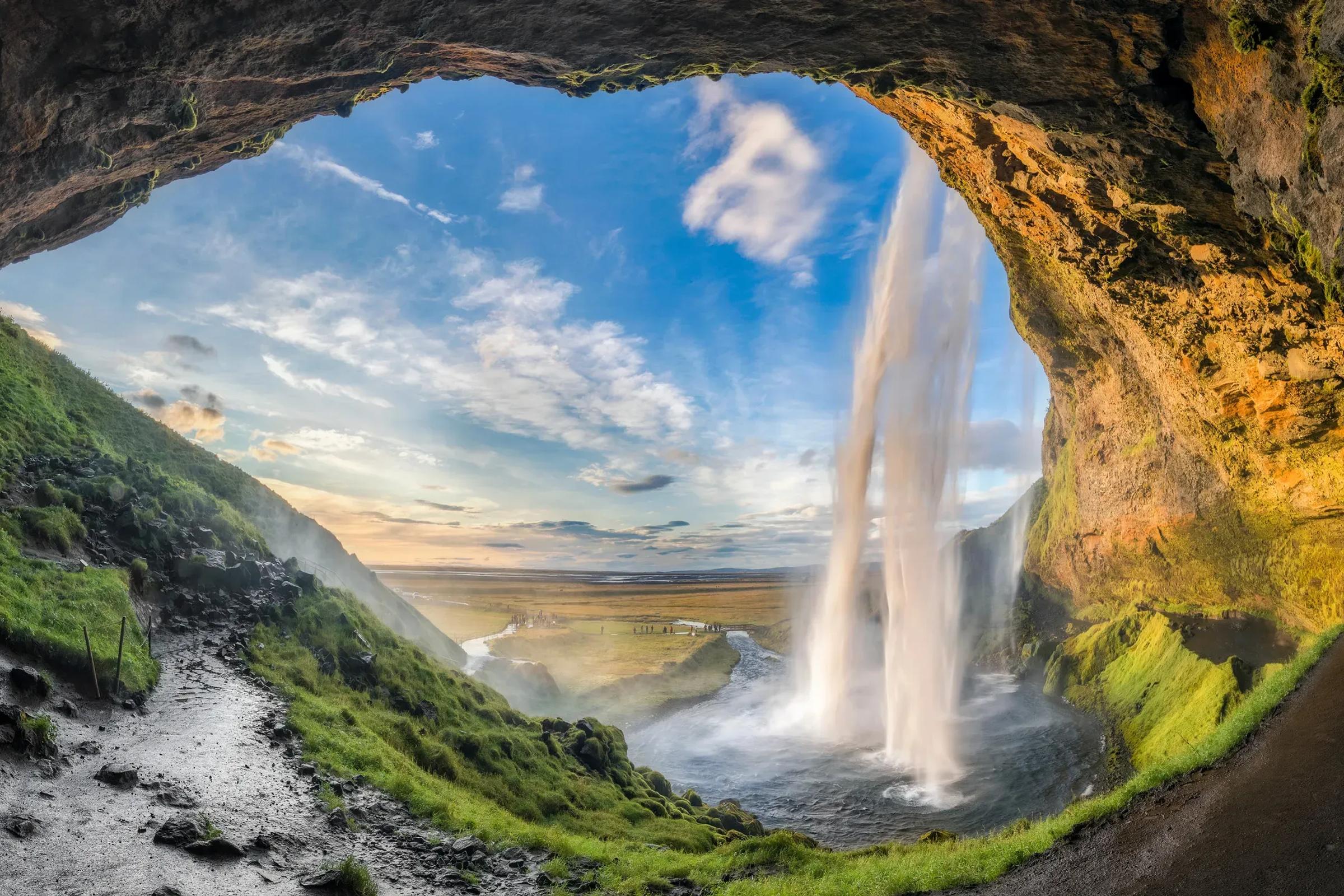
Nauthúsagil Canyon
Nauthúsagil is another canyon with stream crossings and a waterfall, closer to the Ring Road and reachable without F-road driving. It's smaller than Stakkholtsgjá. If you can't get into Þórsmörk, or you want to do two canyon hikes in one day, it's a solid option.
Stakkholtsgjá and Game of Thrones
Stakkholtsgjá was used as a filming location in Game of Thrones Season 7, specifically for the beyond-the-Wall scenes where Jon Snow's group goes out to catch a wight. It's one of several spots in Iceland that appeared in the show.
Iceland gets used for productions like this a lot. The black volcanic rock, green moss, glacial rivers, and big open skies create a landscape that's easy to use for fantasy settings. Stakkholtsgjá fits that well.
That said, the show connection isn't the reason to go. The hike, the geology, the cave waterfall, and the location inside Þórsmörk are all worth it, whether you've seen Game of Thrones or not.
Conclusion
Stakkholtsgjá is a short hike that's worth the effort. The canyon, the mossy gorge, and the cave waterfall make for a good couple of hours, and it fits well into a Þórsmörk day trip or overnight stay. Add Seljalandsfoss and Gljúfrabúi on the way in, and you have a full South Coast day.
The access is the part that needs the most thought, not the hike itself. F249 and the river crossings are what make this complicated. Take the Highland Bus or book a guided tour, sort that out early, and the rest is easy.
Frequently Asked Questions About Stakkholtsgjá Canyon