Höfn is the most important city and cultural center in Iceland's Southern region. It’s a quiet fishing hub, tucked between the ocean and the mighty Vatnajökull glacier. If you’re taking a trip in a campervan through Iceland and are passing by this region, you’ve got to spend some time at Höfn. Famous for its food scene, especially for its fresh seafood, and beautiful surroundings, this town goes beyond being a practical stop.
Come with us to discover everything this place has to offer.
Key Takeaways
Höfn is the main town in southeast Iceland.
It has a population of around 2,400 inhabitants.
The town is famous in Iceland for its fresh seafood, especially lobster.
Why Is Höfn Worth a Visit?
Höfn is a small town in southeast Iceland, set on a peninsula between the ocean and Vatnajökull glacier. It started as a trading outpost in the late 1800s and is now the main town in the area. Höfn is known as the “Lobster Capital” of Iceland, with fishing at the heart of daily life. Its location near the Ring Road makes it an easy and useful stop on a road trip.
What to See and Do in Höfn
Höfn is small, but there are enough things to see and do for a pleasant stop. Most attractions are close together and easy to explore on foot. Life in town is closely linked to the sea and fishing. It is also a good base for short walks and outdoor activities.
Where to Eat in Höfn?
Food in Höfn is all about seafood, especially langoustine from the local harbor. Restaurants range from casual places to more refined options. Menus focus on fresh ingredients and simple flavors. Many of the best restaurants are near the harbor.
Where’s Höfn and How to Get There
Höfn is located on Iceland’s southeastern coast, about 460 kilometers east of Reykjavík. The Ring Road passes just outside town, making it easy to reach by car or campervan. The drive usually takes 5 to 6 hours without stops. Buses and domestic flights are also available.
Where to Stay in Höfn and Nearby
There are several places to stay in and around Höfn, including campsites, hotels, and guesthouses. Camping is popular, but only in designated areas. Options range from central locations to quieter spots in the countryside. Most places offer basic facilities like showers and electricity.
What to See Near Höfn
The area around Höfn is full of natural sights and scenic stops. You can find mountains, black sand beaches, glaciers, lagoons, and waterfalls nearby. Many places are a short drive away. It is a great area for exploring southeast Iceland.
The Weather in Höfn
Höfn’s weather is influenced by the ocean and can change quickly. Summers are cool with long days, while winters are snowy and dark. Wind and rain are common throughout the year. Temperatures are usually milder than in northern Iceland.
What to Pack to Visit Höfn
Packing for Höfn means being ready for changing weather. Layers, waterproof clothing, and good shoes are important. Hats and gloves are useful even in summer. Campervan travelers should also bring practical items like a sleeping bag and a power bank.
Travel Tips
Always check road and weather conditions before driving. Fill up with fuel in Höfn, as stations are limited nearby. Stay on marked paths and respect nature. In summer, it is a good idea to book campsites and tours in advance.
Conclusion
Höfn combines everyday Icelandic life with beautiful natural surroundings. It is less crowded than many other places in Iceland. The town is especially known for its food and seafood. Höfn makes a great and relaxed stop in southeast Iceland.
What's Höfn?
Höfn, also called Höfn í Hornafirði, is a town located at the mouth of a small fjord called Hornafjörður, in southeast Iceland. It sits on a narrow peninsula, surrounded by the ocean on three sides and the vast ice of Vatnajökull to the north. Founded as a modest trading outpost in the late 1800s, it has developed to become the most important town in this part of the country.
Nowadays, it is known as the “Lobster Capital” of the country thanks to its deep harbor, where boats come every day with lots of fish and seafood, especially langoustine, the local specialty. Fishing is, in fact, the main activity in Höfn, paired with a growing tourist scene. However, Höfn isn’t just about the sea. It’s a place where the Icelandic way of life is palpable, and it’s surrounded by some of the country's most impressive landscapes.
Why Should I Visit Höfn Over Other Places in Iceland?
What sets Höfn apart is its understated blend of everyday Iceland and raw spectacle. Taking a walk through the harbor, you can see the colorful fishing boats coming and going, while hundreds of seabirds cry overhead. The surrounding Hornafjörður fjord, carved by retreating glaciers over millennia, creates a great mosaic of black pebble beaches and water inlets. Although this area is not very populated, it has been inhabited for centuries. Just east of the town, Ingólfshöfði cape marks the spot where Ingólfur Arnarson, Iceland's first Norse settler, supposedly made landfall in 874 AD.
If you’re traveling in a campervan, Höfn is a practical, almost compulsory stop. The Ring Road, Iceland’s main highway, passes close to the town. Here you will find all the services you need: gas stations, supermarkets, pharmacies, cafés, and restaurants. It’s also a great base to explore the area around, which is full of magnificent things. There are also a few options to spend the night with your van, whether in town or nearby.
Where's Höfn and How to Get There
Höfn is on the southeastern coast of Iceland. It belongs to the Southern Region (Suðurland in Icelandic) but is relatively close to the Eastern Region. It’s about 460 kilometers (285 miles) east of Reykjavík along the Ring Road (Route 1), the main road in Iceland, that goes around the country. The road doesn’t cross the town, but passes nearby, just 4 kilometers (2.5 miles) away.
The best way to arrive is by campervan or rental car, giving you the freedom to pull over at some of the many natural monuments you’ll find en route. Expect the full drive to take 5 to 6 hours without stops, longer if you stop at waterfalls like Skógafoss along the way. From the capital, you just have to take the Ring Road eastbound and drive for 454 kilometers until you see the signs for Höfn or Route 99.
Public buses from Reykjavík (Strætó) run year-round but stretch to 7 hours with transfers. There’s a small airport at Höfn with domestic flights from Reykjavik in less than an hour. However, once you land, you’re going to need a vehicle to move around the area, and rental options there are minimal. If you’re coming by campervan, fill up the tank in towns like Selfoss, Vík, or Hella . There are a few gas stations between Vík and Höfn.
Even though Höfn is not a large city, it still offers a good number of things to see and do, especially given its size.
The Harbor
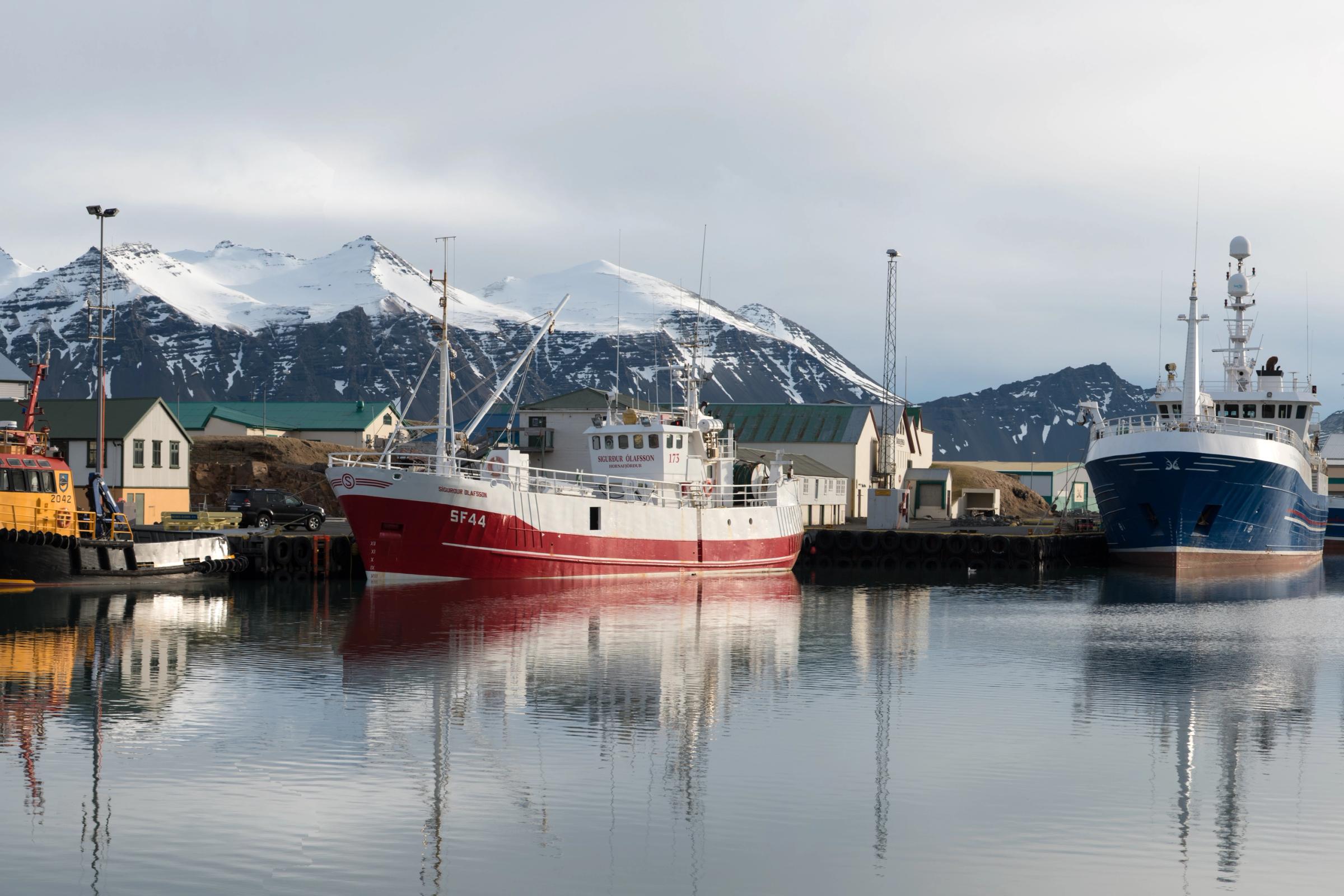
The beating heart of Höfn is its harbor, sheltered from the open ocean by two strips of land. Its location within the fjord means the water there is calm, making it a safe port for vessels. Taking a stroll by the harbor is seeing the town’s daily life from a front-row seat. It’s the perfect example of the deep connection between Iceland and the sea. The boats come in with the catch of the day, and you can see people mending nets or preparing fish for the market.
Lobster Festival
Every summer, Höfn celebrates the Humarhátið, the Lobster Festival, transforming the streets into a seafood celebration. The dates vary each year, but it’s usually held at the end of June or the beginning of July. People grill langoustines, dripped in butter, on a barbecue, with live music, and many stalls selling local crafts. The town becomes a party for three days, both for locals and visitors.
Ósland
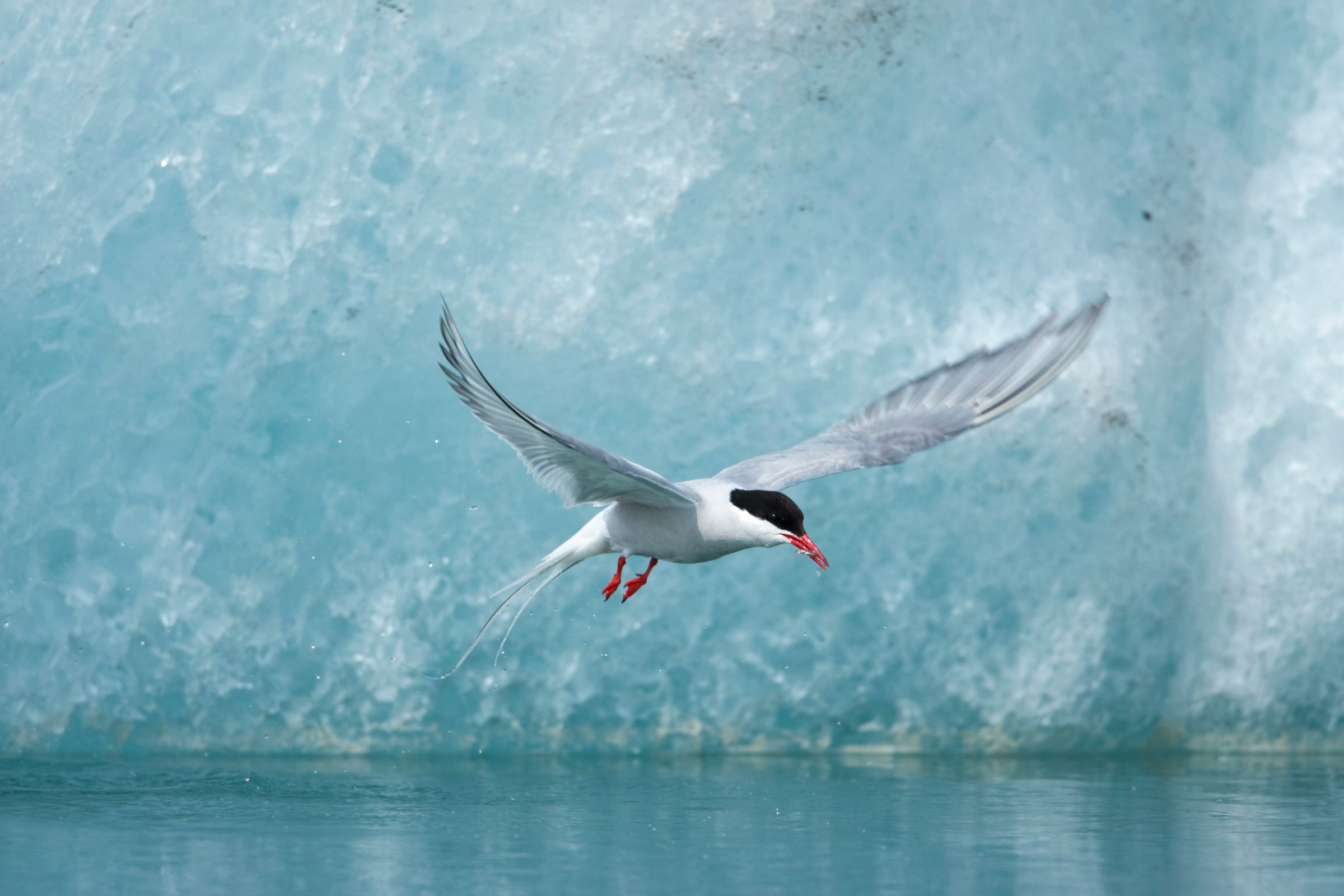
Close to the harbor, at the southernmost tip of Höfn, there’s a smaller peninsula called Ósland. It’s a popular area for hiking and birdwatching, with the Arctic tern as the most common species. It was previously an island, but has been artificially connected to the rest of the town. There’s a small hill in the middle with a monument dedicated to the seamen who lost their lives in the ocean. The views from there of the sea and the glaciers in the back are amazing. Several trails cross this protected area and go around Óslandstjörn, a pond inside the peninsula.
Höfn Universe Sculpture
This outdoor installation is centered on the Ósland peninsula, but it does not end there. The Universe Sculpture is a scale model of our solar system. The sun, placed close to Óslandstjörn, is 65 centimeters in diameter, and all the distances are adapted to that scale. That means that Neptune, the farthest planet from the Sun, is more than 2 kilometers away, in the northern part of the town. There’s an information sign right next to each planet. It’s a unique and educational way to cover the town on foot.
Hornafjarðar Golf Club
If you’re into golf, Höfn has a beautiful course right by the fjord. Silfurnesvöllur at Hornafjarðar Golf Club is a 9-hole links course, par 36, weaving through dunes and offering views of the sea and the glaciers. There’s no need to bring your own clubs; they can be rented at the clubhouse.
Where to Eat in Höfn?
Höfn's dining scene orbits around its seafood heritage, with langoustine starring on nearly every menu. Fresh catches from the harbor mean pure flavors, often paired with local craft beers. Even if you don’t catch the Lobster festival, there are still plenty of great options.
Pakkhús Restaurant is in a restored 19th-century warehouse right by the docks. They specialize in local ingredients, with langoustine as the protagonist; try the grilled tails with garlic butter and herb potatoes. But not only that; they also have soups, lamb, cod, or salmon.
For something more casual, head to Heppa Restaurant, also by the harbor. It’s a brewery restaurant that crafts its own beers. They have soups, rolls, burgers, and plenty of vegetarian options as well.
Hafnarbuðin is a small diner with an old-school look in a wooden building. They offer fast food like lobster baguettes, fish and chips, sandwiches, hot dogs, and burgers.
For a taste of local street food, go to Nailed It Fish and Chips. They have their own batter for the cod, served with fries.
Kaffi Hornid is one of the most popular restaurants in Höfn. They specialized in langoustine, of course, but also serve fresh fish, lamb and beef using ingredients from local farms.
Finally, Otto Matur & Drykkur, also close to the harbor, has become one of the most appreciated establishments not only in Höfn, but in Iceland. Their lobster soup and wonderful desserts are astonishing.
Where to Stay in Höfn and Nearby
One of the best things about doing a road trip in a campervan through Iceland is that there are hundreds of camping grounds in the country. Camping culture is strong in this country, and you’ll always find a place to stay with your van nearby. This part of the country is a bit remote and there are fewer campsites, but there are still a good number of options. It’s important to know that wild camping is illegal in Iceland, so stick to designated areas.
Höfn Camping Ground
Distance to Höfn: 0 km (0 miles).
Opening period: Mid-April to September 30.
Höfn is a great destination for a campervan trip because it has its own camping ground. It has everything a campervan traveler needs: electrical outlets, hot showers, toilets, and a shared kitchen. It’s very close to the town’s center, so you’ll be a couple of minutes on foot to bars, restaurants, and cultural attractions.
Mjólkurstöðin (Milk Factory)
Distance to Höfn: 0 km (0 miles).
Opening period: Year-round.
This establishment is not specifically for campers, but is one of the most popular in the region. It’s a small hotel that has been set up in an old dairy plant, hence its name. It has 17 rooms with Wi-Fi and TV, and breakfast is included.
Myllulækur
Distance to Höfn: 12 km (7.5 miles).
Opening period: May to October.
Located 12 km north of Höfn, this quiet campsite opened in 2021. Myllulækur is in a quiet valley, situated near a nice stream and with views of the mountains around. It has pitches for campervans and tents, with access to toilets, cold and hot running water, showers, electricity, and Wi-Fi.
Stafafell Guesthouse
Distance to Höfn: 32 km (20 miles).
Opening period: June 1 to September 30.
This place is very close to the Ring Road, but it feels more remote. It’s in a beautiful natural area, making you feel in the middle of the wildest side of Iceland. It has toilets, showers, a kitchen with essential utensils, laundry, electricity, and free Wi-Fi. They have horses for rent and take a tour around the area.
Djúpivogur Camping Ground
Distance to Höfn: 103 km (64 miles).
Opening period: All year.
In the heart of the artistic Djúpivogur village, this one is a bit far from Höfn, but it’s a great stop if you are going to venture into the Eastfjords. This campsite has everything: electricity, showers, and laundry. You can walk to local cafes or check out the picturesque Eggin í Gleðivík egg sculptures by the harbor.
What to See Near Höfn
The area surrounding Höfn is full of amazing natural monuments to make your trip to this region even more complete.
Vestrahorn and Stokksnes Peninsula
Just 10 km (6 miles) east of Höfn, Vestrahorn rises like a powerful sentinel in from of the sea. This mountain does not have a single summit, but a series of jagged peaks, making it look unique. In fact, it’s nicknamed the Batman Mountain because, observed from certain angles, it resembles the superhero’s iconic symbol. To the south, there’s the Stokksnes Peninsula, a protected area of dunes and black sand beaches. At the base of the mountain, we can find a Viking village that was built for a movie that was never filmed. However, it can be visited, with its longhouses with turf roofs.
Hvalnes Nature Reserve
Even further east, in the corner that separates South and East Iceland, Hvalnes Nature Reserve shows Iceland’s most natural side. The only thing that seems artificial is the bright orange lighthouse at the tip, called in Icelandic Hvalnesviti (Hvalnes lighthouse). This protected area is a fantastic spot for bird watching, with thousands of puffins, fulmars, and kittiwakes nesting here in the summer months. There’s a long, black pebble beach, great for a stroll. These stones are of volcanic origin, formed centuries ago when lava flowed down and met the cold waters of the North Atlantic Ocean. There’s a path that goes along the beach, about 2 kilometers (1.2 miles) round-trip.
Vatnajökull National Park
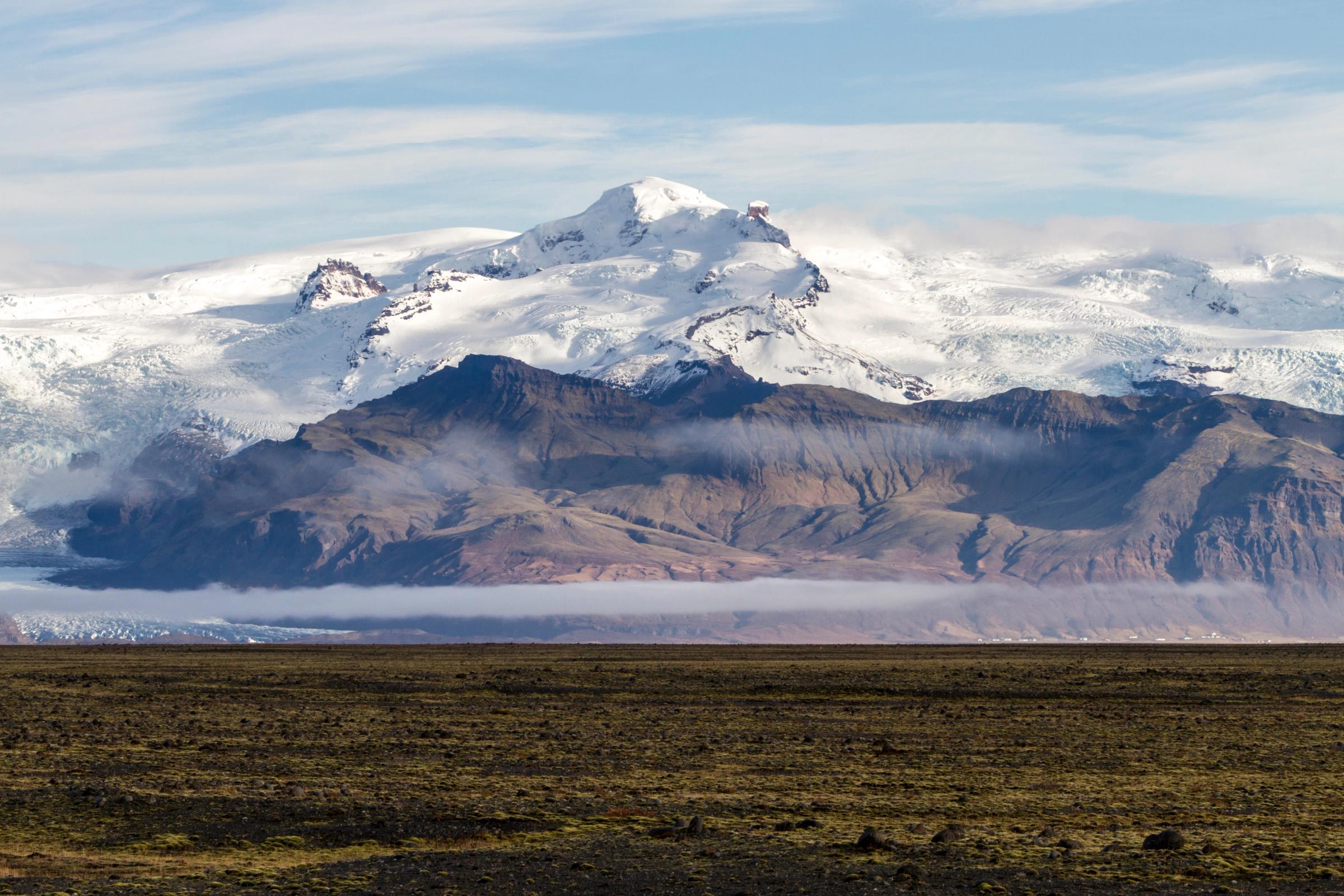
There are three national parks in Iceland, and Vatnajökull is the largest of them all. In fact, it is the biggest national park in Europe, and covers around 14% of Iceland’s landmass, with more than 14,000 square kilometers. The park gets its name from the Vatnajökull, an impressive glacier, also the largest on the continent outside the polar circle. The glacier can clearly be seen from Höfn. There are several active volcanoes beneath it.
You can book a glacier tour in Höfn, and an expert guide will take you on the ice, providing safety gear such as helmets and crampons. In the colder months, another great activity is visiting the ice caves in the park. They are formed when meltwater, in the summer, carves through the ice. It then freezes again when the cold arrives, creating new structures every year. Stop by the Gamlabúð visitor center right in Höfn for maps, ranger advice, and exhibits that bring the park's geology to life before you set off.
Skútafoss is a beautiful waterfall that not many people visit. The river comes from a beautiful green meadow and splits into three different falls that drop over a small cliff. It’s a glacial river, so the flow of water varies depending on the season, with late spring and early summer being the best times. They are not huge, but they are gorgeous. The pond below has crystal-clear water, and some people dare to take a swim there. Feel free to do it, but bear in mind that the water is really cold. You’ll feel really invigorated afterwards, though. It can’t be seen from the road, and it doesn’t appear in many travel guides, so chances are you’ll enjoy the waterfall to yourself.
Jökulsárlón Glacier Lagoon
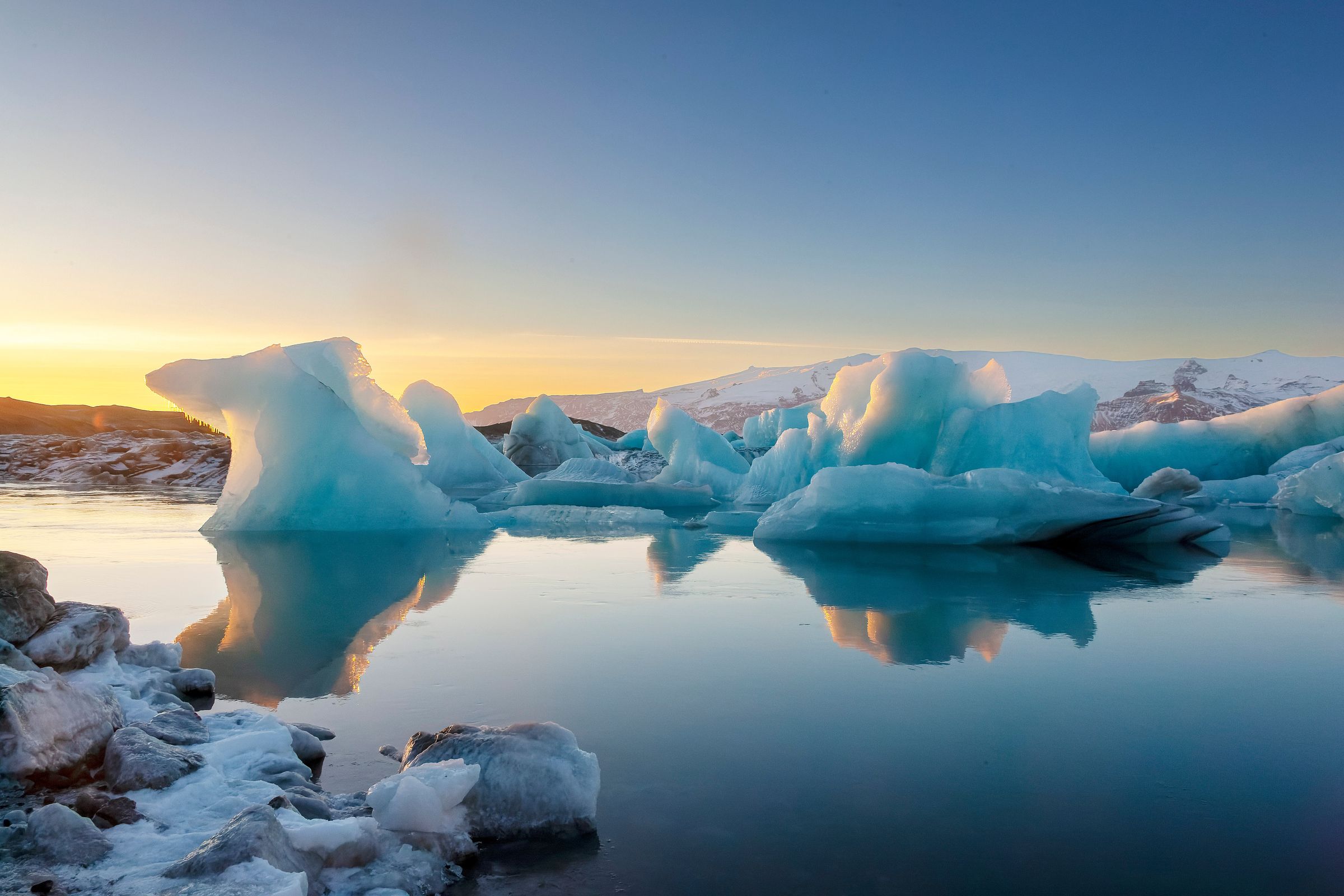
This Lagoon, the deepest in Iceland, is one of the most iconic natural monuments in Iceland. Located south of the Vatnajökull glacier, Jökulsárlón is known for having big pieces of ice floating on its surface. These small icebergs have broken off a glacier tongue and have different colors that go from clear white to deep blue. They spent several days, even weeks, on the lagoon before drifting out to the sea. Many end up on Diamond Beach, a black sand beach nearb,y where they create a beautiful contrast of colors. There are boat tours that go into the lagoon to see the chunks of ice from up close, as well as the seals that live there.
The Weather in Höfn
Höfn's climate is shaped by the ocean. The south of the country is not as cold as the north or center, but it rains quite often, and the town is windy. However, the weather in Iceland is unpredictable and constantly changing, so it’s better to be prepared for a bit of everything.
Summer (June to August): The days are really long, with almost 24 hours of natural light by the end of June. The average temperature moves between 10 and 15°C (50-59°F), and the skies are a mix of sunshine and clouds, with occasional showers. It’s the busiest season, so book your accommodation in advance when possible.
Autumn (September and October): The temperatures drop to 5-10°C (41-50°F), and wind and rain pick up. The hiking trails and secondary gravel roads become muddy and slippery. The days grow shorter week after week, but it’s the season with fewer visitors.
Winter (November to March): Winters in Iceland are long and harsh, but, as we just explained, not as cold in this part of the country. The temperature moves normally between -5°C and 5°C (23°F to 41°F), and almost everything is covered in snow. The days are very short, barely 4 hours of light by late December. On the other hand, it’s the best season for doing glacier tours and visiting the ice caves, and, if the night is clear, there are chances to see the Northern Lights.
Spring (April and May): As the snow from the winter starts to thaw, the fields around Höfn come back to life. This season brings 5-10°C (41-50°F) and the return of the migratory birds that come to this area to nest. Rain is an almost constant companion, and wind is still persistent.
What to Pack to Visit Höfn
Preparing your bags for a campervan trip requires some planning. You don’t want to take up much space in the van, but there are a few elements that are always a good idea to bring. For clothing, think always about layers rather than big, bulky coats. This way, you’ll be able to adapt to changing weather.
Base layers: Thermal and moisture-wicking t-shirts.
Mid-layers: Fleece or wool.
Outer shell: Waterproof, breathable jacket and pants (Gore-Tex style) to deal with sudden rain.
Footwear: Waterproof hiking boots with good grip. A pair of sneakers for long stretches on the road or casual nights out.
Accessories: Hat, gloves, and scarf. Even in summer, the nights can be chilly.
Sunglasses: For the bright days in summer. If you’re going near Vatnajökull, the reflection of the sand on ice and snow can hurt your eyes regardless of the season.
Sleeping bag: Rated for low temperatures if you rent a campervan without heating. You can rent or buy one in Iceland.
Power bank: To keep your devices charged on long excursions. It’s important to always have at least one functioning phone.
Travel Tips
Monitor roads: The weather can have a huge impact on the roads. Check their status before setting out.
Fuel up: There are not many stations in this part of the country outside of Höfn. Fill up your tank before leaving the town.
Respect nature: Stick to marked paths to avoid damaging the environment and take your trash with you.
Book ahead: Campsites and tours fill in summer, especially around the Lobster Festival.
Drive cautiously: The speed limit in Iceland is 90 km/h on paved roads. Also, keep your headlights on at all times; it’s mandatory.
Conclusion
Some places in Iceland are well-known outside of the country, while others still fly under the radar. However, many of these places are fantastic surprises for those who discover them. Höfn certainly fits into that category, with its blend of Icelandic lifestyle and impressive natural surroundings. And the food! One of the best places in that sense all over the country.
Frequently Asked Questions About Höfn
Yes. Höfn offers fuel, groceries, campsites, and road access to Vatnajökull, Eastfjords, and nearby coastal landmarks, making it an ideal campervan base.
Most travelers spend 1–2 days in Höfn, enough to explore the town, enjoy local food, and visit nearby natural attractions.
Yes. From late September to March, Höfn is a good spot for Northern Lights thanks to low light pollution and open coastal views.
Yes — buses run from Reykjavík year-round, but travel times are long and less convenient than driving.