Traveling the Highlands
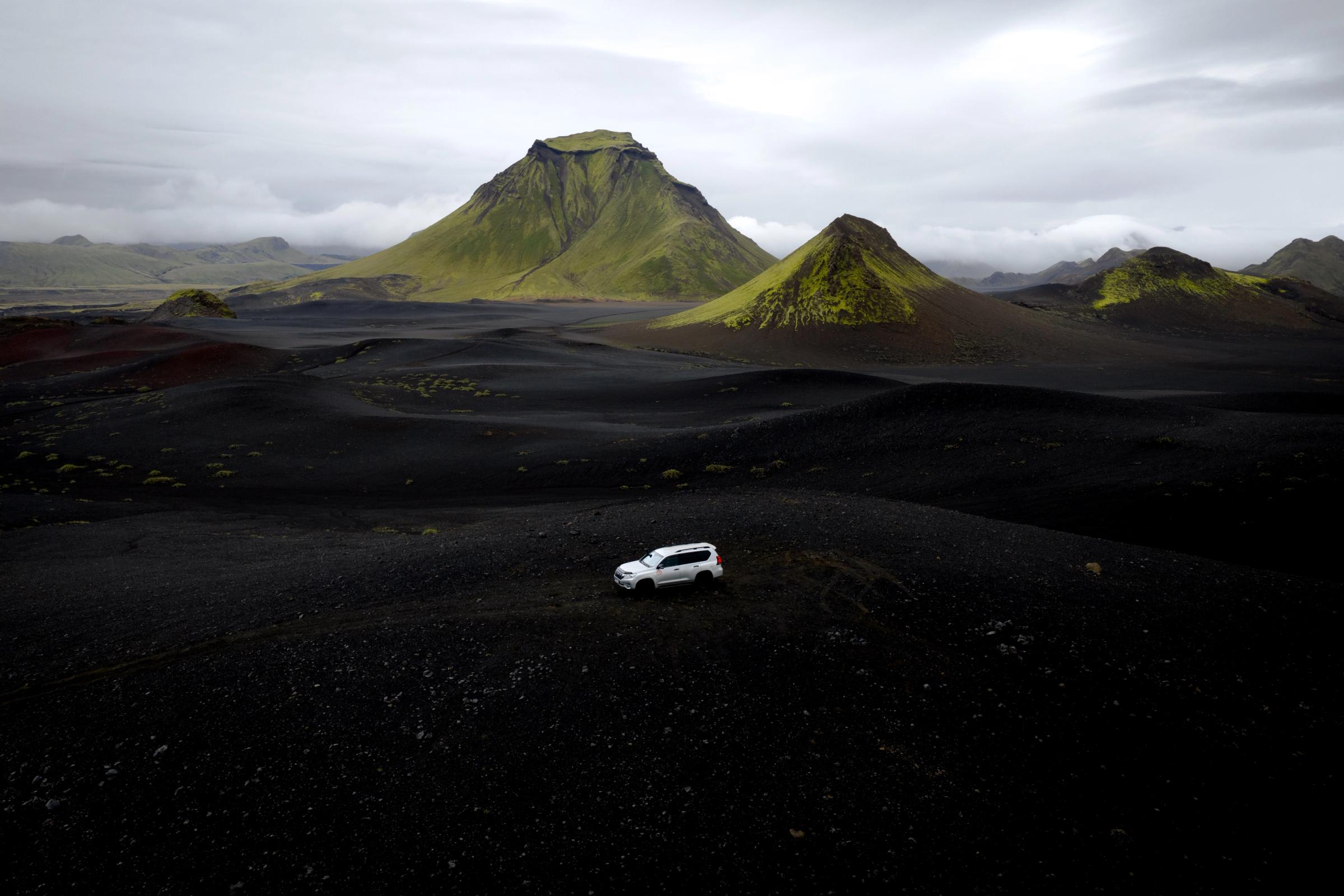
The Icelandic highlands are raw and beautiful, filled with volcanic deserts, glacier valleys, and hidden hot springs. Reaching them means driving on F-roads, which require a 4x4. With one of our campers, you can explore these remote places and travel safely into the wild.
What Are Iceland’s F-Roads?
F-roads are rough mountain roads that run through much of Iceland’s highlands. Unlike the smooth Ring Road, they are made of gravel and rocks and often include unbridged river crossings. The “F” in names like F208 or F35 stands for Fjallvegur, which means mountain road. A 4x4 vehicle with high ground clearance is required, as regular cars are not allowed. Our 4x4 campervans are built for these conditions, offering both strength and comfort.
These routes lead to some of Iceland’s most stunning remote areas, including Landmannalaugar and Þórsmörk. The highlands cover around 40 percent of the country, with landscapes like lava fields, mossy plains, and glacial streams. Driving these roads is part of the adventure, allowing you to experience Iceland’s wild nature up close.




Where to Find the F-Roads
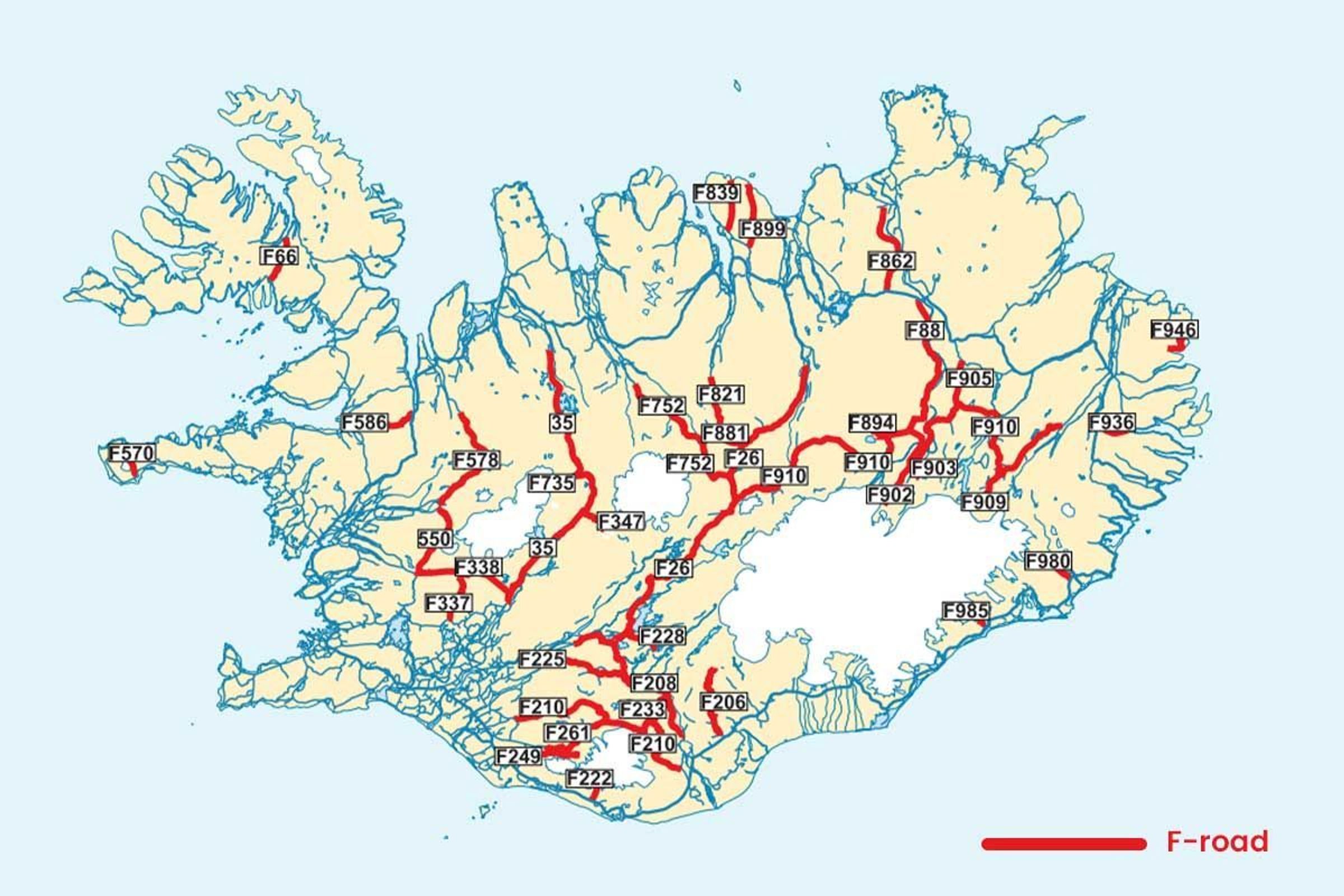
F-roads run through Iceland’s central highlands and other remote areas, far from towns and popular tourist stops. Many begin where paved roads like Route 1 or Route 26 end. The F208 connects the south near Hella or Route 26 in the north to the hot springs of Landmannalaugar. The F249 starts by Seljalandsfoss and leads into Þórsmörk, while the F35 stretches about 180 kilometers from Gullfoss to near Blönduós, linking north and south through the highlands.
Each route varies in length and difficulty. The F88 begins near Mývatn and crosses volcanic plains to Askja’s calderas, while the F26 runs 200 to 250 kilometers from Hella across the Sprengisandur desert with views of Vatnajökull. There are no gas stations or shops once you leave the paved roads, so always check road.is for updates. Whether you choose a short detour or a multi-day drive, these routes offer quiet landscapes and unforgettable views.
When to Drive the F-Roads
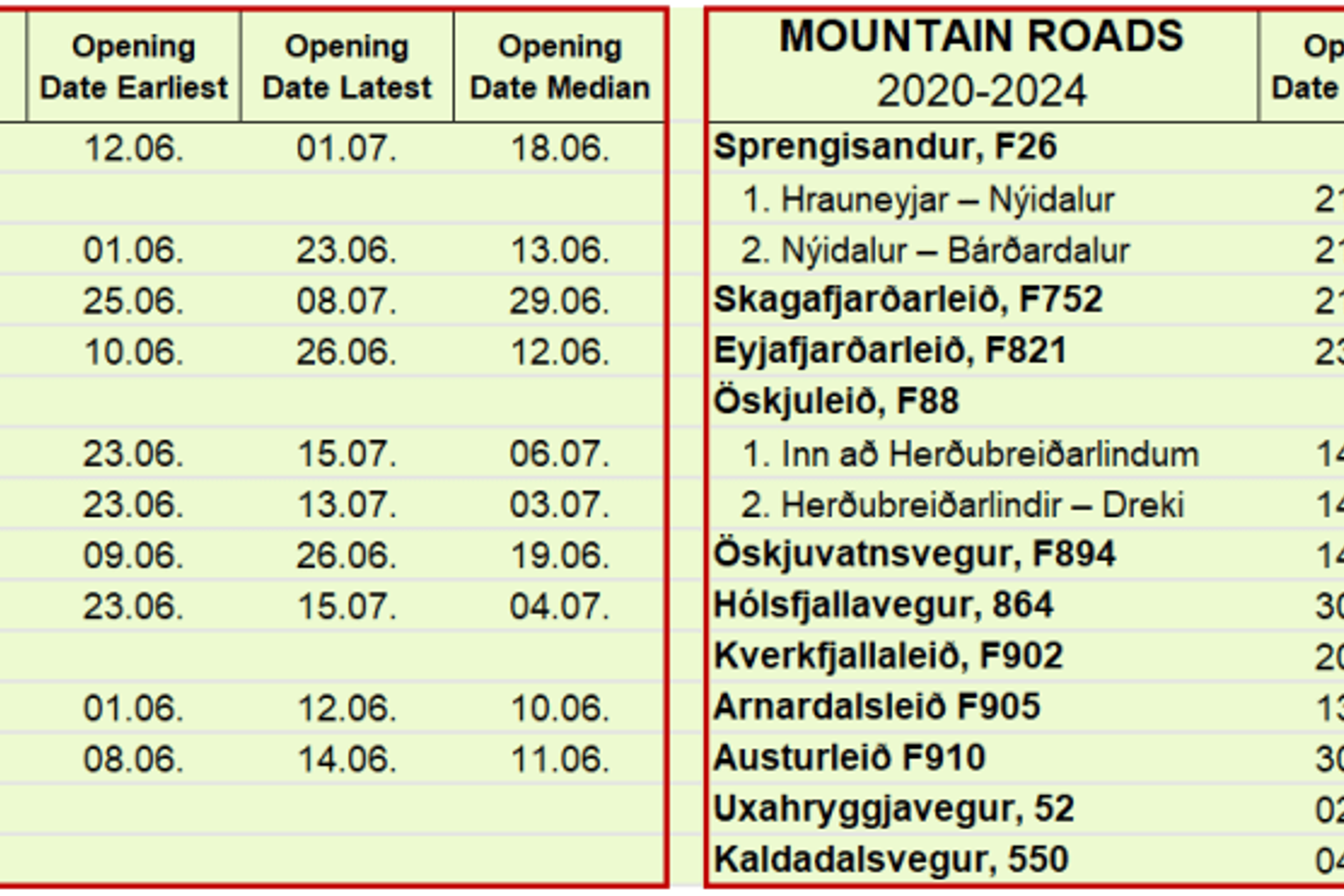
F-roads are only open during the summer, as Iceland’s weather is too harsh for safe travel the rest of the year. Most routes open between mid-June and early July, once snow has melted and maintenance is complete. Easier roads such as F35 may open as early as late May, while more challenging ones like F249 often wait until July. They usually close by late September or early October, sometimes earlier if storms or floods occur. July and August offer the best conditions, with longer days, mild temperatures between 5 and 15°C, and improved road access, though popular spots can be busier.
Opening dates vary each year, but the table below gives a general overview to help with planning.
How to Drive F-Roads Safely
F-roads are tricky but worth it, testing your driving with rivers and rough ground. With the proper steps, you can manage them safely in one of our 4x4 campervans.
Navigating River Crossings
River crossings are one of the most challenging parts of driving on F-roads. Depth and flow can change quickly with rain or melting snow, so take your time and assess each crossing carefully:
- Walk the river first to check depth and current.
- Do not cross if it’s too deep for your vehicle; our campervans can handle about 50–70 cm.
- Drive in at a 45° angle downstream to keep water off the engine.
- Drive slowly and steadily at 5–10 km/h without changing gears mid-crossing.
Water damage is not covered by any insurance, and repairs can be extremely costly, so crossing carefully is essential.

Handling Gravel and Rocky Terrain
Gravel roads require slow and careful driving. Maintain a speed of 20–40 km/h to avoid slipping and watch for potholes that can cause sudden jolts. On steep slopes, use low gear and brake gently to stay in control, as driving too fast can lead to sliding.
Bring essential supplies, including a full spare tire, a shovel, tow rope, traction mats, and extra fuel. Our 4x4 campervans are well equipped for these conditions, but being prepared makes the journey safer and smoother.
Safety and Etiquette
The highlands are remote, so safety and preparation are essential. Share your travel plans with someone or register them at safetravel.is. Mobile service is unreliable, so carrying a locator beacon or satellite phone can be a lifesaver. If something goes wrong, call 112, but be prepared with enough food, water, and warm clothing, as help may take hours to arrive. Check your campervan’s tires, brakes, and fluids daily to avoid problems on the road.
Always stay on marked roads. Off-road driving is illegal and damages fragile moss that takes years to recover. Take all your trash with you, as wind can spread it quickly, and avoid disturbing wildlife such as Arctic foxes. Responsible travel helps keep the highlands pristine for others to enjoy.
Before driving on Iceland’s F-roads, make sure to check these websites for the latest information:
- road.is – for current road conditions and closures
- en.vedur.is – for weather forecasts and storm warnings
- safetravel.is – to create a travel plan and get safety alerts
Using these resources helps you avoid dangerous conditions like deep river crossings or sudden storms and ensures a safer journey.
Damages
Driving in Iceland’s highlands comes with unique risks, and it’s important to understand what is and isn’t covered by insurance.
No insurance covers water damage or damage to the chassis, including harm caused by river crossings. These types of repairs can be extremely expensive, so it’s essential to drive carefully and assess crossings properly before attempting them.
Wind-blown doors are also not covered by any insurance. Highland winds can be very strong, so always hold the door firmly when opening it to prevent damage.
If you have Gold or Platinum insurance, you’re covered for common issues like gravel damage and rock chips, giving you extra peace of mind on rough highland roads.
Before your trip, check out our insurance options to understand exactly what you’re covered for and read the full terms and conditions. This helps avoid unexpected costs and ensures a smoother journey.


4x4 Campers recommended for Highland trips
VehicleComparisonTableBlock
Need help choosing?
If you’re not sure which 4x4 camper is right for your adventure, get in touch with us. We’ll help you find the perfect vehicle for your route, travel style, and comfort so you can enjoy the highlands with confidence.