Iceland is a country with an impressive geographical and geological variety. This has led to a huge number of different landscapes that attract visitors from all over the world. Some of the country’s natural monuments have become famous beyond its borders, while others remain a secret, almost hidden, but that are as spectacular, sometimes even more, as the ones tourists visit the most. The same applies to Iceland’s regions. A few of them concentrate the majority of the tourism that comes to the island. Some others, while being astonishing, are far from the typical tourist routes.
In this article, we’re going to talk about a place that fits those two categories. It’s a magnificent natural landmark that not many people outside the country have heard of, and it’s in one of the less-visited parts. We’re referring to Stuðlagil Canyon, one of East Iceland's most striking natural features. This remote spot in the Jokuldalur Valley is a geological wonder in a region that has a lot to offer, perfect for those seeking off-the-beaten-path adventures. If you’re doing a campervan trip through Iceland, this place is easy to access and will leave you speechless. The canyon's dramatic landscape, shaped by ancient lava flows and glacial rivers, provides a glimpse into Iceland's raw beauty.
Key Takeaways
Studlagil is a canyon located in the Eastern Region.
It’s part of the Jökulsá á Dal or Jökla, the longest river in East Iceland.
It’s famous for the color of the water and its basalt columns.
What's Studlagil Canyon?
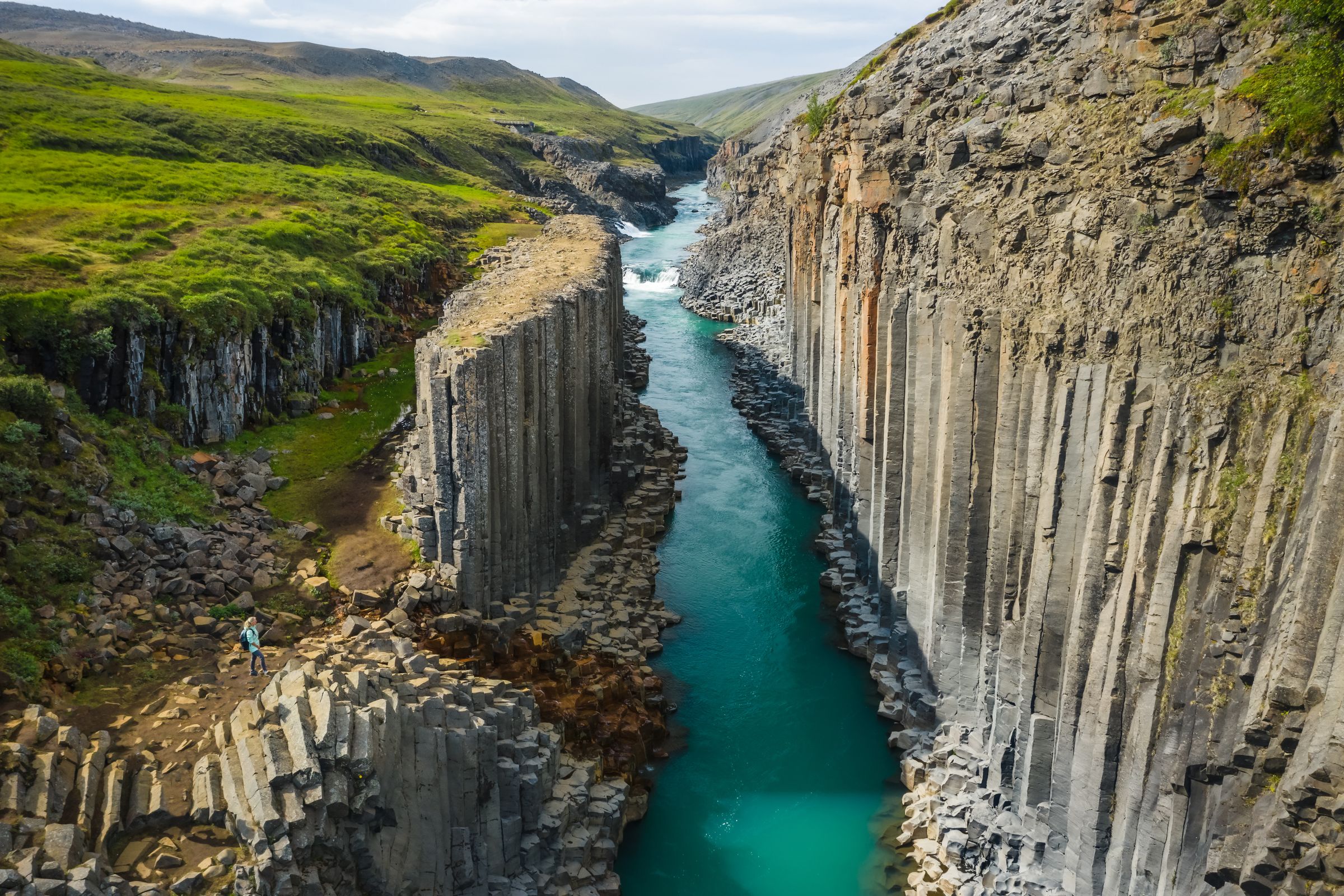
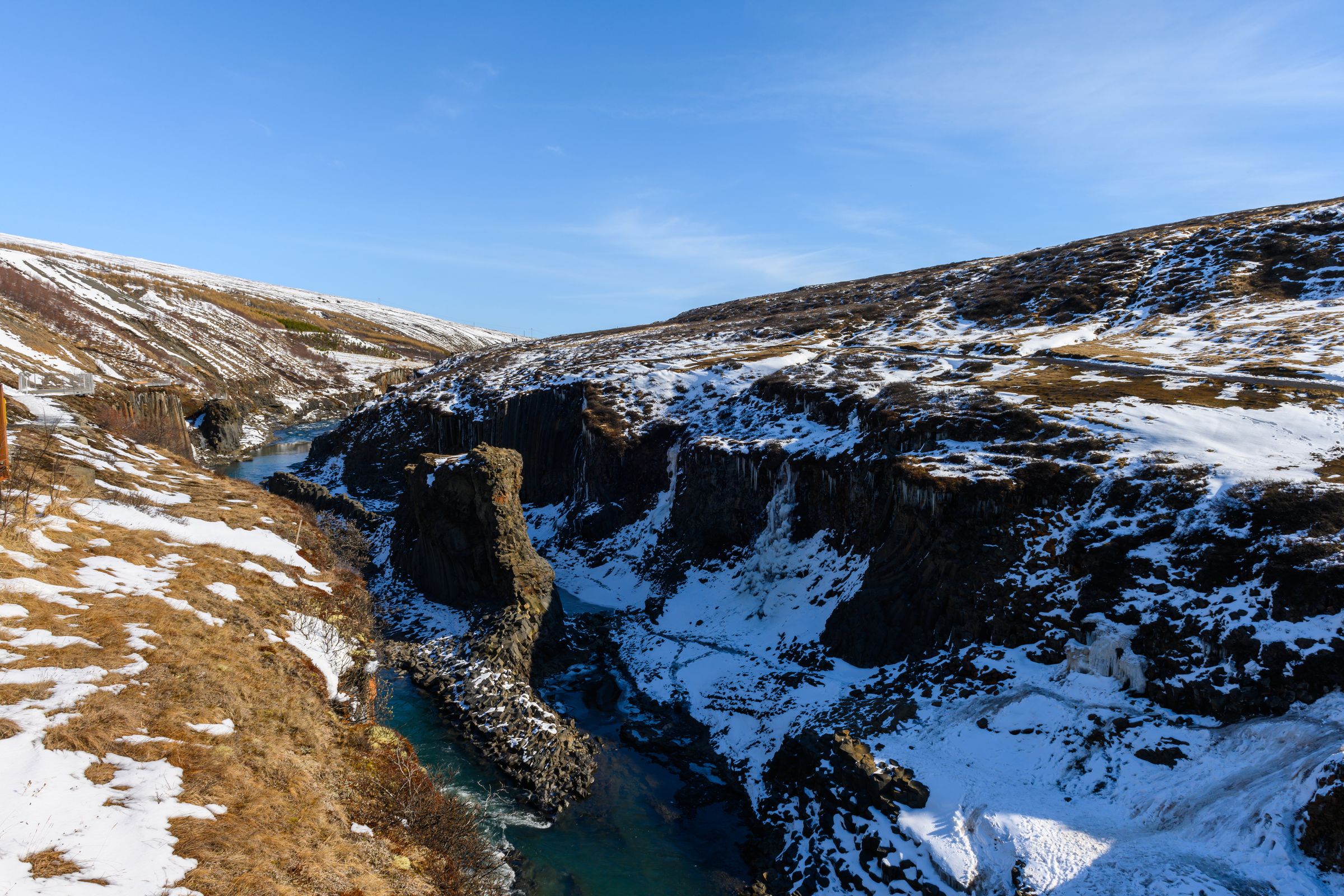
Studlagil Canyon is a hidden treasure in East Iceland. It is mainly known for being a narrow gorge with a glacial river flowing at the bottom. Perhaps its most striking feature is its walls, made of impressive basalt rock columns that look like organ pipes. This site emerged into view relatively recently, thanks to human intervention. Some works upstream lowered the water levels of the Jökla River (Jökulsá á Dal), which runs through it. Before that, the columns were submerged, making the canyon largely unknown even to the local populations. Today, it attracts visitors who appreciate its striking geometry, where hexagonal pillars rise like natural architecture from the bottom of the canyon.
The canyon's appeal lies in its blend of colors and textures. When water levels are low, the Jökla River has an intense turquoise hue that contrasts sharply with the dark basalt and green hills of the surrounding landscape. This creates a photogenic scene that's become increasingly popular in recent times for nature photographers and nature lovers, both locals and tourists. The area around Studlagil feels remote and isolated, as there are barely any artificial things, but it’s quite close to the Ring Road, the most important road in Iceland, so it has great accessibility.
Historically, the Jokuldalur Valley, where the canyon sits, has been sparsely populated. On the other hand, it has been used mainly for sheep grazing. The construction of the Karahnjukar hydroelectric plant between 2003 and 2009 changed the course of the river, lowering its level in certain areas. This revealed the formations that we can enjoy today. It began to be visited, and a photographer published some photos, sparking interest in a broader audience and turning Studlagil Canyon into a new traveling destination. The terrain around is quite rugged, and there is no evidence of ancient settlements nearby.
It’s very normal to have legends associated with natural places in Iceland. In Medieval times, people used to explain the appearances of some sites with mythological stories. However, there are no stories of this type about Studlagil, because, as we have just seen, it had remained hidden until not so long ago. The nearby Lagarfljot Lake, though, has a myth about a dragon-type creature lurking in its depths.
The site's geology is the result of volcanic activity. Basalt, the material the hexagonal columns are made of, is formed when lava cools rapidly. Then, over millennia, the river’s erosion carved out the gorge, shaping and exposing these features. There are many similar formations across Iceland, with waterfalls and beaches featuring them. But not many places boast such a large collection of them like Studlagil Canyon. It’s the kind of place where you can feel the power of nature.
Another advantage of adding this gorgeous canyon to your campervan itinerary is that there’s a parking area close to the canyon, so it’s quite easy to add it as a stop in your journey.
Facts about Studlagil Canyon
In Iceland, the vast majority of places, especially natural ones, have quite descriptive names. In this case, it had remained nameless for almost its entire existence. The same photographer who made it popular, Einar Páll Svavarsson, is the one who named it in 2016. The name "Studlagil" translates to "basalt columns" in Icelandic, directly referencing its defining feature. These columns, formed from cooled lava, can reach heights of up to 20 meters (65 feet), making them some of the tallest in the country.
The canyon is about 500 meters long, with widths ranging from narrow passages to broader sections where the river flows freely. The Jökla River, at 150 kilometers long, originates from the Vatnajökull glacier, the largest in Iceland and Europe, and feeds in the canyon, its depth fluctuating with the seasons and the dam upstream.
Visitor numbers have grown since its discovery, but it remains less crowded than other attractions in the country, especially in the south, Iceland’s most visited region. There’s a parking area by the canyon, and from there it is just a couple of minutes on foot.
Studlagil Canyon Camping and Café
One of the perks of visiting Studlagil Canyon as part of a road trip is that there is a campground there. It’s not one of the most complete in Iceland, but it covers everything you need for a comfortable stay. It has pitches for tents, campervans, and caravans, giving access to toilets, showers (for a supplement), a cooking area, and electricity hookups for campers. Charging electric vehicles is not allowed.
The campground also has a café -well, it’s actually a food truck- that serves food and drinks. They have baked goods, soups, and some traditional Icelandic food. It’s open to the general public, not only people staying in the campsite.
Both the camping ground and the café are only open between May and October.
Where's Studlagil Canyon and How to Get There
Studlagil Canyon lies in the Jokuldalur Valley of East Iceland, about 70 kilometers west of Egilsstaðir, the capital of the Eastern Region. The best way to reach it is by car or campervan, as public transport options are limited in this remote area.
From Reykjavik, the journey is roughly 600 kilometers (373 miles) along the Ring Road (Route 1). It’s on the other side of the country, so it’s a long trip. Start by heading north through Borgarfjordur, then east past Akureyri. The drive takes about 7 to 8 hours without stops, but plan for longer with breaks for fuel and food. Or stopping at some sights. You can also plan it in a few days, taking shorter stages on the road. 50 kilometers before Egilsstaðir, there’s a road to the right called Route 923. This road is 19 kilometers (12 miles) before the canyon area. Part is paved, but the last stretch is gravel, so drive carefully.
Alternatively, you can take the Ring Road from Reykjavik to the south. It’s longer, around 700 kilometers in total. It all depends on the things you want to see on your way to the Studlagil Canyon.
Rent a campervan in Iceland
Visit every hidden gem in the country with total flexibility
Campervan travelers will find several campsites in the area, offering basic to full facilities. Apart from the campsite by the canyon, there are a few other good options. These spots provide easy access to the canyon while allowing you to explore the surrounding area, which is full of nice things. Remember, wild camping is prohibited in Iceland, so stick to designated areas.
This campsite is the second closest to the canyon after the Studlagil campsite. It’s by the junction of Route 1 and Route 923. It’s by a guesthouse owned by the same people, in case you want a different kind of stay. The campsite is quite complete, with toilets, showers, electricity, a washing machine and dryer, a kitchen, a common area, and hot tubs. There is also a swimming pool and a restaurant that offers meals and drinks to guests. It’s pet-friendly.
As the region's main town, Egilsstaðir had to have its own campsite. It has toilets, showers, free Wi-Fi, a washing machine and dryer, electricity, and a playground for children. It’s very close to supermarkets and other services, so it's a solid base for day trips.
Svartiskogur Camping Site
Distance to Studlagil Canyon: 58 kilometers (36 miles).
Opening period: May to September.
This quiet camping ground is located in the middle of a beautiful birch forest. It has grassy pitches for campervans and tents, with access to toilets, showers, electrical hookups, cooking facilities, an outdoor BBQ area, a laundry room, a common area, and free Wi-Fi. The wooded surroundings provide shelter from the wind, and there are several hiking trails nearby to explore the area, which is very nice.
Möðrudalur Fjalladýrð
Distance to Studlagil Canyon: 76 kilometers (47 miles).
Opening period: May to September.
This site is further in the interior, in the first part of the Icelandic Highlands. The camping area is on a grassy meadow crossed by a stream, creating a quite picturesque setting. Its remote location allows you to enjoy a slice of pure raw Iceland. But, at the same time, it’s a complete and well-maintained camping ground, with plenty of activities. It has toilets, showers, electricity hookups, a cooking area, a laundry room, a playground for children, and Wi-Fi. They also have a mini-football field and a disc-golf course. It’s in a tiny village, but there’s a restaurant next door.
Seyðisfjörður Camping Ground
Distance to Studlagil Canyon: 99 kilometers (61 miles).
Opening period: May 1 to September 30.
Close to the center of the town of Seyðisfjörður, this place has pitches divided into different zones. It has toilets, showers, electricity, a washing machine and dryer, free Wi-fi, a shared kitchen, and a dining area. They also have bikes for rent.
Stóra-Sandfell
Distance to Studlagil Canyon: 88 kilometers (54.6 miles).
Opening period: May 15 to September 15 (camping site from June 1 to August 31).
South of Egilsstaðir and nestled inside a nice forest, it’s a great place to have a tranquil stay while being close to everything that matters. It’s a simple option, with toilets, showers, and electricity. There are horse rental options for a nice experience, and the campsite connects to several hiking trails.
Hallormsstaður Camping Ground
Distance to Studlagil Canyon: 97 kilometers (60 miles).
Opening period: May 20 to September 30.
If you’re looking for an amazing setting, this is the place. This camping ground is inside Hallormsstaðaskógur and by the shore of Lake Lagarfljót. This family-friendly site has toilets, showers, electricity, a BBQ area, outdoor tables, and a playground. Many of the trails that lead into the forest depart from the campground. If you prefer, you can also stay in Hotel Hallormsstaður, a new hotel with 100 rooms and a restaurant.
Hengifoss Guesthouse
Distance to Studlagil Canyon: 108 kilometers (67 miles).
Opening period: Year-round (campsite seasonal, from mid-May to late summer).
This guesthouse includes camping options with toilets, showers, and electricity. It also features a BBQ area, a campfire spot, a playground for children with a trampoline and swings, a kitchen, a common area, a laundry room, hot tubs, and a sauna. It’s near Hengifoss, one of the most impressive waterfalls in Iceland.
What to See and Do Near Studlagil Canyon
Studlagil Canyon is an impressive natural landmark. But, since you’re doing a campervan road trip through the country, here’s a list of sensational places you can add to your itinerary in the Eastern Region.
Hallormsstaðaskógur
There are not many forests in Iceland, but the largest in the entire country is not far from Studlagil Canyon. If you are going to visit the gorge, extend your visit a little longer and enjoy Hallormsstaðaskógur. It covers 740 hectares of birch, pine, and spruce along Lagarfljót Lake’s southern shore. Forests are not very common in Iceland, and this one started artificially, planted since 1903, as a plan to fight erosion. Several trails go deep inside the forest. If you’re coming in autumn, you’re in for a treat, as the changing colors of the leaves create a mesmerizing spectacle. It’s a stone’s throw away from the Ring Road, so it’s quite easy to stop to see it.
Hengifoss and Litlanesfoss Waterfalls
Not far from Studlagil Canyon in your campervan, you can arrive at the trailhead for Hengifoss, Iceland's third-tallest waterfall. It stands at 128 meters (420 feet) and is framed by basalt columns, creating a jaw-dropping scene. The 2.5-kilometer hike from the parking area takes about 45 minutes each way, winding through a lush valley. The hike to Hengifoss takes you past Litlanesfoss, another stunning waterfall framed by hexagonal basalt formations. The trek is moderately challenging but rewards you with breathtaking views.
Egilsstaðir
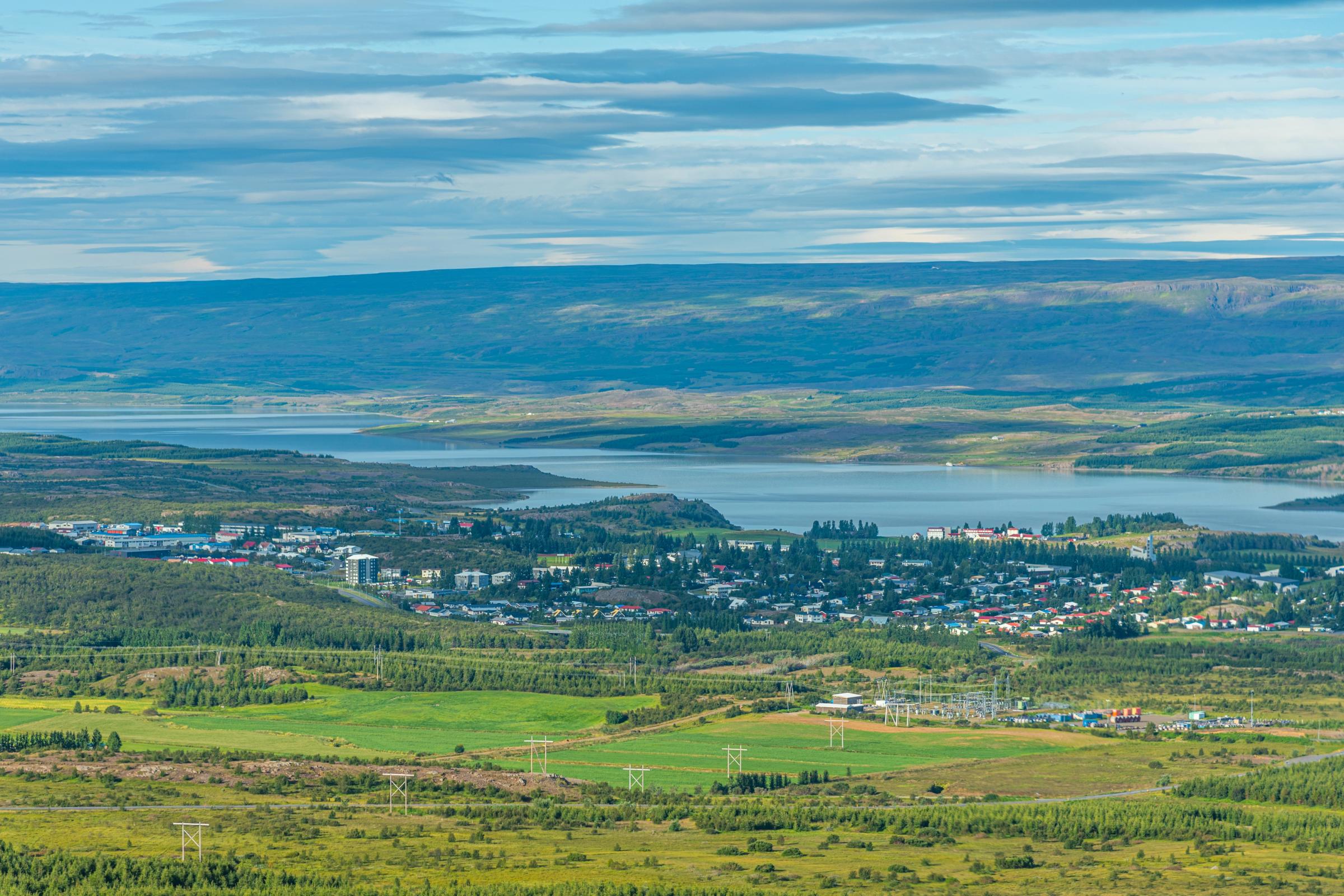
As East Iceland's main town, Egilsstaðir will be your point of reference for services during your campervan trip through this part of the country. Here you’ll find gas stations, shops, and restaurants. If you want to learn about the region’s history, go to the East Iceland Heritage Museum, which features turf houses that are nice examples of traditional Icelandic dwellings. Apart from being practical for refueling and groceries, it also hosts cultural events in summer, like a jazz festival and electronic music concerts.
Lagarfljót
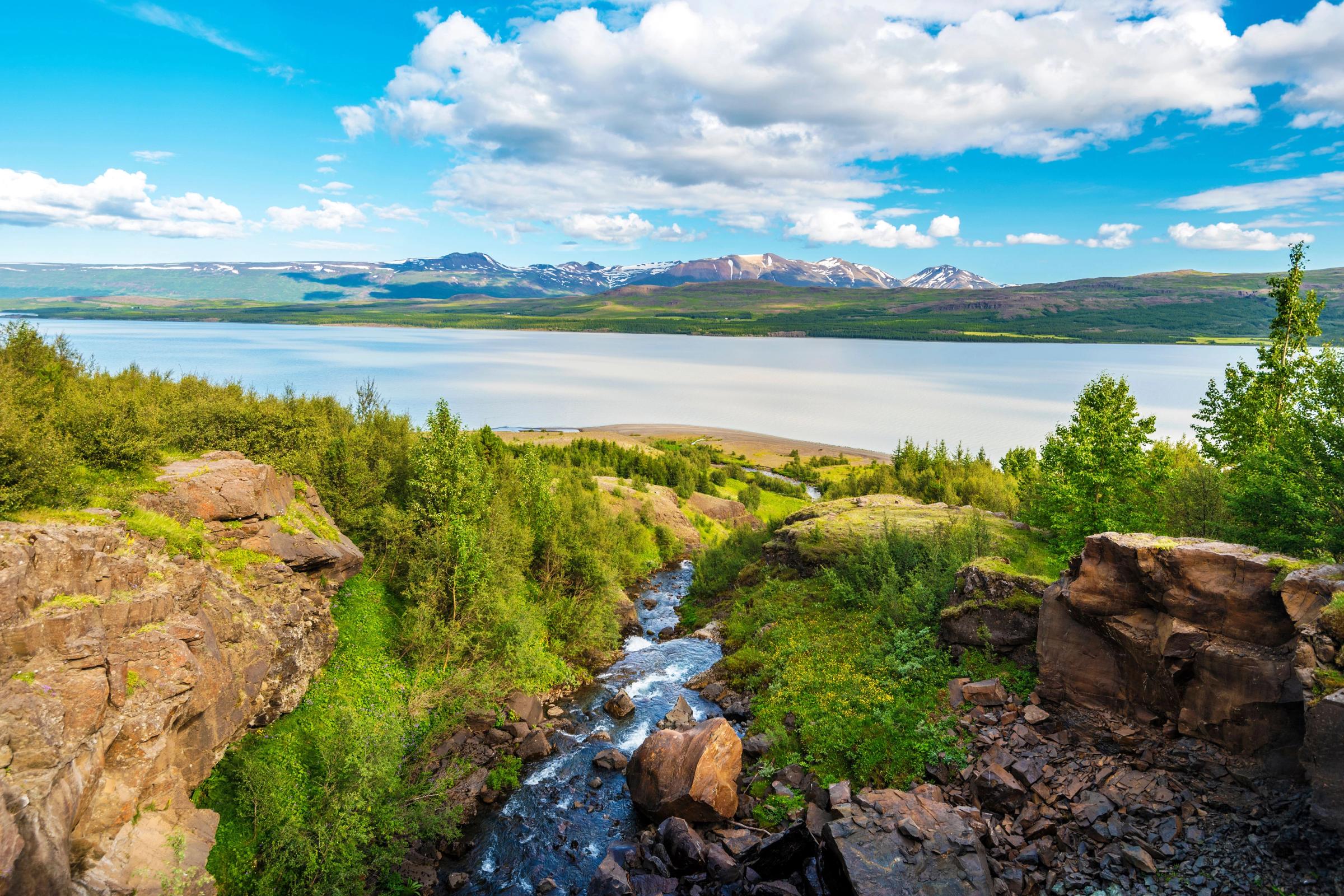
Stretching 25 kilometers (15 miles) long, Lagarfljót is a narrow lake just outside Egilsstaðir. Its calm waters reflect the surrounding hills, and the legend of the Lagarfljótsormur, a monster that allegedly lives there, adds a layer of folklore. While it’s quite unlikely to see the creature, it’s a gorgeous place. You can take a boat tour to explore the shores or cycle one of the many paths around the lake. Birdwatching is popular here, with species like ducks and swans gathering on the water.
Fardagafoss
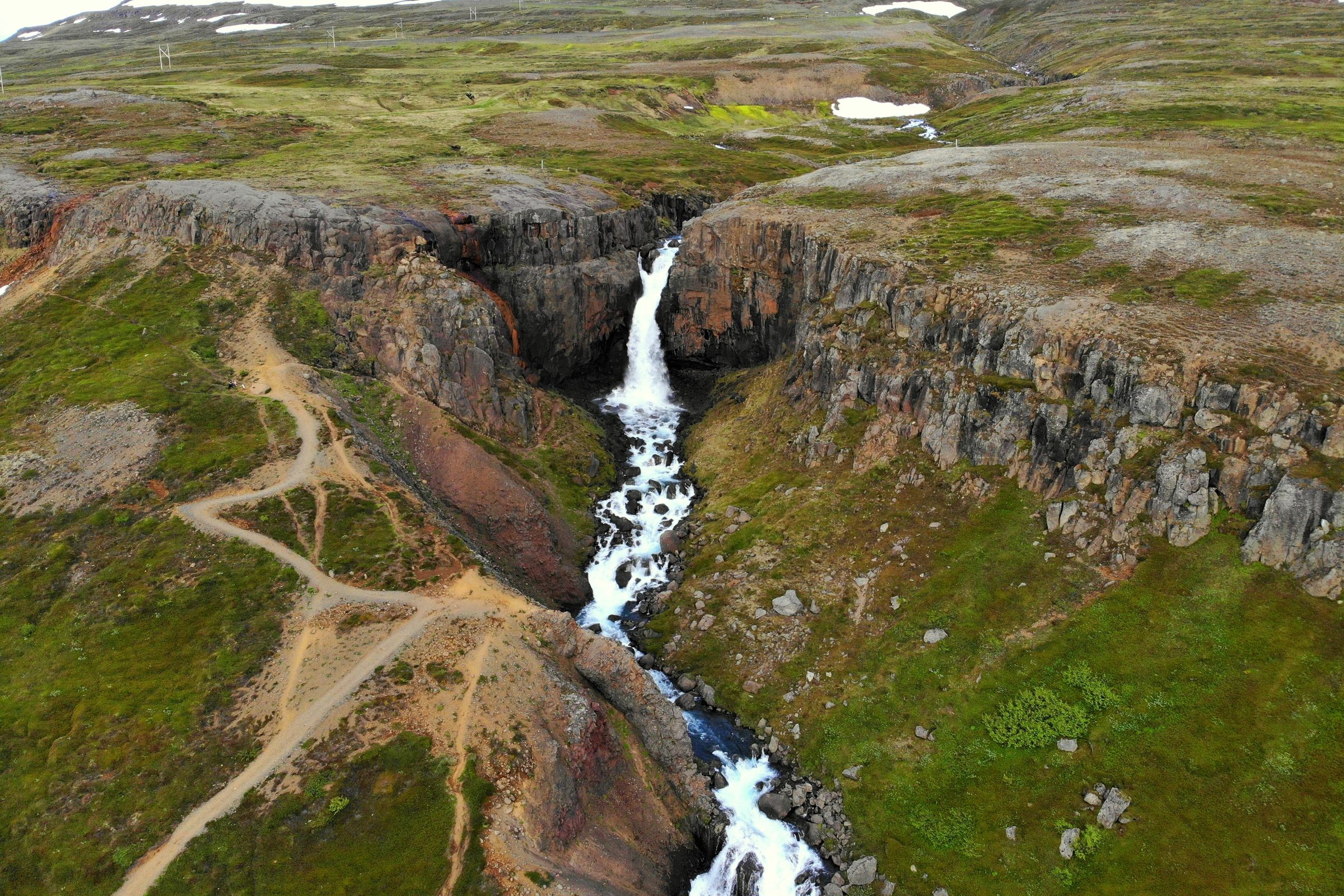
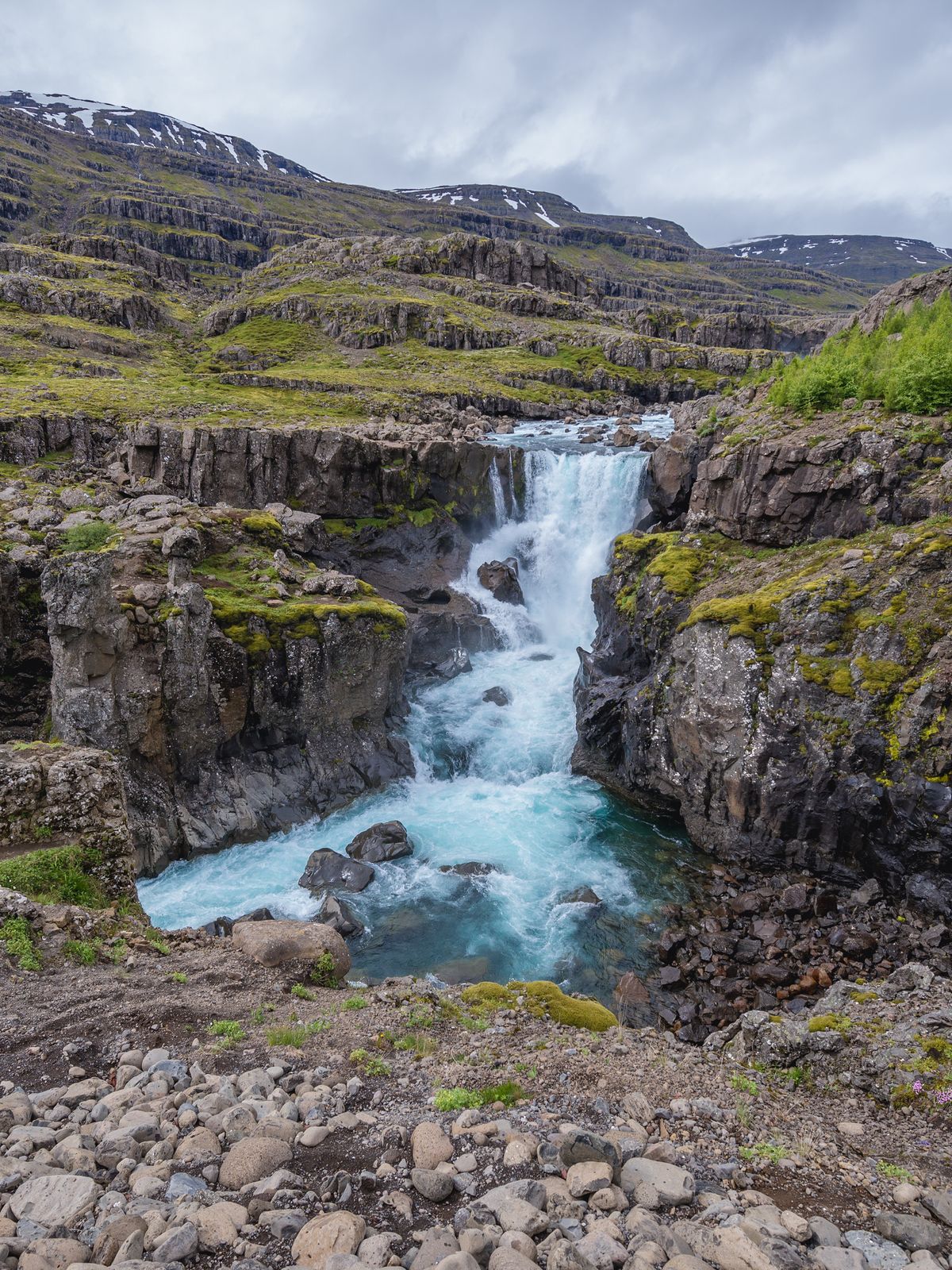
Fardagafoss is a 20-meter waterfall accessible by a 1.5-kilometer moderate hike from a parking lot near the road. The trail crosses streams and has fantastic valley views, taking about 30 minutes each way. The water of the cascade has a milky blue hue and falls into a pond surrounded by rocks, perfect for photos. It's not as famous as other waterfalls in the country, but it’s quite enchanting.
Vök Baths
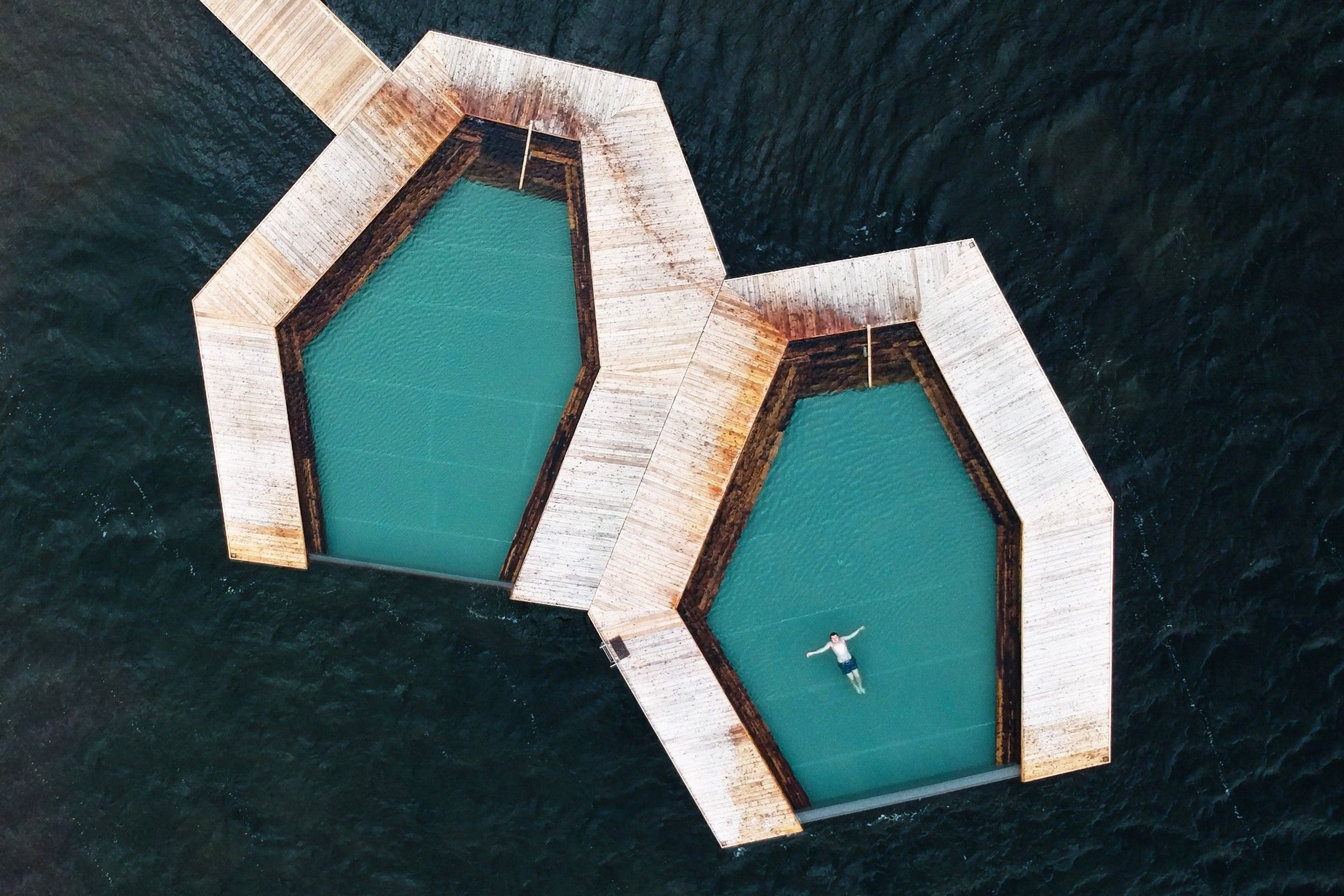
One of the best experiences in Iceland is taking a geothermal bath. It’s not only relaxing, but a phenomenal way to connect with the local culture. Icelanders often go to spas or natural hot springs to unwind, socialize, and even conduct business. Luckily, the probably best spa in East Iceland is just 5 kilometers (3 miles) from Egilsstaðir. The Vök Baths have infinity pools built directly on the surface of Lake Urriðavatn. The pools are naturally heated by nearby hot springs to 38-40°C (100 to 104°F). The facilities include saunas, cold plunges, and a tea bar with herbal infusions, making it a great spot after a day of travel or hiking. Open year-round, the baths provide a contrast to the cool air, especially under starry skies in evening hours. Entry includes access to changing rooms and towels.
The Seasons at Studlagil Canyon
Summer, from June to August, brings mild days with temperatures between 10°C and 15°C (50°F to 59°F). The days are really long, with almost 24 hours of natural light by the end of June. Expect occasional rain, mixed with sunny spells, and light winds. The water levels are at their lowest, so the basalt columns are more exposed. On the other hand, it’s the season with more tourists.
Autumn (September and October) sees the temperatures drop to 5°C to 10°C (41°F to 50°F). The meadows and forests, like Hallormsstaður, get beautiful changing colors. Rainfall increases, and the first days of snow can arrive by mid-October. The water flow increases, as it’s the rainy season. It’s the season with fewer tourists.
Winters (November to March) are long and cold in Iceland, and the east of the country is no exception. The temperature is usually below 0°C (32°F), with snow covering the ground. The days are very short, with almost no natural light by the end of December and beginning of January. Driving can be tricky, and many roads, especially secondary ones, close if the weather is too harsh. On the other hand, if the night is clear, there are high chances of seeing the Northern Lights.
Spring, from April to May, warms gradually from 0°C to 10°C (32°F to 50°F). The snow starts to melt, revealing green fields full of flowers. However, rain is quite common, so the trails can be muddy. The water levels are at their highest point by the end of the season.
What to Pack to Visit Studlagil Canyon
Packing for a visit to Studlagil Canyon should be about the same as for a regular trip to Iceland; there’s no need to bring extra gear. Here’s a list of things you should consider.
Sturdy hiking boots with a good grip.
Waterproof jacket and pants to handle rain.
The best way to adapt to the constant temperature changes is to dress in layers. Thermal base; wool or fleece intermediate; waterproof on the outside.
Hat, gloves, and scarf. Nights can be cold even in summer.
Sunscreen and sunglasses, even in cooler weather.
Paper map or offline GPS app for navigation. The canyon is remote, and cell phone signal can be spotty.
Park only in designated lots to avoid fines and protect the environment.
Carry cash. Card payment is accepted almost everywhere in Iceland, but it can come in handy for certain things.
Visit the canyon early or late to avoid crowds, especially in summer.
Respect nature: stay on marked trails and pack out all trash.
Fuel up in Egilsstaðir, as there are barely any gas stations in rural areas.
When choosing your campervan, opt for a 4x4 for gravel roads.
Combine your visit with nearby sites like Hengifoss for a full day.
Conclusion
Studlagil Canyon is one of those places in Iceland that is full of magic but not many people know of. As it was recently discovered, it doesn’t appear in many travel guides, but it’s a fantastic surprise for anyone who makes their way to this astonishing natural monument.