Grettislaug: A geothermal pool tied to Icelandic folklore
Iceland has many different types of landscapes and unusual geological features. A lot of people travel there because of them. But many visitors also want to do more than just look at the scenery. They look for activities that let them spend time outdoors and experience the environment more directly. Geothermal baths are one of those activities, and they are an important part of Icelandic culture.
There are dozens of places around the country where you can try this long-standing tradition. Some are natural hot springs with simple facilities. Others are more developed spas with a range of services. It depends on what kind of experience you prefer. If you’re heading to North Iceland, Grettislaug—also known as Grettir’s Pool—is a good option. These pools are located by the sea and offer open views of the surrounding area while you sit in warm water. The site is connected to the saga of Grettir the Strong, which adds a historical and literary link to the visit. It also fits well into a campervan trip around Iceland, with places nearby where you can park and stay overnight.
Key Takeaways
- Grettislaug is a geothermal pool located in North Iceland.
- It’s also known as Grettir’s Pool, but the place features two bathing pools.
- It’s a place connected to Icelandic folklore, with the legend of Grettir the Strong.
What's Grettislaug?
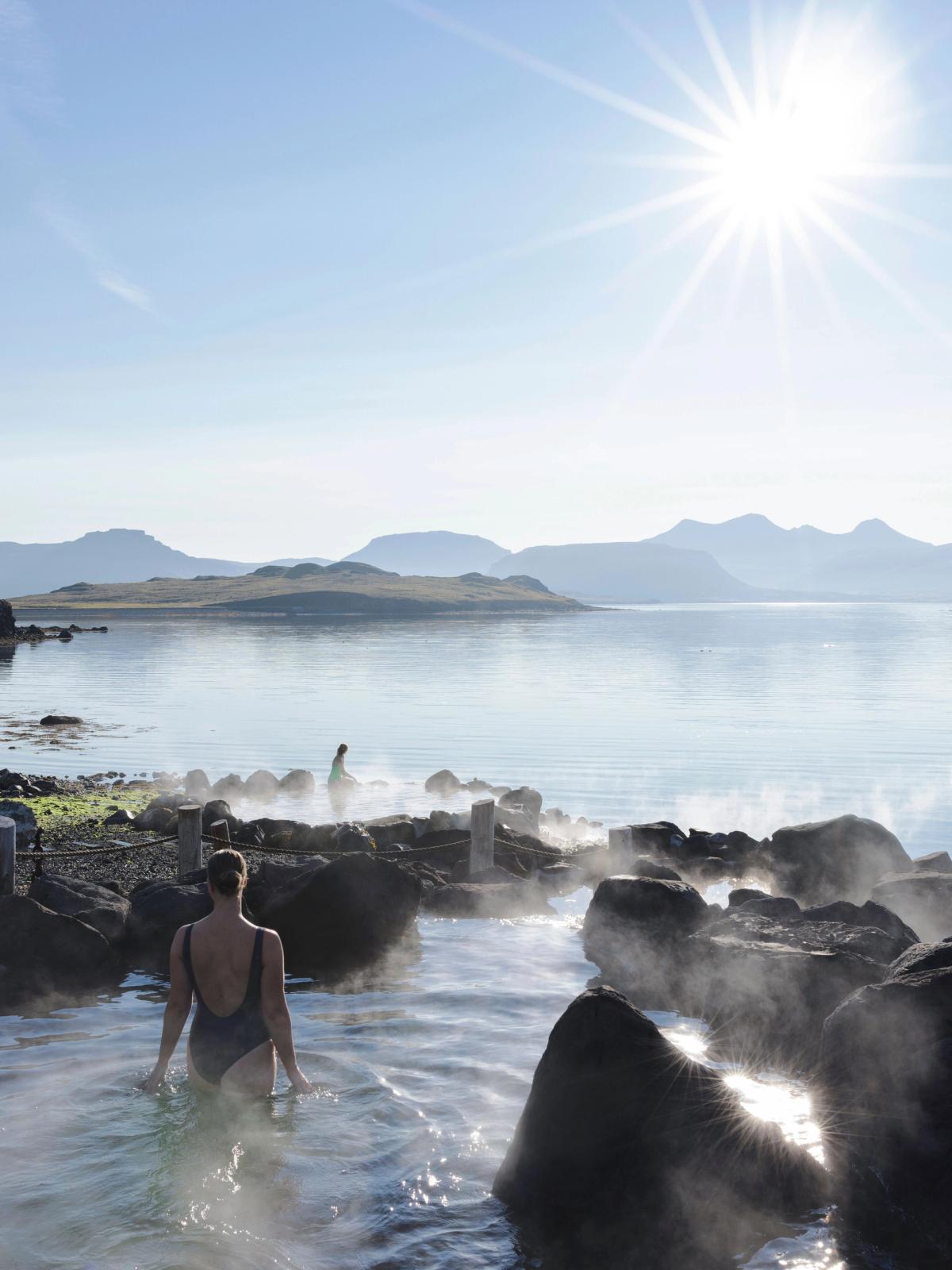
Grettislaug is a natural geothermal pool tucked into the coastline of the Skagafjörður fjord, in North Iceland. It’s a very well-known place for Icelanders for two reasons: the setting is incomparable and it’s tied to the country’s medieval folklore. The site features two small pools built from natural stones found in the area. The water comes out hot naturally from underground and is used to fill up the pools, creating a rustic bathing area right by the sea. The pools are not big, they can fit a few people inside, so visitors often describe the experience as intimate, with the pools overlooking the fjord and a prominent rock formation in the sea, called Drangey Island, in the distance.
The water temperature is kept at around 39-42°C (102-108°F) all year round, making it suitable for a bath even on cooler days. The bathing area is surrounded by grassy hills and rocky areas, and the cliffs around are home to thousands of seabirds that come to nest in the summer, and seals. Even puffins, the most popular bird in the country, and the one tourists want to see the most, can be found here.
To the north and west, the Skagi Peninsula stretches out with its dramatic cliffs and quiet beaches. Inland, there are tall mountains and deep valleys. There’s even a ski station not far from the pools. It’s not as developed and modern as other larger spas in Iceland, like the famous Blue Lagoon or the Sky Lagoon. However, this lack of infrastructure preserves the authentic feel.
What makes Grettislaug particularly appealing is its blend of geology and history. The pools draw from Iceland's abundant geothermal activity, one of the main forces that has shaped, and still does, the island. The energy underneath the surface heats the water and results in baths full of minerals that soothe the body and the soul.
Beyond the natural appeal, the site also holds cultural significance. The name of the place is Grettislaug, which in Icelandic can be translated as Grettir's Pool. Grettir is a legendary figure from the Sagas of the Icelanders, the foundation of the country’s history and literature. You can look up this location on the internet or maps app with both ways of spelling.

Basic Information about Grettislaug
Grettislaug is a small geothermal bathing site on private land at Reykir farm. The facilities are simple. There are two pools:
- Grettislaug (main pool): An oval pool about 4.5 meters long and 4 meters wide. It can hold around 15–20 people.
- Jarlslaug (smaller pool): Fits about 5–6 people.
Both pools stay between 39–42°C throughout the year. The water comes directly from natural hot springs. There are basic changing areas, but no showers or extra spa facilities.
The main pool is named after Grettir the Strong. The smaller pool was first called Reykjalaug, after the farm. It was later rebuilt and renamed Jarlslaug (The Earl’s Pool) to honor Jón Eiríksson, who led the reconstruction. In Icelandic, laug means pool.
Prices, Camping, and Nearby Services
Entry costs around ISK 2,000 per person (about €13.75 or $16.50). This includes access to the pools and nearby restrooms.
Next to the pools is Reykir Campsite. Camping costs about ISK 1,250–1,500 per person per night, and campers can use the pools as much as they want during their stay. The pool fee is lower for those staying at the campsite.
There is a small café on site that sells snacks and drinks. There are no restaurants nearby. The closest restaurants are in Sauðárkrókur, about 18 kilometers to the south.
Children are allowed, but they must be with an adult and supervised at all times.
Opening, Access, and Rules
Grettislaug is open all year. Access depends on weather and road conditions. Northern Iceland gets heavy snow in winter, and smaller roads, including the one leading to the pools, may close during bad weather.
There is no booking system and no website for reservations. The site is usually less crowded than many other geothermal spas in Iceland.
Visitors must follow the rules: do not use soap or shampoo in the pools, keep noise low, and do not play music.
Grettislaug Reykir Campsite
As we were just saying, Grettislaug is a great destination as part of a campervan trip. It’s a great experience, but not only that. If you want to stay right there, Reykir farm has a camping area suitable for tents and vans. It's basic but has all the necessary things. And the setting is unbeatable, with views of the fjord. The price is ISK 1,500 per person per night (around €10.30 or $12.40). It’s open between April 1 and mid-October.
For double the price, that is ISK 3,000 (€20.60 or $24.80), you’ll have a stay in the camping ground plus unlimited access to the Grettislaug pools. Separately, it would be ISK 3,500, so you’ll be saving. And the best part? That includes unlimited access to the hot springs, so you can go as many times as you want during your stay.
The facilities are simple but sufficient: toilets, showers, shared kitchen, and common area. It's open year-round, weather permitting, and is perfect for those who love a remote and unique setting. The road going there, Route 748, is unpaved in the last part, but usually kept in good condition.

The Legend of Grettir the Strong
Grettir the Strong is one of Iceland's most iconic medieval characters. His life fills the pages of the Grettir Saga, one of the Sagas of the Icelanders. These texts are the base of the country’s culture and literature. In them, history and legend intertwine. Grettis Saga is one of them, also known as Grettir's Saga or The Saga of Grettir the Strong (Grettis saga Ásmundarsonar in Icelandic). It was written around the 13th or 14th century, narrating events (real and mythological ones) that happened between the 9th and the 11th century.
Born in the 10th century, Grettir was known for his immense strength and bravery, often battling trolls, ghosts, and human foes alike. His life as an outlaw began after a series of misfortunes, including killings after a series of feuds. Banished from society, he lived in the wilderness, surviving through wit and physical strength. The saga paints him as a tragic figure—powerful yet plagued by bad luck and a quick temper that isolated him from others.
The ties to Grettislaug come from a part of the tale that narrates how Grettir sought refuge in a rock island in the middle of the Skagafjörður, called Drangey Island. He hid there to escape from his enemies, who were trying to kill him, and lived there for years with his brother and a servant. One night, their fire went out, and Grettir swam the 7.5 kilometers (about 4.7 miles) that separates Drangey from the mainland through icy waters, arriving at Reykir farm. Exhausted and chilled to the bone, he discovered the hot spring and immersed himself for hours to recover. The legend suggests that these waters renewed his strength, giving the site its supposed mystical properties.
Where's Grettislaug and How to Get There
Grettislaug sits on the coastline of the Skagafjörður fjord, part of the Northwestern Region, known in Icelandic as Norðurland Vestra. The closest town is called Sauðárkrókur, which is about 25 kilometers (15.5 miles) south of the thermal area. In fact, the road leading to the thermal area departs from said town, winding along the coast.
Anyhow, the best way to reach Grettislaug is by car or campervan, as public transport options are very limited in this rural area. From Reykjavik, the journey covers roughly 300 kilometers (186 miles) and takes about 4 hours. Starting from the capital, head north on the Ring Road (Route 1) for around 240 kilometers (150 miles) until Blönduósbær. Once you’ve passed the town, turn left onto Route 73 toward Sauðárkrókur. From there, continue north on Route 748, a well-maintained road paved on the first part, then gravel, for the final 25 kilometers (15.5 miles). Watch for signs to Reykir farm; parking is free on-site.
If you’re coming from Akureyri, the most important city in North Iceland, the distance is shorter at about 135 kilometers (84 miles), with a drive time of 1 hour and 45 minutes. Follow Route 1 west for 90 kilometers (56 miles) to Varmahlíð, then Route 75 and 748.
Keep an eye to the road conditions, especially in winter. Heavy snow can disrupt travel by road.

Where to Stay near Grettislaug
Apart from the camping ground by the pools, there are a few good options in the region to sleep with your campervan. It’s important to know that wild camping is illegal in Iceland, and that applies to campers and caravans as well. You can’t just park wherever you want and spend the night. Stick to designated areas.
Sauðárkrókur Camping Ground
Distance to Grettislaug: 17 kilometers (10.5 miles). Open: Mid-May to mid-September.
After Reykir, the closest campsite to Grettislaug. It’s located in the town of the same name, next to the local swimming pool. The facilities include toilets, showers, electricity hookups, and hot and cold water. It’s accessible for people in a wheelchair. The proximity to restaurants, bakeries, and shops makes it practical for restocking. There’s a gas station just on the other side of the road.
Skagaströnd Camping Ground
Distance to Grettislaug: 64 kilometers (40 miles). Open: June 1 to August 31.
Skagaströnd is a small town on the other side of the peninsula where Grettislaug sits. The campsite is just outside town, in a beautiful field close to the mountains. This place has toilets, showers, electricity, a washing machine and dryer, a kitchen, and an outdoor sink. There’s a disc golf course next door.
Glaðheimar Cottages
Distance to Grettislaug: 60 kilometers (97.3 miles). Open: All year.
This place is more focused on cottages, but it includes a camping area. You can choose different types of accommodation: cottages (different sizes and capacities) with bathroom and kitchen; a room in the guesthouse with a private bathroom; or a camping area for tents and vans. All the pitches have access to electricity.
Varmahlíð Camping Ground
Distance to Grettislaug: 43 kilometers (26.7 miles). Open: May 15 to October 31.
A great campsite located in the town of Varmahlíð. It has separate areas for tents and vans, and the pitches are separated by trees. It features toilets, showers, a washing machine and dryer, electricity hookups, an indoor kitchen area, a common area, and Wi-Fi. It’s a couple of minutes on foot to the shops and cafés that can be found in Varmahlíð.
Húnaver Campsite
Distance to Grettislaug: 43 kilometers (26.7 miles). Open: All year.
Húnaver is great for nature lovers, as the setting is really beautiful, in a green meadow surrounded by mountains. The site emphasizes basic comforts in a rural setting, with facilities like showers, toilets, and electricity.
Holar Camping Site
Distance to Grettislaug: 47 kilometers (29 miles). Open: Mid-May to mid-September.
Surrounded by a forest, which is not common in Iceland, Holar is one of the most interesting camping grounds in Northern Iceland. The facilities are basic, with toilets and showers. There are several hiking trails around the campsite. Hólar Cathedral is a popular tourist attraction, and the Icelandic Horse History Centre is another.
Hofsós Camping Ground
Distance to Grettislaug: 53 kilometers (33 miles). Open: Mid-May to mid-September.
An ample campsite with basic amenities, such as toilets, showers, electrical hookups, and hot and cold running water. There’s also a playground for children.
Many of the camping grounds in the region, such as Sauðárkrókur, Varmahlíð, Holar, and Hofsós have a partnership agreement. If you stay in one of them, you’ll get a discount for a night on a different site.

What to See and Do near Grettislaug
Making a road trip through North Iceland is a fantastic experience. This part of the country is less visited than others, but there are plenty of things to see and do there. This way, you can pair your visit to Grettislaug with other great stops.
Tindastoll Ski Area
If you are coming in the colder months, Tindastoll Ski Area is a fantastic option to practice winter sport, and it’s quite close to Sauðárkrókur. This resort has slopes for all levels. In season, normally between November and April, you can go skiing, snowboarding, or cross-country skiing. You can rent the equipment on site, and there’s a café to have a break.
Hvitserkur
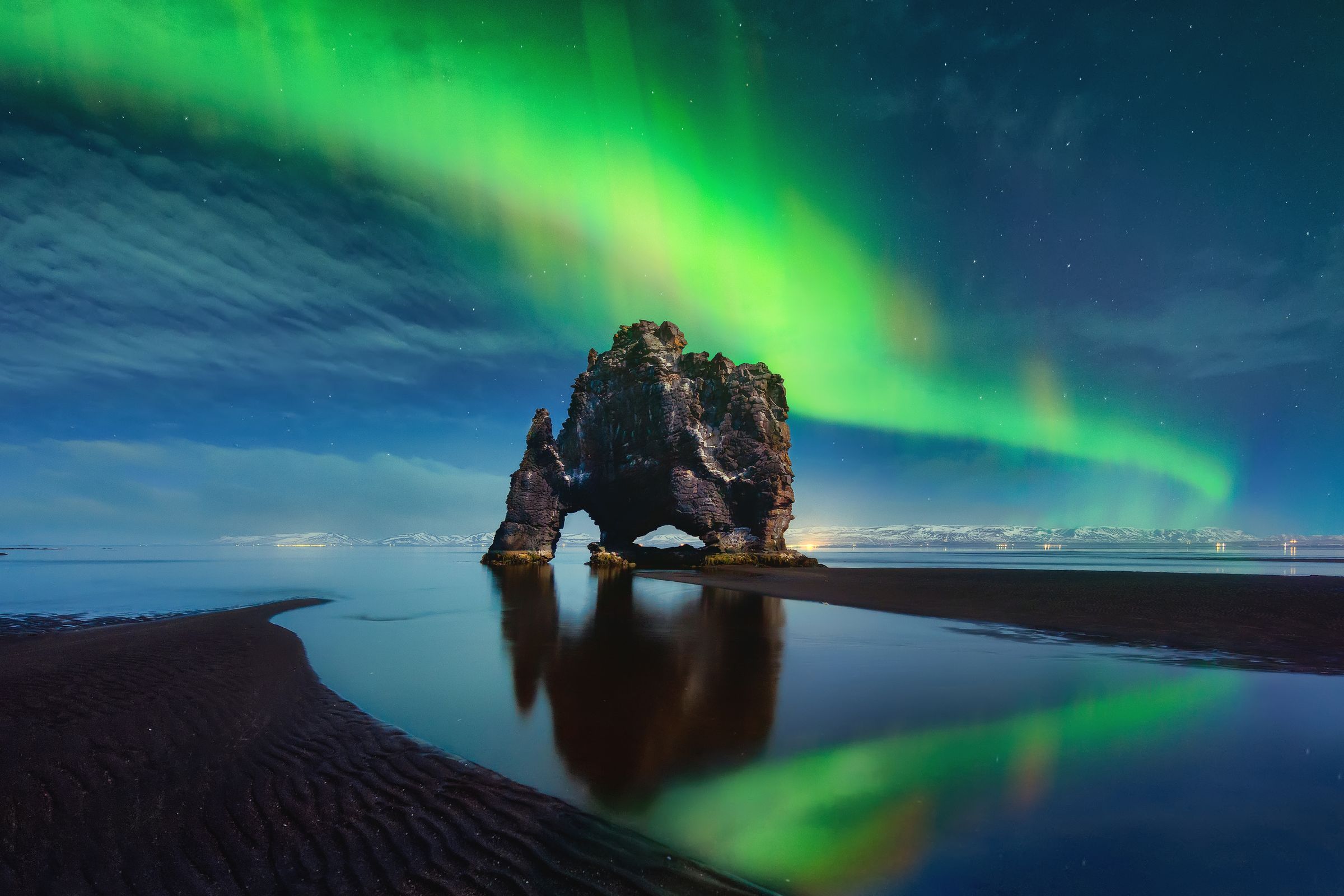
Hvitserkur is a 15-meter (49 feet) tall rock formation off the coast on the Vatnsnes Peninsula. It has a pretty unique shape. Depending on your angle, it resembles a dragon drinking from the sea, a rhino, or an elephant. According to the legends, it was a troll that was surprised by the sun and turned into stone forever. It’s a great spot for photos or bird watching, as it’s a nesting place for seabirds like fulmars, gulls, and shags.
Drangey Island
Drangey Island is a flat-topped volcanic rock in the middle of the Skagafjörður fjord, in front of Grettislaug. This small island is rich in birdlife and is a central element in the Grettis Saga. There are boat tours from Sauðárkrókur that allow you to see lots of puffins, terns, and guillemots in the summer months.
Hólar
Hólar is a small village in Hjaltadalur valley, home to Iceland's oldest stone church, built in the 11th century. There are historical buildings and archaeological excavations. You can visit the Center for the history of the Icelandic horse, Hólar Cathedral, and the turf house Nýibær. The first printing press in Iceland was located here, in 1530.
Glaumbær Turf Farm
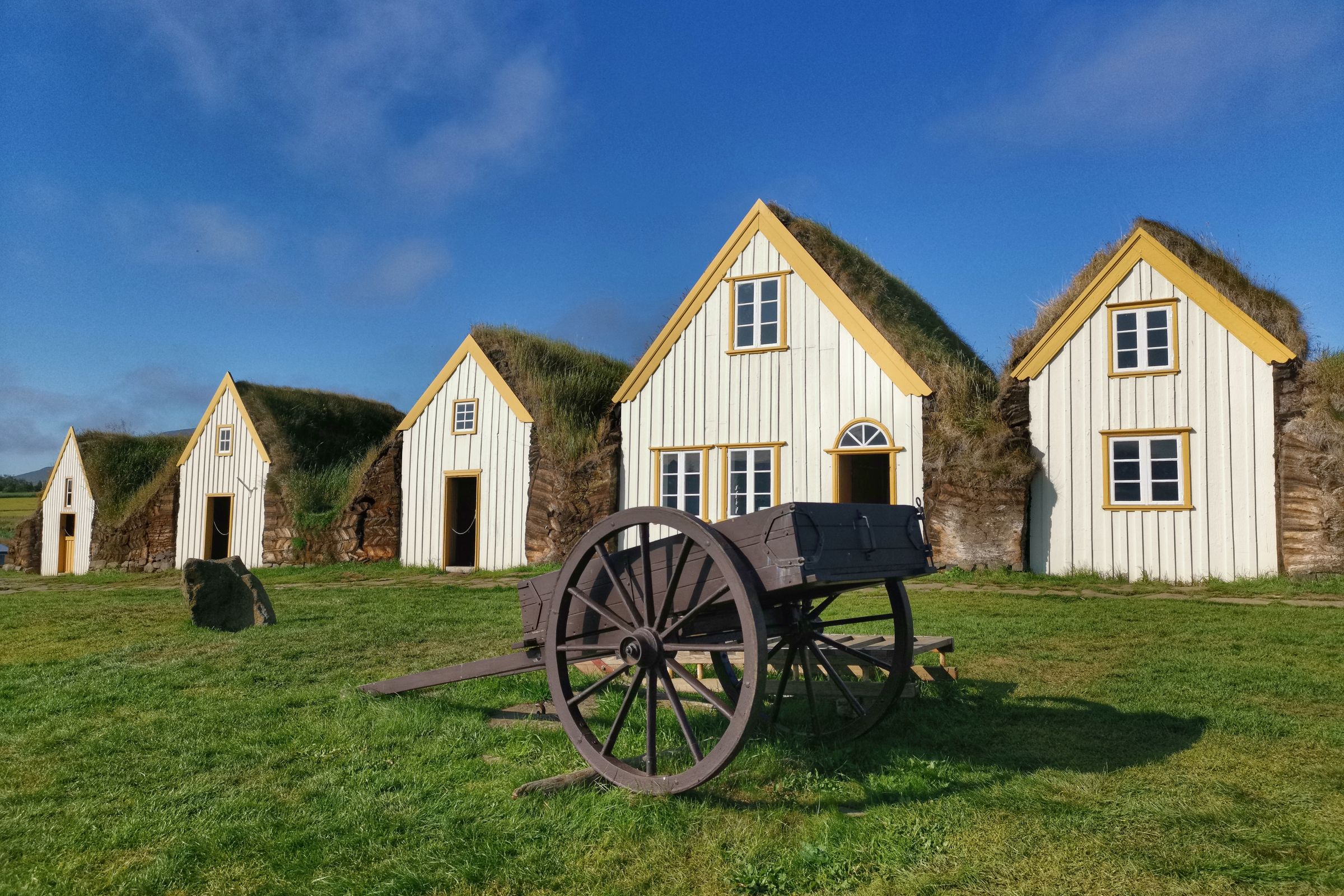
For those wanting to take a peek into how Iceland was a few centuries ago, Glaumbær Turf Farm showcases how Icelanders lived in the 18th and 19th centuries. The site has a few turf buildings and some timber structures. You can visit the kitchen, pantry, and common areas to learn about daily routines. The exhibition displays crafts and folkloric elements to understand the country’s heritage.
Skagafjörður Heritage Museum
Another fantastic cultural experience is the Skagafjörður Heritage Museum, with an exhibition about regional history with workshops for carpenters, saddlers, watchmakers, and tailors. They have Viking artifacts, turf farm exhibits, and interactive displays on social life. It's a compact yet informative stop for understanding local traditions.


Best Time to Visit Grettislaug
The weather has a huge impact on most activities in Iceland, especially since many are outdoors, like Grettislaug. Knowing what to expect can make all the difference.
Summer comes with long daylight hours and mild temperatures (10–15°C, 50–59°F) and almost 24-hour daylight by late June, giving you plenty of time to have a bath with natural light. All roads are accessible, and the skies are a mix of sun spells and sudden showers; rain is always a possibility in Iceland. It’s peak season, and campsites can be fully booked, but North Iceland is not as popular as other parts of the country.
The fields around Grettislaug change colors in Autumn, getting a golden hue that makes everything look wonderful. The average temperature cools down to 0–10°C (32–50°F), and rain becomes more common and increases its intensity. The pools feel warmer against cooling breezes, and sunsets are spectacular. The first days of snow can arrive by mid-October.
Winters are long and cold in Northern Iceland. Everything is covered in snow, and the average temperature barely passes the freezing point. The days are very short, with around 4-6 hours of daylight. Some roads close if there’s too much snow, making them impassable. On the bright side, it’s the season when the Northern Lights happen, so you’ll have chances to have a soak under the dancing aurora.
In spring, the temperatures usually move between 0 and 10°C (32 to 50°F). Rain is common, mixed with sunny spells, and the trails can be muddy and slippery. Take extra care, as paths and roads can have some lingering ice. The fields start to wake up, with flowers in bloom. It’s quieter, with fewer people, though some roads might still be closed, and some campsites open late in the season.

What to Pack to Visit Grettislaug
- Swimsuit and towel, there are no rental options on site.
- Flip-flops or water shoes for walking to the pools.
- Clothes in layers. It’s the best way to adapt to the temperature changes.
- A waterproof bag to protect your clothes and electronics.
- Water bottle and snacks, although you can always have a break in the café.
- Sunscreen.
- First-aid kit with basics like bandages.
- Road map or GPS app, cell phone signal can be spotty in some areas.
Travel Tips
- Check the road conditions before driving to avoid unpleasant surprises, especially outside of summer.
- Follow the leave-no-trace principles to keep the site and its surroundings clean.
- Maximize your day by combining your visit to Grettislaug with other activities.
- Don’t use soap or shampoo in the pools.
- Visit early in the morning or late in the evening for fewer visitors.
- Monitor weather apps for sudden changes.
- Read parts of the Grettis Saga to enrich the experience.
Conclusion
Geothermal bathing is one of the best experiences during a trip to Iceland. It combines Icelandic culture, relaxation, and nature. And in some places, you can add a pinch of folklore. That’s the case of Grettislaug, one of the most unique thermal facilities in the entire country. Grab your things and get ready for a unique experience.