Eldgjá Canyon is deep in Iceland’s Highlands, far from towns and paved roads. It runs for about 40 kilometers through open volcanic land and is the largest volcanic canyon in the world. It doesn’t feel set up for visitors. There are no crowds, no signs telling you where to look, and no sense that this is a place people pass through often.
This isn’t a canyon shaped by a river over time. Eldgjá formed when the ground split open during one of the biggest eruptions Iceland has ever experienced. Being there feels more like standing inside a geological event than visiting a destination.
What’s Eldgjá Canyon and How Was It Formed?
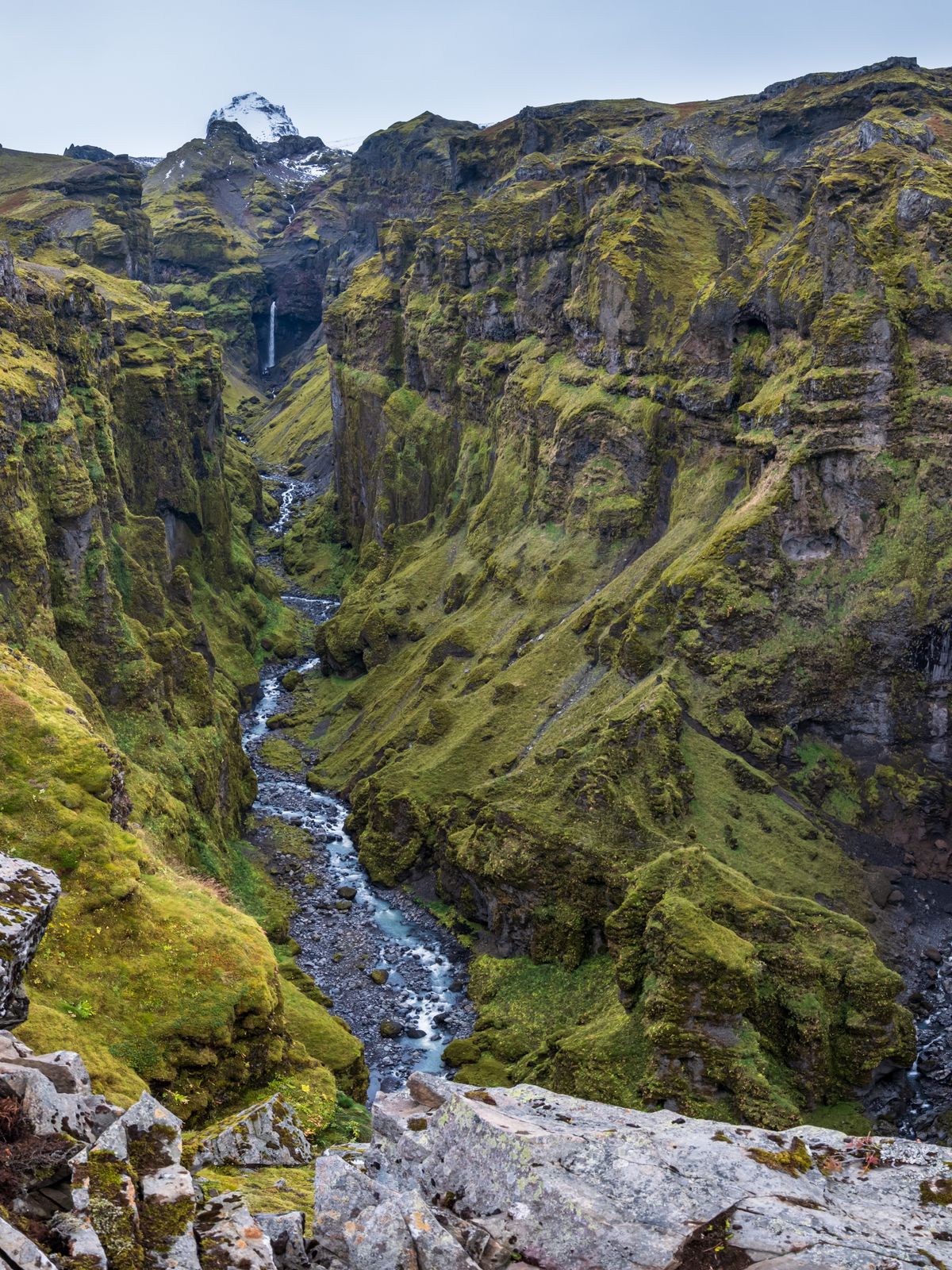
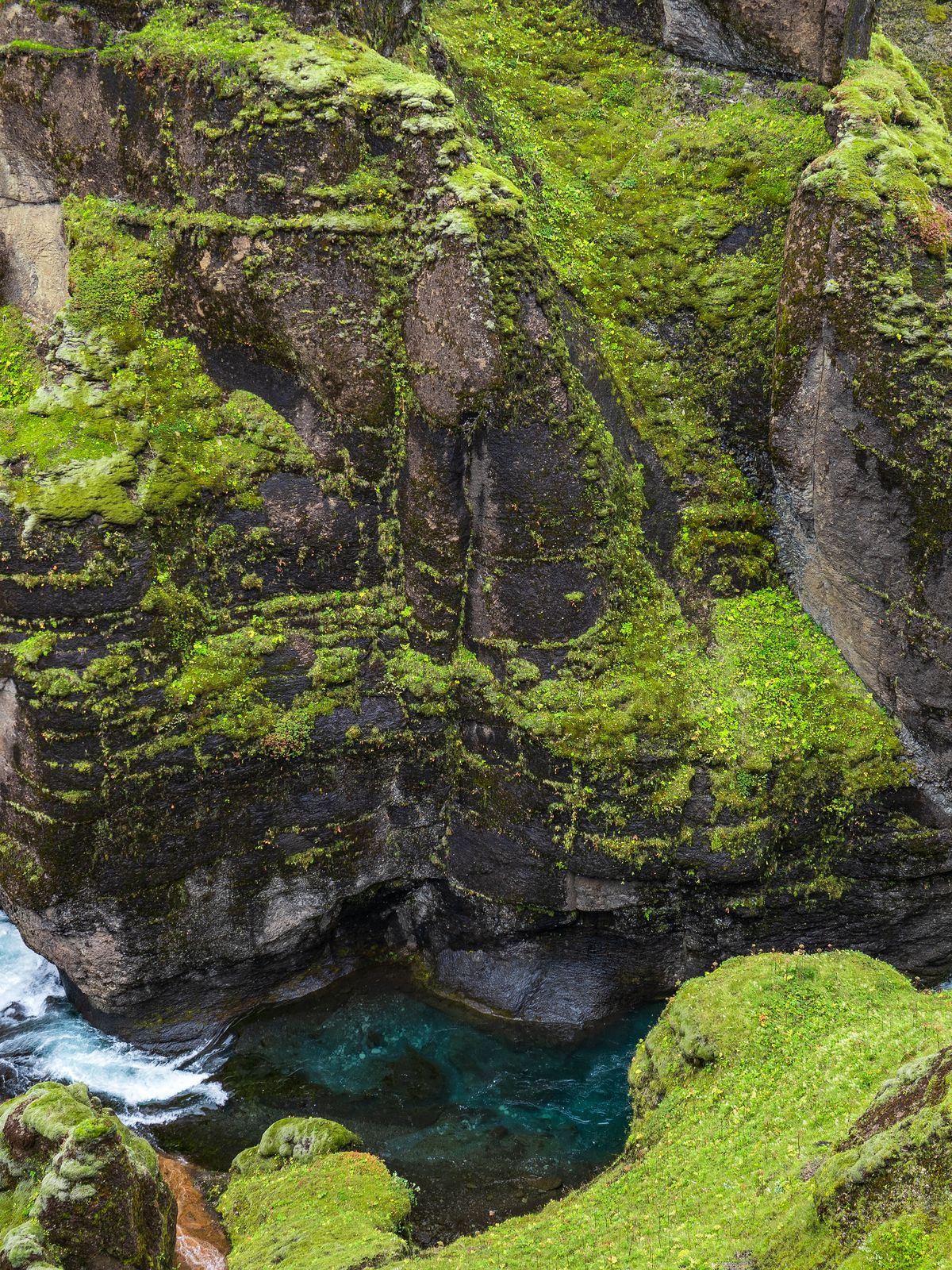
Eldgjá Canyon is a volcanic fissure canyon formed during a major eruption around 939 to 940 AD, stretching about 40 kilometers, reaching depths of up to 270 meters, and widths of up to 600 meters. It opened over just a few years due to volcanic forces, not slow erosion. The canyon is part of the Katla volcanic system, one of Iceland’s most active and dangerous volcanic systems. Its name means “Fire Canyon” in Icelandic.
The 939–940 AD Eldgjá Eruption
The eruption split the Earth open along a fissure about 75 kilometers long, producing an estimated 18 to 21 cubic kilometers of basalt lava that reached Iceland’s southern coast. Large amounts of volcanic gases, especially sulfur, caused cooling across the Northern Hemisphere. Scientists found traces of the eruption in Greenland ice cores and tree rings across Europe. The sulfur haze lowered temperatures for several years.
Where Is Eldgjá Canyon?
Eldgjá is located inside Vatnajökull National Park between Mýrdalsjökull to the west and Vatnajökull to the east, running northeast to southwest along Iceland’s volcanic rift zones. The closest town is Kirkjubæjarklaustur, about 50 kilometers south, with fuel, food, and basic services. The area is part of the Katla Geopark, a UNESCO-designated area recognized for its geological importance. It lies in one of the most active volcanic regions on the planet.
How to Get to Eldgjá Canyon
Eldgjá is reached only by driving on F-roads, usually F208 and then F223, with rough gravel, potholes, and river crossings. A high-clearance 4x4 vehicle is required, and river crossings are the biggest risk. Phone signal is unreliable, so offline maps or a GPS device are essential. Roads are only open in summer.
Best Time to Visit Eldgjá Canyon
The F-roads usually open in late June and close in early October, with July and August offering the best conditions and longest daylight. June can have snow patches and high river levels, while September brings autumn colors but possible early snowstorms. Temperatures can range from near freezing to around 15°C, and wind is almost constant. Weather can change quickly.
Places to Visit Near Eldgjá Canyon
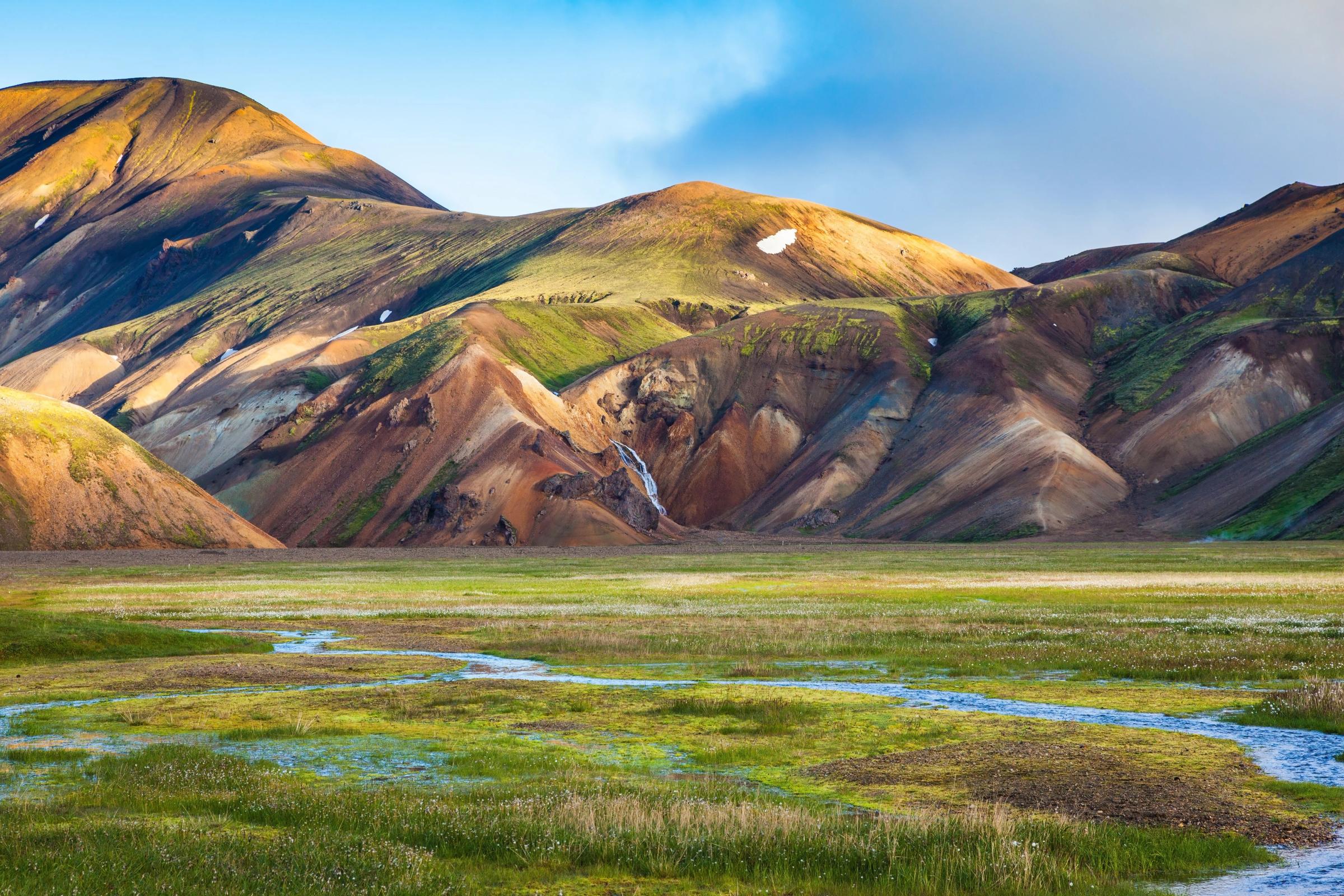
Landmannalaugar, about 60 kilometers north via F208, is known for colorful mountains, geothermal areas, hiking trails, and a natural hot spring. Lakagígar, about 40 kilometers southwest, was formed during the 1783–1784 eruption. There is no direct road between Eldgjá and Laki, but both can be visited on the same Highland trip. The drives are slow and rough but pass through classic Highland scenery.
Where to Eat Near Eldgjá Canyon
There are no restaurants or cafés near Eldgjá, so you must bring all your food and water. The closest town with services is Kirkjubæjarklaustur, about an hour and a half away on rough roads. Hólaskjól Highland Center has a small shop with basic items. It is not suitable for full meals.
Campsites Near Eldgjá Canyon
Hólaskjól Highland Center, about 8 kilometers south of the Eldgjá turnoff, offers a campground, mountain huts, and private cabins. Facilities include toilets, hot showers, and a small shop. Wild camping is not generally allowed inside Vatnajökull National Park. It is best to camp at designated places like Hólaskjól.
Practical Travel Tips
Bring warm clothes, waterproof layers, proper hiking boots, and download offline maps or use a GPS device. Carry extra food and water, as weather and road conditions can cause delays. Fill up your fuel tank in Kirkjubæjarklaustur before heading into the Highlands. Check your spare tire and bring basic tools, since roads are rough and help is far away.
Conclusion
Eldgjá Canyon is a striking volcanic fissure formed in 939 to 940 AD that remains mostly untouched. It is both geologically important and visually dramatic, located in a remote Highland area. Visiting requires planning, a high-clearance 4x4 vehicle, and preparation for changing weather. It offers a clear look at the volcanic forces that shaped Iceland and still shape it today.
What's Eldgjá Canyon and How Was It Formed?
Eldgjá Canyon is a volcanic fissure canyon created during a major eruption around 939 to 940 AD. The name means “Fire Canyon” in Icelandic. The canyon stretches about 40 kilometers, reaches depths of up to 270 meters, and can be as wide as 600 meters in some sections.
What makes Eldgjá unusual is how fast it formed. Rather than taking millions of years, the canyon opened up over just a few years due to volcanic forces. Eldgjá is part of the Katla volcanic system, one of Iceland’s most active and dangerous volcanic systems.
The shape of the land here is the result of pressure, heat, and movement, not slow erosion.
The eruption that created Eldgjá didn’t come from a single volcano. There was no mountain erupting at one spot. Instead, the Earth split open along a fissure about 75 kilometers long.
Lava flowed out along that entire crack.
The eruption produced an estimated 18 to 21 cubic kilometers of basalt lava. That’s enough lava to cover the entire state of Rhode Island under around 15 feet. The lava didn’t stop in the Highlands. It traveled all the way to Iceland’s southern coast.
The effects weren’t limited to Iceland. Large amounts of volcanic gases, especially sulfur, were released into the atmosphere and caused cooling across the Northern Hemisphere. Scientists have found traces of this eruption in Greenland ice cores and in tree rings across Europe. The sulfur created a haze in the atmosphere and lowered temperatures for several years. It was an event that left clear marks far beyond Iceland.
Where Is Eldgjá Canyon?
Getting to Eldgjá means heading into one of Iceland's most remote areas. This is deep Highland country, where distances feel longer, and the landscape stays wide open in every direction.
Geographic Location
Eldgjá is located inside Vatnajökull National Park, which is the largest national park in Europe. The canyon sits between two major glaciers. Mýrdalsjökull lies to the west, and Vatnajökull is to the east. The canyon itself runs roughly from northeast to southwest, following Iceland’s natural volcanic rift zones.
The closest town is Kirkjubæjarklaustur, usually just called Klaustur. It’s about 70 kilometers south of Eldgjá and is the nearest place with fuel, food, and basic services. To the northwest, Eldgjá connects to the highland route leading to Landmannalaugar, another well-known area for hiking and geothermal landscapes.
This whole region is part of the Katla Geopark, a UNESCO-designated area recognized for its geological importance. You’re not just in a national park here. You’re in one of the most active volcanic regions on the planet.
How to Get to Eldgjá Canyon
Reaching Eldgjá is part of the experience. There are no paved roads and no easy shortcuts. You have to work a bit to get there.
Access Via F-Roads
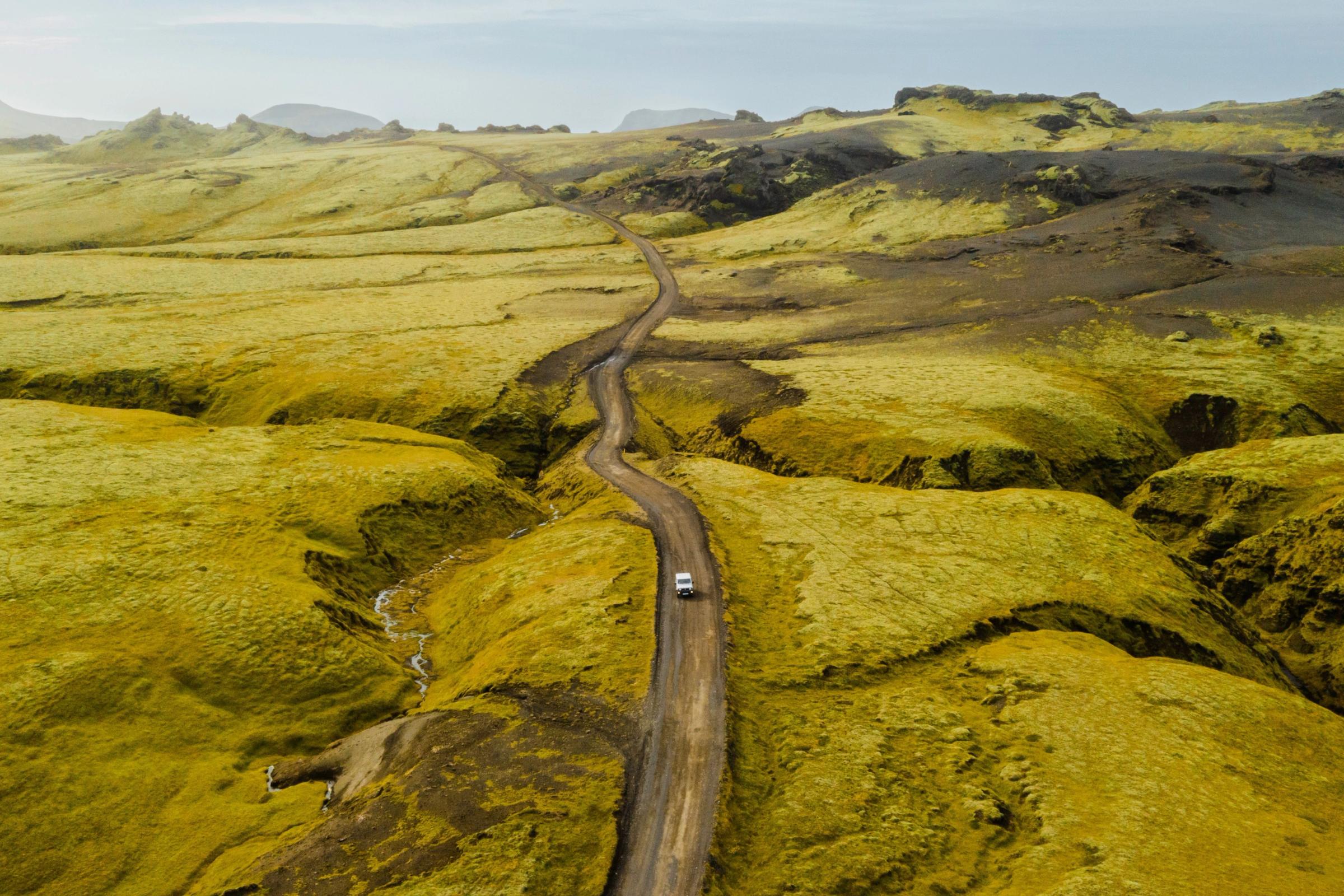
The only way to reach Eldgjá is by driving on F-roads, which are Iceland’s mountain roads. These roads are rough and only open in summer. Expect loose gravel, deep potholes, uneven surfaces, and river crossings with no bridges.
From the south, most people take F208 north from near Kirkjubæjarklaustur. After about 35 kilometers of rough driving, you’ll reach the turnoff onto F223, which leads directly to Eldgjá’s parking area. This route includes at least one significant river crossing, so it’s important to check conditions before attempting it.
There’s also a northern approach via F208 from Landmannalaugar. This route is longer and more difficult, with multiple river crossings and very rough terrain. It’s slower, but the scenery along the way is impressive if conditions are good.
Vehicle Requirements and Navigation
A regular car won’t work here. You need a high-clearance 4x4 vehicle. Good ground clearance matters, and skid plates are a big plus. Many rental companies offer vehicles rated for Highland driving, but they’re more expensive than standard rentals.
River crossings are the biggest risk. Always check the depth before driving through. If the water reaches your vehicle’s air intake, you can easily flood the engine. A recovery in this area is expensive and complicated, and help is far away.
Navigation is another thing to plan for. Phone signal is unreliable or completely absent, so offline maps or a GPS device are essential.
Rent a Campervan in Iceland
Get to the most remote places in Iceland with complete ease and comfort
Timing matters a lot with Eldgjá, because access is limited and conditions change quickly.
Summer Season Access
The F-roads leading to Eldgjá usually open in late June and close again in early October. The exact dates depend on snow and weather conditions each year. July and August are the most reliable months, with the best road conditions and the longest daylight.
June can still have snow patches and high river levels from melting snow. September is quieter, bringing autumn colors to the moss and lava fields, but early snowstorms are possible and can close roads without much warning.
Weather Considerations
The weather in the Highlands changes fast. You can start the day in sunshine and end it in cold rain or even snow. Even in midsummer, temperatures can range from near freezing to around 15°C, or about 60°F.
Wind is almost constant. The canyon itself offers some shelter, but the surrounding roads and open areas are exposed. Strong gusts can make driving harder and walking less comfortable.
Checking the forecast before heading out is important, but it’s just as important to be ready for conditions to change once you’re already there.
Places to Visit Near Eldgjá Canyon
Eldgjá is pretty isolated, but there are a few other places nearby that people often include on the same trip if the roads and weather allow it.
Ófærufoss
Distance from Eldgjá: inside the canyon (0 km)
Ófærufoss is right inside Eldgjá, about a 2 to 3 km walk from the main parking area. It’s a two-level waterfall that flows through a deep volcanic gorge created during the huge eruption in the 10th century. The hike is fairly easy, and you get wide views of the canyon as you walk. If you’re visiting Eldgjá, this is the main stop.
Lake Langisjór
Distance from Eldgjá: approx. 30 to 35 km (about 1 to 1.5 hours via F-roads)
Langisjór is a quiet lake out in the Highlands, surrounded by lava fields and mountains with soft natural colors. It feels very remote and peaceful, which makes it great for hiking and taking photos. Some trails lead up to higher viewpoints where you can see far across the Highlands. You’ll need a 4×4 in summer because the F-roads are rough.
Fagrifoss
Distance from Eldgjá: approx. 82 km (about 2 hours via F208/F206)
Fagrifoss means “Beautiful Falls,” and it sits along the rough road toward Lakagígar. The waterfall drops into a mossy canyon surrounded by dark volcanic rock. It’s a common stop if you’re exploring the Highlands by 4×4. The area feels wild and open, and there’s not much around except nature.
Frostastaðavatn
Distance from Eldgjá: approx. 40 km (about 1.5 hours via F208)
Frostastaðavatn is a lake near Landmannalaugar, surrounded by rhyolite mountains and old lava flows. The water is usually calm and reflects the different colors of the hills around it. It’s easy to reach from the highland road and works well as a short stop to stretch your legs. The whole area shows how volcanic activity and water shape this part of Iceland.
Landmannalaugar
Distance from Eldgjá: approx. 40 km (about 1.5 hours via F208)
Landmannalaugar is about 40 kilometers north of Eldgjá and is reached by driving on F208. It’s known for its colorful mountains, geothermal areas, and hiking trails. There’s also a natural hot spring where people often stop to soak.
The drive between Eldgjá and Landmannalaugar is slow and rough, but it passes through classic Highland scenery. If conditions are good, it’s one of the more memorable drives in the area.
Where to Eat Near Eldgjá Canyon
There aren’t any food options near Eldgjá itself.
Bring Your Own Supplies
You’ll need to bring all your food and water with you. There are no restaurants or cafés in the area. The closest town with services is Kirkjubæjarklaustur, which is about an hour and a half away on rough roads.
Hólaskjól Highland Center has a small shop with basic items, but it’s not somewhere you’d rely on for full meals.
Campsites Near Eldgjá Canyon
If you want to stay overnight, options are limited but straightforward.
Hólaskjól Highland Center
Hólaskjól Highland Center is about 8 kilometers south of the Eldgjá turnoff and is the closest place to stay. It has a campground, shared sleeping areas in mountain huts, and a few private cabins.
There are toilets, hot showers, and a small shop. The site sits by the Syðri-Ófæra River and looks out over lava fields. It’s simple, quiet, and practical.
Camping Regulations
Wild camping isn’t generally allowed inside Vatnajökull National Park. To follow the rules and protect the area, it’s best to camp at designated places like Hólaskjól.
Practical Travel Tips
A bit of preparation makes a big difference out here.
Essential Packing
Bring warm clothes, waterproof layers, and proper hiking boots. Phone signal is unreliable, so download offline maps or use a GPS device.
Carry more food and water than you think you’ll need. Weather and road conditions can slow things down, and there’s nowhere nearby to restock.
Fuel and Vehicle Preparation
Fill up your fuel tank before heading into the Highlands, usually in Kirkjubæjarklaustur. Driving on F-roads uses more fuel than normal roads, and there are no gas stations once you’re out there.
Check your spare tire and bring basic tools. The roads are rough, and help is far away if something goes wrong.
Conclusion
Eldgjá Canyon is a quiet, striking place that still feels mostly untouched. It’s important both geologically and visually, but it doesn’t feel built up or managed for visitors.
Getting there takes time, planning, and the right vehicle. If you’re comfortable with rough roads and changing weather, Eldgjá gives you a clear, honest look at the volcanic forces that shaped Iceland and still shape it today.
Frequently Asked Questions About Eldgjá Canyon
Most visitors spend 2–4 hours at Eldgjá, depending on hiking distance and weather. If you include nearby stops like Landmannalaugar or Laki, plan a full day or more.
Yes, the main trails near the parking area are manageable for beginners with decent fitness. However, weather, uneven terrain, and remoteness require proper footwear and preparation.
In most cases, at least one river crossing is required, especially via F208 from the south. Conditions vary yearly, so always check road reports before driving.
Guided super jeep tours operate during summer from towns in South Iceland. These tours are a good option if you’re not comfortable driving F-roads or crossing rivers yourself.
Wildlife is limited but may include Arctic foxes, migratory birds, and sheep roaming the Highlands in summer. The area is more known for its geology than animal life.
About the author
Aron Freyr
Born and raised in Iceland, Aron Freyr has spent all 28 years of his life exploring the country and getting to know its landscapes, regions, and ever changing conditions. From long summer road trips to winter journeys through remote areas, he has traveled across Iceland more times than he can count. As part of the Go Car Rental Iceland team, Aron turns this firsthand experience into trustworthy, practical guidance that helps visitors navigate Iceland with confidence. His deep local insight makes him one of the most reliable voices on Icelandic travel today. He claims this expertise also includes knowing exactly which gas stations make the best hot dogs.