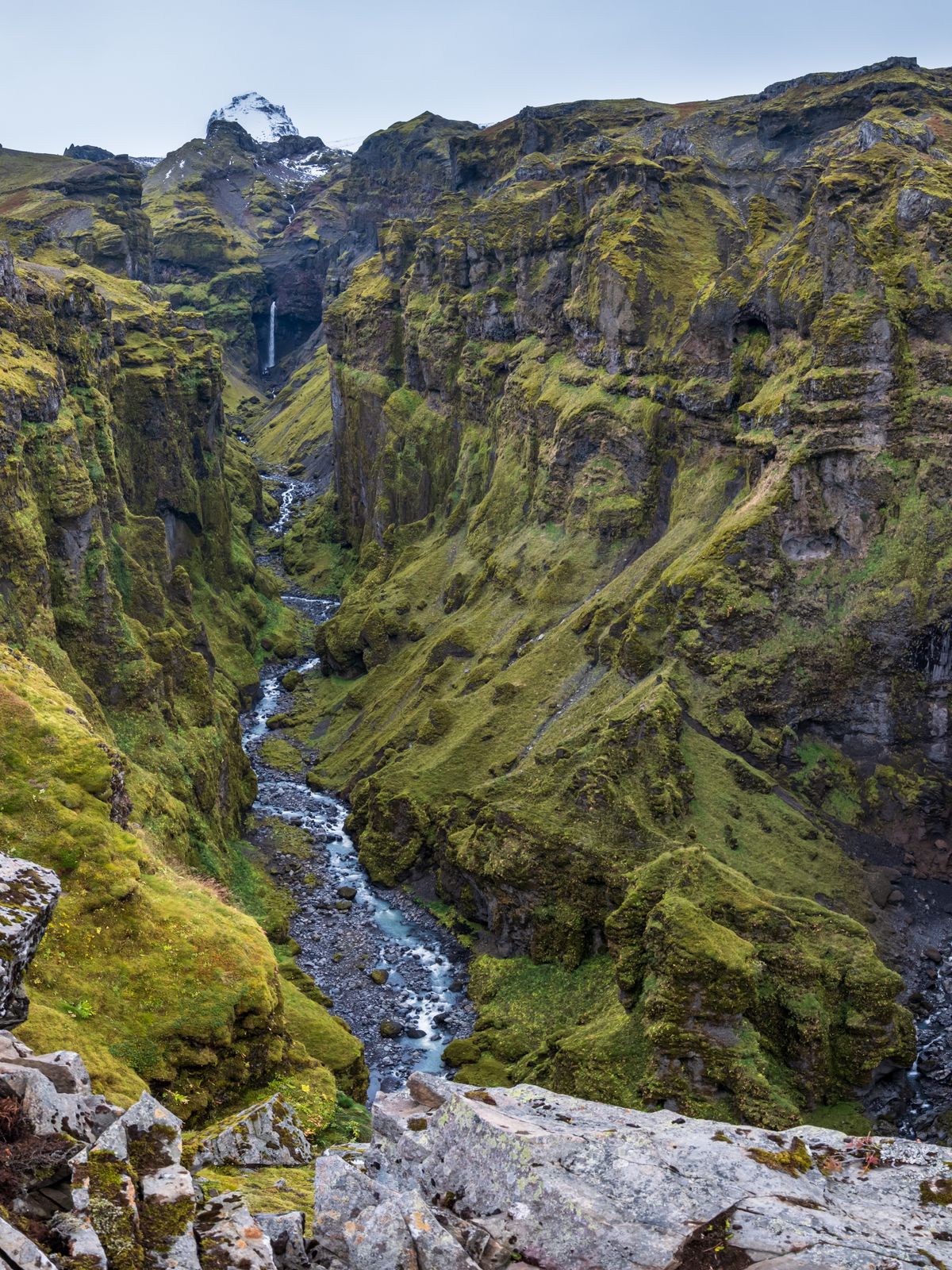
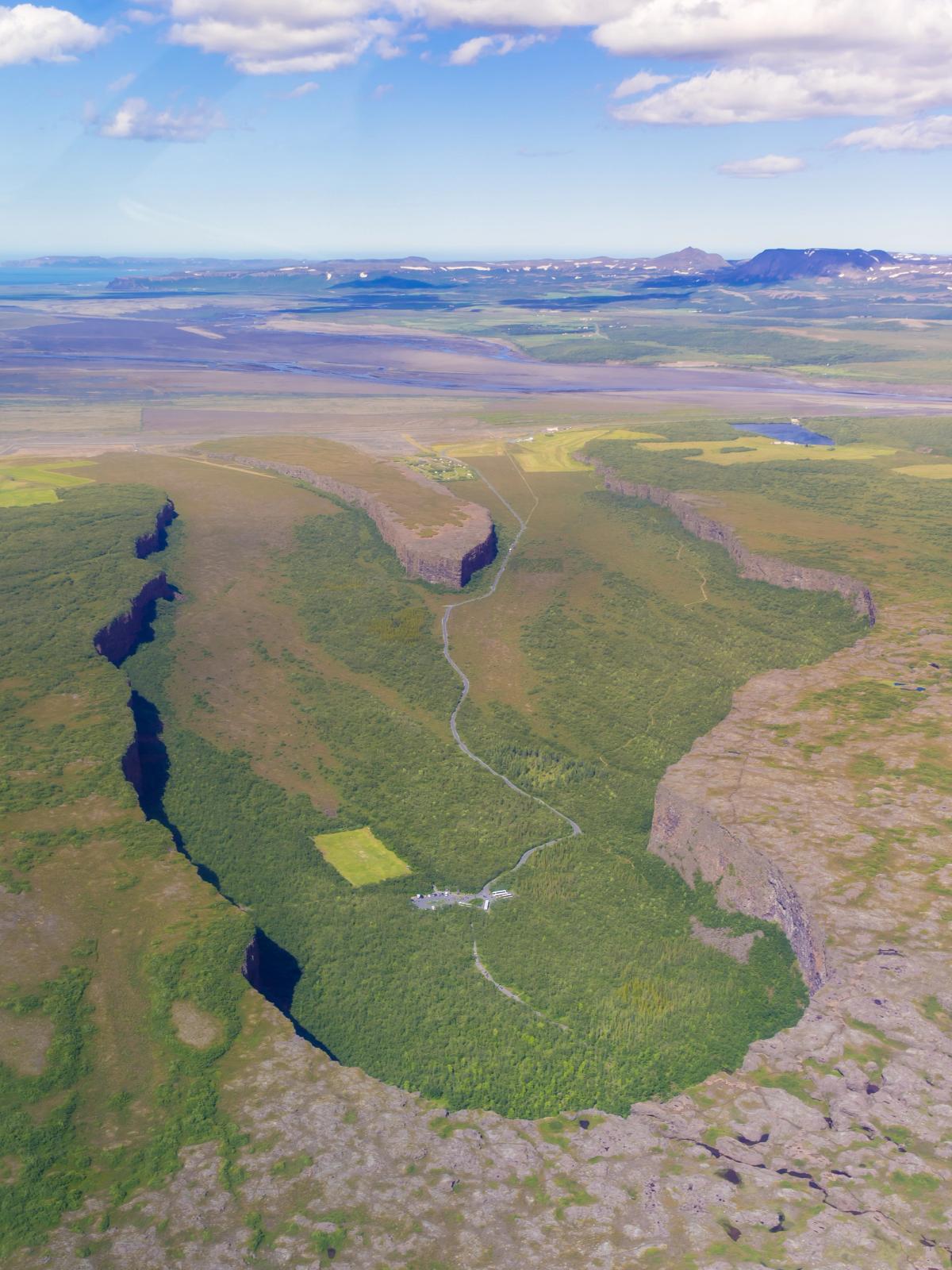
In this article, we’re going to talk about a place that not many travelers visit. In fact, most of them haven’t even heard of this landmark. They pass without realizing how close they are to something special. We’re talking about Kolugljúfur Canyon, a gorge hidden between the impressive landscapes of Northwest Iceland.
Although not many tourists know of its existence, the locals do, and although it looks hidden, it’s just a quick detour from Route 1, Iceland’s main road. It’s one of those places perfect for a campervan trip – easy to reach, free to visit, and full of that raw Icelandic nature that makes you want to pull over and stay a while.
You get a series of lively waterfalls tumbling through a basalt gorge, bright blue pools at the bottom, and a backdrop of green hills and farmland that makes it feel like Iceland at its purest. And, as in many other places in Iceland, nature and culture come hand in hand. There’s a legend about a giantess who once lived here, which adds a nice layer when you’re walking the area. It’s not crowded like some of the bigger attractions, so you can take your time, listen to the water, and enjoy the views without rushing.
What’s Kolugljúfur Canyon?
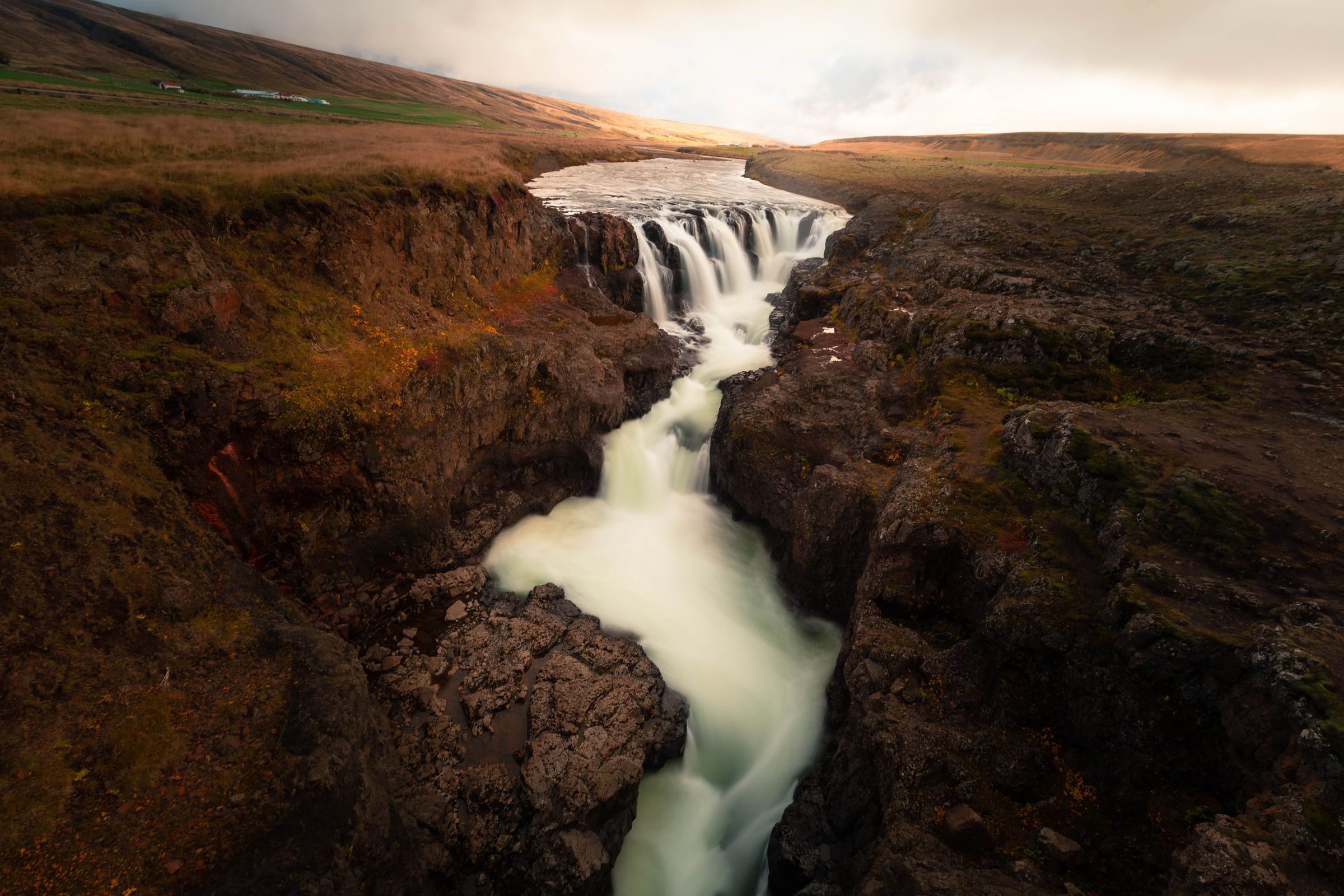
Kolugljúfur Canyon is a rugged gorge carved by the Víðidalsá River in the Víðidalur Valley, Norðurland Vestra. The river drops through a series of waterfalls known as Kolufossar, forming turquoise pools beneath dark basalt walls. It’s easily accessible from the Ring Road, with a short walk to the main viewpoint and a 2.4-kilometer rim trail. The site is free to visit, open year-round, and linked to the legend of the giantess Kola.
Facts about Kolugljúfur Canyon
Kolugljúfur means “Kola’s Canyon,” and the gorge stretches about one kilometer long and 40 to 50 meters deep. Its basalt column walls were formed by rapidly cooled lava, later eroded by the Víðidalsá River. The main waterfalls, Efrifoss, Kolufoss, and Neðri-Kolufoss, include a largest drop of around 10 meters high and 25 meters wide. The canyon has unguarded edges, no facilities, and is considered one of Iceland’s more hazardous tourist sites.
Where’s Kolugljúfur Canyon and How to Get There
Kolugljúfur Canyon is in northwest Iceland, about 200 kilometers from Reykjavík and 190 kilometers from Akureyri. From Route 1, take Route 715 for 6 kilometers to the parking area, with a total drive of 2.5 to 3 hours from Reykjavík. Public buses do not stop there, so traveling by car or campervan is necessary. In winter, the gravel road may require a 4x4 due to snow and ice.
Where to stay near Kolugljúfur Canyon
Several campsites lie within 24 to 53 kilometers of the canyon, including Hvammstangi Camping Ground, Illugastaðir Farm, Glaðheimar, Sæberg HI Hostel, and Borðeyri Campsite. Facilities range from basic grass pitches with toilets to cabins, electricity hookups, swimming pools, and geothermal hot tubs. Most sites are open seasonally, while some operate year-round. Wild camping is illegal, so visitors must use designated areas.
What to see and do near Kolugljúfur Canyon
Nearby attractions include Bergárfoss waterfall, Borgarvirki volcanic plug, Hvítserkur basalt stack, Þrístapar historic execution site, and the town of Hvammstangi. Borgarvirki rises 177 meters above sea level and offers panoramic views, while Hvítserkur stands 15 meters tall in the sea. Þrístapar marks the last execution in Iceland in 1830. Hvammstangi serves as a hub with the Seal Centre, cafés, and services.
The seasons at Kolugljúfur Canyon
Summer brings temperatures of 10 to 15 °C and nearly 24 hours of daylight, with mostly dry trails. Autumn has fewer tourists, more rain, and shorter daylight hours. Winter covers the canyon in snow, limits daylight to four or five hours, and often requires a 4x4, but offers northern lights opportunities. Spring increases river flow, brings birds and wildflowers, and features changeable weather.
What to pack to visit Kolugljúfur Canyon
Bring sturdy hiking boots, waterproof jacket and trousers, and layered clothing to handle changing temperatures. In winter, hat, gloves, and a buff are essential. Pack a reusable water bottle, snacks, a small daypack, power bank, and offline maps or GPS app. There are no facilities or places to buy food at the canyon.
Travel Tips
Check road conditions and weather before visiting and stay back from unfenced edges. Fill up your tank in Hvammstangi or Blönduós and take all rubbish with you. Arrive early or late for fewer visitors and consider a 4x4 outside June to August. Fishing in the river requires a permit.
Conclusion
Kolugljúfur Canyon combines waterfalls, basalt walls, and folklore in a less famous spot along the Ring Road in North Iceland. Its raw landscapes and easy access make it a rewarding stop. Add it to your itinerary for a quieter and magical Icelandic experience.
Key Takeaways
Kolugljúfur is a canyon located in Northwest Iceland.
It’s named after Kola, a mythological giantess that supposedly lived here.
The gorge is about 1 kilometer long and 40 to 50 meters deep.
What’s Kolugljúfur Canyon?
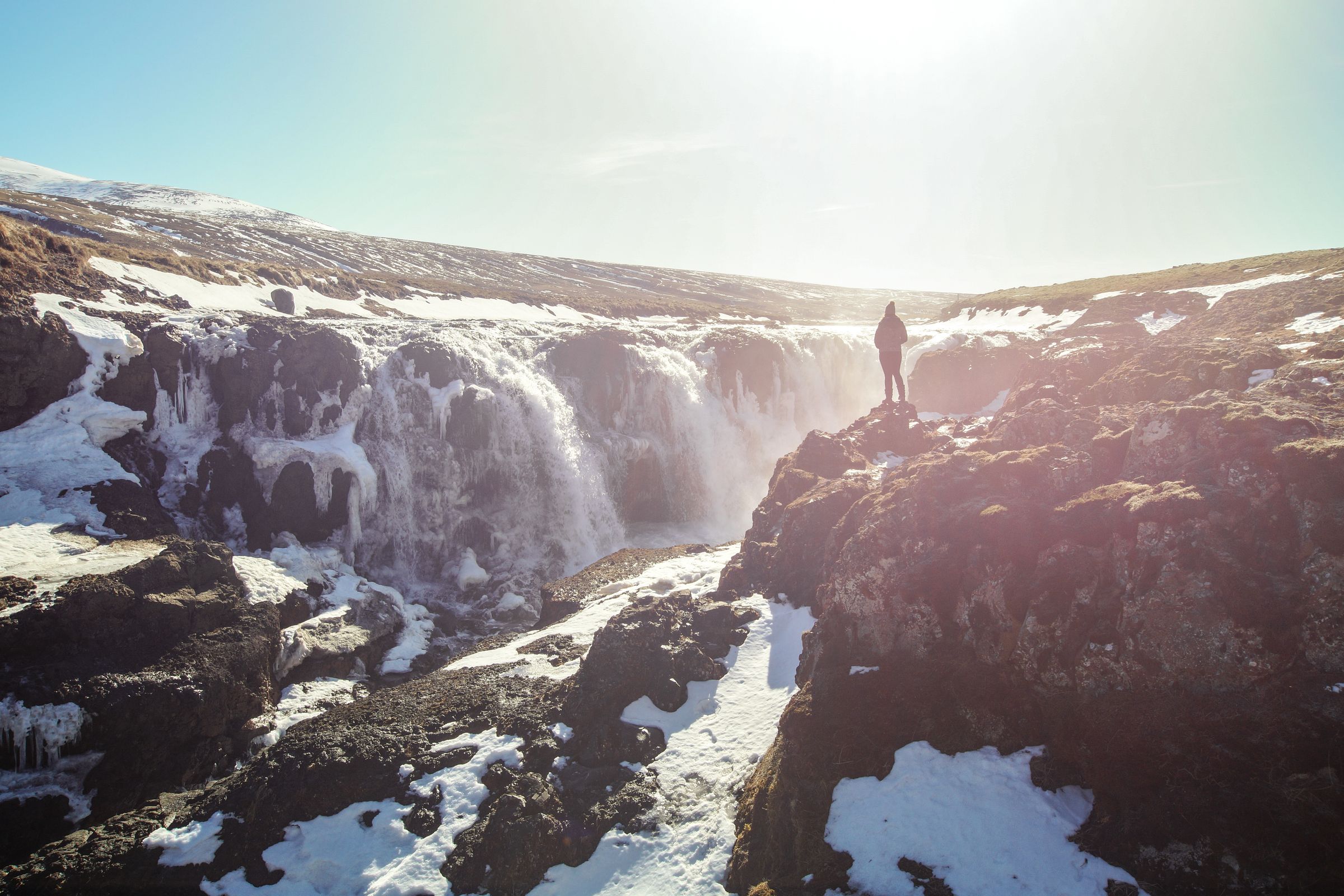
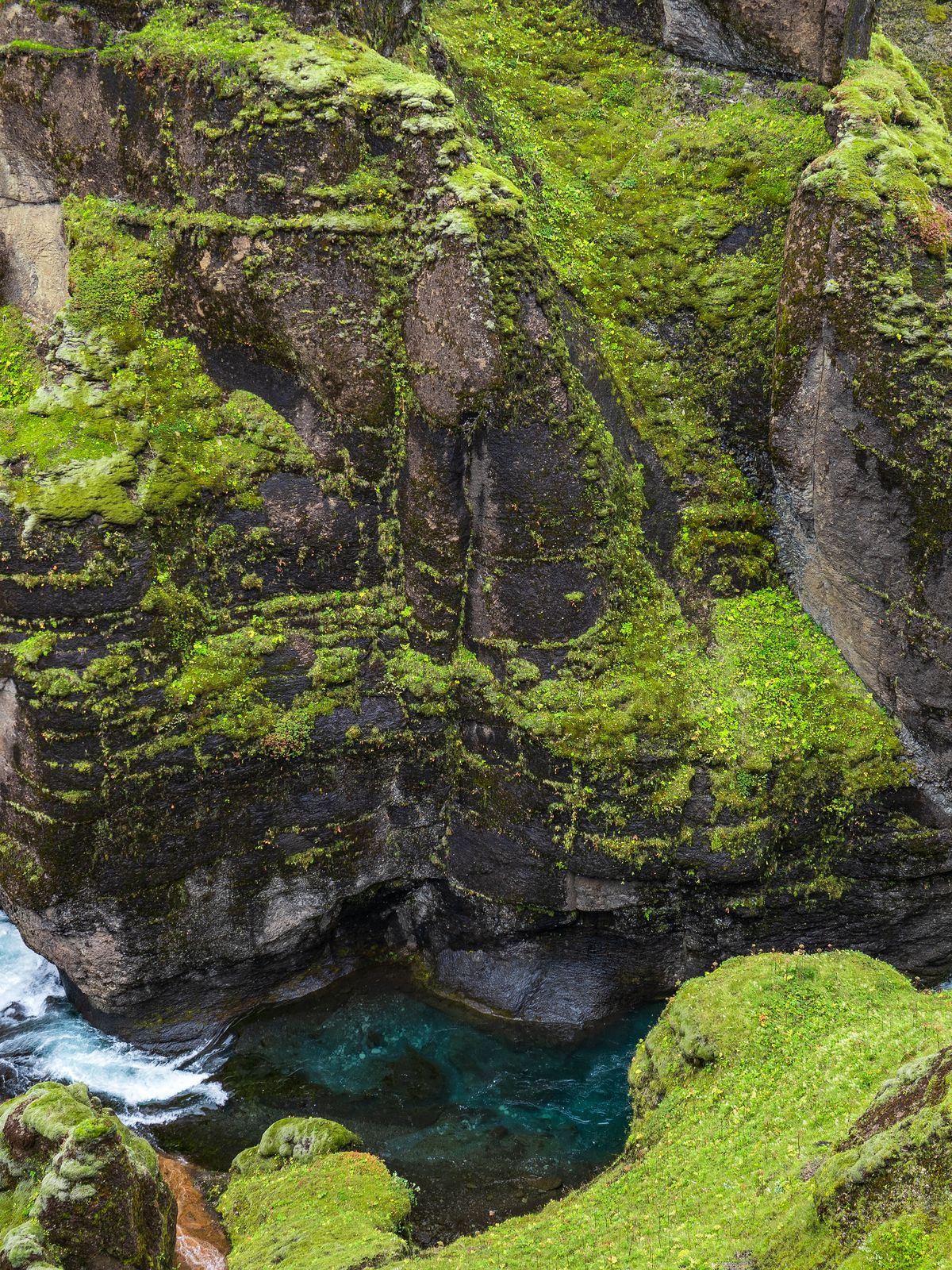
Kolugljúfur Canyon is a rugged gorge carved by the Víðidalsá River. It’s located in the heart of the Víðidalur Valley, in the Northwestern Region, Norðurland Vestra in Icelandic. At this point, the river drops through the canyon in a series of smaller waterfalls known together as Kolufossar. Some of them fall over wide ledges, creating white foam and mist that catches the light beautifully against the dark rock walls. From the viewing spots, you can see the water change from calm flow above to powerful cascades below. The waterfalls pour into quiet pools of an intense turquoise color.
Apart from its sheer beauty, one of the best things about Kolugljúfur is how accessible it feels. You just have to take a short detour from the Ring Road, reach the parking area, and walk a couple of minutes to the main viewing point. Then, there’s a loop trail of roughly 2.4 kilometers (1.5 miles) that follows the rim and gives you different angles without any serious climbing. There are no fences by the edge at some points, so it’s important to stick to the paths, especially if you have kids or if the ground is wet. If it has rained before, the floor can become slippery, and a fall could be potentially dangerous, so be extra careful. Most people spend 30 to 90 minutes here, but it’s easy to linger longer with a coffee from your campervan, having a picnic, or just watching the water.
As it happens with most natural monuments in Iceland, the site never closes, and there’s no entry fee. There’s a parking lot by the canyon that’s also free, so enjoying this magnificent place comes at no cost at all. There’s an information board at the parking area that explains the geology and the local stories in English and Icelandic. In summer, the surrounding area turns green with moss and grass, while the rock faces stay dark, creating a sharp and beautiful contrast. There are chances to spot some wildlife here, too. Birds nest along the ledges, and the river is known for salmon, though the waterfalls block their upstream journey. They are quite hard to see as well.
Kolugljúfur Canyon is not only pleasant to the eye. It also has a deep connection with national folklore. Many natural places in Iceland have tales or legends associated with them, something that also happens here. According to the legend, a giantess named Kola lived in the area near an old farm called Kolugil. She would stand on a ledge at night and reach down with her enormous hands to grab salmon straight from the river. Then she’d toss them into a natural hot spring pool known as Koluketill to cook them. A flat rock shelf on the western side is named Kolurúm – Kola’s Bed – and another formation nearby looks like the edge of a giant bedstead, called Kolusæng.
Some versions of the story say Kola herself shaped parts of the gorge while moving around or resting her feet. These tales have been passed down for generations, and you can still see the rock features that inspired them. The stories make the place feel even more mystical, even though it’s wild and empty most days.
Facts about Kolugljúfur Canyon
Let’s dip into some data about the gorge.
Name and Meaning
The name Kolugljúfur simply means “Kola’s Canyon,” taken directly from the giantess in the story. In Iceland, most natural places have descriptive names, and “gljúfur” is the native word for “canyon” or “gorge”.
Size and Geological Formation
Regarding its size, the gorge runs approximately one kilometer from end to end and drops between 40 and 50 meters at its deepest points. The walls are made of basalt columns. Basalt is a volcanic rock that forms when lava cools down rapidly when in contact with water. It solidifies and creates regular shapes, like hexagons. The Víðidalsá River has kept eroding the rock ever since, creating the waterfalls and deepening the gorge over time.
Waterfalls of Kolufossar
These waterfalls are known, collectively, as Kolufossar, which translates directly as “Kola’s waterfalls,” linking their name to the canyon. The main ones are called Efrifoss (the upper fall), Kolufoss, and Neðri-Kolufoss (the lower fall). The largest single drop measures around 10 meters high (32.8 feet) and spreads about 25 meters wide (82 feet). The water often has a striking blue-green color that shines especially bright when the sunlight reaches the pools below. The river itself is one of Iceland’s important salmon rivers.
Safety and Visitor Information
The canyon is listed among some of Iceland’s more hazardous tourist sites because of the unguarded cliff edges and occasional slippery surfaces. Recent years have seen a few accidents, so common sense and staying on marked paths are essential. The short rim trail has only about 25 meters of elevation gain, making it suitable for most people. There’s no visitor center or any other kind of facilities there, like toilets, so you need to come prepared.
Where’s Kolugljúfur Canyon and How to Get There
As we mentioned at the beginning, Kolugljúfur Canyon lies in northwest Iceland, right in the Víðidalur Valley south of the Vatnsnes Peninsula. It sits about 200 kilometers (124 miles) northeast of Reykjavík and 190 kilometers (118 miles) west of Akureyri, making it a natural halfway point for many trips between Iceland’s two main cities.
The best way to reach it is definitely by car or campervan. Public buses don’t stop at the canyon, so having your own wheels gives you the freedom to stop when you want and stay as long as you like. From Reykjavík, follow the Ring Road (Route 1) north past Borgarnes and Bifröst. Not long after passing through the small town of Laugarbakki, keep an eye out for a sign for Víðidalur (Route 715) on the right. That gravel road, also known as Víðidalsvegur, runs about 6 kilometers (3.7 miles) to the parking area. Total driving time is usually 2.5 to 3 hours in good conditions. The surface is generally fine for standard campervans in summer, though the last stretch on Route 715 may require a 4x4 or extra care if it has been raining heavily.
If you’re coming from Akureyri, the most important city in North Iceland, head west on Route 1 for roughly 180 kilometers (75 miles), passing Blönduós and continuing toward Hvammstangi. The same Route 715 turn appears on the left. The final 6-kilometre stretch is the same. This drive takes about 2 and a half. Both routes wind through open farmland, with plenty of sheep and occasional views of distant mountains. Keep an eye out for livestock on the road – it’s all part of the Icelandic driving experience.
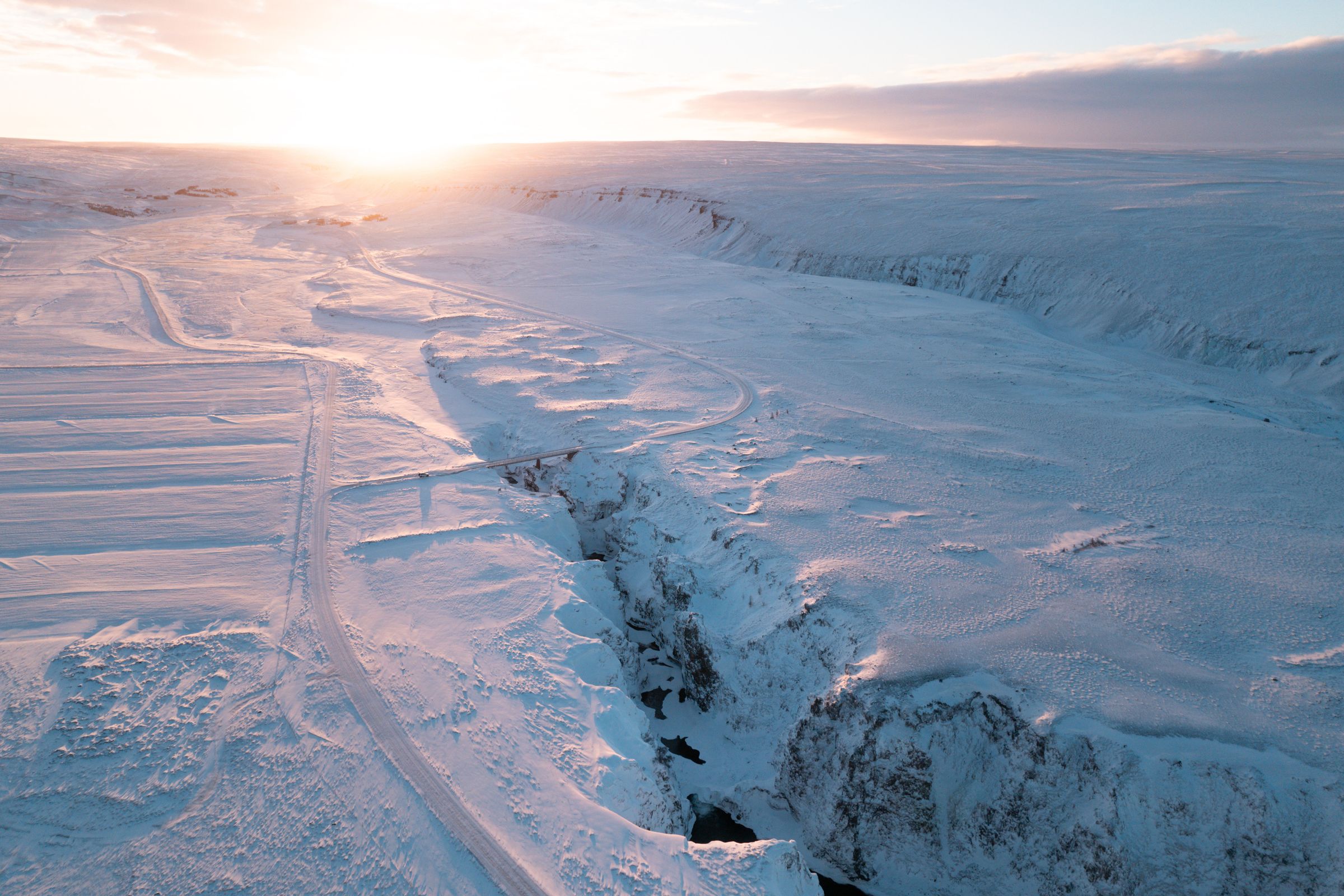
In winter, the gravel section can get snowy or icy, so check the road conditions before you go and consider studded tires or a 4x4 campervan.
Rent a Campervan in Iceland
Get to every corner of the island with complete freedom and comfort
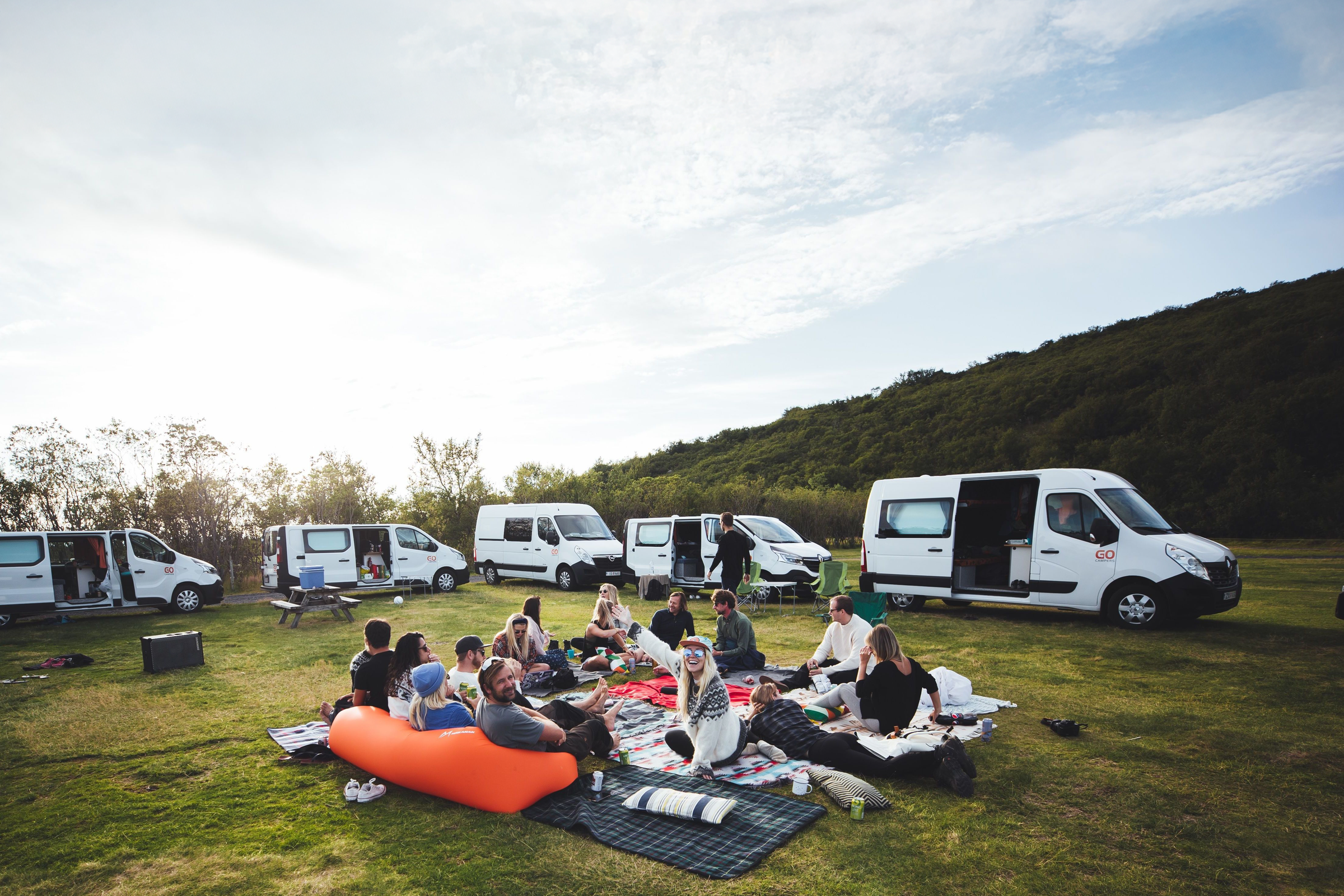
Going on a campervan trip through Iceland is a great experience. Icelanders love camping, so there are always a few sites nearby wherever you are to spend the night. Remember that wild camping is illegal in the country, so stick to designated areas.
Hvammstangi Camping Ground
Distance to Kolugljúfur Canyon: 24 kilometers (15 miles).
Open: Mid-May to mid-October.
It spreads across a big, flat grassy field that works perfectly for campervans of all sizes. You’ll find modern toilets, showers, electricity hookups, a washing machine, a swimming pool, and a playground for kids. Being right inside the small town of Hvammstangi means you can walk to groceries, a gas station, bars, and restaurants.
Illugastaðir Farm Camping Ground
Distance to Kolugljúfur Canyon: 48 kilometers (30 miles).
Open: June 20 to April 30.
This site keeps things simple with grassy pitches, basic toilets, running hot and cold water, and electricity. The real highlight here is the location: this area has a large colony of seals, so it’s a great place to see them. As you perhaps have already noticed, the opening period seems a bit strange, closing only for three weeks in spring. The camping is open all year, but the traffic closes between the beginning of May and late June due to eider ducks nesting in the area.
Glaðheimar Cottages and Camping
Distance to Kolugljúfur Canyon: 47 kilometers (29.2 miles).
Open: All year.
In Blönduós, this site blends cottage charm with a spacious camping area. You can rent one of the cozy cabins, with space for 3, 4, or 8 people. There’s also a guesthouse with double or twin rooms with private bathrooms, towels, and bed linen. If you prefer to stick to sleeping in your van, the camping area has toilets, showers, electricity, a playground for children, and a swimming pool.
Sæberg HI Hostel and Camping
Distance to Kolugljúfur Canyon: 34 kilometers (21 miles).
Open: April to September.
This site combines accommodation in a hostel with shared rooms and a camping area. And a rare treat: a hot tub fed by natural springs. The camping area is compact but flat, with toilets, showers, a geothermal hot tub, Wi-Fi, and a kitchen. There’s also a laundry, but it is charged separately.
Borðeyri Campsite
Distance to Kolugljúfur Canyon: 53 kilometers (33 miles).
Open: May to September.
This camping ground is small but has great views of the coast. Located at the edge of the town of Borðeyri, it’s a straightforward camping ground with simple grass pitches, toilets, cold and hot running water, a BBQ area, outdoor tables, a playground for children, and a football field. Some spots have electricity.
What to see and do near Kolugljúfur Canyon
The canyon is not close to any of the country’s major attractions, but it does have some hidden gems nearby.
Bergárfoss
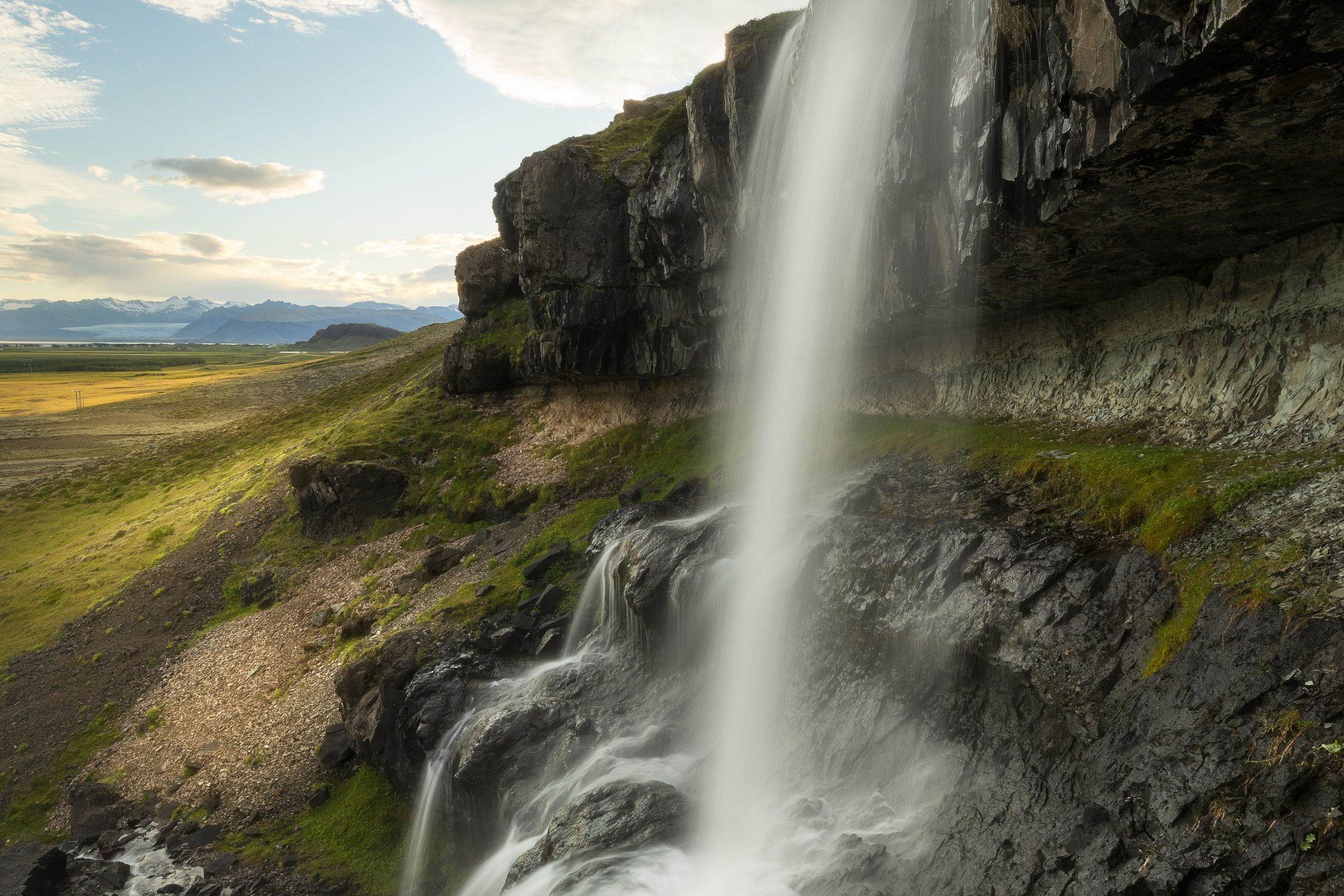
A short drive southeast of the canyon brings you to Bergárfoss, a wide waterfall that drops about ten meters over a broad ledge on the Bergsá River, a tributary to the bigger Víðidalsá. The waterfall is a bit far from the road, but not too much. You can park and take a 10-minute walk through open fields until you reach the shallow gorge where the waterfall is. In late spring, the flow is strong and becomes a bit weaker by the end of the summer. It’s an easy addition to your morning if you’re heading toward Kolugljúfur Canyon.
Borgarvirki
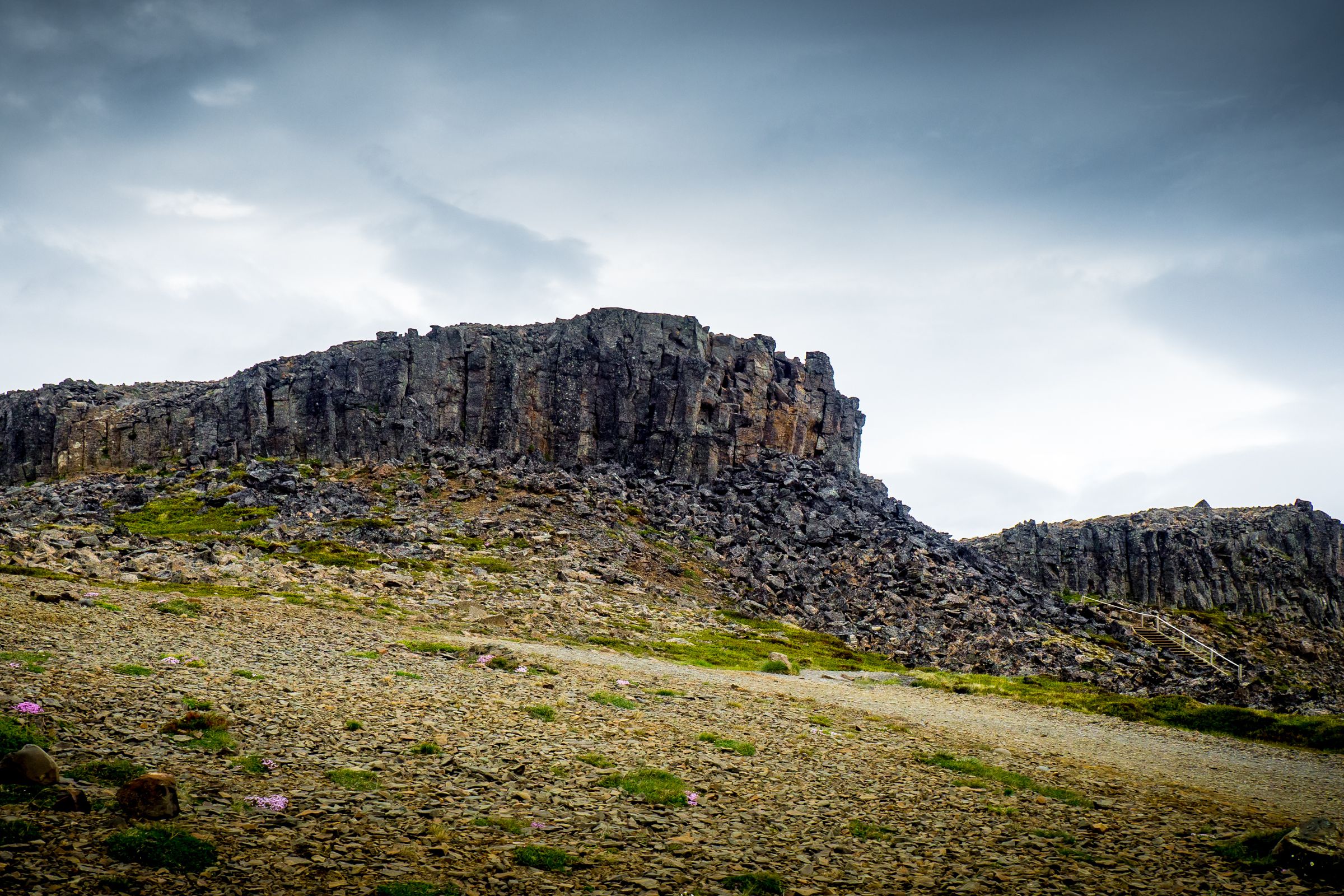
Roughly 20 kilometers (12 miles) northwest, Borgarvirki is a natural volcanic plug that rises 177 meters above sea level. It’s a dramatic basalt formation shaped like a natural castle. The early settlers of Iceland saw it and realized what a fantastic defensive structure it would be, so they fortified it even more. They built stone walls and a gateway, and it was likely used as a stronghold. History is not the only draw to this place. It’s also getting an amazing 360-degree view of the surrounding landscape, with an open plateau in front of you, mountains in the back, and the ocean nearby. Climbing to the top is quite easy. There’s a short and easy path that leads up from a free parking area.
Hvitserkur
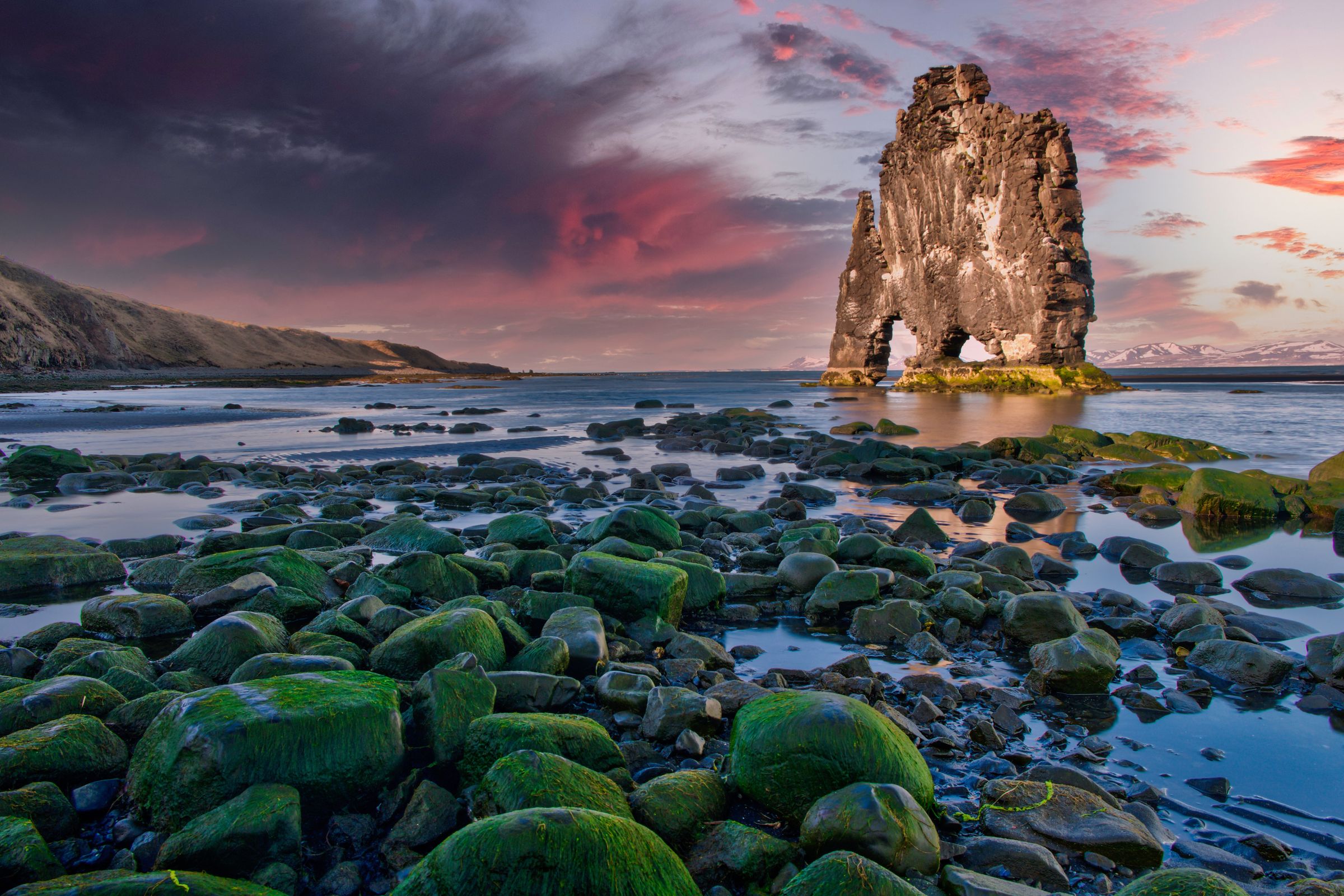
Hvítserkur is one of the most visited and photographed natural monuments in the Vatnsnes Peninsula. It’s a 15-meter (49-foot) basalt stack rising from the sea that resembles a dragon drinking from the ocean. Others state that it’s an elephant. The local legends say that is a petrified troll. It’s not only a feast for the eyes but also a place where many seabirds, like fulmars and gulls, live.
Þrístapar
For a touch of history, go to Þrístapar, just off the Ring Road northeast of Kolugljúfur. This place, whose name can be translated as “three hillocks,” is where the last execution in the history of Iceland was held. In 1830, a man and a woman were sentenced to death for two murders committed two years before. They were beheaded and their two heads were put on spikes. There’s a sculpture of a giant axe to commemorate this event.
Hvammstangi
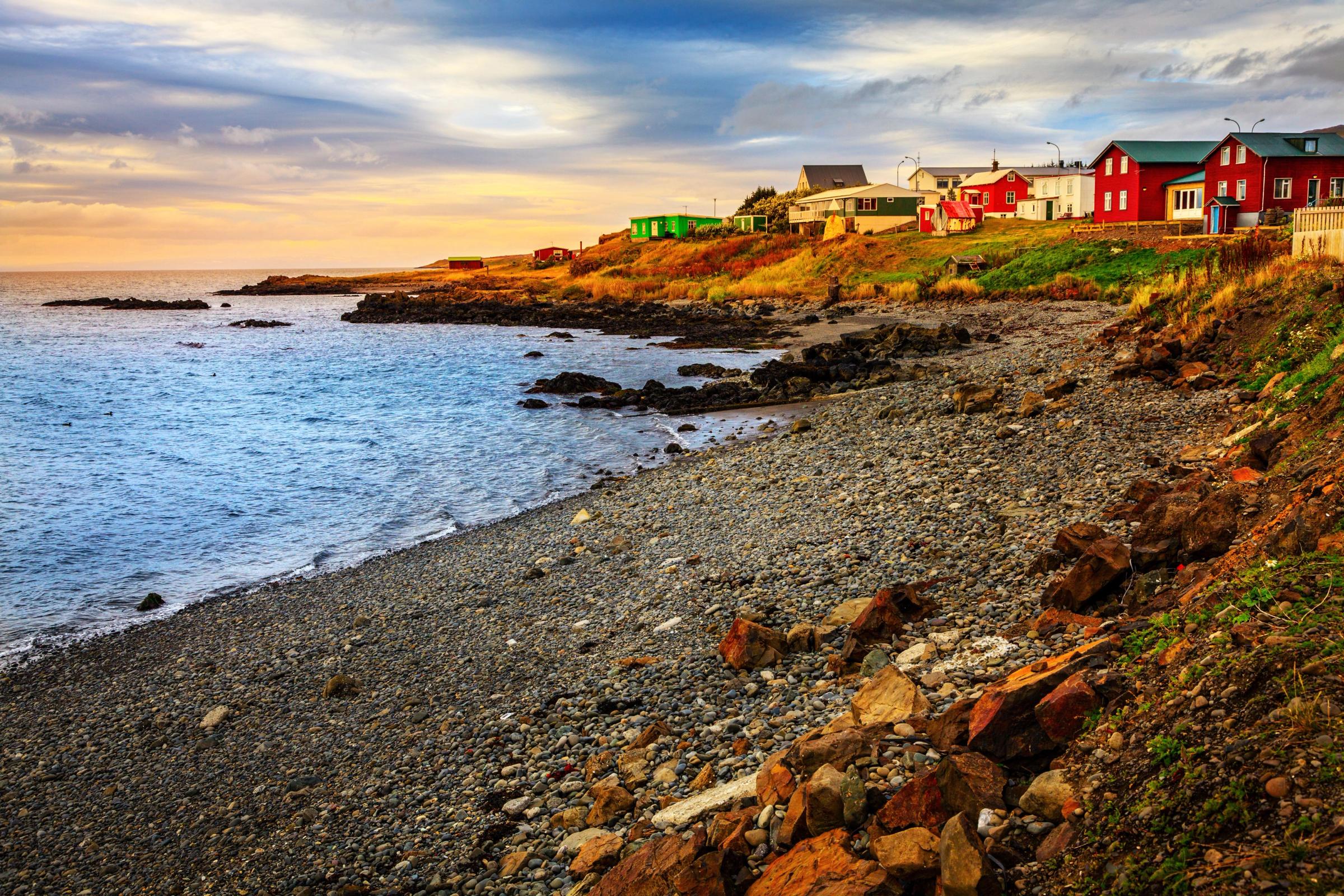
The small town of Hvammstangi is close enough to serve as a practical stop before or after the canyon. One of its main attractions it’s the Seal Centre, which gives you a background on the marine life you might see on the Vatnsnes Peninsula. The town has several cafés that serve fresh local seafood, and a walk around the harbor feels pleasant after time on the road. Many campervan travelers use the town to refuel, buy supplies, and learn a bit about the region’s history, making it a useful hub to explore the region.
The seasons at Kolugljúfur Canyon
When traveling to Iceland, the weather is a huge factor to consider, as it can have a huge impact on your experience. Here you have a breakdown season by season so you can be prepared.
Summer (June to August) is the most popular time, with temperatures usually between 10 and 15 °C (50-59°F) and almost 24 hours of daylight by the end of June. The waterfalls run strongly but not too wildly, and the trails stay mostly dry. There’s always a chance of occasional rain, but the gorge is fairly sheltered, so wind rarely becomes a big issue.
Autumn (September and October) brings cooler air and subtle color changes in the moss and grass along the rims. There are not many tourists, so you often have the viewpoints to yourself. Paths can get slippery with rain, which occurs more often, and daylight shortens every week, so plan accordingly to visit the canyon with natural light. Some campsites close for the season.
Winters (November to March) are long and cold in North Iceland. Almost everything is covered in snow, giving the canyon a completely different look compared to the rest of the year. At the same time, you have to be extra careful near the edge, as ice can make the floor extra slippery. Daylight lasts only four or five hours, so you have to plan your visit carefully. One of the best things about winter is that it is the northern lights season, so if the night is clear, you have high chances of seeing them. The road leading to Kolugljúfur Canyon is gravel, so you’ll need a 4x4 campervan. Well, winter makes it almost compulsory in general.
Spring (April and May) melts the snow and increases the river flow, making the waterfalls roar. Birds return, wildflowers appear, and the whole valley feels fresh and alive. In the early stages of the season, the temperature is still cold, and the weather is highly changeable. Rain is quite common.
Sturdy hiking boots with good grip – the ground near the rim can be uneven or slippery after rain.
Waterproof jacket and trousers – sudden showers are common in all seasons.
The best way to adapt to the constant temperature changes is to dress in layers. Thermal inner layer; fleece or wool for the intermediate; waterproof on top.
Hat, gloves, and a buff – non-negotiable in winter; and in even summer, nights can be quite cold.
Reusable water bottle and snacks. There’s nothing near the canyon to buy food.
Small daypack – keeps everything together.
Power bank for long days out. Running out of battery while trying to find your way to the campsite can be inconvenient.
Offline maps or a GPS app. Don’t rely only on online maps; the cell phone signal can be spotty in rural areas.
Stay well back from unfenced edges, pay extra attention if you go with kids or pets, and avoid the rim if it’s windy.
Fill up your tank in towns like Hvammstangi or Blönduós – options get limited once you leave the Ring Road.
Take all your rubbish with you and leave the parking area and trails cleaner than you found them.
Pair the visit to the canyon with other natural monuments or activities to maximize your day.
Try to arrive early or later in the day to enjoy a quieter experience with fewer other visitors.
Pack a simple picnic in your campervan – the parking area has nice views for an easy lunch stop.
If traveling outside June to August, consider a 4x4 campervan.
Support the small towns by stopping at local shops or cafés in Hvammstangi and Blönduós – it helps keep these communities going.
The river may look tempting for fishing salmon, but it requires a permit and is regulated.
Conclusion
Kolugljúfur Canyon shows that some of the best experiences in Iceland come from the smaller, less famous spots. Here you can feel Iceland at its rawest and purest, with waterfalls, basalt walls, and old stories that create a magical atmosphere. If you’re traveling by the Ring Road through North Iceland, make sure to save a spot in your itinerary for this hidden wonder.
Frequently Asked Questions About Kolugljúfur Canyon
Yes — especially if you prefer uncrowded natural attractions. It offers dramatic basalt cliffs, multiple waterfalls, and scenic valley views without the heavy tourist traffic found at more famous Icelandic sites.
Yes, but supervision is essential. Some cliff edges are unfenced and can be slippery, so children should stay on marked paths and away from the rim.
No. There are no toilets or visitor facilities on site, so plan ahead and use services in nearby towns like Hvammstangi or Blönduós.
Yes, but winter access depends on road conditions. Snow and ice can make the gravel road challenging, and a 4x4 vehicle is strongly recommended in colder months.